Prague Housing Pipeline Reaches Record Levels, But Permitting Delays Continue to Constrain Supply

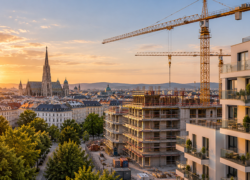
According to an analysis by Central Group, approximately 157,000 apartments are currently in various stages of preparation across Prague, representing the largest residential development pipeline recorded in the Czech capital. The developer estimates that around one-quarter of these planned units are being prepared by the company itself.

Despite the substantial development pipeline, Prague continues to face a shortage of housing supply as lengthy permitting procedures delay the delivery of projects to the market. Industry participants argue that the imbalance between supply and demand is contributing to rising property prices and worsening housing affordability.

Demand for new housing remained strong during the first quarter of 2026, with approximately 1,800 new apartments sold in Prague, according to market data cited by Central Group. Sales volumes remained broadly in line with levels recorded at the end of 2025 and reflected the average demand seen over the past two years.

However, the number of available new homes has remained relatively stable at around 5,000 units in recent years, limiting the market’s ability to respond to sustained buyer demand. Central Group reports that average prices for new apartments in Prague have reached approximately CZK 182,000 per square metre.

The company also points to rising construction costs as an additional challenge. According to its data, construction delivery costs have increased by 27 percent over the past two years. Central Group argues that elevated costs have made it more difficult to launch new projects and have contributed to delays in planned developments.

The analysis indicates that most future residential development is concentrated in Prague 4, Prague 5 and Prague 9, where larger redevelopment sites and brownfield opportunities remain available. Development opportunities in the city centre are considerably more limited.

Industry representatives continue to identify the permitting process as one of the main constraints on housing delivery. According to Central Group, Prague currently permits approximately 5,000 apartments annually, while market demand would require significantly higher levels of construction. The developer estimates that the city’s housing shortage has grown substantially over the past two decades, although the exact size of the deficit varies across different market studies.

Housing affordability remains under pressure. Central Group’s latest affordability index suggests that the purchase of a typical 70 sqm new apartment in Prague now requires the equivalent of 15.9 annual gross salaries. According to the company, apartment prices have increased by almost 180 percent over the past decade, while wage growth has been significantly lower over the same period.

The recently approved Prague metropolitan zoning plan is expected to support future housing development by opening additional brownfield and transformation areas for construction. Market participants are also closely monitoring the proposed amendment to the Building Act, currently being debated in parliament, which aims to streamline permitting procedures through measures including a unified state building authority and accelerated approval processes for large residential developments.

Central Group currently has approximately 3,200 apartments under construction in Prague, representing projects valued at more than CZK 25 billion. The company expects to complete a record 1,600 apartments during 2026.

At the same time, Central Group has continued to postpone the launch of approximately 2,000 additional apartments, citing what it considers unsustainably high construction costs. The developer says the projects are ready to proceed once market conditions stabilise and construction pricing becomes more favourable.

Looking ahead, Central Group reports that it is preparing more than 40,000 apartments across approximately 60 locations throughout Prague. Following a record year for land acquisitions in 2025, when the company acquired sites for around 5,300 future homes, the developer says it continues to explore additional investment opportunities linked to the city’s newly approved zoning framework.

Limbecker Platz Nears Full Re-Leasing After Major Redevelopment of Former Galeria Space

The owners of Limbecker Platz in Essen have nearly completed the re-leasing of one of the largest vacant retail spaces in a German city-centre shopping centre following the departure of former anchor tenant Galeria Karstadt Kaufhof.

Approximately 19,000 sqm of retail space across four floors became vacant in early 2024 after Galeria terminated its lease during insolvency proceedings. In response, the owners—Union Investment, through its open-ended real estate fund UniImmo: Europa, and ECE together with the Otto family—invested around €30 million to reposition the space and adapt it to current market demand.

The redevelopment involved dividing the former department store premises into five separate retail units. According to the owners, four of the five newly created units have already been leased, with around half of the total area already reopened to customers.

Among the new tenants is fashion retailer P&C Düsseldorf, which leased approximately 6,400 sqm across two floors and opened its store in April using the company’s latest retail concept. Sporting goods retailer Intersport Voswinkel secured around 2,000 sqm on the first floor under a ten-year lease and began operations in March.

More recently, discount supermarket chain Netto and Swedish fashion retailer Lager 157 have taken over additional units within the redeveloped space.

Union Investment said the majority of the newly configured retail area has now been leased on a long-term basis, supporting stable income generation for the property. Discussions are reportedly ongoing with potential tenants from the fashion and healthcare sectors regarding the final remaining unit.

Limbecker Platz is one of Germany’s largest city-centre shopping centres, comprising more than 200 stores. The scheme was developed and is operated by ECE. Designed by Munich architect Gunter Henn, the centre is known for its distinctive metal façade, inspired by a dress worn by Marilyn Monroe and featuring illuminated decorative elements that create changing colour effects at night.

EU-Wide Rules Seen as Key to Strengthening European Solar Manufacturing

The European Union’s efforts to build a stronger and more resilient photovoltaic (PV) manufacturing sector could be undermined by inconsistent national regulations, according to a new study by the German Institute for Economic Research (DIW Berlin).

The EU’s Net Zero Industry Act (NZIA) aims to reduce reliance on global supply chains and increase domestic production of clean energy technologies. Under the legislation, Member States are permitted to incorporate non-price criteria, such as carbon footprint and energy efficiency, into subsidy schemes for solar projects. However, the study warns that differing approaches across the bloc may increase costs and weaken the competitiveness of European manufacturers.

The NZIA forms part of the EU’s broader strategy to ensure that 40 percent of the bloc’s photovoltaic demand is met by European-made products by 2030. Researchers argue that achieving this objective will require greater coordination among Member States.

According to the analysis, the current patchwork of national requirements creates additional complexity for manufacturers and investors. Different technical and sustainability criteria across countries limit the ability of companies to operate efficiently across the European market and reduce opportunities to benefit from economies of scale.

The study’s modelling of the European PV module production sector indicates that fragmented implementation of support measures prevents the internal market from reaching its full potential. As a result, production costs increase and investment decisions become more challenging.

Researchers found that harmonising non-price criteria across the EU would help create a more integrated market, reduce manufacturing costs and provide greater certainty for investors. Standardised rules would also enable producers to serve larger markets with fewer regulatory barriers.

The report highlights that European solar manufacturers continue to face intense competition from lower-cost imports, particularly from China. Consistent policy frameworks and predictable market conditions are therefore considered essential to improving the competitiveness of European producers.

In addition to the NZIA, the proposed Industrial Accelerator Act (IAA) could further support the sector by allowing greater consideration of European content requirements, including “Made in EU” criteria, in subsidy programmes. The study stresses that the effectiveness of both initiatives will depend on coordinated implementation across Member States.

DIW Berlin concludes that a unified European industrial strategy, combining industrial, competition and environmental policies, will be necessary to strengthen domestic solar manufacturing, lower production costs and improve the EU’s position in the global photovoltaic market.

Source: DIW Berlin

Poland’s Economy Expands 3.5% in First Quarter as Consumer Spending Drives Growth

Poland’s economy maintained solid momentum at the start of 2026, with gross domestic product (GDP) growing by 3.5% year-on-year in the first quarter, according to a preliminary estimate released by Statistics Poland. The result marks a slight acceleration from the 3.2% growth recorded in the same period of 2025 and was revised upward by 0.1 percentage points from the earlier flash estimate.

Seasonally adjusted GDP increased by 0.6% compared with the fourth quarter of 2025, continuing a sequence of quarterly expansion and indicating that domestic demand remained supportive despite a more uncertain external environment.

Domestic demand was the principal driver of growth during the quarter. Domestic uses increased by 3.7% year-on-year, supported by both household spending and investment activity. Final consumption expenditure rose by 3.9%, while gross capital formation increased by 2.7%. Household consumption, which remains the largest component of economic activity, expanded by 3.3%, while public consumption expenditure increased by 6.0%.

Investment activity also remained positive, although at a more moderate pace than at the end of last year. Gross fixed capital formation increased by 2.4% compared with the first quarter of 2025, while the investment ratio declined slightly to 12.9% from 13.2% a year earlier.

Statistics Poland noted that domestic demand contributed 3.5 percentage points to overall GDP growth, with consumer spending accounting for the majority of that contribution. Net exports had a neutral impact on economic growth during the quarter, compared with a slightly negative contribution in the previous quarter.

On a quarterly basis, gross value added in the national economy increased by 0.6%. Transport and storage activities recorded a 0.7% increase compared with the previous quarter, while public administration, education, healthcare and social services collectively grew by 1.0%. However, several sectors experienced quarterly declines, including industry, construction, trade and financial services.

Compared with the first quarter of 2025, industry delivered one of the strongest performances, with gross value added rising by 4.1%. Trade and vehicle repair activities increased by 4.7%, while transport and storage expanded by 3.0%. Public administration, defence, education and healthcare activities together grew by 4.5%. In contrast, construction contracted by 4.5% and financial and insurance activities declined by 3.4%.

The latest figures suggest that Poland’s economic growth continues to be underpinned primarily by domestic consumption and investment, while sectors linked to manufacturing, trade and logistics remain important contributors to overall economic performance. The resilience of household spending, combined with continued investment activity, helped offset weaker results in construction and financial services during the opening months of 2026.

Ioana Darie Part II: Psychology, Technology and the Human Side of Residential Design

For Ioana Darie, Founder of YODA Interior Design, interior design is not simply about furniture, materials or aesthetics. It is a process deeply connected to psychology, functionality and understanding how people actually live inside their homes.

In the second part of a CIJ EUROPE Q&A, Ioana Darie discussed the emotional dynamics behind residential design, the growing role of technology and AI in homes, and why trust between designer and client has become increasingly important in Romania’s evolving residential market.

According to Ioana successful residential projects begin with understanding the behavioural patterns and lifestyles of the occupants rather than simply selecting finishes or following trends.

“The brief of every apartment is actually the Bible,” she said.

YODA Interior Design’s client process includes extensive interviews that often last several hours and cover subjects far beyond architecture or interiors. Clients are asked about hobbies, travel habits, routines, work styles and even how they relax at home.

“It’s almost like a psychological meeting,” Ioana explained.

These conversations help the company define how spaces should function emotionally as well as practically. A client who travels frequently may be more open to unconventional concepts, while families with children often require stronger emphasis on storage, circulation and long-term durability.

“You have to figure out the psychological way of their lives,” she said.

Ioana believes many clients initially struggle to articulate exactly what they want. Some arrive with strong references or clearly defined styles such as Wabi Sabi, while others require guidance to discover their own preferences through visual studies and discussion.

The company therefore develops concepts gradually through renderings, material selections and staged presentations designed to help clients understand how ideas will translate into real spaces.

“We make the client realise what they want and need,” Ioana said.

Although much of YODA Interior Design’s business focuses on investors and rental apartments, Ioana acknowledged that emotionally driven end-user projects are often the most complex. Renovating a permanent home can create pressure not only financially, but also within family relationships.

“To renovate a house and go through this kind of budget is not easy,” she said. “It is pressure for everybody.”

The discussion also touched on the role of Feng Shui and spatial flow in residential design. While Ioana does not position herself as a Feng Shui specialist, she said many of its principles overlap with traditional architectural rules concerning functionality, energy flow and the relationship between people and space.

“There are certain rules also in Feng Shui and I found them also in architecture manuals,” she said.

She emphasised the importance of avoiding visual and spatial chaos inside homes, creating clear movement paths and designing efficient storage systems that keep interiors organised and uncluttered.

“If an object does not answer the question why it is there, then it has no need,” she said.

Storage planning, in particular, has become increasingly important in Romania’s smaller urban apartments, where limited space requires careful organisation and multifunctional solutions.

Ioana  also spoke extensively about changing stylistic preferences in Romania’s residential sector. According to her, most current projects are firmly modern in style, often incorporating minimalist or contemporary influences adapted to fast-paced urban lifestyles.

“Minimalistic doesn’t mean it’s cheap,” she said. “Minimalistic is even more costly because everything is underneath and there’s a lot of technology there.”

She argued that highly classical interiors rarely perform well in modern glass residential towers, particularly in the rental market where tenants expect cleaner contemporary environments. More traditional styles remain appropriate mainly in historic houses located in areas such as Cotroceni or Dorobanți, where the architectural character supports those aesthetics.

One increasingly important factor shaping residential interiors is technology integration. Ioana Darie xpects smart-home systems and AI-assisted management tools to become standard over the next five years, particularly among younger generations.

She described appliances already capable of generating shopping lists, recipe suggestions and energy management systems integrated through centralised applications.

“I think it will be much more easy for their lives,” she said.

At the same time, she remains cautious about allowing technology to fully replace human interaction inside the design process or construction sector.

“I prefer human interaction,” Ioana said, noting that she continues to work with many of the same contractors and collaborators she used long before officially launching YODA Interior Design in 2019.

Ioana’s own route into the industry came indirectly through economics, law studies, consultancy work and personal real estate projects while raising her two sons. She said the company initially developed organically through recommendations and repeat clients rather than a formal business plan.

“It was something like a rollercoaster,” she said.

Today, the company is exploring ways to combine AI tools with scalable online services that could allow clients from across Romania to submit floor plans digitally and receive customised furnishing concepts remotely.

Still, Ioana believes trust will remain central to the business regardless of how much technology evolves.

“I never exceed the budget. I always deliver what I promise,” she said.

That trust, she added, has become increasingly important as clients seek guidance through a residential market that is becoming more financially selective, emotionally demanding and design-conscious.

“They want to be guided,” Ioana concluded. “They want to have a trust relation with their guidance.”

© 2026 cij.world

Poland Records Growth in Freight and Passenger Transport in 2025

Poland’s transport sector expanded in 2025, with both freight and passenger traffic increasing compared with the previous year, according to the latest report published by Statistics Poland. Growth was recorded across most transport modes, reflecting continued economic activity and rising mobility demand, although rail freight and inland waterway transport remained under pressure.

The total volume of freight transported increased by 7.6% year-on-year to more than 2.3 billion tonnes. Road transport continued to dominate the market, accounting for over 2 billion tonnes of cargo and posting growth of 8.8% compared with 2024. Pipeline transport expanded by 5.9%, while maritime freight rose by 6.3%. Air cargo recorded the strongest growth rate, increasing by 17.5% year-on-year, albeit from a relatively small base. In contrast, rail freight volumes declined by 2.7%, while inland waterway transport remained broadly unchanged.

Freight transport performance, measured in tonne-kilometres, also increased. Total transport work rose by 3.6% to 500.4 billion tonne-kilometres. Maritime transport recorded the strongest increase in transport performance at 12.4%, followed by pipeline transport at 10.1% and air transport at 10.2%. Rail and inland waterway transport were the only segments to register declines.

Road transport remained the backbone of Poland’s logistics sector. National traffic accounted for 83% of road freight volumes, while rail transport was also predominantly domestic, with nearly 70% of goods transported within the country. International transport continued to dominate maritime, air and inland waterway operations.

The largest category of goods transported in Poland during 2025 was metal ores and mining products, which represented 22.9% of total freight volumes. Food products, beverages and tobacco formed the second-largest category with an 11.1% share.

Passenger transport also delivered a positive performance during the year. The total number of passengers carried increased by 4.2% to 728.4 million. Rail transport recorded the strongest growth among major modes, rising by 7.7% to nearly 438 million passengers and accounting for 60.1% of all passenger journeys. Air travel continued its post-pandemic expansion, growing by 9.5% to more than 19 million passengers. Maritime passenger traffic also increased modestly by 3.4%.

Road passenger transport was the only major mode to decline, falling by 1.4% year-on-year to 268.9 million passengers. Inland waterway passenger transport also contracted, decreasing by 8.1%.

Passenger transport performance increased by 3.6% to 82.1 billion passenger-kilometres. Rail transport generated 30.6 billion passenger-kilometres, while air transport remained the largest contributor with nearly 39.9 billion passenger-kilometres, reflecting the longer average travel distances associated with air travel.

The results highlight the continued strength of Poland’s logistics and mobility sectors. Robust road freight activity, growing rail passenger demand and expanding air transport volumes underline the country’s role as a major transport hub in Central Europe, even as rail freight and inland waterways continue to face competitive and infrastructure-related challenges.

Source: SOP

STRABAG Romania: “The Biggest Challenge Today Is Continuity of Decision-Making Throughout the Project Lifecycle”

Romania’s infrastructure sector is entering a period of growing complexity as transport, energy and public investment projects accelerate simultaneously. While the country has significantly improved its technical delivery capabilities over the past decade, contractors are increasingly facing pressure from fragmented coordination, labour shortages, ESG demands and the transition towards digitalised construction processes.

In a conversation with CIJ EUROPE, Bogdan Mărginean discussed the structural challenges facing Romania’s construction sector, the evolving expectations of younger engineers, the practical realities of ESG implementation and why the industry must shift from a pure delivery mentality towards long-term asset performance thinking.

Romania has announced major infrastructure ambitions across transport, energy and public buildings, but execution capacity remains under pressure. Where do you see the biggest structural bottlenecks today: financing, permitting, workforce availability or state-side project management?

I honestly think Romania has already proven that it can build at scale. If we look back even ten years, the difference in technical capability, delivery speed and project complexity is enormous. The construction sector matured significantly.

The bottleneck today is no longer one single issue. It is fragmentation.

Projects are becoming increasingly sophisticated, but the ecosystem around them is still often working in disconnected layers: permitting, financing, design, procurement, execution, utilities, local authorities, consultants and operators. When these layers move at different speeds, pressure accumulates in the execution phase where everybody expects time to be recovered.

In reality, large projects today need something much closer to orchestration than traditional project management.

Permitting still creates unpredictability. Workforce pressure is real across Europe, not only in Romania. Financing became more cautious. But I would say the biggest structural challenge is continuity of decision-making throughout the project lifecycle.

Many projects start with ambitious timelines, but complexity is still underestimated in early stages. And when coordination starts too late, execution becomes reactive instead of strategic.

The projects that perform best today are usually not the most aggressive ones. They are the ones where alignment starts early and where all stakeholders accept realistic planning from the beginning.

Construction companies are increasingly being asked to deliver projects faster, greener and at lower operational cost simultaneously. From a contractor’s perspective, where do ESG requirements genuinely improve project quality, and where do they risk becoming unrealistic administrative pressure?

ESG creates real value when it changes the quality of decisions, not when it only increases the volume of reporting.

Some of the best improvements we see today actually come from ESG-driven thinking: better energy performance, smarter material selection, lifecycle efficiency, healthier work environments, lower operational consumption, more attention to durability and adaptability.

In office construction, for example, the conversation changed completely. Five years ago, sustainability was often treated as an additional feature. Today, it directly influences financing, leasing attractiveness, operational costs and even long-term asset relevance.

So yes, ESG already shapes better projects.

But there is also another side to this discussion.

Sometimes the industry receives overlapping certification requirements, reporting frameworks and documentation obligations that are not always synchronised with execution realities. And if sustainability becomes disconnected from technical feasibility or project economics, then it risks turning into administrative inflation instead of actual progress.

Construction remains a very practical industry. Concrete, logistics, procurement, energy systems and coordination on site are physical realities.

The best ESG results usually appear when sustainability is integrated early into design and decision-making, not added later as a compliance layer.

For me personally, the key word is balance. Ambition is necessary. But realistic implementation matters just as much.

Many international contractors operating in Romania still struggle with labour shortages and retaining technical specialists. How is STRABAG adapting its workforce strategy to remain competitive over the next five years, particularly among younger engineers and project managers?

The younger generation entering construction today is very different from the one we saw fifteen or twenty years ago, and I think this is a good thing.

Young engineers are not only looking for stability anymore. They are looking for meaning, purpose, development speed, flexibility, digital environments, visibility and participation in real decision-making.

The industry sometimes still speaks to young professionals using an old vocabulary: hierarchy, control and rigid structures. But society is changing too fast for that model alone.

At STRABAG, we increasingly see that retention is connected not only to salary or benefits, but to professional experience quality.

People want to feel that they are learning, contributing and evolving. They want exposure to complex projects, technology, international know-how and multidisciplinary collaboration. They also want transparency and realistic leadership.

And I think construction companies need to become more honest about the reality of the profession itself. Construction will never become a fully comfortable office industry. It remains intense, dynamic and responsibility-driven. But at the same time, it is one of the few industries where you can still see tangible impact at the end of your work.

We build something real. Something that changes cities, mobility, energy systems and communities.

For many young professionals, that still matters immensely.

Digitalisation is transforming construction globally through BIM, predictive planning and AI-assisted project management. Which technologies are already having a measurable impact on project delivery inside STRABAG Romania, and where do you still see resistance within the industry?

Digitalisation already improves construction performance in very concrete ways. We are well beyond the stage where BIM or digital coordination are simply presentation topics.

Today, the measurable value comes from integration: clash detection before execution, better sequencing, improved transparency between disciplines, quantity control, planning predictability, document management and faster decision cycles.

The real gain is not “beautiful 3D models”. The real gain is reducing uncertainty before problems arrive on site.

And this is extremely important because modern projects have become too complex to be coordinated efficiently through fragmented communication alone.

At the same time, I think the industry still underestimates something fundamental: technology does not automatically solve cultural problems.

You can implement advanced BIM platforms or AI-supported systems, but if teams still work in silos, avoid transparency or delay decisions, digital tools will only expose inefficiency faster.

AI is especially interesting right now because it can support planning logic, reporting, risk anticipation and data analysis. But construction is still a deeply human industry. Execution depends on coordination, accountability and practical judgement in constantly changing conditions.

So, I would say the biggest resistance today is not actually technological. It is organisational.

The companies that will evolve fastest are probably not the ones buying the most software, but the ones capable of creating collaborative and data-driven working cultures.

Infrastructure discussions in Romania often focus on starting projects rather than maintaining them long term. Do you believe Romania has evolved enough in lifecycle thinking — meaning maintenance, operational resilience and long-term asset management — or is the market still too focused on initial delivery alone?

I think Romania is gradually evolving in this direction, but the market still remains heavily influenced by delivery logic.

Historically, the priority was very understandable: building fast, closing infrastructure gaps and modernising essential systems. And Romania still has major development needs in transport, energy and public infrastructure.

But as the market matures, the conversation inevitably changes.

Today, the important question is no longer only “How fast can we deliver this project?” but also “How efficiently will this asset function ten or twenty years from now?”

This changes everything: material choices, maintainability, operational costs, energy performance, adaptability, digital monitoring and resilience under intensive use.

In many ways, the industry is slowly moving from a construction mindset toward an asset-performance mindset.

And honestly, I believe this transition is essential.

Because infrastructure is not successful the day it is inaugurated. Infrastructure is successful when it continues functioning reliably years later, under real operational pressure.

That is where lifecycle thinking becomes real. Not in presentations, but in long-term performance.

As Romania continues expanding its infrastructure pipeline, the conversation around delivery is increasingly shifting beyond speed and volume towards coordination, resilience and operational efficiency. For contractors such as STRABAG, the next phase of the market will depend not only on technical capability, but also on how effectively public and private stakeholders align around realistic planning, integrated execution and long-term asset performance.


Slovak Wage Growth Accelerates in Q1 as Real Earnings Continue to Rise

Average wages in Slovakia increased at their fastest pace in more than a year during the first quarter of 2026, with real earnings continuing to outpace inflation despite uneven performance across sectors, according to the latest data from the Statistical Office of the Slovak Republic.

The average monthly gross wage in the Slovak economy reached EUR 1,611 in the first quarter, representing a year-on-year increase of 6.1%, or approximately EUR 93 per employee. After adjusting for inflation, real wages rose by 2.3%, marking the tenth consecutive quarter of growth in both nominal and real earnings.

Wage growth was recorded in 18 of the 19 monitored sectors of the economy. Mining and quarrying was the only sector to report a decline, with average wages falling by 0.1% year-on-year.

Education recorded the strongest increase, with average wages rising by 14.5% to EUR 1,582 following legislative changes and wage indexation measures. In real terms, wages in the sector increased by 10.4%, the highest among all industries.

After inflation adjustment, employees in 13 sectors experienced higher purchasing power, while six sectors saw real wages decline. The sharpest decreases were recorded in mining and quarrying and in information and communication activities, where wage growth failed to keep pace with inflation.

Industry and trade, which together account for more than one-third of total employment in Slovakia, continued to report positive wage growth. Average wages in industry rose by 6.0% to EUR 1,721, while trade recorded a 4.5% increase to EUR 1,518. Real wage growth reached 2.2% and 0.8% respectively.

Financial and insurance activities remained the highest-paying sector in the economy, with average monthly earnings exceeding EUR 3,000. At the opposite end of the scale, accommodation and food service activities continued to record the lowest wages at EUR 963 per month, remaining the only sector with average earnings below EUR 1,000.

Regional differences also remained significant. The Bratislavský kraj was the only region where wages exceeded the national average, reaching EUR 1,984 per month. The lowest average wage was recorded in Prešovský kraj at EUR 1,306. Nevertheless, all regions reported growth in both nominal and real wages, with Prešovský kraj recording the strongest gains.

Separate monthly data for February showed that wage growth remained broadly positive across most sectors, although employment trends were more mixed. Real wages increased in nine of the ten sectors monitored monthly, while employment declined in six sectors, including industry, retail and wholesale trade. Construction recorded the strongest wage growth, while information and communication remained the weakest-performing sector, with both wage and employment challenges continuing into 2026.

The latest figures suggest that Slovakia’s labour market remains resilient, supported by continued wage growth and low unemployment. However, the divergence between sectors indicates that inflationary pressures and slowing economic activity continue to affect parts of the economy unevenly.

Source: SRSO

Skanska Invests PLN 143 Million in Third Phase of Warsaw Residential Project

Skanska has announced an investment of PLN 143 million (approximately SEK 360 million) in the third phase of its NU residential development in Warsaw’s Wola district.

The new phase, known as NU3, will comprise three residential buildings offering a total of 156 apartments. The project forms part of a larger six-phase development that is transforming a former industrial area into a mixed residential neighbourhood.

According to Skanska, the development will include landscaped courtyards, recreational and fitness facilities, playgrounds and shared green areas designed to support residents’ wellbeing and improve the local environment.

The company plans to incorporate a range of energy-efficiency measures, including photovoltaic panels supplying electricity to common areas, triple-glazed windows, enhanced insulation for hot water installations and humidity-controlled air vents. Apartments will also be equipped with smart home systems allowing residents to monitor and manage heating and electricity consumption remotely.

The project has received preliminary BREEAM certification at the Very Good level and is targeting an Excellent rating upon completion. It has also been awarded a Green Home pre-certificate by the Polish Green Building Council.

Construction started in May 2026 and completion is scheduled for December 2027.

The NU development is part of the ongoing regeneration of Warsaw’s Wola district, one of the city’s fastest-growing residential and business locations, where former industrial sites are being redeveloped into new urban neighbourhoods.

Slovakia’s Average Wage Rises Above EUR 1,600 in First Quarter as Real Income Growth Continues

The average monthly wage in Slovakia increased to EUR 1,611 during the first quarter of 2026, marking a year-on-year rise of 6.1%, according to data released by the Statistical Office of the Slovak Republic.

After adjusting for inflation, real wages grew by 2.3%, extending both nominal and real wage growth to a tenth consecutive quarter. Compared with the final quarter of 2025, seasonally adjusted average wages increased by 1.6%.

Employees earned on average EUR 93 more per month than a year earlier. While wage growth remained broad-based across the economy, performance varied significantly between sectors.

Education recorded the strongest increase, with average wages rising by 14.5% year-on-year to EUR 1,582. The increase was largely driven by legislative changes and wage indexation measures. After accounting for inflation, real wages in the sector increased by 10.4%, the highest among all monitored industries.

Overall, 18 of the 19 monitored sectors reported higher nominal wages compared with a year earlier. Mining and quarrying was the only sector to record a decline, with average wages falling by 0.1%.

When inflation is taken into account, employees in 13 sectors experienced real wage growth. Besides education, notable gains were recorded in agriculture and forestry, where real wages rose by 5.4%. However, six sectors saw wage increases fail to keep pace with inflation, resulting in declines in purchasing power. The largest decreases were recorded in mining and quarrying and in information and communication activities.

Industry and trade, Slovakia’s largest employers, continued to post positive wage growth, although below the national average. Average wages in industry reached EUR 1,721, up 6.0% year-on-year, while real wages increased by 2.2%. In trade, average monthly wages rose by 4.5% to EUR 1,518, translating into real growth of 0.8%.

Financial and insurance activities remained the highest-paying sector in the economy, with average monthly wages exceeding EUR 3,000. At the opposite end of the scale, accommodation and food service activities continued to record the lowest earnings at EUR 963 per month, remaining the only sector where average wages did not exceed EUR 1,000.

Regional disparities persisted across Slovakia. The Bratislavský kraj remained the only region with wages above the national average, reaching EUR 1,984 per month. In contrast, the lowest average wage was recorded in Prešovský kraj at EUR 1,306.

Despite the gap, all regions recorded growth in both nominal and real wages. Prešovský kraj posted the strongest improvement, with average wages increasing by 10.8% year-on-year and real wages rising by 6.8%.

The latest figures indicate that wage growth in Slovakia remains supported by a relatively resilient labour market, although inflation continues to limit gains in purchasing power across several sectors of the economy.

Source: SRSO

front page info
LATEST NEWS