Spain’s Property Boom Faces New Challenges as Regulation and Housing Pressures Intensify

Spain continues to attract strong interest from international property buyers, particularly in coastal regions such as the Costa del Sol, where demand from foreign purchasers, retirees and remote workers remains high. Strong price growth, a favorable climate and lifestyle considerations have helped position the country among Europe’s most sought-after residential markets.

However, alongside rising demand and property values, Spain is also facing growing housing affordability concerns, increasing regulatory intervention and mounting political pressure to address the impact of tourism and investment activity on local housing markets.

Recent market data shows that residential prices across Spain have continued to rise, supported by limited housing supply, population growth and sustained foreign demand. The Málaga region remains one of the country’s strongest-performing residential markets, with several municipalities on the Costa del Sol recording some of Spain’s highest levels of price appreciation in recent years.

While international buyers continue to view the region as an attractive destination for second homes and lifestyle-driven purchases, local authorities are increasingly focused on the consequences of rapid housing inflation. Rising purchase prices and rental costs have become a major political and social issue in several Spanish cities, where residents face growing difficulties accessing affordable housing.

The shortage of available homes has become a central challenge for policymakers. New construction activity has increased, but industry analysts note that supply continues to lag behind demand, particularly in major urban centers and popular coastal destinations.

As affordability concerns intensify, national and local governments have introduced a series of measures aimed at regulating the housing market. New registration requirements for short-term rental properties have been implemented, while some municipalities have adopted stricter controls on tourist accommodation.

Málaga has emerged as one of the focal points of these efforts. Local authorities have announced restrictions affecting the expansion of tourist accommodation in certain areas, citing concerns about housing availability and the long-term balance between tourism and residential needs.

For property investors, the changing regulatory environment is becoming an increasingly important consideration. While short-term rentals remain an attractive business model in some locations, profitability is now more dependent on local regulations, licensing requirements and community approval processes than in previous years.

Industry experts note that investment decisions increasingly require detailed analysis of local market conditions rather than relying solely on broader national trends. Areas that have experienced exceptional price growth over the past decade may continue to attract buyers, but future returns are widely expected to be more moderate than those achieved during the strongest phases of the market cycle.

At the same time, public debate surrounding tourism and housing has intensified. Demonstrations calling for improved housing affordability and tighter controls on tourist accommodation have taken place in several Spanish cities, reflecting broader concerns about the availability of housing for local residents.

Despite these challenges, Spain remains one of Europe’s most attractive residential property markets. The country’s climate, infrastructure, international connectivity and lifestyle appeal continue to attract buyers from across Europe and beyond.

The market’s outlook remains positive, but the environment is becoming more complex. Investors, second-home buyers and developers must increasingly navigate a landscape shaped not only by demand and price growth, but also by evolving regulations, housing policy and social pressures. As Spain seeks to balance economic growth with housing accessibility, the country’s residential sector is entering a new phase in which sustainability and affordability are becoming as important as investment performance.

Source: CIJ.World Research & Analysis Team

Swedish Parliament Approves Rent-to-Buy Housing Legislation

The Swedish Parliament has adopted new legislation introducing a legal framework for rent-to-buy agreements for residential properties, creating a new pathway to homeownership in the country. The law was approved on 26 May and will take effect on 2 July 2026.

The new Act allows buyers and sellers to enter into binding rent-to-buy agreements, under which a future homeowner can live in a property while gradually working toward purchasing it. During the agreed period, the buyer is granted the right to occupy the property and pays a rent-to-buy fee, while the seller commits to transferring ownership within a specified timeframe.

Under the legislation, sellers can be either private individuals or business entities, while buyers must be private individuals. The framework permits legally binding agreements concerning the future transfer of real estate and site leaseholds in certain defined circumstances.

Lawmakers have presented the reform as a measure designed to broaden access to homeownership and provide greater flexibility in the residential market. Rent-to-buy models are often seen as an alternative for households that may not yet qualify for traditional mortgage financing but intend to purchase a home in the future.

The legislative package also includes measures aimed at strengthening the position of owner-occupied flats within Sweden’s housing market. Among the changes are expanded powers to address cases where owner-occupiers create serious disturbances for neighbouring residents.

The new Act and related amendments are scheduled to enter into force on 2 July 2026, marking the first time Sweden will have a dedicated legal framework governing rent-to-buy residential transactions.

Little London Theoretical High School to Open within Nusco City

Nusco has recently entered into a partnership with Little London Theoretical High School, one of the most reputable Romanian private schools, to open a new campus covering all education levels within Nusco City.


The school, which will cover a land area of 7,200 sqm and a built area of 7,500 sqm, represents an investment estimated at more than EUR 18 million, financed by Nusco.


Little London will host all education cycles here, based on the Romanian curriculum, for more than 600 students: 5 kindergarten classrooms and over 30 classrooms and laboratories dedicated to primary, middle school, and high school education. The educational unit is intended for the entire northern area of Bucharest, not only for Nusco City residents.


“The opening of this new Little London Theoretical High School campus represents a natural extension of our activity and an important step in the school’s evolution. By adding this new campus to our portfolio, we aim to bring Little London’s educational excellence closer to families in the northern part of the Capital, alongside the ongoing activity of our current campuses, which continue their mission unchanged. The additional new space will allow us to serve a broader community and provide more students with access to a modern learning environment. In Nusco City, we found a partner who understands that quality education requires top infrastructure and green spaces. Starting in September 2029, at this new Nusco City campus, we will open the doors to a complete educational ecosystem for another 600 children, from kindergarten to high school, while also creating new career opportunities for education specialists,” said Luminița Macsim, Founder & CEO of Little London.


The new school project will also include an indoor sports hall, an outdoor sports field, a library, a conference hall, two drop-off areas, and 32 parking spaces, with delivery and commencement of classes scheduled for September 2029.


“Schools are essential — we all know this — which is why, alongside the other hotel and medical facilities, an educational institution was part of our project from the very beginning, when Nusco City first started taking shape,” explained Bogdan Iliescu, Commercial Director at Nusco.


IULIUS Workhub opened in United Business Center 1

IULIUS has inaugurated its first coworking space, located in the United Business Center (UBC) 1 building included within the Iulius Town Timișoara mixed-use development. IULIUS Workhub covers 1,000 sqm and features both open-space coworking areas, and individual offices that may accommodate up to 8 people, as well.


The space features open coworking areas, as well as private offices that can accommodate up to 8 people at a time.


“We have closely monitored how the needs of professionals and the business community are evolving, but concomitantly we have also paid close attention to the expectations of the new generation, which wants more than just a basic workspace. IULIUS Workhub is our answer to a real, actual demand: a flexible space where you can come to collaborate with your team for as long as you need, but also a place where you can meet new people from various activity fields. IULIUS Workhub is a concept that we plan to replicate in our office hubs in Iași and Cluj-Napoca as well. The fact of being integrated into the UBC community within the Iulius Town complex gives this coworking space a key advantage: that is you have shops, restaurants, a cinema, a 5-hectare park, and all the services you require just a few steps away”, said Silviu Băbțan, Asset Management Director at IULIUS.

Ioana Darie Part I: Interior Design, Rental Demand and the New Residential Reality in Romania

Romania’s residential market is entering a more cautious and price-sensitive cycle, but according to Ioana Darie, Founder of YODA Interior Design, demand for well-designed and functional homes remains resilient, particularly in the medium and premium segments.

In a CIJ EUROPE Q&A, Ioana discussed how inflation, slowing sales, changing rental strategies and shifting buyer expectations are reshaping residential interiors across Romania. She also explained why developers are increasingly focusing on turnkey rental-ready apartments, how social media has altered consumer expectations and why functionality is becoming one of the most important differentiators in modern housing.

Ioana believes the slowdown affecting Romania is part of a broader European correction rather than an isolated local issue. She pointed to declining sales across Italy and Poland, where some medium and premium product categories have reportedly seen declines of between 20 and 40 percent amid inflationary pressures and geopolitical uncertainty.

“We have a context of a generic crisis in Europe,” she said. “Romania is not outside of this situation.”

She also noted that wider economic uncertainty, including layoffs in sectors affected by automation and AI adoption, is creating additional pressure on consumer confidence. At the same time, however, higher-income buyers continue to spend selectively on quality residential environments.

“With our business, we are working with people on a certain level of income and expectation,” Ioana said. “They are cautious but not dramatically speaking.”

A growing share of YODA Interior Design’s work now comes from partnerships with developers and investors seeking to position completed apartments for the rental market rather than immediate resale. Ioana believes many developers will increasingly retain assets and focus on generating rental income during slower transaction periods.

“The developers will resist with their properties,” she said. “They will not stay with them empty. We have to furnish it and propose it for rent.”

This trend has increased demand for turnkey furnishing solutions designed specifically around return-on-investment calculations. Ioana explained that YODA Interior Design generally recommends investors to allocate approximately 15 percent of the value of a property toward fit-out and furnishing in order to achieve competitive rents and maintain long-term durability.

The interior design company structures each apartment around a clearly defined tenant profile. A two-bedroom apartment may be designed for a young family or hybrid-working couple, while studios are tailored toward mobile professionals or younger tenants.

“We create an imaginary brief where the person will come and stay there for at least 2 years,” she explained.

According to Ioana, most investors today prioritise durable materials, neutral palettes and efficient layouts over highly personalised concepts. YODA Interior Design frequently advises landlords against overly expressive interiors that could narrow the potential tenant pool.

“If the client wants to rent the apartment, then our expertise is to present a neutral palette of colours, very heavy duty and very effective in time,” she said.

The company’s most common furnishing budget for a one-bedroom apartment currently stands at around €25,000 plus VAT, including appliances and custom-made furniture. Roughly half of that budget is typically allocated to bespoke storage and cabinetry systems.

“Nowadays the dimensions are very narrow, and you have to maximise the storage,” Ioana said. “Everything is custom made.”

She argued that many developers still underestimate the importance of functionality in residential layouts. Common issues include poorly positioned laundry connections, inadequate storage space, narrow circulation zones and inefficient entrances that create frustration for occupants after move-in.

“I think constructors should think more about how the person will feel living in this space,” she said.

Ioana pointed to practical details such as storage near entrances, accessible utility areas and unobstructed circulation routes as essential aspects of residential planning that are often neglected during development.

The discussion also explored how buyer expectations have evolved since the pandemic. According to Ioana, the sharp increase in residential prices between 2021 and 2023 fundamentally changed how buyers evaluate value and quality.

She noted that average apartment pricing in Bucharest rose significantly after the pandemic period, particularly in premium locations and projects benefiting from strong demand and migration flows linked to the war in Ukraine.

“Now the people who are buying apartments are interested in good quality furnishing because it will be much more expensive in five or seven years to change everything,” she said.

Social media has also dramatically changed how clients consume design inspiration. Ioana acknowledged that platforms such as Instagram and TikTok have created much more visually informed clients, but often at the expense of practicality.

“We all consume social media more than we need,” she said. “It’s an overload of visuals.”

According to Ioana, younger buyers frequently arrive with highly specific online references that may not suit the scale, functionality or long-term requirements of real apartments. The designer’s role, she argued, is not to dismiss these ideas but to guide clients toward more balanced and sustainable decisions.

“We are not here to manipulate the taste,” she said. “We are here to figure out what they really want.”

One example involved a successful young Romanian professional returning from London who initially requested an entirely pink apartment inspired by social media imagery. Through material studies, consultations and revised concepts, the final project evolved into a more balanced and timeless design.

“It was not about changing her personality,” Ioana said. “It was about helping her realise what would last in time.”

Ioana also believes staging services remain underused in Romania’s residential market. She encouraged developers and agents with difficult-to-sell apartments to reconsider presentation quality and furnishing strategies before focusing only on price reductions.

“If they have apartments that are not moving at all, ask for a staging service,” she said.

Ultimately, Ioana  sees interior design becoming increasingly tied to asset performance, rental positioning and long-term property value rather than simply aesthetics.

“You buy an apartment, but the investment is not stopped,” she concluded. “You have to finish it, furnish it and give it a purpose in the end.”

© 2026 cij.world

Young Buyers Remain Active in Poland’s Housing Market Despite Affordability Pressures

Young buyers continue to represent an important group in Poland’s housing market, although rising apartment prices, mortgage costs, and stricter lending conditions are making purchase decisions more difficult. Developers note that buyers under 35 are increasingly cautious and often rely on mortgage financing and family support when purchasing their first home.

At the same time, expectations are changing. Younger customers are placing greater emphasis on location, functionality, energy efficiency, and long-term investment potential, while some are postponing ownership in favour of greater mobility and renting.

What share of apartment buyers are people just starting their careers? Has their number increased or declined in recent years? And what factors are shaping their decisions today? Representatives from leading development companies share their perspectives.

Tomasz Kaleta, Managing Director of Sales and Marketing at Develia

Approximately 20–30% of our clients are people under 30, buying their first apartment and often benefiting from a mortgage and financial support from family.

Poles still prefer home ownership, which is why many people choose to buy a property instead of opting for long-term rentals. Apartments are still perceived as a safe investment, especially since, despite periodic market fluctuations, their prices tend to rise in the long term. The share of investment purchases in our sales currently accounts for approximately 25%.

In our recent customer satisfaction survey (NPS), approximately 30% of our clients reported that they are buying their first apartment. Respondents also declared their intention to purchase another apartment within the next five years, and a further 30% did not rule out such a decision in the future.

Grzegorz Smoliński, Member of the Management Board of Dom Development

We are not observing a dramatic change in the customer demographic. Young customers still constitute a significant group of buyers, but their purchasing decisions are becoming more selective and more dependent on financing terms and credit availability.

Agnieszka Majkusiak, General Director of Sales and Marketing at Atal

According to market research, the actual share of people under 30 purchasing apartments in Poland does not exceed 10%. This is consistent with our observations and sales practice. The same factors influence purchasing prospects and creditworthiness across every age group: financial situation, income level, and professional stability. For young customers, the possibility of receiving family support is also more important, significantly facilitating a start in housing.

Trends noticeable in the under-30 age group include a reluctance to make long-term commitments, a focus on the “here and now,” and a preference for greater mobility and renting. However, much depends on the individual approach. Each generation includes individuals who are more or less resourceful in life, or simply have different priorities.

Mariusz Gajżewski, Head of Sales, Marketing and Communication at BPI Real Estate Poland

Young buyers are still present in the housing market, but they are making purchasing decisions more cautiously than they were just a few years ago. High housing prices and financing costs are causing some people to postpone purchases or choose smaller properties. At the same time, we are seeing a shift in attitudes towards property ownership.

Location, access to public transport, apartment functionality, and the quality of the investment environment are becoming increasingly important to the younger generation. They also pay attention to environmental aspects and building operating costs. The share of those purchasing apartments for their own needs, often with the support of a mortgage or family, is also growing within this group of buyers. This is a very conscious group that carefully analyses both the investment standard and the total cost of living.

Witold Kikolski, Member of the Management Board of MS Waryński Development S.A.

People at the beginning of their professional careers constitute a noticeable group of customers visiting sales offices, although their participation in final transactions is still limited primarily by creditworthiness and the need to raise a down payment. At the same time, we are observing a shift in attitudes; young customers increasingly perceive buying an apartment as an important financial goal and are actively exploring options for entering the market, especially given the high cost of rent.

We are also seeing greater purchasing pragmatism, with more interest in compact, functional apartments available within a reasonable budget. The trend remains stable, although the pace of purchasing decisions for this group is strongly dependent on the availability of credit and potential programmes supporting the purchase of a first apartment.

Joanna Chojecka, Sales and Marketing Director for Warsaw, Wrocław, and Łódź at Robyg Group

People starting their professional careers and young families remain a significant group of customers. At the same time, we see that young buyers are approaching purchase decisions more cautiously than they did a few years ago.

High apartment prices and mortgage costs are causing some people to postpone purchases or opt for smaller apartments. At the same time, interest in well-connected, functional apartments and investments offering additional amenities is growing. Attitudes toward home ownership are also changing. Mobility and flexibility are becoming more important to some of the younger generation. However, a very large group of Poles still consider owning a home to be the basis of security and stability.

Agnieszka Gajdzik-Wilgos, Sales Manager at Ronson Development

Today, the share of young people is significantly smaller than it was a few years ago. In the pre-pandemic period, when loans were cheaper and support programmes for young borrowers were in place, such clients were significantly more numerous. Currently, we observe that the majority of buyers are people with a stable professional and financial situation, who often decide to buy another apartment rather than their first one. Their decisions are more considered and based on stable sources of income and greater life experience.

There are relatively few young people entering the market and buying their first apartment today. This is primarily due to price levels and financing costs, which are often too high for those just starting their careers to afford a purchase on their own. Of course, there are exceptions, especially in situations where young buyers receive financial support from family.

Damian Tomasik, CEO of Alter Investment

From a market perspective, the growing role of the PRS sector is also clearly visible, helping to fill the housing gap for the younger generation. More and more people starting their professional careers do not necessarily want to buy an apartment immediately and commit to a long-term mortgage. The younger generation is now more mobile professionally and personally, so professional rentals are becoming a natural alternative for many.

Along with the professionalisation of the PRS market, perceptions of renting are also changing. Customers increasingly expect quality, predictability, a good location, and a standard of service similar to the hospitality sector. This trend will continue to grow, especially in the largest cities.

At the same time, alongside the younger generation, a crucial new market segment is emerging: the 55+ customer group. More and more active seniors are seeking well-located apartments in cities, close to services, transport, healthcare, and everyday infrastructure. For many, this is a conscious decision focused on a comfortable and convenient lifestyle. These two trends — the development of the professional rental market and the growing needs of the senior generation — will significantly influence the direction of the housing market and the design of new investments in the coming years.

Małgorzata Porzezińska, Sales Director at Archicom

In our company’s projects in the popular segment, customers under 30 accounted for approximately 15% of sales in the first quarter of 2026, compared to around 10% in 2025. We have seen a significant increase in young buyer activity in recent months, partly due to improved creditworthiness following the decline in interest rates. At the same time, these customers are highly informed and well prepared for the purchasing process. Before visiting a sales office, they often conduct a detailed market analysis, compare offers, and come with specific questions about financing, functionality, and the investment potential of the property. This is largely influenced by new technologies, easier access to data, and greater market transparency.

The approach to home ownership is also changing. For the younger generation, a home is becoming less of a lifelong decision and more of a means of building independence and financial security. Even when purchasing a property for their own needs, young customers consider its future value, rental options, and the flexibility associated with relocating. We are also seeing increased financial awareness. Young buyers are much better at understanding lending mechanisms, analysing costs, and increasingly treating real estate as an asset that can work for them in the future. Despite the growing popularity of renting and the greater mobility of young people, the desire to own a home remains very strong.

Andrzej Swoboda, Vice President of the Management Board at CTE Group

Currently, we are observing that decisions to purchase an apartment are most often made by people already in a stable professional and financial situation. Young clients just beginning their careers still visit sales offices, but their share of the buyer base is smaller today than it was a few years ago.

We are also seeing a shift in attitudes towards apartment ownership. Some young people are postponing purchase decisions, preferring renting, greater mobility, and building professional stability first.

At the same time, a noticeable and increasingly important group of customers are seniors, who seek comfortable apartments with good transport connections and homes adapted to everyday needs. These are people who want to spend their later years in modern, functional surroundings, often exchanging larger, older apartments for newer homes with a higher standard and lower maintenance costs.

Photo: Przystanek Pradnik, Dom Development

Source: dompress.pl

CEDER 2026 in review: From Boxes to Communities: The Transformation of Bucharest’s Office Sector

During the Educational Program panel held at the end of CEDER 2026, the experts invited to participate discussed how in modern Bucharest, the office development landscape is undergoing a profound shift, moving away from “isolated projects” toward integrated developments that actively “influence districts, communities and urban life”. This evolution marks a significant departure from the “chaotic” expansion seen before 2008, as reputable developers now prioritize urbanistic rules and the specific needs of the end-user.


A central theme in this new era is the transition of the office from a functional “box” to a vibrant community. Geo Mărgescu, Founder and CEO of Forte Partners, explains that office buildings have become “communities rather than simply boxes where employees are called to deliver”. In a post-pandemic world where repetitive work can often be done from home, the physical office has been reimagined as a space for collaboration, innovation, and creation. Tenants today demand unique environments that align with their corporate identity—spaces where “employees are feeling at home while working”.


The impact of these modern developments extends far beyond their own walls, often acting as catalysts for wider urban regeneration. A prime example is The Bridge project. Before its inception, the surrounding area was “completely dead,” dominated by old railway lines. Today, it anchors a thriving district with approximately 600,000 to 700,000 square meters of office and residential space. Similarly, the Sector Zero initiative—comprising the Millo and Tandem buildings—has revitalised downtown Bucharest by creating new pedestrian links and public squares.


International developers are also bringing a focus on efficiency and smart planning. Eric Drach, CEO of Hagag Development Europe, emphasizes that modern offices must be “planned smart, efficient, [and] green” to ensure long-term value for tenants. Location is also very important for office developments, as well as flexibility. This includes adaptable solutions like H Private, which offers flexible, short-term office leases along with the traditional long-term leases.


Modular Offices Introduced as Alternative Between Traditional Leasing and Flex Space

A new office leasing format described as “modular offices” is being introduced to the Polish market, targeting companies seeking private office space without the long-term commitments and fit-out costs associated with conventional leases.

The concept was first implemented at the ZITA building within the Promenady Business Park complex in Wrocław, owned by TRU Development. The model is positioned between traditional office leasing and flexible workspace formats such as coworking and flex offices.

Under the modular office approach, tenants lease private office units directly from the building owner rather than through a third-party operator. The offices are delivered ready for use and provide access to shared amenities including meeting rooms, kitchens, lounge areas and office infrastructure. Billing is structured around the number of workstations.

According to Dorota Kościelniak, Director of the Wrocław Office Agency at Savills, the model is designed to address a gap in the market for smaller businesses seeking access to modern office buildings without significant upfront expenditure or long lease obligations.

She noted that traditional coworking spaces do not always provide the level of privacy or corporate image some companies require, while standard leasing models can lack flexibility. In her view, modular offices offer building owners an additional way to utilise smaller office units and reach a broader tenant base.

At Promenady Business Park, TRU Development has allocated one floor in the ZITA building to modular office units. The offices range from smaller layouts for two to four people to larger modules accommodating teams of up to 12 employees. Units can also be combined to create larger spaces for expanding occupiers.

Joanna Samól, Head of Commercialisation and Property Management at TRU Development, said the company aims to make modern office space more accessible to smaller firms and project teams seeking well-connected locations without complex fit-out processes or high initial costs.

The model is primarily aimed at micro and small businesses, project-based teams and regional branches of larger companies. Market participants say it may appeal to occupiers that previously relied on offices in residential buildings, older commercial properties or subleased space due to the cost and complexity of conventional office leasing.

Savills added that modular offices may also provide landlords with a way to activate more difficult-to-lease areas within office buildings while diversifying their tenant mix.

Industry representatives suggest the concept reflects broader demand for shorter leasing processes, predictable occupancy costs and the ability to scale office space more easily in response to changing business needs.

toom Expands Warehouse Automation at Rodgau Fulfilment Centre

German DIY retailer toom Baumarkt has introduced a fully automated small-parts warehouse system at its fulfilment centre in Rodgau, aimed at improving order processing efficiency and supporting growing e-commerce volumes.

The new AutoStore system became operational in March at the company’s Fulfilment Center (FFC) Rodgau. According to the company, the transition was completed without disruptions to day-to-day operations.

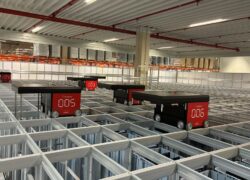
The system uses seven autonomous robots that retrieve storage containers from a central cube structure and transport them directly to picking stations used by employees. The automated process reduces walking distances within the warehouse and is intended to improve ergonomic working conditions for staff.

Around 23,000 containers are currently integrated into the system and are used in daily order fulfilment. toom said the automation shortens lead times and provides greater operational flexibility during periods of higher order volumes.

Dominique Rotondi, Managing Director for Purchasing and Logistics at toom Baumarkt, said the implementation process proceeded according to plan and without affecting ongoing business operations.

The project involved coordination between logistics, IT and technical teams, as well as external partners. Employees underwent training and testing phases before the system was brought into full operation.

According to David Reinke, Project Manager and Head of Supply Chain Management at toom Baumarkt, the system is expected to support future scalability while improving delivery reliability and the customer experience.

The Rodgau facility is located near the company’s warehouse in Dietzenbach to support product availability and delivery efficiency. The site handles B2C orders from the company’s online platform and covers approximately 30,000 square metres.

toom stated that the automation project forms part of broader efforts to modernise logistics operations and improve fulfilment processes for online customers.

Green Courtyards Can Reduce Summer Temperatures in Dense Urban Areas, Study Finds

Green inner courtyards within residential developments can significantly reduce temperatures and improve environmental conditions during the summer months, according to measurements commissioned by developer Corwin and carried out by researchers from the Technical University of Košice.

The findings were presented as the company prepares to launch its first large-scale residential project in Prague, Dvory Vysočany.

Measurements conducted in Bratislava during June compared conditions at a busy urban intersection with those inside the courtyard of the nearby Blumental residential project. According to the study, temperatures inside the courtyard reached 26.5°C, compared with more than 31°C at the nearby intersection, representing a difference of almost five degrees within the same city centre area.

Researchers also reported lower levels of noise and airborne dust particles within the courtyard environment. Noise levels were measured at around 30% lower than at surrounding streets, while concentrations of fine dust particles were reduced by more than 10%.

The company said the results reflect the impact of urban design strategies that prioritise green space, shaded public areas and reduced surface traffic. Corwin stated that its approach has been developed in cooperation with urban planners Jan Gehl and David Sim.

According to Jakub Dobrý, Corwin’s country manager for the Czech Republic, the quality of public space between buildings plays a significant role in how residents experience urban environments during periods of high temperatures.

The Dvory Vysočany project in Prague will incorporate underground parking, landscaped courtyards, rain gardens and green roofs across all buildings. The developer said these measures are intended to improve water retention, reduce heat accumulation and support biodiversity.

Corwin also referred to thermal measurements carried out by specialist company Terradron at its Guthaus residential project in Bratislava. According to the company, a green roof on one section of the development recorded lower surface temperatures than neighbouring conventional roofs during measurements taken in July 2024.

The developer added that the use of mature vegetation, rainwater retention systems and insulated building materials can contribute to improved comfort levels for residents, particularly during increasingly frequent summer heatwaves in Central European cities.

front page info
LATEST NEWS