Sunday, 18 October 2026
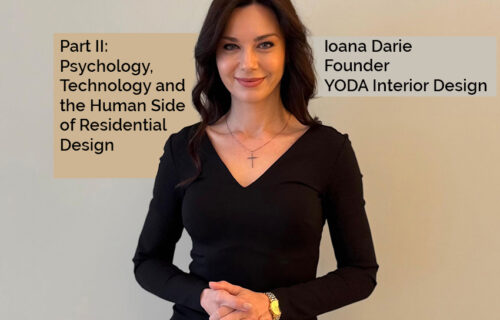
For Ioana Darie, Founder of YODA Interior Design, interior design is not simply about furniture, materials or aesthetics. It is a process deeply connected to psychology, functionality and understanding how people actually live inside their homes.
In the second part of a CIJ EUROPE Q&A, Ioana Darie discussed the emotional dynamics behind residential design, the growing role of technology and AI in homes, and why trust between designer and client has become increasingly important in Romania’s evolving residential market.
According to Ioana successful residential projects begin with understanding the behavioural patterns and lifestyles of the occupants rather than simply selecting finishes or following trends.
“The brief of every apartment is actually the Bible,” she said.
YODA Interior Design’s client process includes extensive interviews that often last several hours and cover subjects far beyond architecture or interiors. Clients are asked about hobbies, travel habits, routines, work styles and even how they relax at home.
“It’s almost like a psychological meeting,” Ioana explained.
These conversations help the company define how spaces should function emotionally as well as practically. A client who travels frequently may be more open to unconventional concepts, while families with children often require stronger emphasis on storage, circulation and long-term durability.
“You have to figure out the psychological way of their lives,” she said.
Ioana believes many clients initially struggle to articulate exactly what they want. Some arrive with strong references or clearly defined styles such as Wabi Sabi, while others require guidance to discover their own preferences through visual studies and discussion.
The company therefore develops concepts gradually through renderings, material selections and staged presentations designed to help clients understand how ideas will translate into real spaces.
“We make the client realise what they want and need,” Ioana said.
Although much of YODA Interior Design’s business focuses on investors and rental apartments, Ioana acknowledged that emotionally driven end-user projects are often the most complex. Renovating a permanent home can create pressure not only financially, but also within family relationships.
“To renovate a house and go through this kind of budget is not easy,” she said. “It is pressure for everybody.”
The discussion also touched on the role of Feng Shui and spatial flow in residential design. While Ioana does not position herself as a Feng Shui specialist, she said many of its principles overlap with traditional architectural rules concerning functionality, energy flow and the relationship between people and space.
“There are certain rules also in Feng Shui and I found them also in architecture manuals,” she said.
She emphasised the importance of avoiding visual and spatial chaos inside homes, creating clear movement paths and designing efficient storage systems that keep interiors organised and uncluttered.
“If an object does not answer the question why it is there, then it has no need,” she said.
Storage planning, in particular, has become increasingly important in Romania’s smaller urban apartments, where limited space requires careful organisation and multifunctional solutions.
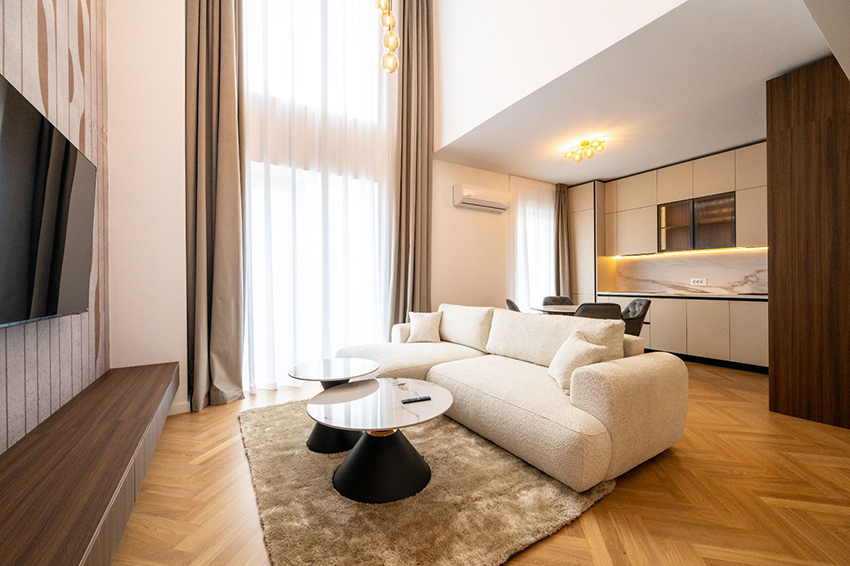
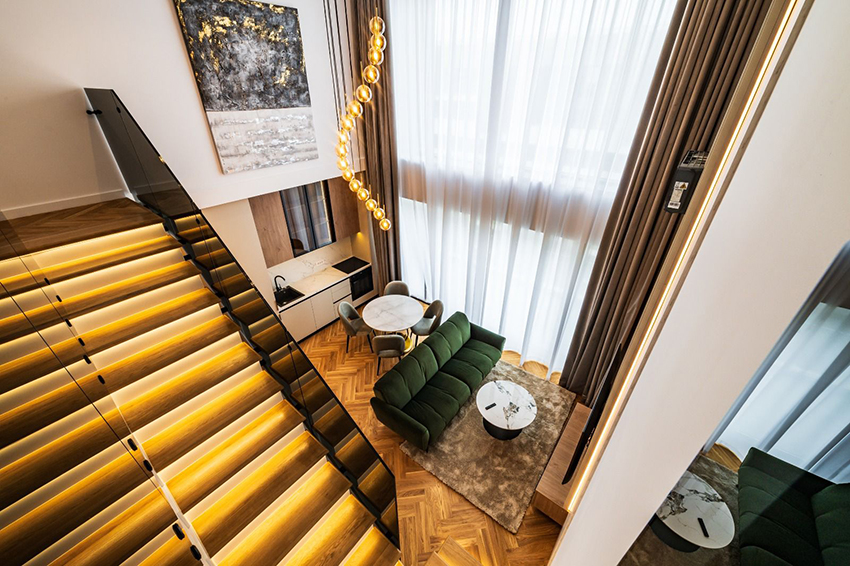
Ioana also spoke extensively about changing stylistic preferences in Romania’s residential sector. According to her, most current projects are firmly modern in style, often incorporating minimalist or contemporary influences adapted to fast-paced urban lifestyles.
“Minimalistic doesn’t mean it’s cheap,” she said. “Minimalistic is even more costly because everything is underneath and there’s a lot of technology there.”
She argued that highly classical interiors rarely perform well in modern glass residential towers, particularly in the rental market where tenants expect cleaner contemporary environments. More traditional styles remain appropriate mainly in historic houses located in areas such as Cotroceni or Dorobanți, where the architectural character supports those aesthetics.
One increasingly important factor shaping residential interiors is technology integration. Ioana Darie xpects smart-home systems and AI-assisted management tools to become standard over the next five years, particularly among younger generations.
She described appliances already capable of generating shopping lists, recipe suggestions and energy management systems integrated through centralised applications.
“I think it will be much more easy for their lives,” she said.
At the same time, she remains cautious about allowing technology to fully replace human interaction inside the design process or construction sector.
“I prefer human interaction,” Ioana said, noting that she continues to work with many of the same contractors and collaborators she used long before officially launching YODA Interior Design in 2019.
Ioana’s own route into the industry came indirectly through economics, law studies, consultancy work and personal real estate projects while raising her two sons. She said the company initially developed organically through recommendations and repeat clients rather than a formal business plan.
“It was something like a rollercoaster,” she said.
Today, the company is exploring ways to combine AI tools with scalable online services that could allow clients from across Romania to submit floor plans digitally and receive customised furnishing concepts remotely.
Still, Ioana believes trust will remain central to the business regardless of how much technology evolves.
“I never exceed the budget. I always deliver what I promise,” she said.
That trust, she added, has become increasingly important as clients seek guidance through a residential market that is becoming more financially selective, emotionally demanding and design-conscious.
“They want to be guided,” Ioana concluded. “They want to have a trust relation with their guidance.”
© 2026 cij.world