WING separates Chairman and CEO roles, appoints Katalin Walter as CEO for Hungary

WING Zrt. will reorganise its management structure from 1 April 2026, separating the roles of Chairman and CEO.

Under the new structure, Noah Steinberg will continue as Chairman, focusing on strategic direction, while Katalin Walter will take over as CEO, responsible for the company’s day-to-day operations in Hungary.

Steinberg, who previously held both roles, will also remain Chairman and CEO of WINGHOLDING, overseeing the group’s wider domestic and international activities.

The company said the change reflects the increasing scale and complexity of its operations. WING has expanded beyond Hungary in recent years and is active in Poland and Germany alongside its domestic market.

“Over the past twenty-five years, our group has evolved from a domestic real estate development company into a regional real estate group with an active development and investment presence in Hungary, Germany, and Poland. Our growing international presence as well as the increasing complexity of our operations justify our diverse activities on the Hungarian real estate market being placed under the leadership of a dedicated executive,” said Steinberg.

He added: “Katalin’s professional experience and leadership track record provide a solid foundation for the further development of WING Hungary, building on our values and on-going success.”

Walter will oversee operations in Hungary, with a mandate to develop the company’s activities in its home market.

“WING has built exceptionally solid foundations in Hungary and across the region over the past decades. As CEO, my goal is to build on these to further carry on and strengthen this success story, making our organisation more efficient and more agile while adapting to the changing market environment and enhancing our competitiveness,” she said.

FETTERS appoints Jana Schumacher as Head of Human Resources

FETTERS Group has appointed Jana Schumacher as Head of Human Resources as the company expands its team.

Based in Prague, Schumacher will be responsible for recruitment, managing hiring processes and developing the company’s HR agenda. Her role will focus on supporting staffing growth, particularly in project management functions.

FETTERS is involved in a range of public and private sector projects, including project management for the Vltava Philharmonic in Prague and the Horácká Multifunctional Arena. The company is also delivering its own residential developments, including Panorama Braník and Viladomy Voborského.

“I am joining FETTERS at a time when the company is growing dynamically. I am delighted to be part of this development and to select new team members. My goal is to establish an effective recruitment process and, over the long term, build a strong team of high-quality people who will be the driving force behind successful projects,” said Schumacher.

She has more than 20 years of experience in human resources, with a focus on recruitment, onboarding, employee development and internal processes. Her previous roles include positions at RN Solutions and Goodyear Dunlop Tires Czech, where she worked as an HR Business Partner and HR Specialist covering the Czech Republic, Slovakia and Hungary.

Schumacher holds a master’s degree in economics from the University of Pardubice.

Potential return of Syrian refugees raises labour market concerns in Germany

Comments by Friedrich Merz on the possible return of Syrian refugees have prompted discussion about the potential impact on Germany’s labour market, particularly in sectors already facing staffing shortages.

According to recent reporting, Merz suggested that a significant share of Syrian refugees could return to their home country over the coming years. The remarks were presented as an expectation rather than a confirmed government policy, and details regarding implementation remain unclear.

Data from institutions including DIW Berlin and Germany’s Federal Employment Agency indicate that Syrian nationals represent a substantial part of the foreign workforce. Approximately 240,000 Syrians are currently employed in jobs subject to social insurance contributions, with many working in sectors such as logistics, manufacturing and healthcare.

Economists note that these sectors are already experiencing labour shortages. Research suggests that migrant workers, including Syrians, play a role in maintaining staffing levels, particularly in operational and support functions.

Labour market analysts warn that a large-scale reduction in this workforce could have broader economic implications. A decline in available labour could affect output in certain industries and contribute to slower economic growth.

The issue is occurring against the backdrop of demographic change. Germany’s workforce is expected to contract as older cohorts retire, increasing pressure on employers to secure replacement labour. In this context, migration continues to be viewed by researchers as an important factor in stabilising labour supply.

While no formal policy on large-scale returns has been confirmed, the discussion highlights the sensitivity of Germany’s labour market to changes in migration patterns and workforce participation.

Source: DIW Berlin

Passerinvest increases bond issue to CZK 2.5 billion

Passerinvest Group has completed a public bond issuance through Passerinvest Finance, increasing the total volume from the initially planned CZK 1.5 billion to CZK 2.5 billion.

The bonds carry a fixed interest rate of 6.5% per year and mature in 2031. Proceeds will be used to finance new developments, support ongoing projects in Prague, and provide intra-group financing. Key areas of investment include the Brumlovka and Nové Roztyly locations.

Financial institutions involved in the transaction included Česká spořitelna, Komerční banka, Raiffeisenbank and UniCredit Bank Czech Republic and Slovakia. Legal advisory services were provided by Dentons.

“As part of the new issue, holders of older bonds maturing in 2028 were offered an exchange for new bonds. We greatly appreciate all existing investors who took advantage of the exchange offer to a significant extent, thereby confirming their satisfaction with their investment in our group and their trust. New investors then showed great interest, and thanks to this, we ultimately issued the bonds at the maximum possible volume. We will use the newly raised funds, in accordance with the prospectus, for our planned projects and also for further improvements to existing buildings,” said Jiří Junger.

“We consider the outcome of the issue to be excellent, even given the volatility of interest rates resulting from tensions in the Middle East. We greatly appreciate investors’ long-term confidence in our group and its projects and thank them for it. We would also like to thank UniCredit Bank, Česká Spořitelna, Komerční banka, and Raiffeisenbank for their professional preparation and distribution of the issue,” added Ondřej Plocek.

By the end of 2029, the group plans to invest around CZK 21 billion in the Brumlovka and Roztyly areas. The programme includes office and residential construction, as well as retail and public space improvements such as parks and leisure areas in Prague 4.

Futureal developments receive top BREEAM In-Use ratings in Hungary

Three developments by Futureal Group have achieved BREEAM Outstanding ratings under the In-Use Commercial scheme, placing them among the highest-rated operational buildings in Hungary.

The projects include Etele Plaza, all phases of the Budapest ONE office complex, and the Corvin Innovation Campus. The latest certification for Corvin Innovation Campus marks the third project by the developer to reach this level based on operational performance.

BREEAM assesses buildings on criteria including energy use, accessibility and operational management. In the In-Use category, the evaluation focuses on how buildings perform in day-to-day operation rather than at the design stage.

Corvin Innovation Campus is located in Budapest’s Józsefváros district, as part of the Corvin Promenade area. The first phase of the office scheme provides around 16,650 sqm of space and has an A+ energy rating. The building is situated close to a metro station, supporting access by public transport.

The project includes building management systems designed to optimise energy use, as well as heating and cooling solutions aimed at reducing emissions. Electric vehicle charging points are installed in part of the parking area, and a rooftop photovoltaic system contributes to the building’s energy demand.

Indoor environmental systems include air filtration and ventilation technologies, while the design incorporates outdoor and shared spaces. The building also emphasises accessibility and the use of natural daylight.

“The latest BREEAM In-Use Outstanding certification clearly validates the consistent sustainability approach underpinning Futureal’s developments. Following Etele Plaza and Budapest ONE in Újbuda, this project completes a kind of ‘hat-trick’, with three of our landmark buildings achieving the highest sustainability rating based on actual operation,” said Gábor Radványi.

Corvin Innovation Campus has also received WELL Core Platinum certification, which focuses on occupant wellbeing, including air quality, light and comfort.

The nine-storey office building includes a public space at its entrance, the Irén Psota Memorial Park, integrated into the surrounding urban area.

7R completes PLN 52 million Series D bond issue

7R has completed the issuance of Series D bonds with a total nominal value of PLN 52 million, the company announced on 31 March 2026.

The three-year bonds carry interest based on WIBOR 6M plus a margin of 4.25%. The offering was taken up by institutional investors alongside selected high-net-worth individuals.

According to the company, proceeds from the issuance will be allocated to the further development of its warehouse portfolio.

The margin on the Series D bonds was set at 4.25%, compared with 4.80% in previous PLN-denominated issuances and 5.5% in a prior EUR-denominated transaction. The company said this reflects improved financing terms and a change in its perceived credit profile.

“The ability to secure financing on increasingly favourable terms is a direct result of the consistent execution of our financial strategy and the strengthening of the 7R Group’s credit profile,” said Tomasz Mika, Board Member and CFO of 7R. “The lower cost of debt improves the efficiency of capital allocation and provides us with greater flexibility to continue scaling the business. The Series D bond issuance strengthens 7R’s funding structure and supports the long-term development of our warehouse portfolio in Poland, the Czech Republic and Germany, where we plan to build an on-balance-sheet portfolio of 800,000 sqm over the next several years.”

The issuance comes amid continued activity in the logistics sector. Total demand for warehouse space reached 6.8 million sqm last year, according to market data cited by the company, making it the second-highest annual result after 2021.

“We would like to thank our investors for the confidence they have placed in 7R in a demanding and volatile market environment. The successful issuance and the meaningful margin compression confirm growing investor interest in our credit profile and the quality of our assets,” said Piotr Pikiewicz, Head of Debt & Treasury at 7R. “This is a clear signal that the capital market views 7R’s financial stability and the long-term potential of our business positively.”

CTP secures JPY and USD syndicated sustainability-linked loan

CTP has signed a dual tranche unsecured syndicated sustainability-linked loan totalling JP¥ 22.5 billion (approximately €122.5 million) and USD 180 million. The company stated that the proceeds will be used to support its development pipeline.

The facility has a five-year maturity and consists of two tranches: a yen-denominated tranche priced at TONA plus 115 basis points and a US dollar tranche priced at SOFR plus 135 basis points.

According to the company, the loan follows its debut Samurai financing in early 2025 and forms part of its efforts to diversify funding sources and increase the share of unsecured financing. The syndication was carried out across several Asian financial centres.

A total of 15 banks participated in the transaction. SMBC Group acted as sole coordinator, sustainability coordinator, bookrunner and mandated lead arranger.

The company stated that the syndication attracted interest from both existing and new lenders.

Energy market disruption raises concerns over delayed impact on Europe

The disruption to global oil markets following the conflict involving Iran is expected to have wider and potentially delayed consequences, with analysts indicating that the full impact has not yet been reflected in European markets.

Industry participants cited by Bloomberg, including traders, logistics operators and energy executives, suggest that supply constraints linked to the Middle East are still unfolding. The situation centres on reduced flows through the Strait of Hormuz, a key corridor for global energy trade that typically handles a significant share of oil and liquefied natural gas shipments.

While some Asian markets are already experiencing tighter supply conditions, Europe has so far seen more limited effects. However, analysts expect this to change if disruptions persist.

Patrick Pouyanné, CEO of TotalEnergies, said: “It is clear to me that if this crisis lasts more than three or four months, it will become a systemic problem for the whole world. We can’t have 20 percent of the oil that is exported globally, trapped in the Gulf, and 20 percent of the LNG capacity blocked without any consequences.”

The International Energy Agency has described the current situation as a major shock to supply, with oil prices rising sharply in recent weeks. Benchmark crude prices have increased significantly since late February, reflecting both physical constraints and heightened geopolitical risk.

Disruptions to tanker movements, higher insurance costs and uncertainty around transit routes have contributed to reduced shipments. In some cases, vessels have delayed or avoided passage through the Strait of Hormuz, further tightening supply. Producers have also begun adjusting output in response to logistical constraints.

If the situation continues, analysts suggest that demand may begin to adjust through higher prices, potentially reducing consumption of fuel-intensive activities such as transport and aviation. Some countries in Asia have already taken steps to build reserves or manage consumption more closely.

Estimates indicate that supply disruptions could amount to several million barrels per day, although the exact scale remains uncertain. Governments and companies have sought to mitigate the impact through the release of strategic reserves and adjustments to supply arrangements, but these measures are seen as temporary.

The liquefied natural gas market is also under pressure, with limited alternative transport routes and constrained supply options. This has raised concerns about broader economic effects, including increased inflation and slower growth.

Analysts note that sustained high energy prices could affect a wide range of industries, given the role of oil and gas in manufacturing, chemicals and agriculture. This could translate into higher costs for goods and services beyond the energy sector.

The overall outlook will depend on how long the disruption lasts and whether alternative supply routes or sources can offset the shortfall. If constraints persist, the adjustment is likely to involve both higher prices and reduced consumption, with broader implications for global economic activity.

Source: CTK

Catella Investment Management acquires residential asset in Vienna-Floridsdorf

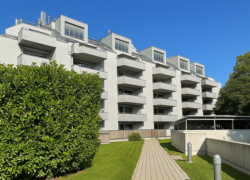
Catella Investment Management has acquired a residential property in the Floridsdorf district of Vienna on behalf of a separate account. The building comprises 127 rental apartments with a total lettable area of 7,407 sqm and is fully leased.

The scheme, completed in 2016, includes one- to four-room units with an average size of around 58 sqm. Apartments are fitted with standard residential specifications including kitchens, triple-glazed windows and outdoor space in the form of balconies, loggias or terraces. Ground-floor units include private garden areas.

The property is arranged around two internal courtyards and provides 66 car parking spaces, three motorcycle spaces and 266 bicycle spaces. Additional facilities include storage areas and a shared laundry room.

Michael Keune, Managing Director of Catella Investment Management, said: “Vienna has been one of Europe’s fastest-growing cities for years and is characterised by high economic stability and rising demand for housing. The Viennese residential market thus offers institutional investors attractive and stable long-term investment opportunities. With this acquisition in Floridsdorf, we are expanding our presence in a sub-market that benefits from positive demographic trends and good infrastructure.”

Stephanie Vermeersch, Head of Austria at Catella Investment Management, added: “Floridsdorf is one of Vienna’s districts with stable demographic growth and sustained high demand for modern housing. With its contemporary living concept, private outdoor spaces and high quality of life thanks to its quiet location on a quiet, low-traffic side street, the property aligns well with current market conditions and represents a solid long-term addition to our client’s portfolio.”

The asset is located in Vienna’s 21st district, Floridsdorf, with access to public transport including the Jedlersdorf S-Bahn station and nearby bus and tram routes. The surrounding area includes local retail, services and green spaces.

Catella Investment Management has operated an office in Vienna since 2022 and manages more than €500 million in assets in the city, with approximately €600 million across Austria and around 20 properties.

Higher UOKiK penalties contribute to increased interest in antitrust audits

Rising penalties for breaches of competition and consumer protection law in Poland are contributing to increased interest in antitrust compliance audits, according to legal practitioners. Both companies and managers face financial exposure, which is influencing how compliance is addressed at management level.

Law firm GESSEL reports a rise in client inquiries related to competition law audits, as businesses review risks linked to distribution models, tender participation and contacts with competitors. The trend reflects ongoing enforcement activity by UOKiK.

Under Polish and EU competition law, companies may face fines of up to 10 percent of annual turnover for anti-competitive agreements or abuse of a dominant position. Managers can also be held personally liable, with penalties of up to PLN 2 million for intentional infringements.

Breaches of consumer protection rules may also result in financial penalties. In such cases, audits typically include pricing policies, promotional practices and communication with customers. UOKiK uses data analysis tools to monitor market practices.

According to publicly available UOKiK data, penalties imposed on companies for competition-restricting practices exceeded PLN 650 million in 2024, while fines on managers were above PLN 4 million. Preliminary figures for 2025 indicate that total penalties related to competition and consumer protection cases reached approximately PLN 1.15 billion, including more than PLN 580 million linked to competition infringements.

“From the perspective of the board, an audit can be a kind of ‘insurance policy’. It allows you to identify risks before they become the subject of proceedings of an antitrust authority. In practice, this means real protection for both the company and the managers,” said Natalia Leśna, Senior Associate at GESSEL.

Recent enforcement cases include fines exceeding PLN 400 million in matters involving price-setting and market allocation in distribution networks, including the automotive sector. Similar findings have been made in cases involving agricultural equipment distribution. In the area of consumer protection, penalties exceeding PLN 100 million have been imposed for misleading commercial practices.

Legal advisors note that compliance activities in some companies are limited to contract reviews. A broader antitrust audit may also include an assessment of business practices, internal processes and market behaviour.

“The classic review of contracts is based on the verification of documents and does not always fully end with a full picture of the risks and possible areas that may generate risks related to the area of interest of the antitrust authority. Antitrust audit is more comprehensive – we analyze not only the provisions in contracts, but also the sales procedures, advertising message, distribution models or the practice of participating in tenders. We analyze the risks associated with the use of exclusivity clauses or the use of contractual advantage. With extensive knowledge of ‘from both sides of the desk’ we can detect in advance areas that can result in violation of the regulations. It is always cheaper and more effective to prevent this type of tort than to react later to the interventional action of the body,” Leśna added.

Common risk areas identified in audits include resale price maintenance, tender procedures and contacts with competitors, including the exchange of sensitive information. Authorities in Europe are also examining labour market practices such as non-solicitation agreements between employers.

Consumer protection risks are also being reviewed, particularly in digital sales channels. This includes how prices, promotions and subscription models are presented to customers.

A structured audit may also be relevant during proceedings. Under UOKiK’s leniency programme, companies involved in anti-competitive conduct may receive reduced penalties in exchange for cooperation.

“If the entrepreneur can show that he has implemented real compliance mechanisms and reacted to signals about violations, it may be important in the course of the proceedings,” said Monika Bychowska, Senior Associate at GESSEL. “Antitrust authorities analyze the degree of diligence of the management board and preventive actions taken, so it is worth taking care of such actions before the control or other actions of the regulator become a fact.”

Audits are also used in investment processes, where compliance with competition law is one of the elements considered in company assessments.

“For investors and supervisory boards, antitrust risk is one of the key elements of the company’s assessment today. Violations of competition law can mean not only multi-million dollar penalties, but also civil disputes, loss of reputation and a decrease in the value of the company,” said Karolina Olszewska, Senior Associate at GESSEL.

As enforcement activity continues, antitrust audits are increasingly used as part of corporate risk management.


front page info
LATEST NEWS