CIJ EUROPE Executive Roundtable: Real Estate Leaders Debate the Future of Offices, Residential Value and Market Resilience

As global economic uncertainty, technological disruption and changing occupier behaviour reshape the real estate landscape, senior executives from Romania’s leading developers, consultants and industry professionals shared their perspectives with CIJ EUROPE on the defining challenges facing both the office and residential sectors.

Their responses reveal an industry that is moving beyond simple market cycles toward a far more selective environment, where quality, adaptability and long-term value increasingly determine success.

The Office Market: A Story of Selection, Not Decline

One of the central questions discussed by CIJ EUROPE was whether the industry is honestly underwriting future office demand, particularly as artificial intelligence, hybrid working and workforce optimisation continue to reshape occupier behaviour.

Adinel Tudor, CEO, EVO Properties

Adinel Tudor believes the market should stop treating office demand as a single indicator.

According to Tudor, those still forecasting office absorption using pre-2020 assumptions are ignoring structural changes that have permanently altered workplace requirements. Employee density has increased, hybrid work has become part of normal business operations and artificial intelligence is expected to reduce some traditional office employment over the coming years.

However, he argues that Bucharest demonstrates why simplistic vacancy statistics can be misleading. While the city reports approximately 12 percent overall vacancy, prime CBD assets operate with vacancy levels close to 3 percent, whereas weaker buildings can exceed 30 percent.

“The demand isn’t disappearing,” Tudor explains. “It’s sorting.”

Rather than fearing declining demand, developers should focus on whether their specific buildings remain competitive.

This philosophy has driven EVO Properties’ strategy of investing heavily in repositioning its London & Oslo Office Buildings into highly flexible, multifunctional workplaces featuring renewable energy systems, integrated fitness facilities and mobility-on-demand services rather than relying on traditional leasing assumptions.

Tudor also believes AI creates both opportunities and risks. While automation may reduce some back-office functions, it simultaneously increases the value of collaboration, company culture and human interaction—qualities that continue to favour well-designed offices.

His conclusion is straightforward: the question is no longer whether the office market survives, but which individual buildings will remain relevant.

Office Rents: Looking Beyond Headline Figures

CIJ EUROPE also asked whether office rents are genuinely increasing or whether landlords are quietly supporting occupancy through generous incentives.

Tudor argues that headline rents often conceal the true economics of leasing.

“The headline rent is what you tell the market; the effective rent is what you tell your banker,” he says.

He believes premium buildings in successful sub-markets increasingly require fewer incentives due to limited new supply, while struggling secondary assets continue offering significant concessions simply to maintain occupancy.

In his view, there are effectively two separate office markets operating simultaneously.

Valentin Neagu, Managing Director, Crosspoint Real Estate

Valentin Neagu believes the market risks underestimating the cumulative effect of several structural pressures rather than focusing on any single challenge.

Although financing remains selective and construction costs unpredictable, he believes the larger issue concerns whether today’s developments will remain relevant to tomorrow’s occupiers.

Prime offices continue attracting demand, but occupiers have become considerably more disciplined, evaluating utilisation rates, flexibility, ESG performance and collaboration space instead of simply calculating desks per employee.

Neagu believes developers can no longer rely on assumptions that prevailed before the pandemic.

“The greatest risk lies with secondary stock,” he explains, suggesting that expecting weaker buildings to return to historical occupancy levels may prove unrealistic.

When asked what currently delays office development most, Neagu identifies uncertainty surrounding long-term occupier demand as the critical issue because it directly influences financing, pricing and future investment liquidity.

Residential Real Estate: Marketing Versus Lasting Value

The premium residential sector increasingly promotes wellness, community and lifestyle, but CIJ EUROPE asked whether these concepts genuinely create long-term value or simply represent more sophisticated marketing.

Răzvan Brașla, CEO, Cloud9

Răzvan Brașla believes buyers have become far more sophisticated and increasingly distinguish between branding and genuine functionality.

While amenities such as gyms, cafés and landscaped spaces receive considerable marketing attention, he argues they only become meaningful when integrated into a broader ecosystem that genuinely improves daily life.

For Cloud9 Evolution, this means combining housing with education, retail, services and accessible public spaces that reduce commuting and simplify residents’ routines.

Brașla says buyers increasingly evaluate projects based on how well they will function five or ten years after delivery rather than how impressive they appear during launch.

He believes Romania’s premium market is maturing, shifting away from luxury defined primarily by finishes and prestigious addresses toward integrated communities supported by strong operational quality and trusted developers.

Ultimately, marketing may generate initial interest, but resident satisfaction determines whether projects retain value over time.

Vlad Musteata, CEO, North Bucharest Investments

Vlad Musteata shares a similar perspective, arguing that marketing can only highlight value—it cannot create it.

For him, long-term value remains anchored in location, infrastructure, construction quality and a project’s ability to remain desirable over the next decade or more.

Concepts such as wellness and community have become standard buyer expectations rather than competitive differentiators.

They only become meaningful when embedded into urban planning through green spaces, mixed-use facilities and services that residents genuinely use.

Musteata believes the ultimate test comes after completion.

“If residents stay, demand remains strong and the asset continues appreciating, then it is value—not marketing.”

He adds that the market ultimately corrects itself, rewarding projects built on substance while exposing developments that rely primarily on promotional messaging.

Andreea-Maria Dumitru, Chief Marketing Officer, Hagag

For Andreea-Maria Dumitru, the distinction between marketing and genuine value becomes obvious only after residents move into a project.

Marketing can successfully communicate a vision, she says, but only everyday living validates that promise.

She believes premium buyers increasingly prioritise invisible qualities over visible luxury. Operational excellence, efficient layouts, energy performance, professional property management and seamless technology now matter more than superficial displays of luxury.

Wellness features, community spaces and landscaping only create lasting value when they genuinely improve comfort, privacy and quality of life over many years.

According to Dumitru, emotional branding remains important in luxury residential development, but long-term credibility depends entirely on execution.

Housing Demand: Structural Support Despite Short-Term Headwinds

CIJ EUROPE also explored whether recent market uncertainty signals a lasting slowdown in Romania’s residential sector.

Bogdan Letcă, CEO, Bog’Art Residential

Bogdan Letcă cautions against drawing long-term conclusions based solely on recent market conditions.

Although inflation, higher financing costs, VAT increases and political uncertainty have temporarily weakened buyer confidence, he believes these challenges should be viewed within the context of a decade of steadily improving housing affordability.

He also points to significant growth in household savings through bank deposits and government bonds, indicating that many potential buyers remain financially capable despite delaying purchasing decisions.

Meanwhile, the continued slowdown in planning approvals and building permits—particularly across Bucharest and Ilfov—is likely to reduce future housing supply.

Combined with consistent life-stage demand driven by marriage, family formation and changing lifestyles, Letcă expects the market to remain fundamentally supported.

He also observes increasing residential migration toward Bucharest’s outer districts, where affordability remains stronger.

Given Bucharest’s economic performance and leading GDP per capita among European capitals, he views the current market as experiencing a temporary adjustment rather than entering structural decline.

Simona Guțiu, Equity Notarial Office

Simona Guțiu also believes Romanian homeownership demand remains fundamentally resilient despite slowing market momentum.

While the pace of new ownership may moderate, she argues that Romanians continue viewing property ownership as one of the safest forms of financial security.

Historical experience, combined with current political, financial and geopolitical uncertainty, reinforces the desire for permanent homeownership.

She also notes that Bucharest remains relatively affordable compared with many other European capitals.

Looking ahead, Guțiu highlights proposed legislation introducing an 11 percent reduced VAT rate for eligible first-time buyers under the age of 35 purchasing qualifying new homes, subject to value limits, ownership conditions and minimum holding periods.

If implemented, such measures could further support entry-level residential demand.

A More Selective Market Emerges

Across both office and residential sectors, one theme consistently emerged throughout the CIJ EUROPE discussion: real estate is becoming significantly more selective.

Whether discussing office leasing, residential communities or investment strategy, the panel agreed that success increasingly depends on long-term quality rather than short-term market momentum.

For offices, the future belongs to adaptable, high-performing buildings capable of supporting collaboration, sustainability and changing workplace patterns.

For residential development, lasting value will increasingly be measured not by marketing campaigns or amenity lists, but by the quality of everyday living, operational excellence and sustained demand years after completion.

In both sectors, the market appears to be moving away from broad assumptions toward far greater differentiation, rewarding projects that genuinely deliver long-term value while exposing those unable to evolve with changing occupier and buyer expectations.

© CIJ EUROPE

Dorin Bob to Develop Mixed Urban Complex in Cluj-Napoca

Cluj-Napoca Estate SRL, a company in the Studium Green group, owned by entrepreneur Dorin Bob, proposes the development of a large urban development project at the entrance to Cluj-Napoca, an investment that will transform approximately 8 hectares into a mixed urban complex.


“Cluj has reached a new stage of development and needs well-founded urban projects and correlated with the socio-economic-demographic trends of the future, taking into account global trends. I believe that the future of the city means coherent developments that respect the legal framework, the property and the role of each institution involved.”, declared Dorin Bob.


The project proposes the construction of a mixed urban complex, which will include commercial spaces, a hotel and aparthotel, office buildings, services, medical functions, recreational areas and spaces dedicated to spending free time.


In addition to road infrastructure, bicycle paths, public spaces and urban developments, the project has as its defining element a mixed-use tower building, designed as an architectural landmark for one of the main entrance gates to the city.


The project is in an advanced stage of the approval process, after completing the preliminary stages and obtaining the necessary approvals and studies.


Pavăl Brothers to Develop Massive Real Estate Project in Cluj

Dragoș and Adrian Pavăl, the founders of the Dedeman retailer, are preparing the development of a major real estate project in Cluj-Napoca, on the former Cora platform, currently Carrefour. The initiative aims for the complete transformation of a strategic plot of land at the entrance to the municipality from Florești, for which the Pavăl brothers acquired the usage rights last year.


The proposed project plans for the creation of a large-scale mixed-use urban complex, structured around an “Entertainment Mall” concept. It will integrate commercial functions, recreation and entertainment zones, sports and cultural facilities, restaurants, as well as specific developments on the banks of the Someș River. In addition to the retail and leisure component, the new economic hub will include office buildings, hotels, medical and healthcare services, educational spaces, and public buildings.


A major landmark of the future complex is the proposal to build towers up to 160 meters high and 33 floors, intended primarily for use as an apart-hotel. If the documentation receives approval from the authorities, this development will redefine Cluj’s urban skyline at the entrance from Florești and Oradea, becoming one of the densest concentrations of tall buildings in Transylvania.

Crosspoint Brokers Rohde & Schwarz Topex Renewal and expansion at myhive IRIDE | nineteen

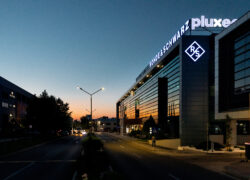
Rohde & Schwarz Topex is consolidating its presence on the Bucharest office market through a renewal and expansion transaction at myhive IRIDE | nineteen, owned by CPI Romania. Under the agreement brokered by real estate consultancy Crosspoint Real Estate, International Associate of Savills in Romania, the company has extended its lease for the existing 8,000 sqm and expanded its occupied space by a further 2,000 sqm.


Rohde & Schwarz Topex now occupies a total of 10,000 sqm within a single operational hub, integrating its offices alongside research, development and production activities.


“The fact that Rohde & Schwarz Topex chose to have me represent them in this complex renewal and expansion process is an important validation of the work done and the trust placed in me throughout this transaction”, said Simona Urse, Associate Director Office Agency at Crosspoint. “Reaching a total footprint of 10,000 sqm is the largest space managed by our Office department for a single account. This project reaffirms the value of a team in which tenant, landlord and advisor work together with confidence and a long-term, solutions-oriented approach”, she added.


“For CPI Romania, transactions of this kind are relevant not only for their scale, but also for the relationship they reflect with our tenants. A long-term partnership built around flexibility and a genuine understanding of tenant needs demonstrates the quality of the spaces we manage and their capacity to support companies as they grow. We are pleased that Rohde & Schwarz Topex continues to expand its operations at myhive IRIDE | nineteen and that we can contribute to creating an environment that meets complex operational requirements and long-term business objectives”, said Fulga Dinu, Country Manager of CPI Romania.


German Economic Outlook Improves Slightly, Recovery Remains Fragile

Germany’s economic outlook improved modestly in June, although a broad-based recovery has yet to emerge, according to the latest business cycle indicator from the German Institute for Economic Research (DIW Berlin).

The DIW Economic Barometer rose to 96.1 points in June from 94.8 points in May, moving closer to the neutral 100-point level that signals average economic growth.

DIW attributed the improvement partly to the easing of tensions between the United States and Iran, which has reduced immediate geopolitical risks. However, the institute cautioned that uncertainty remains elevated and continues to weigh on economic activity alongside persistent inflation, higher energy costs and disruptions to parts of global supply chains.

The institute also noted that fiscal stimulus introduced by the German government contributed to solid GDP growth during the first quarter of the year, helping to stabilise the economy despite a challenging external environment.

Geraldine Dany-Knedlik, Head of Forecasting at DIW Berlin, said the economy appears to be stabilising but has not yet entered a sustained recovery. She added that stronger momentum is expected only towards the end of the year, provided geopolitical tensions do not intensify again and government stimulus translates into higher investment.

Germany’s manufacturing sector continues to face the greatest challenges. Industrial production remains subdued, while new manufacturing orders fell by 3.8% month-on-month, primarily due to weaker foreign demand. At the same time, the manufacturing Purchasing Managers’ Index remains close to the threshold separating expansion from contraction.

DIW said exports continue to be affected by modest global economic growth, increasing protectionist policies and stronger international competition, particularly from China. Although public investment, including defence spending, may provide some support in the coming months, the institute does not expect a strong industrial recovery in the near term.

The services sector also remains subdued. Retail sales have been weak since the beginning of the year as consumer confidence continues to be constrained by higher fuel prices, a subdued labour market and broader economic uncertainty. While consumer sentiment has shown some signs of improvement, service-sector business surveys remain mixed.

Guido Baldi, economic expert at DIW Berlin, said Germany’s recovery will increasingly depend on domestic investment and structural reforms as geopolitical tensions and protectionist trade policies continue to limit external demand.

PORR Completes Breakthrough on Elbe Tunnel for SuedLink Project

PORR has completed the tunnel breakthrough on the ElbX river crossing, marking a key milestone in the construction of the SuedLink electricity transmission project in Germany.

The breakthrough took place on 22 June during work carried out for TenneT Germany and connects the federal states of Schleswig-Holstein and Lower Saxony through a tunnel approximately 5.2 kilometres long beneath the River Elbe.

The crossing forms one of the most important sections of the SuedLink high-voltage direct current (HVDC) transmission corridor, which will transport renewable electricity generated in northern Germany to the country’s southern regions.

According to PORR, the tunnel was excavated using a tunnel boring machine at depths of several dozen metres beneath the river under challenging geological and groundwater conditions.

The company said favourable ground conditions during the final 400 metres of excavation enabled higher advance rates than previously achieved on the project. The tunnel boring machine reached a maximum daily advance of 32.6 metres, while the highest weekly progress totalled 158.7 metres.

Karl-Heinz Strauss, CEO of PORR, said the breakthrough was achieved ahead of the original schedule despite the technical complexity of constructing a tunnel beneath the Elbe.

René Hallbauer, Project Manager for Tunnelling at PORR, said the milestone reflected detailed planning, modern tunnelling technology and close coordination between the project teams.

Following completion of the breakthrough, work will continue with the internal fit-out of the tunnel and installation of its technical systems.

The ElbX crossing extends approximately 5.2 kilometres between Wewelsfleth in Schleswig-Holstein and Wischhafen in Lower Saxony. Once completed, it will carry high-voltage direct current cables beneath the River Elbe as part of the SuedLink transmission system, supporting the delivery of wind-generated electricity from northern Germany to major demand centres in the south.

Colliers Prepares Valuation for €80.5 Million One United Properties Financing

Colliers Romania has prepared the valuation report supporting an €80.5 million financing secured by One United Properties from UniCredit Bank, one of the larger recent lending transactions in Romania’s residential sector.

The financing facility can be increased to as much as €140 million and will support the completion of the One High District and One Lake Club residential developments in Bucharest, while also funding the first stage of the company’s share buyback programme approved by shareholders in October 2025.

The financing involves One United Properties and its subsidiaries One High District and One Lake Club. UniCredit Bank is acting as mandated lead arranger, facility agent, security agent and account bank.

According to information submitted to the Bucharest Stock Exchange, part of the proceeds will be used to refinance intra-group loans linked to the share buyback programme, with the remaining funds allocated to the construction costs of the two residential projects.

Gabriel Blăniță, Director of Valuation & Advisory Services at Colliers Romania, said transactions of this scale illustrate the increasing importance of financing capacity, project quality, execution and liquidity in Romania’s residential development market. He added that valuation for financing purposes now requires detailed analysis of pricing, sales performance, construction costs, permitting, project phasing and market risks.

As of 31 March 2026, One United Properties had 4,154 residential units and approximately 45,500 sqm of commercial and office space under construction, representing a gross development value exceeding €1.6 billion. The company reported a loan-to-value ratio of 34% and net debt of RON 1.1 billion, equivalent to 17% of total assets of RON 6.5 billion.

Andra Hanu, Head of Financing at One United Properties, said the financing will support the completion and delivery of the two developments while allowing the company to maintain a diversified long-term funding strategy.

Colliers noted that Romania’s residential market continues to face constrained new housing supply due to permitting delays and higher development costs, while buyers have become more cautious amid inflation, reduced purchasing power and recent fiscal measures. As a result, banks are placing greater emphasis on project liquidity, sales performance, remaining construction costs and execution risks when assessing financing applications.

According to the consultancy, projects with strong sales momentum, sound financial structures and efficient execution are increasingly well positioned to secure both financing and buyer demand in the current market.

Panattoni Completes 66,000 sqm Industrial Park in Kielce

Panattoni has completed Panattoni Park Kielce, delivering the final phase of what the company describes as the first Class A industrial park in Poland’s Świętokrzyskie Voivodeship.

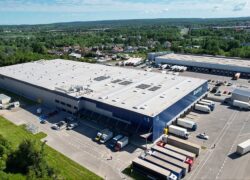
Located on the administrative border of Kielce, the development comprises four warehouse buildings with a combined gross leasable area of approximately 66,000 sqm. The park has been designed to accommodate logistics, manufacturing and e-commerce occupiers.

The final phase consisted of a warehouse of more than 13,000 sqm, which was handed over in May 2026. The building will be occupied by companies from the automotive sector and a logistics operator.

Dorota Jagodzińska-Sasson, Managing Director at Panattoni, said the completion of the project represents an important milestone for the regional industrial market. She noted that Kielce’s location between Warsaw and Kraków, together with access to key transport routes, is supporting its growing role as a logistics location.

The final building is targeting BREEAM certification and incorporates measures intended to reduce energy and water consumption as well as carbon dioxide emissions.

Panattoni Park Kielce is located around 6 km from the city centre near the Kielce Zachód interchange, providing access to the S7 expressway and national road DK74. Its location on the Warsaw–Kraków transport corridor offers connections to Poland’s main logistics routes.

According to Panattoni, the completion of the park further strengthens the Świętokrzyskie region’s industrial property market and supports its role in domestic distribution and Central and Eastern European supply chains.

Skanska Wins SEK 340 Million Infrastructure Contract in Stockholm’s Hagastaden

Skanska has signed several agreements with the City of Stockholm Development Office to carry out infrastructure works in the Hagastaden district under contracts worth approximately SEK 340 million.

The contracts will be included in the company’s order intake for the second quarter of 2026.

The agreements expand the existing design-phase contract by moving the project into the construction phase. The works include ground and civil engineering activities along Norra Stationsgatan and Uppsalavägen, covering the relocation and installation of utility networks, street construction and final landscaping.

The project also includes bridge refurbishment works, construction of new road infrastructure at the Haga Norra interchange, and foundation and concrete works for a new pedestrian and cycle bridge. Additional contracts covering the remaining parts of the development are expected to be awarded at a later stage.

During the design phase, the project focused on identifying construction methods and materials that improve efficiency while reducing environmental impact.

The development has been designed to meet BREEAM Infrastructure certification requirements. Skanska said all vehicles and construction machinery used on the project will operate using 100% fossil-free fuels.

Construction will begin immediately. Individual sections of the project are scheduled for completion between autumn 2026 and autumn 2028, while the overall Hagastaden infrastructure programme is expected to be completed in summer 2030.

German Senior Housing Market Remains Small Despite Growing Demographic Demand

Germany’s specialist senior housing market continues to represent only a small share of residential stock despite demographic trends pointing to increasing demand for age-appropriate housing, according to a webinar hosted by KINGSTONE Real Estate and ImmobilienResearch Vornholz.

The discussion concluded that while an ageing population will increase demand for accessible and care-related housing over the coming decades, most older people continue to remain in their existing homes rather than move into specialist accommodation.

According to Prof. Dr. Günter Vornholz, around 93–95% of senior citizens continue to live in conventional housing. High relocation costs, higher rents for new tenancies and additional service charges are among the main reasons many older households choose to remain in place.

The speakers noted that the senior housing market encompasses a wide range of products, including serviced apartments, assisted living, care homes, accessible housing and multigenerational living concepts, each serving different age groups and levels of care.

Demographic trends also vary by region. While Germany’s baby boomer generation is expected to support demand from younger retirees in the coming years, the strongest long-term growth is anticipated among the oldest age groups, where demand for care-related housing is projected to continue increasing until around 2050.

Regional differences are expected to influence future demand. Areas with ageing populations and the outflow of younger residents may require different housing solutions from larger cities, while medium-sized cities and commuter locations are also expected to see changing housing needs.

The webinar highlighted the importance of upgrading existing housing stock as new residential construction represents only a small proportion of total housing supply. Improvements such as step-free access, accessible bathrooms and adapted layouts could enable many older residents to remain in their homes for longer while reducing future care requirements.

For investors, the participants described senior housing as a long-term investment theme, although they noted that the sector remains fragmented and influenced by regulation, local purchasing power and the availability of care services.

Jean Klijnen, Managing Director of KINGSTONE Real Estate Benelux, said diversified investment strategies combining conventional residential assets with senior housing and care-related properties could provide stable long-term income while addressing the varying housing needs of an ageing population.

The webinar concluded that although specialist senior housing is expected to grow over time, conventional housing will continue to accommodate the majority of older people. Future demand is therefore expected to focus both on expanding specialist housing where appropriate and on adapting existing residential stock to meet the needs of an ageing society.

front page info
LATEST NEWS