Labour market indicator rises in January, pointing to potential increase in unemployment

The Labour Market Indicator (WRP), which signals possible future changes in unemployment, increased by 0.5 points in January compared with December 2025. Although the indicator remains below its most recent peak from July last year, recent movements suggest that the registered unemployment rate may rise slightly in the coming months.

In December 2025, the registered unemployment rate stood at 5.7%, up from 5.1% a year earlier. Part of this increase is linked to regulatory changes introduced in mid-2025 that altered the operation of public employment services and the rules for registering unemployed individuals at district labour offices. The impact of these changes is expected to diminish over the course of 2026. Beyond these regulatory effects, the labour market continues to face structural challenges, including limited labour supply, insufficient activation measures and persistently weak demand for workers, reflected in a low number of job vacancies.

The main factor currently pushing the WRP upward is the low number of job offers registered at district labour offices, which suggests upward pressure on unemployment. A secondary, smaller contribution comes from a rise in the number of unemployed people deregistering after finding work. Other components of the indicator show little evidence of improvement in labour market conditions.

One of the few positive signals comes from assessments of the overall economic situation by managers in the manufacturing sector. While negative views still outweigh positive ones, the gap has narrowed considerably over the past year. However, this improvement has not been matched by employment plans, as forecasts from industrial firms do not yet point to a clear increase in hiring, even though the number of companies planning workforce reductions has been gradually declining.

Labour demand reported through employment offices remains weak. The number of vacancies registered at these offices is close to historical lows. Online job postings show slightly more stability, with the Job Offer Barometer declining marginally month on month and remaining unchanged year on year. This divergence suggests that public employment offices are playing a reduced role in matching jobseekers with vacancies.

Flows out of unemployment into employment have remained broadly stable, with the average monthly number of people leaving unemployment for work in 2025 similar to that in 2024. However, the relationship between job creation and exits from unemployment has shifted. Whereas in previous years new vacancies exceeded the number of people finding work, the situation has now reversed, further indicating a diminished intermediary role for district labour offices.

Recent media reports have highlighted redundancies attributable to employers. Data from the Central Statistical Office (GUS) show that the number of such layoffs has been declining steadily over the past three months, suggesting that large-scale job losses are easing despite the overall weak labour demand.

U Boží Vody project highlights demand for energy-efficient family housing in regional cities

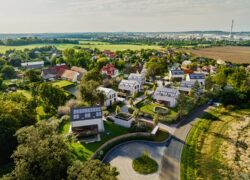
The U Boží Vody residential development in Mladá Boleslav suggests that demand for energy-efficient family homes remains solid outside Prague. Of the nine detached houses planned within the project, four have already been sold, accounting for more than 44% of the total, despite construction still being underway.

The project is being developed by Pierwood Capital and comprises nine standalone houses designed for family living. One unit serves as a show house, while four homes have been sold to date—one already completed and handed over, with three others currently under construction. The remaining four houses are still available.

Sales achieved during the construction phase indicate sustained interest in housing that combines low operating costs with a high standard of living. The project also reflects a broader shift in buyer activity toward regional cities that offer established infrastructure and suitable conditions for family life, rather than demand being focused exclusively on Prague and its immediate surroundings.

According to Pierwood Capital, the development follows a long-term approach that prioritises architectural quality, energy performance and healthy indoor environments over rapid delivery. The scheme was planned as a cohesive residential setting rather than a collection of individual units.

“For us, sustainability is not a marketing label. It must be evident in everyday living comfort, operating costs and in how a home performs over decades. The fact that a number of homes in this project were sold during construction clearly shows that this approach resonates with buyers,” said Frank Nourse, founder of Pierwood Capital.

Nourse’s development philosophy is informed by international experience gained in Africa, Ireland, the United States and across Europe, where he observed the long-term impact of poor construction quality and energy-inefficient housing. After more than 20 years working with conventional steel and concrete structures, he shifted toward timber construction as a way to improve energy performance and long-term sustainability.

Sustainability at U Boží Vody is defined through measurable design and performance criteria rather than formal certification. The homes focus on high insulation standards, the use of natural materials and modern building technologies aimed at reducing long-term energy consumption and operating costs.

The project is delivered under the ZEO Homes standard, which specialises in passive timber housing with very low energy requirements. Pierwood Capital applies this development standard across its residential projects in several regions of the Czech Republic.

Housing quality increasingly linked to mental well-being, says Geosan Development

As stress and burnout remain among the most common challenges facing modern urban populations, attention is increasingly turning to the role housing plays in supporting mental well-being. Recent European research highlights the importance of factors such as access to daylight, contact with greenery and a sense of privacy in reducing long-term stress. In response, residential developers are placing greater emphasis on design principles that frame the home as a place of recovery rather than simply a functional living space.

According to Eliška Koderová, Sales Director at Geosan Development, contemporary residential architecture is increasingly shaped by these findings. “The key elements of this concept are large windows that maximise daylight, connecting the interior with the exterior through terraces or winter gardens, high-quality acoustic insulation to protect against noise, and flexible spaces that allow for the creation of quiet zones separate from work activities. Contact with greenery, even if only visual, has been proven to reduce stress hormone levels,” she said.

The idea of the home as a “sanctuary” does not imply luxury in a traditional sense, but rather a carefully considered environment that supports natural daily rhythms and offers relief from the pace of city life. Design choices related to orientation, ventilation, acoustics and materials are increasingly viewed as factors with a direct impact on health, sleep quality and concentration.

Koderová notes that the growing prevalence of remote and hybrid work has reinforced the need for functional zoning within apartments, allowing residents to clearly separate work from rest. Similarly, attention to air quality, natural materials and interior greenery is seen as contributing to a calmer and more balanced living environment. “Home should be a place where we feel safe and can truly slow down. In today’s world of constant rush and digital overload, this is perhaps more important than ever before,” she said.

One trend reflecting these priorities is the rising interest in rooftop apartments and penthouses, which tend to offer greater privacy, reduced noise and direct access to outdoor space. Terraces are increasingly treated as an extension of the living area rather than an optional extra, providing space for relaxation, gardening or quiet activities away from street-level intensity.

Geosan Development points to its Radimova Residence in Prague’s Břevnov district as an example of how these principles are being applied in practice. The penthouses are designed to maximise daylight, connect interior spaces with terraces and provide enhanced sound insulation. They are offered in a shell-and-core format, allowing owners to adapt layouts and finishes to individual needs, and are equipped with systems such as heat recovery, underfloor heating, air conditioning and external blinds.

From an economic perspective, the company argues that investment in housing quality should be viewed as a form of prevention rather than an added cost. Prolonged exposure to noise, insufficient daylight or lack of privacy has been linked to lower productivity and higher health-related costs over time. “People often perceive quality housing as a luxury, but it is a basic investment in their own health and well-being. In the long term, this investment will pay off many times over—not only in the form of better fitness and vitality, but also higher productivity and overall quality of life,” Koderová concluded.

DIW Economic Barometer rises in January, recovery remains cautious

The Economic Barometer published by the German Institute for Economic Research (DIW Berlin) increased to 94.8 points in January, up from 93.4 points in December. While the indicator has moved closer to the neutral 100-point mark that signals average economic growth, it continues to point to a recovery with limited momentum.

According to preliminary data, Germany’s economy is estimated to have expanded by around 0.2% in the fourth quarter of 2025. DIW Chief Economist Geraldine Dany-Knedlik said that recently introduced investment measures are beginning to support domestic activity, but stressed that the recovery remains fragile. Ongoing structural challenges and the slow pace of additional reforms are continuing to weigh on growth prospects.

Despite ongoing trade tensions, global trade has remained relatively resilient. However, growth rates are expected to stay moderate in 2026, with German exports still facing strong competitive pressure, particularly from China. As a result, sentiment among companies and households is likely to improve only gradually.

German industry has shown early signs of stabilisation after several weak years. Industrial production and new orders have been recovering modestly since autumn. Business sentiment indicators also improved slightly in January, with the ifo Business Climate Index showing better assessments of both current conditions and expectations, and the industrial Purchasing Managers’ Index (PMI) edging higher. At the same time, weak domestic demand and subdued external momentum continue to constrain the sector. DIW economist Laura Pagenhardt noted that government investment programmes are expected to provide incremental support to industry over the course of the year.

The services sector has also shown tentative signs of improvement. The PMI for services has moved above the 50-point threshold that separates expansion from contraction and continues to trend upward. However, the ifo Business Climate Index still points to a cautious outlook, and consumer sentiment remains weak, partly reflecting ongoing tensions in the labour market. A gradual improvement is nonetheless expected in the coming months.

DIW experts conclude that the German economy is showing early indications of recovery, but that patience will be required before investment measures translate into a broader and more self-sustaining upswing in activity and confidence.

Source: DIW Berlin

Slovakia enters 2026 with easing price pressures but limited economic momentum

Slovakia began 2026 with mixed economic signals, as recent official data and international assessments point to stabilising price dynamics alongside modest growth prospects.

Data released by the Statistical Office of the Slovak Republic indicate that price pressures at the producer level softened toward the end of 2025. After several months of increases, industrial producer prices edged lower in December, while growth in agricultural prices slowed compared with earlier in the year. These developments suggest that cost pressures in parts of the supply chain may be easing, reflecting both weaker external demand and gradual adjustments in input costs.

At the same time, broader indicators show that the economy has yet to gain strong momentum. Preliminary figures for late 2025 point to subdued activity across several sectors, with business sentiment and household confidence remaining cautious. Consumer prices are still rising, although at a more moderate pace than during earlier inflationary peaks, keeping pressure on purchasing power.

International organisations published updated outlooks in January 2026 that broadly confirm this cautious picture. Growth in Slovakia is expected to remain restrained over the next two years, with expansion driven mainly by domestic demand rather than exports. External conditions, including slower growth among key trading partners and ongoing geopolitical uncertainty, continue to weigh on the outlook.

Inflation is projected to gradually move closer to more stable levels, but this process is expected to take time. Analysts note that energy prices, tax changes and labour market dynamics will remain important factors shaping price developments in the near term. While wage growth has supported household incomes, it has also contributed to higher costs for businesses, particularly in labour-intensive sectors.

Overall, the latest data suggest that Slovakia is moving away from the period of sharp price volatility seen in recent years, but without a strong acceleration in economic activity. Policymakers and businesses are therefore entering 2026 in an environment defined by adjustment rather than rapid recovery, with attention focused on whether easing cost pressures can translate into more robust growth later in the year.

European logistics real estate markets face subdued growth through 2030

European logistics real estate markets are expected to experience muted momentum over the coming years, with selective growth concentrated in established core locations, according to the latest GARBE PYRAMID MAP published by GARBE Research in cooperation with Oxford Economics.

The forecast, which covers 88 of 122 logistics regions across Europe, reflects a more volatile economic and geopolitical environment and the absence of strong cyclical growth drivers. While average annual prime rent growth reached 5.7% between Q4 2020 and Q4 2025, the outlook for the next five years points to a significantly slower pace of around 1.9% per year.

On the yield side, the report indicates a stabilisation phase following the market correction that began in 2022. Average prime yields across the analysed regions increased from 4.6% in mid-2022 to 5.7%, but recent quarters suggest a gradual return towards yield compression. By 2030, average prime yields across the forecast markets are expected to decline moderately to around 5.2%, with most regions seeing slight compression and others remaining broadly stable.

Markets adapt to prolonged uncertainty

According to GARBE, logistics real estate markets are increasingly decoupling from immediate geopolitical developments. While global events continue to shape sentiment, their direct impact on market performance has become less immediate and more uneven across regions.

Tobias Kassner, Head of Research & ESG at GARBE Industrial, noted that market participants are gradually adjusting to ongoing uncertainty and resuming activity after several years of correction. He added that future performance will be driven less by cyclical recovery and more by location-specific fundamentals.

In this environment, operational performance and asset management have become more critical. Tom Herrschaft, Head of Real Estate Management at GARBE Industrial, emphasised the importance of stable cash flows, active lease and tenant management, and close control at both asset and portfolio level.

Selective rental growth in core markets

Despite the overall slowdown, the forecast identifies continued growth potential in a number of European logistics markets. Prime rents are expected to increase by more than 10% by 2030 in 45 regions, mainly in established core markets in Germany, the United Kingdom, France and the Netherlands.

Munich stands out as a particularly strong performer, supported by sustained demand, limited supply and a robust regional economy. In general, the most attractive return profiles are expected in liquid core markets where moderate rental growth is combined with stable yields.

United Kingdom and France remain resilient

In the United Kingdom, logistics markets continue to show resilience despite ongoing consolidation. Demand remains strong in established regions such as the Midlands and North West England, supported by interest from Asian e-commerce players, defence-related industries and aviation. Limited availability of modern space continues to support rental levels, particularly in well-connected locations near ports.

The French logistics market has also demonstrated stability, with demand driven by both physical retail and e-commerce. Additional support comes from defence and aviation activities, notably in regions such as Toulouse. Investor and occupier focus is increasingly shifting towards modern, ESG-compliant assets, while vacancy remains concentrated in older stock, particularly in northern France.

Structural demand drivers remain in place

GARBE’s analysis concludes that longer-term structural trends are likely to continue shaping Europe’s logistics real estate markets. E-commerce, reconfiguration of supply chains, increased regionalisation of production and a growing focus on strategic resilience and defence-related industries are expected to provide ongoing, though selective, demand impulses across borders over the coming decade.

For more detailed statistics and methodological information, see the interactive GARBE PYRAMID MAP.

Savills Matcha Index highlights role of café culture in technology-driven cities

The Savills Matcha Index suggests that café culture and everyday urban amenities play a measurable role in the long-term attractiveness of technology-oriented cities. According to the index, cities that offer a well-developed environment for daily life, work and informal interaction tend to be more successful in attracting technology companies and skilled professionals.

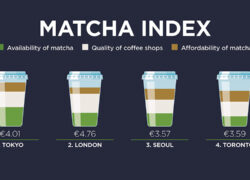
Developed by Savills, the Matcha Index uses café availability and quality, alongside the price of a matcha latte, as indicators of how cities perform in terms of services, lifestyle and social infrastructure. While the index is intentionally light in concept, Savills notes that the price of matcha is not assessed in isolation but serves as a proxy for the wider urban ecosystem.

Pavel Novák, Head of Office Agency at Savills, said: “While the Matcha Index may appear lifestyle-oriented, it actually provides insight into how cities function. The availability of services, measured through café infrastructure, supports everyday interactions and informal networking, which in the long term increases the attractiveness of cities for technology companies and other key businesses.”

Global comparison

In the global ranking, Tokyo placed first, supported by a broad café network, strong availability of matcha-based products and comparatively moderate pricing. London followed in second place, reflecting its extensive independent café scene and established coffee culture.

Savills notes that the results reinforce the view that successful technology cities are shaped not only by labour markets or office supply, but also by the quality of everyday urban life. Environments that naturally combine work, services and social interaction are seen as more resilient and competitive over time.

Price differences between cities

The index also highlights significant variation in matcha prices across global cities. New York recorded the highest average price at €5.34, followed by San Francisco (€5.29) and Los Angeles (€5.26). Prague ranked ninth, with an average price of €4.59.

Lower prices were observed in cities such as Toronto and Seoul, while Beijing recorded the lowest average price at €3.10.

Prague office hubs in focus

Within Prague, Savills identifies Karlín, Holešovice and Smíchov as key technology hubs, alongside other established locations such as Prague Chodov, Jinonice and Brno. The highest local matcha prices were recorded in Prague 4 – Chodov, averaging €5.90, followed by Karlín (including Palmovka) and Brno, where prices are around €4.51.

Novák added: “Specific examples in Prague include Karlín and the increasingly strong position of Holešovice. It is not just about new office developments, but about the entire ecosystem – services, cafés and public space. These factors are now decisive in determining where companies choose to locate and where people want to work.”

According to Savills, the Matcha Index underlines a broader trend: as competition between cities intensifies, the quality of everyday urban experience is becoming an increasingly important factor alongside traditional real estate and labour market considerations.

MLP Group launches new development phase at MLP Business Park Poznań

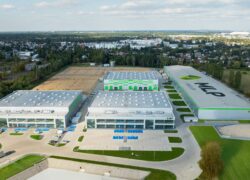
MLP Group has started a new phase of development at MLP Business Park Poznań, adding three office and warehouse buildings with a total gross leasable area of approximately 14,000 sq m. The facilities are being developed on a speculative basis, without pre-let agreements, and construction is being carried out by WPIP Construction as general contractor.

The new phase includes three office and showroom buildings combined with warehouse space and supporting infrastructure. One building will comprise a warehouse hall of nearly 4,000 sq m with a two-storey office component of around 1,400 sq m. The other two buildings will each offer warehouse space of approximately 3,500 sq m, complemented by single-storey office areas of about 700 sq m each.

According to the developer, the decision to proceed without pre-leasing is intended to maintain flexibility in adapting the space to future tenant requirements. WPIP Construction has previously delivered several completed buildings within the park and continues its cooperation with MLP Group on this phase.

Agnieszka Góźdź, Management Board Member and Chief Development Officer at MLP Group S.A., said: “The commencement of construction of further facilities at MLP Business Park Poznań confirms our consistent strategy of developing urban business parks. Projects of this kind respond directly to the needs of last-mile logistics operators as well as companies seeking modern, high-quality and representative office space in close proximity to the city centre. Delivering the investment on a speculative basis allows us to respond swiftly to market expectations and provide flexible solutions for tenants.”

Marek Mielnik, Vice President of the Management Board of WPIP Construction, added: “Our long-standing cooperation with MLP Group is entering another phase, which I am very pleased about. For our organisation, this represents a further driver for the development of WPIP Construction and a source of great pride. The investor’s trust is particularly important to us, as it enables us to continue working on such a large-scale and complex project in Poznań. Each subsequent phase brings new challenges, but also satisfaction from the results achieved through close collaboration.”

MLP Business Park Poznań is located at Wołczyńska Street, approximately 9 km from the city centre. Once fully completed, the park will offer around 49,900 sq m of space. The location provides access by both private and public transport, with nearby bus and tram stops, proximity to the PKP Junikowo railway station and direct access to the A2 motorway around 2.5 km away.

The project is primarily aimed at e-commerce operators and companies requiring an urban location combined with warehouse, office and commercial space. In line with its build-and-hold strategy, MLP Group will retain the completed assets in its portfolio and manage them internally.

Panattoni lets fourth UK logistics facility to EVRi at Burgess Hill

Panattoni has completed a new letting at Panattoni Park Burgess Hill, expanding EVRi’s logistics footprint in the UK. The transaction marks EVRi’s fourth facility within a Panattoni development, bringing the total space it occupies across Panattoni parks to around 245,000 sq ft.

The unit at Panattoni Park Burgess Hill will operate as a last-mile delivery unit, supporting parcel distribution across Sussex, Surrey and the wider South East. The site benefits from access to key A-road routes and onward motorway connections, making it suitable for time-sensitive distribution activities.

The letting follows Austin Racing’s move to the park in 2025 and reflects continued occupier demand for modern logistics space in the South East, where supply remains limited. Existing occupiers at the park include Roche, DPD, EMED Group and Austin Racing, with discussions ongoing for the remaining units.

Will Fennell, Development Manager, South East and London at Panattoni, said:

“We are pleased to be supporting EVRi’s continued growth with their fourth facility within a Panattoni Park. Burgess Hill is a highly strategic last-mile location, offering strong connectivity across the South East, and it continues to attract occupiers who value operational efficiency and access to labour and customers.

The success of the park, following recent lettings and ongoing discussions with occupiers, demonstrates the strength of demand for high-quality logistics space in this market and reinforces our commitment to investing in the South East.”

Panattoni Park Burgess Hill forms part of Panattoni’s South East portfolio and provides logistics accommodation designed to support both regional distribution and last-mile operations. The development comprises 11 speculative units, ranging from 8,142 sq ft to 147,408 sq ft, all available for tenant fit-out.

Leasing agents on the scheme are DTRE, Cogent, SHW and Vail Williams.

Oil market in 2025 marked by oversupply, weaker demand growth and heightened volatility

Global oil markets experienced their sharpest annual price decline in five years in 2025, shaped by persistent oversupply, slowing demand growth and recurring geopolitical disruptions, according to a report by Kamco Invest  .

Crude prices fell for the third consecutive year. Brent crude declined by 17.7% year on year to close 2025 at USD 61.3 per barrel, while the OPEC reference basket fell by 18.2% to USD 61.0 per barrel. Prices started the year near USD 76 per barrel, peaked above USD 83 early on, and then trended downward, briefly recovering mid-year before slipping below USD 60 per barrel in December. The year ended with the market in contango, indicating expectations of continued oversupply into 2026  .

The report notes that geopolitical tensions remained a major source of short-term volatility throughout the year. Conflicts in Ukraine and the Middle East, sanctions on Russia, Iran and Venezuela, disruptions linked to shipping routes, and trade tensions triggered temporary price spikes, but these were insufficient to offset structural market imbalances. Toward the end of 2025, escalating tensions involving Venezuela and renewed sanctions contributed to brief price rebounds  .

On the demand side, global oil demand growth was repeatedly revised downward during the year. Initial forecasts of around 1 million barrels per day (mb/d) were cut to approximately 0.7 mb/d by mid-year, the weakest growth since 2009, before being revised slightly higher to around 830,000 barrels per day by year-end. China’s role shifted notably, with demand growth slowing as fuel consumption plateaued amid rapid adoption of electric vehicles, expansion of LNG-powered transport and increased use of high-speed rail. Demand for petrochemical feedstocks, however, remained relatively strong  .

Supply developments added further downward pressure on prices. World oil supply increased by about 2.0 mb/d in 2025, driven by higher output from both OPEC and non-OPEC producers. OPEC crude production averaged 27.6 mb/d, up from 26.6 mb/d in 2024, while non-OPEC supply also expanded. The gradual unwinding of OPEC+ production cuts from April 2025 resulted in a cumulative increase of around 2.9 mb/d by year-end, before further hikes were paused due to falling prices  .

The United States remained a key contributor to global oversupply. US crude oil production reached a record average of 13.6 mb/d in 2025, reflecting continued growth in shale output. Shale production alone averaged around 10.4 mb/d, also a record level, reinforcing the supply-driven nature of the market imbalance  .

Looking ahead, the report highlights a cautious outlook for prices. Consensus forecasts compiled by Bloomberg indicate Brent crude prices averaging close to USD 60 per barrel through 2026, with most projections clustered in the USD 55-65 range. While demand is expected to continue growing modestly in 2026 and 2027, supply growth—particularly outside OPEC-suggests that market rebalancing may remain gradual rather than immediate  .

front page info
LATEST NEWS