PRIMESTAR Group Opens June Six Salzburg in Partnership with SORAVIA and Marriott International

PRIMESTAR Group has announced the opening of June Six Salzburg, Tribute Portfolio Hotel, scheduled for 1 March 2026. The project has been developed in cooperation with SORAVIA and will operate under Marriott International’s Tribute Portfolio brand.

The property, located in central Salzburg, was previously known as Mayburg Salzburg – Tribute Portfolio Hotel. It will undergo rebranding and design adjustments to align with PRIMESTAR’s June Six brand concept, positioned around the “travel.work.live.” approach. Through its affiliation with Marriott’s Tribute Portfolio, the hotel will combine independent brand identity with access to Marriott’s global distribution and loyalty platforms.

“The June Six Salzburg marks a significant leap in our brand’s growth and global presence,” said Ronald Giese, Managing Director of PRIMESTAR. “By partnering with SORAVIA Group and affiliating with Marriott’s Tribute Portfolio, we can fuse our independent design DNA with Marriott’s world-class distribution and loyalty reach. This strategic collaboration allows us to reimagine the boutique hotel experience while staying true to what makes June Six distinct.”

The 88-room hotel will offer updated interiors featuring contemporary design elements, locally inspired artwork and sustainable materials. Guest amenities will include box-spring beds, Nespresso machines, high-speed Wi-Fi, digital check-in via WhatsApp and flexible workspace areas. The property will continue to provide a digital guest journey, including contactless booking and mobile check-in, alongside on-site concierge-style services.

Dr. Roland Rausch, Chairman and owner of PRIMESTAR Group, said: “This partnership unites three strong forces: PRIMESTAR’s operational excellence, Soravia’s deep real estate expertise, and Marriott’s global hospitality leadership. The Tribute Portfolio affiliation strengthens the international visibility of June Six while preserving our individuality and lifestyle focus.”

Erwin Soravia, CEO of SORAVIA, added: “With June Six Salzburg, we are redefining what lifestyle hospitality means in Salzburg, combining local authenticity with international appeal. This project aligns perfectly with our vision of creating inspiring and sustainable destinations across Europe.”

The opening represents the continued expansion of the June Six brand within the Austrian market under Marriott’s Tribute Portfolio network.

CA Immo Achieves Full Pre-Leasing at Berlin’s Anna Lindh Haus Ahead of Completion

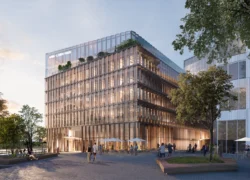
CA Immo has signed two long-term leases at its Anna Lindh Haus development in Berlin’s Europacity submarket, bringing the project to 100% pre-leased more than one year before its planned completion.

The two agreements total approximately 16,700 sqm. Tenant occupation is expected in the first half of 2027, with construction progressing on schedule and within budget. The property is projected to generate annualised gross rental income of approximately €7.9 million upon completion.

With this transaction, CA Immo has now achieved full pre-leasing across its entire Berlin development pipeline currently under construction, which comprises approximately 62,500 sqm across three projects. The announcement follows the recent signing of a long-term lease for around 11,500 sqm at the Karlsgärten redevelopment project near Potsdamer Platz.

The future tenants at Anna Lindh Haus are described as established occupiers from sectors including technology and energy infrastructure. JLL acted as exclusive leasing advisor to CA Immo.

Keegan Viscius, CEO of CA Immo, commented: “The successful pre-leasing of Anna Lindh Haus is another milestone in the progress of CA Immo’s active development pipeline in Berlin – with 62,500 sqm of projects under construction, we have now achieved 100% pre-leasing across all three projects ahead of business plan and before completion. This achievement is proof of concept that there remains a deep pool of institutional occupiers ready to commit to long term office occupation in prime A class properties with high sustainability features, quality certification, and excellent accessibility, and in CA Immo’s correct portfolio positioning and in-house team’s ability to capture this demand on attractive terms.”

Anna Lindh Haus is located on Jean-Monnet-Straße in Berlin’s Europacity district, directly opposite Berlin Central Station. The seven-storey office building, designed by Dorte Mandrup Architects, will provide approximately 17,400 sqm of gross floor area above ground and around 16,900 sqm of rental space including terraces. The scheme includes underground parking and dedicated bicycle facilities.

The building is being constructed using a wood-hybrid method. According to the developer, this approach is expected to reduce embodied carbon by approximately 30% compared with conventional construction. The property will operate fully electrically, with energy intensity projected to be around 70% lower than comparable buildings. Approximately 20% of electricity demand is expected to be generated onsite through rooftop photovoltaic systems, alongside rainwater reuse systems. The project is targeting DGNB Platinum, WELL Core Platinum and WiredScore Platinum certifications.

Further development is planned in the Europacity area, including the Alexander von Humboldt Haus, a waterfront office project of approximately 6,500 sqm that could start construction in 2026, as well as two additional projects totalling around 28,800 sqm with potential starts in 2029 and 2030. Public realm improvements around Europaplatz, including additional greening measures, are also planned.

Union Investment Sells Copyright Building in Central London to Ares

Union Investment has agreed to sell the Copyright Building in London to Ares Real Estate funds, affiliates of Ares Management Corporation. The transaction has been signed and is expected to close in March. Financial details were not disclosed.

Union Investment held the property for nearly ten years within its open-ended public real estate fund, UniImmo: Europa. The asset has been sold at book value. The building provides approximately 10,000 sqm of office and retail space across eight floors and is located in Fitzrovia, within London’s West End office market. It is close to three underground stations and holds a BREEAM Excellent certification.

The sale follows Union Investment’s disposal of Finsbury Circus House to an Australian joint venture, marking its second exit from the London market in the past seven months.

“Institutional and private capital is increasingly looking to enter Central London. This is a good time to create more room for maneuver for our European real estate funds through strategic sales,” said Jacob Thompson, Senior Investment Manager UK & Ireland at Union Investment.

Union Investment acquired the building in 2017 following its completion. The property was let on a long-term lease and has generated stable income during the holding period.

“We acquired the Copyright Building immediately after its completion in 2017 with a long-term lease that has provided our private investors with strong and stable cash flow for almost a decade. Given the shortening remaining term of the leases, the timing of the sale is well chosen. We intend to reinvest the capital available from the recent sales and are actively seeking new attractive investment opportunities in London, specifically for our UniImmo: Deutschland fund,” said Adam Irányi, Head of Investment Management Global at Union Investment.

From the buyer’s side, Ares indicated that the acquisition aligns with its current strategy in the London office market.

“We believe the acquisition of the Copyright Building is consistent with our thesis focused on high quality, well-located assets benefiting from the powerful rental growth we have seen in many of the Central London sub-markets,” said Wilson Lamont, Partner and Co-Head of European Real Estate at Ares.

Union Investment was advised on the transaction by Savills and Knight Frank.

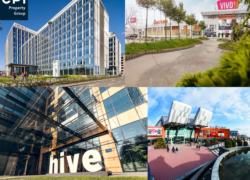
CPI Romania concluded 2025 with a portfolio of 280,000 sqm of modern office space

CPI Romania concluded 2025 with a portfolio of 280,000 sqm of modern office space, representing 8% of Bucharest’s modern stock. The shopping centers in the company’s portfolio recorded an impressive occupancy rate of 98%, while Sun Plaza Bucharest launched a complex remodeling process, confirming the company’s commitment to excellence and innovation. CPI Romania is part of CPI Property Group, one of the largest real estate owners in Europe, with a portfolio valued at EUR 18 billion at the end of the third quarter of last year.


In the office segment, in 2025 the company secured a total area of over 55,000 sqm, both through the signing of lease agreements with new tenants and through renewals of existing contracts, reaching a market share of 21.5%. Among the tenants that expanded or maintained their presence in CPI Romania’s buildings are Societe Generale Global Solution Centre and Foundever Romania in Campus 6.3, Pluxee Romania in the myhive IRIDE | nineteen building, Servier in myhive S-Park, MagnaPharm in the Expo Business Park project, as well as WPP, Infosys and Dentons in The Mark building.


“2025 challenged us to be more flexible and more creative in a complex economic and political context, as well as in an era of changing consumption habits. We continued to invest in strategic projects, consolidating them and increasing their attractiveness. In retail, we focused on introducing innovative formats, top brands and entertainment solutions to meet the expectations of a demanding audience. In the office segment, we stood closer to our tenants, offering flexible, sustainable solutions and services that simplify employees’ lives. We will continue to invest in projects with long-term potential to consolidate our presence on the local market,” stated Fulga Dinu, Country Manager CPI Romania.


CPI Romania’s strategy in the office segment has evolved in recent years to respond to market demands, becoming an important player in the private healthcare services area. In 2025, Policlinica Băneasa (Regina Maria Network), relocated at the end of 2024 to Băneasa Airport Tower office building, began an expansion process that will continue into 2026. At the same time, Leventer Medical Group recently inaugurated Băneasa Tumor Center Hospital in myhive Victoria Park, following an investment of over Eur 30 million, a project dedicated to the integrated treatment of tumor pathologies. The hospital covers an area of approximately 10,000 sqm and is planned to expand to over 12,000 square meters in a subsequent development phase.


2025 was also dynamic in the retail segment: Openings included: Primark and Reserved in VIVO! Cluj-Napoca, a new Mohito concept store in VIVO! Cluj-Napoca and Sun Plaza, Kiko Milano in Sun Plaza, the Fryday concept in all VIVO! centers and in Sun Plaza, Tucano café in VIVO! Pitești, Taco Bell restaurant in Sun Plaza, as well as the Puii mei chain in VIVO! Pitești, VIVO! Baia Mare and Sun Plaza. Inditex brought the most modern Zara and Pull&Bear store concepts to Sun Plaza, while Peek & Cloppenburg modernized its store in VIVO! Constanța.


The transformation of Sun Plaza will continue in 2026 with a latest generation Auchan supermarket covering 7,000 sqm, alongside a fashion hub for international brands occupying a space of 16,000 sqm.


All CPI Romania retail properties are BREEAM Excellent certified, lease agreements are 100% green, and the energy used comes exclusively from renewable sources.

Slovakia’s housing affordability squeeze set to dominate residential market in 2026

Housing affordability is emerging as one of the defining structural pressures facing Slovakia’s residential market in 2026. Although buyer activity has begun to recover and financing conditions have improved compared with the peak of the interest-rate cycle, the widening gap between housing costs and household earnings is increasingly shaping market behaviour, investor strategy and policy focus.

European benchmarking continues to place Slovakia among the least accessible homeownership markets when measured against income levels. Comparative analysis indicates that Slovak households require roughly fourteen years of gross salary to purchase a standardised new dwelling, with Bratislava ranking among the most challenging capitals on the same measure. The trend reflects a long-term shift rather than a temporary market distortion, as the financial threshold for entering the ownership market has risen steadily over the past decade.

The affordability squeeze has been reinforced by the recent trajectory of residential prices. Official statistics confirm that dwelling prices in Slovakia still recorded double-digit year-on-year growth during parts of 2025, including a 13.4 percent increase in the third quarter. In Bratislava’s new-build segment, average asking prices reached approximately €5,600 per square metre toward the end of the year. Market evidence suggests demand has increasingly tilted toward smaller units, indicating that buyers are actively adjusting to tighter purchasing capacity.

International institutions continue to flag valuation risks. The International Monetary Fund has noted that Slovak housing prices remain somewhat elevated relative to fundamentals by some measures, while affordability indicators remain stretched compared with European peers. Although mortgage conditions have improved and banks remain active lenders, the easing in financing has not been sufficient to fully offset the structural affordability gap facing first-time buyers and middle-income households.

The impact is becoming visible beyond the for-sale market. Slovak housing policy documents highlight particularly strong demand for rental accommodation in Bratislava and other major cities, while the supply of regulated or publicly supported rental housing remains limited. As ownership becomes less attainable for a portion of households, this imbalance is reinforcing pressure in the private rental segment.

At the same time, macroprudential policy continues to reflect official concern. The National Bank of Slovakia has maintained borrower-based limits on loan-to-value, debt-to-income and debt-service ratios in response to risks in the residential market. These measures underline the authorities’ focus on containing household leverage in an environment of elevated housing costs.

Slovakia’s affordability challenge appears structural rather than cyclical. Even if price growth moderates during 2026, the accumulated gap between values and incomes is likely to remain a key constraint on transaction volumes and buyer mobility. For developers, lenders and investors, the market is entering a more selective phase in which pricing discipline, product sizing and financing sensitivity will play a greater role in determining absorption and liquidity.

Source: cij.world research & Analysis Team

Amendment to Building Act Eases Development of Corporate Solar Projects in Czechia

An amendment to the Czech Building Act that came into force at the beginning of this year is expected to simplify the installation of photovoltaic systems within existing industrial, logistics and commercial sites. According to solar developer Greenbuddies, the legislative change is already contributing to increased interest from companies seeking to generate electricity for their own use.

The amendment allows photovoltaic systems intended for self-consumption to be built on existing roofs, parking areas and operational spaces without requiring complex zoning plan amendments. If at least half of the suitable space on corporate sites were used, installations could reach a combined capacity of up to 1,000 MW, roughly equivalent to one unit of the Temelín nuclear power plant.

“The amendment to the Building Act significantly expands the possibilities for companies to efficiently produce their own electricity directly on their premises. Photovoltaic power plants intended for own consumption are no longer considered new developments, and companies can thus use not only the roofs of production and logistics halls, but also handling areas and parking lots without unnecessary administrative obstacles,” said Dan Štajner, Commercial Director of Greenbuddies.

The company noted that previous regulatory ambiguities had delayed certain projects. In 2024, a planned photovoltaic installation at a metallurgical supplier’s site in Liberec was halted due to differing interpretations of the law. Following the amendment, the project can now proceed. According to Greenbuddies, clearer and more consistent rules should reduce similar delays in the future and support broader deployment of corporate solar capacity.

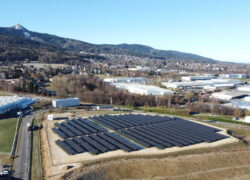
Greenbuddies has implemented rooftop photovoltaic projects at several industrial and logistics facilities in Czechia, including a system at a production site in Pardubice using lightweight panel technology and an installation at a logistics park in Olomouc supplying renewable electricity to tenants. “In many European Union countries where we install solar projects, we see that simple legislation has been in place from the outset, or that countries have moved more quickly than we have in Czechia to simplify it,” Štajner added, noting that the Czech framework has now become more comparable.

In addition to rooftop systems, the amendment supports the development of solar carports, which combine vehicle shelter with electricity generation. Greenbuddies has delivered such projects in Czechia and abroad, including installations in Austria with a combined capacity of 4.67 MWp. In Czechia, the company has completed one of the early solar car park projects at a beverage production site in Prague.

The legislative changes also clarify rules for battery energy storage systems. Installations are now categorised according to capacity and grid connection. Smaller systems of up to 100 kW are treated as minor structures that do not require a building permit or final approval. Systems between 100 and 250 kW require a building permit but not final approval, while larger installations, including those connected to the transmission network, require both. Energy storage facilities above 100 kW are now classified as structures in the public interest and may be located outside built-up areas unless restricted by local zoning plans.

According to Greenbuddies, the revised framework provides greater predictability for project planning and may accelerate investment in on-site renewable generation and storage across the corporate sector.

mBank to Relocate Wrocław Corporate Branch to Infinity Office Building

mBank S.A. has signed a lease for nearly 1,300 sqm of office space in the Infinity office building in Wrocław, located at ul. Legnicka 16. The bank plans to relocate its largest corporate branch in Lower Silesia to the new premises in January 2027. The space will be situated on the fourth floor of the building and will accommodate corporate banking operations, a private banking branch and mLeasing.

mBank, which has operated since 1986 and has been listed on the Warsaw Stock Exchange since 1992, serves 5.7 million retail clients and 36,000 corporate clients. The bank maintains corporate branches and offices in more than 40 Polish cities and has also operated in the Czech Republic and Slovakia for 18 years.

Infinity is owned by Avestus Real Estate and Alchemy Properties. Commenting on the transaction, Marta Kiernicka-Szarska, Wrocław Leasing Director at Avestus Real Estate in Poland, said: “I am delighted that Infinity continues to attract such recognisable and opinion-leading brands that are leaders in their respective industries. mBank S.A. is an exceptionally strong and innovative institution that has been setting standards in digital banking for years. I am therefore confident that our development, distinguished on the market by its architecture, location and technological solutions, will fully meet the needs of the new tenant.” She added that the office would be adapted to the bank’s operational requirements and equipped with appropriate technical systems.

Kiernicka-Szarska also noted that the leasing process was based on clear expectations and cooperation between both parties. “From the very beginning of the leasing process, mBank clearly defined its expectations towards this space. Thanks to open and transparent communication and the commitment of both parties, we were able to develop solutions that fully meet the client’s needs,” she said.

Katarzyna Wiśniewska, Director of the Corporate Branch for Large Enterprises at mBank S.A. in Wrocław, stated that the relocation would consolidate teams on a single floor and support day-to-day collaboration. “In the near future, mBank employees will move into a modern office that will significantly improve working comfort and streamline daily collaboration. All teams will be located on a single floor, which will accelerate information flow and facilitate joint project work,” she said. She added that the new office would provide updated technological infrastructure and enhanced security standards.

Infinity is a seven-storey Class A office building offering 18,727 sqm of office space and 1,561 sqm of retail and service space. The building includes rooftop terraces, a lobby with indoor greenery and a digital building management platform available to tenants. It also provides a three-level underground car park with 311 spaces, electric vehicle charging points and cycling facilities.

The project was developed by Avestus Real Estate in cooperation with Alchemy Properties and has been certified under BREEAM Excellent and WELL Health-Safety standards. The architectural design was prepared by AD Studio and the general contractor was Eiffage Polska Budownictwo. JLL acted as leasing agent.

Poland: Leading Economic Indicator Edges Lower as Order Intake Remains Weak

The Leading Economic Climate Indicator (WWK), which signals expected economic trends in the coming months, declined by 0.6 points in February 2026 compared with January. The drop was modest relative to the gains recorded in previous months and does not interrupt the broader upward trend. However, weak inflows of new orders in the industrial manufacturing sector continue to weigh on the outlook.

Out of the eight components that make up the indicator, only one, the WIG stock exchange index, recorded a noticeable improvement. Four components remained broadly unchanged, while three deteriorated compared with the previous month.

The most persistent weakness remains the limited growth in new orders for manufacturing companies. Order backlogs have been shrinking for nearly two years, particularly among small and medium-sized enterprises. Larger companies have generally shown greater resilience, while producers of transport equipment are among the few segments reporting improvement. Analysts link the subdued order environment to slower economic activity in Germany and ongoing geopolitical uncertainty.

The limited inflow of new business is reflected in corporate finances. Since autumn 2025, the share of companies reporting a worsening financial position has exceeded those reporting improvement by around ten percentage points.

Business sentiment also failed to improve in February. Although January saw a temporary rise in optimism, this was not sustained as companies reassessed the economic environment.

Money supply data show that the real value of the M3 aggregate declined in January 2026, mainly due to lower deposits held by non-financial corporations. Economists note that a reduction in money supply at the start of the year is a recurring seasonal pattern.

On the capital markets, positive sentiment has continued to dominate trading on the Warsaw Stock Exchange for nearly three years and remained in place in February. However, structural challenges persist, including a limited number of new listings. In 2025, only three companies debuted on the exchange, while 15 were delisted. The market also continues to be characterised by the significant weight of large state-controlled enterprises.

Source: BIEC

Redkom Development Starts Construction of Świderek Retail Park in Otwock

Redkom Development has commenced construction of Świderek Retail Park in Otwock, a new retail scheme located in the Warsaw metropolitan area. The project will deliver more than 23,000 sqm of gross leasable area across approximately 40 units.

The tenant mix will include a food anchor operated by Lidl, alongside local and convenience operators such as bakery Wanda, butcher and delicatessen Kiszeczka, and Żabka. The retail park will also host fashion brands including HalfPrice, New Yorker, Sinsay and Worldbox, as well as footwear retailers e-obuwie and CCC. Jewellery tenants Yes and Apart are also planned.

Home and interior brands will include Agata Meble, JYSK and Dr Materac. Discount operators Pepco, TEDi and Action are expected to join the scheme, while Rossmann will provide drugstore and personal care products. Martes Sport will cover sporting goods.

Leisure and service components will include an Xtreme Fitness club and a children’s sports and education facility operated by Xtreme Kids. The food and beverage offer is set to comprise Italian restaurant Semolino, Asian concept Viet Point and a drive-through restaurant.

The retail park is being developed along the S17 Warsaw–Lublin expressway at Andrzeja Sołtana Street, near a Circle K service station. The location provides road access for residents of Warsaw’s Wawer district as well as nearby municipalities including Józefów, Otwock, Karczew and Kołbiel.

Architecturally, the scheme is designed with references to the regional Świdermajer style and will incorporate green roofs. The developer has indicated that the project is targeting BREEAM certification.

Mallson Polska is acting as strategic advisor and is responsible for the commercialisation strategy. The architectural design has been prepared by BM Architekci, while PHUB ŁUCZ-BUD has been appointed as general contractor.

Świderek Retail Park is scheduled for completion and opening in the fourth quarter of 2026.

Lion`s Head and WDP re-enter the Race for P3 Bucharest

The P3 company resumed the sale process of the logistics park near Bucharest after the Competition Council rejected P3’s transaction with CTP last year due to anti-monopoly restrictions. If CTP had bought P3 Bucharest A1, then the real estate developer’s portfolio would have increased to over EUR 3.3 million and would have been close to the 50% threshold of the Romanian industrial/logistics market.


Before reaching an agreement with CTP, WDP, Lion`s Head Investments and the Accolade group from the Czech Republic had also entered the race to acquire the logistics park. Now, with the resumption of the sale process, only WDP and Lion`s Head have shown their interest in the acquisition.


The two companies currently in the race are in the due diligence process, after which P3 will enter into an exclusive agreement with one of them and the transaction will be presented to the Competition Council for validation. P3’s target is to finalize the sale and exit the market by the end of the year. The sale price remained the same as in the first round, i.e. approximately EUR  250 million.


Source: Profit.ro

front page info
LATEST NEWS