Nhood Services Poland Expands Tenant Mix at Auchan Krasne Shopping Center

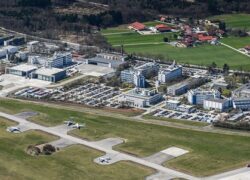
Nhood Services Poland has broadened the retail offering at the Auchan Krasne Shopping Center in Podkarpacie, where Rossmann, Coccodrillo and Wakacje.pl opened new units in November. The centre, owned by Ceetrus Polska, has served local customers for nearly twenty years with a mix of fashion, cosmetics, jewellery, children’s products, services, an Auchan hypermarket and a Leroy Merlin store.

The expansion forms part of Nhood Services Poland’s ongoing work to enhance the facility’s appeal and align it with local demand. Rossmann has opened a 470 sqm drugstore, extending the centre’s health and beauty offering with products ranging from personal care and cosmetics to hygiene, household items, children’s goods and seasonal assortments.

Coccodrillo has added an 82 sqm shop featuring clothing, footwear and accessories for babies and children, with an emphasis on quality materials and comfortable, colourful designs.

Travel agency Wakacje.pl has taken a 60 sqm unit, offering travel packages from major operators, including long-haul and European destinations, as well as city breaks, last-minute trips, airline tickets, hotel bookings, parking and travel insurance.

“For several months now, we have been gradually expanding the portfolio of tenants at the Auchan Krasne Shopping Center. We want to build an offering that will be popular with customers, primarily because it allows them to do their shopping for the whole family in one visit. We are delighted that the trust placed in us by our tenants allows us to effectively pursue this goal,” says Joanna Nowacka-Jankowska, Senior Leasing Manager at Nhood Services Poland, who oversees the centre’s commercialisation.

Alongside retail development, Nhood Services Poland continues to run an extensive programme of community-focused activities at the centre, including free workshops and a year-round family theatre series aimed especially at families with children.

Uniq Logistic Expands Presence in MLP Group Parks to Nearly 50,000 sqm

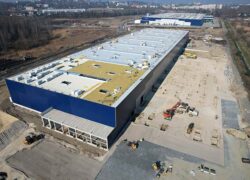
Uniq Logistic has increased its footprint within MLP Group’s logistics parks after securing an additional 9,400 sqm of warehouse space at MLP Łódź. The expansion brings the company’s total leased area across MLP Łódź and MLP Pruszków II to more than 47,000 sqm.

The new lease follows the renewal of approximately 38,000 sqm of existing space in the two parks. The latest unit at MLP Łódź is scheduled for handover in the first quarter of next year, allowing the company to further consolidate its operations within the region.

MLP Group said the continued cooperation reflects a stable, long-term relationship with one of its established tenants. Tomasz Pietrzak, Leasing Director Poland, noted that the company’s decision to expand within MLP Łódź reinforces the appeal of the parks’ technical standards and their ability to support the operational needs of logistics providers.

Uniq Logistic also emphasised the importance of the partnership, citing the landlord’s flexibility and responsiveness. According to the company, access to modern facilities and consistent support has played a role in its ability to scale operations and take on larger projects.

The logistics provider, active in Poland since 2008, has been a tenant of MLP Group since 2020. At MLP Pruszków II, it currently occupies more than 6,000 sqm of warehouse space and 145 sqm of offices. At MLP Łódź, the company makes use of over 30,000 sqm of warehouse space and nearly 900 sqm of office and staff facilities. Under the new agreement, its footprint at the Łódź park will rise by an additional 9,360 sqm.

MLP Łódź is located in the Widzew district in the south-eastern part of the city, offering direct access to the A1 motorway and convenient links to the A2 route. The development is being built to BREEAM standards and will ultimately offer more than 86,000 sqm of space for logistics, e-commerce and light manufacturing.

MLP Pruszków II, positioned near Warsaw, is one of the region’s largest logistics complexes with a planned capacity of 427,000 sqm. The park benefits from access to the A2 motorway, regional transport links and selected buildings with BREEAM certification. Photovoltaic systems are being added in line with the group’s wider sustainability strategy.

Audit Finds Major Gaps in EU VAT Scheme for E-Shops; Czech Traders Among Those Avoiding Tax

A recent audit by the Supreme Audit Office has revealed significant weaknesses in the European Union’s VAT system for cross-border e-commerce. According to the findings, flawed data and systemic loopholes have enabled some online sellers to under-declare or evade VAT, particularly when importing low-value goods into the EU. Authorities warn that shortcomings affect not only overseas vendors, but also create enforcement challenges for member states — including the Czech Republic. 

The audit highlighted misuse of the EU’s “import regime” (under what is commonly known as the Import One-Stop Shop, or IOSS) — a scheme designed to simplify VAT payment for goods imported into the EU from third countries. Under IOSS, the seller is meant to remit VAT at the point of sale, rather than leaving payment to the end customer at customs. However, the SAO found that a substantial share of shipments declared under IOSS were misreported, often showing values far below what the buyer actually paid. In checks on thousands of consignments, the error rate was alarmingly high. 

Officials say the problem is compounded by incomplete and unreliable data provided by Czech authorities to EU-wide anti-fraud tools. Gaps in data exchange undermine the effectiveness of cross-border VAT controls — which rely heavily on transparent and accurate information flows among member states. The Czech Ministry of Finance acknowledged the concerns outlined by the SAO and noted that similar issues have been raised by the European Court of Auditors, stressing the need for a coordinated, EU-wide solution. 

In response to the audit, Czech authorities have pledged support for tighter oversight measures. Proposed reforms — part of a broader EU initiative to modernise VAT and customs procedures — would strengthen verification of IOSS registrations, require greater transparency from online sellers importing goods from non-EU countries, and mandate fiscal representation for non-EU vendors selling into the EU market. These changes are expected to begin phasing in between 2026 and 2028. 

Why the System Is Vulnerable

The IOSS regime was introduced to streamline cross-border trade: sellers can register once in an EU country and declare VAT centrally for all their EU customers. It especially targets imports of low-value goods (typically under €150), a segment that exploded with the rise of online shopping. 

Yet the SAO’s audit shows that some importers — especially from outside the EU — exploit loopholes by undervaluing parcels or misclassifying goods. In one documented case, a consignment declared at low value turned out to contain high-value items upon inspection, indicating deliberate undervaluation to avoid VAT. 

Because customs authorities in the Czech Republic inspect only a tiny fraction of the millions of incoming parcels every year, most misuse goes undetected. The SAO warned that this not only deprives tax authorities of revenue but also distorts competition, favouring non-compliant sellers over legitimate EU-based retailers. 

What Happens Next

The Czech government says it supports upcoming EU reforms that aim to tighten control over e-commerce imports. Among the measures under discussion are mandatory registration and fiscal representation for non-EU sellers, more rigorous cross-checking of customs data and VAT returns, and stricter penalties for mismatches and under-reporting. These changes could help close current loopholes and restore fairness between domestic and foreign sellers. 

Still, experts warn that effective implementation will require real-time data sharing, digital customs infrastructure and better coordination across member states — changes that may take years to fully deploy. Until then, the risk of evasions will likely remain a challenge.

Poland Introduces New PIT and CIT Tax Relief for Employers Hiring Territorial Defense and Active Reserve Soldiers

From 1 January 2025, employers in Poland can make use of a new tax preference in both PIT and CIT when they employ soldiers serving in the Territorial Defense Forces (WOT) or the Active Reserve. The incentive, introduced under the Act of 1 October 2024 amending several laws to support employers of WOT and Active Reserve soldiers, allows businesses to deduct specific amounts from their tax base depending on the soldier’s length of uninterrupted military service.

The relief applies to employees who are soldiers and who, under their employment contract, receive a monthly salary of at least the statutory minimum wage. The period of military service is determined as of the last day of the tax year or the final day of the soldier’s employment during that year. If the soldier is employed for only part of the tax year, the deductible amount is reduced proportionally. The deduction is claimed in the employer’s annual tax return for the year in which the soldier was employed.

The value of the deduction rises with the duration of continuous service: PLN 12,000 after at least one year, PLN 15,000 after two years, PLN 18,000 after three years, PLN 21,000 after four years and PLN 24,000 after five years of service. Micro-entrepreneurs and small entrepreneurs may increase these amounts by a factor of 1.5, while larger businesses employing at least five full-time workers may increase the deduction by a factor of 1.2. The deduction cannot exceed income from business activity, but unused relief may be carried forward for up to five tax years. The rules are set out in Article 26he of the Personal Income Tax Act of 26 July 1991 and Article 18eg of the Corporate Income Tax Act of 15 February 1992.

Beyond the tax benefit, the amending act provides employers with additional advantages, including preferential treatment in public procurement procedures and exemption from paying a two-week severance benefit to an employee who is a WOT soldier.

Czech Trading Firm FTMO Completes Acquisition of U.S. Brokerage OANDA

Czech trading firm FTMO has taken over the American brokerage company OANDA, finalising a deal that marks one of the most significant international moves by a Czech financial-technology player to date. The company confirmed the acquisition in a statement, without disclosing the purchase price. Media reports suggest the value of the transaction reached several billion crowns.

The takeover process began early this year, when FTMO agreed on terms with OANDA’s previous owner, CVC Asia Fund IV. Completion was subject to approval from regulators across multiple jurisdictions, with the final consent granted in November. FTMO officially assumed ownership on 1 December.

OANDA, founded in 1996, operates as a global digital trading platform, offering access to a broad range of financial instruments along with market data and analytical tools. The company maintains offices in major financial hubs such as New York, Toronto, London, Warsaw, Singapore, Tokyo and Sydney. Its chief executive, Gavin Bambury, said the combination with FTMO would enable faster expansion and allow the business to deliver more advanced and integrated trading solutions to users worldwide.

While the financial terms have not been published, FTMO co-founder Otakar Šuffner previously indicated to Czech media that the company had secured a substantial loan to support the acquisition.

FTMO, established in 2015, specialises in training and development services for traders seeking to build skills in financial markets. Its global reach now extends to more than 140 countries. In 2023, the company reported revenues of roughly five billion crowns and an operating profit of 2.3 billion.

The acquisition positions FTMO to deepen its presence in the global fintech landscape by combining its training-focused model with OANDA’s long-standing brokerage infrastructure.

Poland’s Industrial Output Reaches PLN 1.72 Trillion in 2024 Despite a Year-on-Year Decline

Poland’s industrial sector generated PLN 1.716 trillion in sold production in 2024, according to the latest national report on industrial products published by Statistics Poland. Although the result represents a 4.2% decrease compared with 2023, the value remains 47% higher than in 2020, underscoring the sector’s strong growth over the longer term. The survey covered 38,334 enterprises and 4,855 product groups across mining, quarrying and manufacturing. 

The data shows mixed performance across industries. Production increased in 11 of the 28 PKWiU divisions, with the strongest year-on-year gains observed in tobacco products, other mining and quarrying activities, other transport equipment, wearing apparel and computers, electronic and optical products. In contrast, the most notable declines were recorded in hard coal and lignite, electrical equipment, leather goods, wood products and machinery and equipment. Despite these shifts, the structure of industry remained broadly stable. Food products retained the largest share of total sold production, accounting for 19.2% of national output, followed by motor vehicles, trailers and semi-trailers at 11.4% and electrical equipment at 6.9%. 

Significant regional differences persist. Mazowieckie Voivodeship remained the country’s industrial centre, generating 21.9% of all sold production in 2024, or PLN 377.4 billion. It was followed by Śląskie with a 14.5% share and Wielkopolskie with 12%. At the opposite end of the spectrum, Świętokrzyskie Voivodeship accounted for only 1.9% of national production. These shares have changed only modestly since 2020, although Mazowieckie and Małopolskie strengthened their positions slightly, while Dolnośląskie and Śląskie recorded a decrease compared with 2023. 

Large enterprises continued to dominate the industrial landscape. Companies employing 50 or more people were responsible for 94.3% of all sold production, while smaller entities employing between 10 and 49 workers accounted for PLN 98.3 billion. Industrial firms also contributed the overwhelming majority of production, with non-industrial entities representing only a small fraction of the total. 

Production carried out under subcontracting arrangements amounted to PLN 15.1 billion in 2024, marking a 6.1% increase from the previous year. The largest contributions came from the food, beverages and tobacco industries, followed by fabricated metal products, chemicals and chemical products, and motor vehicles and trailers. Growth in subcontracting was particularly notable in pharmaceuticals, wood and wood-based products, other transport equipment, rubber and plastics and electrical equipment. 

The report also highlights rapid expansion in technologically advanced categories. Sold production of goods containing embedded electronic systems reached PLN 42.2 billion, rising 28.8% over 2023 and 75.5% compared with 2020. Products incorporating Internet-of-Things elements accounted for 27.5% of this group. Output was dominated by companies operating in the manufacture of computers, electronics and optical equipment, as well as electrical equipment, with domestic-capital firms responsible for nearly three-quarters of the total value. 

In terms of manufactured volumes, the period between 2020 and 2024 saw sharp increases in products such as direct-current motors and generators, sanitary ware of iron or steel, high-power agricultural tractors, condensed sweetened milk and paper labels. At the same time, production fell steeply in several traditional categories, including stainless-steel sinks, lead and tin ores, newsprint, household mixers and juicers, and textile household linens. The 2024-on-2023 comparison shows similarly diverse results, with notably higher production of white chocolate, zinc-coated flat products, electric hoists, potassic fertilisers and parquet flooring, but major declines in printed periodicals, needle roller bearings, specialised agricultural trailers and several machine tools. 

Within the European Union, Poland maintained its position as the fifth-largest industrial producer when measured by the number of PRODCOM product categories for which output was reported. In 2024, Poland submitted data for 3,144 products, representing 77.7% of the EU’s statistical list. For around 400 products, Poland held between 10% and 20% of the EU’s sold production value, with the highest concentrations in food products, chemicals, rubber and plastics, fabricated metals and machinery. For approximately 268 products, Poland’s share exceeded 20%, including 61.1% of EU production of television receivers and more than half of the EU’s output of household washing and drying machines. In several cases, Poland accounted for over 50% of EU production volumes, including handmade paper, MDF boards under 5 mm, scouring preparations, electric toasters, potato-harvesting machinery and selected furniture components. 

Czech Unemployment Rises to 3.2%

The latest labour-market data published by the Czech Statistical Office (CZSO) indicates that the rate of unemployment in the Czech Republic increased to 3.2 % in October, according to the monthly survey of labour-force status. 

The employment rate — defined as the share of employed persons among all residents aged 15–64 — reached 75.4 % in October 2025, marking a 0.2 percentage-point rise compared to the same month last year.  The male employment rate was recorded at 80.0 %, while the female rate stood at 70.8 %. 

At the same time, the rate of economic activity, that is the share of people aged 15–64 who are either employed or actively seeking employment, climbed to 77.9 % — up 0.5 percentage point year-on-year. 

“Gradual increasing of the unemployment rate is apparent in both males and females in the course of this year,” said Dalibor Holý, Director of the Labour Market and Equal Opportunities Statistics Department at CZSO. 

The survey is based on the internationally comparable Labour Force Sample Survey (LFSS), which is conducted among private households (excluding collective accommodation and temporary shelters), and defines employment and unemployment in line with the recommendations of the International Labour Organization. 

The rise to 3.2 % unemployment — from 3.0 % in September 2025 as reported in the previous release — suggests a modest but persistent upward trend in joblessness at a time when employment and activity rates remain robust. 

Deka Immobilien Sells Yokohama High-Tech Park Asset After 17 Years

Deka Immobilien has sold an office and service property in the Hakusan High-Tech Park in Yokohama, Japan. The asset was acquired by Godo Kaisha Hakusan, a vehicle established by a consortium of Japanese institutional investors. The transaction concerns a property held in the open-ended real estate fund Deka-ImmobilienGlobal. The purchase price remains confidential.

Completed in 1987, the “German Industry Park” offers approximately 15,600 sqm of lettable space and 107 parking spaces. Alongside office areas, the property provides flexible space for production, research, product demonstrations and warehousing. Additional amenities include a restaurant, cafeteria and training rooms. The building is fully occupied by 24 tenants from the industrial, technology and manufacturing sectors.

Situated in Yokohama—Japan’s second-largest city—the property benefits from its location within the Hakusan High-Tech Park, a recognised hub for German companies operating in Japan. Transport links include proximity to Tokyo Haneda International Airport, about 20 kilometres away, and a nearby railway station providing rapid connections on the high-speed line between Tokyo and Osaka.

The property has received a four-star rating under Japan’s CASBEE sustainability certification system.

According to Deka Immobilien, the disposal takes advantage of favourable market conditions following a holding period of more than 17 years. The sale forms part of ongoing portfolio optimisation, involving the divestment of older assets and reinvestment into new opportunities. The fund intends to redeploy the capital into countercyclical acquisitions. Over the entire holding period, investors generated a significant profit from the transaction.

Dietz AG Delivers 73,000 sqm Sustainable Logistics and Production Facility in Rheda-Wiedenbrück

Dietz AG has completed a built-to-suit logistics and production centre of roughly 73,000 sqm for Beckhoff Automation GmbH & Co. KG in Rheda-Wiedenbrück. The property on Ferdinand-Braun-Straße was handed over on schedule after a 14-month construction period.

The facility has been developed to the EG40 efficiency building standard and incorporates a series of sustainability measures. A rooftop photovoltaic installation with a capacity of approximately 4 MW supplies green electricity, while an air-source heat pump system provides fossil-free heating for the entire complex. Dietz AG is pursuing DGNB Gold certification for the building. The layout and technical specifications were tailored to Beckhoff Automation’s operational requirements.

“The excellent partnership with List Bau Nordhorn GmbH and the entire project team was a decisive factor in the success and quality of this project,” said Markus Engelmann, CEO of Dietz AG, acknowledging the performance of the general contractor.

Engelmann noted that close coordination with local authorities and specialist departments played an important role in keeping the project on schedule, despite a challenging regulatory environment. Logivest, a long-standing partner of Dietz AG, advised on the project and facilitated both the land acquisition and the leasing process.

“With the completion of this project, we not only want to contribute to strengthening the regional industrial and logistics infrastructure, but also send a clear signal for sustainable project development in East Westphalia,” Engelmann added.

NOVIKO Animal Health opens new distribution premises at Panattoni Business Park Zdice

NOVIKO Animal Health, part of the Covetrus group, has begun operating from its new 12,400 m² premises at Panattoni Business Park Zdice. The facility will expand the company’s storage capacity and support the distribution of its Calibra and Covetrus product ranges, including goods requiring controlled temperatures. The project was developed by Panattoni, with Accolade as the investor.

The new building is equipped with a cooling system designed to maintain temperatures below 25 degrees Celsius, enabling the handling of pet food, supplements, and other products that require specific storage conditions. NOVIKO will use the site as its main distribution point for selected international markets.

Calibra, a brand established in the Czech Republic more than two decades ago, supplies feed and veterinary diets for dogs, cats, and small animals and is currently sold in over 40 countries. Covetrus products, aimed at veterinary professionals, are also distributed in more than 40 markets.

“We are very pleased with the trust NOVIKO has placed in us and its decision to locate its distribution center in Panattoni Business Park Zdice. The industrial center near Prague, with excellent connections to Western markets, offers not only perfect logistics conditions, but also modern, environmentally friendly and innovative facilities. Within a single hall, we have managed to create a space tailored to the needs of three different plants,” said Jan Andrejco, Director of Regional Development at Panattoni.

The complex incorporates several environmental features, including a landscaped area designed to reduce heat accumulation, a retention tank for rainwater, and a façade intended to limit heat absorption. The site is located away from residential areas, allowing freight traffic to avoid local neighbourhoods.

“The takeover of the site by NOVIKO Animal Health in Zdice confirms that we have long been successful in bringing stable businesses to the regions. From the very beginning, we prepared the site to provide tenants with everything they need for distribution, further increasing production capacity, and supporting their development in European markets. At the same time, we make sure that such investments have a direct and positive impact on the surrounding area, including the creation of new jobs, the development of related services, and overall economic activity in the area,” said Jiří Stránský, Director of Development at the Accolade Group.

Business Park Zdice is located near exit 28 of the D5 motorway, around 40 kilometres from Prague and 120 kilometres from Rozvadov on the Czech–German border. The area also provides access to long-distance and freight rail services via the nearby Zdice railway station.

front page info
LATEST NEWS