Passerinvest Group recognised among the top five companies in Czech ESG rating

Passerinvest Group has been ranked among the top five companies in the Czech Republic in the Basic category of the ESG Excellence 2025 assessment. The nationwide rating, managed by the Faculty of Business Administration at the University of Economics in Prague, evaluates how companies address environmental, social and governance matters. The Basic category includes firms with up to 1,000 employees.

The assessment is based on the VSME reporting framework, a voluntary European standard intended for non-listed small and medium-sized companies and expected to become a foundation for future non-financial reporting requirements. Participating firms answer a comprehensive questionnaire that examines their approach to sustainability and responsible business practices, after which their results are compared within both their category and industry group.

Passerinvest has taken part in this evaluation for four consecutive years and views the process as an opportunity for an independent review of its internal policies and their practical outcomes. According to the company, the rating offers structured feedback on its progress, highlights areas for further development, and helps prepare for upcoming EU reporting obligations focused on transparency in non-financial disclosures.

The recognition places the company among the better-rated organisations in its category. Passerinvest states that its projects aim to reflect a responsible approach to long-term development and engagement with local communities, and that its internal conduct is guided by principles rooted in its corporate values.

FETTERS Starts Core Construction of Panorama Braník

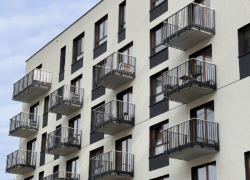
FETTERS management has started the main construction phase of its Panorama Braník residential development in Prague 4, marked by a formal foundation-stone ceremony. The 14-storey mixed-use building will be located on the edge of established housing and adjacent green areas. The project includes 77 apartments of various sizes and seven ground-floor commercial units. Qarta Architektura designed the initial concept and zoning documentation, while Domy Architects prepared the building-permit documents. The final technical design and implementation plans were completed by Atelier Smitka. BAK stavební společnost, a.s. is serving as general contractor. According to the developer, 60 percent of the apartments have already been sold, with completion planned for December 2026.

“We designed Panorama Braník to stand the test of time. The project meets the high demands of contemporary living, with each apartment designed with an emphasis on quality, detail, comfort, and maximum use of space. The practical layouts range from 1+kk apartments to atypical duplexes on the upper floors. Many of them offer unique views of Prague,” says Tomáš Fetters, CEO of FETTERS management. He adds: “We have many years of experience in project management of large buildings throughout the country. This is reflected in every detail of our own development projects, from the technical solutions to the way we think about the comfort of future residents. I am convinced that this is clearly visible in the project, as evidenced by the interest of buyers.”

The scheme offers units from approximately 30 m² studios to larger apartments of around 120 m². All apartments will have cellar storage, and most will include a balcony or terrace. Duplex units on the upper floors will feature larger outdoor spaces with views toward the city. Large window openings are incorporated across the building to maximise daylight, and the design allows for external blinds. Interior materials are selected to provide durable, neutral finishes, extending also to communal areas. The building will include 87 parking spaces, with the option for two spaces for selected larger units.

The design integrates landscaping into both the building and its immediate surroundings. A green roof above the retail units will help regulate indoor temperatures and will be visible from higher floors. A retention tank will collect rainwater for irrigation. Planters are incorporated into each balcony and terrace, enabling planted greenery to extend up the building and contribute to the microclimate. These features are intended to enhance an underused plot and bring it into everyday neighbourhood use.

The developer also plans improvements to the surrounding public realm. Ground-floor services will open the building to the street, while upgrades to the nearby intersection are being coordinated with the district authority and Prague’s transport agency. “We are convinced that honest architecture should benefit the wider community. We support projects that develop and open up places that have been unused for a long time. At Panorama Braník, we are naturally also addressing the public space, from services on the ground floor to the modification of the adjacent intersection in cooperation with the municipal district and TSK Praha. A new bus bay, better-lit crossings, and a generally clearer traffic situation will improve the functioning of the entire area,” says Luboš Králíček, commercial director of FETTERS management.

Panorama Braník is situated within an established residential district of Prague 4, characterised by villa architecture, mature greenery, and full community services. Schools, shops, public transport stops, local restaurants, sports areas, and the Braník biotope are all within walking distance. The developer highlights the location as one with an active local community and complete amenities.

EPP Reports Major Cuts in Carbon Output, Nearing Its 2030 Climate Goals

EPP, the country’s largest manager of shopping centres, has sharply reduced the emissions produced by its real-estate portfolio, bringing the company close to the climate goals it pledged to meet by 2030. Recent sustainability disclosures indicate that emissions from its own operations have fallen by almost half since 2019, while emissions linked to parts of its supply chain have dropped by roughly one-third. These reductions align with the company’s near-term targets validated by an international climate-science body last year.

Company representatives say the progress reflects several years of upgrades across the portfolio. These include improvements to building systems, replacing older lighting with more efficient alternatives, and widening the use of electricity backed by renewable-energy certificates. Office properties already run entirely on electricity matched with green-energy guarantees, and the company aims to steadily expand this approach in its retail assets.

Energy-saving projects have also been carried out at the property level. One example is the shopping centre in Poznań, where a broad renovation programme resulted in lower energy use in shared spaces and moved the building into a higher efficiency category. The firm is also developing rooftop solar installations, with plans to add more than a dozen systems over the next two financial years. Several centres have already been equipped with new panels, which will help reduce dependence on the grid.

Alongside these measures, EPP is introducing digital tools designed to improve how waste is monitored and sorted across tenant units. The system captures data in real time and is being phased in across the assets under management.

The company continues to seek external verification of its buildings based on environmental performance. All of its office properties hold high ratings under international assessment schemes, and its shopping centres meet or exceed mid-level certification standards. The firm is also expanding the number of lease agreements that include sustainability clauses. Nearly half of its contracts now contain provisions aimed at reducing the environmental footprint of day-to-day operations.

EPP has also increased its focus on community engagement. Over the past year, its centres hosted hundreds of initiatives aimed at local groups, with employees contributing thousands of volunteer hours. These activities ranged from portfolio-wide campaigns to locally driven projects supported through small grants.

Although the company has already come close to achieving its 2030 climate targets, it maintains that further work lies ahead. Its long-term ambition is to balance all emissions across its portfolio by mid-century, a goal that will require continued investment and collaboration with tenants, contractors and suppliers.

Poland’s Housing Market Steadies as Borrowing Conditions Improve

The Polish residential market is moving through a period of relative calm after several years of rapid growth. In 2025, prices in the largest cities stopped rising at the pace seen earlier in the decade, with some markets even recording slight reductions in achieved sale values. This cooling followed a period of weaker demand, influenced mainly by the high cost of credit that limited buying power.

Although prices remain high by historical standards, the slowdown marks a notable shift from the double-digit annual increases observed in recent years. Negotiations between buyers and sellers have become more effective, especially in major metropolitan areas, where final sale prices in places such as Warsaw, Wrocław and Kraków registered mild year-on-year declines. The secondary market reflected similar behaviour, with modest decreases in several cities.

Economic conditions, however, suggest this phase may not last long. Poland’s economy regained momentum in the second half of 2025, recording its strongest GDP growth in three years. Inflation eased back toward the central bank’s preferred range, allowing policymakers to gradually reduce interest rates. Over the course of the year, the benchmark rate was cut by 150 basis points, and analysts expect room for additional reductions in 2026 if consumer prices remain under control.

Lower borrowing costs have already revived interest in home loans. Banks issued nearly 65,000 new mortgages in the third quarter of 2025—more than 40 percent above the level a year earlier—with the total value of new lending also increasing. The average loan size continued to climb, reflecting both higher prices and renewed confidence among households. With lenders easing some of their criteria, the flow of new applications has risen steadily since mid-year.

On the supply side, developers are still cautious. Permits issued for new housing projects fell compared with 2024, especially for multifamily developments, which could limit future availability. At the same time, the cost of construction is gradually increasing, adding pressure to project budgets. Any legislative changes affecting development—planned for the coming years—may further influence the economics of new projects.

Despite the uncertainty, long-term demand remains supported by several structural factors. Poland continues to experience one of the highest rates of household overcrowding in the European Union, and the preference for owning rather than renting remains strong. Large cities continue to attract both internal and international migrants, concentrating demand in metropolitan areas. These conditions—combined with the current slowdown in new supply—may contribute to firmer prices once borrowing becomes more accessible.

The rental sector, especially professionally managed schemes, is also growing quickly. High purchase prices and lifestyle preferences among younger residents are driving more interest toward long-term renting, encouraging institutional investors to expand their portfolios in Poland’s biggest cities.

Overall, the current period of stabilisation may prove temporary. If borrowing continues to become cheaper and the economy maintains its pace, demand for apartments is likely to strengthen in 2026. Market analysts expect price growth to reappear from the second quarter of next year, although at a more moderate speed than during the previous boom.

Sources: Colliers, NBP and CIJ EUROPE Analysis Team

Biedronka Fined Nearly PLN 105 Million for Misleading Promotional Practices

The Office of Competition and Consumer Protection (UOKiK) has imposed a penalty of almost PLN 105 million on Jeronimo Martins Polska, the operator of the Biedronka retail chain, after finding that customers were misled by two one-day promotions run early last year. The campaigns, branded “Special Wednesday” and “Valentine’s Wednesday,” encouraged shoppers to buy selected products with the promise of receiving a “100% refund in the form of a voucher.”

According to UOKiK’s findings, the advertisements—broadcast on radio, displayed in stores, promoted through the chain’s app and on social media—gave the impression that the voucher could be used freely for future purchases. In practice, the vouchers were subject to conditions that were not communicated upfront. Customers often learned about the restrictions only after paying at the checkout and receiving the voucher together with their receipt.

The vouchers could be redeemed only for specific types of goods chosen by the retailer, and often these categories had no connection to the items originally purchased. For example, buying meat or chocolate could result in a voucher valid only for cosmetics, household cleaners or produce. In several cases, shoppers were required to spend more than the voucher’s value in order to redeem it. Limits on the number of vouchers per customer and rules on returns applied as well, yet these details were not stated in the promotional materials.

Many of these conditions appeared only in regulations posted on the company’s website, on notice boards positioned behind checkout counters or printed directly on the voucher itself—long after consumers had already committed to the promotion. UOKiK concluded that key information was withheld at the moment when customers made their purchasing decision.

The authority stated that this approach could have influenced shoppers’ choices by creating an impression that the promotion offered more flexibility and value than it actually did. According to UOKiK, this constituted a deliberate violation of collective consumer interests.

The fine totals PLN 104,722,016. The decision is not yet legally binding, and Jeronimo Martins Polska has the right to appeal.

Construction Begins on Hall C1 at City Point Targówek

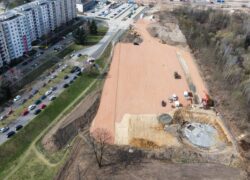
Peakside Capital Advisors has started construction of Hall C1 at City Point Targówek, with representatives of the investor and general contractor Depenbrock Polska attending the groundbreaking ceremony. The new facility will provide 17,000 sqm of space, more than 10,000 sqm of which has already been leased. Completion is scheduled for the third quarter of 2026.

Hall C1 is being developed on a revitalised site following demolition and cleanup works. It will offer warehouse modules with space for offices and social areas, as well as the option for light industrial operations. Most of the space has been reserved by “one of the leading companies operating in the food sector,” according to Peakside.

The project incorporates a range of sustainability and energy-efficiency measures. These include mitigation of heat-island effects through light-coloured façades and a white and green roof, photovoltaic installations, and rainwater reuse for sanitary purposes. Energy performance will be verified through leak testing and thermal imaging. Skylights will cover 5–12% of the roof to increase natural light, and district heating will serve the building. Outdoor areas will include rest and recreation spaces for employees, as well as charging stations for electric vehicles and covered bicycle shelters. The building will pursue BREEAM, LEED and WELL Health-Safety certifications.

Roman Skowroński, Managing Director at Peakside Capital Advisors, said: “City Point Targówek is a project that we are consistently building as a new generation urban park – multifunctional, accessible and ready to serve both urban logistics and light manufacturing or specialized activities. Hall C1 fits perfectly into this vision, providing modern, flexible spaces for businesses that want to operate close to the city and their customers.”

Michał Berus, Construction Manager at Depenbrock Polska, added: “This project requires high engineering precision, among other things due to the advanced infrastructure of one of the future tenants, who has planned a cold store and freezer room with a temperature of –20°C on its premises. We are currently reinforcing the ground with displacement columns and carrying out preparatory work for the foundations.”

City Point Targówek is the largest logistics park within the Warsaw city limits and is planned to reach 100,000 sqm of modern space. Located in a former industrial zone, it is designed to accommodate urban logistics, light manufacturing and specialised operations. The complex forms part of the urban logistics portfolio developed by the joint venture between Partners Group and Peakside Capital Advisors, aimed at delivering adaptable warehouse and production facilities in key urban locations.

SPM Invest Acquires Major Office Complex in Brno for Over CZK 2.3 Billion

Investment group SPM has completed the purchase of one of Brno’s largest office parks, The Campus Science Park in Bohunice, in a transaction valued at more than CZK 2.3 billion. The acquisition adds more than 50,000 sqm of modern workspace to SPM’s growing real estate portfolio. The seller was Corebridge Real Estate Investors.

The office campus, developed in several phases between 2009 and 2018, sits next to the Brno University Hospital and the Masaryk University campus. The location has attracted a strong mix of corporate occupiers, including firms operating in telecommunications, media, banking and digital services.

According to Kateřina Skalická, partner at SPM Invest, the group intends to build on the property’s existing position in the market. She noted that the immediate priority is to raise occupancy while keeping service standards at a high level. She added that SPM plans to focus on new residential opportunities, particularly in Prague 5, while remaining attentive to other attractive investment prospects.

The acquisition strengthens SPM’s presence in both Prague and Brno. In previous years, the group has taken ownership of prominent assets such as the Křižík Palace office complex in Prague’s Smíchov district, along with other holdings that include residential and mixed-use sites and an industrial facility near Tachov.

The purchase of The Campus Science Park ranks among the most notable transactions of the year in the Czech commercial property market and marks another step in SPM’s long-term expansion strategy.

Czech Budget Deficit Reaches CZK 232.4 Billion by November, Lowest November Figure in Six Years

The Czech state budget ended November with a deficit of CZK 232.4 billion, according to new data from the Ministry of Finance. The gap widened by CZK 49.3 billion during the month but remains below last year’s November shortfall of CZK 259.2 billion. Despite the improvement, it is still one of the deepest deficits recorded since the country’s establishment.

By the end of November, state revenues totalled CZK 1.87 trillion, a year-on-year increase of 7.6 percent. Higher tax receipts and stronger collection of compulsory insurance payments were the key drivers of this rise. Expenditures reached CZK 2.102 trillion, up 5.3 percent compared with the same period last year.

Finance Minister Zbyněk Stanjura, who is leaving office following the government’s resignation, said the budget will be handed over to the next administration in a stronger position than the one his cabinet inherited. He pointed to a significantly smaller deficit at this stage of the year compared with 2021.

Analysts, however, cautioned that challenges remain. PwC analyst Dominik Kohut noted that only a small margin separates the current deficit from the full-year target of CZK 241 billion. He stressed that the long-running pattern of large deficits cannot be resolved without substantial structural changes to public finances, warning that technical revisions to economic forecasts are insufficient without deeper reforms.

Corporate income tax collection recorded the strongest growth among major tax categories, rising 14.7 percent year-on-year to CZK 175.8 billion. Revenue from the windfall tax applied to energy, petrochemical companies and major banks amounted to CZK 32.8 billion, higher than at the same point last year. Personal income tax generated CZK 167.6 billion, reflecting wage growth across the economy, which also contributed to a 7.1 percent increase in insurance contributions to CZK 730.8 billion.

Value added tax (VAT) receipts reached CZK 377.4 billion, an 8.4 percent increase attributed in part to stronger household consumption. Excise duties brought in CZK 153.4 billion, up 2.9 percent year-on-year. Higher excise tax rates on alcohol and tobacco supported the rise, while economic activity and transport volumes boosted fuel-related revenues.

Social benefits remained the largest expenditure item, amounting to CZK 845.6 billion by November, including CZK 656 billion for pensions. Debt-servicing costs climbed to CZK 86 billion, an increase of 15.7 percent. Analysts highlighted that the cost of servicing public debt has grown sharply over the past decade; Raiffeisenbank’s Tereza Krček noted that such expenses are now two and a half times higher than in 2010. Kohut added that rising debt costs reduce the government’s capacity to invest.

Capital spending reached CZK 197.1 billion, 20.2 percent higher year-on-year, though representing just over 74 percent of the amount planned for the full year. Transfers to the State Fund for Transport Infrastructure rose markedly to CZK 76.9 billion, an increase of 43.3 percent.

For 2025, the budget framework allows for revenues of CZK 2.086 trillion and expenditures of CZK 2.327 trillion, corresponding to a planned deficit of CZK 241 billion. Last year’s budget finished CZK 271.4 billion in the red, the lowest deficit since the start of the COVID-19 pandemic but still among the largest in modern Czech history.

Source: CTK

New-Home Prices Hold Steady Across Major Cities in November

New-build housing prices in Poland’s largest urban markets showed little movement in November, according to data tracking developers’ offers in major cities. With one exception, average asking prices remained close to October levels, suggesting that the rapid increases seen earlier in the year have eased.

Warsaw was the only city where the average price per square metre slipped slightly. Analysts attribute the decline to a wave of lower-priced units added to the market rather than a broad-based adjustment by developers. In other cities, including Kraków, Wrocław, Tri-City, Poznań, Łódź and the Upper Silesian-Zagłębie Metropolis, the averages were essentially unchanged.

Despite the lack of visible reductions in official price lists, market observers note that the final prices paid by buyers can differ. Many developers rely on promotions, seasonal incentives and limited-time offers, particularly toward the end of the year, to stimulate demand without altering headline prices.

Łódź currently stands out as the most stable of the major markets, with the average price of new apartments sitting slightly below its level from a year earlier. The Upper Silesian-Zagłębie Metropolis has also shown minimal fluctuation over the year. Kraków has seen a modest rise, while Wrocław has experienced somewhat stronger growth. Warsaw and Poznań recorded increases of around 3 percent over the past twelve months.

November’s results reinforce the picture of a market that has cooled after a period of strong growth. Although demand remains steady in many regions, a broader mix of pricing and product types—especially in the capital—has helped to keep average values in check.

Chamber Raises Outlook for Czech Economic Growth, Sees Stronger Momentum Through 2027

The Czech Chamber of Commerce now expects the economy to expand by 2.4 percent this year, revising its June outlook upward. The organisation presented the updated figures at a briefing, noting that domestic demand has been recovering faster than anticipated. A combination of rising household spending and continued wage growth is credited with supporting the improvement.

According to the Chamber, the current year’s performance is benefiting from stronger pay increases than previously assumed. Higher earnings, combined with easing inflation, are helping restore purchasing power after several years of decline. Chamber president Zdeněk Zajíček said that wage pressures appear to reflect efforts by employees to recoup earlier losses in real incomes. A tight labour market, he added, is also shaping wage negotiations.

The Chamber expects growth to moderate slightly in 2026, estimating a 2.3 percent expansion. The forecast suggests that while household spending will remain important, investment by companies should play a greater role next year. A temporary rise in unemployment to around 4.5 percent is also anticipated, though analysts involved in the forecast emphasise that this reflects movement between sectors rather than a broader downturn.

Looking ahead to 2027, the Chamber predicts an acceleration in economic activity, projecting growth of 2.7 percent. It expects that consumer demand and business investment will continue to reinforce each other, while the contribution of international trade could also turn mildly positive.

Other institutions have released more cautious projections. The Czech National Bank recently downgraded its outlook, now expecting the economy to rise by 2.3 percent this year and 2.4 percent in 2026. By contrast, the Ministry of Finance has slightly improved its own assessment and now anticipates 2.4 percent growth for 2025, followed by a 2.2 percent increase next year.

While the individual forecasts differ, all point to a gradual improvement in the Czech economy, supported by firmer household finances and a rebound in private investment.

front page info
LATEST NEWS