Romania Eases FDI Framework as It Positions for a New Investment Cycle

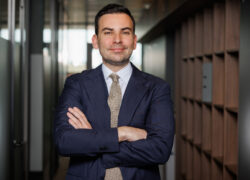
Romania’s foreign direct investment (FDI) regime is entering a more pragmatic phase, as recent legislative changes aim to streamline procedures while maintaining safeguards for strategic sectors. According to an interview with CIJ EUROPE, Silviu Stratulat, Managing Partner at Stratulat Albulescu Attorneys at Law, said the evolution of the framework reflects both European alignment and a growing effort to improve the country’s investment appeal.

Romania introduced its FDI screening mechanism in 2022, following a broader European Union initiative to protect critical assets and sensitive industries. While the framework was not among the first in the region, it aligned the country with established regimes in major EU economies and reflected a shift toward greater scrutiny of cross-border capital flows.

In its initial form, however, the legislation created a degree of uncertainty. Broad definitions of sensitive sectors and limited guidance made it difficult for investors to assess whether transactions required notification. In practice, authorities encouraged a precautionary approach, effectively expanding the scope of filings and adding complexity to deal execution.

From a transactional perspective, the introduction of FDI screening extended timelines and increased costs, particularly for mid-sized investments. Despite this, Stratulat notes that it did not deter foreign capital. Instead, investors adapted by incorporating FDI approval into their transaction planning, treating it as a standard step rather than an obstacle.

One of the more effective aspects of the regime has been the ability to initiate filings at an early stage, based on preliminary agreements rather than fully executed contracts. This has allowed investors to run the screening process in parallel with due diligence and negotiations, helping to mitigate delays. In practice, approvals have generally been obtained within a timeframe of around three months.

Recent amendments adopted in March 2026 indicate a shift toward a more investor-oriented approach. The notification threshold has been increased from €2 million to €5 million, significantly reducing the number of transactions subject to review. At the same time, procedural timelines have been shortened and administrative steps simplified, while fees have been reduced, easing the cost burden on investors.

Additional measures include exemptions for certain intra-group reorganisations involving EU and OECD investors, as well as a more streamlined decision-making process. While the effectiveness of these changes will depend on implementation, they signal a clear intention to improve efficiency and predictability.

Stratulat views these developments as part of a broader effort by Romania to prepare for a new investment cycle. In the context of shifting geopolitical dynamics and the prospect of post-war reconstruction in the region, the country is positioning itself to capture increased capital flows. Sectors such as manufacturing, logistics and infrastructure are expected to benefit, alongside a broader reorientation of global investment toward Europe.

Despite these improvements, regulatory predictability remains a key concern. Romania benefits from the stability provided by EU membership, including harmonised frameworks in areas such as competition law, data protection and corporate regulation. Certain sectors, including IT, construction and agriculture, have also maintained relatively consistent policy support.

At the same time, investors continue to face challenges linked to legislative volatility. Frequent use of emergency ordinances, particularly in tax and labour law, creates uncertainty and can complicate long-term planning. Changes are sometimes introduced with limited consultation or short implementation timelines, increasing execution risk.

Administrative consistency also remains uneven. Differences in capacity across public authorities, combined with periodic leadership changes, can slow decision-making and require investors to re-engage repeatedly with institutions.

In a regional context, Romania retains strong fundamentals, including a large domestic market, competitive labour costs and access to EU funding. Growth sectors such as IT, business services, agriculture and energy continue to attract interest, supported by a well-developed academic base.

However, competition from other Central and Eastern European markets is intensifying. While infrastructure development is accelerating and administrative processes are gradually improving through digitalisation, investor perception continues to play a role. Although progress has been made in strengthening the rule of law, historical concerns still influence how the market is viewed externally.

Overall, Romania’s FDI framework is moving toward greater alignment with international standards. The latest reforms suggest a shift from control toward facilitation, as authorities seek to balance security considerations with the need to attract sustained foreign investment.

© 2026 cij.world

Oxygen Park Signs Five Lease Agreements in Warsaw

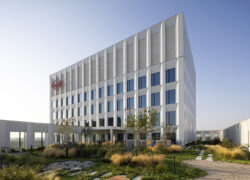
Oxygen Park, an office complex located on Aleje Jerozolimskie in Warsaw, has secured five lease agreements covering approximately 2,400 sqm, including renewals with existing tenants and two new occupiers.

The transactions were completed by Golden Star Estate and include both office and service space.

Among the new tenants is Puerta, which has taken over the operation of the SZAWA conference centre, leasing more than 650 sqm. The space includes training rooms and a conference area with capacity for up to 200 people. Vicziunai-Pol Sp. z o.o., part of the Vičiūnai Group, has also joined the complex, leasing around 140 sqm of office space.

Three existing tenants have extended their leases. These include Parker Hannifin, which occupies more than 750 sqm, as well as Diasorin Poland, with approximately 500 sqm. Nieruchomości Plus has also renewed its lease, maintaining around 300 sqm.

“The recent period has been extremely intensive for Golden Star Estate. At Oxygen Park alone, we signed five agreements, welcoming two new companies to the complex and successfully renegotiating the presence of three of our existing tenants,” said Ewa Dragunajtys. “Each such agreement confirms that Oxygen Park is a place where companies feel comfortable, grow their teams, and effectively pursue their business plans.”

The leasing processes involved several advisory firms, including Brookfield Partners, Cushman & Wakefield, DORE Consulting and Immo Broker.

Oxygen Park comprises two six-storey buildings with a total leasable area of more than 18,000 sqm. The complex offers office space alongside tenant amenities, including a courtyard, café and parking facilities. It is located in Warsaw’s western business district, with access to public transport and major road connections.

GCC Earnings Slow as Key Sectors Weigh on Profitability in Late 2025

Corporate earnings across the Gulf markets declined in the fourth quarter of 2025, reaching a three-year low as weaker performance in key sectors weighed on overall profitability.

The drop in earnings was recorded both on a quarterly and annual basis, with most markets reporting lower results. Saudi Arabia accounted for the largest share of the decline, reflecting pressure across core industries, while Abu Dhabi and Dubai were among the few markets to post growth.

The downturn was driven primarily by the performance of energy and materials companies. Lower earnings in these sectors reflected a combination of softer pricing conditions and base effects following stronger results in previous periods. Telecommunications and consumer-related segments also reported weaker outcomes, partly due to the absence of one-off gains that had supported earlier comparisons.

Financial institutions provided partial support to overall results. Banks reported higher profits compared to a year earlier, although performance weakened on a quarterly basis as rising costs and higher provisioning levels affected margins. Real estate companies recorded growth, while utilities returned to profitability.

Despite the decline in earnings, total revenues across listed companies continued to expand, reaching a new high for the region. However, this growth did not translate into higher profits, pointing to margin pressures across several sectors.

The quarterly results were also accompanied by softer investor sentiment. Market data indicates reduced trading activity and net foreign outflows during the period, suggesting a more cautious approach among investors despite ongoing structural reforms and diversification efforts across GCC economies.

On a full-year basis, corporate profits declined for a third consecutive year, underlining the continued influence of commodity cycles and sector-specific dynamics on regional performance.

Overall, the data points to a mixed picture. While underlying economic activity and investment pipelines remain intact, earnings are increasingly shaped by sector-level pressures, cost dynamics and changing investor behaviour.

Skanska to Deliver Residential Project in Bratislava for EUR 45M

Skanska has signed a contract to build a residential complex in Bratislava with a total value of EUR 45 million (approximately SEK 480 million). The project will be included in the company’s European order bookings for the second quarter of 2026.

The development, known as Matadorka Living, is being carried out for Nová Matadorka, part of the OPTIMAL DEVELOPMENT group. The scheme represents the next phase of the wider residential project.

The contract covers the construction of five residential buildings ranging from nine to ten storeys. The project will deliver 229 apartments, 22 commercial units and two levels of underground parking.

Located in the Petržalka district, the site is part of a former industrial area that is being redeveloped into a mixed-use urban neighbourhood combining residential space with supporting amenities.

Construction is scheduled to begin in September 2026, with completion planned for 2029.

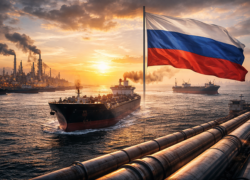
Russian Fossil Fuel Revenues Rise Despite Sanctions, CREA Analysis Shows

Russia’s fossil fuel export revenues increased significantly in March 2026, highlighting the continued resilience of its energy sector despite ongoing Western sanctions, according to a new analysis by the Centre for Research on Energy and Clean Air.

The report shows that Russia’s export revenues rose by 52% month-on-month to approximately EUR 713 million per day, driven primarily by higher global energy prices rather than a sharp increase in export volumes.

Crude oil remained the main source of revenue, with earnings from oil exports rising sharply as prices increased. At the same time, export volumes grew more modestly, indicating that price dynamics played a larger role in revenue growth.

The analysis highlights the continued importance of Asian markets. China and India remained the dominant buyers of Russian crude oil, together accounting for the majority of exports. In March, imports by India increased significantly, while China maintained its position as the largest single purchaser of Russian fossil fuels.

Despite sanctions, Russia continues to rely heavily on maritime transport networks that operate outside traditional regulatory frameworks. The report estimates that nearly half of seaborne oil exports were transported by so-called “shadow fleet” tankers, which are often used to bypass restrictions.

At the same time, Europe remains a relevant buyer in certain segments. The European Union continues to import a significant share of Russia’s liquefied natural gas, accounting for close to half of total LNG deliveries in March.

The report also points to disruptions in export logistics linked to geopolitical developments. Ukrainian drone strikes on key Baltic Sea ports temporarily reduced oil shipments, although the impact on overall revenues was offset by rising global prices.

According to CREA, stricter enforcement of existing sanctions could significantly reduce Russia’s export income. Estimates suggest that full compliance with price caps could have lowered revenues by several billion euros in March alone.

The findings underline the continued complexity of global energy markets, where sanctions have reshaped trade flows but have not fully curtailed Russia’s ability to generate income from fossil fuel exports.

Catella Appoints Herbert Mirbeth to Lead Capital Raising Strategy

Catella has appointed Herbert Mirbeth as Director Group Capital Raising Strategy & Partnerships, effective 13 April 2026. The newly created role is part of the company’s efforts to strengthen its capital raising and investor communication activities across Europe within its Investment Management business.

Mirbeth joins from Patrizia AG, where he served as Director Institutional Clients for the DACH region. In that position, he advised institutional investors across real estate and infrastructure, covering equity, debt and listed investment strategies. Earlier in his career, he held senior roles at KG Allgemeine Leasing and Real I.S. Group.

In his new role, Mirbeth will focus on developing a more coordinated approach to investor communication and engagement across Catella’s European operations. His responsibilities include aligning messaging across markets, supporting cross-border investor relations and contributing to relationships with institutional clients.

“Herbert’s appointment marks an important step in strengthening our platform for European investor communication and capital raising. His strategic experience in managing institutional relationships and investor communication will significantly enhance our visibility, credibility, and effectiveness further,” said Dominik Röhrich.

The appointment reflects Catella’s broader strategy of building a more integrated approach to capital raising and investor relations across its European platform.

Immocap Sells The Mill Office Building in Bratislava to REICO Fund

Immocap has agreed the sale of The Mill office building in Bratislava to REICO LONG LEASE, part of the Erste Asset Management group. The transaction is among the larger office deals recorded on the Slovak market this year and forms part of a broader cooperation between the two parties.

The agreement also includes a partnership under which Immocap will provide property management services for selected assets within REICO’s Slovak portfolio, including The Mill, as well as Forum BC and Park One.

“The Mill building fits perfectly into our REICO LONG LEASE fund, where it is the first investment in offices and thus further diversifies the fund’s risk profile,” said Dušan Sýkora. “The partnership with Immocap is a big step for us on the Slovak market and I am convinced that we will see further joint transactions in the future. Not only this acquisition, but also the entire cooperation is beneficial for our tenants and consequently especially for our investors.”

The Mill is located on Mlynské nivy boulevard in Bratislava and offers more than 25,000 sqm of leasable office space. The building is fully occupied.

Immocap will continue to manage the property following the transaction, while also expanding its role within REICO’s portfolio in the country.

“I see the agreement with the REICO investment fund as a good signal for the entire office real estate market in Slovakia and I believe that it will also be an impulse for boost in this area,” said Martin Šramko. “Immocap has successfully established itself as a lessor and partner for large multinational companies, and the latest transaction confirms this success story. I am glad that we are handing over the building in excellent condition and with one hundred percent rent.”

Immocap has been active on the Slovak market for more than three decades, focusing on office developments for international occupiers. Its portfolio includes projects delivered for tenants such as DELL, Henkel, Orange and ZSE.

The transaction reflects ongoing investment activity in the Bratislava office market, where fully leased and recently completed assets continue to attract institutional capital.

CTP Signs Over 12,000 sqm of New Logistics Leases Across Poland

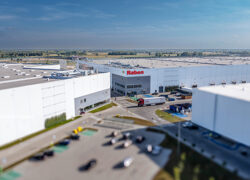
CTP has completed new leasing agreements across Poland totalling more than 12,000 sqm of warehouse and logistics space, in addition to a previously announced 29,000 sqm lease at CTPark Legnica.

The latest transactions were concluded across five business parks and include a mix of lease extensions and new tenant agreements.

In northern Poland, MAG expanded its operations by 6,900 sqm at CTPark Gdańsk Port. In western Poland, Domator24 increased its leased space at CTPark Sulechów. A company operating in the electrical infrastructure sector signed a 1,500 sqm lease at CTPark Zabrze.

Further activity was recorded in the Warsaw region. A tyre and rim distributor leased 1,900 sqm at CTPark Warsaw South. At CTPark Warsaw Nowy Konik, the first tenant has been secured for the CTBox development, which is designed to provide smaller, flexible industrial units.

The agreements follow earlier leasing activity in March, when Windar Renovables signed for 29,000 sqm at CTPark Legnica.

Poland remains one of the larger logistics markets in Central Europe, supported by its location, transport infrastructure and domestic demand. CTP’s portfolio in the country includes 16 industrial and logistics parks with more than 1 million sqm of gross leasable area. The company also has additional development capacity of around 2.6 million sqm and is currently delivering over 440,000 sqm of new space under construction.

“These transactions demonstrate the continued strength of occupier demand for high-quality logistics space across Poland, from major urban markets like Warsaw to key regional hubs,” said Piotr Flügel. “Poland’s economic fundamentals remain robust, and as companies adapt their supply chains and distribution networks, we continue to see strong interest in flexible, well-located space that can support long-term growth.”

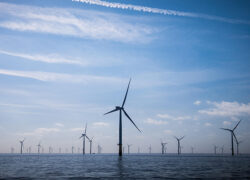
Offshore Wind Expansion Gains Momentum as Poland Prepares First Projects

Offshore wind energy continues to expand globally, with installed capacity reaching around 85 GW and a further significant volume currently under construction, confirming the sector’s ongoing growth.

Across Europe, investment in offshore wind remains a central component of the energy transition. Countries bordering the North Sea have committed to accelerating the development of wind capacity and supporting grid infrastructure, while auction systems continue to bring forward new projects, particularly in markets such as the United Kingdom.

In Poland, offshore wind is moving from planning to implementation. The first large-scale projects, including Baltic Power, are expected to begin operations around 2026–2027, marking a transition from development to active generation.

“Offshore wind is no longer a future concept but a developing part of the energy system,” said Oliwia Mróz-Malik, Manager for Offshore Wind Investment and Development at the Polish Wind Energy Association. “The coming years will determine how quickly projects translate into measurable contributions to the national energy mix.”

The experience of more mature markets such as the United Kingdom, Germany and Denmark illustrates the pace at which offshore wind can scale once initial projects are delivered. In these countries, offshore wind has evolved from early-stage projects into a significant source of electricity within a relatively short timeframe.

From a market perspective, offshore wind offers advantages linked to the absence of fuel costs, which can reduce exposure to commodity price volatility. However, its impact on electricity prices depends on broader system conditions, including grid capacity, storage and overall system flexibility.

“Increasing the share of low-carbon generation can influence wholesale electricity prices, particularly during periods of high renewable output,” Mróz-Malik added. “However, the scale of this effect will depend on infrastructure readiness and system integration.”

In Poland, the development of offshore wind is also linked to industrial activity. A growing number of companies are participating in the supply chain, including manufacturers of structural components, cables and specialised equipment, as well as service providers in logistics and engineering.

“Offshore wind projects are not only energy investments but also industrial projects,” Mróz-Malik said. “They contribute to the development of local capabilities and support long-term economic activity.”

Industry estimates suggest that investment in offshore wind could reach significant levels over the coming decades, reflecting the scale of infrastructure required. The final outcome will depend on the pace of project delivery, regulatory conditions and the expansion of supporting infrastructure such as transmission networks and energy storage.

While the sector continues to face challenges, including permitting and grid integration, offshore wind is increasingly positioned as a key component of Europe’s long-term energy strategy. In Poland, the coming years are expected to determine how quickly the sector moves from initial deployment to broader system relevance.

Czech Travel Sector Unaffected by Fuel Supply Risks, Though Costs Rise

Travel agencies in Czech Republic are not currently experiencing disruptions related to aviation fuel supply, despite rising geopolitical tensions in the Middle East, according to industry representatives.

Officials from the Association of Travel Agents said that flights arranged through tour operators are typically secured and prepaid several months in advance, in many cases covering the summer season. This reduces the immediate risk of cancellations. Industry representatives also note that airlines are expected to prioritise existing contractual commitments, including those with travel agencies.

Major operators, including DER Touristik CZ and Čedok, have not reported any concerns regarding fuel availability. Airports across the country, including Prague, Brno, Pardubice and Ostrava, are also operating without disruption at present.

While supply remains stable, costs are increasing. Aviation fuel prices have risen sharply in recent weeks, raising operating expenses for airlines. According to market participants, this is beginning to be reflected in ticket pricing, particularly for new bookings. For short-haul routes within Europe, additional charges are typically in the range of several hundred Czech crowns per passenger, while long-haul travel may see increases of approximately CZK 2,000 to CZK 3,000.

Travel agencies have indicated that previously purchased package holidays are not subject to price adjustments. Future pricing, however, will depend on developments in fuel markets, demand trends and available capacity.

Demand patterns are also shifting. Interest in destinations in or near the Middle East has weakened, while travel within Europe has gained momentum. Data from Kiwi.com suggests increased demand for regional destinations, including Poland.

Industry organisations, including Airports Council International Europe, have warned that prolonged disruption to key oil transit routes could create supply pressures in the coming weeks. For now, however, the sector continues to operate normally, with the primary impact limited to gradually rising travel costs rather than availability constraints.

Source: CTK

front page info
LATEST NEWS