MKiŚ: Trump’s energy policies could lower oil and gas prices, but climate action remains crucial

The recent decision by U.S. President Donald Trump to ramp up oil and gas production is expected to increase global supply and subsequently drive down prices, according to Paulina Hennig-Kloska, Poland’s Minister of Climate and Environment. However, she strongly criticized Trump’s move to withdraw the United States from the Paris Climate Agreement, warning of its negative impact on global efforts to combat climate change.

“Increasing gas and oil production will likely lead to a decrease in their global prices. It’s a simple market rule—when more supply enters the market, prices fall. In Poland, we prefer American gas and oil over Russian imports, which should be completely phased out from the European market,” Hennig-Kloska said in an interview with Radio One.

Hennig-Kloska acknowledged that while the energy transition will take years, natural gas is currently viewed as a transitional fuel in Poland’s energy transformation strategy. She stressed that an abundant global supply of American gas could benefit Poland economically, leading to lower energy costs. However, she emphasized that global cooperation is necessary to achieve meaningful reductions in emissions.

“The key is a global approach to emission reductions, not just actions taken in Poland or Europe alone, as these isolated efforts will have limited impact,” she said, highlighting the responsibility of the world’s largest emitters in curbing climate change.

Hennig-Kloska criticized Trump’s decision to abandon the Paris Agreement, calling it a “bad decision for the world,” as climate change is an undeniable reality. She pointed to recent climate-related disasters, citing heatwaves, rising sea levels, drinking water shortages, and extreme weather events observed in Poland, Spain, and Central Europe.

“This year, we’ve experienced unprecedented weather anomalies, including massive storms and floods. The United States will also face its share of climate-related disasters,” she warned.

According to Business Insider Polska, Trump’s withdrawal puts the U.S. in a group with countries such as Iran, Libya, and Yemen—the only nations that have opted out of the 2015 climate accord, which aims to cap global warming at 1.5°C above pre-industrial levels to prevent catastrophic climate impacts.

When asked how Poland can encourage its energy transition, Hennig-Kloska stressed the importance of making the shift “beneficial for citizens and the economy.” She argued that expanding renewable energy sources (RES) leads to lower energy costs and tangible benefits for Polish consumers.

“Transitioning our energy mix from coal to wind and solar power is not only necessary but also profitable. As more renewable energy is integrated into the system, energy prices will decline, benefitting households and businesses alike,” she stated.

Hennig-Kloska reiterated that Poland’s domestic industry is eager for an accelerated transition, as cheaper energy from renewables would strengthen economic competitiveness and drive sustainable growth.

As the global energy landscape shifts, Poland remains committed to advancing its green transformation while navigating the economic implications of U.S. energy policies under the new administration.

Source: MKiŚ and ISBnews

KRD: Pensioner debt falls to PLN 5.65 billion, but average debt per senior increases

The total debt of Polish pensioners has decreased by PLN 0.9 billion over the past year, reaching PLN 5.65 billion, according to the latest data from the National Debt Register (KRD). Despite the overall reduction, the average debt per senior has risen from PLN 18,800 to PLN 19,000. The number of indebted retirees recorded in the KRD database has also declined, dropping from 349,100 in January 2024 to 296,300 currently.

According to Adam Łącki, President of the National Debt Register, nearly 53,000 pensioners have successfully paid off their arrears, which is a positive signal considering the financial challenges many seniors face. He noted that retirees must carefully manage their limited budgets, which often do not cover their essential needs and living expenses. Łącki also highlighted that pensioners have collectively paid PLN 98 million in bank debts, PLN 15 million for telecommunications services, and almost PLN 5 million for housing rent over the past year. However, outstanding electricity bills have increased by PLN 8.5 million during the same period.

A significant portion of pensioners’ debt, amounting to PLN 3.93 billion, has been taken over by securitization funds that purchased the liabilities from original creditors, primarily banks. Additionally, pensioners owe PLN 1.01 billion to state and local authorities, PLN 489.2 million to financial institutions such as banks, loan providers, and insurers, PLN 77.4 million in unpaid housing rent, PLN 61.4 million to telecommunications and internet providers, and PLN 34.4 million to energy suppliers.

Findings from the survey “Portfolios of Polish Households Under Pressure from Rising Prices,” conducted by KRD in the third quarter of 2024, reveal that older consumers are more likely than younger age groups to prioritize paying bills over discretionary spending when facing financial strain. The study shows that 61% of people aged 55-64 would reduce spending in other areas to cover their bills, while among those aged 65-74, the figure rises to 73%.

Jakub Kostecki, President of debt collection firm Kaczmarski Inkasso, observed that while many seniors worry about their debt, they often struggle to take a flexible approach to financial management. He noted that pensioners tend to experience significant anxiety over their ability to meet financial obligations. However, once they commit to an installment repayment plan, they exhibit remarkable discipline and consistency. Clearing their debts, according to Kostecki, provides a sense of relief and restores their financial dignity.

Data from KRD also indicates that women make up the majority of indebted pensioners, with 155,800 female debtors compared to 140,000 male debtors. However, men account for a larger share of the total debt, owing PLN 2.98 billion compared to PLN 2.67 billion owed by women. Male pensioners also carry a higher average debt, amounting to PLN 21,200 per person, while the average debt among female pensioners stands at PLN 17,100.

The reduction in total pensioner debt indicates progress, but the increase in individual debt levels underscores the ongoing financial pressures retirees face. As Poland’s aging population continues to navigate economic challenges, maintaining financial stability remains a key concern for both individuals and policymakers.

Source: KRD and ISBnews

PORR’s climate commitment confirmed by science based targets initiative

The Science Based Targets Initiative (SBTi) has officially confirmed PORR’s commitment to setting science-based climate targets aimed at limiting global warming. As part of this initiative, the construction company will submit specific climate goals designed to contribute to the fight against climate change.

PORR’s pledge to the SBTi marks a significant milestone in its sustainability strategy. The company has committed to establishing scientifically backed climate targets for short-term emission reductions by 2030 within the next 48 months. The targets include a 43% reduction in Scope 1 and Scope 2 emissions and a 25% reduction in Scope 3 emissions. These reductions will be achieved through clearly defined and measurable measures implemented across the entire value chain.

With this commitment, PORR is reinforcing its alignment with the Paris Agreement, which aims to limit global warming to 1.5°C above pre-industrial levels. To achieve this goal, global greenhouse gas emissions need to be reduced by half by 2030 and reach net zero by 2050—a significant challenge for the emissions-intensive construction industry.

Commenting on the company’s commitment, PORR CEO Karl-Heinz Strauss emphasized the importance of collaboration in tackling climate change. “Global decarbonization can only be achieved through collective effort, taking effective steps in a transparent and verifiable manner. Transparency is a key component of PORR’s Green and Lean strategy. By committing to the SBTi, we are sending a clear message about our sustainable future and encouraging our partners, customers, and suppliers to join us on this journey,” said Strauss.

The SBTi is a globally recognized initiative that helps companies and financial institutions set and implement credible climate targets. It was established through a collaboration between the Carbon Disclosure Project (CDP), the United Nations Global Compact, the World Resources Institute (WRI), and the World Wide Fund for Nature (WWF).

In Europe, around 10,000 companies have committed to science-based targets, including 82 Austrian firms, reflecting a growing commitment across industries to sustainable business practices.

With its SBTi commitment, PORR is positioning itself at the forefront of sustainability within the construction sector, taking decisive steps toward a low-carbon future while encouraging stakeholders to contribute to the broader climate action agenda.

Sebastian Barandziak appointed President of Euro Styl at Dom Development Group

Sebastian Barandziak has been appointed as the new President of the Management Board of Euro Styl, a subsidiary of Dom Development Group, Poland’s leading residential developer. The company announced that the existing board members, Magdalena Reńska and Jarosław Górski, have been appointed as vice presidents.

Barandziak brings extensive experience in the real estate and construction industry, having worked in the sector for many years. His career began in commercial roles, and since 2005 he has held various managerial positions, including serving as chairman of the board and financial director.

In 2013, he joined Dekpol, where he served as Real Estate Director for five years before taking on the role of President of the Management Board at Dekpol Deweloper, a position he held for nearly six years.

Euro Styl, a key player in the residential development sector, is part of Dom Development Group, which has been listed on the Warsaw Stock Exchange (WSE) since 2006 and is a constituent of the mWIG40 index.

The appointment of Barandziak is expected to bring strategic leadership and further strengthen Euro Styl’s market position within the Polish residential real estate sector.

GreenWay Polska expands charging network to 1,178 public points in 2024

GreenWay Polska significantly expanded its electric vehicle (EV) charging infrastructure in 2024, adding 363 new proprietary public charging points, bringing the total number of company-owned public stations to 1,178. The company’s broader public network, which includes partner stations, now comprises 1,633 charging points, the company announced.

“GreenWay Polska has been expanding its public network at an average pace of 200 new charging points annually, but the 2024 results significantly exceeded this average,” the company stated.

In the past year, the company deployed 525 AC chargers and 653 DC chargers across its network, highlighting a growing demand for fast-charging solutions. Additionally, 160 new partner stations were integrated into the GreenWay network, further boosting the company’s nationwide coverage.

A major focus of GreenWay’s expansion has been the development of environmentally friendly, renewable energy-powered charging stations. By the end of 2024, the network included 592 green energy charging points, comprising 137 AC chargers and 455 DC chargers.

“In 2024, we added nearly twice as many charging points as the previous year, effectively integrating almost one new station per day into our public network,” said Rafał Czyżewski, CEO of GreenWay Polska. “This milestone is significant, but it’s important to note that we also developed even more charging points for businesses.”

GreenWay Polska also made significant strides in expanding charging infrastructure for businesses. In 2024, the company built 650 new charging stations for corporate clients looking to expand their electric vehicle fleets. Moreover, an additional 362 charging points were brought under the company’s management, further strengthening its service portfolio.

In total, GreenWay Polska now oversees 1,750 private charging points operated by well-known brands such as InPost, IKEA, Mercedes (Jawor factory), and Strabag. These stations, though privately owned, are integrated into GreenWay’s broader management system to ensure optimal operation and maintenance.

To support corporate fleets, GreenWay offers a fleet card system, which grants access to its entire public charging network. By the end of 2024, over 3,500 fleet drivers were utilizing this service.

“Year after year, we observe growing interest from businesses in establishing their own charging infrastructure,” noted Marek Zientarski, Sales Director at GreenWay Polska. “As more companies transition to electric fleets, they are becoming a key driver of zero-emission transportation growth.”

In 2024, GreenWay Polska experienced a surge in customer registrations, with 33,000 new users joining its network, bringing the total number of registered users in Poland to over 108,000.

EV drivers conducted 1.23 million charging sessions across the GreenWay network last year—representing a 33% increase compared to 2023.

GreenWay also expanded its operations in other European markets. In Slovakia, the network grew by 6,300 new users, bringing the total customer base there to 19,000. Additionally, the company launched its services in Croatia, registering 896 customers in its first year of operation.

GreenWay Polska is part of the international GreenWay Group, recognized as one of the fastest-growing electromobility infrastructure providers in Central Europe. As of the end of 2024, the company operates 1,633 public charging points in Poland, with a significant portion offering fast charging capabilities exceeding 100 kW, catering to the growing needs of EV users.

With a strong focus on expanding both public and corporate infrastructure, GreenWay Polska continues to play a pivotal role in driving sustainable mobility across the region.

Source: GreenWay Polska and ISBnews

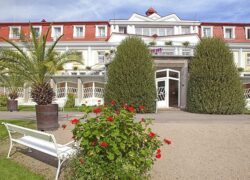
EMERGE Industry receives regulatory approval to acquire Bohdaneč and Teplice nad Bečvou spas

The Office of Competition and Consumer Protection (ÚOHS) has granted approval for EMERGE Industry to acquire the Bohdaneč Spa in the Pardubice region and the Teplice nad Bečvou Spa in the Přerov region.** The decision, announced today on the authority’s website, confirms that the transaction will not significantly distort competition in the market.

“The Authority concluded in a simplified procedure that the merger will not result in a significant distortion of competition. The decision is now final,” the ÚOHS stated.

The acquisition will see EMERGE Industry take over the parent companies of both spas from their current owner, Jiří Vitík. Vitík, a long-time senior manager of both facilities, acquired them through an auction in 2021 for CZK 47.1 million. The spas had previously been under the control of a bankruptcy trustee since the collapse of their former owner, Médeia Bohemia, in 2002.

According to the 2023 annual report filed in the Collection of Deeds, Léčebné lázně Bohdaneč reported a net turnover of CZK 284 million, closing the year with a profit of CZK 20 million. The spa specializes in treating musculoskeletal conditions and primarily caters to elderly clients.

Meanwhile, the Teplice nad Bečvou Spa recorded a net turnover of CZK 297 million in 2023, with an annual profit of CZK 33 million. The facility offers a wide range of treatments, focusing on cardiovascular diseases, oncological conditions, metabolic and endocrine disorders, musculoskeletal and nervous system ailments, diabetes, and hypertension.

EMERGE Industry is a holding company owned by Czech entrepreneur Filip Takáč. The firm itself does not engage in direct business operations; instead, it derives income from its subsidiary, EMERGE, based in Bakov nad Jizerou in the Mladá Boleslav region.

EMERGE specializes in warehousing, pressing, and welding services, with a primary focus on supplying the automotive sector. The company, which started as a family-owned business, has grown to employ nearly 700 workers, approximately half of whom are individuals with disabilities.

In 2023, EMERGE reported a net turnover of CZK 3.6 billion and a net profit of CZK 60.6 million, underscoring its strong financial standing.

With the regulatory approval now finalized, the acquisition is set to enhance EMERGE Industry’s presence in the healthcare and wellness sector. Analysts suggest that the move aligns with the growing demand for spa and rehabilitation services, driven by an aging population and increasing health awareness across the Czech Republic.

The integration of Bohdaneč and Teplice nad Bečvou spas into EMERGE Industry’s portfolio is expected to bring new investment and modernization efforts, potentially expanding the range of services offered to clients.

Source: CTK
Photo: Léčebné lázně Bohdaneč

Gabriela Dernerová joins P3 Czech Republic leasing team as Junior Leasing Manager

P3 Logistic Parks, a leading owner, manager, and developer of European industrial properties, has strengthened its Czech leasing team with the addition of Gabriela Dernerová as Junior Leasing Manager.

Dernerová’s appointment underscores P3’s commitment to providing personalized service and fostering strong relationships with tenants. Jan Andrus, who has overseen leasing operations and business development since last year, expressed confidence in her potential. “At P3, we believe that understanding our tenants’ needs is key to successful collaboration. Gabriela brings a strong willingness to deepen her expertise in the industrial real estate sector, making her a valuable addition to our team,” said Andrus.

Dernerová joins P3 with a background in real estate, having gained experience at Knight Frank and 108 Agency, where she honed her skills in business communication and client relations. She expressed enthusiasm for her new role, stating, “I truly appreciate the opportunity P3 has given me. I am eager to build on my previous experience and look forward to working with our tenants. I am familiar with P3’s parks and their modern, flexible facilities, and I am excited to help bring in new tenants.”

P3 Logistic Parks continues to be a major player in the Czech industrial property market, owning and managing 96 industrial properties across 17 parks, with a total lettable area approaching 1.4 million square meters. The company remains focused on providing high-quality, adaptable spaces to meet the evolving needs of tenants across various industries.

With Dernerová’s appointment, P3 aims to further enhance its leasing operations and strengthen its market position by attracting new tenants while maintaining strong relationships with existing clients.

Analysts: Trump to ramp up economic pressure on Europe, but negotiation channels remain open

The economic policies outlined by newly inaugurated U.S. President Donald Trump are expected to increase pressure on Europe, particularly in areas such as environmental regulations and trade policies. However, analysts suggest that Trump’s approach, while aggressive, leaves room for future negotiations with European partners.

According to economists interviewed, the most significant impact is anticipated in the realm of environmental policy, where the European Union loses a key ally in its Green Deal agenda. Analysts warn that this shift could compel European policymakers to reconsider their sustainability goals. Meanwhile, Trump’s support for increased energy production is likely to drive down global energy prices, benefiting consumers but challenging the EU’s green transition efforts.

Green Policies in Jeopardy as U.S. Shifts Focus

One of Trump’s key economic promises involves rolling back environmental regulations and cutting support for electromobility. “The EU has lost a crucial partner in its green initiatives. The question now is how long the European leadership can sustain green policies that, while beneficial for the environment, have been a drag on economic growth,” said Pavel Peterka, chief economist at XTB.

Vít Hradil, chief economist at Cyrrus, echoed these concerns, noting that Trump’s expected departure from environmental commitments could hurt Europe’s competitiveness. “The EU is likely to maintain strict green regulations, which could further widen the gap in economic growth compared to other regions,” he added.

Energy Prices Set to Fall with Increased U.S. Production

Trump’s emphasis on boosting domestic production, particularly in oil and gas, is expected to lower energy costs worldwide and curb inflation in the U.S. “Trump aims to increase energy exports globally to strengthen the U.S. economy,” said Peterka.

Radim Dohnal, an analyst at Capitalinked.com, noted that while an increase in U.S. production could put downward pressure on prices in Europe, the decline may be tempered by Trump’s plan to expand U.S. strategic reserves. “Energy prices may drop, but the effect could be limited by increased stockpiling,” Dohnal said.

Trade Policies: Tariffs as a Bargaining Tool

Another cornerstone of Trump’s economic strategy is a potential shift in trade policy, which could include the introduction of tariffs. Analysts believe that such tariffs could serve a dual purpose—generating revenue for the U.S. budget and acting as leverage in trade negotiations.

“Trump did not specify any tariffs during his inaugural speech, which suggests they may not be an immediate priority,” said Petr Bartoň, an analyst at Natland. He added that while broad tariffs could be imposed on Europe, they are more likely to be used as a negotiating tool rather than an outright policy. Bartoň also warned that tariffs typically result in higher costs for domestic consumers, stating, “Tariffs inevitably impact the citizens of the country that imposes them, as they directly increase prices.”

Inflation Control and Its Global Impact

Trump’s focus on inflation reduction could also have consequences beyond the U.S., particularly for the Czech Republic in its election year. “Trump identified rising energy prices and government deficit spending as key drivers of inflation, a stance that could influence political debates in the Czech Republic,” Bartoň explained. Czech political parties are expected to use this argument in their campaigns to highlight the impact of government fiscal policies.

Panama Canal Concerns and Potential Trade Disruptions

Trump’s announcement that he intends to assert greater U.S. control over the Panama Canal has raised concerns about potential disruptions to global trade. Analysts warn that such a move could lead to temporary inflationary pressures worldwide.

Technology Sector Prioritized Over Traditional Industries

In a notable departure from previous inaugurations, Trump’s inaugural event prominently featured representatives from major global technology companies rather than industrial leaders. Dohnal pointed out that this reflects a shift in priorities and presents an opportunity for Europe to strengthen its technological standing. “Europe stands a better chance of catching up with the U.S. in technology rather than in energy-intensive sectors,” he noted.

Source: CTK

InterPadel becomes first tenant at MLP Business Park Poznań

MLP Group has secured its first tenant for the under-construction MLP Business Park Poznań, signing a lease agreement with InterPadel, a company operating a growing network of padel centers across Poland. InterPadel will occupy approximately 2,800 square meters of modern space, with the facility set for completion in December 2025. The transaction was facilitated by MAXON Nieruchomości.

Under the terms of the agreement, InterPadel will utilize nearly 2,600 square meters for sports activities, primarily padel courts, while the remaining space will be allocated for office use. This lease marks a significant milestone for the park, which is being developed in Poznań’s metropolitan area.

InterPadel, a leader in the padel sports sector, continues its expansion across the country, bringing the fast-growing sport – a hybrid of tennis and squash – to new audiences. The upcoming Poznań venue will feature nine courts, making it the largest facility of its kind in the Greater Poland region.

“This project is a major step in our mission to popularize padel in Poland,” said Jacek Sobala, CEO of InterPadel Polska. “With this new facility, we aim to provide top-tier services and foster a strong padel community. The partnership with MLP Group is particularly exciting, as their extensive experience in real estate ensures a high-quality venue for our customers.”

MLP Business Park Poznań is situated just 9 kilometers from the city center at Wołczyńska Street 18. It offers excellent connectivity, with nearby bus and tram stops, the PKP Junikowo railway station, and proximity to the A2 motorway, ensuring easy access for businesses and visitors alike.

“We are thrilled to have secured our first lease at such an early stage in the development of this urban project,” said Agnieszka Góźdź, Member of the Management Board and Chief Development Officer at MLP Group S.A. “This agreement underscores the strong demand for high-quality commercial spaces in strategic locations. MLP Business Park Poznań is designed to meet the needs of various sectors, including last-mile logistics and recreational services, as highlighted by our partnership with InterPadel. Additionally, the project will meet the highest sustainability standards, with all facilities undergoing BREEAM certification.”

The transaction highlights the flexibility and adaptability of the new business park. According to Kamilla Joszczuk, Head of the Industrial Department at MAXON Nieruchomości, “InterPadel required a specialized solution that would enable them to operate a sports facility within a warehouse environment in an urban area. Through early engagement and detailed planning, we were able to identify MLP Business Park Poznań as the perfect match for their needs.”

Once completed, MLP Business Park Poznań will offer a total of 43,300 square meters of modern commercial space. The project is primarily targeted at e-commerce businesses and companies requiring premium urban locations for their operations.

MLP Group follows a build-and-hold strategy, retaining completed logistics parks within its portfolio while providing long-term management and tenant support. The company is known for its strategic site selection, tailored solutions, and commitment to maintaining high-quality standards across all developments.

As the park takes shape, MLP Group anticipates further leasing activity, with demand driven by its strategic location and modern amenities catering to a wide range of businesses.

Czech capital to continue dominating commercial real estate market in 2025

Despite a below-average volume of commercial real estate deliveries in 2024, the Czech market remained active, largely driven by domestic capital. According to experts at Colliers, this trend is set to continue in 2025, with investor focus shifting towards the residential and retail sectors. Sustainability and ESG considerations are expected to play a crucial role in shaping the market, while challenges related to the ineffective digitalization of construction management could pose significant hurdles.

Czech Investors Seize Opportunities Amid Foreign Capital Retreat

Economic turbulence and property price adjustments across European markets have led to a retreat of international investors from the Czech market, redirecting their focus elsewhere. This shift has created a unique window for Czech investors, who dominated the investment market in 2024 and expanded their presence across Central and Eastern Europe. Experts predict that in 2025, domestic investors will continue to capitalize on the weak presence of foreign capital, acquiring prime assets entering the market. Among the most sought-after properties will be shopping centers and retail assets, as well as build-to-rent residential projects, predominantly secured through forward purchases.

Residential Prices Expected to Rise Further

Rising demand for housing across the Czech Republic and the broader CEE region has fueled activity in the residential property market. Colliers anticipates that this trend will lead to further price increases, particularly in high-quality new developments. “With no significant improvements in zoning, permitting, or financing to stimulate higher construction volumes, the ongoing price growth comes as no surprise,” said Josef Stanko, Director of Market Research at Colliers. He added that private rental sector (PRS) projects and serviced rental housing will gain further traction, as evidenced by increasing investor interest in this segment.

Retail Sector Poised for Expansion

Following a downturn in 2023, retail sales in the Czech Republic rebounded strongly in 2024, revitalizing the retail real estate sector. Rising tourism and consumer confidence have spurred the development of new projects and the refurbishment of existing shopping centers and retail parks. Investor interest has also grown, leading to several significant transactions in the past year.

Leasing activity remains robust, with retailers eager to fill vacancies left from the previous economic slowdown. “In 2025, we expect expansion to be primarily driven by discount retailers and mass-market chains, targeting previously untapped locations,” said Stanko. Additionally, major brands are likely to test the market with temporary pop-up stores. However, the market for large shopping centers is expected to remain stagnant, given the already high saturation levels in Prague and other major cities.

Office Market to See More Renegotiations Amid Space Shortages

The Czech office market will continue to experience high levels of lease renegotiations in 2025, as developers face persistent challenges. Delays due to financing issues and a shift in focus toward residential projects have hindered new office developments. Despite this, some projects have progressed through speculative builds or forward acquisitions, with over 160,000 square meters of office space currently under construction in Prague.

However, demand for new office space remains high, and options are limited in key locations, with vacancy rates as low as 3%. “Companies seeking office space in prime locations may postpone their projects until suitable options become available,” Stanko noted. This trend is expected to result in a higher volume of renegotiations compared to new leases.

Industrial Real Estate Faces Continued Challenges

The Czech industrial real estate sector continues to struggle against competition from neighboring countries, which offer more attractive conditions such as lower rents, better incentives, and a more favorable regulatory environment. These factors have led some companies to reconsider their expansion plans or move their operations abroad.

“Industrial real estate demand is expected to face a challenging first half of 2025, with improvement likely in the second half,” said Stanko. However, he cautioned that total transaction volumes will likely be lower than in 2024, marking the fourth consecutive year of market slowdown. Rental rates are expected to see only slight declines, but landlords may offer more attractive incentives such as rent-free periods, flexible lease terms, and additional benefits to attract tenants.

Despite these efforts, the Czech industrial sector remains at a disadvantage compared to neighboring countries, and competition is expected to remain fierce in the coming year.

Source: Colliers Czech Republic

front page info
LATEST NEWS