Slovakia’s average wage rises 5.7% in Q3 2025, real growth slows to 1.3%

Average wages in Slovakia continued to grow in the third quarter of 2025, but the pace of real wage growth eased as inflation picked up. According to data from the Statistical Office, the average nominal monthly wage reached EUR 1,569, which is 5.7% higher than a year earlier. In real terms, after adjusting for inflation, wages increased by 1.3%, the second weakest growth rate in the last two years. Seasonally adjusted wages were unchanged compared with the second quarter.

Nominal wage growth was recorded across all 19 monitored sectors, with increases ranging from just under 2% in professional, scientific and technical activities to more than 12% in the real estate sector. However, not all sectors kept pace with inflation. Three areas experienced real wage declines: professional, scientific and technical activities (-2.4%), arts and recreation (-1.4%), and administrative services (-1%).

Real wages rose in 16 sectors, with the strongest gains—above 5%—in real estate activities, mining and quarrying, and healthcare. Wage increases in healthcare reflected the financial adjustments applied to selected medical professions in 2025.

The two largest employers in the country, industry and trade, also saw slower nominal wage growth in Q3. Industry wages grew by 5.7% year-on-year, in line with the national average, bringing the sector’s average wage to EUR 1,672. In trade, wages rose by 5.3% to EUR 1,487, resulting in real wage growth of 1%.

Employees in information and communication, financial and insurance services, and energy utilities continued to earn the highest wages, all exceeding EUR 2,500 on average. At the opposite end of the scale, accommodation and food services remained the lowest-paid sector, though the average wage there passed EUR 1,000 for the first time. All sectors now report an average wage above this threshold.

Regionally, Bratislavský kraj remained the only region with wages above the national average, reaching EUR 1,866. Other regions ranged from EUR 1,252 in Prešovský kraj to EUR 1,495 in Trnavský kraj. Nominal wages increased in all regions, with the highest annual rise in Nitriansky kraj (8.4%). After inflation adjustment, all regions recorded real wage growth, with Nitriansky kraj again leading (3.9%) and Bratislavský kraj recording the smallest increase (0.3%).

For the period from January to September 2025, the average monthly wage reached EUR 1,580, up 6.5% year-on-year. Real wages over the first three quarters rose by 2.3%. Eighteen sectors reported real wage gains in this period, while only one—electricity, gas and steam supply—registered a real decline.

Blue Assets to Manage Fidurock’s Retail Parks in the Czech Republic

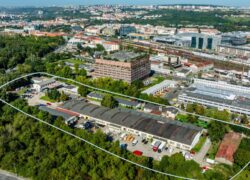
Blue Assets, the property manager overseeing the largest commercial real estate portfolio in the Czech Republic, is expanding into the retail property segment. The company has secured a mandate to manage retail parks owned by the Fidurock real estate investment group.

Effective January 2026, Blue Assets will provide full property management services for seven Fidurock retail parks. The company has already taken over management of Arkáda Prostějov as of 28 November 2025. With these additions, the total area managed by Blue Assets will increase by approximately 82,000 sqm, bringing its overall managed portfolio to more than 1.6 million sqm. Blue Assets, part of the Panattoni Group, has been active on the Czech market since 2023.

The tender included eight retail parks located in Staré Město u Uherského Hradiště, Choceň, Milevsko, Liberec, Mladá Boleslav, Tábor, Trutnov and Prostějov. The combined GLA exceeds 82,000 sqm, and tenants include Mountfield, Sportisimo, Penny, Pepco, Kik, dm, and Rossmann.

“We leverage synergies within the managed real estate portfolio for the benefit of our clients, for example, in optimizing energy management. We preserve the real estate asset value and we are responsible for its efficient operation and optimal use. We believe that effective property management is the base of successful real estate business. We are delighted to welcome Fidurock among our clients,” said Denisa Gelatková, Director of Blue Assets CZ.

Blue Assets currently manages more than 60 assets with a total leasable area exceeding 1.6 million sqm and more than 170 tenants across logistics, automotive, manufacturing, pharmaceutical and other sectors. The portfolio includes Panattoni Park Kojetín, used as a distribution centre for Amazon.

Fidurock’s real estate holdings comprise more than 35 properties with a total value above CZK 10 billion. Its portfolio focuses on apartment buildings and retail parks, alongside ongoing development activities. The group owns assets in Prague, Brno, Plzeň and Liberec, as well as multiple locations in Slovakia.

“Blue Assets met all our tender criteria and confirmed high level of its expertise. We see it as a strong player in the property management. Its strengths include a wide range of services, including energy management, community energy frameworks and use of state-of-the-art technologies. From the management perspective, a stable team of qualified people is key for us,” said Petr Vondrášek, Asset Management Director.

Art-Invest Real Estate Announces Leadership Change at Its Berlin Branch

Art-Invest Real Estate has announced a leadership transition at its Berlin branch. Mathias Groß will join the company’s management board in the first quarter of 2026 and assume responsibility for the Berlin office, succeeding Lena Brühne, who is stepping down after 13 years with the firm to pursue new opportunities in the real estate sector.

Groß will oversee a portfolio of projects in Berlin totalling around 300,000 m² and valued at more than EUR 2 billion. He joins Art-Invest Real Estate from BAUWERT Aktiengesellschaft, where he served as Head of Acquisitions, Project Development and Sales. Prior to that, he spent nine years as Branch Manager at Pandion Real Estate GmbH in Berlin. He is also an honorary board member of Transiträume Berlin e.V. and holds a degree in business administration from the Berlin School of Economics and Law. With more than 25 years of industry experience, he will take over management of one of Art-Invest Real Estate’s key regional operations.

Brühne leaves the company at her own request. Having joined Art-Invest Real Estate in 2012, she initially held roles in North Rhine-Westphalia and Berlin before establishing and leading the Berlin branch from 2016 onwards. Under her management, the location grew into an important part of the organisation, now employing 35 people. Among the projects carried out under her leadership were the Deutsche Bank Campus on Otto-Suhr-Allee, Macherei Berlin-Kreuzberg, and in the eastern region, Listhaus and Dresdner Hof in Leipzig.

“I am very much looking forward to the tasks ahead at Art-Invest Real Estate in Berlin. The current market phase in particular is opening up numerous exciting opportunities. At the same time, our goal is to further develop the existing portfolio in the best possible way. Together with the dynamic Berlin team at Art-Invest Real Estate, I would like to take on this challenge and contribute to the realization of further architecturally outstanding and innovative real estate projects,” said Mathias Groß.

Reflecting on her departure, Brühne stated: “The past 13 years have been characterized by entrepreneurial responsibility and a passion for creating lasting value. From establishing the Berlin office to large-scale projects, we have proven together that strategy and success arise from dialogue with the right people. I would like to thank the entire team for this formative time. As I now turn my attention to new perspectives, I would like to express my special thanks to the shareholders for their trust. I remain on friendly terms with Art-Invest Real Estate.“

Art-Invest Real Estate’s leadership expressed appreciation for her contribution and support for the incoming head of the Berlin office. “We would like to express our sincere thanks to Lena Brühne for her many years of trustful cooperation and wish her all the best for her future. At the same time, we are delighted to welcome Mathias Groß, an expert in the Berlin real estate market, as her successor at the Art-Invest Real Estate Berlin branch and wish him every success in his upcoming tasks,” said Dr. Markus Wiedenmann, CEO, and Dr. Ferdinand Spies, COO of Art-Invest Real Estate Management.

DIW Heat Monitor 2024: Heating Demand Stable, District Heating Prices Increase Markedly

Heating energy demand in German households remained largely unchanged in 2024 compared with the previous year, while overall heating prices rose more slowly. District heating, however, recorded a significantly sharper increase. These findings come from the latest Heat Monitor published by the German Institute for Economic Research (DIW Berlin), based on data from real estate service provider ista SE.

According to the report, temperature-adjusted heating energy consumption remained nearly constant in 2024 and was still around seven percent lower than in 2021, before the energy crisis. Emissions from residential heating also declined slightly. “The DIW Heat Monitor shows that many households are still heating more economically today than before the energy crisis,” said study author Sophie M. Behr from DIW Berlin’s Climate Policy Department.

Heating energy prices increased by an average of around six percent in 2024, compared with a rise of roughly 20 percent the previous year. District heating, however, became considerably more expensive following the expiration of national price caps, with prices rising by 27 percent. “The sharp increase in district heating prices is largely driven by catch-up effects. Prices for heating oil and gas had already risen more sharply in the previous year,” said study author Till Köveker. “Since the beginning of the energy crisis, district heating has nevertheless become less expensive overall than gas or heating oil.” Overall, heating energy prices have risen by 77 percent since 2021, while district heating prices have increased by 67 percent.

The report notes continued regional differences. Temperature-adjusted heating requirements in eastern Germany were nearly 15 percent lower than in western states, reflecting higher renovation rates and greater use of district heating. Households in the eastern states paid about 11 percent more for heating in 2024, compared with a nationwide average cost increase of 3.5 percent.

Behr warned that the uneven price developments could affect public support for the heating transition. “The extremely different price developments in 2024 between district heating and other energy sources could jeopardize the acceptance of the heat transition—unjustifiably, because it does not reflect long-term price developments,” she said. Köveker added that “pricing and price trends for district heating must become more transparent. We also need a reliable regulatory framework so as not to jeopardize investment security for the expansion of district heating and thus for the heat transition.”

Source: DIW Berlin

Reckitt to Become Anchor Tenant at New Hall in GARBE Park Klášterec nad Ohří II

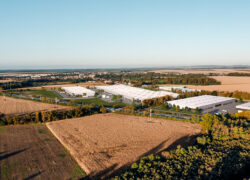
GARBE has begun construction of a new 55,000 sqm hall at GARBE Park Klášterec nad Ohří II. Reckitt, the multinational producer of health, hygiene and home care products, will become the anchor tenant. The company has signed a ten-year lease for 35,000 sqm and is expected to take occupancy in the second quarter of 2026.

“This strategic move is a milestone for our supply chain efficiency and increasing customer demand for reliable and fast deliveries. We choose strong partner in our preferred location without compromising on anything. I am looking forward to our cooperation with Garbe and successful completion of the project,” said Mark Alderson, Global Procurement Director at Reckitt.

GARBE reports that interest in the site extends beyond the anchor tenant. “We are very pleased that Reckitt, a major international player in brands focused on health and hygiene, has become the new tenant. The location is also attracting interest from other companies. Currently, around 13,000 sqm of space is still available, suitable for storage, logistics, or light manufacturing. This follows the successful first phase, in which we developed and fully leased nearly 20,000 sqm of industrial space,” said Veronika Zacha, Head of Business Development CZ at GARBE.

The new hall is designed to meet current technical standards, including a 12-meter clear height, loading docks and direct access points. The location offers direct links to regional and national road networks, including connections to the D7, D8, D6 and D5 motorways, providing access to Germany, particularly Bavaria and Saxony.

GARBE Park Klášterec nad Ohří II targets companies operating in logistics, warehousing, light manufacturing and e-commerce. The scheme includes Class A industrial space, LED lighting, EV charging stations, a green façade and rainwater reuse systems. The project is being developed in line with ESG requirements, EU Taxonomy and BREEAM certification standards.

Reckitt, headquartered in Slough, operates in more than 60 countries and manages a network of manufacturing and distribution facilities worldwide. Its portfolio includes brands such as Dettol, Lysol, Vanish, Harpic, Finish, Veet, Durex, Strepsils, Gaviscon, Nurofen and Mucinex.

HELIX alpha Appoints Four Experts to Its Interdisciplinary Advisory Board for Life Science Real Estate

HELIX alpha, an investment manager focused on life science real assets, has appointed four new members to its advisory board, strengthening the company’s strategic competence across science, real estate and investment management. The newly formed body brings together international and interdisciplinary expertise to support decision-making in a sector that is both technical and highly specialized.

The advisory board will be chaired by Prof. Dr. Thomas Glatte, CEO of Familienheim Rhein-Neckar and Professor of Real Estate Management. He previously spent nearly two decades as Director Global Real Estate at BASF, giving him extensive insight into life-science user requirements. His work with the BASF pension fund also provides experience with institutional investor perspectives.

Dr. Inez de Greef, Managing Partner at 3D-PharmXchange and CEO of biotechnology company Treeway, joins the board with a background in research, drug development and science-driven innovation, expertise considered essential for evaluating the long-term suitability of locations and tenants in the life science sector.

Dr. Thomas Diefenthal, Managing Director of BioPark Regensburg and former Vice President of the Federal Association of German Innovation, Technology, and Start-up Centers, adds knowledge of European life science parks and cluster development, as well as broader sector dynamics.

Prof. Dr. Andreas Pfnür, Head of the Real Estate and Construction Management Department at TU Darmstadt, contributes economic and academic expertise, with a focus on corporate real estate and life science real estate. His connections to major pharmaceutical companies further complement the board’s profile.

The members will not serve solely in an advisory role. They have been integrated directly into the firm’s governance framework as voting members of the “Investment & Risk Committee”. As part of this committee, they will participate in shaping investment policy and reviewing key investment decisions, including acquisitions and portfolio assessments. HELIX alpha states that this approach is designed to ensure that its strategies address the technical, scientific, regulatory and strategic complexities of the life science real estate asset class.

“We are not investing in buildings – we are investing in complex ecosystems,” said Martin Eberhardt FRICS, Founder and CEO of HELIX alpha. “This requires a deep understanding of the life science sector, its user needs, and the requirements of locations and regulation. This is precisely the expertise the advisory board adds—and it is crucial for sustainable performance in this young and complex asset class.”

HELIX alpha aims to develop a diversified portfolio across major European life science clusters, including Barcelona, Copenhagen, Vienna and Cambridge, with properties spanning laboratory, production and logistics facilities.

Residential property prices in Slovakia rise at fastest rate in over two years

Residential real-estate prices in Slovakia accelerated markedly in the third quarter of 2025, according to data from the Statistical Office. On average, sale prices for dwellings increased by 4.9 % compared with the prior quarter – a clear rise after slower growth during earlier quarters this year. 

On an annual basis, prices for homes and apartments were up by 13.4 % compared with the same period in 2024 – the highest year-on-year increase recorded in the last 12 quarters. 

A closer look at the composition of the market shows that both newly built and existing dwellings contributed to price growth. Existing properties rose in value by 13.7 % year-on-year, while newer units saw an increase of about 11.8 %. 

Regionally, all eight regions tracked by the Statistical Office observed rising prices. The steepest annual increases were recorded in the Nitriansky and Banskobystrický regions, where prices climbed by more than 20 %. 

Longer-term data highlight how sharply the market has changed over the past 15 years. Compared to 2010, the average sale price of dwellings in 2025 has more than doubled – new homes are nearly 80 % more expensive, while older dwellings have increased by over 130 %. 

At the same time, construction activity shows signs of cooling. At the end of June 2025, about 77,000 housing units were under construction nationwide – a 2.8 % drop compared with the same point in 2024.  The number of units completed in the first half of 2025 also fell sharply, contracting by around 19 % year-on-year.  Meanwhile, the number of newly started dwellings dropped by approximately 14.5 % compared with a year earlier and remains well below the long-term average. 

These trends – rapidly rising sale prices alongside reduced production of new housing — could intensify pressure on supply in the months ahead.

In practical terms, the surge in prices appears to be driven predominantly by existing dwellings, which are changing hands at a faster rate of price growth than new builds. That suggests demand remains strong even as supply dynamics shift.

Overall, the latest data confirm that Slovakia’s residential real-estate market remains in motion, with rising prices and tightening supply reinforcing upward pressure on housing costs. For buyers and developers alike, the current environment calls for close attention to both market timing and availability of units.

CTP Completes Czech Republic’s Largest Continuous Vertical Garden as Part of Heat-Island Research Project

CTP has installed what it describes as the largest continuous vertical garden in the Czech Republic at CTPark Prague North, as part of a research project conducted in cooperation with the Czech University of Life Sciences (CZU) and vertical-garden specialist Němec.

The installation covers roughly 1,300 sqm and includes more than 45,000 plants selected by CZU researchers. According to initial measurements, the green façade can reach surface temperatures up to 15°C lower on summer days compared with a standard exterior wall. The project examines whether such systems can reduce heat accumulation at industrial sites and contribute to improving microclimatic conditions.

The research forms part of an EU-supported program under OP TAK, which granted funding to Němec for the development of its vertical-garden system. The collaboration aims to assess how plant species behave under real operating conditions and whether they can provide long-term functional benefits. The Cascade Garden® system used for the installation is designed to moderate temperatures on and around the building.

“Our goal is not to create an aesthetic decoration for the building, but a functional living system. We are monitoring how different plant species react to changes in the weather. Additionally, we are interested in which species are able to survive in the long term without intensive care and how their vitality changes throughout the seasons. A crucial stage of research is coming now, when the plants will have to cope with frost and snow without help,” said Oldřich Vacek of CZU’s Department of Garden and Landscape Architecture.

The façade incorporates an irrigation system intended to minimise water use and distribute moisture evenly. The research team is studying how the plants respond to high heat, drought, wind and winter conditions. No protective measures are used during colder seasons in order to evaluate natural resilience.

“We are very pleased that we have managed to create the continuous vertical garden in Czechia. This project was not only a technical challenge for us, but also an opportunity to show how natural solutions can work in an industrial environment. I believe that the successful implementation of this wall can serve as inspiration for the future construction of similar ecological solutions around the world,” said Josef Němec, owner of Němec s.r.o.

Jakub Kodr, Managing Director of CTP in the Czech Republic, noted the potential implications for industrial real estate. “Vertical gardens are usually applied to office or public buildings in Czechia, but at CTP we believe that their potential can be much broader. This project is one of the first of its kind to test the functionality of a vertical garden on an industrial building in operation. Our goal is to find out whether similar solutions can not only improve the microclimate at our parks but also help reduce energy consumption and heat load. If this system proves to work, it could be a breakthrough that paves the way for the integration of vertical gardens as a standard part of industrial development, not only in our country, but also on a global scale.”

The research will continue through 2026, with findings expected to contribute to future architectural and sustainability applications and inform the potential wider use of vertical gardens in industrial settings.

Only a Few Firms Reap Big Gains — But AI Is Starting to Deliver Real Business Value

A new report from PwC shows that while widespread, dramatic transformation driven by generative AI remains rare, a growing number of companies are beginning to realize tangible, measurable returns — and the potential for broader change is rising. 

From Experiments to Operating Levers

The report, titled 2026 AI Business Predictions, highlights a shift: organisations are moving beyond pilots and experimentation toward disciplined deployment. Leaders are increasingly choosing a limited number of high-impact use cases — where data, talent and strategic priorities intersect — rather than scattering investments broadly. 

As PwC puts it: “only a few companies are realizing extraordinary value from AI today… many others are also experiencing measurable ROI, but their outcomes are often modest — some efficiency gains here, some capacity growth there.” 

But even modest gains are accumulating, allowing companies to build internal benchmarks, track performance, and refine their AI strategies to squeeze more value — especially in finance, tax, operations, and other back-office functions. 

Emerging Patterns: Agents, AI-Generalists, and Responsible AI

PwC outlines several key trends expected to shape the next wave of AI-driven transformation:

  • The rise of the “AI generalist” — i.e., employees who combine domain knowledge with AI-based tools. Instead of replacing entire teams, AI augments human workers, enabling broader access to specialist-level output. 

  • Growing adoption of AI agents and “agentic AI,” with companies accumulating enough experience to generate proof points and real-world benchmarks for performance. 

  • A shift from rhetorical commitment to concrete action around ethics and governance: “responsible AI” is becoming a business imperative, not just a compliance tick-box. Ethical guardrails, transparency and governance will play a bigger role as AI scales across functions. 

  • A recognition that AI can contribute to sustainability goals: as firms optimise operations with AI, they may offset some of AI’s environmental costs — though PwC notes this requires discipline and measurement. 

What’s Next: Strategic Focus Over Hype

PwC argues that the next stage of AI-led business transformation will be defined less by flashy new tools and more by strategic focus, discipline and orchestration. Companies ready to succeed will pick carefully — align AI initiatives with business priorities, create internal metrics, and build human–AI workflows that capture real value. 

In short, AI is no longer just a shiny experiment: for a growing subset of companies, it has become a lever for operational improvement, new workforce models, and even sustainable growth.

Czech Industrial Property Market Strengthens in Q3 2025 as Construction and Demand Rise

The Czech industrial real estate market continued its recovery in the third quarter of 2025, recording its strongest quarterly performance in three years. According to data from Colliers, 130,800 m² of new industrial space was completed in Q3, bringing total new space for the year to 475,400 m² and increasing the overall market size to nearly 12.9 million m². This represents year-on-year growth of 5%.

Colliers notes that construction activity remains elevated, with almost 1.8 million m² currently under development. Prague and Central Bohemia account for 25.3% of space under construction, followed by the Moravian-Silesian Region (17.2%) and the Karlovy Vary Region (17.1%). In Karlovy Vary, the high share is primarily due to a single automated warehouse project in Cheb exceeding 200,000 m².

Beyond ongoing construction, the pipeline of future projects is substantial. “In addition to spaces under construction, there are also a significant number of projects in various stages of approval, as well as spaces for which zoning decisions and building permits have been issued. Nearly 2.8 million m² have been approved and are ready for construction. Another 2.6 million m² are awaiting zoning or building permits. The total volume of potential projects is therefore approximately 5.4 million m², with what is under construction exceeding 7 million m²,” says Miroslav Kotek, head of the industrial real estate department at Colliers.

Vacancy and availability

Vacancy in existing warehouses remained just below 4% in Q3, totalling around 512,500 m²—up 94 basis points year on year. Despite the low headline vacancy rate, availability is improving due to speculative development.

“Despite this low vacancy rate, there is sufficient space available on the Czech market, as more than 50% of all properties under construction are vacant. They represent 887,200 m² of modern industrial space available in the near future,” explains Kotek. Speculative construction is concentrated in Prague and Central Bohemia (235,200 m²), the Ústí Region (176,000 m²), and the Moravian-Silesian Region (160,300 m²).

Demand picks up

Gross take-up reached 608,900 m² in Q3, 29% above the five-year average, while net take-up totalled 470,400 m²—56% above the five-year average. Both metrics were the highest since Q2 2022.

Total gross demand in the first three quarters of 2025 amounted to 1.43 million m², slightly above the five-year average and only 20,000 m² short of matching the full-year 2024 result. Net demand reached 829,900 m², in line with the five-year average and around 50,000 m² below last year’s total.

Rents and incentives

Prime rents remained unchanged for the fifth consecutive quarter, standing at EUR 7.00–7.50/m²/month. Office mezzanine rents range between EUR 9.50 and 12.50/m²/month, with service charges typically between EUR 0.75–1.00/m²/month.

“The highest achievable rent has remained at the same level for five quarters. However, we are increasingly seeing tenants in a stronger negotiating position, which is reflected in more generous incentives offered by landlords in all regions,” notes Kotek. He adds that in markets that have expanded quickly—such as the Moravian-Silesian Region—rents are experiencing gradual downward adjustments due to mild oversupply.

Investment market

Industrial real estate remains a key target for capital, accounting for 31% of all investment transactions in 2025 to date.

Source: Colliers

front page info
LATEST NEWS