Nowy Rynek C in Poznań receives Category 1 protective structure certification

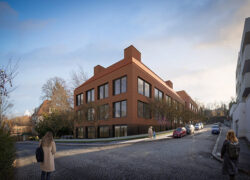
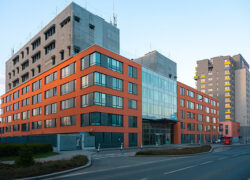
Nowy Rynek C, developed by Skanska Commercial Development Europe, has received certification confirming compliance with Category 1 protective concealment requirements, marking a first for an office building in Poland.

The technical assessment was carried out by experts from the Protective Construction Center at the Military University of Technology. The certification confirms that key structural components, including the underground garage, meet the highest protection standards defined for this category.

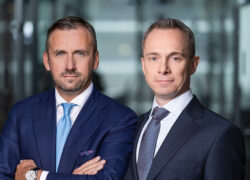
“Nowy Rynek C project assumed compliance with stringent safety requirements from the very beginning – even before the so-called shelter law,” said Roland Jarosz. “Obtaining the certificate is the result of over two years of work, dozens of safety analyses, and the application of advanced engineering solutions during construction.”

According to the assessment, the structure is designed to withstand impacts such as natural disasters, debris loads and falling structural elements.

“Thanks to the expert assessment carried out by our team, we are confident that Nowy Rynek C effectively provides protection against the effects of natural disasters and debris,” said Jarosław Siwiński. “This demonstrates that modern construction can set standards for public protection based on the latest technical knowledge.”

Nowy Rynek C is scheduled for completion in 2027 and will provide approximately 28,700 sqm of gross leasable area across six floors. The building is designed to operate independently of district heating and will be powered by renewable energy.

Poland investment volumes exceed €1bn in Q1 as activity shifts to larger deals

Poland’s commercial real estate investment volume reached €1.02 billion in the first quarter of 2026, marking a 43 percent year-on-year increase and the strongest opening to a year in four years, according to market data.

The result was driven by a smaller number of larger transactions, with deal volume falling to 29 from 42 a year earlier, indicating lower liquidity but higher average ticket sizes. Activity included transactions exceeding €100 million across all major sectors.

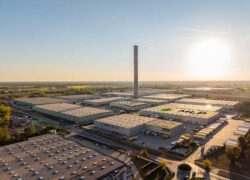
The industrial and logistics segment accounted for the largest share, with approximately €447 million invested, supported by continued demand for income-secured assets and sale-and-leaseback structures.

“The pricing consensus between buyers and sellers is becoming more common, which is reflected in the recovery in investment activity, primarily driven by foreign capital inflows,” said Bartłomiej Krzyżak, Senior Director, Investment.

Retail investment totalled €318 million, with activity supported by a large portfolio transaction and ongoing demand for retail parks and grocery-led assets.

“Poland’s retail sector continues to attract strong investor interest,” said Artur Czuba, Director, Investment. “The wide variety of product makes the market accessible to both domestic and international capital.”

The office sector recorded €245 million in transactions, including several prime assets in Warsaw and Kraków. While regional markets accounted for the majority of deals, their share of total volume remained limited.

Domestic investors represented around 9 percent of disclosed activity. Overall, the market continues to show signs of recovery, with capital focusing on core assets and larger-scale opportunities.

Source: Avison Young

Prague begins construction of new primary school in Košíře

Representatives of the City of Prague and the Prague 5 district have laid the foundation stone for a new primary school in the Košíře area, marking the start of a project aimed at expanding education capacity in the city.

The school, named ZŠ V Cibulkách, will be built between Na Výši and V Cibulkách streets and is expected to accommodate around 330 pupils. It will operate as a branch of ZŠ Nepomucká, with the first students scheduled to begin classes in autumn 2027.

“Every new school is an investment in Prague’s future. I know how important it is for parents to have a quality school within walking distance, and that is exactly what this project delivers,” said Bohuslav Svoboda.

Local officials described the development as a response to growing demand for school places in the Cibulky Hill area. “We began preparing for this project during the previous election term,” said Lukáš Herold, noting that the city has provided substantial financial support.

The project is also intended to deliver modern learning conditions. “This school will not only be a much-needed facility but also a modern and inspiring space for the education and development of children,” said Zdeněk Kovářík.

Construction began last summer, with early works including excavation complicated by bedrock conditions. The initial phase will provide ten standard classrooms and one preparatory class for younger pupils.

“This is one of our shared priorities. I am glad that the capital city was able to contribute 200 million crowns to this project,” said Antonín Klecanda.

Further development is already being considered, with plans for an additional building on the site in the future to serve elementary school students. “The decision was driven by the location of the site in the centre of the Cibulky area, allowing children to walk to school from across the neighbourhood,” said Martin Damašek.

The project follows the demolition of older buildings previously used for special education. The site was transferred to the district as part of a land exchange agreement with the city.

The school has been designed by Škarda Architekti, with project documentation prepared by Sial architekti a inženýři. Construction is being carried out by SYNER, with project management provided by Fetters management.

Total construction costs are expected to exceed CZK 450 million excluding VAT, with CZK 200 million provided by the city.

IF&B Mille Sapori leases space at MLP Pruszków II logistics park

IF&B Mille Sapori has signed a lease for 4,118 sqm of warehouse space at MLP Pruszków II, a logistics complex developed by MLP Group near Warsaw.

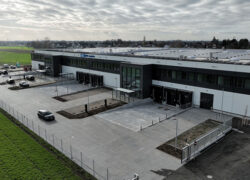
The space is located in a building currently under development, with completion scheduled for October. The facility will include dedicated cold storage and freezer areas, alongside 172 sqm of office and staff space. The tenant is expected to gain early access in September, ahead of full handover later in the autumn. The leasing process was supported by Coldwell Banker Commercial.

IF&B Mille Sapori supplies Italian food products, including cheeses, cured meats, pasta and olive oil, primarily to the HoReCa sector in Poland.

“MLP Pruszków II is a versatile and fast-growing logistics park that successfully responds to the needs of companies from a wide range of sectors,” said Agnieszka Góźdź. “Welcoming IF&B Mille Sapori further confirms that our offer meets the expectations of companies with diverse business profiles and advanced operational needs.”

The tenant said the new location will support its operational expansion. “The new central warehouse location at MLP Pruszków II will enable us to scale our operations and provide even more effective support to our business partners and branches across Poland,” said Waldemar Dimke.

Michał Mazurek added that the investment is aimed at improving efficiency: “The new central warehouse space represents a step towards further operational optimisation and increased supply chain efficiency.”

From the advisory side, Tomasz Rąba commented: “It is a demanding undertaking, both technologically and in terms of timing, but thanks to the commitment of all parties, the technical details were efficiently agreed and negotiations were conducted in a positive atmosphere.”

MLP Pruszków II is located in the Brwinów municipality, approximately 5 km from Pruszków and close to Warsaw. The project is planned to reach 427,000 sqm of leasable space, positioning it among the largest logistics parks in the region. The site benefits from access to the A2 motorway and proximity to rail connections, supporting both domestic and international distribution. Selected buildings are being developed in line with sustainability standards, including BREEAM certification and the use of rooftop photovoltaic systems.

Garbe Industrial signs lease agreements with Goodcang Logistics for nearly 100,000 sqm in Germany

Garbe Industrial has agreed two lease transactions with Goodcang Logistics covering close to 100,000 square metres of logistics space across Germany.

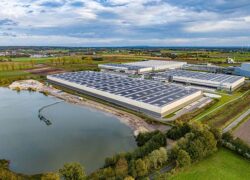
The larger portion of the space, approximately 67,500 sqm, is located at Niedersachsenpark in Rieste near Osnabrück, while a further 30,500 sqm has been leased at a logistics property in the port area of Duisburg. The agreements support Goodcang Logistics’ expansion in Germany, increasing its capacity to serve online retailers operating on e-commerce platforms.

“Especially in these challenging economic times, we are delighted with this double success. The hard work put in by our asset management team over the past few weeks has paid off,” said Tom Herrschaft.

At Niedersachsenpark Rieste, the tenant will occupy two buildings completed in 2022, with a combined area of around 67,500 sqm. The assets were developed in line with current sustainability standards and have received certification from the German Sustainable Building Council. The lease transaction was supported by BNP Paribas Real Estate.

Garbe Industrial also manages an additional fully let logistics asset in the same park, totalling around 23,000 sqm, occupied by a logistics operator and a manufacturer of photovoltaic mounting systems.

In Duisburg, Goodcang Logistics will take space at a property within the Logport area in the Rheinhausen district, one of Germany’s established logistics hubs. The leased space includes approximately 28,500 sqm of warehouse area, along with office and mezzanine space. The site benefits from proximity to the Duisburg Intermodal Terminal, providing access to combined water, rail and road transport. The lease was advised by Realogis Immobilien Düsseldorf.

Legal advice for both transactions was provided by Taylor Wessing.

Germany’s Pension Gap Persists as New Savings Reform Struggles to Address Inequality

A new analysis from the German Institute for Economic Research based on data from the Socio-Economic Panel highlights persistent gaps in pension provision across Germany, showing that supplementary retirement savings remain limited and unevenly distributed among different population groups.

The findings come shortly after the Bundestag approved a new retirement savings account intended to replace the Riester pension. The reform aims to expand private pension participation, but the research suggests structural issues continue to limit its effectiveness.

According to the study, fewer than 10 percent of current pensioners receive income from private supplementary pensions, while around one-third benefit from occupational schemes. Among the working population, participation in private pension products rose in earlier years but has stagnated since the mid-2010s and recently declined.

The data reveals clear disparities. Individuals with higher incomes, stronger educational backgrounds and no migrant background are significantly more likely to hold additional pension savings. Gender differences are also evident, with women more likely than men to make supplementary provisions. However, low-income earners and those with interrupted careers remain the least covered.

“Supplementary private pension provision has so far been far from reaching all population groups equally and tends to exacerbate existing inequalities in old age rather than balancing them out,” said Peter Haan, who co-authored the research with Johannes Geyer and Marcus Borlinghaus.

Occupational pension schemes, while more common than private ones, also show uneven access. Employees in larger companies and certain sectors are significantly more likely to participate than those working in smaller firms, with additional variation across regions and genders.

The new savings account introduces features such as potentially higher-yield investment strategies and a standardised state-backed option, which could improve uptake. However, researchers argue that voluntary systems continue to fall short.

“We know from research that voluntary supplementary pension schemes are not achieving the necessary uptake, because it is primarily those who already have sufficient resources who are making provisions,” said Johannes Geyer.

The study also raises concerns about the design of state subsidies. Since benefits are closely tied to individual contributions, higher-income households stand to gain more, reinforcing existing inequalities rather than reducing them.

The authors conclude that more fundamental reform may be required. They suggest a system that is more deeply integrated, potentially including mandatory elements and collective risk-sharing mechanisms similar to occupational pension models. Such an approach could better accommodate varying employment histories and reduce exposure to market fluctuations.

At the same time, public opinion appears to favour a strong role for the state. Around 60 percent of respondents in the SOEP survey support a predominantly state-led system to secure living standards in retirement, while only a minority believe responsibility should rest primarily with individuals.

Source: DIW Berlin

Poland’s Job Vacancy Barometer signals tightening labour market conditions

Competition for available jobs in Poland is expected to intensify, as the latest data from the Job Vacancy Barometer points to a continued slowdown in recruitment activity alongside a gradual rise in unemployment.

The index, compiled by the Department of Economics and Finance at WSIiZ and BIEC, declined again in March 2026 to 244.5 points, down from 246.7 in February and 261.4 a year earlier. The figures, adjusted for seasonal effects, reflect a persistent downward trend in online job postings that has been evident since April 2025.

According to the report, vacancies have been falling across three out of four broad occupational groups. The most pronounced drop has been recorded in manual professions, although this segment still accounts for a relatively large share of available roles. In contrast, positions requiring a science or engineering background showed a modest increase, remaining the only category with an upward trajectory, albeit from a low base.

The decline in hiring activity is linked to broader economic pressures. The report highlights weaker economic conditions, compounded by inflationary pressures stemming from energy market disruptions associated with the conflict in the Middle East. At the same time, Poland’s registered unemployment rate, excluding seasonal work, rose to 5.8% in February. While still low by historical standards, the number of unemployed individuals has increased compared with the previous year.

This combination of fewer vacancies and rising unemployment is shifting labour market dynamics. The report notes that these trends are “fostering an employer’s market, weakening employees’ bargaining power and dampening prospects for real wage growth,” adding that in such an environment, upskilling is becoming increasingly important.

Regionally, job vacancies declined in most provinces in March. The sharpest increases were recorded in Podlaskie, Lubuskie and Opolskie, while the largest decreases were observed in Pomorskie, Wielkopolskie and Lubelskie. The report also points to a slightly stronger contraction in regions with already low unemployment levels.

Across occupational groups, services experienced the most notable monthly decline in vacancies, continuing a gradual downward trend observed over the past 18 months. Despite this, vacancy levels in the sector remain broadly in line with longer-term averages. Manual and social professions also continued to trend downward, with the decline in social sciences-related roles described as less pronounced but still persistent.

In roles requiring a background in social sciences or law, most categories recorded a drop in vacancies. Significant declines were noted in call centre roles, banking, graphic design and legal professions. Month-on-month increases were limited to areas such as real estate, procurement and human resources. Overall, sentiment in this segment remains subdued, with many categories either continuing to contract or stabilising at relatively low levels.

In science and engineering roles, demand was strongest for ICT systems administrators, health and safety specialists, and research and development staff. However, vacancies for programmers, engineers and construction-related roles declined. Although some IT-related positions have shown signs of recovery in recent months, activity remains low compared with previous years.

The services sector saw a broad-based reduction in vacancies in March. Media-related roles recorded the sharpest drop, continuing a long-term decline. Job postings in education have been decreasing for seven consecutive months, though the pace of decline is slowing. Despite a reduction in vacancies, demand in tourism remains relatively strong, while logistics continues to recover gradually after a prolonged downturn. Freight forwarding roles have shown some growth, in contrast to the wider logistics segment, where vacancies remain limited.

Healthcare vacancies have also been undergoing a correction over the past year, although demand for workers in the sector remains comparatively high.

Overall, the data points to a labour market that is becoming more competitive for job seekers, with limited signs of a near-term recovery in hiring activity across most sectors.


HIH Invest acquires logistics asset in Weiterstadt for institutional mandate

HIH Invest has completed the acquisition of a newly developed logistics property in Weiterstadt, in the southern German state of Hesse, acting on behalf of an institutional investor. The asset was purchased from a joint venture between MB Park Deutschland and Isarkies Wohn- und Gewerbegrund.

The warehouse, located on Dammstraße in the Gräfenhausen district, was finalised in autumn 2025 and provides a total lettable area of 8,630 square metres. The scheme includes 7,586 square metres of logistics and storage space, alongside 529 square metres of office accommodation and 512 square metres dedicated to staff and communal use. The site also offers 69 parking spaces, including electric vehicle charging points.

The building is fully leased under a long-term agreement to MOL Logistics Deutschland GmbH.

“With this acquisition, we are securing a high-quality asset for our investors in one of Germany’s strongest logistics regions,” said Maximilian Tappert, Head of Transaction Management Logistics at HIH Invest. “The property already meets key sustainability requirements and, thanks to its flexible layout, offers significant potential for future use.”

The investor is targeting DGNB Gold certification for the asset, which has been designed with a range of sustainability features. These include an air-source heat pump, rooftop and façade photovoltaic systems, partial green roofing, LED lighting with motion sensors, and dedicated staff amenity areas.

Located within the Rhine-Main region, one of Germany’s primary logistics corridors, the property benefits from direct access to major transport infrastructure. The A5 motorway is reachable within minutes, while both Frankfurt Airport and Darmstadt city centre are within a 20-minute drive.

Advisory services on the transaction were provided by Baker Tilly, which handled legal and tax due diligence, and JT Solutions, responsible for technical and ESG assessments.

Poland Starts 2026 with €1 Billion in Investment Activity as Domestic Capital Gains Momentum

Poland’s commercial real estate investment market recorded approximately €1 billion in transactions in the first quarter of 2026, marking the strongest start to a year since 2022 and indicating renewed activity across the sector.

The volume was supported by a relatively high number of deals, with 26 transactions covering 54 assets, reflecting solid liquidity and continued investor engagement at the start of the year.

Logistics assets accounted for the largest share of investment activity, followed by retail, while the office sector maintained a steady level of transactions, with additional deals still progressing.

“The scale of the volume recorded in the first quarter and the structure of transactions indicate growing readiness among investors to deploy capital,” said Piotr Mirowski. “The increasing number of portfolio and long-term transactions confirms confidence in the fundamentals of the Polish commercial real estate market.”

Portfolio transactions and sale-and-leaseback deals continued to play a significant role in the market, reflecting investor preference for assets with stable income profiles. 

Alongside the recovery in activity, the structure of demand is evolving. Domestic investors are becoming more visible, following strong participation in 2025, when Polish capital reached a record share of total investment volume.

“We are seeing a new wave of buyers who are focusing on stabilised, income-generating assets rather than taking on development risk,” Mirowski said. “This is pragmatic capital with a long-term perspective.”

Domestic investors are typically targeting mid-sized assets and increasingly using bank financing, which has become more widely available in recent months.

“The market is being shaped by a new group of investors,” Mirowski added. “In many cases, these are experienced entrepreneurs who have built capital outside the real estate sector and are now allocating it into commercial property.”

Macroeconomic conditions continue to support investment decisions despite external uncertainty. Poland remains one of the faster-growing economies in the European Union, supported by a strong labour market and rising real wages.

“Strong consumption and solid demand fundamentals translate into lower risk on the tenant side,” said Grzegorz Sielewicz. “This supports rental stability and more predictable occupier behaviour.”

At the same time, pricing differences compared to Western Europe continue to attract investor interest, with Polish assets offering relatively higher returns.

Looking ahead, market participants expect further activity during 2026, supported by both domestic investors and a gradual return of international capital.

“We are at the beginning of a longer-term trend,” Mirowski said. “Polish capital is still gaining momentum, and as experience and financial capacity grow, investors are likely to move towards larger transactions.”

The first quarter results point to a market that is not only recovering in terms of volume, but also undergoing structural change, with domestic capital playing an increasingly important role.

Photo: Piotr Mirowski, Head of the Investment Advisory Department at Colliers and Grzegorz Sielewicz, Chief Economist for the Central and Eastern Europe Region at Colliers.

TTC Acquires Office Building in Prague 4 from Česká spořitelna

TTC Group has acquired an office building in Prague from Česká spořitelna, expanding its presence in the commercial real estate sector.

The property, located in Prague 4, offers approximately 25,000 sqm of space across eight above-ground and five underground floors. The transaction was completed on 1 April 2026. Following the acquisition, TTC’s total leasable area exceeds 100,000 sqm, with the overall portfolio value approaching CZK 3 billion.

The building, completed in 2007, is currently occupied by companies from the Česká spořitelna group, which will remain as tenants for a transitional period before relocating to new premises.

“For us, this acquisition represents a combination of stable returns and significant development potential. In addition to the leasing business, we see key value in the opportunity for further development of the data center, where we have strong expertise and growing demand,” said Ivan Strouhal.

Part of the building’s underground space is designated for technological use, which TTC intends to utilise for potential expansion of its data centre capacity.

“The success of this deal stems from the fact that we managed to find a suitable investor for our client’s property, Česká spořitelna. TTC has a clear plan for how to utilize the building, and as a technology group, it was able to appreciate its specific parameters,” said Zdenka Klapalová, whose firm advised the seller.

The location is expected to benefit from the planned development of the Metro D line, including the Olbrachtova station nearby.

“Prague 4 has long been one of the most sought-after business addresses in the capital. With the arrival of the new metro line, its appeal to future tenants will increase even further,” Strouhal added.

Alongside this acquisition, TTC continues to develop its broader real estate activities, including projects such as the Malešice Technology Park in Prague, where a new technology-focused complex is planned.

front page info
LATEST NEWS