Czech real estate demand and prices set to rise in 2025

The demand for Czech real estate is expected to grow in 2025, driving up property prices. Experts cite an improving economic outlook and gradually declining mortgage rates as key factors behind this trend. Older flats are likely to see price increases of about 1%, reflecting ongoing low levels of new housing construction and limited market supply. Rents are also projected to rise at a similar rate, while investment in commercial real estate is expected to rebound significantly, according to real estate specialists.

“We anticipate continued moderate appreciation in property values next year due to falling mortgage rates and economic recovery. Housing has become more expensive, and family homes are increasingly out of reach for many, even with a mortgage,” said Michal Macek, owner of a real estate group.

Lumír Kunz, managing director of a real estate platform, predicts a similar market dynamic for older properties in 2025. “With a shortage of new housing projects, buyers will likely turn to older properties in good condition. Lower mortgage rates, combined with limited supply, will allow sellers to raise prices further,” he explained.

One consultancy estimates that prices for both owner-occupied and rental housing could rise by 5-10% next year. Lower homeownership affordability is expected to fuel demand for rental housing, while investment in logistics and rental-focused apartments will remain attractive. Multifunctional centers, hotels, and offices are also gaining interest as the office market recovers, with more people returning to workplaces post-pandemic.

The commercial real estate sector is poised for growth, with investment activity likely to surpass CZK 50 billion (EUR 2 billion) in 2025, a significant increase from this year’s CZK 38 billion (EUR 1.5 billion). The first quarter of 2025 is expected to see strong activity, driven by several major transactions nearing completion. While domestic entities will lead investments, foreign investor interest is anticipated to rebound as well.

“Industrial production and the automotive sector face challenges, but we foresee a slight recovery next year. Multifunctional centers and hotels are attracting growing interest from investors,” one consultancy noted.

The overall market trajectory reflects cautious optimism, with increasing demand and rising prices across residential, rental, and commercial real estate. The combination of improving economic conditions and reduced borrowing costs is set to shape a dynamic year for the Czech real estate sector.

Source: CTK
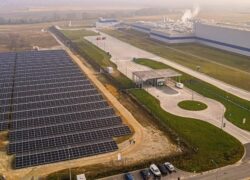
PepsiCo launches largest photovoltaic farm in Poland near Wroclaw

In Święte near Wroclaw, PepsiCo has inaugurated its largest photovoltaic farm in Poland, boasting a capacity of 3.5 MWp. This initiative is part of the company’s PLN 22 million investment in renewable energy sources this year, marking a significant step in its sustainability efforts.

The photovoltaic farm spans approximately two hectares and features over 6,000 advanced photovoltaic modules equipped with dual-sided, high-efficiency cells. According to PepsiCo, this first phase of the project includes the installation of 2 kilometers of medium-voltage power lines, underscoring the scale of the investment.

“This facility will generate 24% of the energy needs of our plant in Święte, which consumes 11.7 GWh of electricity annually. All energy produced by the photovoltaic farm will be used exclusively to power the factory,” said Tomasz Bronny, Director of PepsiCo’s Święte plant.

PepsiCo’s Święte facility, opened in May 2023, represents a €1 billion investment and has created hundreds of jobs in the Wroclaw region. Located in the Środa Śląska municipality along the Wrocław–Środa Śląska road, it is the company’s most advanced factory in the European Union.

The plant produces some of PepsiCo’s most recognizable snack brands, with the photovoltaic farm directly supporting these operations. On sunny days, the solar farm is expected to supply 100% of the energy required for the eRBS electric oven, which is essential for baking crisps. Additionally, the installation will meet the energy demands of a new production line scheduled for completion by mid-2025.

This photovoltaic project is a cornerstone of PepsiCo’s global PepsiCo Positive (pep+) strategy, aimed at transforming its operations to benefit both people and the planet. “Investing in renewable energy sources is a strategic priority for us, and we plan to expand such initiatives across Poland in the coming years,” stated Ugur Bulduk, Vice President of Supply Chain.

Since entering the Polish market in 1991, PepsiCo has grown to employ over 3,000 people across the country. Its operations include production facilities in Michrów, Żnin, Grodzisk Mazowiecki, and Tomaszów Mazowiecki, in addition to the Święte plant. The company continues to invest in local communities and sustainable practices, reinforcing its commitment to Poland’s economic and environmental progress.

Source: PepsiCo and Wroclaw.pl

EBRD invests €21.7 million in Greek real estate redevelopment consortium

The European Bank for Reconstruction and Development (EBRD) has announced a €21.7 million equity investment in the P&E Investments Axiopoiisis & Anaptyxis Akiniton consortium in Greece. The consortium, which includes longtime EBRD partner Dimand and Premia Properties, will grant the EBRD a 20% stake in its capital.

The funds from this investment will be allocated toward acquiring shares in Skyline, a newly established special purpose vehicle (SPV). Skyline’s portfolio consists of approximately 460 commercial and residential properties identified for redevelopment, repositioning, or trade sale. The consortium will acquire a 65% stake in Skyline, which Dimand will oversee, while the remaining 35% will be retained by the seller, Alpha Bank.

The project is designed to redevelop prime assets, aiming to meet top-tier specifications or unlock value through strategic repositioning. Additionally, granular assets will be redirected to the market, enhancing the functionality of Greece’s primary and secondary cities while providing retail investors with opportunities to invest in existing building stock.

A key focus of the project is on sustainability, emphasizing the efficient use of resources and tenant engagement through green leases. Redeveloped assets in the portfolio will target compliance with high green building standards, such as LEED Gold or BREEAM Very Good certifications.

The initiative will also strengthen climate governance practices by adopting GRESB reporting standards, a globally recognized benchmark for environmental, social, and governance (ESG) performance in real estate.

The EBRD has been operating in Greece since 2015, contributing to the country’s economic recovery through investments across corporate, financial, energy, and infrastructure sectors. To date, the Bank has invested over €8 billion in 116 projects, reaffirming its commitment to fostering sustainable growth in Greece.

This latest investment not only advances urban redevelopment but also aligns with the EBRD’s broader objectives of promoting sustainability, innovation, and resilience in the real estate sector.

Source: EBRD
Photo: EBRD

Slovak government consolidation package to impact growth, wages, and housing

The Slovak government’s recently introduced consolidation package, centered on tax increases such as a higher VAT rate and a transaction tax, is expected to weigh heavily on the economy. Rising prices will erode real wages, and an anticipated increase in housing costs will further diminish affordability. Compounding these challenges is Slovakia’s recent credit rating downgrade by Moody’s, which may slow the decline in mortgage interest rates, adding uncertainty to the real estate market and the availability of loans for prospective buyers.

Economists broadly criticize the consolidation measures, particularly the VAT hike and transaction tax. While these steps aim to stabilize public finances, their adverse effects on economic growth and consumer purchasing power raise significant concerns. Questions also linger about whether the government can realistically achieve its target of generating €2.7 billion in additional revenues by 2025.

Moody’s decision to downgrade Slovakia’s credit rating, the second downgrade since the current government took office in October 2023, underscores these concerns. Fitch Ratings had already lowered Slovakia’s rating in December 2023, citing slowing economic growth. Moody’s further highlighted uncertainties around the government’s fiscal consolidation efforts and potential economic risks in its assessment.

“The downgrade by Moody’s signals that, despite fiscal consolidation efforts, Slovakia’s economic trajectory remains uncertain, necessitating caution from investors. Being downgraded to levels not seen since before EU accession in 2003 is a significant setback,” noted Marián Búlik, an analyst at OVB Allfinanz Slovensko.

The downgrade has immediate and long-term repercussions. Higher risk premiums on Slovak bonds are anticipated, which will raise borrowing costs for the government. This increase in debt servicing expenses will strain the state budget, potentially necessitating additional fiscal measures to maintain financial stability.

“The state will likely face higher interest rates for upcoming bond issuances compared to just a few weeks ago,” Búlik warned. This scenario could exacerbate budget deficits and undermine the government’s ability to meet its fiscal targets for 2026, potentially leading to further tax hikes or public spending cuts. Both outcomes could have additional negative implications for the broader economy.

Rising inflation, coupled with higher borrowing costs stemming from the rating downgrade, will dampen affordability in the housing market. Prospective buyers may find it increasingly difficult to secure loans or navigate the fluctuating real estate landscape. Furthermore, a slower-than-expected decline in mortgage interest rates will likely deter homebuyers and stall market activity.

The consolidation package’s focus on revenue generation without sufficient consideration of its economic ramifications could lead to a prolonged period of stagnation. Reduced consumer spending power and uncertainty in key sectors such as real estate may undermine the government’s fiscal objectives.

The challenges ahead underscore the need for balanced policymaking that addresses fiscal consolidation while safeguarding economic growth and household welfare. Without such measures, Slovakia risks further economic instability and a loss of investor confidence.

Source: OVB Allfinanz Slovensko and Trend

Survey: Financial situation of Czech households improves for the third consecutive year

The financial situation of Czech households has shown consistent improvement for the third year in a row, according to a December survey by Provident Financial. This year, 32% of respondents described their financial year as successful, up from 25% in 2022. Additionally, the proportion of people who had to reduce spending dropped to 20%, compared to 25% last year.

The survey, which gathered responses from over a thousand participants, revealed that fewer households are limiting spending on daily necessities, entertainment, sports, and vacations. The proportion of those curbing leisure-related expenses fell to 36%, down from 42% in 2023 and 47% in 2022.

Looking ahead, 50% of respondents expect their financial situation to remain the same or improve in 2025, an increase of 10 percentage points compared to last year.

Nearly 12% of participants considered 2024 a financially successful year, with many investing excess funds. This marks an increase of 5 percentage points from 2023 and 7 points from 2022. Furthermore, the survey found that 20% of households were able to build savings this year, while only 21% had to draw on their reserves—a significant improvement from the 30% who reported the same in 2022.

“While the financial outlook is improving, Czechs remain cautious. People are thinking carefully about their expenses, focusing on savings and sensible investments rather than unnecessary borrowing,” said Petr Javůrek, chief analyst at Provident Financial.

Energy bills and summer holidays were the most significant drains on family budgets this year, along with home renovations and household equipment purchases. Energy costs were a particular concern for older adults aged 54–65, with 54% in this group identifying these as a major financial burden. For younger Czechs aged 18–26 and middle-aged individuals between 45–53, summer holidays represented the largest expense.

The survey also highlighted a positive trend: more than a quarter of respondents now regularly set aside money for unexpected expenses. “This demonstrates a responsible approach to personal finance. Households with savings are better prepared for sudden costs, like a broken appliance or unforeseen bills,” Javůrek noted.

Fewer Czechs are concerned about their financial prospects for the coming year. In 2022, 32% of respondents expressed worry about their financial situation, dropping to 25% in 2023 and 21% this year.

“The economic challenges of recent years have taught people to be more mindful of their finances. Even as the economy improves, many households continue to spend cautiously, which has resulted in better overall financial stability,” Javůrek concluded.

As Czechs look to 2025, the trend of prudent financial management and improved household finances offers a promising outlook for continued stability and growth.

Source: Provident Financial and CTK

Rzeszów and Chełm railway station modernizations lead Eastern Poland’s FEPW projects

The modernization of railway stations in Rzeszów and Chełm will be the first projects under the European Funds for Eastern Poland (FEPW) program, receiving PLN 56.4 million in EU co-financing. These investments fall under the Second Regional Railway Infrastructure Action, the Ministry of Funds and Regional Policy (MFiPR) announced. Applications for the action are open until 18 December 2025, with a total program budget of EUR 690 million.

“These modernized railway stations in Rzeszów and Chełm will offer improved functionality and be better adapted to the needs of travelers. A total of PLN 82.1 million has been allocated for these projects, with PLN 56.4 million coming from EU co-financing,” the ministry stated.

The European Funds for Eastern Poland program continues to support development in the country’s eastern voivodships, including Warmińsko-Mazurskie, Podlaskie, Lubelskie, Świętokrzyskie, Podkarpackie, and parts of Mazowieckie (excluding Warsaw and nine surrounding districts). The program focuses on investments in small and medium-sized enterprises, climate adaptation projects, zero-emission urban mobility, biodiversity protection, intelligent energy networks, enhanced rail and road accessibility, and sustainable tourism.

With a budget of EUR 2.65 billion for the years 2021–2027, the FEPW program aims to advance infrastructure and socio-economic development in Eastern Poland, fostering innovation and connectivity across the region.

Source: FEPW and ISBnews
Photos: MFiPR

Confidence in Czech economy declines among entrepreneurs and consumers in December

Confidence in the Czech economy dropped slightly in December, with both entrepreneurs and consumers expressing increased pessimism compared to the previous month, according to the Czech Statistical Office (ČSÚ). The overall confidence indicator fell by 0.5 percentage points month-on-month to 97.5 points, though it remains higher than a year ago, when it stood at 93.8 points.

Among entrepreneurs, confidence declined by 0.4 points to 96.9 points. According to Jiří Obst, head of the ČSÚ’s business survey department, this drop was primarily driven by reduced demand in the industrial sector and lowered expectations for production growth over the next three months. Confidence in the industrial sector fell significantly, by 2.4 points, while the construction sector’s confidence remained steady compared to November. Confidence in selected service sectors rose by 1.5 points, and trade confidence increased slightly by 0.4 points.

Consumer confidence also saw a decline, dropping by 1.2 points to 100.4 points in December. This marks a partial correction following three months of growth. Anastasija Neradová from the ČSÚ’s business cycle survey department attributed the decline to heightened concerns about the overall economic outlook and an increasing reluctance among households to make major purchases in 2025.

The share of consumers anticipating a worsening of the economic situation in the next 12 months rose slightly, while expectations of an improved financial situation remained largely unchanged from November. However, there was a slight decline in the number of households that assessed their current financial situation as worse than in the past 12 months. Meanwhile, the proportion of consumers who view the current time as unsuitable for large purchases increased in December.

The December data reflects ongoing uncertainty in the Czech economy, with a cautious outlook from both businesses and households as they navigate potential challenges in the year ahead.

Source: ČSÚ and CTK

Approximately 195,000 old-age pensioners work in the Czech Republic

Around 195,000 retirees in the Czech Republic continue to work, with the majority employed as workers and the rest operating as sole traders or under agreements, according to data from the Ministry of Labour and Social Affairs (MPSV). Notably, nearly 99,200 of these working pensioners are over the age of 67, making up half of the total.

The number of retirees in the workforce reached its peak in 2019, with 219,500 individuals, before declining during the COVID-19 pandemic. In 2022, the labor department recorded 194,566 working pensioners, including 163,543 employees and the remainder as self-employed or working under agreements. About 3,200 individuals combined their employment with freelance work or agreements.

Starting next year, working pensioners will no longer be required to pay pension contributions, a measure introduced as part of the government’s pension reform. This change will leave an additional 6.5% of their earnings in their wallets. For a pensioner earning CZK 20,000 gross, this translates to CZK 15,600 annually in extra income, while those earning CZK 40,000 gross would save CZK 31,200 annually.

This measure, aimed at incentivizing employment among retirees, is expected to reduce state revenues by approximately CZK 4 billion per year. However, the ministry believes the resulting increase in workforce participation and tax revenues will offset the loss.

The Czech retirement age is gradually rising, currently increasing by two months annually for men and four to six months for women. It is expected to reach 65 years by the 2030s. The pension reform envisions further increases, with the retirement age extending by one month per year until it caps at 67 years after five decades.

This gradual shift has sparked debate, with critics arguing that many people may not be able to work until such an advanced age. The opposition party ANO has pledged to reverse parts of the reform if it gains power in the next elections.

In 2022, nearly three-quarters of working pensioners were over the age of 65. Among them, approximately 53,900, or 28%, were aged 70 or older. Meanwhile, workers aged 64 and 65 numbered 25,700 and 24,200, respectively.

According to the Czech Statistical Office, the total number of working pensioners has steadily risen. The 2021 census revealed that 565,800 retirees were employed, accounting for nearly 11% of the workforce. This figure includes both old-age and disability pension recipients, more than double the number recorded in 2011.

The removal of pension contributions for retirees represents a shift in how the state supports working pensioners, replacing small periodic pension increases previously granted for continued employment. The government hopes this change will encourage more retirees to remain in or return to the workforce, thereby boosting economic activity.

Source: MPSV and CTK

Noxo Energy aims for high-speed chargers to constitute at least 50% of its network

Noxo Energy plans for high-speed DC charging stations to account for at least 50% of its network in the future, according to board member Jakub Bańkowski.

“We aim for DC stations to make up no less than half of our charging points. However, it’s hard to predict whether we’ll settle at 50% or even reach 60% of the network,” said Bańkowski.

Currently, high-speed chargers represent just 12% of Noxo Energy’s network, with 55 DC charging points out of a total 460 stations. The company has ambitious plans to expand its network next year, not only increasing the number of chargers but also diversifying their locations.

“Until now, our AC chargers have primarily been located at hotels and amusement parks, while DC chargers have been placed at shopping malls, where drivers typically spend about an hour. In 2025, we plan to install fast chargers in high-traffic areas along major routes. These won’t be on traditional motorway or expressway service stations but in places drivers already frequent, such as popular, well-rated restaurants,” Bańkowski explained.

Bańkowski emphasized the importance of balanced growth across both AC and DC charger segments. For AC chargers, the focus remains on strategic placement rather than simply increasing numbers.

“We pride ourselves on having one of the highest utilization rates for charging stations in the market. This is because we’ve been meticulous in selecting locations. Some operators placed AC stations in areas with insufficient demand, making it challenging to justify their investments. By contrast, we’ve rejected many potential locations, which has allowed us to achieve higher energy sales at certain AC stations than some competitors do with their less popular DC stations. Additionally, the investment cost for AC stations is eight times lower,” he noted.

Noxo Energy’s thoughtful approach aims to balance growth, convenience, and profitability, positioning it as a key player in the expanding electric vehicle charging market.

Source: Noxo Energy and ISBnews

GDDKiA: Kraków and Warsaw connected by S7 expressway

Kraków and Warsaw are now linked by the S7 expressway, with the Kraków metropolitan area also benefiting from the completion of the S52 route, which improves accessibility in the city’s northern areas. The General Directorate for National Roads and Motorways (GDDKiA) announced the opening of 25 kilometers of expressways, enhancing the transportation network in the region.

The newly inaugurated 13.3 km section of the S7, connecting the Widoma junction to the North Bypass of Kraków, establishes a direct expressway route between Poland’s two largest cities. The full 270 km stretch of the S7 now links Warsaw and Kraków with a modern highway. In the Małopolska region, the S7 follows a new route, diverging from the path historically designated in the early 19th century.

While the section is open to traffic, construction work is not yet fully complete. Remaining tasks include finishing junctions and fencing. For safety, the speed limit on the section is temporarily set at 80 km/h, though both carriageways are available with two lanes each. Completion of the remaining work is expected by late spring 2025.

Angela Martinez-Sarasola, head of the Polish Department for the European Regional and Urban Commission, emphasized the importance of these projects in enhancing Poland’s infrastructure and strengthening interregional connections. “The investments in S7 Widoma-Kraków and the S52 North Bypass of Kraków exemplify the role of road infrastructure in economic and social development. These projects, part of the TEN-T network, significantly improve accessibility and connectivity within Małopolska and beyond,” she said.

The European Union supported the development of the S7 expressway with a PLN 534.8 million grant from the Operational Programme Infrastructure and Environment and PLN 420.7 million from the Operational Programme European Funds for Infrastructure, Climate, and Environment. The project, costing nearly PLN 1.7 billion, was delivered by a consortium led by Gulermak.

Additionally, the 12.3 km Kraków Bypass (POK) brings Kraków closer to becoming the second Polish city, after Łódź, fully encircled by expressways. The city now has 64.5 km of bypass routes, with a final 5 km section between the Mistrzejowice and Nowa Huta junctions scheduled for completion by mid-2026.

The S52 route, financed with PLN 789.6 million from the Operational Programme Infrastructure and Environment, represents a total investment of approximately PLN 1.4 billion. This section was also constructed by the Gulermak consortium.

These infrastructure advancements enhance mobility, safety, and travel comfort while supporting sustainable development and EU integration. The newly opened expressways are expected to bolster the region’s competitiveness and foster greater cohesion within Poland.

Source: GDDKiA and ISBnews

front page info
LATEST NEWS