Wednesday, 16 September 2026
Prague’s transformation of Smíchov into a major transport and development district is set to continue with the reconstruction of the railway station building expected to begin in 2029. The project would follow the CZK 5.1 billion modernisation of the railway infrastructure that is already underway and scheduled for completion by the end of 2028.
According to the latest timetable presented by Správa železnic, work on the passenger building could start in 2029 and take approximately two years. The schedule represents a further adjustment to earlier plans and should be regarded as the current anticipated construction period rather than a fixed completion programme.
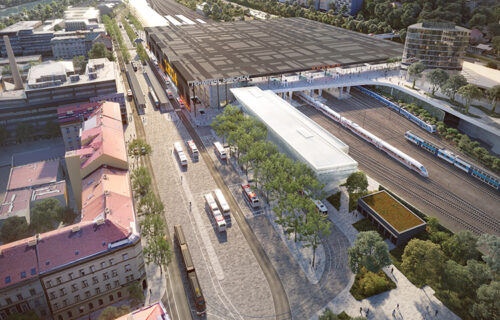
The project will involve refurbishment of the existing main station building alongside construction of a new southern wing. The additional building is planned to accommodate passenger services together with shops, restaurants, public facilities and other functions associated with the station. Project documentation is currently being prepared by SUDOP.
The building project will form another stage of a much larger reconstruction of the Smíchov transport interchange. Work on the railway infrastructure started in 2024 and involves rebuilding the track layout, upgrading three existing platforms and adding a fourth platform. Bridges, underpasses and other parts of the station infrastructure are also being modernised.
The railway investment has a value of approximately CZK 5.12 billion, with a substantial proportion financed through European funding. Completion of this part of the programme remains planned for the end of 2028.
A new accessible pedestrian bridge will also provide a connection across the railway and improve links between Smíchov and Radlice. The structure replaces an earlier footbridge removed as part of the station reconstruction.
The longer-term importance of the project extends beyond the railway itself. Prague is preparing a new transport terminal above the station that will allow regional and long-distance buses to connect directly with rail and urban public transport services. Bus operations currently concentrated around Na Knížecí are expected to move to the new facility.
Plans for the transport hub also include P+R parking and cycling infrastructure. Preparatory structural work associated with the future terminal is already being coordinated with the railway reconstruction, allowing the different parts of the project to be developed in stages.
The combination of rail, metro, tram, bus, pedestrian and cycling connections is intended to make Smíchov one of Prague’s principal multimodal transport interchanges. This is becoming increasingly significant as the surrounding district undergoes extensive residential, office and mixed-use development.
Smíchov has emerged as one of Prague’s largest regeneration areas, with former railway and industrial land gradually being converted into new urban development. The expansion of housing and workplaces in the district is increasing the importance of transport capacity and connections with the wider city.
The future commercial component of the railway station will also add another element to this transformation. Rather than functioning primarily as transport infrastructure, the reconstructed station is expected to combine passenger facilities with retail and food and beverage uses serving commuters, local residents and employees in the surrounding developments.
For the property market, the investment illustrates the relationship between major transport infrastructure and the regeneration of former industrial districts. Improved accessibility can support higher development density while allowing new residential and commercial projects to connect more effectively with the rest of the city.
The current programme therefore extends well beyond the CZK 5.1 billion railway reconstruction. With the station building expected to enter its next development phase from 2029 and the city planning a new terminal above the railway, Smíchov is gradually moving towards becoming a substantially larger transport and commercial node within Prague.
Source: CTK