Deka Immobilien acquires premium office property in Paris for €89 million

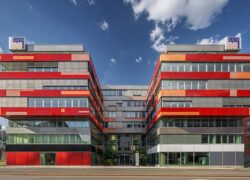
Deka Immobilien has purchased a high-quality office property with retail space in Paris for €89 million. The seller, AG Real Estate France, is a subsidiary of the Belgian real estate group AG Real Estate. The property will be integrated into the open-ended real estate fund Deka-ImmobilienMetropolen (DIM).

The newly built property, completed in March 2024, offers 7,750 sqm of leasable space, including a rooftop terrace. It is fully leased under long-term agreements. The main tenant, Citeo, focuses on sustainable waste management and resource optimization, while the retail space is occupied by discount retailer Aldi.

Located at Place de la Nation in Paris’s 11th arrondissement, the property sits in a dynamic and increasingly desirable office market. The area, supported by excellent infrastructure, is attracting innovative companies and young professionals, particularly from the technology sector.

“My Little Nation” boasts top sustainability credentials, holding both BREEAM ‘Excellent’ and HQE ‘Excellent’ certifications. It was also recognized with the Coup de Coeur Award in the office building category at the 2024 Salon de l’Immobilier d’Entreprise (SIMI).

This acquisition aligns with Deka-ImmobilienMetropolen’s strategy of investing in high-quality properties in Europe’s key metropolitan areas. By securing a premium asset outside the traditional Central Business District, the fund management taps into the growth potential of Paris’s eastern sub-market, enhancing long-term rental income prospects.

The transaction was completed under favorable terms, reinforcing Deka-ImmobilienMetropolen’s position in one of Europe’s most sought-after real estate markets.
Savills: Poland’s retail property sector thrives in 2024

The Polish retail property sector experienced significant growth in 2024, outperforming much of Europe, according to Savills. Investment transactions in the first three quarters totaled nearly €2.5 billion, a 51% year-on-year increase and 20% above the full-year 2023 total. Approximately 25% of these funds were directed toward retail properties, making Poland a hotspot for global investors.

Eastern Europe Outpaces European Averages

While Europe’s retail property market grew modestly, with transaction values rising 6% year-on-year to €19 billion, Eastern Europe showed exceptional dynamism. Poland and Hungary led this trend, with Poland focusing on ESG principles and modernizing its retail spaces.

Key Transactions and Sector Performance

Poland’s retail market accounted for 25% of all commercial real estate investments, surpassing 2023’s total by 43%. Major transactions included:
• Magnolia Park (Wrocław) and Silesia City Center (Katowice) acquired by NEPI Rockcastle for nearly €780 million.
• Retail parks in Myszków and Włocławek purchased by BIG Poland for over €56 million.
• Other notable deals included Galeria Wisła (Płock) and Galeria Szperk (Gdańsk).

The robust activity positions 2024 as the retail sector’s best year since 2019, driven by stable economic fundamentals and the growing popularity of retail parks.

The Rise of Retail Parks and Omnichannel Strategies

Retail parks, particularly in smaller towns, are gaining traction as they cater to local community needs. At the same time, omnichannel strategies integrating physical and online retail are becoming increasingly prominent, aligning with broader European trends.

European Context and Modernization

Poland’s growth outpaced Europe’s 6% average, with other strong performers including Ireland (+107%), Italy (+83%), and Hungary (+34%). Across Europe, retail parks (28%), shopping malls (26%), and shopping streets (18%) remain the top investment segments.

Modernization is key for further growth, with investors focusing on upgrading older properties to enhance value and sustainability.

Positive Outlook for 2025

Savills forecasts increased investor activity in 2025, with investment volumes expected to exceed 2024 levels. Poland remains a standout market in the region, offering stability, growth potential, and opportunities for modernization and innovation in the retail property sector.

Českomoravská Nemovitostní completes landmark aquisition worth CZK 5 Billion

Českomoravská Nemovitostní (ČMN), the third-largest office landlord in the Czech Republic, together with the NEMO Fund, has finalized its largest acquisition to date—a real estate portfolio valued at approximately CZK 5 billion. The transaction, completed with NOVA Real Estate Fund, encompasses five premium office buildings with a leasable area exceeding 37,000 m² and 11 retail parks spanning 72,000 m², marking ČMN’s entry into the retail property segment.

The acquisition includes notable Prague office properties such as Smíchov Gate, Anděl 17, Idea Office Building, Victoria Vyšehrad, and Panorama Business Centre near the National Museum. These modern and strategically located buildings boast excellent accessibility and offer tenants high-quality, representative spaces. Tenants include prominent international and local companies like Google, Hochtief, Cemex, and Mercedes-Benz.

In addition to office properties, the portfolio features retail parks anchored by well-known tenants, including Ahold, Penny Market, OBI, and Tesco. This diversification aligns with ČMN’s strategy to broaden its asset base with profitable properties that generate stable, long-term returns.

“We are thrilled to announce the largest acquisition in our history and one of the most significant transactions on the Czech market this year,” said Radek Stacha, Chairman of the Board at ČMN. “This deal reflects our commitment to strategic growth. While the market has been challenging in recent years, this acquisition was worth the wait, enabling us to diversify our portfolio with high-quality assets that align with our long-term investment goals.”

The acquisition was financed by Germany’s Helaba Landesbank Hessen-Thüringen. “The Czech investment market remains one of the most attractive in Europe. We are proud to provide financing for this milestone transaction with our long-standing client ČMN,” said Jürgen Schleimer, Director of Real Estate Finance CEE at Helaba.

The sale was conducted by REDSIDE, the investment company managing NOVA Real Estate Fund, as part of its strategy to liquidate the fund’s portfolio following investor decisions. The process was completed within six months.

“We congratulate ČMN on this landmark acquisition and extend our thanks to all advisors for ensuring a smooth transaction. Completing such a large deal on schedule was a challenging yet successful endeavor,” said Rudolf Vřešt’ál, Founder and Chairman of REDSIDE.

Savills, acting as the advisor for REDSIDE, highlighted the competitive tender process that led to the sale. “ČMN’s offer stood out due to its strong commercial terms and deep understanding of the portfolio,” noted Stuart Jordan, CEO of Savills.

The acquisition significantly strengthens ČMN’s position in the Czech commercial real estate market. Known for its focus on properties with stable cash flow and long-term value growth, the company continues to expand its portfolio underpinned by a strong financial foundation and a team of seasoned professionals.

The transaction is subject to final approval by the Competition Authority. Once integrated, the newly acquired assets are expected to bolster ČMN’s reputation as a leading player in both the office and retail property segments.

CTP partners with Grammer Jifeng Automotive Seating CZ for 21,000 sqm facility in Czech Republic

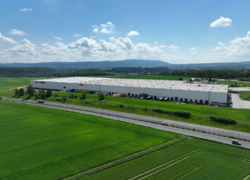
CTP, Europe’s largest listed developer and manager of industrial and logistics properties by gross lettable area (GLA), has announced a new partnership with Grammer Jifeng Automotive Seating CZ to develop a 21,000 sqm state-of-the-art manufacturing and testing facility at CTPark Cheb in the northwest of the Czech Republic. The facility is expected to be operational by late 2025.

Grammer Jifeng Automotive Seating CZ specializes in producing advanced interior components for premium car brands. The new facility will house cutting-edge laboratories, vibration rooms, testing areas, and storage facilities, all designed to meet high technological and environmental standards.

The project reflects the strong partnership between CTP and the automotive interior specialist, which already leases over 72,000 sqm of space at other CTP parks across the Czech Republic. Grammer Jifeng Automotive Seating CZ represents the merger of Grammer AG and Ningbo Jifeng Auto Parts Co. Ltd., two leaders in automotive interior component manufacturing.

CTPark Cheb was selected for its strategic proximity to the German border, just a 10-minute drive away. This location offers direct motorway access and close ties to Germany’s automotive sector, where many multinational car manufacturers are based. The region also boasts a skilled workforce, thanks to its industrial heritage.

“This collaboration with CTP allows us to expand our capacity to meet the growing demands of our customers,” said Carsten Winkelbach, Managing Director of Grammer Jifeng Automotive Seating CZ. “Cheb’s strategic location provides seamless access to foreign markets and connections with our suppliers and customers. Additionally, this project will create up to 433 new jobs, contributing to the region’s economic growth.”

CTP’s ability to adapt to Grammer Jifeng Automotive Seating CZ’s specific requirements was key to the project’s success. “The decision to build at CTPark Cheb followed detailed analysis of the area’s labour market and strategic advantages,” said Jakub Kodr, Head of Business Development for the Czech Republic at CTP. “Our approach ensures the new facility is tailored to their bespoke needs, supporting their growth ambitions.”

MOL Polska to absorb Slovnaft Polska by 2025

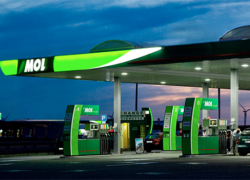
MOL has announced plans to integrate its wholesale and retail operations in Poland by merging Slovnaft Polska into MOL Polska. The formal merger is expected to be completed by the end of 2025, marking a significant step in MOL’s strategic alignment of its business structure in one of its key regional markets.

“The integration of wholesale and retail activities under one company is a natural progression that will enhance the efficiency of our operations in Poland,” said MOL Group Vice-President for Consumer Services. “This approach aligns with MOL’s core business model, which covers the entire value chain for customers and partners. By leveraging synergies in this new structure, we aim to strengthen our business development efforts in Poland, one of our most critical markets in the region.”

Slovnaft Polska, established in 1997, has been a key player in the wholesale market in southern Poland. It imports, stores, and distributes liquid fuels produced at MOL Group’s refineries in Bratislava (Slovakia) and Százhalombatta (Hungary). Fuels are transported by rail and stored in fuel terminals in southern Poland.

Since 2006, Slovnaft Polska has operated the Slovnaft Partner program, supplying fuel to nearly 90 petrol stations, primarily in southern Poland. By integrating Slovnaft Polska’s wholesale operations with MOL Polska’s retail activities, MOL will provide a unified and comprehensive offering for customers and partners across the country.

The integration process will occur in two phases:
1. Acquisition of Slovnaft Polska shares by MOL Polska – Already completed.
2. Transition of Slovnaft Polska’s operations into MOL Polska structures – Expected to conclude by late 2025.

While Slovnaft Polska’s wholesale operations will be absorbed into MOL Polska, its office in Kraków and the Slovnaft Partner program, which currently supports 88 service stations, will continue to operate during and after the transition.

MOL Polska’s President, Richard Austen, highlighted the importance of maintaining strong relationships with Slovnaft Polska’s existing partners: “We value the long-standing partnerships we’ve built with station owners. While we plan to explore incorporating these partners into the MOL network in Poland, we aim to ensure that any such transition offers excellent conditions and benefits for all involved.”

Source: MOL Polska and ISBnews

Residential property prices in Germany see mixed trends in Q3 2024

In the third quarter of 2024, residential property prices in Germany, as measured by the house price index, recorded a slight year-on-year decline of 0.7% compared to the same period in 2023. This marks a continuation of the downward trend observed earlier in the year, albeit at a slower pace, as the year-on-year decrease in Q2 2024 was more pronounced at 2.5%.

On a quarter-on-quarter basis, residential property prices edged up by 0.3% in Q3 2024, representing a smaller increase compared to the 1.5% rise seen in the second quarter. This modest growth suggests a cooling momentum in price recovery, indicating a market still in transition.

The decline in year-on-year prices reflects the lingering effects of high interest rates, tighter lending standards, and cautious consumer behavior in the face of economic uncertainty. The earlier more significant drop in Q2 2024 was attributed to subdued demand and elevated inflation rates, which affected affordability and tempered buyer activity.

However, the slight quarter-on-quarter growth indicates signs of stabilization, possibly driven by improving inflation rates and marginally better consumer sentiment. The housing market also benefited from targeted policy measures to support affordability and incentivize homeownership, although their impact remains uneven across regions and property types.

While the overall trend shows slight year-on-year declines, regional disparities are evident. Urban areas, particularly in major cities like Berlin, Munich, and Hamburg, have experienced softer declines or marginal increases due to sustained demand and limited housing supply. In contrast, rural and suburban regions, which saw a surge in popularity during the pandemic, are experiencing more pronounced price adjustments as demand normalizes.

Segment-wise, smaller residential properties, including apartments, have shown relatively stronger price resilience compared to larger detached homes, as they cater to a broader market of buyers.

The German residential property market remains in a state of flux as it adjusts to broader economic challenges, including elevated financing costs and a cooling economy. While the slower rate of decline and slight quarter-on-quarter increase offer a glimmer of hope, the market is expected to remain subdued in the near term.

Analysts predict that any significant recovery will depend on macroeconomic factors such as central bank interest rate policies, consumer confidence, and government interventions in the housing sector. For now, the market continues to navigate a complex mix of pressures and opportunities.

Source: destatis.de

German economy faces year-end stagnation despite modest December improvement

The German Institute for Economic Research (DIW Berlin) reported a slight uptick in its economic barometer, which rose to 86.4 points in December, a 2.7-point increase from November. However, the index remains well below the neutral 100-point mark, indicating below-average growth. This suggests the German economy is ending 2024 on a weak note despite minor signs of recovery. Economic output in the fourth quarter is expected to have declined slightly, with domestic demand faltering and exports failing to provide momentum. Political and economic uncertainties, both domestic and international, continue to weigh heavily on sentiment.

Germany’s internal challenges include the ongoing political vacuum following the collapse of the Ampel coalition, with a new government unlikely to form before spring. Internationally, the re-election of Donald Trump as U.S. President adds to the uncertainty, particularly regarding trade policy.

“Trump’s return raises significant questions about U.S. economic and foreign policy directions,” said DIW’s head of economic research, Geraldine Dany-Knedlik. “Tariff increases on certain EU imports are a real risk. However, the European Central Bank’s interest rate cuts may provide some relief to the German economy in the coming year, alongside a slight recovery in the eurozone.”

German industry remains a key point of concern. Industrial production declined again at the start of the quarter, and the business climate has further deteriorated. Companies are increasingly pessimistic about both current conditions and future prospects.

While order books saw a minor boost—largely thanks to a major shipbuilding contract—sectors like mechanical engineering and automotive manufacturing reported declines in backlog orders. “Domestic demand continues to be weak,” noted DIW economist Laura Pagenhardt. “Companies remain cautious, holding off on significant decisions until the economic policy landscape becomes clearer next year.”

The services sector shows early signs of improvement, with the Purchasing Managers’ Index for services rising in December. However, consumer sentiment remains muted despite a significant drop in inflation. This is partly due to challenges in the labor market, particularly job losses in manufacturing, which are dampening private consumption. Unemployment, while still low, reflects the broader economic weakness.

“Germany is currently experiencing both economic and political paralysis,” said DIW economic expert Guido Baldi. “The hope is that in 2025, Germany can address these blockades and capitalize on its numerous strengths.”

The coming year will be crucial for Germany to resolve its domestic challenges and navigate global uncertainties, particularly in trade and industrial policy. While signs of stabilization exist, the path to sustained recovery will require decisive action from both policymakers and industry leaders.

Source: DIW Berlin

Polish housing loan value drops 31.9% YoY to PLN 6.73 billion in November

The value of residential loans in Poland fell by 31.9% year-on-year (YoY) to PLN 6.727 billion in November 2024, representing a 9.5% month-on-month (MoM) decrease, according to data from the Credit Information Bureau (BIK). The volume of housing loans granted also declined sharply, with 15,700 loans issued last month, a drop of 35.7% YoY and 10.5% MoM.

Despite the November decline, housing loans for the January-November period showed strong growth. The number of loans granted rose by 31.9% YoY to 192,600, while their total value surged by 45.8% YoY to PLN 80.72 billion.

“Even without a new support program, housing loans are performing well. November’s lending value of PLN 6.72 billion remains at a solid level. The projected annual loan volume of PLN 81 billion is likely to be exceeded, as we’ve already reached PLN 80.72 billion after 11 months,” said Waldemar Rogowski, Chief Analyst at BIK Group.

However, Rogowski noted that this year’s figures include loans from applications submitted in 2023 under the ‘Safe 2% Loan’ program, amounting to PLN 13.6 billion. Without these contributions, the January-November lending total would be PLN 67.12 billion, representing a more modest 21.2% YoY increase.

The increasing value of housing loans, despite fewer loans being issued, indicates that borrowers are taking on higher loan amounts. This trend reflects rising property prices in Poland, Rogowski pointed out.

“The main driver of the January-November credit growth is improved creditworthiness, allowing borrowers to take out higher loans. This trend aligns with the relatively high housing loan levels in the EU and longer loan repayment periods. It also indicates that higher-income individuals are dominating the market,” Rogowski explained.

In November 2024, the average housing loan reached a record PLN 429,200, marking a 6% increase YoY. This figure is the highest recorded in Poland’s history, emphasizing the impact of escalating property prices on the housing loan market.

While the November slowdown highlights fluctuations in the housing loan market, strong year-to-date figures suggest robust demand driven by improved creditworthiness and the enduring appeal of real estate investment in Poland.

Source: BIK and ISBnews

INVESTIKA Real Estate Fund acquires five logistics parks in Poland in landmark €150M deal

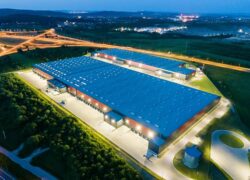
INVESTIKA Real Estate Fund has acquired a portfolio of five logistics parks in Poland from developer 7R. The transaction, completed in partnership with BUD Holdings SA, is valued at over €150 million, making it the largest logistics property investment in Poland this year and the second largest in Central Europe in 2024.

The newly acquired 212,500 sqm portfolio includes high-quality logistics properties across Poland, nearly fully leased to tenants from the production, logistics, retail, and e-commerce sectors. The properties are:
• 7R Park Bydgoszcz I – North-west Poland
• 7R City Park Gdańsk Airport I – Northern Poland
• 7R City Flex Kraków Airport I – Southern Poland
• 7R Park Kielce – Southern Poland
• 7R City Park Poznań West – Western Poland

This acquisition increases INVESTIKA’s Polish real estate holdings to over 409,000 sqm, underscoring its growing presence in one of Central and Eastern Europe’s largest and most dynamic property markets. Bank financing was provided by Berlin Hyp.

“This acquisition strengthens our position in the largest and most robust market in Central and Eastern Europe,” said Petr Čížek, Chairman of the Board of Directors at INVESTIKA. “The portfolio features high-quality logistics properties leased to well-known tenants, supporting our long-term target return of 4–6% annually for investors. Alongside our office building investments, we are strategically focusing on logistics, a sector we believe will see significant future growth.”

Paolo Panico, Director of BUD Holdings SA, added, “This portfolio from 7R represents a rare opportunity to invest in high-quality, stabilized logistics assets that align perfectly with our investment strategy.”

The logistics parks are strategically located, offering flexible layouts to meet tenant needs. All properties comply with international BREEAM environmental certifications, and selected buildings feature photovoltaic panels. INVESTIKA plans to implement long-term active asset and property management strategies to enhance the value of these assets for investors.

Rafał Proczek, Director of INVESTIKA Polska Services, highlighted the strategic importance of the acquisition: “These assets guarantee stable rental income from a diverse group of reputable tenants. We have prepared long-term management plans to maximize their potential and ensure sustained value growth.”

INVESTIKA Real Estate Fund and BUD Holdings were advised by a consortium of experts, including Linklaters, Colliers, Avison Young, REALS, and CRIDO. Developer 7R was advised by A&O Shearman.

Chris Zeuner, Co-CEO of 7R, commented: “This transaction reflects the exceptional quality of our logistics properties, offering investors a rare opportunity to acquire a sizable and stabilized portfolio. The long-term stability of rental income underscores the value of these assets.”

With this acquisition, INVESTIKA continues to solidify its position as a leading player in the Central European real estate market, balancing growth across sectors while delivering robust returns for its investors.

BGK provides over PLN 1 billion for green urban transformation projects

Bank Gospodarstwa Krajowego (BGK) has successfully concluded 201 loan agreements, granting over PLN 1 billion in financing to support the green transformation of Polish cities. This milestone meets the 2024 targets set by the National Reconstruction and Resilience Plan (KPO) within the prescribed timeline, the bank announced.

Since April, when BGK signed an agreement with the Ministry of Funds and Regional Policy, the bank has introduced targeted loans to its portfolio. These funds have primarily supported local governments, resulting in the creation or revitalization of over 90 hectares of green spaces, a reduction of more than 120 GWh in primary energy consumption, and the planting of nearly 1 million new plants.

“This is the largest project for local governments under the KPO, with a funding pool of PLN 40 billion,” said Minister of Funds and Regional Policy Katarzyna Pełczyńska-Nałęcz. “The initiative aims to enhance the quality of life in urban areas. Applications amounting to nearly PLN 4.3 billion have already been submitted, encompassing 173 projects in small cities, 417 in medium-sized cities, and 388 in large urban centers.”

Marta Postuła, BGK’s First Vice-President, emphasized the dual benefits of the initiative: “These investments are not just about fulfilling KPO objectives; they directly enhance the quality of life for residents by reducing pollution and increasing urban greenery. Additionally, they stimulate economic growth, particularly in smaller towns, which account for the majority of signed contracts. This aligns with BGK’s mission of fostering sustainable socio-economic development in Poland.”

The loans have primarily supported projects involving water and sewage infrastructure, energy-efficient lighting, and the greening of urban areas. Small and medium-sized cities have been the main beneficiaries, accounting for over 60% of the loans issued. Larger cities, while applying less frequently, secured higher amounts, with Warsaw leading as the record holder, signing contracts worth over PLN 400 million.

Loan agreements under this initiative can be finalized until the end of August 2026. However, BGK’s strong collaboration with local governments is expected to ensure the full allocation of funds well before the deadline.

BGK highlighted the favorable terms of the loans, with interest rates ranging from 0% to 1%. For non-revenue-generating projects, up to 5% of the principal can be forgiven, making the financing highly advantageous for municipalities.

As Poland’s state development bank, BGK plays a pivotal role in driving economic growth and sustainability. It collaborates with development institutions such as PFR, KUKE, PAIH, PARP, and ARP, financing major infrastructure projects, enhancing housing access, and supporting Polish businesses domestically and abroad.

With this green urban transformation initiative, BGK continues to contribute to Poland’s transition toward sustainable urban living and long-term economic resilience.

Source: Bank Gospodarstwa Krajowego and ISBnews

front page info
LATEST NEWS