Šárka department store in Prague 6 to be demolished and replaced by residential development

The CPI Property Group is planning to demolish the Šárka department store in the Červený Vrch housing estate in Prague 6. The building will be replaced by a new residential complex developed in cooperation with a commercial partner. The project will also involve improvements to the surrounding public spaces, developed in collaboration with the Prague 6 district office and the Institute of Planning and Development (IPR Prague).

As part of the project, an urban-architectural competition has been announced to determine the future appearance of the area. According to CPI Property Group’s project manager, Petr Beránek, the goal is to enhance civic amenities and create new commercial spaces for shops and services to support the revitalization of the central area of the estate.

In line with local requirements, the new residential building is expected to include a restaurant with a social hall and space for medical offices. The competition will also address the design of the surrounding public areas, including the pedestrian axis connecting the Na Dlouhém lánu Primary School and the Arabská Gymnasium.

According to Prague 6 Deputy Mayor Václav Kožený (ODS), integrating the investor’s project into the broader planning of the area will help guide future coordinated development. Mayor Jakub Stárek (ODS) added that the city’s goal is to establish a local center that connects different parts of the housing estate while creating a functional and attractive space for residents.

Local residents have had the opportunity to engage in the planning process through exhibitions, public meetings, and an online survey.

Applications to participate in the design competition are open until 7 April. A jury will then select seven to eight teams to present their concepts by June. From these, three to four finalists will move on to a second round to further develop their proposals, which will be presented to the public in the autumn. The jury is chaired by Slovak architect and urban planner Igor Marko. The competition is organized by planning consultancy ONplan.

Source: CTK

OECD presents toolkit to finance industrial decarbonisation under climate club initiative

The OECD has released a draft version of the “Climate Club Financial Toolkit,” a comprehensive guide outlining financial instruments to support the decarbonisation of heavy industries. The report, developed as part of the Climate Club’s 2024 work programme (Pillar III, Module 2), targets both developed and developing economies by identifying strategies to mobilise private capital and reduce risks associated with low-carbon investments.

The toolkit includes an analysis of 28 financial instruments divided into three categories: economic instruments, de-risking tools, and financing mechanisms. Each instrument is assessed for its potential benefits, use cases, and relevance to key sectors such as cement, iron and steel, and petrochemicals. The document also presents a series of international case studies demonstrating the application of these tools in real-world decarbonisation projects.

A notable component of the report is the economic assessment of selected low-carbon technologies, designed to highlight their viability in various market environments and country contexts. The assessment focuses on hard-to-abate sectors that are typically more challenging to decarbonise due to technical, financial, and regulatory barriers.

The toolkit is expected to inform upcoming financial and technical assistance programmes within the Climate Club and support policy makers and industry stakeholders in identifying effective pathways to achieve net-zero targets. It serves as a resource for mobilising private investment in emissions reductions while enhancing cross-border cooperation on climate goals.

This initiative reflects growing international recognition of the need for targeted financial strategies to accelerate industrial decarbonisation and support global efforts to meet the goals of the Paris Agreement.

Lindab extends lease at MLP Pruszków II logistics park

Lindab, a manufacturer and distributor of building, ventilation, and air conditioning products, has extended its lease agreement at the MLP Pruszków II logistics park. The company will continue to occupy approximately 6,700 square metres of warehouse and office space. The agreement was facilitated by real estate consultancy Knight Frank.

Lindab has been operating at MLP Pruszków II since 2020, initially leasing 4,300 square metres and later expanding to its current footprint. The company is part of the Lindab Group, which has been present in the Polish market since 1992.

MLP Group representatives stated that the lease extension reflects Lindab’s continued confidence in the facility and the working relationship. The MLP Pruszków II park, located in the Brwinów municipality near Warsaw, offers modern logistics space and is designed with sustainability in mind. Several buildings hold BREEAM certification, and photovoltaic systems are being installed as part of the group’s ESG strategy.

The logistics park provides good connectivity to Warsaw and national transport routes, including proximity to the A2 motorway and international railway lines. It is MLP Group’s largest facility in the region, with a target leasable area of 427,000 square metres.

MLP Group follows a long-term “build & hold” strategy, retaining and managing its logistics parks after development. The company offers tailored solutions and ongoing support to its tenants throughout the lease term.

PORR reports strong 2024 results and positive outlook for 2025

PORR recorded strong results for the 2024 financial year, achieving growth in key areas despite a mixed economic environment. The company reported an increase in production output to EUR 6.7 billion and a record EBIT of EUR 158.4 million, with an EBIT margin of 2.6%. The equity ratio rose to 21.1%, and the Executive Board has proposed a dividend of EUR 0.90 per share for the year.

Order intake for 2024 reached EUR 6.846 billion, including major projects such as a data centre in Germany valued at nearly EUR 200 million and a pharmaceutical production facility worth almost EUR 100 million. Civil engineering projects, including the Luegbrücke bridge in Austria, also contributed to an order backlog of EUR 8.5 billion, up 1.1% from the previous year.

Group-wide production output increased by 2.6% to EUR 6.747 billion, with civil engineering accounting for 57.4% of the total. Residential construction remained a smaller segment at 8.1%, while other building construction made up 24.4%. PORR continued to serve industrial clients with complex projects delivered on time and within budget.

Revenue increased by 2.3% to EUR 6.19 billion, supported by efficiency improvements and cost savings. EBITDA rose by 7.1% to EUR 368.8 million, and group net profit grew by 14.6% to EUR 108.9 million. Earnings per share reached EUR 2.32. Free cash flow rose by 39% to EUR 138.2 million, reflecting stronger operating and investment performance.

PORR’s total assets stood at EUR 4.24 billion at the end of 2024. Despite repaying hybrid capital, equity increased by 4% to EUR 894 million, with net debt near zero. Liquidity reserves remained high at over EUR 1 billion. Based on these results, the proposed dividend represents a 38.8% payout ratio.

Economic forecasts for 2025 anticipate a recovery in the European construction sector, supported by expected interest rate cuts and increased private investment. PORR sees growth opportunities in residential construction, data centres, healthcare facilities, and infrastructure expansion. The company continues to focus on decarbonisation efforts, committing to science-based climate targets with emissions reduction goals through 2030.

Looking ahead, PORR expects moderate increases in output and revenue in 2025, with a projected EBIT margin between 2.8% and 3.0%. The long-term target for 2030 remains an EBIT margin of 3.5% to 4.0%. The outlook remains subject to potential geopolitical risks and broader economic developments.

Timber Prague project achieves over 50% reduction in carbon emissions

An analysis of the Timber Prague residential project in Prague-Řeporyje has shown that switching from the original reinforced concrete design to a hybrid timber structure has led to a 52.42% reduction in total carbon emissions. The project, completed by UBM Development Czechia in autumn 2024, marks the first multi-storey timber residential buildings in the Czech capital. The buildings form part of the Arcus City development and have received both a PENB A energy certificate and BREEAM Excellent certification.

Originally planned as a concrete structure, the project was redesigned in 2021 to align with the sustainability goals of UBM Development AG, which is pursuing a strategy to lead in timber construction across Europe. The analysis, prepared by consulting firm Grinity, assessed both the embodied emissions from construction materials and operational emissions over a 50-year period.

The analysis found that the timber design fixed 4,177 tonnes of CO₂e through carbon stored in wood, representing a 34.47% reduction in embodied emissions compared to the original concrete design. Operational emissions were also significantly reduced due to the implementation of energy-saving technologies, including geothermal boreholes, heat pumps, solar panels, and external shading. These measures brought operational emissions down from 7,502 tonnes of CO₂e to 2,357 tonnes, a decrease of 68.58%.

In total, the carbon footprint of the Timber Prague project was reduced from 13,733 tonnes of CO₂e to 6,534 tonnes. The findings highlight the potential for timber and hybrid construction to support decarbonisation in the building sector, while also offering benefits such as faster construction, improved precision from prefabrication, and the promotion of circular construction practices. UBM says the project reflects its broader commitment to sustainable development under its “green. smart. and more” strategy.

CA Immo reports 5% growth in recurring earnings for 2024, proposes €1 dividend per share

Real estate company CA Immo reported a 5% increase in recurring earnings (FFO I) to €120 million in 2024, surpassing its annual target of €105 million. The company’s rental income rose by 3% to €238.9 million, supported by completed developments and higher rental rates across its portfolio. These gains offset declines from the sale of non-core assets. The management board has proposed a dividend of €1.00 per share, to be voted on at the Annual General Meeting scheduled for May 5, 2025.

Despite the improvement in recurring income, EBITDA decreased to €174.8 million, down 46% year-on-year, due to a high sales result in 2023. The net result showed a reduced loss of €66.3 million, compared to a loss of €224.5 million the previous year, reflecting continued market-driven revaluation adjustments, particularly in Central and Eastern Europe and Germany. The overall revaluation loss was €199.6 million, corresponding to a 2.3% drop in gross asset value.

The company continued its capital rotation strategy, completing 13 sales of non-core assets totaling approximately €170 million, with additional transactions of €250 million signed for future closure. CA Immo also advanced its development pipeline, with two office projects underway in Berlin. The occupancy rate of its investment portfolio improved to 93.1%, up from 88.8% the previous year.

Keegan Viscius, CEO of CA Immo: “During the course of 2024, we were able to significantly advance our business. We increased occupancy and rental income despite shrinking the overall size of the portfolio due to sales, and at the same time successfully progressed our profitable development pipeline. Despite a challenging transaction environment, we completed 13 sales of non-core properties at a premium to book value. As a result of the higher top line and reduced expenditure, we delivered a strong FFO I, significantly exceeding our financial target – which enables us to return capital to our shareholders in the form of a dividend payout. Looking ahead, we aim to position our business to perform and continue to deliver attractive returns to shareholders despite the uncertain macro and market environment.”

At the end of 2024, CA Immo’s total property assets stood at approximately €5.0 billion, with 96% of the portfolio focused on office assets. The company maintained a strong liquidity position with €797.3 million in cash and a net LTV of 38.2%.

Looking ahead, CA Immo expects gradual improvement in the European economy and continued demand for high-quality office space. The company’s strategic priorities remain focused on profitability, asset rotation, and selective reinvestment, while maintaining a stable financial position.

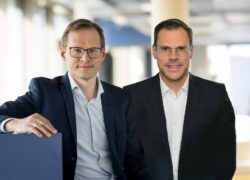
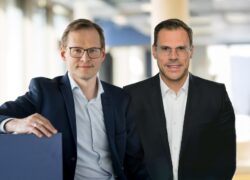
Photo: Keegan Viscius, CEO of CA Immo

OECD launches toolkit to support industry decarbonisation financing

The OECD has released a new financial toolkit developed under the 2024 Climate Club Work Programme. The document provides guidance on economic, de-risking, and financing instruments to support industry decarbonisation across emerging and developing economies (EMDEs) as well as developed countries. The initiative forms part of Pillar III of the Climate Club’s strategy, focused on international cooperation and partnerships.

This toolkit introduces 28 instruments, detailing their design, purpose, benefits, and typical providers. These are divided into three categories: economic instruments such as tax credits and carbon pricing schemes; de-risking tools like political risk insurance and buyer credit guarantees; and financing mechanisms including concessional loans, bonds, and sustainability-linked instruments. Each is supported by case studies that illustrate practical implementation.

The toolkit also provides a preliminary economic assessment of low-carbon technologies in sectors such as steel, cement, and petrochemicals. For instance, it examines the application of carbon capture and storage (CCS), renewable hydrogen, and biomass-based processes.

In parallel with the toolkit, the OECD supports a Global Matchmaking Platform (GMP), where EMDEs can request technical and financial support for decarbonisation efforts. The toolkit aims to help stakeholders, including governments, development banks, and private investors, select suitable instruments to meet specific decarbonisation needs.

With industrial sectors accounting for roughly 25% of global emissions and requiring an estimated USD 10–15 trillion in investment by 2050, the report emphasises that tailored financial solutions will be essential to address investment gaps. The toolkit is intended as a living document, to be updated through 2026 with new instruments and examples based on lessons learned and stakeholder engagement.

Public support for euro adoption in Poland falls to record low

Support for Poland’s adoption of the euro has dropped to 26 percent, the lowest level in years, according to a recent survey conducted by the Ariadna National Research Panel. The data shows a clear decline in public backing, falling from 35 percent in 2023 and 31 percent at the start of 2024.

Three out of four respondents expressed opposition to replacing the Polish złoty with the euro, citing concerns over price increases and the impact on household budgets. Women in particular are strongly against the change, with 80 percent expressing opposition compared to 66 percent of men. This resistance is partly attributed to the perception that adopting the euro could lead to rising living costs, a fear voiced by 70 percent of women and 55 percent of men surveyed.

Among younger respondents, support is also limited. Only 24 percent of people under 34 years old favour joining the eurozone, despite this group often showing greater openness to European integration. Many Poles associate the złoty with national identity, viewing the currency as a symbol of sovereignty and uniqueness within the EU.

Supporters of the euro are most likely to include entrepreneurs and their families, who see potential benefits such as lower transaction costs and reduced exchange rate risks in cross-border business. However, consumer concerns remain dominant, with skepticism focused on the potential for price hikes and diminished purchasing power.

The topic of euro adoption remains politically sensitive. While Poland is formally committed to joining the eurozone under EU treaty obligations, no specific timeline has been established. Successive governments have deferred the decision, reflecting the persistent lack of public enthusiasm.

A 2021 report by the Warsaw Enterprise Institute (WEI), titled “Taking Advantage of Independence – the Euro vs. the Złoty,” concluded that economic theory and empirical evidence offer no definitive answer on whether adopting the euro would be beneficial or harmful. The report recommended caution, arguing that unless the advantages clearly outweigh the risks, Poland should continue to use its national currency.

The WEI also noted that maintaining a national currency alone does not ensure prosperity. Sound monetary and economic policy remains critical, with emphasis placed on lowering inflation, reducing regulatory burdens, and fostering private sector growth.

Source: WEI

REALIA Fund reports 9.18% return in 2024 and marks five years of operations

REALIA FUND SICAV, a qualified investor fund specialising in regional retail parks, recorded a net return of 9.18% on CZK-denominated shares and 8.12% on EUR-denominated shares for 2024. Since its establishment in 2020, the fund has delivered an average annual return of 9.91%, reflecting its capacity to navigate changing market conditions.

According to Tomáš Oplíštil, member of the fund’s investment committee and Chief Commercial Officer at REALIA Group, last year’s results were driven by regular rental income adjusted for inflation and a positive revaluation of the retail park portfolio.

In February 2025, the fund marked its fifth anniversary. Over this period, it has weathered several external pressures, including the COVID-19 pandemic, energy price increases, rising interest rates, and subdued consumer spending. Despite these challenges, the fund has maintained its performance and continued to follow a stable investment strategy.

REALIA Fund follows a conservative investment model, focusing on carefully selected properties rather than pursuing high-priced acquisitions. It prioritises assets that offer long-term income stability, with financing secured at fixed interest rates and leases generally signed for five years or more.

The fund currently manages assets worth CZK 2.7 billion and holds 20 retail parks in its portfolio. Its most recent acquisition was completed in February 2025. Approximately 80% of its investors are individual qualified investors, with the remainder comprising corporate entities, municipalities, non-profit organisations, other investment funds, and one bank.

Polish business climate indicator rises for second consecutive month in March

The Business Climate Indicator (BCI), a measure providing early insight into future economic trends, rose by more than 1.3 points in March compared to February 2025. This marks the second consecutive month of improvement in the indicator, although the pace of positive change has slowed compared to the previous month. The sustainability of this trend will depend on whether the current optimism among company managers translates into actual economic performance, as reflected in official statistics.

Out of the BCI’s eight components, three showed improvement while five remained stable. The most significant factor contributing to the index’s growth was the continued rise of the Warsaw Stock Exchange. The WIG index in real terms reached a new peak, surpassing the previous local high from April 2024.

Manufacturing sector managers reported continued positive sentiment regarding the inflow of new orders. While the total volume of orders has not changed substantially, there has been a noticeable increase in export orders, particularly among chemical industry firms. Conversely, producers of durable consumer goods noted a decline in order inflow, in line with recent trends in retail sales. A modest recovery was observed among producers of capital and intermediate goods, which may signal renewed private sector investment. This trend is supported by survey responses indicating that firms planning to increase investment this year outnumber those planning reductions by nearly 12 percentage points—up from a 10-point margin in last year’s survey.

Company assessments of their financial condition remained largely unchanged from February. However, concern over rising labour costs has grown, with over 60% of manufacturing managers now citing high labour expenses as a key obstacle to operations. Despite this, fewer firms are reporting delays in payments from clients. The percentage of companies experiencing an increase in payment arrears fell from nearly 11% a year ago to 7.5% this month.

In monetary terms, the M3 money supply rose by 0.8% in real, seasonally adjusted terms compared to February. Household credit debt also increased, although this does not reverse the long-term trend of declining interest in consumer loans for purposes other than home purchases.

Source: BIEC

front page info
LATEST NEWS