Romania H1 real estate investment 30% above 12-year average

Investment in income-generating real estate assets in Romania totaled approximately €391 million during the first half of 2025, according to data from Cushman & Wakefield Echinox. This represents a slight decrease of 6.5% compared to the same period in 2024, when the volume reached €418 million. Despite the year-on-year decline, H1 2025 ranks as the second-best performing first half of the past 12 years, standing 30% above the average for the period.

Cushman & Wakefield Echinox participated in three of the largest transactions completed so far this year, with a combined value of €160 million, accounting for more than 40% of the total market volume.

These transactions included the sale of a portfolio of seven strip malls in Slobozia, Focșani, Râmnicu Sărat, Sebeș, Făgăraș, Târgu Secuiesc, and Gheorgheni; the sale of Focșani Mall; and the disposal of a significant portion of the IRIDE Business Park in Bucharest. The IRIDE complex consists of 17 mixed-use buildings for office, storage, and light production purposes, located on a 128,000 sqm plot near the Pipera metro station.

Cristi Moga, Head of Capital Markets at Cushman & Wakefield Echinox, noted that the results from the first half of 2025 reflect growing interest from foreign investors, who accounted for over 70% of the transaction volume. “The outlook for the second half of the year remains positive, considering ongoing negotiations and the historical trend of higher activity in H2. We expect the total annual investment volume to reach between €800 million and €1 billion,” he said.

By asset class, retail properties recorded the highest investment volume in H1 2025, amounting to €163 million and representing 42% of the total. Office assets followed with €126 million (32%), while mixed-use projects accounted for €55 million (14%).

The office sector experienced a notable recovery, rising from a 5% share in H1 2024 to nearly one-third of total investments in the first half of this year. This was attributed to improved office occupancy levels and a moderate decline in vacancy rates.

Among investor groups, those based in the United Kingdom were the most active, completing transactions totaling €148 million (38% of total), followed by Romanian investors with €105 million (27%), and Hungarian investors with €52 million (13%).

Santander Bank Polska provides €22 million financing for Panattoni Park Poznań XIV expansion

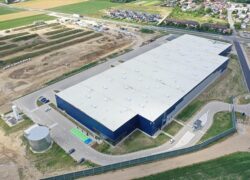
Panattoni has secured additional financing from Santander Bank Polska to support further development of Panattoni Park Poznań XIV. The €22 million loan will fund the second and third phases of the project, which include the construction of a build-to-suit (BTS) facility and a 28,000 sqm speculative hall.

Emilia Taczewska-Trojańska, Head of Debt Finance Poland at Panattoni, noted that Greater Poland is a key market for the company, where it has already delivered over 1.9 million sqm of space. She stated that the new financing will help Panattoni meet tenant demand by providing modern facilities in a location with strong transport connections. Panattoni Park Poznań XIV is designed to support advanced logistics operations and meet high ESG standards.

The park is situated in Głuchowo, near Poznań, approximately 6 km from the Poznań Zachód junction, where the S5 and S11 expressways intersect with the A2 motorway. This location offers convenient access to both national and international transport routes, making the site suitable for logistics, e-commerce, and light manufacturing companies.

The second phase of the development will include a BTS logistics center, while the third phase will feature a speculative hall totaling 28,000 sqm, intended for future tenants.

Once completed, Panattoni Park Poznań XIV will comprise three buildings with a total area of 63,000 sqm. The first phase, a 14,000 sqm facility, is nearing completion and will be leased by Gasa Group and Markat Plus. The entire complex is planned to receive BREEAM certification at the Excellent level, incorporating environmental measures aimed at reducing energy and water consumption.

Companies increase refinancing and seek funds for new acquisitions, CBRE survey finds

Lending activity is expected to grow significantly this year among companies using debt to finance their real estate portfolios, according to a Europe-wide survey conducted by CBRE, a global provider of commercial real estate services.

The survey found that 40% of respondents observed an improvement in market sentiment compared to the previous year across all commercial real estate sectors. Nearly 80% of companies plan to expand their borrowing activities. The primary reason cited is refinancing existing loans (56%), followed by funding for new development projects (21%) and acquisitions (15%). The share of companies pursuing financing for these purposes has increased by nine percentage points year-on-year.

Non-bank lenders—including debt funds, insurance companies, and investment banks—are playing a larger role in financing and are generally more optimistic about credit growth than traditional banks.

Rental housing remains the leading asset class for loan financing in Europe this year, accounting for 48% of activity. Industrial and logistics properties, which shared the top position with residential assets last year, have moved to second place, while hotels have risen to third place with a 14% share.

“Similar to last year, the survey shows that over 80% of companies remain open to investing in alternative assets,” said Chris Gow, Head of Debt and Structured Finance for CBRE Europe. “This segment is currently led by various residential sub-sectors, including senior housing and co-living projects. Storage units and mini-warehouses have newly emerged among the top investment areas.”

Geopolitical uncertainty is seen as the main risk facing the European credit market, with nearly 70% of respondents expressing concerns—an increase from 37% a year earlier. Despite this, many companies plan to increase their lending activity, which could enhance liquidity and support higher loan-to-value (LTV) ratios.

From a sector perspective, interest remains strong in residential rental and industrial and logistics properties in Western Europe. There is also renewed interest in retail real estate and continued focus on data centers.

Jakub Štěpán, Head of Valuation at CBRE for the Czech Republic and Central and Eastern Europe, noted differences in the region’s market trends. “In Central Europe, including the Czech Republic, we have not yet seen widespread construction of data centers or storage units, although activity in these sectors is increasing. Debt financing in our region remains focused on traditional property types, such as shopping centers, retail parks, premium offices, and, increasingly, hotels. Following the recent sale of the Hilton Prague hotel, other significant transactions are underway.”

Across Europe, most lenders are willing to provide loans with LTV ratios of 50-60%, with only minor differences between sectors. Rental housing projects see slightly higher LTVs, ranging from 52.5% to 65%. Data centers also exhibit a broader LTV range of 50-65%, with a median slightly above 50%.

Overall, median LTVs remained stable compared to last year, fluctuating by no more than one to two percentage points. European banks and non-bank institutions reported similar figures, except in logistics and data centers. In logistics, banks reported a median LTV of 55%, compared to 60% for non-bank lenders. For data centers, banks reported a median of 60%, while non-bank lenders reported 55%.

Sustainability has become a key element in lending strategies. More than 70% of respondents indicated they would avoid financing assets lacking sustainability features or plans to achieve them. Additionally, 57% of lenders confirmed they offer improved terms or margin discounts for properties that meet higher environmental standards, Gow said.

The CBRE Lender Intentions Survey was conducted in March and April 2025, involving 143 respondents representing established companies across Europe.

Raben Romania expands operations with new warehouse at CTPark Brașov West

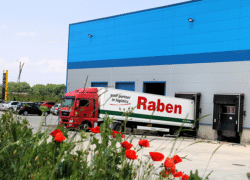
CTP has signed a lease agreement with Raben Romania for 1,800 sqm of space at CTPark Brașov West.

This new warehouse brings Raben’s network in Romania to 10 facilities, totaling 15,000 sqm leased within CTParks across the country.

The warehouse in Brașov will function as a logistics hub for cross-docking, contract logistics, co-packing, and last-mile deliveries to retailers in the region. It will operate as part of Raben’s daily-connected network with other facilities in Sibiu, Bucharest, Roman, and Buzău.

Raben currently leases 261,000 sqm of space across six countries in Central and Eastern Europe within the CTPark network, including Poland and the Czech Republic.

George Clipa, Domestic Road Network Manager at Raben Logistics Romania, stated that the new warehouse strengthens the company’s national logistics capabilities and supports efficient connections between Brașov and other European markets such as Poland, the Czech Republic, and Germany.

The agreement reflects Brașov’s growing significance as a logistics and production hub in central Romania and continues the partnership between Raben and CTP.

Viorela Olteanu, Business Developer at CTP Romania, noted that Brașov is attracting companies seeking to optimize supply chains and establish production operations, supported by local infrastructure and workforce availability.

CTP plans to develop two additional buildings totaling 10,000 sqm at CTPark Brașov West, tailored for logistics and light industrial activities, and built to sustainability standards.

CTPark Brașov West is situated 15 minutes from Brașov, with direct links to major transport routes including E68, E60, the future A3 motorway, and Brașov-Ghimbav International Airport. The park spans 12.6 hectares and offers Class A industrial spaces designed for flexible and energy-efficient operations.

CTP’s portfolio in Romania exceeds 3 million sqm of GLA, covering locations such as Bucharest, Arad, Sibiu, Oradea, Timișoara, Craiova, and now Brașov.

Poland: Job offer barometer shows continued decline in second quarter

The Job Offer Barometer, compiled by the Department of Economics and Finance at the University of Information Technology and Management in Rzeszów and the Office for Investment and Economic Cycles, recorded a slight decrease in June 2025. The index fell to 255.6 points from 257.8 points in May and 258.7 points in June 2024. This marks the third consecutive monthly decline, leaving the index slightly below its level at the end of last year.

Across broad occupational categories, demand remained steady for positions requiring social science education, while services saw no significant change, influenced by continued corrections in tourism and further declines in logistics. Vacancies for manual workers declined for another month, although demand remains relatively high. Meanwhile, there has been a modest and persistent increase in job offers for graduates in science fields, particularly in IT and construction. However, data suggest that growth in IT job postings stems largely from hiring by a small group of large employers, rather than broad sectoral recovery.

The registered unemployment rate, excluding seasonal workers, declined by 0.1 percentage points in May to 5.0%.

In June, more provinces recorded decreases in job advertisements than increases. Larger monthly declines were seen mostly in provinces with already low unemployment rates. Podlaskie, Lubelskie, and Opolskie provinces reported the most notable increases in job offers, while Śląskie, Pomorskie, and Małopolskie experienced the largest decreases.

Among broad occupational groups, only roles requiring science or engineering education saw an increase in vacancies compared to the previous month. This marked the seventh consecutive rise, though growth has slowed since April and remains modest. Overall, the level of job postings is still low in historical terms. Growth in job offers for these occupations was primarily driven by positions in IT and the construction industry. Other occupational groups saw a month-on-month decline in vacancies, with the most significant drop recorded among manual workers. This decline is the third in a row and the largest since December, despite sustained demand for workers in this category.

For occupations requiring education in social sciences and law, cyclical declines persisted across several job categories, though some areas showed signs of stabilization. In June, more job categories experienced declines in vacancies than increases. Notably, new job advertisements were most frequent for graphic designers, call centre employees, and marketing specialists. Demand for call centre employees, office workers, and banking professionals has remained largely stable in recent months. There are emerging signs of recovery in demand for human resources specialists and finance professionals. Marketing roles, following significant declines in previous years, have seen five consecutive months of increasing vacancies, though the overall level remains low. The real estate sector has experienced three months of rising job offers, though vacancies remain slightly below levels seen a year ago. The largest monthly decreases in job postings were observed for legal professionals and corporate procurement staff, along with continued declines in sales roles. Except for a brief pause in February, legal job vacancies have fallen consistently for a year. Customer service roles have also seen a prolonged decline since February, although the number of vacancies remains relatively high compared to historical levels.

Among job offers for graduates in science and engineering, half of the job categories recorded increases in June, while declines were generally modest. The highest number of new job postings appeared for programmers, R&D staff, and IT system administrators. Vacancies for programmers and IT administrators have gradually increased over the past eight months, except for a drop in March for administrators. However, data suggest that recent increases in IT job postings are driven mainly by recruitment efforts from a few large employers rather than a broad recovery across the sector. The number of companies seeking IT workers in the first half of 2025 was also lower than during the same period last year. Outside of IT, the construction sector continues to see a positive trend in job postings. Meanwhile, vacancies for R&D and e-commerce professionals fell in June compared to May. Engineering vacancies decreased for the fourth time this year and have been declining steadily since mid-2022.

In service professions, job vacancies rose in June only in education and media. Education has maintained a high level of job offers for several years, while media continues to follow a long-term downward trend. Other service sectors saw reductions in job postings, with the most significant declines in tourism and logistics. Tourism has entered a correction phase following record highs in the previous quarter, while logistics continues its downward trajectory, with vacancy numbers falling consistently over the past year except for a few brief periods of growth.

Scallier to commercialize five new retail parks in Poland

Scallier has obtained exclusive rights to commercialize five new retail parks planned in Toruń, Bydgoszcz, Ruda Śląska, Zabrze, and Darłowo. Construction is scheduled to start between late 2025 and early 2026, with the facilities expected to open during the first half of 2027. Altogether, the projects will offer a total gross leasable area exceeding 40,000 sqm.

According to Bartosz Nowak, Managing Partner at Scallier, the company’s approach involves analyzing local markets and tenant demand to define appropriate tenant mixes, set rental levels, and design leasing strategies that balance investor expectations with customer convenience for everyday shopping.

In Bydgoszcz, a retail park of approximately 13,000 sqm will be developed on Grunwaldzka Street, near residential areas and national road DK80. Toruń’s planned retail park will cover 10,000 sqm on Bukowa Street, adjacent to housing estates and a main ring road.

In Darłowo, the first phase of development will create over 7,000 sqm of retail space on the main access road to Darłowo and Darłówko. Despite having around 12,000 permanent residents, the town attracts about one million tourists annually, contributing to the demand for retail services.

The second phase of a retail park in Ruda Śląska will add 6,000 sqm of space near existing commercial facilities such as Castorama and Aura Park.

In Zabrze, Scallier is managing both the commercialization and the full development of a retail park on Wolności Street, which is being constructed on the site of a former supermarket. An adjacent Aldi store will supplement the retail offering.

Scallier has also recently been involved in several openings. In November 2024, it commercialized a retail park in Ruda Śląska, followed by a park in Pyrzyce in May 2025. Earlier this year, the company delivered a retail facility in Kościan through the redevelopment of a former Tesco building, now housing tenants including Worldbox, Rossmann, Sinsay, Xtreme Fitness, and grocery anchor tenant Biedronka.

Further openings are planned for later this year. A 6,700 sqm retail park on Bukowska Street in Poznań is set to open in August, anchored by Lidl. In October, Wrocław will see the launch of a retail park on Średzka Street, while December will bring the opening of a 7,200 sqm facility on Bydgoska Street in Chełmża.

Nowak noted that there is still potential for growth in the Polish retail park sector, citing lower market saturation levels and steady interest in local shopping centers. Scallier continues to expand its tenant portfolio with both new brands entering Poland and established retailers and service providers, aiming to offer a variety of services and retail categories, including fashion, sports, health, beauty, and leisure.

ZEITGEIST Asset Management completes mixed-use development in Krakow

ZEITGEIST Asset Management has announced that its mixed-use project, ZEITRAUM – Racławicka 58, has received an occupancy permit and BREEAM certification. The development, located in Krakow’s Krowodrza district, combines a private student residence and serviced apartments to help address the city’s housing needs.

The building, which will open this autumn, features two distinct sections. The left wing contains a private student residence with 289 beds, while the right wing offers 182 serviced apartments. The project is operated by ZEITRAUM, a subsidiary of ZEITGEIST Asset Management, which currently manages multiple student residences and apartment buildings in Poland and the Czech Republic.

Peter Noack, co-founder and CEO of ZEITGEIST Asset Management, explained that flexibility was a core design principle for the development. Both sections of the building can be adapted to changing market demands due to a modular layout.

The student residence has been designed to support both academic and recreational needs. It includes single rooms and communal facilities such as a gaming room, relaxation areas, a gym, and spaces for yoga.

The serviced apartment section consists of units designed for both short-term and long-term stays, featuring a cohesive design in neutral tones and modern furnishings. The property also includes underground parking with electric vehicle charging points, bicycle storage, and a central green courtyard.

The building’s architecture was developed to integrate well into the surrounding urban environment, with a U-shaped design and a central courtyard aimed at enhancing circulation and creating shared spaces. Tomasz Dąbrowski, Managing Director of ZEITGEIST Asset Management Polska, noted the building’s emphasis on natural light and good interior acoustics. The project was completed in collaboration with Reesco Hospitality and B2 Studio.

The new development comes amid significant demand for student housing in Krakow, which has over 130,000 students but limited accommodation options in public and private residences. The shortfall leaves a large number of students seeking private rentals or shared housing.

Zdena Noack, Managing Director of ZEITRAUM, highlighted that the Racławicka project was designed to combine privacy with communal spaces, aiming to support both academic focus and social interaction.

ZEITRAUM Racławicka is situated 10 to 20 minutes by public transport from major Krakow universities and is adjacent to the Łobzów train station, which offers a four-minute connection to Kraków Główny train station. The Krowodrza district, where the building is located, offers various amenities including restaurants, cultural venues, parks, sports facilities, and essential services.

Move-ins at Racławicka Street are planned for this autumn, with reservations already underway for spaces available from 1 September.

Tobias Lagaly appointed Center Manager of EUROPA-Galerie Saarbrücken

Sonae Sierra has announced the appointment of Tobias Lagaly as the new Center Manager of the EUROPA-Galerie Saarbrücken, an inner-city shopping center managed on behalf of owner Union Investment.

Lagaly, who is originally from Saarbrücken, has over a decade of experience in center management, where he has been involved in the development and repositioning of multiple retail locations in southern Germany. He is also recognized in the industry for his work in event planning and activation concepts.

Christine Hager, Director of Property Management at Sonae Sierra in Germany, said that Lagaly’s familiarity with the Saarbrücken area and his industry experience will contribute to both operational and strategic management of the center.

Lagaly expressed enthusiasm about his new role, noting the opportunity to further develop the EUROPA-Galerie in his hometown and enhance its position as a shopping destination in Saarbrücken.

Tobias Lagaly succeeds Dennis Bastuck, who previously held the role of Center Manager at the EUROPA-Galerie. Sonae Sierra oversees administration, marketing, leasing, and project management for the property.

Atradius survey finds businesses skeptical about Germany’s investment program

While the German government has announced plans to invest over half a trillion euros to modernize infrastructure, support digitalization, and meet climate targets, a new survey indicates significant skepticism among German businesses about the program’s implementation and impact.

The investment initiative, financed through a special credit-funded fund, includes an immediate investment program passed last week by both the Bundestag and the Bundesrat. Despite the scale of the effort, many companies remain doubtful that the measures will translate into tangible benefits for their own investment plans.

“Only a quarter of businesses believe that the federal government’s immediate program is feasible,” said Frank Liebold, Country Director Germany at credit insurer Atradius. He noted that while the program aims to stimulate growth and provide long-term planning security, many businesses question whether these goals will be achieved.

Atradius conducted a survey of over 480 companies across various sectors including automotive, construction, chemicals, services, finance, IT, and manufacturing. The survey revealed that nearly three-quarters of respondents see reducing bureaucracy in planning and approval processes as the most effective way to encourage investment. Other priorities include lowering corporate tax rates from 2028 (58 percent), reforms to reduce energy costs (52 percent), tax write-offs on equipment investments until 2027 (44 percent), and expansion of digital infrastructure (43 percent).

Fewer businesses believe that promoting electric mobility will significantly impact their investment plans, with only 15 percent citing it as a priority.

Businesses expressed a clear preference for the special fund’s resources to be allocated toward traditional infrastructure projects such as transport networks, digital expansion, housing construction, and education.

Despite the scale of planned investments, only about eight percent of companies surveyed consider the government’s measures fully sufficient to secure long-term economic growth. Nearly half remain undecided, while around one in five view the measures as inadequate.

Concerns also extend to the feasibility of implementing the program. More than 70 percent of respondents anticipate significant obstacles, citing delays in legislation and approvals as the primary challenges. Other issues include a shortage of skilled workers, unclear priorities, resistance from regional governments or civil society groups, and administrative complexity. Financial risks such as potential reallocation of funds or future budget cuts also contribute to the uncertainty felt by about a quarter of businesses.

Nevertheless, if implemented effectively, businesses see potential benefits. Two-thirds expect reduced bureaucratic hurdles, while 64 percent anticipate better investment conditions through tax reforms. Half of the companies surveyed expect improvements in the energy supply.

“Companies are willing to invest but require clear framework conditions and planning certainty,” said Liebold. “For the special fund to be effective, decision-making processes need to become significantly more efficient.” He added that the recent legislative steps, including extended depreciation options and proposed corporate tax reductions, are positive but must be accompanied by efforts to reduce bureaucracy and improve digital infrastructure to ensure timely execution of the stimulus measures.

The survey participants ranged from companies with annual turnovers of under five million euros to those exceeding one billion euros, employing anywhere from fewer than 100 to more than 1,500 people.

CTP to develop 12,000 sqm facility for E.ON subsidiary at CTPark Mülheim

CTP, a listed European developer and operator of industrial and logistics real estate, has announced plans to construct a build-to-suit logistics facility for Westenergie AG, a subsidiary of E.ON SE, at CTPark Mülheim in North Rhine-Westphalia, Germany.

The new facility will cover approximately 12,000 square meters of rental space. Westenergie AG will consolidate two metering business units from Essen-Kettwig and Mülheim into the building, which will include office areas, a logistics center for metering device technology, and a state-approved test center for metering devices. The company has signed a long-term lease for the premises.

CTPark Mülheim occupies a brownfield site previously used as an industrial rolling mill, acquired by CTP from Vallourec in 2023. The developer is transforming the 335,000 square meter site into a business park intended to offer over 160,000 square meters of space for research and development, laboratories, co-working, industrial, and logistics facilities. Target industries include life sciences and IT manufacturing.

The location of CTPark Mülheim in the Rhine-Ruhr metropolitan region provides direct access to several major highways and is in proximity to cities such as Düsseldorf, Duisburg, Dortmund, and Essen. The site is also connected to logistics networks serving Belgium and the Netherlands, including major ports like Amsterdam, Antwerp, and Rotterdam.

Bernd Böddeling, Senior Vice President Energy Networks Germany at E.ON and CEO of Westenergie AG, noted that the new building will support future growth in the region. Marc Buchholz, Mayor of Mülheim an der Ruhr, said that E.ON’s presence signals the area’s attractiveness for high-growth businesses.

Timo Hielscher, Managing Director M&A at CTP Deutschland, stated that the development reflects CTP’s focus on repurposing brownfield sites and leveraging the potential of the Rhine-Ruhr region.

CTP aims to achieve DGNB Gold certification for sustainable construction at the site, including the installation of a photovoltaic system to support a fossil-free energy supply. Completion of the project is expected in the third quarter of 2027. Brockhoff & Partner and the city of Mülheim an der Ruhr are also involved in the project.

front page info
LATEST NEWS