Berlin Hyp reports strong financial performance in 2024 amid integration with LBBW

Berlin Hyp concluded the 2024 financial year with a significant improvement in profitability and a rise in new lending volume. The bank reported profit before income tax of €527 million, more than four times higher than the previous year. This increase was partly driven by the reversal of provision reserves in connection with the bank’s ongoing integration into Landesbank Baden-Württemberg (LBBW).

Despite a challenging economic and political environment, Berlin Hyp expanded its operating business and continued to implement strategic initiatives. New lending rose to €6.9 billion, compared to €6.5 billion in 2023. This included €2.6 billion in new financing and €4.3 billion in extensions. Germany remained the primary market for new business, accounting for 66% of lending, while international markets—particularly the Netherlands, Poland, and France—gained importance.

Berlin Hyp also strengthened its collaboration with Germany’s savings banks. In 2024, it maintained active relationships with 179 institutions, over half of which used the ImmoDigital platform to access the bank’s investment products. €1.2 billion in new lending was generated through these partnerships.

Progress was made in the bank’s ongoing transformation into a centre of expertise for commercial real estate financing within the LBBW Group. Integration of corporate functions and core systems proceeded according to plan. Berlin Hyp also continued to advance the digitalisation of key processes and system upgrades.

Net interest income increased significantly to €559.3 million, up from €498.3 million in 2023, primarily due to growth in mortgage lending and income from interest rate risk management. Net commission income declined slightly to €16.3 million, in line with the volume of contracted lending.

Operating expenses rose to €215.1 million from €207 million in the previous year. Higher personnel costs and increased depreciation, driven by integration-related activities, were partially offset by lower general operating expenses, including the elimination of the €16.4 million bank levy previously paid in 2023.

Risk provisioning saw a net reversal of €165.3 million, compared to a net allocation of €152.1 million the year before. This was mainly due to the reversal of provision reserves associated with the integration into LBBW. Valuation allowances on individual real estate positions were made, but remained lower than the previous year. In contrast, the securities portfolio recorded a valuation loss of €2.4 million, compared to a gain of €16.8 million in 2023.

The bank’s capital position remained stable, with no further allocations made to the general banking risk fund, which remains at €800 million. After taxes of €82.3 million, the profit transferred to LBBW amounted to €444.7 million, up from €75 million in net income the previous year.

Berlin Hyp’s balance sheet total increased to €36.4 billion, up €0.9 billion from the end of 2023. The common equity tier 1 ratio stood at 14.2%, and the total capital ratio was 15.1%. The cost-income ratio improved to 37.1%, down from 40.0% in 2023.

Looking ahead, Berlin Hyp expects modest economic growth globally, with stagnation anticipated in Germany due to structural challenges and geopolitical uncertainties. Despite this, the bank forecasts an increase in lending activity in 2025 and anticipates renewed interest in the real estate investment market, especially from institutional capital.

The integration of Berlin Hyp with LBBW’s commercial real estate operations is scheduled for completion in August 2025. Following the merger, all real estate financing under LBBW will be consolidated under the Berlin Hyp brand. The bank aims to become a central hub for commercial real estate expertise in Europe, offering clients access to a broader product range and services through the combined strengths of both institutions.

“We are entering a new phase for Berlin Hyp,” said Sascha Klaus, Chair of the Board of Management. “With greater market presence and flexibility, supported by LBBW’s full range of offerings, we are well positioned to deliver value for our clients and partners in the savings bank sector.”

Poland’s tax exemptions for mothers could outperform 800+ program

As Poland faces an intensifying demographic crisis, experts suggest that the country may need to rethink its pro-family policies. Despite the introduction of child benefit programs like 500+ and its successor 800+, birth rates in Poland have continued to decline, prompting calls for new solutions—such as income tax exemptions for working mothers, a model already in place in Hungary.

According to the latest data from Statistics Poland (GUS), the country’s population could shrink to 30.9 million by 2060, a drop of nearly 7 million compared to 2022. At the same time, Poland’s fertility rate has fallen to 1.16—well below the 2.1 replacement level and one of the lowest in the European Union.

This trend is expected to accelerate the ageing of the population. Projections show that by 2050, 40% of Poles will be past working age. Currently, there are 35 retirees per 100 working-age citizens; by 2060, that figure may rise to 64, placing significant strain on the pension system and labour market.

While the 800+ program has improved financial conditions for lower-income families, its overall impact on fertility remains limited. According to experts from Personnel Service, the current benefits structure lacks incentives for middle- and high-income families to have more children. They argue that future policy should better integrate financial support with long-term family stability and labour market participation—particularly for women.

A potential alternative is the approach taken by Hungary. Starting in October 2024, Hungarian mothers with three or more children are fully exempt from income tax for life. By 2026, the program is expected to include mothers with two children, expanding to younger age groups over time. This policy is projected to boost large families’ incomes by nearly 19% annually. For example, a woman earning the equivalent of PLN 6,000 gross per month could retain an extra PLN 1,000 in net income.

Hungary’s broader pro-family strategy includes subsidised home loans, grants for family vehicles, and tax incentives for young parents. Since the implementation of these policies, Hungary’s fertility rate has risen from 1.23 in 2011 to 1.55 in 2023. In contrast, Poland’s fertility rate has not exceeded 1.4 in recent years and reached an all-time low in 2023.

“Demographics represent one of Poland’s most urgent long-term challenges,” says Krzysztof Inglot, labour market expert and founder of Personnel Service. “Without bold action, the consequences for the labour market and pension system could be irreversible. Introducing income tax exemptions for working mothers—similar to Hungary’s model—could offer a stronger and more targeted pro-family incentive.”

With fewer births and ongoing emigration among younger Poles, experts agree that policy changes are necessary. They argue that adopting elements of Hungary’s approach could help reverse negative trends and create a more supportive environment for families of all income levels.

Source: Personnel Service

Żabka eyes international expansion, keeps focus on Romania for now

Polish convenience store chain Żabka is keeping its international growth ambitions on the table, with Romania currently serving as its main focus. While the company has not confirmed any immediate plans to enter additional foreign markets, it has made clear that it does not rule out further expansion in the future.

Żabka’s operations in Romania began in 2023 with the launch of its first stores under the brand “Fresco by Żabka.” The pilot project has since developed steadily, with more locations opening and a growing customer base becoming familiar with the company’s model of quick, convenient shopping. The Romanian market was selected as a strategic entry point due to its size, urbanisation trends, and growing appetite for modern retail formats.

“We’re continuing to build our presence in Romania and evaluating the market’s long-term potential. At the same time, we are closely observing opportunities in other countries,” Żabka’s spokesperson said. “However, we want to ensure that our current operations are scalable and sustainable before making further international moves.”

Żabka Group’s cautious approach reflects a broader strategy of responsible growth. In recent years, the company has expanded its footprint across Poland with an emphasis on digital services, automated stores, and a franchise model that has proven successful domestically.

The convenience retail sector across Europe continues to attract attention from investors and operators, especially in urban areas where consumers favour speed, accessibility, and a broad product mix. Żabka’s model, which combines traditional stores with unmanned formats and digital innovation, is seen as adaptable to a variety of markets.

Although no official announcements have been made regarding additional foreign entries, industry analysts believe countries in Central and Eastern Europe could be potential targets for Żabka’s future expansion, given regional similarities in consumer habits and retail development.

For now, the company remains focused on building its brand and operations in Romania, where its performance could serve as a benchmark for future ventures abroad.

Deka Immobilien acquires modern logistics facility in Belgium

Deka Immobilien has acquired a newly developed logistics property in Mechelen, Belgium, from MG Real Estate. The asset will become part of the portfolio of the Deka-ImmobilienEuropa open-ended real estate fund. The transaction amount has not been disclosed.

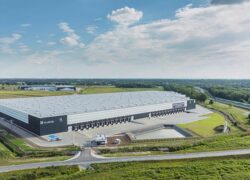
Completed in 2024, the MG Park Malinas distribution centre offers approximately 71,500 square metres of leasable space, including 110 parking spaces and 33 loading docks. The facility is fully leased on a long-term basis to a subsidiary of Kellanova, the food manufacturing company formerly known as Kellogg’s. Located near Kellanova’s production site, the facility enables efficient distribution across the Benelux region and northern France. MG Real Estate will continue to manage the property, supporting the tenant’s day-to-day operations.

The logistics centre is situated in Mechelen, a key logistics hub positioned between Brussels Airport and the Port of Antwerp. The region is part of the Brussels–Antwerp–Ghent logistics triangle, which offers strong motorway connections and infrastructure for supply chain activities. A rooftop photovoltaic installation with an estimated capacity of 9.5 MW is planned for the building. The property is also targeting a BREEAM “Excellent” sustainability certification.

Jack Schulte, branch manager for Deka Immobilien in Brussels, noted that the acquisition represents the company’s first step into the Belgian logistics sector. “Following our long-standing presence in Belgium with offices, retail properties, and hotels, we are pleased to expand into logistics. Belgium’s central location in Europe makes it a strategic market for us,” he said.

MG Real Estate CEO Ignace Tytgat emphasised the significance of redeveloping a former brownfield site into a high-quality logistics centre. He added that MG would continue to support Kellanova through its facility management services.

With this acquisition, Deka-ImmobilienEuropa secures a modern logistics asset in a competitive sub-market, underpinned by a reliable long-term tenant. The property is expected to generate stable income for the fund over the long term.

Construction prices in Poland slightly up in January 2025

The latest report from Statistics Poland (GUS) shows that prices for construction and assembly works in Poland saw a modest overall increase in January 2025 compared to the previous month. According to the study, the index of construction and assembly production prices rose by 0.1%, marking continued inflationary pressure in the construction sector.

Across all major categories of construction activity, prices recorded slight increases. Building construction costs went up by 0.1%, civil engineering projects (including infrastructure works) rose by 0.2%, and prices for specialised construction work also increased by 0.1%.

The report highlights specific growth in prices for a range of construction and assembly works. Notable increases were observed in the installation of heating and mechanical systems (+0.4%), mechanised earthworks (+0.3%), masonry structures (+0.2%), and sewage installations (+0.2%). Prices for water supply network installations also rose slightly (+0.1%).

In terms of buildings, construction costs for multi-family residential buildings (IV and V storeys), collective housing, retail pavilions, production halls, and medium-voltage cable lines also experienced small increases, typically between 0.1% and 0.2%.

Among infrastructure projects, expressways saw a price rise of 0.3%, while highway construction rose by 0.2%. Urban roads and access streets remained mostly stable, with some slight variation across categories.

Bridge construction also recorded modest price increases. Projects involving reinforced concrete viaducts and bridges built with monolithic techniques rose by up to 0.2%, while the cost of bridges using prefabricated elements increased by 0.1%.

The report, conducted by the Trade and Services Department of Statistics Poland, collects data from selected construction companies nationwide and serves both informational and practical purposes. The indices provided are used in project cost estimations, contract valuations, and investment planning by both public and private sector entities.

The January 2025 update confirms ongoing cost pressure in Poland’s construction industry, although at a moderate pace. It reflects both steady demand for construction services and adjustments linked to labour and materials pricing.

Life expectancy in Poland: Latest data shows detailed age-based breakdown

Statistics Poland has released its latest update on life expectancy for both sexes combined, presenting detailed figures by age for 2025. The data provides an essential reference for policymakers, researchers, and institutions working in areas such as health, pensions, and demographic analysis.

The figures, presented in months, reflect the average number of months a person of a specific age is expected to live. For example, at age 30, the life expectancy stands at approximately 591.5 months (just under 49.3 years), while at age 40, the expectation decreases to 477.6 months (nearly 39.8 years). This decline continues steadily with age, as would be expected in actuarial calculations.

The statistical release includes a month-by-month breakdown for each year of age, offering a granular look at how life expectancy changes even within a single year. For instance, a person aged 50 and 0 months has a life expectancy of 367.8 months, while someone who has turned 50 and is 11 months into their 51st year has an expectancy of 358.0 months.

Source: GUS

Office leasing in Poland: Market dynamics and evolving tenant expectations

Over the past year, tenant behaviour in Poland’s office market has continued to evolve, shaped by a mix of economic, operational, and regulatory influences. Key factors such as ESG requirements, longer lease commitments, and increasing demand for flexibility are now central to leasing decisions.

Changing Priorities Among Tenants
Environmental, Social, and Governance (ESG) considerations are playing an increasingly prominent role in office selection. Companies are placing more emphasis on a building’s sustainability credentials and are beginning to expect ESG-related clauses to be included in lease agreements from the outset of negotiations.

At the same time, the rising costs of office fit-outs have led to a noticeable shift in lease durations. Seven-year contracts are becoming standard in new developments, while leases in existing buildings typically run for five years or more. Short-term agreements, such as three-year leases, are now far less common.

For tenants requiring greater flexibility, particularly smaller businesses, landlords are responding with shorter-term leasing options. These often involve standardised, ready-to-occupy spaces available for one or two years, aimed at organisations that do not require customised office fit-outs.

Coworking is also seeing continued interest. Both independent providers and property owners are expanding their offerings, making flexible office arrangements more accessible. This reflects the wider move toward adaptability in workplace strategy and leasing structures.

Pre-let Activity Likely to Increase
With a limited number of speculative office developments in the pipeline, pre-let agreements may become a key avenue for tenants seeking high-quality, well-located space. Over the next two to three years, more organisations are expected to secure space through pre-let deals to ensure their specific requirements can be met.

The limited availability of new supply may also impact existing lease terms. Tenants could face added pressure when negotiating renewals, especially if they aim to maintain favourable conditions amid reduced options.

Market Balance Shifting Toward Landlords
For a prolonged period, office tenants in Poland benefitted from strong negotiating power. However, the balance has started to shift. The current supply gap is putting upward pressure on rental rates, and landlords are now in a stronger position than in previous years. While this shift reflects a typical market cycle, it presents new considerations for tenants.

Larger organisations are increasingly initiating negotiations well ahead of lease expiry—sometimes two to three years in advance—to secure suitable space. In contrast, smaller firms may gain a competitive edge by simplifying their internal decision-making, enabling them to respond quickly when opportunities arise. Recent market trends suggest that delays in the leasing process can lead to missed opportunities, making speed and preparedness more important than before.

Complexity Around ESG Compliance
While tenants today are generally more knowledgeable about the leasing process, the growing emphasis on ESG has introduced new challenges. Companies now require more specialised guidance in assessing buildings against ESG standards—a demand that was almost non-existent just a few years ago.

As a result, lease negotiations often involve input from multiple specialists, including sustainability consultants, legal advisers, and facility planners. This complexity is contributing to longer decision-making timelines and requires a more coordinated approach among stakeholders.

In summary, Poland’s office leasing market is adapting to changing tenant expectations and evolving conditions in supply and demand. ESG criteria, longer lease terms, and flexible options are now key factors in the decision-making process, while landlords are gradually regaining negotiating strength. As the market continues to shift, early planning and informed decision-making will be essential for tenants looking to secure the right space on favourable terms.

By Robert Pastuszka, Director, Office Agency

Renovation over demolition: ZEITGEIST focuses on sustainable urban development

In 2024, ZEITGEIST Asset Management completed several renovation projects in Central Europe, continuing its focus on the adaptive reuse of existing buildings rather than demolition and new construction. The developer finalised three building refurbishments in central Warsaw and completed the restoration of the historic Dunaj Palace in Prague’s UNESCO heritage zone.

The company’s approach reflects a growing trend in urban development: maintaining the architectural integrity of buildings while adapting them for modern use. By renovating rather than demolishing, developers can reduce environmental impact, preserve historical character, and contribute to more sustainable city planning.

According to Peter Noack, co-founder and managing director at ZEITGEIST Asset Management, modern renovation techniques allow old structures to meet current quality standards while maintaining their original design. “These buildings not only retain their atmosphere, but also contribute to more coherent and attractive city spaces,” he said.

In Warsaw, ZEITGEIST completed three major projects in 2024. The first, a 1960s office building in the Solec district, was transformed into a student residence. Another project involved the renovation of a historic tenement house in Old Praga, and the third was the refurbishment of a former shopping centre on Św. Barbary Street, near the Office of Telecommunications and Telegraphy on Nowogrodzka.

Tomasz Dąbrowski, Managing Director of ZEITGEIST in Poland, noted that adapting historic buildings for residential use supports urban goals such as the “15-minute city” concept. “Shorter travel distances reduce traffic and improve quality of life by allowing residents to spend more time with family or in the community,” he said.

ZEITGEIST reports strong demand for its renovated properties. In Warsaw, most of the 130 apartments at Wrzesińska Street have already been rented, while the Solec student residence has been fully occupied since opening.

Much of Warsaw’s architectural heritage is modernist, particularly from the post-war period. Many of these buildings suffered during poor-quality restorations in the 1980s and 1990s. Recent projects aim to reverse that damage and recover original design elements. For example, the renovation of the student residence at Solec 22 preserved the building’s original facade and staircase, with architectural features typical of 1960s modernism, including large windows and open ground floors.

At Św. Barbary 6/8, ZEITGEIST chose to highlight modest architectural details rather than replace them. The renovation focused on restoring metalwork, including the original entrance gate and courtyard-facing galleries. The building’s original light pink colour was also reinstated, along with terrazzo facade elements characteristic of the period.

In Old Praga, ZEITGEIST restored a tenement at Wrzesińska 2 that had fallen into disrepair. Originally built in 1863, the building later became the seat of a Jewish school after World War II. Renovation efforts included the preservation of original woodwork, mezzanine structures, and the historic entry gate.

The company follows a similar strategy in the Czech Republic. Its flagship revitalisation project, Palác Dunaj in Prague, is a notable example. Originally designed by architect Adolf Foehr, the constructivist building has been restored and now hosts the offices of the European Commission and the European Parliament, among others.

ZEITGEIST is currently managing around 60 revitalisation projects across Poland and the Czech Republic. According to Dąbrowski, the goal is to give historical buildings a new function while preserving their past. “Through restoration, we help people connect with the history of their city while meeting contemporary needs,” he said.

Poland’s unemployment rate holds steady at 5.4% in February 2025

Poland’s unemployment rate remained unchanged at 5.4% in February 2025, matching both the previous month’s figure and market expectations, according to the latest data released by the Ministry of Family, Labour and Social Policy.

The number of registered unemployed rose slightly by 9,000 compared to January, reaching a total of 846,600 jobseekers. Despite the month-on-month increase in registered unemployment, the overall rate has held steady, indicating a broadly stable labour market.

Year-on-year, the unemployment rate also remained unchanged. In February 2024, the jobless rate stood at the same level of 5.4%, reflecting consistency in labour market conditions over the past 12 months.

Analysts note that the slight uptick in the number of unemployed individuals is typical for the winter months, when seasonal employment opportunities in sectors such as construction, tourism, and agriculture are limited. They also highlight that the current rate continues to reflect a relatively strong labour market by historical standards, supported by steady economic activity and ongoing demand in several industries.

The government maintains that efforts to support employment through active labour market policies and training initiatives are helping to mitigate any significant fluctuations in joblessness. Economists will be closely watching labour market trends in the coming months as seasonal hiring resumes and broader economic conditions evolve.

Many in Sweden still work from home, though frequency Is slowly declining

Working from home remains a significant feature of employment life in Sweden, with levels still far above pre-pandemic norms, according to new data from Statistics Sweden’s Labour Force Surveys (LFS). The report reveals that while the share of people working from home has slightly declined since the peak of the pandemic, it remains a core part of the work routine for many, especially among permanent employees aged 20–64.

In 2024, around 46 percent of employed Swedes in this age group reported working from home to some extent—a dramatic rise from 2008, when the figure stood at just 20 percent. The most substantial growth has occurred among those who work remotely at least half of their working days. That share rose from just 6 percent before the pandemic to about 13 percent in 2024. While this figure is slightly down—by less than one percentage point—from 2023, the trend remains remarkably high compared to pre-pandemic patterns.

“The share of people who often work from home has decreased slightly but remains at a high level,” said Stefan Andersson, a statistician at Statistics Sweden. “We also see that those who work from home tend to log more hours overall.”

Remote work is particularly common among permanent employees aged 30–54. For this group, the share working from home at least half of the time increased from around 4–5 percent in 2019 to 14 percent for both men and women in 2024.

Education and sector also play a significant role in who works from home. Employees with post-secondary education, especially those in the private service sector or the state sector, are far more likely to work remotely. In these groups, the share working from home at least half the time has roughly doubled since 2019—from 10 to 22 percent in the private sector and from 12 to 21 percent in the state sector. In contrast, municipal sector workers have seen a decrease in remote work, dropping from 7 to 5 percent—likely due to the nature of roles that require physical presence.

Geographically, working from home is most common in Sweden’s metropolitan areas, where just over 15 percent of workers regularly work remotely. In urban and rural areas, the figure stands closer to 10 percent. Before the pandemic, remote work levels were more evenly spread across regions, but the shift toward remote work has since been concentrated in larger cities.

The report also examined how remote work affects the number of hours worked. Overall, individuals who work from home report slightly higher average weekly working hours than those who do not, a pattern consistent across most sectors. The largest gap is seen in the municipal and county council sectors, where remote workers logged nearly three more hours per week on average. Interestingly, in the IT sector—where remote work is most widespread—employees who work from home reported working about one hour less than their on-site counterparts.

Using a regression model, Statistics Sweden found a positive link between remote work and longer working hours, particularly among younger and older workers, individuals without post-secondary education, and those living in rural areas. In professions such as teaching and management, remote work is associated with working two to four more hours per week. However, this trend reverses in some high-tech fields like IT, where home-based work is associated with slightly fewer hours.

While remote work habits are evolving, the overall findings suggest that working from home is here to stay for a large segment of the Swedish workforce, albeit with variations across age, profession, education, and location.

Source: SCB
Data: Labour Force Survey

front page info
LATEST NEWS