Panattoni secures €74.5 million loan from PKO Bank Polski for Wrocław Campus 2 development

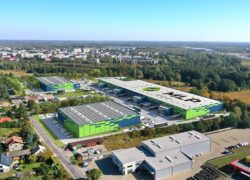
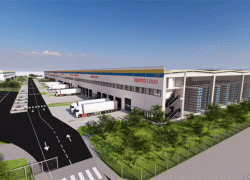
Panattoni has obtained €74.5 million in financing from PKO Bank Polski to support the development of Wrocław Campus 2, a major logistics and industrial investment located in Lower Silesia. The campus, situated approximately 20 kilometres from Wrocław, will eventually provide over 160,000 square metres of modern industrial space.

The first 30,000 square metres of the development has already been completed. An additional 30,000 square metres is expected to be delivered by June as part of the second phase, which will eventually expand to 130,000 square metres.

The project is located near the A4 and A8 motorways, with proximity to key industrial sites, including the LG manufacturing complex, providing strategic advantages for logistics and supply chain operations.

The facility will be developed to BREEAM Excellent standards and will include features such as intelligent energy management systems, water-saving technologies, green areas, and infrastructure for electric vehicles. The roof will be reinforced to allow for photovoltaic installations.

Panattoni has completed over 2.3 million square metres of space in Lower Silesia, with 80,000 square metres currently under construction. The loan from PKO Bank Polski is expected to help complete the Wrocław Campus 2 project and support the developer’s broader activities in the region.

DIW economic barometer: German economy shows modest progress in March

Germany’s economic recovery remained modest in March, according to the latest economic barometer from the German Institute for Economic Research (DIW Berlin). The indicator rose slightly by 0.2 points to 90.6, continuing the upward trend seen over the past few months. However, the pace of improvement has slowed, and the index remains well below the 100-point mark that signals average economic growth.

The sluggish recovery reflects ongoing uncertainty among both companies and private households. Concerns over domestic and international political developments continue to weigh on confidence. Although recent coalition negotiations between the CDU and SPD suggest a potential path to government stability, questions remain about how quickly the new administration will be able to implement economic measures, even with a €500 billion infrastructure package already approved.

Germany’s industrial sector, which has faced persistent challenges in recent years, is beginning to show signs of stabilisation. The Purchasing Managers’ Index has improved since the beginning of the year, and the ifo Business Climate Index also rose in March. While business sentiment remains cautious, expectations among industrial firms have become more optimistic. The possibility of further interest rate cuts by the European Central Bank and clearer economic policy direction may help bolster business confidence. However, rising protectionist tendencies in the United States continue to cast a shadow over Germany’s export-oriented industry. Some reduction in uncertainty surrounding trade policies is expected in the near future.

The services sector also saw a slight improvement in expectations, though overall sentiment remains muted. Consumer spending remains constrained by a challenging labour market, which has prompted many households to prioritise saving. Despite stable inflation and real wage gains over the past year, the high price level continues to limit purchasing power and dampen consumption.

Source: DIW Berlin

GARBE strengthens management team with new appointments

GARBE Industrial Real Estate GmbH, a provider and manager of logistics and light industrial properties in Germany and across Europe, has announced changes to its senior management team as part of its ongoing growth strategy. Dr. Peter Bartholomäus will take on the role of Chief Investment Officer (CIO), while Nicolai Soltau is set to become Head of Portfolio Management starting April 2025. Both will report to Jan Philipp Daun, Managing Director of GARBE Industrial Real Estate.

Dr. Bartholomäus has been with the company since 2021, most recently overseeing fund management and capital markets. With prior experience at ECE Projektmanagement, his background includes mergers and acquisitions, investment strategy, and the formation of international joint ventures. In his new role, he will focus on advancing GARBE’s investment strategy and expanding its presence across Europe.

Nicolai Soltau brings over two decades of experience in real estate, with particular expertise in fund and portfolio management on an international scale. He most recently worked at PATRIZIA, where he was responsible for developing the European logistics portfolio, growing it to over six billion euros in assets. His experience also includes capital raising, investor relations, and managing diverse asset classes such as healthcare and hospitality. Soltau’s responsibilities at GARBE will include managing and developing the company’s existing property portfolio in alignment with its broader strategic objectives.

These leadership changes come as GARBE continues to pursue its “Sheds, Beds & Infrastructure” strategy, which groups its operations into three specialised holding companies. GARBE Industrial Real Estate GmbH plays a central role in the “Sheds” component, focusing on logistics, retail, data centres, and industrial assets. Together with subsidiaries such as GRR GARBE Retail GmbH, NDC GARBE GmbH and GARBE Insite GmbH, the company aims to deliver a fully integrated platform across the industrial value chain.

The latest appointments are expected to further enhance GARBE’s capabilities in investment and portfolio management, supporting its long-term growth and reinforcing its position in the European logistics and industrial real estate market.

Photos: Dr. Peter Bartholomäus and Nicolai Soltau

Retail logistics in 2030: Shaped by technology, sustainability, and evolving consumer demands

Retail logistics is expected to undergo major changes by 2030, shaped by advances in technology, growing environmental concerns, and evolving consumer preferences. According to CEVA Logistics, these shifts will redefine how goods are distributed, with an increasing emphasis on supply chain transparency, personalisation, and sustainable operations. The forecast is based on research and analysis by Yingli Wang, professor at Cardiff University’s Department of Logistics and Operations Management.

The global retail logistics market, valued at approximately €225 billion in 2022, is projected to more than double by 2030. This growth is closely tied to the continued expansion of e-commerce, which is forecast to reach nearly €44 trillion globally. The sector’s evolution is being driven by customer demand for faster, more personalised services, access to real-time information, and environmentally responsible practices. New technologies, including artificial intelligence, big data, and virtual reality, are expected to play an increasingly central role in meeting these demands.

Logistics providers are likely to deepen their integration with retail partners, especially during peak sales periods such as Black Friday, by offering end-to-end services including supply chain visibility and compliance with emerging regulations like the EU’s Digital Product Passport. These digital tools are designed to improve transparency on product origin, material use, and environmental impact.

By the end of this decade, retail logistics will be heavily influenced by the purchasing behaviour of the Millennial generation, which will represent the majority of the global workforce. Their expectations include seamless shopping experiences and high standards of corporate social responsibility. Younger consumers, particularly from Generation Z, are placing increasing importance on sustainability, often favouring brands that demonstrate ethical production practices and reduced environmental footprints.

Retailers and logistics operators will also face growing pressure to adapt their supply chains to reflect these values. This includes investing in more energy-efficient infrastructure, reducing emissions from transport and warehousing, and implementing product traceability systems. Such changes may come at a significant cost, as they involve not only technological upgrades but also the redesign of operational processes to comply with environmental and social governance standards.

Automation is expected to play a key role in making supply chains more efficient. AI-powered logistics hubs capable of operating with minimal human input will enhance warehouse productivity and flexibility. Alongside AI, technologies such as the Internet of Things and cloud-based inventory management systems will help companies respond more effectively to fluctuations in demand and better manage their resources.

In addition to managing operational efficiency, companies will need to address the environmental impact of their activities. Logistics-related emissions are among the highest contributors to global greenhouse gases, prompting both regulatory responses and changes in consumer behaviour. The shift towards clean urban transport and the use of alternative fuels will be essential in meeting climate targets, as well as customer expectations for sustainable delivery solutions.

Looking ahead, the retail logistics landscape in 2030 is expected to be defined by its ability to respond to complex global challenges, from climate change and regulatory compliance to digital transformation and shifting demographics. Companies that invest in flexible, sustainable, and technology-driven strategies will be better positioned to meet future demands and remain competitive.

Housing prices rise again in Slovakia, affordability continues to decline

Residential property prices in Slovakia rose for the third consecutive quarter at the end of 2024, with the pace of growth accelerating both quarter-on-quarter and year-on-year, according to the latest data from the Statistical Office of the Slovak Republic (SOSR). Prices increased by 3.6% from the previous quarter and reached nearly 8% higher than the same period a year earlier.

The data show that price increases were recorded in six of Slovakia’s eight regions, with the highest year-on-year growth observed in the Žilina and Košice regions, driven largely by the appreciation of existing properties. In the Nitra region, the year-end price growth remained in the double digits, continuing a trend seen in the previous quarter. Bratislava, the most active real estate market in the country, also saw a 4% rise in both new and existing property prices.

Meanwhile, minimal quarterly price declines were observed in the Trnava and Trenčín regions, due mainly to falling prices of existing homes. On a year-over-year basis, all regions saw rising prices, ranging from a 2.3% increase in Trnava to a 20.3% jump in Žilina. The national average for existing property prices rose by 8.4%, while new builds increased by 5.7%.

In a longer-term comparison, prices of residential real estate have nearly doubled since the base index was set 14 years ago. Existing home prices have increased by 111%, while new home prices have climbed by 66%.

While the real estate market continues to grow, concerns about housing affordability are mounting. Financial analyst Marián Búlik from OVB Allfinanz Slovakia warned that sustained price increases could make homeownership unattainable for a large segment of the population. He noted that, although mortgage interest rates could fall slightly—by approximately 0.4 percentage points for loans with three-year fixed terms—this would not be enough to offset the recent pace of price growth.

Búlik also pointed out that recent price increases were not solely due to a rush in new home purchases before the January VAT change, as prices for existing properties rose even faster. He added that efforts such as cooperative housing models or rental housing support, while helpful, are unlikely to significantly improve the overall availability of affordable housing, especially given the estimated shortage of more than 200,000 rental units in Slovakia.

Despite the worsening affordability, Slovaks remain interested in homeownership and home renovation. Interest in housing subsidies and energy-efficient renovations has grown significantly, suggesting that while prices may be rising, the demand for housing and investment in property remains strong.

Czechs remain committed to homeownership despite rising costs

Despite high housing prices and growing financial pressures, most Czechs remain committed to the goal of owning their own home, according to the first edition of the Housing Future Index published by the KB Group. The index, which measures public sentiment about housing accessibility, financing, sustainability, and smart technology, reached 51 out of 100 points in 2025, suggesting cautious optimism among the population.

The survey found that 80% of respondents view homeownership as unaffordable under current conditions. Nevertheless, many continue to save regularly and plan to use financial tools such as mortgages and building savings loans to bridge the gap. While concerns about the rising costs of real estate and construction are widespread, there is still strong interest in long-term investment in housing, including sustainable and energy-efficient solutions. Nearly three-quarters of those planning to build or renovate a home said they are considering sustainable housing, and nearly half would be willing to pay up to 10% more for it.

Generational differences were also observed. Generation Z, defined as those under 30, showed lower confidence in their ability to achieve homeownership, with an index score of 46 compared to the general population’s 51. They were also more open to renting or shared housing as an alternative. However, they expressed greater optimism about long-term affordability, with 23% expecting housing to become more accessible in the next decade.

Savings habits remain strong, with half of respondents actively putting money aside for housing. Around 31% use dedicated financial products for regular savings, while another 19% contribute irregularly. Market data supports this trend: the number of new mortgages rose by 83% year-on-year in 2024, while loans from building savings schemes increased by 45%.

The sustainability index scored relatively high at 70 out of 100, reflecting growing interest in environmentally conscious living. Many respondents expect Czech housing to become more energy efficient over the next ten years. Generation Z again led in this area, being both more likely to consider sustainable housing and more willing to invest in it. Smart technologies, while not yet widespread, are gaining attention, particularly among younger people who anticipate greater integration of digital solutions into housing in the future.

Despite ongoing challenges, such as rising housing costs and limited accessibility, the index indicates that Czechs remain determined to pursue homeownership and are increasingly looking to modern financial tools, sustainable solutions, and digital innovation to achieve it.

Source: KB Group

EU reports €11.1 billion trade deficit in aluminium for 2024

In 2024, the European Union recorded a trade deficit of €11.1 billion in aluminium and related articles, according to the latest data from Eurostat. Imports totalled €29.5 billion, while exports reached €18.4 billion.

Compared to 2019, the value of aluminium imports rose by 29.9%, or €6.8 billion, while exports increased by 21.3%, or €3.2 billion. This growth in trade value occurred despite a decline in the actual volume of traded aluminium, with imports down by 6.2% and exports down by 1.7%. The figures suggest that price increases, rather than volume, were the primary driver of the higher trade values.

Norway and China were the EU’s largest suppliers of aluminium and related goods in 2024, with imports valued at €4.4 billion and €3.9 billion, respectively. Türkiye, Iceland, and Switzerland followed, with significant growth in imports from Iceland (+104.9%) and Türkiye (+95.4%) compared to 2019.

On the export side, the United Kingdom was the leading destination, receiving €3.7 billion worth of aluminium from the EU. The United States and Switzerland followed with €2.6 billion and €2.4 billion, respectively. Türkiye and India rounded out the top five, with India seeing the sharpest growth in EU aluminium exports since 2019 at +135.6%, followed by Türkiye with +66.7%.

Source: Eurostat

EU in global context: New Eurostat report highlights demographic and economic trends

The 2025 edition of “Key Figures on the EU in the World,” published by Eurostat, presents a detailed comparison of the European Union with countries and regions worldwide. The report provides insight into demographics, economic performance, trade, environment, and society, based on harmonised data from Eurostat and international sources.

As of 2023, the EU’s population stood at 448 million, representing 5.5% of the global population. While India and China each accounted for over 17% of the global total, the EU ranked third in size ahead of the United States and Indonesia. However, projections show the EU’s share of global population will fall to 4.2% by 2075, reflecting demographic challenges, including an ageing population and lower fertility rates.

The EU’s population density of 106 inhabitants per square kilometre remains well above the global average of 62. Urbanisation levels are also high, with 75.7% of the EU population living in urban areas compared to 57.3% globally.

The median age in the EU reached 44.5 years in 2023, far above the world average of 30.4. Ageing remains a prominent demographic feature, with the EU’s old-age dependency ratio at 33.4%, more than double the world average of 15.4%. This is projected to rise to 55.5% by 2075, driven by increasing life expectancy and declining birth rates.

In terms of fertility, the EU recorded an average of 1.46 children per woman in 2022, below the replacement level of 2.1 and well below the global average of 2.25 in 2023. The crude birth rate in the EU was 8.2 per 1,000 inhabitants, while the crude death rate was higher at 10.8, leading to a negative natural population change of –2.6 per 1,000.

Despite these demographic trends, migration remains a key driver of population growth in the EU. In 2023, the total population change was positive due to net migration, with 3.7 more people per 1,000 inhabitants. There were 27.4 million non-EU citizens residing in the EU, with Ukrainians, Turks, and Moroccans forming the largest groups. A significant increase in migration flows was noted in 2022, largely linked to geopolitical developments.

On health indicators, the EU showed a strong performance. Life expectancy reached 81.5 years in 2023, higher than the world average of 73.2. Infant mortality rates in the EU stood at 3.3 deaths per 1,000 live births in 2022, far below the global figure of 27.3. Healthcare expenditure in the EU represented 10.9% of GDP in 2021, marginally above the world average.

In education, over a third (35.1%) of EU citizens aged 25–64 had completed tertiary education. Youth not in employment, education or training (NEETs) made up 9.2% of those aged 15–24, significantly lower than the global rate of 20.4%.

Labour market performance showed steady recovery following the pandemic. In 2023, the EU employment rate for people aged 15–64 stood at 70.5%, and the unemployment rate was 6.1%. Men worked an average of 39.2 hours per week compared to 34.2 hours for women.

The Eurostat report offers a broad statistical perspective of the EU’s global position, highlighting both its strengths and areas where demographic and economic shifts may pose future challenges.

Source: Eurostat

Poznań closes 2024 with strong budget execution and stable economic indicators

Poznań ended 2024 with a solid financial performance, achieving higher-than-expected revenue and managing its budget effectively. According to data from the city’s financial department, the budget revenues reached PLN 6.36 billion, surpassing the planned amount by 0.8%. This figure represents a 23.8% increase compared to the revenue collected in 2023. Meanwhile, budget expenditures amounted to PLN 6.26 billion, which is 95% of the annual spending plan, and 1.5% less than the total revenue, indicating a well-managed fiscal year.

A significant portion of the budget—31.3%—came from general subsidies and targeted grants from the state, while revenues from shares in personal and corporate income taxes accounted for 33.6%. Education and schooling received the largest allocation within the city’s expenditures, consuming 37.3% of the budget, followed by transport and communications at 21.5%, and public administration at 7.5%.

On the economic front, industrial production and construction activity remained steady. The city’s registered employment and wage levels showed stability, while tourism and public safety also featured in the latest statistics. As part of a comprehensive report prepared by the Statistics Office in Poznań, the quarterly bulletin captures a detailed picture of the local economy, including labor market trends, social services, and demographic data.

The publication, covering the fourth quarter of 2024, includes analytical insights across various sectors, and positions Poznań in relation to both the wider Wielkopolskie Voivodeship and other major Polish cities. Overall, the report reflects continued economic resilience in the city, supported by prudent fiscal policy and ongoing development across infrastructure and public services.

Source: Statistical Office Poznan

Producer prices in Slovakia rise in February 2025, marking trend reversal in industry

Industrial producer prices in Slovakia rose year-on-year in February 2025, marking the first increase in 13 months. The upward shift was mainly driven by the energy sector, where producer prices for electricity and gas rose for the first time since December 2023. According to the Statistical Office of the Slovak Republic, overall industrial producer prices for the domestic market increased by 2.4% compared to February 2024.

Among the 16 monitored industrial sectors, 12 recorded price increases. Notable contributors included the energy sector with a 4.2% rise and the manufacture of transport vehicles, where producer prices were 4.4% higher than a year earlier. The rubber and plastic manufacturing sector also saw sustained growth, with prices remaining around 5% higher year-on-year. In contrast, the manufacture of petroleum products experienced an 8.1% decrease. For the first two months of 2025, industrial producer prices for the domestic market showed a marginal decline of 0.1%.

Producer prices for the non-domestic market also saw moderate growth, increasing by 0.4% year-on-year in February, although they declined by 1.1% month-on-month. Over the first two months of the year, non-domestic producer prices rose by 0.9% compared to the same period in 2024.

In agriculture, producer prices increased by 7% year-on-year in February. Crop product prices grew by 9.6%, driven by notable increases in cereals, legumes, oilseeds, and fruits. Animal product prices rose by 4.9%, with sheep and lamb prices up by 24%, while hen eggs and raw cow’s milk prices rose by 12% and 8%, respectively. On average, agricultural producer prices rose by 7.3% in the first two months of the year.

In the construction sector, work prices were 2.9% higher than in February 2024, and construction material prices increased by 1.9%. For the first two months of the year, construction work and material prices rose by 3.1% and 1.9%, respectively.

The February data suggests a broader shift in production price trends across key sectors, influenced by energy market developments and rising agricultural and construction costs.

Source: Statistical Office of the Slovak Republic

front page info
LATEST NEWS