New BMW logistics hub under construction at Mošnov as industrial park continues expansion

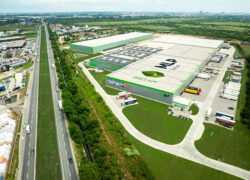
Construction is progressing on a large distribution facility for the BMW Group within the industrial zone near Leoš Janáček Ostrava Airport, part of the wider Ostrava Airport Multimodal Park development. The complex, which is being built by Czech developer Gridarch, is expected to be completed in 2026 and will serve as an international distribution point for the automotive manufacturer.

The Mošnov site has been developed in stages over several years and combines warehouse buildings with rail, road and air transport access. Since the first buildings were delivered at the beginning of the decade, the area has attracted a range of logistics operators and manufacturing companies that use the location for regional and cross-border distribution.

The newest phase of the park includes several large halls intended primarily for automotive logistics. Company representatives involved in the project have indicated that the construction schedule is on track and that preparations for operational activity are already underway, including the recruitment of warehouse and logistics staff in the Ostrava region.

Earlier phases of the industrial park were partly sold to an international real estate investment manager, while later stages have continued under Gridarch’s ownership. When all planned stages are completed, the total leasable area of the Mošnov complex is expected to exceed half a million square metres, making it one of the largest logistics and light-industrial concentrations in the northeastern part of the Czech Republic.

Electric mobility in Germany shows gradual recovery, but growth remains moderate

After a noticeable decline in 2024, registrations of electric cars in Germany increased again in 2025, although overall growth in electric mobility remains gradual over the longer term. According to an analysis by the German Institute for Economic Research (DIW Berlin) based on data from the Open Energy Tracker platform, the expansion of charging infrastructure has outpaced the growth of the electric vehicle fleet, while policy uncertainty continues to affect the pace of adoption.

There are currently around two million fully electric passenger cars on German roads, representing roughly four percent of the total vehicle fleet. In 2025, nearly one in five newly registered cars was battery electric. This marks an improvement compared to the previous year, when demand declined following the end of purchase subsidies, but the share is only slightly higher than levels recorded in 2022 and 2023. Plug-in hybrid vehicles also increased their share of new registrations to just over ten percent, although studies indicate that these vehicles are often driven on combustion engines for much of their mileage.

Newly registered electric cars are increasingly concentrated in larger vehicle categories. Sport utility vehicles and off-road models account for around half of all new electric registrations, while more than ten percent are in upper or upper-middle market segments. European manufacturers dominate the market, producing about four out of five newly registered electric cars, with German brands accounting for more than half. The market share of North American suppliers has declined, while Chinese brands have expanded from a relatively low base.

Electrification is also advancing in parts of the commercial vehicle sector. The share of battery-electric articulated lorries in new registrations reached around three percent in 2025, with higher monthly figures toward the end of the year. Electric buses represent approximately one quarter of new bus registrations, the highest proportion among vehicle categories, and about five percent of the total bus fleet is now fully electric.

Public charging infrastructure has expanded significantly in recent years. Germany now has close to 190,000 public charging points, around one quarter of which are fast chargers. The ratio of electric cars to fast-charging points has improved compared with previous years, and average installed charging capacity per vehicle has increased. According to the DIW analysis, charging availability is unlikely to be the main constraint on further adoption in most regions.

The study notes that policy direction remains a key factor influencing market development. DIW researcher Wolf-Peter Schill stated that clearer long-term priorities and consistent regulatory signals could support investment and purchasing decisions. While financial incentives such as subsidies or tax advantages may provide short-term effects, the report suggests that long-term growth depends largely on stable policy frameworks and clearer guidance regarding future drive technologies.

Source: DIW Berlin

Makita expands leased space at MLP Pruszków II logistics park

Makita has increased the amount of warehouse and office space it leases at the MLP Pruszków II logistics park near Warsaw. The company will occupy around 18,000 square metres in total after the expansion, almost twice the size of its previous lease. The additional area is scheduled to be handed over in mid-2026. Cushman & Wakefield advised the tenant during the transaction.

Makita has operated at the site since 2017, when it initially leased approximately 9,800 square metres of warehouse space. Under the new agreement, the company will use about 16,800 square metres for storage and logistics functions and around 1,200 square metres for offices and staff facilities.

Representatives of both the landlord and the tenant said the expansion reflects the company’s growing logistics requirements and the availability of additional space within the same complex. Cushman & Wakefield noted that concentrating operations in a single location can simplify distribution and inventory management processes.

Makita is a Japanese manufacturer of power tools and garden equipment and operates two logistics centres in Poland, one of which is located at MLP Pruszków II together with a training and presentation area.

MLP Pruszków II is a large logistics park in the Brwinów municipality west of Warsaw, close to the A2 motorway and several rail connections. The complex is being developed in stages and is planned to reach more than 400,000 square metres of leasable space. Some buildings have environmental certifications, and rooftop solar installations are being introduced as part of the developer’s sustainability programme.

Quantum reports strong acquisition activity and portfolio growth despite cautious market climate

The Hamburg-based real estate developer and investment manager Quantum has reported continued expansion of its property portfolio despite more demanding conditions across European markets. According to company information, the group added assets with a combined value of more than €650 million during the past year, while also completing several disposals and project handovers.

The newly acquired properties are primarily residential buildings located in major urban areas in Germany as well as selected cities in Austria and Denmark, complemented by a purchase in the light industrial segment. At the same time, the company finalised the sale of two investment properties and concluded the redevelopment and transfer of a large mixed-use scheme in Cologne.

By the end of the year, the total value of properties managed on behalf of investors reached approximately €12.5 billion. Housing continues to represent the largest share of the portfolio, followed by office space and retail premises. Leasing activity remained steady, with tens of thousands of square metres of commercial area newly occupied and several thousand apartments rented in both existing and recently completed residential projects.

In addition to investment transactions, the company secured new development management assignments in Hamburg and Munich. Three major projects were delivered during the year, including two large residential quarters in Hamburg and the final phase of an inner-city regeneration project in Cologne. Developments currently under construction or in preparation represent an estimated pipeline of more than €2 billion.

Company representatives indicated that residential real estate will remain a strategic focus moving forward, particularly in large European metropolitan regions. Following the completion of several flagship schemes, the group expects to continue launching further large-scale projects in the coming year, positioning itself for gradual growth as market conditions stabilise.

Euro area price growth eases at the start of 2026

Price growth across the countries using the euro slowed at the beginning of 2026, according to newly released preliminary data from the European Union’s statistical office. The early estimate for January indicates that consumer prices rose at a slower annual pace than in the final month of 2025, suggesting a continued cooling of inflationary pressures across the monetary union.

The main driver of price increases remained the services sector, although the rate of growth there also showed a slight moderation compared with the previous month. Food and beverage prices continued to rise year-on-year, but at a more measured speed than seen during much of the previous year. By contrast, energy costs continued to decline, helping to offset price increases in other categories and contributing significantly to the overall slowdown in inflation.

Goods excluding energy and food registered only limited annual price changes, reflecting relatively stable conditions in retail markets. The combination of softer energy prices and a gradual easing in service-related costs played a key role in bringing the overall rate lower at the start of the year.

The figures are based on an initial calculation and will be revised later in the month when more complete national data becomes available. Such early releases are closely monitored by financial markets and policymakers, as they provide one of the first signals of economic trends within the euro area each month.

Source: Eurostat

BBI Development receives final approval for 170-metre Roma Tower project in central Warsaw

BBI Development has obtained final administrative approval allowing the construction of the long-planned Roma Tower high-rise in central Warsaw, removing the last formal obstacle before work on the project can begin. The decision confirms that the building design and construction plans have been fully accepted by authorities, enabling the developer to move forward with both the start of works and the marketing of the scheme.

The tower is planned for a site near the junction of Nowogrodzka and Emilii Plater streets, one of the capital’s most prominent central locations. According to project information, the structure is expected to reach around 170 metres in height and comprise close to fifty above-ground levels. The building is intended primarily for residential use, with additional commercial and service areas at lower floors and parking space below ground.

Roma Tower is being developed through a partnership between BBI Development, the Liebrecht & WooD Group and the Pro Bonum Foundation. The project has been discussed in the Warsaw market for several years and has undergone a lengthy planning and permitting process, including design adjustments and changes in functional concept before reaching its current form.

Developers indicate that the final approval allows preparations for construction to accelerate during the year, while also opening the way for commercial activity related to the apartments and other premises planned within the building. Market observers note that the project is set to become one of the tallest predominantly residential buildings in the Polish capital once completed, further reshaping the skyline of Warsaw’s city centre.

Indotek divests Warsaw office property to Łazarski University for educational redevelopment

A Warsaw office building previously owned by the Hungarian investment group Indotek has been sold to Łazarski University, which plans to transform the property into new academic facilities focused on medical and dental education. The transaction marks another step in the ongoing conversion of older office assets in the Polish capital toward alternative uses.

The property, known as Taifun, is situated in the Włochy district of Warsaw and comprises approximately 7,000 square metres of space spread across several floors, along with both underground and surface parking areas. Its proximity to rail connections and relatively short travel time to Chopin Airport are considered key advantages of the location. Following the acquisition, the university intends to adapt the building to house teaching rooms and a modern medical simulation centre designed to support practical training for students.

University representatives described the purchase as part of a broader expansion strategy aimed at strengthening healthcare-related study programmes. The institution is preparing to introduce a new dentistry course alongside its existing medical studies, and the additional premises are expected to accommodate specialised laboratories and smaller class groups.

For Indotek, the disposal aligns with a pattern of repositioning its Polish portfolio by selling selected office assets that offer potential for functional change. Market observers note that interest in such properties has grown as educational institutions and other non-traditional occupiers seek well-located buildings that can be reconfigured rather than constructing new facilities from scratch.

Indotek Group, headquartered in Budapest, manages a large real estate portfolio across multiple European countries, covering retail, office, logistics, hotel and mixed-use properties. The sale of the Taifun building reflects a continuing shift in the Warsaw market, where older office stock is increasingly being repurposed to meet evolving demand from sectors outside the traditional corporate tenant base.

International study urges tighter coordination in Ukraine’s reconstruction efforts

An international policy study has found that Ukraine has built a wide network of institutions and partnerships to manage its post-war rebuilding, but warns that overlapping responsibilities, staff shortages and dispersed funding channels are slowing progress. The analysis estimates that the country will require hundreds of billions of dollars over the next decade to restore damaged infrastructure, revive the economy and support communities affected by the conflict.

The study points out that since the escalation of the war in 2022, Ukrainian public bodies have continued to function under difficult conditions, maintaining essential services while also advancing administrative reforms. At the same time, foreign governments, development banks and international organisations have delivered large amounts of financial and technical assistance. According to the authors, the central challenge is no longer a lack of support but the difficulty of organising and directing it efficiently so that funds reach projects on the ground without delay.

One of the main concerns highlighted is the strain on the public administration. Many ministries and agencies have experienced frequent leadership changes and a steady loss of experienced staff, which has disrupted continuity and weakened long-term planning. In addition, several separate systems are used to monitor incoming aid and public investments, making it harder for authorities to gain a clear overall picture of available resources and spending priorities.

Local governments, which were granted greater independence through earlier decentralisation reforms, have played a significant role in emergency response and community-level recovery. However, the report notes that many regional and municipal administrations are now overstretched and lack qualified personnel. In some areas, the temporary presence of military authorities alongside civilian structures has added complexity to decision-making and blurred lines of responsibility.

The international support landscape is also described as crowded. Numerous donor platforms, working groups and bilateral initiatives exist simultaneously, reflecting strong global solidarity but sometimes leading to duplicated discussions and fragmented planning. The study suggests that better information sharing and clearer divisions of roles among partners would reduce administrative burdens and improve predictability for Ukrainian institutions.

To address these issues, the authors recommend establishing a central coordination unit at the highest level of government to bring together recovery priorities, oversee funding flows and serve as a single contact point for external partners. They also call for expanded training and recruitment efforts within the civil service, stronger digital tools to manage investment projects and greater engagement of Ukrainians living abroad as a source of skills, networks and investment. In the view of the study, these steps would help transform extensive international backing into more coherent and visible rebuilding results across the country.

Source: OECD

REALOGIS Research: Logistics rents rose in 2025 as demand supported market stability

REALOGIS Unternehmensgruppe, an advisory firm specialising in industrial and logistics real estate and commercial land, has analysed rental developments for new and existing logistics space across 33 German markets. The study indicates moderate but broadly distributed rental growth in 2025, with demand remaining solid in both standard and higher-quality segments. In the eight core markets identified by REALOGIS — Berlin, Hamburg, Munich, Frankfurt am Main, Cologne, Düsseldorf, the Ruhr region and Stuttgart — minimum and prime rents increased in parallel, while the overall price structure remained largely unchanged.

Christian Beran, Managing Director Germany at REALOGIS, said that rental trends in 2025 reflected a resilient logistics property market, with rents in many regions rising at a measured pace and without a significant widening of the gap between standard and premium space. According to Beran, sustained demand in the largest markets continued to underpin stability.

Across all markets analysed, the average prime rent for new logistics space increased to €7.59 per m² in 2025 from €7.45 per m² a year earlier, representing annual growth of 2.0%. In the eight largest markets, prime rents averaged €9.04 per m², up 2.4% year-on-year. Minimum rents for new-build space reached €6.44 per m², an increase of 2.2%, while in the Top 8 markets minimum rents averaged €7.36 per m², reflecting a more moderate rise of 1.4%. Prime rents increased in 16 markets, remained unchanged in ten and declined in seven, with Dresden recording the strongest annual rise and Leipzig the steepest decline. Munich continued to show the widest price range in the new-build segment, where prime rents reached €13.50 per m² and minimum rents €9.50 per m², leaving the spread unchanged.

Rental growth also continued in the existing stock segment. Average prime rent increased to €6.58 per m² in 2025 from €6.45 per m² in 2024, corresponding to annual growth of 1.7%. In the eight largest markets, prime rents rose by 2.5% to €7.95 per m². Only two markets recorded declines, while rents were stable in 19 and increased in 12, with Dresden again registering one of the strongest gains. Munich remained the most expensive market for existing logistics space, where prime rents increased to €11.00 per m² and minimum rents to €8.00 per m², leaving the price differential unchanged. Across all analysed markets, the average minimum rent for existing logistics properties increased by 2.6% to €5.28 per m², while in the Top 8 markets minimum rents reached €6.39 per m², also up 2.6% year-on-year.

Cresco Real Estate and WOOD & Company present Yards Žižkov residential project in Prague

Cresco Real Estate, together with co-investor WOOD & Company, has introduced the Yards Žižkov residential development planned for the site of the former Žižkov freight station in Prague. The project is part of the gradual redevelopment of one of the city’s largest brownfield areas and is scheduled to be delivered in two phases. In total, more than 1,100 apartments are planned, alongside public spaces, local services and a kindergarten. Construction of the first phase, which will include approximately 520 apartments, is expected to start in the first quarter of the year, with the first completions targeted for 2028.

The scheme will offer apartments ranging from studio layouts to five-room units, with floor areas from around 20 to 158 square metres. Each apartment is planned to include either a balcony, terrace or private garden area. According to the developer, the standard specification will include underfloor heating, triple-glazed windows, exterior shading and energy-efficient technologies intended to reduce long-term operating costs.

Aleš Svatoň, CEO of Cresco Real Estate Czech Republic, said the project reflects the company’s broader view of residential development. “The Yards Žižkov project builds on our long-term approach to residential development, where we view housing in the broader context of the city, public space, and the everyday needs of its residents,” he stated.

The name Yards Žižkov refers both to the railway history of the location and to the inner courtyards that will form central elements of each construction phase. The project is designed as a mixed urban district intended to connect with surrounding neighbourhoods through public areas and services. Plans include ground-floor retail and service units, landscaped courtyards, a green promenade and a new square. The development also includes a five-class kindergarten with capacity for 125 children, as well as a financial contribution toward expanding a nearby elementary school.

As part of the land acquisition, Cresco Real Estate and WOOD & Company assumed previously agreed obligations toward the Prague 3 district amounting to CZK 167 million. These commitments cover the construction of the kindergarten, improvements to public spaces, transport connections and other elements of local infrastructure.

Pavel Dobeš, Deputy Mayor of Prague 3, emphasised the importance of linking residential construction with public facilities. “For us as a city district, it was and is essential that the construction of thousands of new apartments in this location be accompanied by public amenities,” he said, adding that the planned tram line running through the area would be an important addition to local transport capacity.

The development site is planned to benefit from improved accessibility through a new tram line and stop in the immediate vicinity, alongside pedestrian-oriented planning and proximity to everyday services. The architectural and urban concept is being prepared in cooperation with QARTA Architektura, a Prague-based studio with experience in brownfield regeneration. The design references the industrial history of the former freight station while adapting the layout to contemporary residential standards.

Project architect Jiří Řezák of QARTA Architektura said the aim is to maintain a link to the site’s past while integrating it into the emerging district. “The architecture is inspired by the history of the location in its details and transformed into a contemporary concept,” he noted.

front page info
LATEST NEWS