Slovakia’s Warehouse Sector Enters a More Competitive Phase

After several years in which available industrial and logistics space was limited and occupiers competed for new facilities, Slovakia’s warehouse market is showing signs of a changing balance. New developments continue to expand the country’s industrial footprint, while companies are taking a more measured approach to growth, creating a market where tenants have more options and landlords face increasing competition.

The first months of 2026 brought another wave of new warehouse and production facilities to the market, pushing Slovakia’s modern industrial stock close to the five-million-square-metre mark. At the same time, developers continue to build additional projects, ensuring that further capacity will be added during the remainder of the year.

Despite economic uncertainty across Europe, occupier activity remained relatively solid. Companies signed agreements for more than 129,000 sqm of industrial space during the first quarter, although a large proportion of this activity came from businesses choosing to remain in their existing premises rather than undertaking major expansion projects. This reflects a business environment in which operational efficiency and cost control are increasingly important considerations.

The automotive industry continues to play a decisive role in shaping demand. Slovakia remains one of Europe’s leading vehicle manufacturing locations, and the network of suppliers, logistics providers and production companies linked to the sector continues to generate requirements for both warehouse and manufacturing facilities. At the same time, companies are adapting to changes in vehicle technology, supply-chain structures and production strategies, factors that are influencing future real estate decisions.

Industrial activity remains concentrated in western Slovakia, where established transport infrastructure and proximity to major European markets continue to attract occupiers. The Bratislava region remains the country’s primary logistics hub, while Trnava, Nitra and Žilina benefit from their close links to manufacturing operations. Further east, Košice is gradually strengthening its position as an alternative location for companies seeking expansion opportunities and access to labour.

A growing amount of immediately available space has become one of the defining features of the market. Several projects completed over the past year entered operation without being fully occupied, increasing the number of options available to prospective tenants. Vacancy has risen to levels not seen for several years, although it remains within a range considered manageable by industry standards.

This increase in choice is beginning to influence commercial terms. Property owners are placing greater emphasis on attracting and retaining occupiers, while rental growth has slowed following the sharp increases experienced during the post-pandemic period. Although well-located, high-quality facilities continue to achieve premium pricing, the market is becoming more competitive overall.

Developers are also operating in a different environment. Higher financing costs and longer decision-making processes among occupiers mean that project planning requires greater caution. While construction activity remains active, the success of future developments will increasingly depend on location, building quality and the ability to meet evolving tenant requirements.

Investment interest in the sector remains comparatively strong. Industrial and logistics properties continue to attract capital from domestic and regional investors, supported by the long-term importance of manufacturing, trade and distribution activities within Central Europe. Investors remain particularly interested in modern assets with reliable occupiers and stable income streams.

Environmental performance is becoming another important factor influencing both occupiers and investors. Energy efficiency, lower operating costs and sustainable building features are now routinely included in development plans as companies seek to meet corporate environmental objectives and reduce long-term expenses.

The outlook for the remainder of 2026 will largely depend on how quickly the market absorbs the substantial amount of new space delivered over the past 18 months. Demand remains present, supported by manufacturing and logistics activity, but occupiers are making decisions more carefully than in previous years.

Rather than signalling a downturn, current conditions point to the maturation of a market that has undergone rapid expansion. Slovakia’s industrial property sector remains supported by strong economic fundamentals, but success is increasingly being determined by quality, efficiency and strategic location rather than by a simple shortage of available space.

Source: CIJ.World Research & Analysis Team

Survey Finds Nearly One in Five Czechs Has a Mortgage as Housing Demand Remains Strong

Nearly one in five Czechs currently has a mortgage, while a similar proportion expects to take out a home loan in the coming years, according to a new survey conducted by the Czech Banking Association (CBA) and Ipsos.

The research found that 18% of respondents currently hold a mortgage and a further 19% plan to apply for one in the future. Most borrowers use mortgage financing to purchase their primary residence, while a smaller share finance investment properties or housing for family members.

The survey suggests that demand for homeownership remains resilient despite rising property prices. Although many households continue to face affordability challenges, the proportion of people who have postponed plans to purchase a home has fallen compared with the previous year.

Respondents planning to take out a mortgage indicated an average loan requirement of CZK 3.16 million, an increase of more than CZK 500,000 compared with last year’s survey. More than a quarter of prospective borrowers expect they will need financing exceeding CZK 4 million.

The findings also highlight the growing financial burden associated with homeownership. Four out of ten households with a mortgage spend more than one quarter of their monthly net income on repayments, while almost one-third allocate at least 30% of their income to servicing housing debt.

Future borrowers appear prepared for similar commitments. According to the survey, around one-third of prospective applicants expect mortgage repayments to consume more than 40% of household income.

Most respondents planning to purchase property believe housing prices will continue rising over the next two years. This expectation is contributing to ongoing demand despite affordability concerns and elevated borrowing costs.

Survey data also indicates that family support is becoming increasingly important in helping younger buyers enter the housing market. Around one-third of future mortgage applicants expect financial assistance from a partner, parents or other family members. At the same time, inherited property is playing a larger role in housing ownership, with the share of respondents who acquired housing through inheritance increasing over recent years.

The broader mortgage market remains active. According to the latest CBA Hypomonitor data, banks and building societies provided CZK 52.6 billion in mortgage loans during May. While activity eased slightly compared with April, lending volumes remained substantially higher than a year earlier.

The average newly issued mortgage reached CZK 4.84 million in May, significantly above the average amount anticipated by prospective borrowers in the survey. This gap suggests many households may still underestimate the financial requirements associated with purchasing property in today’s market.

Housing prices continue to rise across the country. According to the ČSOB Housing Index, apartment prices increased by 12.5% year-on-year during the first quarter of 2026, while family house prices rose by 9.1%. Although growth has moderated compared with previous periods, housing values continue to outpace inflation and remain a key factor influencing purchasing decisions.

The survey results point to a housing market where demand remains strong despite affordability pressures. Expectations of further price growth, combined with limited housing supply and a continuing preference for homeownership, are encouraging many households to remain active in the market even as borrowing costs remain above the levels seen in previous years.

Source: CTK

European Property Markets Find Their Footing as Investors Refocus on Long-Term Opportunities

After several years marked by rising borrowing costs, valuation adjustments and reduced transaction activity, Europe’s commercial real estate sector is showing increasing signs of stability. Investment decisions are becoming easier to make, more transactions are reaching completion and a growing number of investors are returning to the market with capital ready to deploy.

The recovery is not occurring evenly across the continent, but the overall direction is becoming clearer. Major markets including the United Kingdom, Germany, Spain and the Netherlands continue to attract the largest share of investment activity, supported by their scale, transparency and depth of occupier demand. London remains Europe’s primary destination for global capital, while Madrid has strengthened its position among the continent’s most closely watched investment locations.

In Central and Eastern Europe, activity is gradually expanding beyond a small number of core markets. Prague continues to benefit from strong investor interest thanks to its limited supply of institutional-grade assets and broad buyer base. Poland remains the region’s largest market, while Romania and several South-East European countries are increasingly appearing on investors’ acquisition lists as they search for opportunities offering both income and growth potential.

One of the most notable shifts during 2026 has been the return of international buyers. For several years, many European markets were largely driven by domestic investors who were often better positioned to navigate uncertain conditions. Today, overseas capital is becoming more visible once again. Investment groups from North America, the Middle East and other global markets are actively assessing opportunities across Europe, contributing to greater competition for high-quality assets and increasing market activity.

Access to financing has also improved compared with the more difficult conditions experienced in recent years. While debt remains more expensive than during the previous decade, lenders have become more active and transaction processes more predictable. Investors are once again able to underwrite acquisitions with greater confidence, although uncertainty surrounding inflation, economic growth and geopolitical developments continues to influence decision-making.

Investor demand is increasingly focused on sectors supported by long-term structural trends. Residential property remains one of the most attractive areas of the market as many European cities continue to face housing shortages. Logistics facilities continue to benefit from changes in manufacturing and distribution networks, while healthcare properties are drawing interest due to Europe’s ageing population. Student accommodation, senior housing and other operational real estate sectors are also gaining momentum among institutional investors seeking stable and predictable income streams.

Technology is creating another area of growth. Facilities supporting cloud services, artificial intelligence and digital infrastructure have become some of the most sought-after assets in Europe. Investor interest in these properties continues to rise, although development activity in certain markets is increasingly constrained by energy supply limitations and infrastructure requirements.

The office sector remains divided. Buildings that meet modern workplace expectations and environmental requirements continue to attract occupiers and investors, particularly in central business locations. Older properties face greater challenges and, in many cases, require substantial upgrades to remain competitive. As a result, many owners are investing in refurbishment programmes or exploring alternative uses where market conditions allow.

Environmental performance is becoming a more important factor in asset value and investment strategy. Properties capable of meeting evolving regulatory requirements and occupier expectations are generally attracting stronger demand, while less efficient buildings face increasing pressure to improve. This trend is reshaping investment decisions across every major property sector.

At the same time, technology is beginning to play a larger role in the way buildings are operated, analysed and managed. Artificial intelligence is increasingly being used to support decision-making, improve operational efficiency and help owners better understand tenant behaviour and building performance.

Despite improving market conditions, challenges remain. Ongoing geopolitical tensions, economic uncertainty and fluctuating energy costs continue to influence investor sentiment. Many buyers remain highly selective, focusing on assets with strong fundamentals, reliable income and clear opportunities for long-term value creation.

What distinguishes the current environment from previous market cycles is the emphasis on discipline rather than rapid expansion. Investors are paying closer attention to asset quality, operational performance and future resilience. Rather than pursuing short-term gains, capital is increasingly targeting sectors and locations supported by demographic change, technological development and evolving occupier needs.

The European property market may not yet have returned to the levels of activity seen during previous peaks, but it has clearly moved beyond the period of uncertainty that followed the sharp shift in interest rates. The focus has shifted from market correction to market opportunity, creating the foundations for a more measured and sustainable phase of growth across the continent.

Source: CIJ.World Research & Analysis Team

Bulgaria Expands Competition Controls with New Pricing and Supply Chain Rules

Bulgaria has adopted a substantial overhaul of its competition legislation, introducing stricter oversight of market power, pricing practices and supply chain transparency. The amendments to the country’s Protection of Competition Act were approved by Parliament on 11 June 2026 and are awaiting promulgation in the State Gazette before entering into force.

The changes are among the most significant updates to Bulgarian competition policy in recent years and are expected to affect manufacturers, wholesalers, distributors and retailers across multiple sectors. While the legislation applies broadly across the economy, particular attention has been placed on food and agricultural supply chains amid ongoing concerns about inflation and consumer prices.

Joint Dominance Formally Recognised

One of the most notable reforms is the introduction of the concept of joint or collective dominance. Under the new framework, two or more independent companies may be considered jointly dominant when economic links or market interdependence enable them to behave to a significant extent independently of competitors, suppliers or customers and thereby weaken effective competition.

The legislation establishes a presumption of individual dominance for companies holding at least a 50% market share. A separate presumption of collective dominance applies when companies together account for at least 60% of a market. Once dominance is established, the companies concerned become subject to Bulgaria’s abuse-of-dominance rules.

New Restrictions on Excessive Pricing

The amendments introduce an explicit prohibition on excessively high prices charged by companies holding a monopoly position, a dominant position or a jointly dominant position. Parliament defined an excessive price as one that substantially exceeds economically justified production, acquisition and sales costs, including a reasonable profit margin, and is considered unfair either on its own merits or when compared with similar products or services.

The Bulgarian Commission for Protection of Competition (CPC) will assess pricing using several benchmarks, including cost-based analysis, comparisons with similar products, historical pricing trends and the economic value of the goods or services concerned. Businesses will be able to defend higher prices where they can demonstrate objective economic justifications, such as increases in production costs, logistics expenses or external market pressures.

Violations may result in penalties of up to 10% of annual turnover.

Broader Controls on Food Supply Chains

The legislation also expands the list of prohibited unfair trading practices within the agricultural and food supply chain. New restrictions target practices such as imposing discriminatory commercial conditions on suppliers and demanding retroactive bonuses, discounts or payments that were not agreed at the time of delivery or are not linked to a clearly identifiable service.

The government argues that the measures are intended to improve fairness and transparency within food distribution channels, although several business organisations and foreign chambers of commerce have criticised the reforms, warning that they could increase administrative burdens and create uncertainty for investors.

Digital Registry to Track Agricultural Products

Another major element of the reform is the creation of a central electronic registry designed to monitor the movement of agricultural and food products through the supply chain. Importers, producers and distributors will be required to provide information on products entering the market and their subsequent wholesale distribution.

Authorities plan to use algorithmic analysis and artificial intelligence tools to identify potential indicators of market concentration, unfair trading practices and competition law violations. Regulatory agencies will have access to pricing and transaction data submitted to the system.

Failure to comply with reporting obligations may trigger substantial fines, including penalties linked to company turnover for repeat or serious breaches.

Further Guidance Expected

Several implementing measures are expected following the law’s entry into force. These include a methodology defining how excessive prices will be assessed and secondary legislation setting out the operational rules for the new supply chain registry. Technical specifications and implementation deadlines for the registry are expected to be published in the coming months.

The reforms form part of a broader effort by Bulgarian policymakers to address concerns over rising consumer prices and market concentration. However, the new rules have already sparked debate between lawmakers, regulators and business groups regarding their potential impact on competition, pricing freedom and investment conditions in the country.

Source: CMS

Fraport AG Leases 6,000 sqm at THE SQUAIRE in Frankfurt

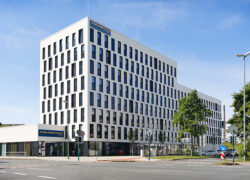
Fraport AG has signed a lease for approximately 6,000 sqm of office space at THE SQUAIRE, the mixed-use commercial complex located at Frankfurt Airport. The company will occupy space on the eighth and ninth floors of the building.

The offices will accommodate employees from Fraport’s Central Infrastructure Management (ZIM) division, which is responsible for major construction projects, building services and maintenance activities across the airport.

According to Sonar Real Estate, the asset manager of THE SQUAIRE, the agreement further diversifies the tenant base at the property.

THE SQUAIRE is one of Germany’s largest mixed-use commercial buildings, providing around 140,000 sqm of leasable space. The property combines office, hotel, retail and food service uses, with offices accounting for the majority of the space. Existing occupiers include companies from sectors such as consulting, engineering, mobility and business services.

The building is directly connected to Terminal 1 at Frankfurt Airport and sits above the airport’s long-distance rail station, providing access to Germany’s high-speed rail network. It is also positioned near major road connections, including the A3 motorway and the Frankfurter Kreuz interchange.

In addition to office and hotel facilities, the complex includes retail and restaurant units as well as a separate parking structure offering approximately 2,500 parking spaces. The parking facility is linked to the main building via an automated shuttle system and includes electric vehicle charging infrastructure.

The transaction reflects continued demand for office space in locations with direct access to major transport infrastructure, particularly among occupiers whose operations are closely connected to airport activities.

DSV Expands Operations at Wrocław Campus 2 with Additional 20,000 sqm Lease

DSV – Global Transport and Logistics has expanded its presence at Panattoni’s Wrocław Campus 2 logistics park near Wrocław, leasing an additional 20,000 sqm of space. The agreement increases the company’s footprint at the development to more than 65,000 sqm.

DSV began operating at Wrocław Campus 2 in February 2026, using the facility to support warehousing and distribution activities across multiple European markets. The latest lease covers approximately 19,800 sqm of warehouse space and 200 sqm of office accommodation. The newly leased area is expected to become operational in the second half of 2026.

According to DSV, the site has become an important logistics hub within its European network.

“Krzyżowice is a unique location. In less than three months, we have created a strategic logistics centre here for our client, from which we coordinate the warehousing and distribution of goods to 34 markets across Europe. The appropriate infrastructure, tailored to our requirements, and access to skilled staff were undoubtedly the foundation of this success. At the same time, it is important to highlight the growing role of Lower Silesia within the European logistics system. We believe in the region’s continued potential, which is precisely why we have invested in expanding our space. With the completion of this transaction, we will be managing 36 warehouses in Poland with a total area of 567,000 sqm,” said Piotr Wojtkowski, Commercial Director at DSV – Global Transport and Logistics.

Panattoni noted that the expansion follows only a few months after DSV commenced operations at the park.

“The expansion of our cooperation with DSV as part of Wrocław Campus 2 confirms that modern and excellently located industrial premises remain a key element in the development of logistics operators. The fact that the decision to increase the space was made just a few months after the launch of the first operations best illustrates the pace of DSV’s business growth and the potential of the Wrocław Campus 2 project. In total, DSV already operates across approximately 160,000 sqm of space in Panattoni’s Wrocław developments,” said Damian Kowalczyk, Managing Director for Romania and the Lower Silesia Region at Panattoni.

Wrocław Campus 2 reached its planned size of 160,000 sqm following the completion of construction in May 2026. Located approximately 20 km from central Wrocław, the park benefits from direct access to the S8 expressway and connections to the A4 and A8 motorways, providing links to key domestic and international transport routes.

The development is targeting BREEAM Excellent certification and incorporates energy-efficiency measures, including enhanced thermal insulation and automated heating and cooling controls.

The Wrocław region remains one of Poland’s largest warehouse markets. According to market data, total leasing activity reached 355,000 sqm in the first quarter of 2026, including 226,000 sqm of new leases and expansions. The region’s warehouse stock stood at 5.27 million sqm, making it the country’s third-largest logistics market.

Tomasz Mika, Head of Industrial Agency at JLL, said the transaction highlights the importance of expansion opportunities within existing logistics facilities.

“DSV’s rapid expansion at Wrocław Campus 2 is an excellent example of how strategic locations meet the real needs of logistics operators serving multiple European markets. The ability to increase space within an existing complex, without having to relocate operations or build processes from scratch, is a key advantage today. In a tight market where the availability of large units is limited, flexibility and expansion potential are becoming just as important as the location itself,” he said.

CEE Office Markets Enter a New Cycle Defined by Scarcity, Rental Growth and Asset Repositioning

The office markets of Central and Eastern Europe are undergoing their most significant structural transformation since the sector’s emergence more than two decades ago. According to Colliers’ ExCEEding Borders Office 2026 report, the six largest office markets in the region, Prague, Warsaw, Budapest, Bucharest, Bratislava and Sofia, are being reshaped by a combination of historically low development activity, tightening availability in prime locations, rising rents and growing pressure on ageing office stock.

While concerns about hybrid work and declining office demand dominated industry discussions in recent years, the report argues that the market’s defining challenge has shifted. The primary issue facing occupiers and investors is no longer excess supply, but an increasingly limited pipeline of modern office space.

By the end of 2025, the six capitals collectively accounted for approximately 22.1 million sqm of modern office stock. Yet annual completions fell to just over 200,000 sqm, the lowest level ever recorded in the modern history of the CEE office sector. Vacancy across the region declined to approximately 10.5%, while full-year leasing activity remained stable at around 2.63 million sqm. Prime rents continued to rise in every capital, ranging from around €16 per sqm in Sofia to approximately €30 per sqm in Prague.

The Lowest Development Pipeline on Record

The most striking finding is the collapse of new office development across much of the region.

Colliers estimates that only around 300,000 sqm of office space will be delivered across the six capitals in 2026, a fraction of historical averages. Construction cost inflation, elevated financing costs, stricter lending requirements and uncertainty around future occupier demand have significantly reduced developers’ willingness to launch speculative projects.

Warsaw, which routinely delivered more than 225,000 sqm annually during the previous decade, has entered a period of structural undersupply. Developers face construction economics that make projects difficult to justify at rents below €17 per sqm, while lenders increasingly require substantial pre-leasing commitments before financing can be secured. More than 150,000 sqm of approved projects remain on hold awaiting stronger market signals.

Prague presents a different challenge. While a sizeable volume of projects remains under construction, around 60-70% of the pipeline is intended for owner-occupiers, including corporate headquarters and institutional buildings. This means only a limited amount of future space will reach the open leasing market. Prague consequently recorded the lowest vacancy rate in the CEE region at 5.8% in Q1 2026.

Budapest’s speculative development pipeline has effectively dried up. Only two small speculative buildings totalling around 5,000 sqm were completed in 2025. Rising construction costs, attractive returns from alternative investments and uncertainty surrounding exit pricing have significantly reduced development appetite. Meanwhile, older office buildings are increasingly being converted to residential or hotel uses.

Bratislava remains a highly concentrated market with only a handful of major projects under construction. Changes to zoning regulations increasingly favour residential development over office projects, further limiting future office supply.

Bucharest experienced perhaps the most remarkable milestone in the region: no new office buildings were delivered in 2025, likely the first such year in more than two decades. Approximately 49,000 sqm is expected in 2026 and less than 100,000 sqm in 2027, remaining significantly below the pre-pandemic average of 130,000-150,000 sqm annually.

Sofia is the only capital currently displaying a relatively healthy development pipeline. Around 235,000 sqm remains under active construction, with seven new office projects recently receiving permits. Demand has largely kept pace with new supply, particularly in established office clusters.

Leasing Activity Remains Stable but Has Fundamentally Changed

Although gross leasing volumes across the CEE-6 remained broadly stable at around 2.6 million sqm in 2025, the composition of demand has changed significantly.

Lease renewals and renegotiations now dominate many markets. In Prague, approximately 60% of leasing activity consists of renewals, while in Bratislava nearly two-thirds of transactions are extensions rather than new commitments. Companies are increasingly choosing to remain in existing locations rather than undertake costly relocations, particularly as uncertainty persists around future workforce requirements, hybrid working patterns and artificial intelligence-driven workplace changes.

The traditional dominance of technology occupiers is also fading. In Bucharest, the IT sector’s share of leasing activity has declined from around 50-55% in 2019 to approximately 20% in 2025. Financial services, professional services and business support functions are becoming increasingly important sources of demand. Similar shifts are visible in Sofia, where the combined IT and BPO sectors now account for around 34% of demand compared with 75-80% historically.

The result is a more diversified occupier base. Financial institutions increasingly favour central business districts and premium ESG-certified buildings, while professional services firms place greater emphasis on brand, amenities and employee experience.

Rising Fit-Out Costs Are Extending Lease Terms

One of the most important but often overlooked market shifts concerns the rapid increase in fit-out costs.

Tenant fit-out costs have risen to approximately €600-700 per sqm in Bucharest, €600-900 per sqm in Warsaw and close to €1,000 per sqm in Prague. These higher capital expenditures are encouraging both occupiers and landlords to seek longer lease commitments.

As a result, lease terms of seven to ten years are becoming increasingly common across the region. Bratislava is now regularly seeing commitments exceeding seven years, while Warsaw and Prague have also experienced a significant extension of average lease durations.

The Flight to Quality Continues to Accelerate

Perhaps the strongest theme emerging across the CEE office market is the widening performance gap between modern and older office assets.

The report identifies an increasingly pronounced polarisation between prime ESG-compliant buildings and ageing stock developed during previous market cycles. Vacancy rates in the best buildings continue to tighten, while older properties struggle to attract occupiers without significant investment.

Bucharest provides one of the clearest examples. Although the citywide vacancy rate stands at around 10.6%, modern well-located buildings often report vacancy between 3% and 9%, while older assets in peripheral locations can reach vacancy levels approaching 40%. Similar trends are evident in Warsaw, Budapest, Bratislava and Sofia.

This divergence is increasingly reflected in rental performance.

Prague remains the region’s most expensive office market, with prime rents around €30 per sqm and selected projects achieving €31-32 per sqm. Warsaw has entered a period of meaningful rental growth following years of relative stability. Budapest’s newest projects are achieving rents significantly above older stock, while Bucharest’s prime rents remain around €22 per sqm, with some upcoming projects testing higher levels.

The rental gap between prime and secondary assets continues to widen as occupiers prioritise quality, sustainability and operational efficiency.

Service Charges Are Changing Occupier Decisions

An increasingly important consideration for tenants is total occupancy cost rather than headline rent alone.

Newer buildings across the region often benefit from significantly lower service charges due to better energy efficiency, modern building systems and more efficient management. In Bratislava, modern buildings operate at approximately €3 per sqm in service charges compared with €5-6.50 per sqm for older assets. Similar patterns are visible in Bucharest and other capitals.

As a result, the overall cost difference between old and new buildings is often much smaller than headline rental comparisons suggest, further encouraging occupiers to relocate into higher-quality premises.

Office Stock Is Beginning to Shrink

One of the most important long-term developments identified by Colliers is the gradual withdrawal of obsolete office stock from the market.

Across several capitals, landlords are increasingly converting older office buildings into residential schemes, hotels, student housing or data centres. Warsaw has already seen more than 500,000 sqm removed from office stock during the past five years, while Budapest is witnessing a growing number of conversion projects.

This trend is becoming an important mechanism for reducing oversupply in secondary locations and supporting market rebalancing.

ESG Requirements Are Becoming a Defining Investment Challenge

The report emphasises that ESG certification has effectively become a baseline requirement for new office developments. However, the larger challenge now concerns existing stock. Penetration of ESG-compliant standards remains relatively low among older buildings throughout the region. In some markets, only a small proportion of existing stock meets modern sustainability requirements.

Owners of ageing assets increasingly face substantial capital expenditure requirements to maintain competitiveness, improve energy performance and meet evolving regulatory expectations. Buildings unable to justify these investments may ultimately face repositioning or alternative uses.

A Market Increasingly Favouring Landlords

Taken together, the combination of constrained supply, limited development pipelines, falling vacancy in prime locations and growing occupier preference for quality space is strengthening landlords’ negotiating position.

Large occupiers in Warsaw frequently have only a handful of suitable options available. Prime vacancy in Prague has fallen below 6%. Modern buildings in Bucharest often operate close to full occupancy, while Sofia’s most sought-after submarkets have virtually no available space.

While overall office demand remains selective rather than expansive, the scarcity of high-quality space is increasingly driving rental growth and supporting asset values.

According to Colliers, the region’s office sector is not experiencing decline but rather a profound structural transformation. The next phase of growth is likely to be defined less by the construction of new buildings and more by the repositioning, upgrading and reinvention of existing assets. For investors, developers and occupiers alike, the most important question is no longer whether offices remain relevant, but which offices will remain relevant in the decade ahead.


Study Finds State Aid Helped Stabilise Banks Without Lasting Competitive Distortions

State support measures introduced during financial crises have played an important role in maintaining the stability of Europe’s banking sector and preventing wider systemic failures, according to a new study involving researchers from the German Institute for Economic Research (DIW Berlin). The findings suggest that the impact of state aid on competition depends largely on how support measures are structured.

The research, conducted by an international consortium and based on a newly compiled dataset combining European Commission state aid records with bank balance sheet data from 2007 to 2021, examined the effects of different forms of government assistance on competition within the banking sector.

According to the study, targeted support provided to individual banks facing financial difficulties generally did not result in negative competitive effects. Such measures, including recapitalisations, were typically accompanied by strict conditions requiring restructuring efforts and the participation of shareholders and creditors in absorbing losses. Researchers found that these requirements helped limit potential distortions to competition.

The analysis identified different outcomes for broader state aid schemes designed to provide rapid liquidity support across the banking sector. Banks benefiting from these programmes experienced temporarily higher profit margins compared with similar institutions that did not receive assistance. However, the study found that these advantages were short-lived and largely disappeared within two to three years.

The findings arrive as European policymakers continue to refine the framework governing state aid. In recent years, the European Commission has activated temporary aid mechanisms in response to several economic shocks, including the COVID-19 pandemic, the energy crisis and more recent disruptions linked to geopolitical tensions and energy price volatility.

Researchers argue that the evidence supports a balanced approach combining rapid crisis intervention with carefully designed safeguards. The study concludes that swift support can help preserve financial stability during periods of stress, while targeted conditions and oversight remain essential to ensuring that competition within the banking sector is maintained over the longer term.

The authors suggest that lessons from previous crises could help inform future policy responses, particularly as governments and regulators prepare for potential economic and financial disruptions in the years ahead.

Futureal Energy Partners Acquires Energy Storage Portfolio in Latvia

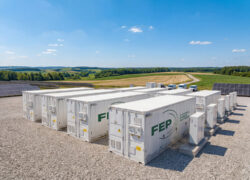
Futureal Energy Partners (FEP) has entered the Baltic energy storage market through the acquisition of a battery energy storage system (BESS) portfolio in Latvia from  Aretis Group⁠.

The transaction comprises two projects in the Riga area with a combined capacity of 45 MW and 120 MWh. The portfolio includes the Bolderaja project, with a planned capacity of 15 MW / 40 MWh, and the Bisuciems project, with a capacity of 30 MW / 80 MWh.

The projects were developed by Aretis Group and have secured grid connection agreements and building permits. Construction is scheduled to begin in July 2026, with commercial operations expected to start in November 2026.

Located in the Riga metropolitan region, the battery storage facilities are intended to provide balancing and ancillary services to the electricity grid. Demand for such services has increased following the synchronization of the Baltic electricity networks with the continental European power system in 2025.

The acquisition marks Futureal Energy Partners’ first investment in the Baltic energy storage sector and expands its renewable energy portfolio across Central and Northern Europe.

The company’s existing portfolio includes solar photovoltaic and battery storage projects in Finland, a large-scale solar development in Hungary and a 45 MW onshore wind project under construction in Poland.

Art-Invest Real Estate Acquires Four Points Flex by Sheraton Hotel in Essen

Art-Invest Real Estate has acquired the Four Points Flex by Sheraton hotel in Essen from an institutional fund. The property will continue to be operated by  The Chocolate on the Pillow Group⁠, in which Art-Invest Real Estate holds a stake.

The hotel is located at Hachestraße 63 in Essen city centre, within walking distance of the main railway station. The property was completed in 2016 and comprises 174 guest rooms.

Operating under the Four Points Flex by Sheraton brand, part of  Marriott International⁠, the hotel serves both business and leisure travellers in the midscale segment.

Essen’s location within the Ruhr region supports demand from corporate travel, trade fairs and events. The hotel also benefits from access to public transport and proximity to major business locations in the region.

According to Art-Invest Real Estate, the acquisition aligns with its strategy of combining hotel investment activities with operational expertise through affiliated operating platforms.

The buyer was advised on the transaction by  Loschelder Rechtsanwälte⁠.

No financial details of the transaction were disclosed.

front page info
LATEST NEWS