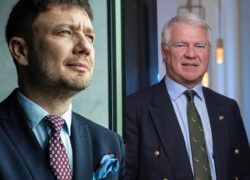
Deka Immobilien sells Edison Höfe property in Berlin

Deka Immobilien has sold the Edison Höfe office and commercial complex in Berlin-Mitte to an institutional investor. The asset was held in the portfolio of the open-ended real estate fund WestInvest ImmoValue, which is aimed exclusively at institutional clients. The parties agreed not to disclose the transaction price.

The property is located at Invalidenstraße 116–119 and Schlegelstraße 26, 26A–C and comprises eight office and commercial buildings with approximately 27,700 sq m of leasable space and 129 parking spaces. The complex includes the Torhaus, a gatehouse building completed in 2012, and a former AEG factory building dating back to 1880 that was comprehensively refurbished between 2002 and 2004, including the addition of an extra floor.

According to the company, the sale follows a holding period of nearly 13 years and was executed as part of portfolio management activities within the WestInvest ImmoValue fund.

Record demand and limited new supply on the Wrocław office market

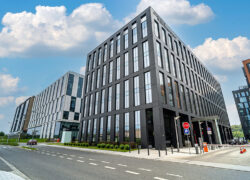
The Wrocław office market recorded its highest level of tenant activity to date in 2025, with total leasing volume reaching nearly 180,000 sq m, according to a report by Savills. At the same time, the market continues to face a relatively high vacancy rate and very limited new supply, contributing to a widening difference in rental levels between newer and older buildings.

At the end of 2025, total office stock in Wrocław stood at approximately 1.33 million sq m. The largest share of space is located in the central zone, accounting for 36 percent of the market, followed by the western zone with 33 percent and the southern zone with 22 percent. No new office buildings were delivered during the year, while total leasing volume reached 179,600 sq m, up 23 percent year on year. The fourth quarter accounted for 75,600 sq m of signed agreements.

The structure of transactions indicates that many occupiers focused on renewing existing leases rather than expanding. Renegotiations represented 57 percent of total leasing activity, while new leases accounted for 30 percent and expansions for 10 percent. The most active tenant sectors were business services, information technology and manufacturing.

Savills notes that the absence of new completions and the dominance of renegotiations reflect a period of cost control and space optimisation among tenants. Newer buildings in central or well-connected locations have generally maintained higher rental levels, while older properties in secondary locations have faced increased competition and downward pressure on rents.

Supply remains limited, with only two office projects under construction in the southern zone, providing a combined 20,400 sq m of space. Both schemes, Swobodna SPOT and The Park Wrocław 2, are scheduled for completion in 2026. There are currently no confirmed deliveries for 2027, and several projects planned for 2028 remain uncertain.

Despite the lack of new completions, the overall vacancy rate increased to 19.9 percent, equivalent to around 266,300 sq m of available space. Approximately four-fifths of this vacant stock is located in older buildings and office complexes, which are more difficult to lease amid a continued preference for higher-quality space. Prime headline rents rose to around EUR 17 per sq m per month, while rents in less central Class A locations declined to approximately EUR 13.50 per sq m. Service charges stabilised in the range of PLN 20–30 per sq m.

For 2026, Savills expects lease renegotiations and space optimisation to remain common, with hybrid working models continuing to influence demand patterns. Buildings with immediately available space are likely to attract increased attention due to the limited development pipeline.

Photo: The Park Wrocław 2

NEINVER appoints Natalie Schmidt as Retail Director

NEINVER has appointed Natalie Schmidt as Retail Director. In this role, she will work with Joan Rouras, Leasing and Retail Director at the company.

Schmidt will be responsible for contributing to NEINVER’s retail strategy and overseeing the brand and tenant mix across the 21 outlet centres the company manages in six European countries: Poland, Spain, Germany, France, Italy and the Netherlands.

Joan Rouras said Schmidt’s experience in international retail and product management would support the company’s cooperation with brand partners and the development of its retail operations.

Schmidt has more than 20 years of experience in the retail sector in both domestic and international markets. Before joining NEINVER, she served as Deputy Retail Director at Wertheim Village in Germany, part of The Bicester Collection, where she was involved in sales strategy for premium brands.

Her previous roles include positions in product distribution and commercial management at companies such as VF Corporation, Oysho (Inditex Group) and Mango. She later held management functions at Desigual, including Global Monobrand Director and Global Retail Outlet Director, overseeing operations in Europe, the United States, Japan and Canada. She also worked at CBRE.

Schmidt holds a degree in Psychology from Ramon Llull University and a master’s degree in Mediation and Conflict Resolution from the University of Barcelona. She has also completed additional courses in retail innovation and sustainable management at ESADE.

According to the company, the appointment is part of an ongoing expansion of its management team as it continues to develop its retail activities in Europe.

Data4 publishes life-cycle environmental analysis of a data centre

Data4, a European data centre operator, together with engineering consultancy APL Data Centre, has published a document presenting a life-cycle assessment (LCA) of a 5 MW data centre. According to the companies, the report applies recognised international standards and is intended to provide a broader view of the environmental impact associated with this type of facility.

The publication comes at a time of increasing demand for digital infrastructure linked to the expansion of cloud services and artificial intelligence technologies. The study argues that the environmental impact of data centres should be assessed across their full life cycle rather than through selected operational indicators alone.

The report, titled “Data Centres: Measuring impacts for more effective actions,” evaluates environmental effects from the extraction of raw materials and construction, through operation, to eventual dismantling. The methodology follows ISO 14040 and ISO 14044 standards for life-cycle assessment.

According to the findings, excluding servers, the production of construction materials and equipment such as concrete and steel accounts for 39 percent of the total carbon footprint calculated over a 20-year period. Operational emissions account for 48 percent over the same horizon. The study also indicates that direct water consumption at the analysed facility represents less than 0.1 percent of total impact, with most water use occurring indirectly through electricity generation.

Linda Lescuyer, Head of Environment and Innovation at Data4, said the aim of the publication is to provide a detailed measurement framework that can support design and operational decisions within the sector. Thomas Martin, Deputy CTO and Head of Sustainability and Innovation at APL Data Centre, stated that life-cycle assessment and carbon footprint analysis can help identify areas where environmental performance can be improved.

The white paper forms part of Data4’s “Data4Good” programme, under which the company reports it has introduced measures including the use of lower-carbon concrete, renewable energy power purchase agreements and the development of water-free cooling systems.

The report is also relevant to the Polish market, which has seen increased data centre investment in recent years driven by demand from businesses, public institutions and cloud service providers. Industry representatives note that broader environmental assessment methods may influence future project planning and regulatory discussions. Adam Ponichtera, Director of Data4 Poland, said the analysis highlights the importance of comprehensive environmental measurement in the development of digital infrastructure.

Piotr Aftewicz joins Walter Herz management team

Walter Herz has appointed Piotr Aftewicz as Managing Director as part of an expansion of its management structure. Aftewicz has more than 20 years of professional experience in the IT sector, product management and commercial leadership, with a focus on business process design and optimization in both growing companies and large international organisations.

In his new role, Aftewicz will oversee the development of the company’s organisational structures and the introduction of operational changes intended to support further business growth. His responsibilities are to include work on sales strategy, the creation of dedicated business lines and measures aimed at improving client service efficiency and advisory quality in the commercial real estate and investment segments.

He will work with the management board on operational processes, including closer coordination between marketing, sales and customer service functions. Part of these efforts will involve the implementation of a RevOps-type operating model intended to streamline internal workflows.

During his career, Aftewicz has led transformation and organisational projects in the financial, industrial, retail and technology sectors. He previously held senior management roles overseeing sales, marketing, product development and IT. At Awareson he served as Chief Commercial Officer, where he was responsible for revenue growth strategy. Earlier, at Billennium, he worked as CIO and Chief Product Officer, managing cross-functional teams and implementing CRM and business intelligence systems. He also held roles at Sciamus and Sygnity S.A. Aftewicz is a graduate of the Military University of Technology in Warsaw.

Bartłomiej Zagrodnik, Managing Partner and CEO at Walter Herz, said the appointment supports the company’s plans to strengthen its operational capabilities. Aftewicz stated that his objective is to further develop the firm’s operating model and support its position in the commercial real estate market.

Romania updates tax rules and electronic invoicing deadlines through new ordinance

Romanian authorities have introduced a set of fiscal and administrative changes at the beginning of February 2026 through a new government ordinance that affects companies, individual entrepreneurs and property owners. The measures modify how certain business expenses are treated for tax purposes, adjust deadlines for digital invoicing and introduce new procedures for payroll reporting.

One of the most significant changes concerns the treatment of expenses paid to affiliated companies abroad for services such as intellectual property, management or consultancy. A restriction that previously limited how much of these costs could be deducted when calculating corporate taxes has been removed. From the first quarter of 2026, these expenses are again assessed under the standard rules applied to other business costs.

The ordinance also introduces targeted local tax relief for residents in two protected regions of the country — the Danube Delta Biosphere Reserve and the Apuseni Mountains. Owners of homes used as their primary residence in these areas, as well as the land attached to them, are eligible for a reduced local tax rate. The measure also extends to one privately owned vehicle per household, provided the assets are not used for commercial purposes.

In the area of digital administration, the government has postponed the deadline for certain individuals who conduct ongoing economic activities to register and issue invoices through the national electronic invoicing platform. The new deadline has been set for 1 June 2026, giving affected taxpayers additional time to adapt to the system. After that date, invoices will have to be submitted electronically, with financial penalties foreseen for non-compliance by both sellers and buyers.

Another amendment concerns employers operating several branch offices within the same municipality. These businesses will now be required to appoint a single branch responsible for declaring and paying salary-related taxes on behalf of all local units. Companies that already have multiple offices must notify tax authorities of their chosen reporting unit by the end of June 2026. During the transition period, sanctions for non-registration are temporarily suspended.

The package of measures is intended to clarify existing rules and simplify certain compliance processes while offering limited tax relief in designated regions. At the same time, the continued rollout of electronic systems signals the authorities’ broader effort to move administrative procedures further into digital formats.

Source: Deloitte

Czech state budget posts surplus in January as provisional spending limits take effect

The Czech state budget recorded a surplus of CZK 32.4 billion in January, influenced largely by the temporary budget provisional that restricts government spending, the Ministry of Finance announced. It is the first January surplus since 2022, which also began under provisional budget rules. In January last year, the budget showed a deficit of CZK 11.2 billion.

Total revenues in the first month of the year reached CZK 181.4 billion, representing a year-on-year increase of 12.1 percent. The growth was driven mainly by higher tax collection and increased inflows from European Union funds. Government expenditures totalled CZK 149 billion, a decline of 13.9 percent compared with the same period last year.

Analysts expect the balance to weaken once the provisional regime ends and regular spending resumes. Komerční banka analyst Jaromír Gec noted that expenditure is likely to rise after the provisional is lifted, while the current boost in EU-related income may also prove temporary as it reflects reimbursements for projects financed in previous periods.

Revenue increased by nearly CZK 20 billion year-on-year in January, with EU transfers accounting for a significant portion of the rise. The Czech Republic received CZK 24.1 billion from the EU during the month, CZK 13.3 billion more than a year earlier. Finance Minister Alena Schillerová stated that prioritising the use of European funds contributed to the higher income figure, describing the result as a return to more typical levels rather than an exceptional peak.

Among tax categories, personal income tax showed the fastest growth, reaching CZK 17.5 billion, up 8.5 percent year-on-year, reflecting wage increases. Social insurance contributions amounted to CZK 68.8 billion, an annual rise of 5.8 percent. Value-added tax collection grew by 3.9 percent to CZK 43.6 billion, while excise duties generated CZK 16.4 billion, up 5.6 percent from the previous year.

Expenditure trends were shaped by the provisional budget framework, which limits monthly spending to one-twelfth of the previous year’s total. The Ministry of Finance indicated that this particularly affected current spending, including temporary reductions in allocations for education, research and innovation.

Social benefits remained the largest expenditure item at CZK 82.5 billion, an increase of 3.8 percent year-on-year. Of this amount, pensions accounted for CZK 64.1 billion, rising by 3.1 percent compared with January last year. Capital expenditures rose to CZK 8.3 billion, CZK 6 billion higher than a year earlier, including CZK 4.4 billion transferred to the State Fund for Transport Infrastructure. The ministry noted that investment spending is typically lower at the beginning of the year, with most projects implemented later in the budget cycle.

The Czech Republic entered 2026 under provisional budget rules after the government rejected the previous draft budget proposal. A new budget plan has since been approved by the cabinet and is expected to be finalised by parliament in March. In 2025, the state budget closed with a deficit of CZK 290.7 billion, the fourth-largest shortfall since the country’s establishment.

Poland: What is the prevailing mood on the housing market at the beginning of 2026?

What is the prevailing sentiment in the housing market at the start of 2026? How is the new-build residential segment performing this year, and how do companies evaluate their sales results from last year? What expectations have developers set for 2026, and is the market likely to see any significant structural changes?

Tomasz Kaleta, Managing Director of Sales and Marketing at Develia

Last year, we again recorded record sales of 3,345 units, 5 per cent more than in 2024, exceeding our annual target. At the same time, we handed over 2,959 flats to customers, the highest number in the company’s history, 3 per cent more than in 2024.

In 2026, we expect further gradual growth in sales, which will be supported by lower financing costs, wage growth and a relatively stable economic outlook. With moderate growth in flat prices – on average 1-2 per cent above inflation – the market will gradually move towards a better balance between supply and demand. The demand side will be influenced by decisions on further interest rate cuts and increased availability of financing. On the supply side, however, low availability of attractive land and long and complex administrative procedures delaying the launch of new projects will remain a constraint.

The residential property market in Poland remains fragmented, so the sector will continue to undergo consolidation. Although our priority is organic growth, we do not rule out further strengthening it through acquisitions and joint ventures.

Grzegorz Smoliński, Member of the Management Board of Dom Development

The past year was very successful for the Dom Development Group, both in terms of sales and apartment deliveries. The fourth quarter brought record sales of 1,232 units in our history. It was also the sixth consecutive quarter in which we sold at least 1,000 units, confirming the stable demand for our offer and its high attractiveness. In total, in 2025, we found buyers for 4,448 units, which is our best annual result in 30 years of operation.

For 2026, we expect to further strengthen our leading position in the markets where we operate. To this end, we are consistently developing our residential offering and land bank. We systematically purchase land for new, promising projects and regularly secure further transactions, which gives us the comfort of medium- and long-term planning.

From the perspective of the entire industry, a further decline in interest rates is expected, which may translate into increased interest in purchasing flats. On the other hand, the growing complexity of the investment process as a result of new regulations will favour large entities with the appropriate competences. In addition, the relatively high level of supply, including a significant proportion of ready-to-move-in flats, may lead to new projects being launched in a more selective manner and translate into price pressure in some markets, such as Warsaw and the Tri-City.

Zbigniew Juroszek, President of the Management Board of Atal

The company ended the last quarter of 2025 with good sales results, with December being the best month of all. This is the result of the market recovery that we have been observing since the second half of last year.

In the coming months, the housing market will continue to be characterised by a large volume of supply, and as a result, the situation on the market will remain stable. Over time, however, supply will shrink as developers reduce the pace of new construction and fewer and fewer small and medium-sized developers remain active. This may also contribute to the consolidation of the highly fragmented property development market in Poland.

Demand will be stimulated by key macroeconomic factors, such as the generally good condition of the Polish economy and wage levels, low inflation and, as a result, increasingly attractive financing conditions for purchases following interest rate cuts. This cycle is unlikely to have ended, so we expect this parameter to improve further. Interest in purchasing new flats will continue to be supported by attractive promotions from developers, which have been stimulating the market for about a year now. However, as the range of discounts gradually runs out, there may be fewer and fewer of them, and customers will finalise transactions more quickly.

Demand, which was previously postponed due to high interest rates or in anticipation of decisions on buyer support programmes, will also have a positive impact on contracting. In general, we expect it to increase in 2026 and assume a result in the range of 2,500-3,000 flats sold. This should be facilitated by the current profile of our offer, in which flats ready for occupancy, which are more popular with customers, are beginning to predominate.

Newly launched projects will be offered at similar or increasingly higher prices, which will be influenced by their construction costs, lengthy permit procedures, persistently high land prices, as well as regulations and new technical and environmental requirements affecting developers’ activities.

Waldemar Olbryk, President of the Management Board of Archicom

Archicom is currently in a stable operational and financial condition, based on very good sales results achieved in 2025. The company sold nearly 2,850 flats, achieving its strategic goal. A particularly strong fourth quarter confirmed the effectiveness of the adopted business model and the accurate matching of the offer to the structure of demand, especially in the popular segment, which remains one of the drivers of the market. For 2026, the company has a prepared portfolio of projects and a flexible schedule for their launch, which allows it to adjust the scale and pace of development to current market conditions. Another important factor is the company’s 40th anniversary on the market. The experience gained in various phases of the economic cycle translates today into greater predictability of operations and the ability to plan for the long term.

From the perspective of the entire market, the availability of financing will remain a key factor in 2026. Expected further interest rate cuts should support credit demand and stabilise purchasing activity. At the same time, the market will continue to operate under the influence of structural supply constraints, including low availability of well-prepared land, quality locations and the risk of regulatory changes. In this context, a scenario of sudden breakthroughs, such as mass consolidation of the industry or a sharp slowdown in investment, is unlikely. More realistic seems to be moderate, controlled growth and further strengthening of the position of entities with the appropriate scale, financial and operational resources and the ability to act flexibly.

Mariusz Gajżewski, Head of Sales, Marketing and Communication, BPI Real Estate Poland

We are starting 2026 on a stable footing, with a plan for consistent development of the company’s presence on the Polish residential property market. 2025 was marked by strategic decisions, intensive work on preparations for investments and the finalisation of construction projects, such as Chmielna Duo in Warsaw and the first stage of Cavallia in Poznań. At the same time, we initiated new projects in the capital, such as PianoForte and the prestigious Moniuszki Tower office building, which we added to our portfolio with plans to transform it into a residential investment in the future.

Our assumptions for 2026 focus on further expansion in Warsaw, Poznań and Gdańsk, and the implementation of projects in the spirit of sustainable development. We expect that the development market may face consolidation, increased construction costs and changing demand. We estimate that demand for flats will remain stable or increase moderately. Whether the year will be a breakthrough for the industry depends primarily on the regulatory situation, credit costs and land supply in cities.

Andrzej Gutowski, Sales Director, Ronson Development

The year 2025 brought an improvement in the housing market. After a quieter start to the year, the following quarters saw a gradual recovery in demand, supported by further interest rate cuts, which significantly improved the availability of mortgages. For our company, it was an intense but successful year. We achieved our goals, and improving market conditions allowed us to consistently develop our offer and effectively respond to customer needs. We ended 2025 with solid sales results, selling a total of 542 units.

In 2026, we plan to start construction of approximately 1,000 units in six projects, both in new locations and in subsequent stages of ongoing investments. Warsaw will play a special role, where we have planned several important launches, but at the same time we are developing our portfolio in Wrocław, Szczecin and other large urban centres.

The consolidation process is largely complete, with some of the smaller, less well-prepared players having disappeared from the market. From the customers’ point of view, this is a positive development, as proven, reliable brands are playing a greater role. The market will not be supported by new government programmes, but at the same time there are no strong negative impulses in sight.

Andrzej Swoboda, Vice-President of the Management Board, CTE Group

We are entering 2026 with cautious optimism, but also with a great deal of realism. For the housing market, 2025 was a period of stabilisation after the very dynamic and uneven years that preceded it. From our company’s perspective, it was a challenging year, but a satisfactory one in terms of sales, especially in the segment of well-designed, energy-efficient flats located in proven parts of Wrocław. We are successfully completing the sale of rent-free flats on Bakaliowa Street in Wrocław.

We clearly saw that customers were making more careful decisions. The decision-making process became longer, price sensitivity increased, but at the same time, customers expected higher product quality and greater transparency of the offer. Projects well suited to the real needs of the market sold steadily.

For 2026, we have adopted assumptions for continued cautious development, and we plan to commence the first stage of our new investment located in the northern part of Wrocław. Could 2026 bring groundbreaking changes? Potentially yes, but not in one direction.

The key factors are interest rate policy, availability of financing, regulatory stability and investment implementation costs. We expect further consolidation of the industry, especially among smaller, less capitalised entities. We also do not rule out a temporary slowdown in new investments, which in the medium term may again affect supply and price pressure.

Zuzanna Należyta, Commercial Director at Eco Classic

We do not anticipate any drastic changes in the market. We have a fairly large oversupply, which must be reduced for prices to change, and this depends on sales growth. Despite the increased availability of credit, most of the loan agreements concluded after the interest rate cuts concerned refinancing or changes in the interest rate. For borrowers to return to the primary market, several more interest rate cuts are needed, as well as some time for customers to see that lower interest rates are here to stay.

Marcin Michalec, Managing Director, Okam Capital

We are starting 2026 with great optimism. First of all, in January 2026, the City Council voted in favour of the largest Lex in Poland for the first stage of our F.S.O. PARK investment on the site of the former Passenger Car Factory in Warsaw. This is the culmination of almost four years of work on this project, which will now allow us to proceed with the preparation of the project for a building permit.

In addition, we have many development plans, not only in Poland, but also on the Italian market. We will certainly face many new challenges.

In 2025, the housing market faced high supply and considerable interest from customers, but customers’ decision-making was prolonged. At the beginning of 2026, we are seeing signs of recovery. Our sales results in 2025 were at a satisfactory level for us; we can say that we have achieved our target.

Interest rate cuts by the Monetary Policy Council and the expected further easing of monetary policy in 2026 are gradually improving customers’ creditworthiness, which already translated into greater interest in flats in the last months of 2025. We anticipate that demand will grow in 2026, supported by improved financing conditions, rising wages and pent-up demand from previous periods. Our key assumption for 2026 is to continue our strategy of delivering high standards and building integrated communities. We focus on quality and tailoring our offer to the real needs of the market.

In terms of groundbreaking changes, 2026 is likely to bring a gradual consolidation of the development market. Smaller companies that have overestimated the market’s potential and built up excess supply may find it difficult to maintain financial liquidity. However, we do not expect dramatic price changes, but rather stabilisation with moderate growth at the level of inflation. The macroeconomic situation, further actions by the Monetary Policy Council and the final shape of the planning reform, which may significantly affect the availability of land for development, will be of key importance.

Witold Kikolski, member of the management board of MS Waryński Development S.A.

We are entering 2026 with moderate optimism, but at the same time with great investment caution, resulting from very demanding market conditions. The situation is particularly difficult in regional markets, such as Katowice, where high housing supply and strong competition significantly affect the rate of absorption of the offer and prolong the decision-making process on the part of customers. The market environment remains under pressure from financing costs and limited availability of mortgage loans, which further restricts demand.

In these conditions, our assumptions for 2026 are based on a selective approach to launching new investments, a focus on financial liquidity, and the quality and alignment of our offer with the real possibilities of the market. Any breakthrough changes in the development market, such as industry consolidation, a slowdown in new projects or significant price changes, will, in our opinion, depend primarily on the direction of interest rate policy, the availability of financing for customers and further regulatory decisions. These factors will largely determine the scale and pace of market improvement in the coming quarters.

Damian Tomasik, President of the Management Board of Alter Investment S.A.

We are entering 2026 in a mood of calm confidence, but without any illusions. Today, this market does not reward loud declarations – it rewards process, pace and risk control. I consider 2025 to be a good year, albeit a challenging one. Selection was key in terms of sales: what mattered was the quality of the transaction and the predictability of the project, not ‘volume at any cost’. With rising capital costs and regulatory changes, those who have projects ready to go are the biggest winners.

For 2026, we assume a continued focus on urban projects for multi-family housing and PRS, as well as consistent land refinement – from analysing absorption and risks, through organising the legal and planning status, to bringing projects to a stage where they can be implemented or sold.

Will 2026 bring a breakthrough? Yes, more in the form of polarisation than a single event. Good locations and well-prepared projects will become more expensive, while weaker projects will either stall or be sold at a discount. Industry consolidation is very real, as the cost of error is increasing. This depends mainly on the cost of financing, credit availability, land supply, and the predictability and efficiency of administrative procedures.

Photo: Wolne Miasto – Eco Classic
Source: dompress.pl

Logivest brokers lease of more than 5,000 sqm of logistics space in Hilden

Logistics real estate consultancy Logivest has arranged a long-term lease for approximately 5,000 square metres of logistics and office space in Hilden, North Rhine-Westphalia. The property, located at Im Hock 14, is owned by the Schoppmann Group.

The tenant is a logistics service provider focused on e-commerce that was seeking its first logistics facility in the Düsseldorf region. According to Logivest, the Hilden location met the company’s requirements due to its proximity to the state capital and access to the nearby motorway junction.

Marlon Bäumler, Consultant Industrial and Logistics Letting at Logivest NRW GmbH, stated that Hilden has gained importance as a logistics location in recent years, citing its transport connections and relatively moderate rental levels compared with neighbouring cities.

The building includes several loading ramps and a covered external area of around 1,000 square metres designed for vehicle loading and unloading operations. The tenant is expected to take occupancy of the premises in February 2026.

Czech Housing Price Growth Slows, Quarterly Levels Largely Flat

Housing prices in the Czech Republic showed limited movement in the fourth quarter of 2025, with quarter-on-quarter values remaining broadly stable despite continued year-on-year growth. According to an analysis by the real estate platform Bezrealitky.cz provided to the Czech News Agency, prices of older apartments, single-family houses and rents increased by more than ten percent compared with the previous year, but changed little compared with the third quarter.

The report attributes the stabilisation partly to the composition of properties on the market. Higher-quality and more expensive units attracted strong demand and were sold more quickly, leaving a larger share of lower-priced or renovation-ready properties in listings. Analysts note that it remains uncertain whether this period of price stagnation will continue into the following quarters.

The average price of older apartments nationwide reached approximately CZK 118,500 per square metre in the fourth quarter. While this represented a double-digit increase compared with the same period a year earlier, the average price was unchanged from the previous quarter. Prague remained the most expensive market, with average prices exceeding CZK 155,000 per square metre and only marginal quarterly growth. Regional differences were more pronounced, with some areas recording moderate increases and others slight declines.

Hendrik Meyer, head of the EEC Group, which includes the Bezrealitky platform, stated that lower or declining asking prices in certain locations were influenced by limited supply and the mix of available properties. In some regions, specific apartment layouts were temporarily scarce, while in others sellers were more willing to negotiate on price.

The analysis also suggests that part of the price stabilisation in the apartment segment may be linked to shifting buyer preferences. Some households have increasingly considered purchasing family houses, where price growth has been slower in recent months. According to Meyer, the widening price gap between flats and older houses has made detached homes, even those requiring renovation, more financially attractive for certain buyers.

Average prices for single-family houses also remained broadly flat compared with the previous quarter, with a national average of roughly CZK 66,000 per square metre. Regional movements varied significantly, with notable declines recorded in the Karlovy Vary and Ústí regions, while selected areas such as Pilsen and Pardubice saw moderate increases.

Rental markets continued to show gradual upward pressure. Nationwide, average monthly rents rose slightly in the fourth quarter, reaching approximately CZK 374 per square metre. Prague recorded the highest rental levels, while regional cities displayed mixed trends, with some markets experiencing modest growth and others slight decreases.

Overall, the data indicate that while annual growth in housing and rental prices remained visible at the end of 2025, short-term momentum slowed, resulting in a period of relative stability rather than continued rapid increases.

Source: CTK

front page info
LATEST NEWS