Czech national debt projected to rise by more than CZK 300 billion in 2026

The Czech Republic’s national debt is expected to increase by approximately CZK 313.6 billion this year, reaching nearly CZK 4 trillion, according to documentation accompanying the draft state budget submitted by the government to parliament. The projected rise is broadly in line with last year’s increase. At the same time, the cost of servicing the debt is forecast to climb to around CZK 110 billion, up from roughly CZK 98 billion a year earlier.

Government materials note that the final level of debt will depend on the actual outcome of public finances during the year. The draft budget anticipates a deficit of about CZK 310 billion. Total state revenues, including funds from the European Union, are estimated at approximately CZK 2.1 trillion, while expenditures are expected to reach around CZK 2.4 trillion. The overall deficit of the government sector is projected at 2.2 percent of gross domestic product, slightly above the previous year’s level of two percent.

The debt-to-GDP ratio is expected to rise to 44.6 percent by the end of 2026, compared with 43.1 percent at the end of last year. The share of debt relative to economic output has generally been increasing since 2020, with a brief decline recorded in 2023.

By the end of 2025, the vast majority of the country’s debt consisted of domestically issued government bonds and short-term treasury bills. In 2026, bonds with a total value exceeding CZK 420 billion are scheduled to mature, adding to refinancing needs. The national debt is primarily formed through the accumulation of state budget deficits and is financed through a combination of treasury bills, government bonds, direct loans and borrowing from international financial institutions such as the European Investment Bank.

Source: CTK

Key sectors of the Polish economy under financial pressure as overdue business debt rises

The latest figures from the BIG InfoMonitor Debtors Register and the BIK credit information database point to mounting financial strain in three of Poland’s core economic sectors. Trade, manufacturing and construction together account for nearly half of all outstanding corporate debt in the country, with the combined value of overdue liabilities reaching approximately PLN 22.7 billion. Total unpaid obligations of Polish companies currently stand at around PLN 46.2 billion.

Data from both databases show that although the number of indebted companies has fallen in each of the three sectors, the overall value of arrears has continued to grow. In trade, overdue debt now exceeds PLN 9 billion, reflecting a modest annual increase, while more than 7,000 entities have been removed from the register of unreliable payers. In construction, outstanding liabilities rose by roughly 10 percent year-on-year, climbing from PLN 5.4 billion to over PLN 6 billion, despite a decline of nearly 3,700 debtors. Manufacturing recorded an increase of around PLN 430 million, bringing total arrears to more than PLN 7.6 billion, even as the number of companies with overdue payments fell by close to 2,000.

According to BIG InfoMonitor, more than 142,000 businesses from these three sectors are currently listed with financial arrears. Paweł Szarkowski, President of BIG InfoMonitor, noted that the scale of overdue liabilities highlights the need for companies to verify the payment credibility of potential partners both before and during cooperation. He added that interest in financial background checks has been growing, with millions of inquiries recorded over the past year from banks and private enterprises seeking to reduce the risk of delayed payments and liquidity pressures.

Market observers point to a combination of rising operating costs, weaker demand and margin pressure as the main drivers of financial tension. Many firms are operating close to profitability thresholds, which increases the importance of payment discipline, ongoing monitoring of receivables and effective debt recovery processes.

In the trade sector, analysts describe a prolonged squeeze on margins driven by higher energy, logistics and labour expenses, combined with limited room to raise consumer prices. More cautious household spending and slower turnover of goods have also contributed to tighter cash flows, particularly for small and medium-sized retailers. Limited access to working capital financing has further constrained the sector.

Construction shows a different dynamic, where the overall number of indebted firms is shrinking but the value of arrears is rising. Industry representatives describe this as a concentration of financial risk among a smaller group of medium and large contractors responsible for major infrastructure and commercial projects. A shortage of new public investments and intense competition for tenders have led companies to accept lower margins, often resulting in delayed payments along supply chains. A slowdown in residential development has added further pressure.

In manufacturing, debt growth has been more moderate compared with the other two sectors. Despite continued exposure to high energy and labour costs, there are signs of improving performance, supported by stronger industrial output at the end of 2025. However, analysts warn that challenges remain, including the need for costly energy transitions, elevated employment expenses and uncertainty linked to external markets, particularly Germany and broader EU-US trade relations.

Experts underline that trade, construction and manufacturing together represent roughly 40 percent of Poland’s gross domestic product, which partly explains their large share in total overdue debt. At the same time, the declining number of indebted companies is viewed as a positive sign that some businesses are improving their financial standing, even though financial difficulties continue to deepen for others, leading to a concentration of higher liabilities among fewer entities.

Source: BIG InfoMonitor

Poland: Council of Ministers adopts amendment to the Public Finance Act

The Council of Ministers has adopted a draft amendment to the Act on Public Finances and several related laws. The proposal is intended to implement solutions linked to the A2aG milestone under the National Recovery Plan (KPO) and to increase the transparency and efficiency of public spending. The measures reflect arrangements agreed with the European Commission.

The draft introduces a new structure for grouping state budget expenditure designed to make public finances clearer and easier to interpret. Under the proposal, expenditure will be divided into current transfers, such as grants, benefits for individuals, current expenditure, property expenditure including investments, and property transfers such as investment grants. Each category will also show spending related to programmes financed with support from the European Union budget and non-refundable assistance from the Member States of the European Free Trade Association (EFTA).

The amendment also seeks to simplify selected budgetary procedures. It предусматривает greater flexibility in reallocating funds, allowing regional governors to transfer resources more easily to tasks delegated to local governments. Public sector units would be permitted to modify investment expenditure of up to PLN 500,000 without prior approval from the minister responsible for public finances, compared with the current limit of PLN 100,000.

Another element of the reform is the strengthening of parliamentary and public oversight of state finances. Financial plans of funds managed by Bank Gospodarstwa Krajowego are to be published as part of the justification to the annual budget act, and the budget law is to specify more clearly the amount of funds available to individual ministers.

The draft also structures the process for assessing large public investments. Projects with a value of at least PLN 10 million would be subject to evaluation based on uniform statutory criteria. Investments exceeding PLN 100 million would require the publication of implementation information, while projects above PLN 500 million would also require the publication of evaluation results in the Public Information Bulletin. The evaluation is to cover, among other aspects, the justification for implementation as well as financial and non-financial costs and benefits, with the aim of harmonising procedures and improving access to information on public projects.

According to the government, the new regulations are expected to enter into force 14 days after their publication in the Journal of Laws.

Source: The Ministry of Finance

Nowa Szkoła extends lease and expands operations at CELH in Łódź

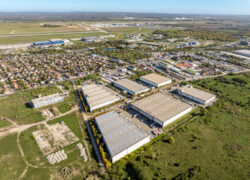
Nowa Szkoła, a Polish manufacturer of educational equipment, has renegotiated its lease and increased the amount of space it occupies at the Central European Logistics Hub (CELH) in Łódź. Following the new agreement, the company will use a total of 12,500 sq m of warehouse space, together with 340 sq m of office and social facilities. The logistics park is owned by AEW, and AXI IMMO represented the tenant in the transaction.

Based in Łódź, Nowa Szkoła produces furniture, teaching aids and sensory equipment for schools, kindergartens and nurseries. The company operates internationally and holds ISO 9001, ISO 14001 and PEFC certifications related to quality, environmental management and sustainable sourcing.

Łukasz Wronka, Logistics Manager at Nowa Szkoła, said the decision was linked to operational efficiency and long-term planning. “The extension of our lease at the current location, combined with an increase in leased space, is fully aligned with our long-term growth strategy and efforts to improve supply chain efficiency,” he said. He added that the additional space is intended to support better organisation of processes and faster order preparation, both for domestic and international deliveries.

Hubert Wojtera, Director of Industrial & Logistics at AXI IMMO, described the agreement as beneficial for both sides. “Nowa Szkoła remains at CELH, a well-known and proven location, while retaining its existing workforce and gaining greater operational flexibility,” he said, noting that the owner also secures a long-term tenant within the property.

The Central European Logistics Hub is located in the eastern part of Łódź near the A1 motorway and close to major national transport routes. The park provides standard logistics specifications, including high storage ceilings, reinforced floors, fire protection systems and dedicated loading areas, along with on-site security and parking facilities.

Photo below: Hubert Wojtera, Director of Industrial & Logistics at AXI IMMO

WING and Accent assume management of Hotel Yacht Wellness & Business Siófok

From January 2026, Hotel Yacht Wellness & Business Siófok is operating under a new management structure. The hotel is now managed by a joint venture formed by Accent Hotel Management and WING, which was established in 2025. The partnership also operates the Best Western Plus Lakeside Hotel in Székesfehérvár.

Hotel Yacht Wellness & Business Siófok is located in the marina area of Siófok and operates year-round. The property has 70 rooms, a conference centre of approximately 300 sq m and a wellness area of around 1,000 sq m with panoramic views. According to the companies, the new management model is intended to support the hotel’s business and leisure activities through coordinated operational management and standardised service processes.

Under the new structure, WING contributes its experience in property development and asset management, while Accent Hotel Management is responsible for day-to-day hotel operations and staff management. The two companies state that their cooperation is aimed at maintaining service quality and operational efficiency.

WING is a real estate developer and investor active in Central Europe since 1999, with projects across office, retail, residential and hotel segments. Its hotel portfolio includes developments operated in cooperation with international hospitality brands and management companies. Accent Hotel Management specialises in hotel operations and portfolio management within the Central European region.

Ananda Group reports 265 million lei turnover in 2025, plans 2,500 apartments in southern Bucharest

Ananda Group, a residential developer active in the southern part of the Bucharest–Ilfov region, reported a consolidated turnover of approximately 265.7 million lei for 2025. The company also announced plans to develop more than 2,500 new apartments in the southern area of the capital in the coming years.

The group has been active in residential development for over eight years and reports the delivery of more than 3,800 housing units to date. According to company data, cumulative turnover between 2018 and 2025 reached approximately €228 million. Financial figures for the 2018–2024 period are based on publicly available balance sheet data for several companies associated with the group, including Siena Residence, Green & Yellow Development, TNF Unity Residence and Ananda General Construct, as well as transaction values from multiple residential complexes developed during that time.

In 2025, the group introduced the Ananda brand and reorganised several activities under a unified structure. New entities were established in areas such as architecture and design, marketing and sales, human resources, cleaning, electrical services and furniture production, alongside project-specific development companies. Separate businesses initiated by the group’s associates, including a metalworks factory, a fitness and spa centre and a wellness facility, also continued operations.

The company reported residential sales of more than 350 units in 2025, with an average monthly sales pace of around 30 apartments. Internal marketing and sales departments were cited as contributing factors to this performance through in-house campaigns and coordinated sales processes.

One of the group’s largest projects is 81 Residence, developed in several phases by Siena Residence and Unik Residence. The project comprises approximately 1,500 apartments. By the end of 2025, the developer reported that 99 percent of units had been sold, with over 1,000 apartments already delivered in earlier phases and the remaining units under completion.

Ananda Group states that demand for housing in the southern part of Bucharest has been supported by comparatively lower prices than other areas of the city and by access to transport links and local amenities. Company representatives note that earlier buyers in previous projects have seen increases in property values following project completion, although results vary depending on market conditions.

The group employs more than 500 staff across development, construction, sales and management functions and is currently working on several projects simultaneously. For the next development cycle, Ananda plans approximately 2,500 additional housing units across three main projects, including a scheme on Strada Biruinței in Popești-Leordeni, a fourth phase of 81 Residence and a mixed-use residential complex near the Berceni metro station.

Alongside its development activities, the company reports investments in marketing, community facilities and selected social initiatives, including land donations for public purposes and the creation of wellness and leisure amenities accessible to residents.

INDUSTRIA increases assets under management to €6.3 billion in 2025

INDUSTRIA Immobilien reported an increase in its assets under management (AuM) to approximately €6.3 billion at the end of 2025, up from €5.6 billion a year earlier. The Frankfurt-based company manages residential real estate and related property services in Germany. The number of residential and commercial units under administration rose by around 2,200 during the year to roughly 24,000.

The company attributed the growth primarily to new asset and property management mandates for third parties, including two mandates linked to existing residential real estate funds with a combined volume of about €230 million and approximately 1,650 units. Additional property management contracts were also secured during the year. Acquisition activity exceeded sales, contributing further to the increase in AuM.

Total transaction volume in 2025 amounted to about €168 million. This included roughly €107 million in acquisitions and around €61 million in disposals. Among the purchases was the “Dreiklang” residential portfolio comprising 372 units in the metropolitan regions of Berlin, Frankfurt and Stuttgart. Several smaller assets were sold during the same period.

INDUSTRIA’s property management division expanded its portfolio, with managed floor space increasing by 16 percent to approximately 1.7 million square metres. The company stated that both the number of managed units and the range of mandates grew over the year.

INDUSTRIA currently manages 14 institutional real estate funds and one open-ended public real estate fund, FOKUS WOHNEN DEUTSCHLAND. In its institutional segment, the company serves around 80 investors, including pension funds, insurance companies, banks and other financial institutions.

For 2026, INDUSTRIA has set a target of increasing assets under management by approximately €500 million, supported by both organic growth and potential acquisitions.

Photo: Headquarters in Berlin, Charlottenburg Local Court, HRB 120729 B, Managing Directors: Nikolaus von Raggamby-Fluck, Susanne Edelmann, Christof Hardebusch, Thomas Rücker, Daniel Sohler

REALOGIS brokers warehouse and office space in Ginsheim-Gustavsburg to Sovereign Network

REALOGIS Immobilien Frankfurt GmbH has brokered the lease of approximately 2,220 sq m of warehouse and office space in Ginsheim-Gustavsburg. The premises form part of a logistics property offering around 9,575 sq m of total usable space. REALOGIS was exclusively mandated by M7 Real Estate to market the asset.

The tenant is Sovereign Network GmbH, a company specialising in transport and handling services for courier and logistics operators. The lease comprises about 1,850 sq m of warehouse space and 350 sq m of office space, along with 22 parking spaces. The new site is intended to support the company’s operations linked to Frankfurt Airport, where it already maintains a branch in Cargo City South.

Ginsheim-Gustavsburg is located near the cities of Mainz and Wiesbaden and has a population of around 17,000. The municipality is connected to the regional road network via the A60 and A671 motorways, while the B43 federal road runs through the Gustavsburg district.

HIH leases 1,733 sq m at KORYFEUM complex in Unterschleißheim

HIH has signed a lease for 1,733 sq m of office and warehouse space at the KORYFEUM office and commercial property in Unterschleißheim, north of Munich. The tenant is an international provider of security system services, with occupancy planned for summer 2026. HIH has been responsible for asset management and leasing of the property since summer 2025.

KORYFEUM comprises two building sections with a total lettable area of approximately 24,500 sq m and was completed in 2023. The complex includes 277 underground parking spaces as well as charging points for electric cars and e-bikes. The buildings hold DGNB Gold certification and WiredScore Silver certification for digital infrastructure.

The available premises are designed for multi-tenant use and can be divided into units of around 400 sq m, allowing for a range of office and mixed-use layouts, including research and light industrial functions. The ground floor offers ceiling heights of over five metres, and the property includes a roof terrace. Plans also include the addition of a central service building with catering, meeting and lounge areas, as well as landscaped outdoor areas.

According to HIH, around 13,000 sq m of space remains available for lease. The company notes that the building’s technical standards and transport connections are among its main features.

Unterschleißheim is located in the northern part of the Munich metropolitan region and is served by S-Bahn rail connections as well as the A9 and A92 motorways. The surrounding area includes companies from the technology, automotive and research sectors, along with local amenities such as schools, childcare facilities and fitness centres.

CBRE acted as leasing agent and advised the tenant in the transaction.

Periskop appoints Philipp Loth as Director Logistics & Light Industrial

Periskop Partners has appointed Philipp Loth as Director Logistics & Light Industrial within its logistics platform. He joined the company on 15 January 2026 and is based primarily in Frankfurt am Main. Loth reports to Dr. Kilian Mahler, Managing Partner of Periskop Logistics.

Loth has around 20 years of experience in investment and asset management in the logistics and light industrial real estate sectors. Most recently, he was a member of the management board and Head of Investment Management Germany at GARBE Industrial Real Estate in Frankfurt, where he also led the local branch office. Earlier in his career, he held roles at Schroder Property Investment Management, focusing on pan-European logistics funds, and at the Archon Group, part of Goldman Sachs. Over the course of his career, he has been involved in real estate transactions with a combined volume of approximately €5.5 billion, including around €4 billion in logistics assets and €750 million in the light industrial segment.

At Periskop Logistics, Loth will be responsible for developing the company’s investment activities in logistics and light industrial real estate and will serve as a contact point for property owners, investors and advisers in these sectors.

Dr. Kilian Mahler stated that Loth’s market experience and transaction background support the company’s plans to expand its logistics activities. Philipp Loth said his focus will be on working with the team to identify investment opportunities across different risk profiles, including core, core-plus and value-add assets, as well as sale-and-leaseback transactions.

front page info
LATEST NEWS