IAD Investment Real Estate Fund Signs Lease Agreement with Kooperativa for Twin City C in Bratislava

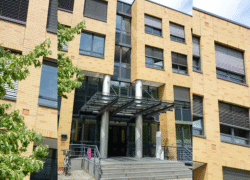
IAD Investment Real Estate Fund (IAD IRF), managed by IAD Investments, has signed a long-term lease agreement with Kooperativa poist’ovňa, a.s., part of the Vienna Insurance Group, for 7,200 square metres of office space in the Twin City C administrative building in Bratislava. The lease is set for ten years, with occupancy beginning in November 2025. With this agreement, the occupancy rate of Twin City C is expected to exceed 95% by the end of the year.

Martin Proksa, CEO of IAD Investments Fund and board member of IAD Investments Management S.à r.l., said the lease marks a confirmation of the fund’s investment strategy focused on high-quality properties in prime locations. The decision by Kooperativa to move into Twin City C aligns with its criteria for modern, accessible, and energy-efficient office space that also complies with ESG principles.

Kooperativa’s CEO Vladimír Bakeš described the relocation as a key moment in the company’s development, moving its headquarters after more than 30 years. He emphasized the value of a well-equipped and sustainable work environment that supports employee productivity, creativity, and wellbeing. He added that the move to Twin City C – located in the business district of Mlynské Nivy – reflects the company’s long-term cooperation with IAD.

IAD Investment Real Estate Fund reported net assets of over €115 million as of 31 March 2025. The fund, which has a history of more than 12 years, focuses on stable, income-generating real estate investments. In 2024, it recorded its highest-ever revenue, with institutional class shares appreciating by 12.5% annually, class A by 11.9%, and regular class shares by 11.8%.

The fund’s property portfolio includes Twin City B and C, as well as City Business Center I and II in Bratislava, and the Aupark shopping centre in Hradec Králové. IAD Investments, based in Slovakia and operating since 1991, manages assets worth over €2.1 billion across Slovakia, the Czech Republic, Hungary, and Poland. The company is part of Pro Partners Holding.

Kooperativa, a member of Vienna Insurance Group (VIG), is a major insurance provider in Slovakia, serving over 1.5 million clients and holding a market share of 24.7% at the end of 2024. The Vienna Insurance Group is active in 30 countries, with around 50 companies and 32 million clients. VIG is listed on the Vienna, Prague, and Budapest stock exchanges and maintains an A+ rating with a stable outlook from Standard & Poor’s.

Two new tenants join Panattoni Park Siedlce as expansion moves forward

Panattoni has signed lease agreements with two new tenants at its logistics park in Siedlce. FoodWell, a company active in the dried fruit and nuts market, will occupy 5,700 sqm of space in an existing building. A second tenant, a logistics operator, has agreed to lease more than 6,200 sqm, prompting the development of new warehouse space.

FoodWell plans to use the warehouse as a storage and distribution facility for finished products, as well as for raw materials and packaging connected to its production site in Janów Podlaski. The company is part of a Polish capital group active in the healthy food sector, with brands including Bakalland, Delecta, Purella Superfoods, BeRAW, and Anatol.

With the lease to FoodWell, Panattoni has fully commercialised the speculative space currently available at Panattoni Park Siedlce. The agreement with the logistics operator will initiate the next stage of the development. Construction of the new warehouse unit has already begun and is expected to be completed by the end of 2025.

The facility will be developed in line with BREEAM “Excellent” certification standards, incorporating features to reduce water consumption and enhance indoor environmental quality. The design will ensure access to natural daylight and provide workspaces with improved acoustic and thermal conditions.

Panattoni Park Siedlce consists of two Class A warehouse buildings located near the centre of Siedlce and close to the Siedlce Południe exit of the city bypass, which connects to the A2 motorway. The site provides direct road access to Warsaw and eastern Poland, offering flexible solutions for storage, logistics, and light manufacturing activities.

Prague 2 to hold third rental housing auction on June 2

The City District of Prague 2 will hold its third electronic auction of rental apartments this year on June 2, 2025, as part of ongoing efforts to fill vacant municipal housing. The auction will include residential units of various sizes located in the Nové Město and Vinohrady neighborhoods.

The apartments will be made available for rent through a public tender. Interested parties can find detailed information about the units and participation requirements on the official website of the Prague 2 City District.

Virtual 3D tours and a complete overview of the available apartments are provided by the auction platform operated by NAXOS a.s.

Poland’s trade trends in Q1 2025 reflect ongoing stagnation

Poland’s foreign trade in the first quarter of 2025 continued to mirror patterns established over the past two years, marked by limited growth in exports and rising imports. The overall picture points to sustained stagnation in trade activity, with key dynamics driven by subdued external demand—particularly from the European Union.

One of the most significant influences remains the ongoing economic slowdown in Germany, which continues to weigh on Polish exports. Since 2022, Germany’s share in Polish exports has declined by two percentage points, although the absolute export value has held steady. Meanwhile, the impact of recent U.S. tariffs is not yet evident in official trade figures, though an uptick in exports to the U.S. may suggest anticipatory shipping ahead of new trade barriers. Imports from China have maintained a steady upward trajectory.

According to data from the Central Statistical Office, Polish exports reached €88 billion in Q1 2025, nearly identical to the same period in 2024 in euro terms. However, imports rose by 6% year-on-year. The result was a continuing trade deficit, which has now persisted for five consecutive months. In zloty terms, exports fell by 3% while imports rose by 3%, reflecting the recent appreciation of the Polish currency.

Trade volume data for January shows modest signs of recovery. Export volume grew by 2.4%, although fluctuations in recent months indicate ongoing volatility. Trade with EU member states remains weak, reflecting broader sluggish growth across the region. Conversely, trade with non-EU countries has proven comparatively resilient, with import and export volumes more stable. One notable trend is the year-on-year decline in imports from non-EU countries since early 2023, influenced by a high baseline comparison from the 2022 period, which was marked by geopolitical disruption.

Poland’s export structure continues to be dominated by vehicle parts, although this category saw a 6% decline in value compared to Q1 2024. In contrast, exports of computer equipment and food products such as chocolate and poultry registered strong year-on-year growth. The steepest declines were observed in exports of trucks, passenger cars, monitors, and tobacco products. Battery exports, which fell sharply in 2024, continued to decline by a further 8% in the first quarter of this year.

Germany remains Poland’s top export destination, but its share has dropped from 29% in early 2023 to 27% in early 2025, underscoring the persistent effects of Germany’s economic stagnation. Meanwhile, imports from China are rising sharply, with the country now accounting for 14% of total Polish imports. Chinese goods worth over €13 billion entered Poland in Q1 2025, a 19% increase over the same period in 2024. These imports are heavily concentrated in advanced technologies and automotive components, although smartphone imports have declined. Growth is seen in categories such as TV parts, computer hardware, automotive systems, and data storage devices.

Trade with the United States has also grown. Polish exports to the U.S. rose by 12% year-on-year in Q1 2025, with a record €1.14 billion recorded in March. This increase may reflect frontloading ahead of expected tariff changes. Imports from the U.S. rose even more sharply, up 20.5% year-on-year, peaking at €1.81 billion in January.

Exports to Germany, in contrast, dropped by 2.2% year-on-year in the first quarter, a direct outcome of the continued economic stagnation in Germany. Imports from Germany remained largely unchanged during the same period.

Overall, the trade data for Q1 2025 underscores a continuation of recent trends: weak demand from key EU markets, a growing reliance on Chinese imports, modest export gains to the U.S., and a widening trade deficit.

Source: PIE

EBRD and BNP Paribas Bank Polska to expand green residential financing in Poland

The European Bank for Reconstruction and Development (EBRD) has agreed to provide an €80 million risk-sharing guarantee to BNP Paribas Bank Polska (BNPPBP) to support the expansion of green residential financing across Poland. The facility is expected to unlock €100 million in new lending, primarily targeting energy efficiency upgrades, renewable energy investments, and sustainable transport solutions for private individuals.

The initiative marks the EBRD’s first InvestEU-backed financial sector operation in Poland. The programme will support residential borrowers seeking to replace outdated heating systems or carry out comprehensive thermal renovations of single-family homes. These homes represent a significant portion—nearly 40 percent—of Poland’s residential housing stock and are often among the least energy efficient.

By helping reduce energy consumption and greenhouse gas emissions in the residential sector, the project aims to support Poland’s transition toward a low-carbon economy. Residential heating, largely dependent on coal-fired systems, remains a major contributor to air pollution and accounts for approximately 40 percent of the country’s total energy use.

This operation aligns with the EBRD’s Green Economy Transition (GET) strategy and benefits from partial first-loss risk coverage provided under the EU’s InvestEU programme. It is also supported by technical assistance designed to help scale the impact of the project.

Andreea Moraru, EBRD Regional Director for Poland and the Baltic States, noted that the partnership continues a successful collaboration with BNP Paribas Bank Polska. She highlighted the importance of modernising the residential and transport sectors to advance Poland’s broader green transition and improve living conditions for its citizens.

Jarek Rot, Chief Sustainability Officer at BNPPBP, emphasised that residential green financing is a key component of the bank’s strategy to support Poland’s energy transformation. He said that the new financing made possible through EBRD cooperation will allow the bank to deepen its engagement in projects promoting energy efficiency and renewable energy adoption.

Adam Hirny, Director of Sustainable Business Development at BNPPBP, added that while the investment in new heating systems can be costly for households, the long-term benefits—including lower energy bills, improved living conditions, and higher property values—justify the commitment. He underlined the importance of using EU instruments such as InvestEU to make this transition more accessible.

BNP Paribas Bank Polska, the sixth-largest bank in the country, offers a wide range of sustainable finance products and aims to position itself as a market leader in this space. It is majority-owned by the BNP Paribas Group, with the EBRD holding a minority stake.

The EBRD has invested nearly €16 billion in Poland through 560 projects, including a record €1.43 billion in 2024. The current agreement contributes to the EU’s broader policy goals, including the European Green Deal and the digital transition, by mobilising private and public capital through strategic partnerships.

EBRD supports major urban regeneration project in Cluj-Napoca

Cluj-Napoca, Romania’s second-largest city, is set to undergo significant urban redevelopment with the support of a €180.3 million loan from the European Bank for Reconstruction and Development (EBRD). The funding is part of a broader financing package valued at up to €400.6 million, aimed at transforming a former industrial site into a large mixed-use development that will include entertainment, retail, cultural, and office spaces, alongside public infrastructure improvements.

The project is being led by Rivus Investments SRL, a Romanian-incorporated company jointly owned by Iulius Group and Atterbury Europe. Of the total EBRD-backed financing, €132.8 million will come directly from the Bank, while €57.5 million will be co-financed by commercial lenders. Other financial partners in the wider package include Erste Bank, BCR Romania, and BRD Groupe Société Générale.

The development will feature approximately 132,500 square metres of gross lettable area and include the repurposing of two historical buildings into a performing arts centre and interactive family entertainment venues. Office and retail units will also be part of the project.

In addition to commercial spaces, the initiative includes major public infrastructure upgrades. These will encompass new roads, two pedestrian bridges and a four-lane road bridge over the Somes Mic River, new roundabouts, an advanced traffic management system, and improved public transport connectivity. Plans also involve the rehabilitation of a public square, new parking facilities including electric vehicle charging stations, and the creation of 52,000 square metres of green space through parks and urban gardens. Upon completion, elements of the infrastructure will be transferred to the Municipality of Cluj for public use.

“This project represents a major step in urban regeneration and aligns with the EBRD’s Real Estate Sector Strategy 2025–2029, which places emphasis on sustainability, accessibility, and community-focused development,” said Vlaho Kojakovic, Director of Real Estate at the EBRD. He noted that this is the EBRD Real Estate team’s largest urban regeneration project signed so far in 2025.

Iulian Dascălu, President of Iulius Company, said the initiative will transform the site into a contemporary, mixed-use destination while preserving elements of the city’s industrial heritage. He described it as a future regional hub that will offer a combination of retail, culture, business, and leisure opportunities.

Iulius Group is an experienced developer in Romania, known for large-scale urban projects such as the Palas complex in Iași and Iulius Town in Timișoara. Atterbury Europe, its joint venture partner, has a presence in Romania, Cyprus, and Serbia, and has co-invested with Iulius in several regeneration projects across the country.

The EBRD has been active in Romania since the early 1990s and has so far invested more than €11.5 billion across 560 projects, with a focus on promoting green transition, private sector development, and sustainable urban growth.

Czech VAT and real estate: Key changes from July 1, 2025

Amendments to the Czech VAT Act (No. 461/2024 Coll.) introduce significant updates to the treatment of real estate transactions. While some changes took effect on January 1, 2025, the remaining provisions—particularly those affecting real estate—will apply starting July 1, 2025. The most notable changes include a revised definition of building land, a shorter VAT exemption period for completed buildings, adjustments to VAT rules for social housing, and a new framework for assessing substantial changes in real estate.

Refined Definition of Building Land

From July 1, building land will remain subject to VAT, but its classification will be more narrowly defined. The new criteria limit recognition of land as building land to cases supported by spatial planning documents, official zoning boundaries, or construction permits issued under the Building Act. Conversely, plots located in built-up areas will no longer be classified as building land if construction is clearly unfeasible or highly unlikely on the site.

Shortened VAT Exemption Period for Completed Buildings

The VAT exemption period for transfers of completed buildings is being reduced from five years to 23 calendar months. This countdown begins the month after the occupancy permit takes effect—either after initial construction or after a substantial reconstruction. Additionally, if a reconstruction clearly qualifies as a substantial change, the 23-month test period may begin before the occupancy permit is issued.

Sellers must assess whether a reconstruction constitutes a substantial change. If it does, and the sale occurs within the 23-month test period, VAT must be applied to the transaction.

Revised Rules for Social Housing VAT Rate

The reduced 12% VAT rate will continue to apply only to the supply of buildings classified as social housing. To qualify, single-family homes and apartment buildings must now be registered in the official territorial and property register. The existing 350 m² maximum floor area for family homes remains unchanged. However, in apartment buildings, the presence of larger units (above 120 m²) will not disqualify the building from the reduced rate, provided that apartments below this threshold make up more than half of the building’s total floor area.

Definition of Substantial Change in Real Estate

A substantial change triggers VAT liability if a property is sold within 23 months of the change. This applies when a reconstruction alters the use or living conditions of a property and when the seller’s costs exceed 30% of the property’s sale price. Determining whether a change meets this threshold is only necessary when the property is sold.

If the reconstruction qualifies and the sale occurs within the specified period, VAT must be applied to the transaction, in line with the amended rules.

Source: Ilona Semerádová, bnt attorneys in CEE

Gen Z returns to the office: Young workers show renewed interest in on-site work

Contrary to common assumptions, members of Generation Z are increasingly drawn to working in offices. While flexibility remains important, recent data suggest that young employees in Poland and abroad are choosing in-person work more often than their older counterparts. The findings come from Personnel Service’s “Barometer of the Polish Labour Market” and international research by JLL.

In Poland, the preferred work model among Gen Z is hybrid. Nearly half of young workers favour up to three days of remote work per week, and 11% prefer to work entirely on-site. Only 6% prefer working from home four days a week, while fully remote work appeals to about 24% of respondents. These preferences highlight that while flexibility is important, physical office space still holds significant value for younger employees.

According to Krzysztof Inglot, labour market expert and founder of Personnel Service, the office environment offers more than a desk and chair—it provides context, mentorship, and a sense of community. Many young workers, whose education and early work experiences were shaped by the pandemic, now seek real-world interaction to support their personal and professional development.

This shift is also visible in how young people perceive their career prospects. One in four rates their current situation as negative, while 34% describe it as neutral, and 38% see it as good or very good. Despite some uncertainty, a majority expects stability or improvement in their careers over the coming year.

International data further supports these findings. JLL’s research shows that employees under the age of 24 spend an average of 3.1 days per week in the office—more than Generation X (2.5 days) and Millennials (2.7 days). For Gen Z, the office is not viewed as outdated but rather as a space that fosters growth, networking, and collaboration. Face-to-face interactions and informal exchanges, which are difficult to replicate online, are key attractions.

However, some young employees express frustration with the absence of senior colleagues and managers, who often continue to work remotely. This lack of visibility can reduce the value of office time. In response, some companies have introduced initiatives such as hiring junior staff in concentrated locations to form larger in-person teams or setting up dedicated hours for open interaction with leaders.

Inglot notes that a productive office experience for younger staff relies on more than physical presence. It should include shared projects, mentoring opportunities, and collaboration. The goal is to ensure the time spent in the office adds value, not just fills time.

This renewed interest in office life is also playing out on social media platforms like TikTok. Popular content under themes like “corporate girlies” and “day in the life” gives insight into the professional routines of young office workers, drawing millions of views. These videos reflect the curiosity and enthusiasm of a generation eager to learn and engage with the working world in a tangible way.

Source: Personal Service

Asylum applications in the EU declined in February 2025

According to data released by Eurostat, a total of 59,085 first-time asylum seekers applied for international protection in the European Union in February 2025. This represents a 23% decrease compared with the same month in 2024, when 77,170 applications were recorded, and a 12% drop from January 2025, which saw 66,800 applications.

In addition to first-time applicants, there were 7,630 individuals submitting subsequent asylum claims in February 2025. This figure marks a 6% increase from February 2024, but a 6% decrease compared to January 2025.

The largest group of asylum seekers in February came from Venezuela, with 8,345 first-time applicants. They were followed by nationals of Afghanistan (5,610) and Syria (4,630).

Most applications were concentrated in four EU countries. Spain received the highest number with 12,805 applicants, followed by Germany (11,185), France (10,725), and Italy (10,715). Combined, these four countries accounted for 77% of all first-time asylum applications in the EU during the month.

Relative to population size, the highest rates of first-time asylum applications were recorded in Greece, with 40.2 applicants per 100,000 people, followed by Spain (26.3) and Luxembourg (25.6). The EU average was 13.2 applicants per 100,000 people.

In February 2025, 1,720 unaccompanied minors applied for asylum in the EU for the first time. The majority of these children originated from Syria (300), Afghanistan (210), and Egypt (200). Germany received the most applications from unaccompanied minors (575), followed by Spain (330) and Greece (245).

Czech producer price trends – April 2025

According to data published by the Czech Statistical Office on 20 May 2025, producer prices in April showed mixed developments across different sectors. Agricultural producer prices rose both month-on-month and year-on-year, while industrial producer prices continued to decline. Construction and service sectors recorded moderate price growth.

Agricultural producer prices increased by 3.2% compared to March and were 15.7% higher year-on-year. The month-on-month increase was driven by price growth in eggs (+12.1%), cattle for slaughter (+4.6%), pigs for slaughter (+3.1%), cereals (+1.3%), and milk (+1.1%). Prices fell for potatoes (-4.0%), oilseeds (-0.8%), and poultry (-0.5%). Year-on-year, crop production prices rose by 17.3%, with notable increases in fruit (+38.5%), oilseeds (+25.4%), cereals (+14.9%), and fresh vegetables (+14.4%), while potato prices declined (-4.9%). In animal production, prices increased by 14.4%, with eggs up by 42.5%, cattle for slaughter by 25.8%, milk by 19.6%, and poultry by 4.3%. The only decline was in pig prices, which dropped 14.1%.

Industrial producer prices fell by 0.8% compared to March and were 1.3% lower year-on-year. Price decreases were most evident in energy-related sectors such as ‘coke and refined petroleum products’ and ‘electricity, gas, steam and air conditioning’ (-3.0%). Prices also declined in chemicals (-2.7%). Some segments posted gains, including ‘preserved meat and meat products’ (+2.1%), ‘processed fruit and vegetables’ (+2.3%), and ‘wood products’ (+2.1%). Year-on-year, energy prices dropped 5.9%, while intermediate goods declined by 0.5%. Non-durable consumer goods and capital goods increased by 1.9% and 1.4%, respectively. When excluding energy, industrial producer prices rose 0.6%.

Construction work prices increased by 0.4% month-on-month. Year-on-year, estimated prices for construction work rose by 3.6%, while prices of materials and products used in construction grew by 0.7%.

Service producer prices in the business sector grew by 1.0% compared to March and by 4.0% year-on-year. Significant month-on-month increases were observed in ‘programming and broadcasting services’ (+9.8%), ‘advertising and market research’ (+9.4%), and ‘employment services’ (+3.9%). Declines were recorded in ‘land transport services’ (-0.5%) and ‘motion picture and related media services’ (-3.2%). Excluding advertising, service prices grew by 0.3% month-on-month and by 3.2% year-on-year.

In the broader EU context, preliminary Eurostat data for March 2025 show a 1.6% monthly decline in industrial producer prices across the EU27. The largest decreases were seen in Estonia, Spain, and Italy. Prices declined slightly in Germany and Czechia, remained unchanged in Poland and Slovakia, and rose in Austria, Greece, Luxembourg, and Slovenia. Year-on-year, EU27 industrial prices rose by 2.1%. Notable increases were recorded in Bulgaria, Ireland, and Denmark, while prices declined in countries including Poland, Czechia, and Germany.

Source: CSO

front page info
LATEST NEWS