Prague approves land sale for Nové Holešovice development project

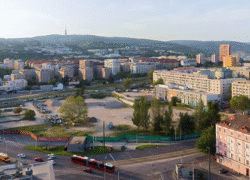
The Prague City Council has approved the sale of land near the Nádraží Holešovice metro station to Nové Holešovice, a joint venture involving the Prague Public Transit Company (DPP), Karlín Group, and CPI Property Group. The decision follows over a year of political disagreement that had delayed the proposed redevelopment of the area.

The joint venture was established in 2021 to revitalize the metro station and surrounding land, with DPP expected to contribute land and later share in the profits from the development. However, the project was stalled in early 2024 after Deputy Mayor Zdeněk Hřib (Pirates) reversed his initial support, raising concerns about the joint venture’s structure.

Following a prolonged deadlock among coalition parties, a working group was formed to review the agreement and present alternatives. Four options were considered: the city joining the joint venture, entering a contractual agreement with it, revising the original plan, or dissolving the venture and developing a new model. The council ultimately supported the revised sale option, backed by councilors from the Spolu alliance (ODS, TOP 09, KDU-ČSL) and STAN.

According to Finance Councilor Zdeněk Kovářík (ODS), the city has completed its part of the process. Final approval now depends on the DPP and joint venture partners agreeing to updated contractual terms. The final sale price, originally estimated at CZK 173 million, is expected to be higher, though an exact figure has not been confirmed.

Karlín Group’s Jan Ludvík welcomed the decision, noting that while the project had lost time and incurred legal costs, development will now resume from where it was paused in February 2024.

The Pirates, however, maintain their opposition. Hřib reiterated concerns about potential links between individuals involved in the project and the Dozimetr corruption case, as previously reported by Lidovky.cz. He also questioned the procedure of the vote, arguing that it did not comply with DPP’s formal governance requirements. The Pirates may pursue legal action if the project continues based on what they consider a flawed resolution.

Opposition figures criticised the delays. Adam Scheinherr (Prague Sobě) said the project has only seen minor adjustments despite more than a year of political obstruction. Ondřej Prokop (ANO) warned that prolonged inaction could result in financial losses or arbitration risks, and argued that the current state of the station reflects missed opportunities. He suggested similar partnerships could be considered for other deteriorating metro areas, such as Roztyly.

Source: CTK

Sofidel Expands Operations at CTPark Budapest West with New 18,000 sqm Lease

Sofidel Hungary Kft. has signed a lease agreement for nearly 18,000 square metres of space at CTPark Budapest West in Biatorbágy, strengthening its long-term presence at the site. The new unit is located in a BREEAM “Very Good” certified logistics facility and will support the company’s ongoing operational and sustainability objectives.

Sofidel, a producer of tissue paper products, has operated in Hungary for several years and chose to expand within the same logistics park due to the site’s infrastructure and proximity to transport routes. The decision also reflects the existing relationship with CTP Hungary and the desire for a consistent, scalable operational base.

According to Dr. Ferenc Gondi, Managing Director of CTP Hungary, the park is designed to offer flexible, long-term solutions for tenants. The agreement with Sofidel reinforces the company’s focus on stability and infrastructure that meets evolving logistics and energy efficiency requirements.

The expanded space will enable Sofidel Hungary Kft. to increase production capacity and optimise its logistics processes. The location provides access to advanced infrastructure, supporting the company’s commitment to efficient and environmentally responsible operations.

Jim Barker, Country Operations Manager at Sofidel Hungary Kft., noted that the new unit supports the company’s goal of strengthening its position in Hungary through the use of modern, sustainable facilities aligned with broader business and environmental strategies.

KGAL Core 5 acquires residential property in The Hague as part of Pan-European expansion

KGAL Core 5 Acquires Residential Property in The Hague as Part of Pan-European Expansion

Grünwald, 20 May 2025 – KGAL has added a fully leased residential property in The Hague to its pan-European real estate fund, KGAL Core 5. The building, completed in 2024, comprises 36 apartments with a total area of around 3,000 square metres. The asset meets advanced energy efficiency and sustainability standards and is located in a competitive rental housing market.

This acquisition follows earlier investments by KGAL Core 5 in Ireland and Spain and brings the fund’s total invested equity above €100 million. All properties in the fund meet the criteria of Article 9 of the EU Sustainable Finance Disclosure Regulation (SFDR), reflecting a focus on sustainability. The fund currently reports an occupancy rate of approximately 97% and achieves returns in the high single-digit range based on full equity investment.

The residential units in The Hague have an average size of 83 square metres and are designed to meet the demand for modern, efficiently planned housing. The property also includes 29 parking spaces.

Rainer Pohl, Head of Transaction Management at KGAL, stated that despite ongoing market challenges, the acquisition presented an opportunity to secure a core asset with no development or leasing risks. He noted that constrained new supply in many European cities continues to support long-term demand in the residential sector. Further acquisitions are planned, with a focus on newer, ESG-compliant properties in liquid and high-growth urban markets.

Philipp Langbehn, portfolio manager of KGAL Core 5, added that the new acquisition aligns with the fund’s strategy of geographic diversification and long-term value creation in demographically and economically stable locations.

Legal and tax due diligence was carried out by Dirkzwager. DW Real Estate (Netherlands) handled commercial due diligence, SGS was responsible for technical analysis, and Oterea conducted the ESG review.

NEPI Rockcastle reports 12.6% increase in net operating income for Q1 2025

NEPI Rockcastle NV reported a 12.6% year-on-year increase in net operating income (NOI) to €152 million in the first quarter of 2025. The result reflects contributions from two major acquisitions in Poland completed in the second half of 2024, as well as operational adjustments across the portfolio. On a like-for-like basis, NOI grew by 5%.

Lower inflation moderated rental indexation compared to previous years, but this was partially offset by active asset management strategies such as space reconfiguration and improvements in lease structures. Short-term income and higher cost recovery also supported NOI growth.

Tenant sales rose by 3.7% year-on-year on a like-for-like basis (excluding hypermarkets). Average basket size increased by 9.7%, influenced by both acquisitions and a continued trend toward higher per-visitor spending. Footfall was marginally lower by 0.7%, with variations partially attributed to the timing of Easter.

EPRA retail vacancy was 1.7% as of 31 March 2025, with overall portfolio vacancy at 2.0%. Rent collection for Q1 stood at 98%.

Leasing and Development Activity

NEPI Rockcastle signed 411 leases and lease renewals in Q1 2025, covering over 96,500 sqm. New leases accounted for 21% of gross lettable area, with international retailers representing 74% of new leasing volume. Notable new tenants include Zara, Avitela, Mohito, Boss, and Lego, with recent openings across Hungary, Poland, Romania, and Croatia.

Major development projects remain on track. In Bucharest, 68% of the additional retail area at Promenada has been pre-leased ahead of its scheduled opening in Q1 2027. Construction is progressing at Bonarka City Center and Arena Mall Budapest, and the extension of Pogoria Shopping Centre in Poland is underway, with 90% of new space pre-leased.

The Promenada Plovdiv project in Bulgaria is pending a building permit, expected in Q3 2025, with 40% of retail space already under negotiation. A similar permitting timeline applies to the Galati Retail Park development in Romania.

Green Energy Investments

The group continues to expand its renewable energy capacity. Phase two of its green energy initiative includes 15 MW of solar installations across 23 properties in Poland, Bulgaria, Hungary, and Croatia. Seven additional installations in Slovakia and Czechia are in procurement. Phase three includes two large photovoltaic plants in Romania (159 MW total), with construction already underway for the first.

As of 31 March 2025, the total value of projects under construction or in permitting, including green energy infrastructure, is approximately €788 million. €250 million had been invested by the end of the quarter.

Financial Position

NEPI Rockcastle reported cash and committed credit facilities totalling nearly €1.2 billion as of 31 March 2025. The loan-to-value ratio was 31.2%, remaining below the company’s 35% strategic threshold. Following the April 2025 dividend payment, estimated LTV rose slightly to 32.9%.

The company continues to operate within covenant requirements:
• Solvency Ratio: 0.38 (maximum allowed: 0.60)
• Consolidated Coverage Ratio: 4.89 (minimum required: 2.00)
• Unencumbered assets to unsecured debt ratio: 266% (minimum required: 150%)

Average cost of debt was 3.2% in Q1. Exposure to variable interest rates is limited to 14% of total debt, primarily linked to the IFC loan.

Outlook

The Board maintains its February 2025 guidance for distributable earnings per share to increase by approximately 1.5% compared to 2024, assuming no major geopolitical or macroeconomic disruptions and the continuation of current trading trends. The 90% dividend payout ratio remains unchanged. This forward-looking statement is subject to future revision and has not been reviewed by the company’s auditors.

Deka Immobilien sells office complex in Paris for EUR 430 million

Deka Immobilien has signed an agreement to sell an office complex in Paris for approximately EUR 430 million. The property was part of the Deka-ImmobilienEuropa open-ended real estate fund. The buyer is Gecina, a major French real estate company.

The complex consists of three interconnected buildings originally constructed in 1911, 1935, and 1964. Following a restructuring in 2013, the site was unified into a single complex comprising the Rocher and Vienne buildings. The total leasable space amounts to around 32,000 square metres, with an additional 197 parking spaces for cars and 77 for motorcycles. Located in Paris’ 8th arrondissement near the Saint-Lazare railway station, the property holds LEED Gold certification and a BREEAM “Very Good” rating for sustainability.

The Vienne building remains fully leased to four tenants, while the Rocher building became vacant in April 2025. Deka-ImmobilienEuropa had held the asset for 14 years and is now selling it at a price above both its book value and original acquisition cost. According to the fund’s management, the decision to sell reflects the current favourable investment climate and the opportunity to reduce exposure to potential vacancy or conversion risks. Proceeds from the sale are intended to support new investment opportunities.

Home Concept Interior Design Centre in Katowice expands to 17,000 sqm with third building

The Home Concept Interior Design Centre in Katowice has completed its expansion with the addition of a third building, bringing the total leasable area of the complex to 17,000 square metres. Located in the Roździeń district near the revitalised Aleja Kasztanowców, the facility now hosts 40 interior design showrooms representing a broad spectrum of furniture and design brands. All new showrooms in the third building will open to customers on 2 June.

The new building adds 2,200 square metres of exhibition space and is fully leased. Tenants include BoConcept, which is returning to Katowice with a 400 sqm showroom, along with Dion and Bizzarto, who are relocating from existing spaces within the complex. Other new brands include Jawor-Parkiet (wooden flooring), Mirad (tiles and bathroom fittings), and furniture retailers Moco Home, Vongai Concept, and Wajnert.

With this expansion, Home Concept continues to position itself as a comprehensive resource for interior design, offering access to products across categories such as kitchens, bathrooms, lighting, flooring, windows, and furnishings. In addition to major brands like IWC Home, Maxfliz, Senpo, and MyBed, the centre now includes a diverse range of suppliers catering to both residential and commercial design needs.

The centre is designed to support direct customer engagement, offering opportunities to physically experience products and consult with specialists. Common areas, such as a rooftop terrace and shared patio space integrated into Aleja Kasztanowców, are also intended to provide visitors with a more relaxed environment in which to consider their design decisions.

Events for professionals are part of the centre’s regular programming. In April, for example, the Puszman showroom hosted a design-focused breakfast attended by architects and designers, including a talk by Oskar Zięta. These gatherings reflect Home Concept’s strategy of fostering ongoing dialogue between brands, design professionals, and end-users.

The centre is also developing co-working areas where designers can meet clients, and plans to continue hosting educational and promotional events. According to Krzysztof Kołaszewski, President of AB Development and the investor behind the project, the goal is to support informed decision-making and provide an accessible, centralised environment for all aspects of interior design.

The third building’s opening strengthens Home Concept’s role as the largest interior design centre in the Silesia region, offering a consolidated destination for high-quality furnishings and professional expertise.

Office demand rises amid limited new supply in Poland

In the first quarter of 2025, demand for office space in Poland’s key markets increased by 25% compared to the same period last year, despite a continued slowdown in new office development. Tenants remain focused on high-standard properties in central locations, while the market sees minimal additions to existing stock.

In Warsaw, total office leasing activity reached over 160,000 square metres in Q1, with new lease agreements making up the majority of transactions. In regional markets, demand was even stronger, amounting to nearly 180,000 square metres. More than half of this figure came from lease renegotiations, indicating sustained interest in existing office locations.

Mateusz Strzelecki, Partner and Head of Tenant Representation at Walter Herz, notes that financial terms, accessibility, and location continue to drive office space decisions. He also highlights the limited pipeline of new developments, estimating that only around 135,000 square metres of new space will be added to Warsaw’s total office stock this year. Older, less efficient office buildings are gradually being removed from the market, partially offsetting the modest pace of new construction.

Investor activity has slowed, but lower interest rates and improved financing conditions could support future growth. The presence of international investors completing large transactions in Poland is also expected to contribute to a gradual market recovery.

In terms of completions, the first quarter of 2025 saw minimal additions. Warsaw’s total stock, currently standing at 6.39 million square metres, grew by just 5,600 square metres with the completion of a single project. In regional cities, the only new delivery was an office building in Poznań.

Approximately 210,000 square metres of office space is now under construction in Warsaw. Key developments expected to be completed in 2025 include The Bridge (51,400 sqm) and Office House (31,100 sqm). Other ongoing projects are Upper One (35,900 sqm), Studio II Phase (26,600 sqm), Vena (15,400 sqm), Skyliner II (22,000 sqm), and the V Tower refurbishment (26,200 sqm).

Among regional markets, Cracow and Wrocław are leading in both demand and development. Cracow, with a total office supply of 1.81 million square metres, recorded demand of 57,000 square metres in Q1 and currently has around 86,000 square metres under construction. Wrocław, with a 1.42 million square metre stock, saw 44,000 square metres leased in Q1 and has 27,000 square metres of space being built.

Rental rates and service charges have remained stable since late 2024. In central Warsaw, monthly asking rents range from EUR 18 to 27 per square metre, while in non-central locations, they fall between EUR 10 and 17. Rents in regional cities vary from EUR 9 to 19.5 per square metre per month.

Vacancy rates differ by location. Warsaw’s overall vacancy rate has dropped to just above 10%, with only 7% of offices available in central areas. In outer districts, such as Służewiec, vacancy exceeds 20%. In regional cities, the average vacancy rate remains above 17%. Cracow and Katowice are experiencing a slight decline in vacancy, while Wrocław and Poznań have seen vacancy rates increase.

Trei Real Estate to develop residential complex with 82 apartments in Northern Munich

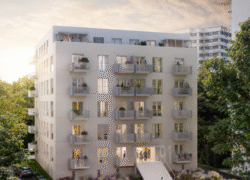
Trei Real Estate GmbH has received the building permit for its Weyprechthof residential development in the Milbertshofen-Am Hart district of northern Munich. Located on Max-Liebermann-Strasse, the project will deliver 82 rental apartments along with ground-floor gastronomy units and an outdoor beer garden. Construction is scheduled to begin in July 2025, with completion expected in 2027. The total investment volume is approximately €50 million.

The development will include a mix of one- to four-room apartments across two buildings: a six-story northern block and a five-story southern block. Together, the apartments will cover around 4,400 square meters of living space. Each unit will feature modern fittings and balconies. A shared roof terrace on the southern building will be accessible to all residents.

Additional amenities include a two-level underground car park with 75 spaces, roughly one-third of which will have charging stations for electric vehicles. The ground-floor restaurant space and adjoining beer garden are designed to contribute to the area’s urban atmosphere.

The project will incorporate sustainable construction methods and meet current energy standards. Features will include a photovoltaic system and ventilation with heat recovery. The building is expected to meet the requirements for QNG-PLUS and DGNB Gold certifications.

Situated near the Allianz Arena and Olympic Park, the site benefits from strong public transport connections to Munich’s city center, universities, and airport. The area is also surrounded by parks and local services, including schools, shops, and healthcare facilities.

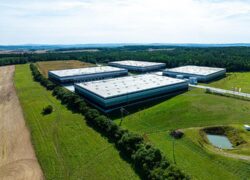
CTP develops 18,000 sqm facility in Serbia for SCHOTT Pharma

CTP has completed an 18,000 sqm build-to-suit production facility for SCHOTT Pharma at CTPark Jagodina in Serbia. The new site expands SCHOTT Pharma’s manufacturing network, which now spans 15 countries, and will focus on the production of glass ampoules used in vaccines and other injectable medications.

The facility will employ 180 people and adds to SCHOTT Pharma’s existing network of ten ampoule production sites worldwide. The building was developed according to CTP’s modern industrial standards, which include sustainability-focused features and energy-efficient infrastructure.

CTPark Jagodina is located near the A1 highway and offers access to key cities including Belgrade and Niš, as well as multiple EU markets through direct road connections. The park is also situated within a region with a population of approximately 400,000 and close to the university city of Kragujevac, providing access to a skilled workforce.

The park includes BREEAM Very Good-certified buildings and features such as rooftop solar panels, water reuse systems, and amenities designed to support employee wellbeing. It spans 22.9 hectares, with 33,000 sqm of space already built and 88,000 sqm planned for future development.

Petar Kolognat, Business Development Director for CTP Serbia, stated that the partnership with SCHOTT Pharma supports the wider industrial network in the region and offers flexibility for future expansion.

Denis Nikitin, Plant Manager at SCHOTT Pharma, noted the suitability of the site and the cooperation with CTP throughout the project, highlighting the location’s industrial relevance and access to qualified personnel.

CTP manages 600,000 sqm of industrial and logistics space in Serbia, with 200,000 sqm of new space expected to be delivered by the end of 2025. The company continues to develop facilities across Serbia’s main cities, including Belgrade, Novi Sad, Kragujevac, and Niš, as demand grows from multinational manufacturers seeking to relocate production closer to European markets.

ROBYG developments reflect local identity in Gdańsk and Gdynia

The Tri-City region, encompassing Gdańsk, Gdynia, and Sopot, is known for its distinctive coastal character, shaped by maritime heritage and modern urban growth. Within this context, ROBYG has delivered residential projects that respond to the local environment rather than dominate it. Drawing on the cultural and architectural traditions of the Polish coast, the company’s premium developments in Gdańsk and Gdynia aim to balance historical continuity with contemporary design.

In Gdańsk, the Nadmotławie development is one of ROBYG’s flagship projects. Located on the revitalised post-industrial site of the Polish Hook, where the Motława and Martwa Wisła rivers meet, the project has transformed the area into a modern residential zone. Inspired by the city’s Hanseatic past and its shipbuilding legacy, the design integrates industrial motifs with contemporary features. Elements such as Corten steel façades, large-scale glazing, and industrial details reference the form of ship hulls and port equipment. A suspended footbridge over the courtyard adds visual interest while offering recreational space and views of the river. Nadmotławie has received recognition at both national and European levels, including a finalist position in the European Baumit Life Challenge 2024 and an award in the Polish Facade of the Year 2023.

In neighbouring Gdynia, the WENDY project continues this approach by referencing the city’s modernist architectural tradition and its maritime setting. Situated in the centre of Gdynia, near the port and major transport routes, WENDY is designed with the principles of a compact, accessible “15-minute city.” The layout of five buildings draws inspiration from the structure of shipping containers and warehouse stacking. The design features a palette of cool tones and metallic finishes, reflecting the city’s modernist roots while introducing subtle contemporary contrasts. High-quality materials, spacious common areas, and a distinctive four-storey lobby contribute to the development’s premium character.

Both projects reflect ROBYG’s broader approach to urban development. Beyond providing housing, the company seeks to shape new cityscapes that incorporate architectural heritage and urban functionality. Nadmotławie and WENDY illustrate how modern residential development can coexist with historical and cultural identity, creating sustainable and livable communities rooted in their local context.

front page info
LATEST NEWS