Housing market update: Trends in new flat listings over the past year

The latest survey by real estate website dompress.pl examines changes in the housing market over the past year, focusing on the availability and profile of new flats. It provides insights into whether more properties have been listed for sale, how many new listings appeared over the last 12 months, and the characteristics of the current market offer, based on comments from participating companies.

Tomasz Kaleta, Managing Director of Sales and Marketing at Develia
In 2024, we put 3,915 properties up for sale and started construction, which is 37% more than in 2023, expanding our offer in key markets in Warsaw, Krakow, Katowice, Gdańsk, Poznań and Wrocław. more than in 2023, expanding our offer in key markets in Warsaw, Krakow, Katowice, Gdańsk, Poznań and Wrocław. This year, we plan to launch and start construction of at least 3,100 units in all cities where we are present, including Gdynia, a new, promising market that will enrich our Tri-City offering. Our portfolio will include apartments in the popular segment as well as higher standard and premium apartments. We analyse the structure of demand on an ongoing basis and, based on this, launch investments that meet the current needs of buyers. A diverse land bank gives us flexibility in this regard. In the coming months, we plan to launch two new projects: Przy Parku Vita in Wrocław and Trzcinowa Vita in Warsaw, as well as further stages of existing developments: City Vibe in Krakow, Orawska Vita and WUWA Vita in Wrocław, and Ceglana Park in Katowice.

Zbigniew Juroszek, President of the Management Board of Atal
In 2024, we launched a total of 24 development projects, comprising 4,739 units of various sizes, layouts, locations and standards. These were predominantly two- and three-room units, which are currently the most sought-after by customers and dominate our offer. The launch of many new development projects in the last several months was due to the positive market outlook for the coming years, the availability of subcontractors and building materials. This situation may soon change with the launch of the National Recovery Plan and other EU funds, as well as the start of large infrastructure projects. The launch of new construction projects secures us for such an eventuality and provides a ready-made residential portfolio for the recovery, which we anticipate with the start of interest rate cuts in Poland.

Mariusz Gajżewski, Head of Sales, Marketing and Communication, BPI Real Estate Poland
The launch of our latest development in Warsaw’s Dolny Mokotów district, PianoForte, had a key impact on the change in our offering year-on-year. As part of the sale of this property, we have added 101 apartments ranging in size from 38 to 134 sqm and in layout from one to four rooms, as well as three commercial premises. Nevertheless, the number of apartments we currently offer is lower than in the comparable period last year, which is obvious in view of the ongoing sale of three ready-to-move-in investments – Czysta4 in Wrocław, Bernadovo in Gdynia and Panoramiqa in Poznań, as well as the recently completed Chmielna Duo. PianoForte offers the opportunity to live in a modern building in a unique location. The site on which it is being built is the last vacant plot in Dolny Mokotów designated for residential development. This makes it an absolutely unique project on the Warsaw residential property market.

Katarzyna Mirota, Head of Sales & Marketing, Matexi Polska
We are currently implementing 11 residential projects, including 4 in Krakow and 7 in Warsaw. We currently have around 678 flats on offer, compared to around 750 at the beginning of the year. In the first quarter of 2025, we sold 71 flats, which confirms the stable interest in our offer. We plan to further expand our offer in the near future. In the second quarter of this year, we plan to launch two new projects, comprising a total of nearly 200 apartments. The new offer will respond to current market needs, focusing on the most sought-after sizes, from compact, functional two- and three-room apartments to more spacious units suitable for families. Like our existing investments, the new projects will be distinguished by high quality workmanship, a well-thought-out functional layout and attractive common areas. We also pay special attention to location. All our investments are well connected and offer access to urban infrastructure and green areas, which meets the expectations of today’s buyers.

Joanna Chojecka, Sales and Marketing Director for Warsaw and Wrocław at Robyg Group
In Q1 2025, TAG Group in Poland had approximately 7,300 residential and commercial units under construction. The Group’s portfolio of rental apartments amounted to over 3,350 units. Robyg currently has approximately 1,900 units on offer. In the first quarter of 2025 alone, new stages comprising 1,100 apartments were added to the offer, including in the following investments: Modern City and Modern Life in Warsaw, Początek Piątkowo in Poznań, and Leszczyńskich and Szumilas in Gdańsk. In addition, we have building permits for approximately 2,100 units. In 2025, the Group plans to sell 2,800 apartments and increase its portfolio of rental units to over 3,600 units. By 2028, the TAG Group plans to have 10,000 units available for rent in Poland. In addition, the Group is expanding its land bank, which includes the potential to build approximately 28,000 units throughout Poland, and is looking for investment opportunities in new land.

Agnieszka Gajdzik-Wilgos, Sales Manager at Ronson Development Sales Manager, Ronson Development
In the first quarter of 2025 alone, we handed over 300 residential units to customers, most of them in the Ursus Centralny (176 units) and Miasto Moje (104 units) projects. In addition, in the second quarter of 2025, the company continues to pursue its ambitious plans, with the Nova Królikarnia investment in Warsaw nearing completion and the sale of a new project in Wrocław on Sobieskiego Street, which offers a very well-designed structure of two- and three-room flats, now underway. At the same time, the next stage of the Zielono Mi investment is starting, and new houses are being added to the offer as part of the Nowe Warzymice project. The profile of the new offer is diverse and well thought out. The company focuses on flexible apartment layouts that allow for individual space arrangement and locations with development potential. This is a response to the changing needs of customers who expect functionality, comfort and a good living environment.

Michał Witkowski, Sales Director, Lokum Deweloper
Last year, we expanded our offer with new apartments in two Wrocław investments, the expanded Lokum Porto in the Old Town and Lokum la Vida in Sołtysowice. In addition, units are also available for sale in the completed Lokum Verde estate in Zakrzów and the last spacious apartments in the intimate Lokum Monte estate, located in Sobótka, surrounded by the Ślężański Landscape Park. We are constantly analysing the market situation and adapting our offer to changing buyer preferences. The available properties include both ready-to-move-in units and those with a short completion date, which will be delivered later this year. We offer a wide selection of flats of various sizes and layouts, from compact studios and two-room flats ideal for singles, first-time buyers or investors, to large flats for families with children and customers who value space. Our developments are distinguished by their attractive location, high standard and carefully designed common areas, which include green relaxation zones, playgrounds and outdoor gyms. There are numerous shops and services, kindergartens, schools, medical facilities and recreational areas in the vicinity of the estates. All this means that our offer meets the diverse expectations of our customers. When planning and designing our housing estates, we always put the needs of their future residents first. We strive to adapt to market requirements as best as possible. Our current offer includes many types of flats and various investment locations. Our land bank allows us to continue these plans, so that by expanding our offer with new investments, we will have the opportunity to reach a wide range of customers. Łukasz Šedovič, Sales Director at Trust Investment S.A. 2024 was a time of intense development and new investments for our company. Key projects were put up for sale, including Plaza City in Częstochowa, offering 106 apartments, ULTRADOM in Radom with 184 units, Krakowska Rogatka in Kielce – an investment comprising 225 apartments and commercial premises, as well as the second stage of the Sky Trust project in Kielce, which added another 223 units to the offer. Added to this is the prestigious Browar Hugo Scobel investment in Gliwice, where 96 apartments and commercial premises are planned. In total, in 2024, we put 834 flats and commercial premises on sale, which is a dynamic response to the growing market demand. However, we are not slowing down – at the beginning of 2025, another important investment joined our offer – Dzielnica Trust in Kielce, which increased the pool of available premises by 160 flats. At the same time, intensive preparations are underway to launch the sale of our latest and exceptionally prestigious investment in Katowice, where we have planned 406 apartments. It is worth noting that two-room apartments, which continue to enjoy great interest among customers, account for the largest share of our offer. Our strategy responds to the real needs of the market by offering a variety of housing solutions while maintaining high quality and attractive locations.

Photo: Moja Polnocna Warszawa, Eco Classic

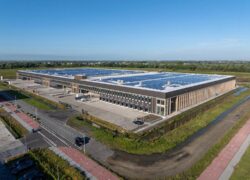
Nrep acquires commercial property for sustainable 37,000 sqm logistics center near Copenhagen

Nrep, the real estate arm of Urban Partners, has announced the acquisition of a commercial property in Høje Taastrup, advancing its logistics strategy with plans to develop a 37,000 square meter energy-efficient logistics center. The 19,000 square meter property, purchased from Castellum, is located near key transport links, offering quick access to Copenhagen and the Øresund Bridge.

The acquisition was made through Nrep’s latest NSF-series fund and aligns with the firm’s strategy to meet rising demand for sustainable logistics facilities. The development will prioritize environmental considerations, integrating renewable energy solutions such as rooftop solar panels and reusing materials from the existing structure.

“This agreement is a significant step in our logistics strategy,” said Thomas Riise-Jakobsen, Partner and Head of Nrep Denmark. “It’s not just an investment in real estate but an investment in future infrastructure. As e-commerce, sustainability demands, and urbanization reshape supply chains, we are creating one of Denmark’s key logistics hubs. Our focus is on providing efficient, customer-centric, and sustainable solutions.”

The location is seen as highly advantageous for last-mile delivery operations, benefiting from proximity to Copenhagen’s 2.1 million residents, major ports, the airport, and the national motorway network.

The transaction supports Nrep’s broader growth plans in the Danish logistics sector. In 2024, the company also acquired a 14,000 square meter logistics project in Brabrand, near Aarhus.

The Nordic logistics market, valued at an estimated USD 76 billion in 2025, is projected to expand to approximately USD 92 billion over the next five years, driven by increasing demand for e-commerce and sustainable logistics infrastructure.

Republika Srpska advances fiscal risk management and SOE oversight

The government of Republika Srpska (RS) in Bosnia and Herzegovina has made significant progress in recent years in strengthening the analysis, disclosure, and management of fiscal risks, with a particular focus on state-owned enterprises (SOEs). These efforts, led by the Department of Macroeconomic Analysis and Policy of the RS Ministry of Finance, have been complemented by initiatives to improve SOE coordination and oversight, managed by the General Secretariat of the RS Government.

Ongoing reforms are expected to further enhance SOE accountability and gradually extend to cover broader fiscal risks. The analysis of SOEs is based on the International Monetary Fund’s (IMF) SOE Health Check Tool (SOE-HCT). These initiatives are supported by the IMF’s Public Financial Management (PFM) reform program for Southeast Europe, with funding from the European Union and Switzerland.

Recent Developments

In 2024, the Ministry of Finance (MoF) completed a draft of its second Fiscal Risk Statement (FRS), which provides a comprehensive analysis of the financial health of the SOE sector for 2023. While the FRS has not yet been published, preliminary findings show that the risk rating for major SOEs remains at Category 2 on a five-point scale (with 1 being low risk and 5 high risk), consistent with 2022. The draft includes a five-year trend analysis showing that several SOEs improved from Category 3 to 2 between 2019 and 2022, although some reversals were noted in 2023.

The analysis reveals that although many SOEs maintain low liabilities relative to assets, they continue to face challenges in generating sufficient earnings to service their debts and often experience liquidity constraints.

Aggregate sector performance showed improvement, with a small but positive return on equity of 2% in 2023, up from 1% the previous year. Only two of the 21 major SOEs posted losses. Sector liabilities finance approximately 27% of SOE assets, a relatively moderate level. While debt remains high relative to earnings, it has improved compared to 2022, and the sector is generally able to meet interest obligations. However, liquidity remains tight, with current assets covering only 55% of current liabilities.

In terms of government support, SOEs received KM 49.3 million in subsidies and grants in 2023, a reduction of KM 8.1 million compared to the previous year. The largest recipients were Putevi RS (Roads RS) with KM 29.7 million and Željeznice RS (Railways RS) with KM 10 million.

Next Steps

The MoF has begun employing the IMF’s SOE Stress Test Tool (SOE-STT) to develop forward-looking risk assessments for individual SOEs and the overall portfolio. This tool will enable projections of SOE financial statements under varying macroeconomic and firm-specific conditions, helping quantify potential fiscal risks and assess the implications of different policy options.

To improve fiscal risk reporting, the MoF plans to streamline the FRS by focusing it exclusively on fiscal risks related to SOEs, while broader analysis of SOE financial performance will be transferred to a separate SOE Report, to be prepared by the General Secretariat. The two institutions will coordinate closely to ensure alignment and consistency across both reports.

Looking ahead, the MoF intends to gradually broaden the FRS to encompass other categories of fiscal risk, including macroeconomic fluctuations, debt and contingent liabilities, financial sector vulnerabilities, and subnational government risks. Meanwhile, the SOE Report will initially focus on financial results and, over time, expand to provide a more comprehensive review of SOE policies, objectives, and performance.

Consortium proposes €1.3 billion acquisition of Dalata, Ireland’s largest hotel group

A consortium composed of property owners Pandox AB and Eiendomsspar AS has submitted a proposal to acquire Dalata Hotel Group, Ireland’s largest hotel operator, for €1.3 billion.

The offer consists of a cash bid of €6.05 per ordinary share, representing a premium of approximately 5% over Dalata’s closing share price on Monday. Eiendomsspar currently holds around 8.8% of Dalata’s issued ordinary shares, making it the company’s second-largest shareholder.

The bid follows Dalata’s announcement in March that it had initiated a strategic review to explore options for enhancing shareholder value, including the possibility of a sale.

Dalata operates 55 hotels under the Maldron and Clayton brands, primarily located in Ireland and the United Kingdom.

Under British takeover regulations, the consortium has until July 15 to submit a formal offer or withdraw its interest.

Photo: Clayton Hotel Cardiff, Dalata Hotel Group

Sales of new apartments in Poland’s major markets rise to 3,700 units in May

Sales of new apartments across Poland’s seven largest markets increased to over 3,700 units in May, marking a 30% rise compared to April, according to data from Otodom. During the same period, developers introduced around 5,200 new units, raising the total number of available apartments to 62,100. This represents a 37% increase year-on-year and a 3% rise compared to the previous month.

Katarzyna Kuniewicz, Director of Market Research at Otodom, noted that historical patterns show how quickly the housing market can respond to interest rate cuts, referencing the post-2020 period when rates fell to a record low of 0.1%, fueling rapid monthly growth in apartment sales. She added that while May’s increase in reservations signaled potential recovery, the rise might also be attributed to a wave of new developments rather than solely to interest rate movements.

The supply side has also shown signs of recovery. Developers launched over 5,200 new units in May, with the highest volumes in Warsaw (1,300 units), the Tri-City (1,100 units), and Kraków (1,100 units). While Warsaw and the Tri-City markets typically have a sustainable offer absorption period of 4–5 quarters, Kraków’s market shows signs of strain, with absorption rates exceeding 7 quarters. As a result, Kraków’s inventory reached a record 10,500 units by the end of May.

Average prices for apartments in newly launched developments increased both month-on-month and year-on-year. Despite increased activity, the likelihood of a significant price reduction remains low. The average apartment size in May was 54 square meters, with an average total price slightly exceeding CZK 809,000 — a 2% increase from May 2024. Price growth per square meter slowed slightly to 4.1% year-on-year, compared to 4.6% growth in April.

While the new-build market experienced robust activity, the secondary market showed signs of cooling. Between May 1 and May 26, nearly 47,000 second-hand apartment listings were published in the seven major cities, down 6% compared to April but up 16% year-on-year. Warsaw, Kraków, and Wrocław saw the most listings, with Poznań and Łódź recording the largest annual increases in listings at 34% and 24%, respectively.

Demand in the secondary market also declined modestly. By the end of May, approximately 67,000 inquiries were recorded, suggesting a likely 4% drop in user activity compared to April if the trend continues. Łódź is expected to see the sharpest monthly decline at around 13%.

In terms of pricing, the secondary market remained relatively stable in May. Katowice and Warsaw posted moderate year-on-year price increases of 5% and 2%, respectively, while prices in Kraków, Poznań, and Wrocław remained largely unchanged. Only Łódź experienced a slight decline in average asking prices.

OECD releases first comprehensive entrepreneurial ecosystem diagnostics report

The OECD has released its inaugural report on Entrepreneurial Ecosystem Diagnostics, offering a pioneering tool to assess the strengths and weaknesses of entrepreneurship environments across all 38 OECD member countries. The study marks a significant step in providing data-driven insights to inform national policies aimed at supporting startups and business growth.

Entrepreneurial ecosystems—defined as the network of actors, institutions, and resources that foster entrepreneurial activity—have become central to policy discussions in recent years. However, consistent and comprehensive measurement tools have been lacking. The OECD’s new diagnostic framework addresses this gap, enabling cross-country benchmarking and offering policymakers a foundation for deeper analysis and strategic reforms.

The report measures ten core elements critical to entrepreneurial ecosystems: Institutions, Culture, Networks, Infrastructure, Markets, Finance, Knowledge, Talent, Leadership, and Intermediate Services. Each element is quantified through composite indicators based on around 40 variables, and outputs are evaluated with a focus on productive entrepreneurship—business ventures that generate employment and innovation.

Key findings highlight substantial variation in ecosystem quality across countries. Leadership, Markets, and Knowledge emerged as the areas with the widest performance gaps, signaling potential for targeted policy interventions. Countries like the United States, the United Kingdom, and Switzerland lead on multiple ecosystem elements, while others such as Colombia and Costa Rica show room for significant improvement.

The study also tracks how ecosystems have evolved over time. For instance, France improved its Institutions scores through regulatory reforms, while Portugal, Lithuania, and Poland advanced in Talent development by enhancing digital skills education. Meanwhile, Estonia and Türkiye made notable progress in Infrastructure.

In addition to national-level assessments, the report explores regional and social variations in entrepreneurship. Countries such as Belgium and the Netherlands exhibit relatively even start-up activity across regions, whereas Chile and Slovakia show higher disparities. Similarly, countries like Sweden and Ireland display less disparity in start-up rates among women, youth, and seniors compared to middle-aged men.

The report features case studies of notable national initiatives aimed at ecosystem development, including France’s “French Tech” program, Italy’s “Startup Act,” and the Netherlands’ “TechLeap” project. These initiatives illustrate holistic approaches that simultaneously address multiple ecosystem elements and empower entrepreneurs directly.

Looking ahead, the OECD plans to expand and refine this diagnostic tool, with aspirations to incorporate more subnational data and develop deeper econometric analyses. The goal is to foster better-informed policy decisions and promote resilient, high-growth entrepreneurship across OECD countries.

For policymakers, the report serves as a critical starting point for identifying ecosystem bottlenecks and fostering data-driven dialogues to design more effective entrepreneurship policies.

Mortgages remain more expensive than rents at the end of 2024 by CZK 9,245

At the end of 2024, the monthly cost of a mortgage payment for an apartment exceeded the average monthly rent by CZK 9,245, according to an analysis by the Association of Rental Housing provided to the Czech News Agency. While the gap narrowed by CZK 287 compared to November, it was CZK 459 larger year-on-year.

The analysis attributes the persistent gap to the continued rise in apartment prices, which has outpaced rent increases. Falling mortgage interest rates have not been sufficient to offset the effect of property price growth.

“The gap between mortgage payments and rental costs may narrow over the course of the year as mortgage rates decline. However, the extent of this narrowing will depend primarily on the rate at which housing prices continue to grow,” said Jakub Vysovský, President of the Association of Rental Housing.

In earlier years, the situation was reversed. Data from the association show that before 2022, mortgage payments were on average CZK 765 more expensive than rents. However, since spring 2022, renting has been economically more favorable, with the monthly gap ranging between CZK 7,000 and CZK 9,000. The widest difference occurred in the third quarter of 2022, when mortgage payments exceeded rents by over CZK 10,300.

The comparison between rental and ownership costs is based on an average apartment size of 52.6 square meters. The calculation uses data from Deloitte’s Real Index and Ren Index, alongside average mortgage interest rates. “The analysis provides a purely economic comparison and does not consider personal preferences. Homeownership builds equity, while renting offers flexibility and reduced responsibility,” explained Tomáš Kašpar, Vice President of the Association.

According to Deloitte, apartment prices in the Czech Republic increased by 5.8% quarter-on-quarter in the final quarter of 2024, with the average price reaching CZK 110,100 per square meter — an increase of CZK 6,000 compared to the previous quarter. Price growth was most notable in the Hradec Králové and Karlovy Vary regions, while prices fell in the South Bohemian and Pilsen regions.

In contrast, rents slightly decreased by 0.3% quarter-on-quarter at the end of 2024, with an average monthly rent of CZK 309 per square meter. More recent data show a 2.3% increase in the first quarter of 2025, bringing average rents to CZK 316 per square meter.

Mortgage rates have also been gradually declining. According to Swiss Life Hypoindex, the average mortgage rate fell below 5% in early May 2025 for the first time since spring 2022, decreasing to 4.96%. The monthly installment for a CZK 3.5 million mortgage with 80% loan-to-value (LTV) and a 25-year term was CZK 20,381, representing a year-on-year decline of over CZK 1,100.

Source: CTK

Analysis: Prices of cottages and chalets in Czechia rise 8.8% year-on-year

The average price of cottages and chalets in Czechia rose by 8.8% year-on-year in the first half of 2025, reaching CZK 3.2 million, according to the latest analysis by digital real estate platform Bezrealitky.cz. The most sought-after recreational properties in prime locations are now priced at up to CZK 6.4 million, reflecting a 12.3% increase compared to the same period last year.

While interest in recreational properties remains, demand has moderated. Last year, listings typically attracted five to ten prospective buyers before the summer season; this year, the number has halved.

Smaller cottages are being offered for around CZK 850,000, a slight decrease of 1.4% year-on-year. Meanwhile, garden cottages in high-demand areas are averaging CZK 1.6 million, up 3.5% from the previous year.

According to the analysis, most buyers prioritize properties in good condition and desirable locations. Interest in older cottages or chalets requiring renovation, especially those located outside key tourist areas, has declined significantly.

“The market has shifted over the past year. Owners are responding to increased demand for real estate investment by raising asking prices for recreational properties. At the same time, buyers looking for bargains largely made their purchases in previous years. As a result, many properties have remained on the market for several seasons, and with summer approaching, owners are making greater efforts to sell,” said Martin Ponzer, head of Bezrealitky.cz.

Ponzer also noted a trend of buyers turning to older family houses as alternatives to cottages, often at lower prices but typically located away from major tourist destinations. Additionally, some owners are selling holiday homes to finance apartment purchases, leading to quicker sales and potentially better deals for buyers.

Among the most popular regions for holiday properties are the Krkonoše Mountains, Jizera Mountains, Orlické Mountains, Kralický Sněžník, and their foothills. High demand is also seen in areas such as Kokořínsko, Pálava, and Lipno, where properties command higher prices due to their commercial potential and proximity to Prague or Brno. Other areas with strong interest include Šumava, Bohemian Switzerland, Beskydy, Slapy, South Bohemia, Bohemian Paradise, and Dolnomoravský úval.

Bezrealitky noted that buyers may find more room for price negotiation in the Ore Mountains, Lusatian Mountains, and the Křivoklát region.

The Liberec Region recorded the highest average cottage prices, at CZK 4.95 million, followed by the Hradec Králové Region at CZK 4.67 million. In the Central Bohemian Region, cottages and chalets are priced at an average of CZK 3.83 million.

Source: CTK

Czech state budget deficit rises to CZK 170.5 billion in May

The Czech state budget deficit increased to CZK 170.5 billion at the end of May, up from CZK 126.1 billion in April, according to data released by the Ministry of Finance. Despite the monthly increase, the deficit remains lower compared to the same period last year, when it reached CZK 210.4 billion. Finance Minister Zbyněk Stanjura (ODS) attributed the year-on-year improvement to ongoing government measures aimed at budget consolidation.

By the end of May, state budget revenues totaled CZK 774 billion, reflecting a 7.3% year-on-year increase, driven by higher tax receipts, compulsory insurance contributions, and transfers from the European Union. Expenditures rose more moderately by 1.4% to CZK 944.5 billion.

Stanjura noted that May is typically a challenging month for the budget due to advance payments for regional education and tax refunds. However, this year’s figures were CZK 13 billion better compared to May 2024. “In four out of the first five months, we have seen year-on-year improvements in the deficit, supporting our budget consolidation efforts,” he said. Stanjura expressed optimism that the balance will continue to improve in the coming months, particularly on the revenue side.

Commenting on the figures, Jan Brázda, a partner at PwC responsible for the public sector, highlighted that the budget is performing approximately CZK 40 billion better than last year. However, he cautioned that budget performance may become less predictable as parliamentary elections approach, citing risks of increased spending.

Martin Kuč of Kearney pointed out that while revenue growth has helped narrow the deficit, structural reforms to reduce operating costs have not been implemented. He emphasized that the structural deficit persists and noted that CZK 37.8 billion has been spent on debt servicing since the beginning of the year, funds that could otherwise be directed to investments, education, or modernization.

Among tax revenues, personal income tax collection showed the strongest growth, rising by 16.1% year-on-year to CZK 67.1 billion, supported by wage increases and reductions in certain tax deductions. Compulsory insurance premiums increased by 7.6% to CZK 329.6 billion, also linked to wage growth.

Value added tax (VAT) revenues rose by 8.2% year-on-year to CZK 162.6 billion, reflecting higher household consumption. Excise tax collection increased by 5.4% to CZK 64.9 billion, primarily due to higher rates on tobacco and alcohol. Corporate income tax collection grew by 3.9% to CZK 48.6 billion. The windfall profits tax, mainly targeting energy firms, petrochemical companies, and large banks, brought in CZK 9 billion, up 29.2% from last year.

On the expenditure side, social benefits remained the largest budget item, totaling CZK 386.3 billion, a 2% increase compared to the previous year. Of this amount, CZK 299.4 billion went toward pensions, with pension expenditures remaining stable. Debt servicing costs reached CZK 37.8 billion, an 8.4% increase year-on-year.

Capital expenditures declined by 3.4% to CZK 61.3 billion, largely due to irregular funding of joint projects with the European Union, which dropped by CZK 5.6 billion. Investment purchases by the Ministry of Defence fell by CZK 7.8 billion, while investment transfers to the State Fund for Transport Infrastructure increased by CZK 13.8 billion.

For 2025, the government projects total revenues of CZK 2.086 trillion and expenditures of CZK 2.327 trillion, targeting a deficit of CZK 241 billion. Last year, the budget closed with a deficit of CZK 271.4 billion — the lowest since the COVID-19 pandemic but still the fifth highest in the country’s history.

Source: CTK

Czechs show increased interest in domestic summer holidays

A new survey by CzechTourism reveals that 65% of Czechs plan to spend their summer holidays in the Czech Republic this year, up four percentage points from last year. In contrast, 57% of respondents indicated plans to travel abroad, a three-percentage-point decrease year-on-year. The survey, conducted in May 2025, collected responses from several thousand participants.

Respondents were able to express interest in both domestic and international holidays. Domestic travel was most popular among individuals aged 40–49 years with monthly incomes between CZK 20,000 and 25,000. International holidays were favored primarily by respondents aged 30–49 years and those with university degrees. The likelihood of traveling abroad also increased with higher income levels, according to CzechTourism.

The survey found that the average planned duration for a summer holiday within the Czech Republic is nine days, one day shorter compared to the previous year. However, anticipated spending per person rose by CZK 423 to an average of CZK 9,707. Accommodation accounts for nearly half of holiday expenses. The South Bohemian, South Moravian, and Central Bohemian Regions remain the most popular domestic destinations, consistent with last year’s rankings.

Accommodation providers in these regions expect weekend occupancy rates between 52% and 68% during the summer, with nightly rates ranging from CZK 2,500 to 3,000, based on data from Data Rhymes cited by CzechTourism.

“Domestic holidays continue to attract Czechs by offering security, comfort, quality services, and a wide range of experiences—from natural landscapes and cultural landmarks to regional cuisine,” said František Reismüller, Director of CzechTourism. He added that interest in local gastronomy is growing, with 77% of respondents indicating they often sample regional specialties while traveling within the country, providing significant support for local producers and businesses.

In the first quarter of 2025, 4.15 million tourists stayed in Czech accommodation facilities, a 1.4% increase compared to the same period last year. Guests spent 10.5 million nights in accommodation establishments, reflecting a 0.6% year-on-year rise, according to the Czech Statistical Office (ČSÚ).

Last year, Czechs made 7.5 million trips abroad, a decline of about 4% compared to 2023. However, the number of overnight stays rose by approximately 1.1% to 49.1 million. According to CZSO data, Italy overtook Croatia as the most popular destination for trips lasting four or more nights, with 796,000 trips to Italy compared to 674,000 to Croatia.

Source: CTK

front page info
LATEST NEWS