Forte Partners Advances U•Center 3 as Demand for Premium Mixed-Use Projects Strengthens in Bucharest

The Bucharest office and residential markets are entering a new phase of stability, with demand holding strong for high-quality projects in prime locations. That was the key message from Geo Mărgescu, Founder and CEO of Forte Partners, in a recent interview with CIJ EUROPE, as the company pushes ahead with its €100 million U•Center 3 development.

Mărgescu explained that both tenants and apartment buyers are increasingly selective, willing to pay more but only for projects that deliver the best product, location and facilities. He emphasized that this holds true across both residential and office markets, where quality has become the decisive factor.

The office sector, he said, has undergone major shifts over the past four years. The pandemic initially drove tenants to vacate large spaces and accelerated the adoption of remote work, but the market has since returned to balance. A shortage of new building permits at City Hall temporarily limited new supply, which helped stabilize conditions and shift the market back in favor of landlords. Hybrid work models have now become the norm, shaping demand for more flexible layouts and collaboration areas. At the same time, inflation has pushed rents upward, bringing them to what Mărgescu described as a healthy level for both landlords and the market as a whole.

Against this backdrop, Forte Partners is advancing U•Center 3, the third phase of its landmark project on Bulevardul Tineretului. The €100 million investment includes a new office building and 200 residential apartments, along with additional retail and public spaces. Financing is structured around a mix of equity and traditional bank lending. Mărgescu explained that the company always begins with equity, accessing bank financing only once it has visibility on tenant demand, ensuring a careful balance between profitability and risk.

Sustainability is a central feature of the new phase. U•Center 3 will be fully electric, equipped with advanced building management systems, rainwater harvesting, and predictive weather-control technologies designed to reduce energy use. The project has already secured Leed Platinum certification. For Forte, Mărgescu said, ESG is not about ticking boxes but about building better projects that remain modern and relevant for decades to come.

One of the defining aspects of U•Center 3 is its mixed-use concept. Mărgescu stressed that large office projects risk becoming deserted after working hours, something Forte seeks to avoid. By adding apartments, retail, and public amenities, the company aims to create a community that remains active both during the day and into the evening. The project will include a piazza with restaurants and shops, designed to open up the site and integrate it with the surrounding neighborhood.

The 200 apartments are planned for sale rather than rental and will target young families and professionals in their 30s. They will include terraces, underfloor heating, premium materials and shared amenities such as car-sharing spaces and bicycle repair points, which remain rare in Romania. Mărgescu described the design as low-rise, green and community-oriented, with the goal of attracting both existing residents who wish to remain in the area and employees from nearby office tenants.

Looking ahead, Mărgescu expects Bucharest to expand both outward into northern suburbs and inward through the redevelopment of large industrial platforms. He noted that the city does not tend to embrace very tall towers and that the next wave of development will likely come from reconverting brownfield sites into mixed-use projects. He estimated that several major redevelopments could bring as much as half a million square meters of new space to the city over the next decade.

Forte Partners plans to begin pre-sales of the residential component of U•Center 3 in early 2026 once permits are secured, with pre-leasing for office space already underway. Beyond this project, the company is preparing additional acquisitions and joint ventures for larger mixed-use developments, continuing its focus on Bucharest.

“Our goal is to keep reshaping Bucharest with projects that blend work, living, and leisure. We want to build not just for today, but for the next generations,” Mărgescu concluded.

© 2025 www.cijeurope.com
Forte Partners Advances U•Center 3 as Demand for Premium Mixed-Use Projects Strengthens in Bucharest

The Bucharest office and residential markets are entering a new phase of stability, with demand holding strong for high-quality projects in prime locations. That was the key message from Geo Mărgescu, Founder and CEO of Forte Partners, in a recent interview with CIJ EUROPE, as the company pushes ahead with its €100 million U•Center 3 development.

Mărgescu explained that both tenants and apartment buyers are increasingly selective, willing to pay more but only for projects that deliver the best product, location and facilities. He emphasized that this holds true across both residential and office markets, where quality has become the decisive factor.

The office sector, he said, has undergone major shifts over the past four years. The pandemic initially drove tenants to vacate large spaces and accelerated the adoption of remote work, but the market has since returned to balance. A shortage of new building permits at City Hall temporarily limited new supply, which helped stabilize conditions and shift the market back in favor of landlords. Hybrid work models have now become the norm, shaping demand for more flexible layouts and collaboration areas. At the same time, inflation has pushed rents upward, bringing them to what Mărgescu described as a healthy level for both landlords and the market as a whole.

Against this backdrop, Forte Partners is advancing U•Center 3, the third phase of its landmark project on Bulevardul Tineretului. The €100 million investment includes a new office building and 200 residential apartments, along with additional retail and public spaces. Financing is structured around a mix of equity and traditional bank lending. Mărgescu explained that the company always begins with equity, accessing bank financing only once it has visibility on tenant demand, ensuring a careful balance between profitability and risk.

Sustainability is a central feature of the new phase. U•Center 3 will be fully electric, equipped with advanced building management systems, rainwater harvesting, and predictive weather-control technologies designed to reduce energy use. The project has already secured Leed Platinum certification. For Forte, Mărgescu said, ESG is not about ticking boxes but about building better projects that remain modern and relevant for decades to come.

One of the defining aspects of U•Center 3 is its mixed-use concept. Mărgescu stressed that large office projects risk becoming deserted after working hours, something Forte seeks to avoid. By adding apartments, retail, and public amenities, the company aims to create a community that remains active both during the day and into the evening. The project will include a piazza with restaurants and shops, designed to open up the site and integrate it with the surrounding neighborhood.

The 200 apartments are planned for sale rather than rental and will target young families and professionals in their 30s. They will include terraces, underfloor heating, premium materials and shared amenities such as car-sharing spaces and bicycle repair points, which remain rare in Romania. Mărgescu described the design as low-rise, green and community-oriented, with the goal of attracting both existing residents who wish to remain in the area and employees from nearby office tenants.

Looking ahead, Mărgescu expects Bucharest to expand both outward into northern suburbs and inward through the redevelopment of large industrial platforms. He noted that the city does not tend to embrace very tall towers and that the next wave of development will likely come from reconverting brownfield sites into mixed-use projects. He estimated that several major redevelopments could bring as much as half a million square meters of new space to the city over the next decade.

Forte Partners plans to begin pre-sales of the residential component of U•Center 3 in early 2026 once permits are secured, with pre-leasing for office space already underway. Beyond this project, the company is preparing additional acquisitions and joint ventures for larger mixed-use developments, continuing its focus on Bucharest.

“Our goal is to keep reshaping Bucharest with projects that blend work, living, and leisure. We want to build not just for today, but for the next generations,” Mărgescu concluded.

© 2025 www.cijeurope.com

Polish Buyers Drive Demand for Spanish Homes as Costa del Sol Luxury Prices Climb

Despite autumn settling in across Central Europe, the appeal of Spain’s sunny coasts continues to attract Polish investors, with new data showing a double-digit increase in property purchases during the first half of this year.

According to figures from Registradores de España, Polish nationals acquired around 2,050 properties in Spain in the first six months of 2025, an increase of roughly 14 percent compared with the same period in 2024. Real estate consultancy Dream Property Marbella notes that Poles remain among the most active foreign buyers, particularly in Andalusia’s Málaga province, which encompasses Marbella, Estepona and Torremolinos.

The Costa del Sol’s climate remains a central attraction. Local tourism and climate sources frequently cite more than 300 days of sunshine annually, making the region one of Europe’s warmest and most reliable coastal destinations. While winters are mild rather than summer-hot, the perception of year-round sun continues to bolster demand for second homes and investment properties.

Málaga province has also seen some of Spain’s sharpest price growth, with average values climbing between 14 and 17 percent year on year in mid-2025 to nearly €2,900 to €3,000 per square metre, according to official registrars’ data. New developments continue along the Marbella–Estepona corridor, but high demand from international buyers keeps competition for prime beachfront stock intense. Polish investors are often focused on lifestyle purchases such as holiday or retirement homes, but they also view Spanish real estate as a hedge against domestic currency or political risk.

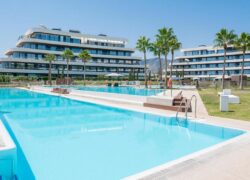
Luxury acquisitions remain a hallmark of this trend, with agents reporting strong Polish interest in premium coastal schemes. In Marbella’s Los Monteros district, prime villas close to the beach are typically listed between €4.5 million and over €10 million, with sea views, private pools and large plots commanding the highest premiums. In Torremolinos, duplex penthouses with rooftop pools at Residencial Nereidas are currently advertised for around €2.0 to €2.2 million, while standard units in the same complex start closer to €1 million. In Estepona, ground-floor garden apartments at The Edge, one of the town’s flagship seafront developments, are marketed at €990,000 to €1.1 million depending on size and orientation.

Agents on the ground say momentum remains robust despite rising prices. “The combination of a Mediterranean lifestyle, reliable climate and steady economic growth continues to act as a magnet for Polish buyers,” said Tatiana Pękala, owner of Dream Property Marbella, a Polish-run agency specialising in Spanish coastal investments. With Málaga maintaining its position as Spain’s top growth market and demand for prime homes exceeding supply, analysts expect international investors, including Poles, to remain active, particularly in the luxury segment of the Costa del Sol.

Polish Buyers Drive Demand for Spanish Homes as Costa del Sol Luxury Prices Climb

Despite autumn settling in across Central Europe, the appeal of Spain’s sunny coasts continues to attract Polish investors, with new data showing a double-digit increase in property purchases during the first half of this year.

According to figures from Registradores de España, Polish nationals acquired around 2,050 properties in Spain in the first six months of 2025, an increase of roughly 14 percent compared with the same period in 2024. Real estate consultancy Dream Property Marbella notes that Poles remain among the most active foreign buyers, particularly in Andalusia’s Málaga province, which encompasses Marbella, Estepona and Torremolinos.

The Costa del Sol’s climate remains a central attraction. Local tourism and climate sources frequently cite more than 300 days of sunshine annually, making the region one of Europe’s warmest and most reliable coastal destinations. While winters are mild rather than summer-hot, the perception of year-round sun continues to bolster demand for second homes and investment properties.

Málaga province has also seen some of Spain’s sharpest price growth, with average values climbing between 14 and 17 percent year on year in mid-2025 to nearly €2,900 to €3,000 per square metre, according to official registrars’ data. New developments continue along the Marbella–Estepona corridor, but high demand from international buyers keeps competition for prime beachfront stock intense. Polish investors are often focused on lifestyle purchases such as holiday or retirement homes, but they also view Spanish real estate as a hedge against domestic currency or political risk.

Luxury acquisitions remain a hallmark of this trend, with agents reporting strong Polish interest in premium coastal schemes. In Marbella’s Los Monteros district, prime villas close to the beach are typically listed between €4.5 million and over €10 million, with sea views, private pools and large plots commanding the highest premiums. In Torremolinos, duplex penthouses with rooftop pools at Residencial Nereidas are currently advertised for around €2.0 to €2.2 million, while standard units in the same complex start closer to €1 million. In Estepona, ground-floor garden apartments at The Edge, one of the town’s flagship seafront developments, are marketed at €990,000 to €1.1 million depending on size and orientation.

Agents on the ground say momentum remains robust despite rising prices. “The combination of a Mediterranean lifestyle, reliable climate and steady economic growth continues to act as a magnet for Polish buyers,” said Tatiana Pękala, owner of Dream Property Marbella, a Polish-run agency specialising in Spanish coastal investments. With Málaga maintaining its position as Spain’s top growth market and demand for prime homes exceeding supply, analysts expect international investors, including Poles, to remain active, particularly in the luxury segment of the Costa del Sol.

Romanian Residential Market Faces Adjustment as Consumer Confidence Slumps

Romania’s housing market is entering a cooling phase after several years of exceptional demand, with consumer sentiment weakening and fiscal changes reshaping buyer behaviour.

According to Eurostat, Romania’s consumer confidence index fell to –31.5 in August 2025, well below its long-term average of around –17. Colliers consultants describe the first half of this year as registering the sharpest slide in optimism since the 2009–2010 crisis, excluding the brief pandemic shock, and warn that the downturn in confidence could prove more persistent this time.

Uncertainty over fiscal policy dominated the early months of the year. The government’s decision to raise the standard VAT rate from 19% to 21% on 1 August 2025 triggered volatility in the residential market, as debates over timing and exemptions unsettled potential buyers. Once the increase was confirmed, many households rushed to close deals ahead of the change.

This was reflected in transaction data. The National Agency for Cadastre and Real Estate Publicity (ANCPI) recorded 66,013 property deals in July, one of the most active months in recent years. Activity eased in August to 53,433 transactions, but that still represented 2,366 more than in August 2024. Colliers noted that more than 17,000 apartment-type units changed hands nationally in July alone, including over 5,000 in Bucharest, as buyers accelerated purchases before the higher tax took effect.

In total, ANCPI data show 408,332 property transactions of all types were completed in the first eight months of 2025. While this figure aligns broadly with last year’s levels, analysts point out that it masks growing caution among households.

On the supply side, constraints are becoming visible. Data from the National Institute of Statistics (INS) indicate that 24,609 dwellings were completed in the first half of 2025, down by 1,327 units year on year. Both the first and second quarters showed lower delivery volumes than in 2024. Rising construction costs—driven by higher material prices and the impact of new fiscal measures—are keeping price pressures elevated, particularly in centrally located and well-connected areas. By contrast, developers in suburban and metropolitan zones, where land remains more affordable, continue to deliver at more stable price levels.

Colliers emphasises that the market is undergoing a period of adjustment rather than a structural downturn. “Although sentiment and activity have weakened, this is not comparable to the collapse seen during the global financial crisis,” said Gabriel Blăniță, Associate Director for Valuation & Advisory Services at Colliers Romania. “The fundamentals remain supportive: major cities still face a housing deficit, households are overcrowded by European standards, and purchase intentions remain higher than in the pre-pandemic period.”

Still, challenges loom in the short term. Fiscal changes—including higher VAT, increased excise duties and rising energy costs—are eroding disposable incomes. Mortgage rates remain elevated, and the labour market, while stable overall, shows early signs of softening. Aggregated employment data indicate a slight decline in June to July, though official monthly statistics do not yet confirm a sustained trend of job losses.

The near-term outlook suggests that housing demand will be more selective, with fewer transactions closing compared to the highs of recent years. Over the longer horizon, however, Romania’s structural housing needs, combined with urban growth, are expected to underpin the sector.

Source: Colliers Romania

Romanian Residential Market Faces Adjustment as Consumer Confidence Slumps

Romania’s housing market is entering a cooling phase after several years of exceptional demand, with consumer sentiment weakening and fiscal changes reshaping buyer behaviour.

According to Eurostat, Romania’s consumer confidence index fell to –31.5 in August 2025, well below its long-term average of around –17. Colliers consultants describe the first half of this year as registering the sharpest slide in optimism since the 2009–2010 crisis, excluding the brief pandemic shock, and warn that the downturn in confidence could prove more persistent this time.

Uncertainty over fiscal policy dominated the early months of the year. The government’s decision to raise the standard VAT rate from 19% to 21% on 1 August 2025 triggered volatility in the residential market, as debates over timing and exemptions unsettled potential buyers. Once the increase was confirmed, many households rushed to close deals ahead of the change.

This was reflected in transaction data. The National Agency for Cadastre and Real Estate Publicity (ANCPI) recorded 66,013 property deals in July, one of the most active months in recent years. Activity eased in August to 53,433 transactions, but that still represented 2,366 more than in August 2024. Colliers noted that more than 17,000 apartment-type units changed hands nationally in July alone, including over 5,000 in Bucharest, as buyers accelerated purchases before the higher tax took effect.

In total, ANCPI data show 408,332 property transactions of all types were completed in the first eight months of 2025. While this figure aligns broadly with last year’s levels, analysts point out that it masks growing caution among households.

On the supply side, constraints are becoming visible. Data from the National Institute of Statistics (INS) indicate that 24,609 dwellings were completed in the first half of 2025, down by 1,327 units year on year. Both the first and second quarters showed lower delivery volumes than in 2024. Rising construction costs—driven by higher material prices and the impact of new fiscal measures—are keeping price pressures elevated, particularly in centrally located and well-connected areas. By contrast, developers in suburban and metropolitan zones, where land remains more affordable, continue to deliver at more stable price levels.

Colliers emphasises that the market is undergoing a period of adjustment rather than a structural downturn. “Although sentiment and activity have weakened, this is not comparable to the collapse seen during the global financial crisis,” said Gabriel Blăniță, Associate Director for Valuation & Advisory Services at Colliers Romania. “The fundamentals remain supportive: major cities still face a housing deficit, households are overcrowded by European standards, and purchase intentions remain higher than in the pre-pandemic period.”

Still, challenges loom in the short term. Fiscal changes—including higher VAT, increased excise duties and rising energy costs—are eroding disposable incomes. Mortgage rates remain elevated, and the labour market, while stable overall, shows early signs of softening. Aggregated employment data indicate a slight decline in June to July, though official monthly statistics do not yet confirm a sustained trend of job losses.

The near-term outlook suggests that housing demand will be more selective, with fewer transactions closing compared to the highs of recent years. Over the longer horizon, however, Romania’s structural housing needs, combined with urban growth, are expected to underpin the sector.

Source: Colliers Romania

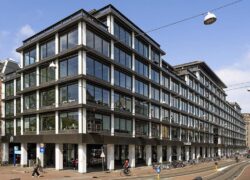
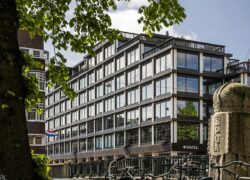
HIH Secures New Tenants for Amsterdam Office Building

HIH Invest has signed long-term leases for a total of 2,443 square metres of office space in central Amsterdam over the past six months. The property at Vijzelstraat 66–80 is now fully occupied following the agreements with three new tenants.

AMS-IX, operator of the Amsterdam Internet Exchange, has leased 1,029 square metres, while food delivery company Flink has taken 752 square metres and an international music streaming service occupies 660 square metres. The multi-tenant building offers a total of 21,083 square metres and already counts Spaces, Randstad, Angelo Gordon and Booking.com among its occupants.

“With the new leases, we were able to increase the total rent by four percent,” said Malte Wallschläger, Head of International Asset Management at HIH Real Estate. “Both yield and internal rate of return are currently well above the levels calculated when the building was acquired in 2014. We expect further growth potential, as the supply of new office space in the city centre remains very limited.”

The vacancies emerged after existing tenants adjusted their office requirements. HIH quickly brought the units back to the market with support from broker DRS Makelaars.

“The property is in a prime location in Amsterdam’s Grachtengordel, directly connected to the M52 underground line,” noted Ferenc Trexler, Senior Asset Manager at HIH in the Netherlands. “It was fully refurbished in 2014 to create modern, flexible offices with panoramic views and roof terraces that are highly valued by tenants. The new leases were signed at the top rent levels seen in the city centre.”

HIH manages a portfolio of six office buildings in Amsterdam and four logistics assets in Zwolle, Breda, Halfweg and Bleiswijk, totalling around 300,000 square metres of fully let space. Earlier this month, the company expanded its Amsterdam presence by moving into larger premises at Beethovenstraat 500.

HIH Secures New Tenants for Amsterdam Office Building

HIH Invest has signed long-term leases for a total of 2,443 square metres of office space in central Amsterdam over the past six months. The property at Vijzelstraat 66–80 is now fully occupied following the agreements with three new tenants.

AMS-IX, operator of the Amsterdam Internet Exchange, has leased 1,029 square metres, while food delivery company Flink has taken 752 square metres and an international music streaming service occupies 660 square metres. The multi-tenant building offers a total of 21,083 square metres and already counts Spaces, Randstad, Angelo Gordon and Booking.com among its occupants.

“With the new leases, we were able to increase the total rent by four percent,” said Malte Wallschläger, Head of International Asset Management at HIH Real Estate. “Both yield and internal rate of return are currently well above the levels calculated when the building was acquired in 2014. We expect further growth potential, as the supply of new office space in the city centre remains very limited.”

The vacancies emerged after existing tenants adjusted their office requirements. HIH quickly brought the units back to the market with support from broker DRS Makelaars.

“The property is in a prime location in Amsterdam’s Grachtengordel, directly connected to the M52 underground line,” noted Ferenc Trexler, Senior Asset Manager at HIH in the Netherlands. “It was fully refurbished in 2014 to create modern, flexible offices with panoramic views and roof terraces that are highly valued by tenants. The new leases were signed at the top rent levels seen in the city centre.”

HIH manages a portfolio of six office buildings in Amsterdam and four logistics assets in Zwolle, Breda, Halfweg and Bleiswijk, totalling around 300,000 square metres of fully let space. Earlier this month, the company expanded its Amsterdam presence by moving into larger premises at Beethovenstraat 500.

Mündel Trans Secures 17,000 sqm of Logistics Space in Burgkunstadt

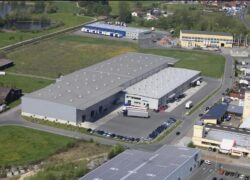
Logistics service provider Mündel Trans GmbH has leased nearly 17,000 square metres of space in Burgkunstadt, Upper Franconia, in a deal advised by integrated logistics real estate consultant Logivest. The properties, owned by Friedrich-Baur-GmbH, are located on Joseph-Weiermann-Straße 1 and Bahnhofstraße 28.

The lease includes two facilities: an 11,400 square metre warehouse on Joseph-Weiermann-Straße and a 5,400 square metre property on Bahnhofstraße, both equipped with multiple ramp gates. The sites are well connected via the nearby B289 highway, providing direct access to the company’s headquarters in Sonneberg, Thuringia, roughly 30 kilometres away.

According to Stefan Moor, Head of Industrial and Logistics Letting at Logivest in Nuremberg, the Lichtenfels district offers strategic advantages for logistics operations. “Its location at the Thuringian border and proximity to Czechia make it attractive, and the area also provides large-volume existing spaces with good links to the A70, A73 and A9 motorways,” he said.

Mündel Trans has already taken occupancy of the space.

Mündel Trans Secures 17,000 sqm of Logistics Space in Burgkunstadt

Logistics service provider Mündel Trans GmbH has leased nearly 17,000 square metres of space in Burgkunstadt, Upper Franconia, in a deal advised by integrated logistics real estate consultant Logivest. The properties, owned by Friedrich-Baur-GmbH, are located on Joseph-Weiermann-Straße 1 and Bahnhofstraße 28.

The lease includes two facilities: an 11,400 square metre warehouse on Joseph-Weiermann-Straße and a 5,400 square metre property on Bahnhofstraße, both equipped with multiple ramp gates. The sites are well connected via the nearby B289 highway, providing direct access to the company’s headquarters in Sonneberg, Thuringia, roughly 30 kilometres away.

According to Stefan Moor, Head of Industrial and Logistics Letting at Logivest in Nuremberg, the Lichtenfels district offers strategic advantages for logistics operations. “Its location at the Thuringian border and proximity to Czechia make it attractive, and the area also provides large-volume existing spaces with good links to the A70, A73 and A9 motorways,” he said.

Mündel Trans has already taken occupancy of the space.

front page info
LATEST NEWS