Prime Minister Donald Tusk addresses the nation following presidential election

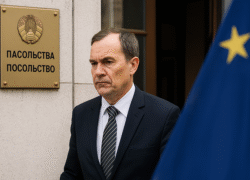
Prime Minister Donald Tusk delivered a speech today reflecting on the results of the recent presidential election. Speaking against the backdrop of the Polish and European Union flags, Tusk acknowledged the intense emotions surrounding the vote and expressed gratitude to the more than 20 million citizens who participated, underscoring their commitment to democratic principles and free elections.

“Regardless of how we view the outcome, the winner must be acknowledged and congratulated, which I do now,” Tusk stated. He also extended his appreciation to the opposing candidate for a determined campaign effort.

Tusk emphasized that the presidential election has not altered the government’s course. “I will continue, without interruption, the work we began — for a free, sovereign, secure, and prosperous Poland,” he affirmed.

He pledged cooperation with the newly elected president in accordance with the constitution and where practical, though he acknowledged that the relationship may be challenging. “A contingency plan for difficult cohabitation is prepared,” Tusk noted. He expressed openness to collaboration should the president show willingness, but stressed that the government would proceed with its agenda regardless of obstacles.

Tusk outlined key priorities for his administration, including strengthening Poland’s international standing, building a robust military and economy, supporting domestic industry, enhancing social security and state services, and addressing crime and accountability.

He called for unity within the October 15 Coalition and announced that he would soon seek a vote of confidence in the Sejm. “This will demonstrate, both domestically and internationally, that we are prepared for the challenges ahead and fully committed to our goals,” he said.

Addressing supporters of Rafał Trzaskowski, Tusk acknowledged their disappointment but urged perseverance. “In a democracy, the struggle never ends,” he concluded. “I believe in you. I believe in Poland.”

CA Immo sells Visionary office building in Prague

CA Immo has completed the sale of the Visionary office building, located in Prague’s Holesovice district. The property offers approximately 25,500 square meters of gross lettable area and generates annualized gross rental income of around €4.3 million. Including leases with future start dates, the building’s occupancy rate stands at 93%.

Keegan Viscius, CEO of CA Immo, stated: “With Visionary nearing full occupancy, we have completed our business plan for the asset. This sale allows us to leverage current market liquidity to reallocate capital and monetize future profits where further value creation would be limited under our current model.”

The transaction is part of CA Immo’s ongoing capital rotation program, aimed at concentrating its portfolio on high-quality, modern office properties in prime inner-city locations. As part of this strategy, the company is divesting assets that do not align with its core investment focus based on factors such as asset class, location, building quality, and value creation potential.

Proceeds from the sale will be used to support value-enhancing investments, including the expansion of the company’s prime development pipeline in Berlin, debt reduction, general corporate purposes, capital distributions to shareholders, or selective acquisitions should suitable opportunities arise.

CBRE acted as the commercial advisor and Dentons served as the legal advisor to CA Immo during the transaction.

Prague office rents reach record high

Rents for modern office space in Prague have reached record levels, according to a new analysis by real estate consultancy Colliers. In the first quarter of 2025, the average rent for new office buildings near metro stations increased by 3.3% year-on-year and by 6.3% over the past two years. The current average rent stands at €17.4 (approximately CZK 435) per square meter per month.

In central Prague, office space is being leased for over €30 (CZK 750) per square meter, while rents in the wider city center average €20 (CZK 500). In the outskirts, rents are around €16.50 (CZK 410) per square meter.

Colliers attributes the increase to low vacancy rates, driven by limited new office development. Prague currently has approximately 3.96 million square meters of office space, with a vacancy rate of 7%. Of the 278,000 square meters of available space, about half is in buildings completed within the past 15 years. Prague’s vacancy rate is the lowest among the capitals of Central and Eastern Europe, with larger office centers in the city reporting occupancy rates between 94% and 96%. In some areas, such as Budějovická, occupancy exceeds 99%.

Only one new office project, the first phase of the E-Factory offering 8,700 square meters, was completed in the first quarter. Two major renovation projects also commenced: the Isolda building in Pankrác and office spaces in the Kotva department store on Republic Square. By the end of 2025, four new developments totaling 17,900 square meters are expected to be completed, representing the lowest level of new construction in a decade.

“We are increasingly observing the conversion of older office buildings into residential projects,” said Josef Stanko, Director of Market Research at Colliers. “Given the acute housing shortage in Prague, this trend is economically logical but puts additional pressure on the office market. Looking ahead, the outlook is more positive, with up to nine new projects totaling 160,900 square meters expected between 2026 and 2028.”

Despite the rise in rents, demand for office space in Prague was at its lowest level since 2020 during the first quarter. Companies leased a total of 87,700 square meters, with more than half consisting of new leases. Approximately 40% were renewals of existing contracts, and around 5% were subleases.

Arvato expands healthcare logistics campus in Harsewinkel

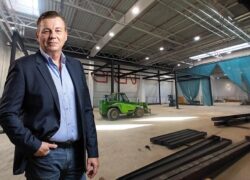
Arvato has announced the expansion of its healthcare logistics campus in Harsewinkel, Germany, continuing its investment in the sector. A groundbreaking ceremony marked the start of the new phase of development, which is expected to be completed by mid-2026. The expansion is intended to accommodate the growth of existing clients, integrate new clients, and strengthen the site’s role in the distribution of pharmaceutical and medical technology products.

The Harsewinkel campus currently spans approximately 60,000 square meters of logistics and office space across three halls, employing over 1,000 staff to manage supply chain operations across Europe.

Arvato is investing a mid-double-digit million euro sum in the project. Plans include three new modules featuring advanced logistics technologies. A new 18-meter-high refrigerated warehouse (maintaining temperatures between 2–8°C) will be constructed, alongside additional ambient storage areas (15–25°C) providing space for 22,000 pallets. The expansion will add about 20,000 square meters to the existing logistics area.

The new buildings will be equipped with photovoltaic systems delivering a total output of around 700 kWp, supporting Arvato’s goal of achieving climate neutrality by 2030. The expansion is also expected to create up to 70 new jobs.

“Harsewinkel is a key site for our healthcare business in Europe,” said Thorsten Winkelmann, President Healthcare at Arvato. “Since 2019, our revenue here has grown by an average of 15 percent per year. With current storage areas operating at around 80 percent capacity, the expansion is aimed at creating space for further growth.”

The new facilities will feature advanced automation technologies, including a fully automated pallet shuttle system. These will complement the site’s existing systems, which include AutoStore, bin shuttle, rack-to-person systems, and goods-to-person workstations with pick-by-light technology—all of which will also be expanded. Autonomous forklifts and automated container transport systems are already in operation at the site.

“Our Harsewinkel site offers efficient logistics capabilities,” added Paul Engel, Site Manager at Arvato. “We enable next-day delivery within Germany, delivery across Europe within 24 to 48 hours, and global delivery within two to four days. The expansion will ensure that we maintain high standards for the distribution of sensitive healthcare products, both domestically and internationally.”

EU records slight decline in tourism nights in the first quarter of 2025

Tourist accommodations across the European Union recorded 452.4 million overnight stays in the first quarter of 2025, reflecting a marginal decline of 0.2% compared with the same period in 2024. In January, overnight stays reached 139.0 million, representing a 3.5% year-on-year increase. February saw a decrease of 0.8% to 147.7 million nights, while March recorded 167.7 million overnight stays, down 2.7%.

The data, published today by Eurostat, are based on monthly reporting up to March 2025. The modest overall decline is attributed to calendar shifts, notably the timing of school holidays around carnival moving from February to March and the Easter holidays shifting from March to April.

Foreign visitors accounted for approximately 45.6% of all overnight stays during the first three months of 2025, although the proportion varied significantly between countries. Malta recorded the highest share of foreign overnight stays at 91.2%, followed by Cyprus (85.7%) and Luxembourg (80.4%). In contrast, foreign visitors made up a smaller share in Poland (18.6%), Romania (20.1%), and Germany (20.2%).

Overnight stays by foreign visitors increased slightly by 1.1% compared to the first quarter of 2024, while overnight stays by domestic guests declined by 1.3%. The largest increases in foreign visitor stays were observed in Latvia (+18.5%), Malta (+17.2%), and Finland (+10.6%). Meanwhile, the steepest declines were recorded in Ireland (-23.1%), Croatia (-16.7%), and Sweden (-11.5%).

Source: Eurostat

Employment, unemployment, and economic activity rates — April 2025

According to data from the Czech Statistical Office (CZSO), the unemployment rate in Czechia stood at 2.7% in April 2025. This represents a 0.1 percentage point decrease compared to April 2024.

Employment Rate

The employment rate for individuals aged 15–64 reached 75.8%, an increase of 0.9 percentage points year-on-year. The male employment rate was 81.0%, while the female employment rate stood at 70.5%.

Unemployment Rate

The general unemployment rate, defined as the proportion of unemployed individuals within the labor force (the total number of employed and unemployed persons), was recorded at 2.7%. Among men, the unemployment rate was 2.3%, while the rate for women was higher at 3.2%.

Economic Activity Rate

The economic activity rate, measuring the proportion of economically active individuals in the 15–64 age group, was 77.9%, up 0.8 percentage points compared to the previous year. The male economic activity rate was 82.9%, while the female rate was 72.9%, reflecting a 10 percentage point gap between genders.

Methodological Changes

The CZSO has transitioned from seasonally adjusted figures to trend-cycle data, providing a smoother time series and capturing only significant structural breaks, typically associated with methodological changes. “Trend-cycle figures are more suitable for year-on-year and month-on-month comparisons, offering a clearer view of labor market dynamics,” explained Dalibor Holý, Director of the Labour Market and Equal Opportunities Statistics Department.

International Comparability

The data are derived from the Labour Force Sample Survey (LFSS), conducted in private households and conforming to International Labour Organization (ILO) guidelines. These figures differ from administrative data collected by the Labour Office of the Czech Republic, which reports registered job seekers. The LFSS methodology ensures international comparability, and data are regularly submitted to Eurostat for EU-level reporting. For the broader age group of 15–74 years, the unemployment rate in Czechia was also 2.7% in April 2025.

It should be noted that the LFSS does not include individuals in collective accommodation or temporary shelters.

Historical data from 1993 onward, along with trend-cycle and unadjusted time series for employment, unemployment, and economic activity rates, are available in the accompanying tables.

Olomouc to continue negotiations with Redstone on multifunctional hall project

The City Council of Olomouc has agreed to continue negotiations with the Redstone Group regarding the construction of a planned multifunctional hall, estimated to require an investment of CZK 2.1 billion. The council approved the continuation of preliminary market consultations and the preparation of documents necessary for notifying the European Commission about public support for the project. Additionally, a memorandum outlining further cooperation with Redstone was approved.

The city has been in discussions with Redstone for some time concerning the construction and management of the proposed five-story hall. Olomouc previously attempted to develop its own hall on the site of the old ice rink, a project estimated at CZK 1.2 billion, which would have required external subsidies and operational funding from the city.

“Today’s decision allows us to continue our efforts with the city to prepare the necessary documentation for public support notification and to draft the contractual framework between the city and the investor,” said Richard Morávek, founder of Redstone.

Since 2022, the projected costs of the multifunctional hall have risen by CZK 250 million, bringing the total to CZK 2.1 billion. Alongside this, Redstone has revised the proposed annual contribution from the city, increasing it from CZK 36.9 million to CZK 43.7 million, reflecting inflation. An additional CZK 7.3 million annually is expected to come from the regional government.

The council’s resolution to continue negotiations was not supported by representatives from ProOlomouc, the Pirates, and spOLečně. The decision was passed with the support of the ANO coalition and opposition parties Spolu, SPD, and Trikolóra. Some council members raised concerns that entering a contract with the investor would commit the city to annual payments for 30 years, potentially straining the municipal budget and limiting funding for other priorities such as water management infrastructure.

Deputy Mayor Miroslava Ferancová (ANO) noted that halting negotiations would leave the city with the alternative of a costly reconstruction of the existing ice rink. “Repairing the old stadium would cost approximately the same as the annual contribution to the new hall,” Ferancová stated. She emphasized that continued consultations would provide further information, enabling the council to make a final decision after the notification process. Until then, the city remains under no contractual obligation.

The multifunctional hall is part of the broader New Velkomoravská district project being developed by Redstone. The facility is planned to host around 50 sports events annually, including 26 hockey matches, and will be used by the HC Olomouc hockey club. Plans also include 24 cultural and four social events per year. The building’s basement is designed to accommodate 1,184 parking spaces.

Source: CTK

Poland’s presidential election results signal a shift in political balance

Following a closely contested election, the National Electoral Commission announced that Karol Nawrocki has been elected President of Poland, narrowly defeating Rafał Trzaskowski with 50.89% of the vote to 49.11%. Voter turnout exceeded 71%, marking one of the highest participation rates in Poland’s recent history.

Despite facing several allegations regarding his past—many of which were not substantiated—Nawrocki prevailed over Trzaskowski, the current mayor of Warsaw, who had the backing of the ruling coalition, most major media outlets, and significant institutional support. Nawrocki’s victory prevents the consolidation of political power under Prime Minister Donald Tusk’s government, maintaining a balance between the executive and legislative branches. Had Trzaskowski won, the government would have had control over both branches, enabling broader policy shifts, including those in line with European Union initiatives. Nawrocki’s presidency introduces a counterweight that ensures continued political competition.

Poland now faces a period of cohabitation, which will require cooperation between institutions often marked by political divisions. The presidency in Poland has limited formal powers but retains important tools such as legislative vetoes and the authority to refuse nominations. This dynamic may lead to frequent conflicts between President Nawrocki and Prime Minister Tusk, potentially slowing the legislative process. Tusk’s government, despite holding a parliamentary majority, may find itself restricted to administrative governance without broader strategic influence. Meanwhile, Nawrocki is expected to become a key figure for the opposition and may act as a check on government policies, particularly regarding EU matters.

From a broader European perspective, Nawrocki’s election could complicate the European Union’s ambitions to reform its treaties, a process that would involve transferring more competencies to EU institutions and removing member-state veto powers. With Nawrocki joining other Eurosceptic leaders in countries such as Hungary, Italy, and Slovakia, efforts to advance treaty changes may face significant resistance. Nawrocki has also criticized policies like the Digital Services Act, expressing concerns about potential restrictions on freedom of expression—contrasting with Trzaskowski’s more supportive stance on EU regulations.

The current political landscape in Poland suggests a stalemate: the government lacks the political initiative for major reforms, the opposition holds no parliamentary majority, and the president’s influence is limited to blocking measures. This situation may lead to a period characterized more by political management than decisive governance. Unless the government implements substantial reforms, including fiscal tightening and regulatory simplification, it risks stagnation.

While Nawrocki has not outlined a comprehensive economic agenda, his election reflects a broader public sentiment skeptical of progressive reforms aligned with EU policies. Many voters appear to favor a political direction emphasizing national sovereignty and cultural identity. As a result, the 2025 presidential election could mark the beginning of a new phase in Poland’s political development.

Source: WEI

ATAL launches Przystań Sobieszewo residential project in Gdańsk

Nationwide developer ATAL has launched the sale of 28 residential units in its new project, Przystań Sobieszewo, located on Sobieszewska Island in Gdańsk. The development consists of 14 two-unit buildings designed in the style of modern terraced houses. Each unit will be equipped with smart home technology. Construction is scheduled for completion in the fourth quarter of 2026.

Przystań Sobieszewo aims to meet the demand for housing in areas with access to green spaces and recreational facilities while maintaining proximity to the amenities of Gdańsk. The project is intended for buyers seeking single-family-style living or those interested in a second home close to the coast.

Each unit will have a separate entrance. The low-rise buildings and layout are intended to integrate with the surrounding landscape. Ground-floor apartments will include gardens and terraces, while upper-floor units will offer balconies and terraces. Large sliding windows are planned to increase natural light and views of the surroundings. Each apartment will have a designated parking space, and the development will include bicycle storage facilities.

Units range from approximately 50 to 77 square meters. Layout options include two-room ground-floor apartments with gardens and upper-floor apartments with mezzanines. Prices range from PLN 14,800 to PLN 16,200 per square meter in the developer’s standard finish. Buyers can opt for turnkey finishing under the ATAL Design program, which offers four interior packages: Basic, Optimum, Premium, and Invest.

The smart home system from Appartme will enable residents to control room temperatures and lighting remotely and receive alerts in the event of hazards such as flooding.

The development is located on Narcyzowa Street, within a designated Protected Landscape Area. It is situated within walking distance of a sandy beach along the Gulf of Gdańsk and near the Ptasi Raj and Mewia Łacha nature reserves. The center of Gdańsk is accessible in approximately 25 minutes by car, and the S7 route via the Gdańsk Wschód junction is about 15 minutes away. The location also provides access to nearby seaside resorts along the Vistula Spit, including Jantar and Stegna.

Union Investment sells Vienna office property QBC3 to ATL Immoinvest Group

Union Investment has completed the sale of the QBC3 office building in Vienna to the Austrian-based ATL Immoinvest Group. The financial details of the transaction have not been disclosed.

The property, located in Vienna’s Quartier Belvedere Central (QBC) near the main railway station, was acquired by Union Investment in 2016 as a development project for its UniImmo: Global open-ended real estate fund. Completed in 2017, QBC3 offers approximately 8,200 square meters of rental space across eight floors, with retail and restaurant units situated on the ground floor. It is one of six buildings that form part of the larger QBC development.

Filip Rosa, Managing Director of ATL Immoinvest Group, stated: “The acquisition of QBC3 marks the beginning of our strategic expansion in the CEE real estate market. We aim to pursue further investments in prime locations with long-term potential.”

Alejandro Obermeyer, Head of Investment Management DACH at Union Investment, noted: “Through active asset management, we have increased the value of QBC3 by approximately 25 percent over a nine-year holding period. We have now taken advantage of favorable market conditions to complete this sale through a structured process.”

Legal and advisory services for the transaction were provided by Schönherr Rechtsanwälte, Vavrovsky Heine Marth Rechtsanwälte, TPA Steuerberatung, LeitnerLeitner Wirtschaftsprüfer Steuerberater, and DELTA Gruppe. CBRE Austria acted as the intermediary.

front page info
LATEST NEWS