Does the Future of Apartment Sales Belong to Artificial Intelligence?

Artificial intelligence is becoming an increasingly visible part of the residential real estate sector. From automating customer communication and creating marketing materials to analyzing buyer preferences and generating virtual tours, AI is already helping developers improve efficiency and enhance the customer experience. However, an important question remains: can technology eventually replace real estate sales professionals?

The following comments reflect the perspectives of representatives from major development companies operating in the Polish housing market.

Tomasz Kaleta, Managing Director of Sales and Marketing at Develia

Artificial intelligence will play an increasingly important role in the development industry, but in our opinion, it will not completely replace apartment salespeople or customer advisors. Buying a home is one of the most important financial and life decisions, which is why customers still expect a personalized approach, conversations with an advisor, and support at various stages of the purchasing process. Soft skills, the ability to understand customer needs, build relationships, and provide a sense of security remain particularly important today.

At the same time, AI already strongly supports marketing and sales and is used in areas such as creating visualizations, promotional materials, and data analysis. Chatbots, in turn, allow for automating initial contact with customers, answering basic questions, and supporting lead management.

We view virtual tours as a complement to the sales process, not a replacement. Customers still want to see the location, speak with an advisor, and discuss individual issues related to financing or apartment layouts.

Grzegorz Smoliński, Board Member, Dom Development

In the housing industry, AI is used, among other things, to create visualizations, 3D models, and other promotional materials, effectively building a narrative around a project. However, it cannot replace interpersonal relationships or the responsibility a salesperson assumes. Negotiations, building trust, intuition, and the ability to understand clients’ emotions remain key in real estate sales. Buying a home is a high-value decision, so many people expect a personalized approach and the support of experienced staff to guide them through the entire process.

Agnieszka Majkusiak, General Director of Sales and Marketing at Atal

AI opens up many new possibilities in terms of offer presentation, marketing, and effective audience outreach. Modeling, virtual tours, customer profiling, automation of accounting and financial processes, and the analysis of large datasets streamline sales management and improve service quality.

However, people, their skills, and personal attributes still play a key role in the purchasing process, contributing to the strength of our sales teams. Virtual advisors can assist with initial contact with the company and quickly provide essential data and information, but in the subsequent stages of the home-buying process, clients expect personal service, advice, consultations on available options, answers to questions about the investment, presentations during meetings, and participation in such crucial events as a notary visit.

Customers also want to be sure that the offer presented to them is not simply the result of algorithms, but of someone listening to their preferences and needs. Customers’ initial expectations regarding the apartment they are looking for often change as they learn more about the development, its surroundings, and the conditions that will impact their quality of life.

It is also important to emphasize that the development market is highly regulated. Strictly defined procedures apply, and knowledge, experience, and familiarity with regulations are essential. In this context, human involvement in the sales process remains indispensable.

Tomasz Stoga, CEO of Profit Development

AI will change the way we work, but it will not replace humans in the apartment-buying process. For most people, buying an apartment is the biggest financial decision of their lives. Customers want to talk, ask questions, clear up doubts, and feel secure. Even the most advanced algorithm cannot provide this.

At Profit Development, we use AI-based tools to accelerate teamwork, better analyze customer needs, and respond to questions more quickly. AI helps increase efficiency, but it does not replace relationships. The modern market requires modern solutions, but when buying an apartment, face-to-face contact remains essential. Customers still buy from people, not algorithms.

Mariusz Gajżewski, Head of Sales, Marketing and Communication, BPI Real Estate Poland

Artificial intelligence already supports the real estate industry in areas such as data analysis, offer personalization, communication automation, and market analysis. Virtual tours and modern digital tools help customers learn more quickly about investments and streamline the sales process.

However, AI will not replace interpersonal relationships, which remain crucial in the apartment-buying process—one of the most important financial decisions in a customer’s life. This is why an advisor’s experience, trustworthiness, and personalized approach remain essential.

Zuzanna Potrzebta, Commercial Director at Eco Classic

Artificial intelligence will not replace interpersonal contact. Professions in which human interaction provides a sense of security and engages with the physical and emotional aspects of a person will never be replaced by AI.

Witold Kikolski, Member of the Management Board, MS Waryński Development S.A.

Artificial intelligence will certainly play an increasingly important role in apartment sales, but it is difficult to expect it to completely replace advisors or agents. Buying a home remains one of the most important financial and life decisions, which is why customers still expect direct contact, a personalized approach, and support throughout the entire purchasing process.

AI effectively supports sales today by helping with offer presentations, handling initial inquiries, analyzing customer needs, and facilitating apartment selection through virtual tours and visualizations. However, the best results are achieved by combining modern technologies with professional, personal service, as humans remain irreplaceable in building trust, negotiating, and making the final decision.

Joanna Chojecka, Sales and Marketing Director for Warsaw, Wrocław, and Łódź at Robyg Group

Artificial intelligence and new technologies already support apartment sales, but they will not completely replace interpersonal relationships. Buying a home is one of the most important financial decisions in life, which is why customers still expect personalized contact, professional advice, and a sense of security.

AI is a significant aid in analyzing customer needs, personalizing offers, automating communication, and preparing marketing materials. Virtual tours and online presentations are also playing an increasingly important role, helping customers during the initial apartment selection process. However, soft skills, relationship building, negotiations, and customer support throughout the purchasing process remain areas where humans continue to play a key role.

Karolina Bronszewska, Marketing and Innovation Director, Ronson Development

From a marketing and innovation perspective, we view AI and digital tools primarily as support for the sales process, not as solutions that could replace humans. Technology plays a crucial role today, especially in the early stages of the customer journey—in online campaigns, websites, property search engines, apartment configurators, 3D models, and virtual tours. Its primary purpose is to facilitate customer access to information, improve understanding of investments, and help narrow down choices.

At the same time, purchasing an apartment remains one of the most important life and financial decisions. Therefore, at this crucial stage of the sales process, the role of an advisor remains irreplaceable. Today, customers expect not only data and technology but also conversation, understanding, answers to questions, and a sense of security when making decisions.

We develop technological solutions because we see their real business value, including in data analysis, communication personalization, apartment recommendations, and the automation of repetitive processes. This allows sales teams to operate more effectively and focus on what matters most: advice, relationships, and building trust.

Therefore, we see the future of apartment sales as a hybrid model. Companies that can effectively combine modern technologies with high-quality customer service will gain a competitive advantage.

Małgorzata Porzezińska, Sales Director at Archicom

Artificial intelligence will not replace apartment salespeople or agents, but it will certainly change their role. AI tools are increasingly taking over the most repetitive and technical tasks, such as data analysis, pre-selection of offers, and appointment scheduling. This makes the apartment search process faster and more efficient.

The same applies to virtual tours. They do not sell apartments on their own, but they help customers during the initial review of offers. They allow buyers to eliminate properties that do not meet their expectations without leaving home, saving time for both customers and advisors.

The final decision to purchase a property, which for many people is one of the most important decisions of their lives, almost always requires thorough analysis.

Conclusion

The responses from developers reveal a clear consensus: artificial intelligence is becoming a valuable tool that enhances many aspects of apartment sales, including marketing, customer service, data analysis, communication automation, and virtual property presentations. AI can streamline processes, improve efficiency, and help customers access information more quickly.

However, the industry remains firmly convinced that technology will complement rather than replace human sales professionals. Purchasing a home is one of the most significant financial and emotional decisions in a person’s life. Building trust, understanding individual needs, providing expert guidance, negotiating terms, and offering reassurance throughout the purchasing journey are areas where human interaction continues to be essential.

The future of apartment sales is therefore likely to be a hybrid model, where artificial intelligence handles routine and data-driven tasks, allowing sales advisors to focus on what they do best: building relationships and helping customers make informed decisions with confidence.

Source: Dompress.pl & edited by CIJ.World

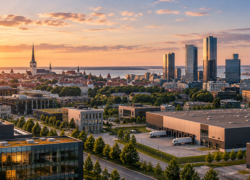
Photo: Apartamenty Portowa Krakow, Matexi Polska

Poland Moves to Tighten Oversight of Real Estate Brokerage Sector

The Polish government has taken the first step toward introducing new rules for the country’s real estate brokerage industry, advancing a legislative proposal aimed at increasing transparency, strengthening consumer safeguards and improving standards across the residential property market.

The draft legislation has been added to the government’s legislative agenda, formally launching the process that could lead to significant changes in how brokerage services are provided and supervised. The proposal remains at an early stage and will still require consultation, regulatory review and parliamentary approval before any new measures can take effect.

The planned reforms are designed to address concerns surrounding consumer protection during property transactions, which are often among the largest financial commitments made by households. Officials argue that greater clarity regarding the responsibilities of brokers and the services they provide would improve confidence in the market and reduce the risk of disputes.

Among the proposed changes is the introduction of clearer obligations for brokers when handling property transactions. Real estate professionals would be required to conduct more comprehensive checks of properties before bringing them to market, ensuring that key legal and factual information has been properly reviewed.

The government is also seeking to address potential conflicts of interest within the brokerage process. One of the measures under consideration would prevent brokers from receiving remuneration from both parties involved in the same transaction, a practice that has generated debate within the industry in recent years.

Marketing practices are another focus of the proposed legislation. The draft aims to establish clearer rules governing property advertisements, including requirements regarding the source of listings and the relationship between brokers and property owners. The objective is to improve transparency for buyers and sellers by making it easier to understand who is responsible for a particular offer.

The reforms would also expand the supervisory powers of consumer protection authorities. Regulators would be given broader authority to examine whether brokerage firms are complying with legal requirements, properly informing clients about services and adhering to professional standards. Financial penalties could be imposed in cases where violations are identified.

Industry observers note that the proposal represents one of the most significant attempts to reshape Poland’s brokerage market since the sector was substantially liberalised more than a decade ago. Unlike some Western European countries, where real estate professionals are subject to licensing systems and formal qualification requirements, the Polish proposal focuses primarily on market conduct, transparency and consumer protection.

The initiative also reflects broader developments across Europe, where regulators have increasingly focused on improving transparency in residential property transactions. Several countries have introduced reforms in recent years aimed at clarifying commission structures, strengthening disclosure requirements and improving protections for buyers and sellers.

For Poland’s residential market, the legislation could lead to changes in agency business models, advertising practices and client relationships. Supporters argue that the measures will improve trust and professionalism across the sector, while critics may raise concerns about additional compliance obligations and operational costs.

As the draft moves through the legislative process, it is expected to generate considerable discussion among brokers, developers, consumer organisations and property market participants. The outcome could influence not only how brokerage services are delivered, but also how residential transactions are conducted across one of Central Europe’s largest housing markets.

Demographic Trends May Create Winners and Losers in Slovakia’s Future Housing Market

Residential property has long been regarded by many Slovaks as one of the safest ways to preserve and build wealth. However, economists and investment analysts are increasingly warning that long-term demographic changes could reshape housing demand across the country and lead to growing differences between regional property markets.

While Slovakia’s housing sector continues to perform strongly today, supported by limited supply and steady buyer demand, experts argue that population trends may become one of the most important factors influencing future property values.

The country is facing a gradual ageing of its population, accompanied by lower birth rates and continued migration towards economically stronger regions. Similar developments are already affecting housing markets in several European countries, where some cities continue to attract residents and investment while smaller towns and less dynamic regions struggle to maintain population levels.

According to analysts, these demographic shifts are unlikely to trigger a nationwide decline in property values. Instead, they are expected to create a more fragmented market in which location becomes increasingly important for long-term investment performance.

Western Slovakia continues to attract the strongest population growth, particularly in areas surrounding Bratislava and Trnava. Employment opportunities, infrastructure improvements and proximity to major economic centres have supported demand for housing in these regions and helped sustain price growth.

By contrast, some districts in central and eastern Slovakia have experienced population losses over the past decade. In these locations, a shrinking pool of potential buyers could eventually place pressure on housing demand, particularly if younger residents continue moving to larger urban centres.

Industry observers note that housing prices often react differently to changes in supply and demand. Strong demand can support gradual price increases over time, while weakening demand combined with rising housing availability may lead to sharper market adjustments. This dynamic has been observed in several European regions facing long-term demographic decline.

At the same time, current market conditions remain favourable for many property owners. Official data show that residential prices across Slovakia have continued to rise over the past year, with particularly strong growth recorded in major urban areas. This suggests that demographic challenges are unlikely to have a significant short-term impact on the market.

The debate has also renewed discussion about investment diversification. Financial advisers increasingly encourage households to avoid concentrating all of their wealth in a single asset class or geographic location. While property remains an important component of many investment strategies, experts argue that long-term financial security is often strengthened through broader portfolio diversification.

European demographic forecasts indicate that ageing populations will become a defining economic challenge across much of the continent over the coming decades. As a result, housing markets may become more dependent on local economic performance, migration patterns and employment growth than on national trends alone.

For investors, the message is not that residential property is losing its appeal. Rather, analysts suggest that future success may depend less on owning real estate itself and more on choosing locations capable of attracting residents, businesses and long-term economic activity.

As demographic trends continue to reshape Europe, Slovakia’s housing market may increasingly reflect a divide between regions benefiting from population growth and those facing a gradual decline in demand.

Mortgage Market Faces Turning Point as Buyers Watch for Lower Borrowing Costs

Europe’s mortgage market is entering a period of renewed uncertainty as banks, homebuyers and property investors assess how recent monetary policy decisions and easing geopolitical tensions could shape borrowing costs over the coming months.

The European Central Bank raised its benchmark interest rates by 25 basis points in June, citing renewed inflationary pressure linked largely to higher energy prices. At the same time, policymakers acknowledged that economic growth across the euro area is slowing, creating a more complex outlook for future monetary policy. As a result, financial markets remain divided over whether further rate increases will be needed later this year. Recent comments from ECB officials suggest additional tightening remains possible, although any future decisions will depend on inflation and economic data.

The changing outlook has become particularly relevant for prospective homebuyers and homeowners approaching the end of fixed-rate mortgage periods. After several years of rapidly rising borrowing costs, many market participants believe mortgage pricing may be approaching a turning point, although significant differences remain between European countries.

Mortgage rates are influenced by a range of factors beyond central bank policy. Banks also consider funding costs, government bond yields, competitive pressures and their own lending strategies when pricing home loans. As a result, changes in official interest rates are not always reflected immediately in mortgage offers.

Recent ECB data show that borrowing costs for new housing loans across the euro area increased during the spring, although movements differed depending on the length of the fixed-rate period. Longer-term mortgage products generally remained more stable than shorter-term loans, highlighting the varied response of lenders to changing financial conditions.

The property market has also shown signs of resilience despite higher financing costs. Limited housing supply in many European cities continues to support residential prices, while improving labour markets and steady wage growth have helped sustain buyer demand. Industry analysts note that any meaningful reduction in mortgage rates could further strengthen competition for available housing, particularly in markets already facing supply shortages.

Recent geopolitical developments have also altered market expectations. Easing tensions in the Middle East and declining oil prices have reduced immediate concerns about further inflationary shocks. While this has improved investor sentiment, economists caution that energy markets remain vulnerable and that inflation risks have not disappeared entirely.

For borrowers, the coming months could present both opportunities and challenges. Competition among lenders may gradually improve financing conditions, particularly if wholesale funding costs stabilise. However, experts advise against assuming that mortgage rates will decline automatically, as banks continue to balance funding costs with economic uncertainty and regulatory requirements.

Across Europe, housing affordability remains one of the property sector’s biggest challenges. Higher construction costs, limited residential supply and elevated financing expenses have constrained many first-time buyers over the past two years. Although borrowing conditions may gradually become more favourable, analysts expect affordability pressures to remain a defining feature of the market.

For households considering purchasing property or refinancing an existing mortgage, financial advisers recommend monitoring both central bank decisions and individual lenders’ pricing strategies. While official interest rates provide an important signal, the most competitive mortgage offers are ultimately determined by market competition and each bank’s appetite for new lending.

As the second half of the year begins, the European mortgage market appears to be moving from a period of rapid tightening toward one where financing conditions become increasingly dependent on inflation, economic growth and competition between lenders rather than on monetary policy alone.

Europe’s Rising Temperatures Put Energy Networks and Real Estate Under Pressure

Recent periods of extreme heat across Europe are drawing renewed attention to the relationship between energy infrastructure, digitalisation and the built environment, as governments, investors and businesses assess how to prepare for a more energy-intensive future.

Higher temperatures have increased demand for cooling across residential, commercial and industrial buildings, placing additional strain on electricity networks in several European markets. At the same time, some forms of energy generation have faced operational challenges linked to prolonged heat and drought conditions, highlighting the growing importance of resilient infrastructure.

For the real estate sector, these developments are reinforcing a broader shift in priorities. Alongside sustainability targets and environmental certifications, investors and occupiers are placing greater emphasis on how buildings perform during periods of extreme weather and how efficiently they manage energy consumption.

The issue extends beyond traditional property sectors. The rapid growth of artificial intelligence and cloud computing is accelerating demand for data centres, which are becoming some of the largest consumers of electricity in many markets. As a result, access to reliable power capacity is increasingly influencing investment decisions, site selection and development strategies across Europe.

In a growing number of locations, the availability of electrical infrastructure is becoming as important as transport connections, labour availability and land supply. Developers are increasingly competing for sites capable of supporting future energy requirements, while operators are seeking locations where grid capacity can accommodate long-term expansion plans.

This trend is also reshaping industrial and logistics real estate. Facilities are becoming more technologically advanced and energy dependent, while occupiers are seeking buildings that can deliver lower operating costs and greater resilience against fluctuations in energy prices and supply.

At the policy level, the discussion around climate action is increasingly intertwined with concerns about economic competitiveness and energy security. Governments across Europe are accelerating investment in electricity networks, renewable energy generation and storage capacity, recognising that future economic growth will depend heavily on access to affordable and reliable power.

For commercial property owners, these developments are creating new opportunities as well as new challenges. Buildings that combine energy efficiency, modern technical systems and resilience to extreme weather are expected to attract stronger occupier demand and maintain their value more effectively over time.

The ageing of Europe’s building stock adds further urgency. Many existing properties were not designed for prolonged periods of high temperatures and may require significant upgrades to cooling systems, insulation, ventilation and energy management technologies. This is likely to generate growing demand for refurbishment and repositioning projects across office, retail, residential and industrial sectors.

Urban planning strategies are also evolving. Cities are increasingly incorporating green infrastructure, water-retention systems, shading measures and climate-adaptation features into development frameworks as they seek to reduce the impact of extreme weather on residents and businesses.

The combination of rising temperatures, expanding digital infrastructure and growing electricity demand is creating a new investment landscape for Europe. Increasingly, the competitiveness of cities, business parks and individual assets will depend not only on location and quality, but also on their ability to operate efficiently and reliably in a more demanding energy environment.

As climate risks and technological transformation continue to converge, the ability to deliver resilient, energy-efficient real estate is becoming a defining factor for the next generation of property development and investment.

Source: CIJ EUROPE Analysis Team

FM Logistic Expands Operations at CTPark Bucharest

CTP is expanding the facility occupied by FM Logistic at CTPark Bucharest by an additional 10,300 sqm, increasing the logistics operator’s footprint across CTP’s Romanian portfolio to approximately 116,000 sqm.

The new warehouse space is being developed at CTPark Bucharest in Dragomirești Vale, west of Bucharest. FM Logistic currently occupies 23,800 sqm at the park. Construction has already commenced, with completion scheduled for the third quarter of 2026.

The expansion follows CTP’s acquisition in 2023 of FM Logistic’s Romanian logistics portfolio through a sale-and-leaseback transaction. The portfolio comprised more than 100,000 sqm of warehouse space located in Bucharest, Pitești and Timișoara. Since acquiring the assets, CTP has continued to invest in the sites while maintaining FM Logistic as a tenant.

According to the companies, the additional space will support FM Logistic’s growing operations in the Bucharest region and accommodate increasing demand from customers across multiple sectors.

Founded in France in 1967, FM Logistic provides warehousing, transport and supply chain services to customers in industries including fast-moving consumer goods, retail, beauty and cosmetics, industrial manufacturing and healthcare. The company has operated in Romania since 2003.

CTPark Bucharest is located near the A1 motorway and serves as a distribution hub with access to Bucharest and the wider Romanian transport network. The industrial park is designed to accommodate logistics, warehousing and last-mile delivery operations.

The latest expansion further strengthens the long-term relationship between the two companies and reflects continued occupier demand for modern logistics space in the Bucharest market.

Fewer Slovaks Took Holiday Trips in 2025 as Financial Pressures Weighed on Travel

The number of Slovak residents taking holiday trips declined in 2025, with domestic travel proving more resilient than outbound tourism as financial concerns continued to influence consumer behaviour.

According to data published by the Statistical Office of the Slovak Republic, approximately 2.9 million residents aged 15 and over took at least one overnight leisure trip during the year, representing 64.5 percent of the population. While this was only a modest decline of 1.3 percent compared with 2024, travel participation remained significantly below pre-pandemic levels, with around 470,000 fewer travellers than in 2019.

The figures indicate a shift in travel patterns, with more Slovaks choosing to holiday exclusively within the country. Domestic-only travel increased by 7.3 percent year-on-year to 1.31 million people, making it the only travel category to record growth. These travellers accounted for nearly 45 percent of all holidaymakers in 2025.

By contrast, the number of residents combining domestic and international trips fell by 9 percent to just over 1 million people. International travel also weakened overall. Around 1.6 million Slovaks travelled abroad during the year, either exclusively or alongside domestic trips, representing a decline of more than 7 percent compared with 2024.

The number of people travelling exclusively abroad also decreased, although at a slower pace. Approximately 577,000 residents took foreign-only holiday trips, down 4.2 percent year-on-year. Despite the decline, this segment remained slightly above its pre-pandemic level.

Domestic tourism continued to play a central role in the travel market. Nearly 2.4 million residents took at least one trip within Slovakia during 2025, either as a standalone domestic holiday or combined with international travel. However, domestic participation remained substantially below 2019 levels, highlighting that the sector has yet to fully recover from the disruptions of recent years.

Age demographics also influenced travel activity. Residents aged between 25 and 44 remained the most active travellers, accounting for more than 1.1 million holidaymakers. Meanwhile, travel participation among seniors continued to decline. The number of travellers aged 65 and older fell by 8 percent year-on-year to fewer than 362,000 people and remained more than one-quarter below pre-pandemic levels.

At the same time, the number of residents who did not take any holiday trip increased. Around 1.6 million Slovaks, representing 36 percent of the adult population, did not participate in overnight leisure travel during 2025. This figure was 3 percent higher than a year earlier and approximately 45 percent above the level recorded in 2019.

Financial constraints emerged as the primary obstacle to travel. Half of all non-travellers cited cost-related reasons for staying home, with the number of people reporting financial barriers rising by roughly 25 percent compared with the previous year. Health concerns remained the second most common reason, accounting for nearly one-third of non-participants. Family-related reasons also became more prominent, with the number of people citing family commitments increasing by around 40 percent year-on-year.

The latest results suggest that while demand for leisure travel remains relatively strong, economic pressures continue to influence consumer decisions. Slovaks are increasingly prioritising domestic destinations and limiting more expensive international travel, reflecting broader concerns about household budgets and affordability.

Summer Heat Raises Questions Over Food Deliveries to Parcel Lockers

The rapid expansion of parcel locker networks across Europe has transformed last-mile deliveries, but food safety experts are warning that high summer temperatures may make standard collection boxes unsuitable for many food products.

As heatwaves become more frequent, specialists caution that enclosed parcel lockers exposed to direct sunlight can reach temperatures far above the outside air, potentially affecting the quality, nutritional value and safety of temperature-sensitive goods.

The warning comes as consumers increasingly order groceries, snacks, dietary supplements and beverages online alongside traditional retail products. While most retailers continue to transport chilled and frozen foods using temperature-controlled logistics, a growing number of shelf-stable products are being delivered to standard self-service lockers.

Food industry representatives note that although these products may not require refrigeration under normal conditions, prolonged exposure to excessive heat can still alter their quality. Chocolate products can soften or melt, baked goods may become damp inside sealed packaging, and nut-based products can deteriorate more quickly when exposed to high temperatures.

Some nutritional supplements are also vulnerable. Products containing probiotics, vitamins or gelatin may lose effectiveness if stored in hot conditions for extended periods. Fermented beverages, including kombucha, may continue to develop pressure inside sealed bottles when exposed to heat, increasing the risk of packaging failure.

The issue is not limited to the Czech Republic. Food safety authorities and consumer organisations across several European countries have issued seasonal guidance encouraging consumers to avoid leaving temperature-sensitive goods in uncontrolled environments during periods of extreme heat. Maintaining an uninterrupted temperature chain remains one of the key principles for preserving food quality and reducing the risk of bacterial growth.

The challenge reflects the broader growth of online grocery shopping across Europe. Parcel lockers have become an important part of urban logistics networks, with thousands of new collection points installed in recent years. However, most standard lockers were designed for general e-commerce rather than products requiring controlled storage conditions.

The logistics industry has already begun responding to changing consumer habits. Retailers and delivery companies in several European markets are expanding the use of refrigerated collection points and temperature-controlled click-and-collect solutions for groceries and pharmaceutical products. These systems allow customers to collect purchases while maintaining appropriate storage conditions until pickup.

Consumers are also being encouraged to consider alternative delivery options during hot weather. Home delivery using refrigerated vehicles, collection from air-conditioned retail locations or refrigerated pickup points may offer better protection for products that are sensitive to temperature fluctuations.

As climate change contributes to longer and more intense summer heatwaves across Europe, experts expect the issue to receive increasing attention from retailers, logistics operators and food manufacturers. The continued growth of online grocery shopping is likely to accelerate investment in temperature-controlled last-mile infrastructure, helping ensure that convenience does not come at the expense of product quality or consumer safety.

Source: CTK & CIJ EUROPE Analysis Team

Ukraine Shifts Focus from Wartime Survival to Long-Term Institutional Renewal

As the war continues, Ukraine is increasingly turning its attention from emergency management to the long-term reforms needed to support reconstruction, attract investment and strengthen its path toward deeper integration with Western institutions.

The latest assessments released by the Organisation for Economic Co-operation and Development (OECD) highlight progress across several key areas, including infrastructure planning, public administration and the justice system. Together, the reviews paint a picture of a country attempting to modernise core institutions while simultaneously responding to the challenges of an ongoing conflict.

The findings suggest that Ukraine’s recovery will depend not only on rebuilding damaged infrastructure but also on creating the institutional foundations necessary to support economic growth, private investment and public confidence in the years ahead.

One of the most significant challenges remains reconstruction financing. International estimates place the country’s recovery needs at approximately USD 588 billion over the next decade, a figure that far exceeds the resources currently available through public budgets and international aid programmes. This has reinforced the view among international organisations that private capital will be essential to rebuilding efforts.

According to the OECD, improving the quality of project preparation, procurement processes and investment planning will be critical to attracting long-term investors. The organisation argues that reconstruction projects must be financially viable, technically robust and supported by transparent decision-making if they are to secure financing from both public and private sources.

The reviews also underline the importance of strengthening legal certainty and institutional credibility. Despite the disruption caused by the war, Ukraine has continued implementing reforms aimed at improving judicial oversight, public administration and anti-corruption measures. International observers note that maintaining momentum in these areas will be essential for creating a stable environment for businesses and investors.

Governance reforms have become increasingly linked to Ukraine’s broader international ambitions. Efforts to align public institutions with European standards are progressing alongside the country’s aspirations for closer integration with both the European Union and the OECD. Recent discussions with international partners have placed particular emphasis on the effectiveness of public institutions, the rule of law and administrative capacity.

The OECD also points to the need for stronger coordination across government, arguing that reconstruction will require a clear strategic framework capable of linking national priorities, public spending and long-term development objectives. Ensuring that ministries and public agencies work toward common goals is viewed as a key factor in delivering reconstruction projects efficiently and transparently.

Infrastructure remains at the centre of the recovery agenda. Transport networks, energy systems, water infrastructure and digital connectivity are all considered essential for restoring economic activity, improving living standards and enhancing competitiveness. However, international experts increasingly emphasise that rebuilding physical assets alone will not guarantee long-term success.

Financial institutions including the World Bank, European Bank for Reconstruction and Development and European Investment Bank have repeatedly stressed that institutional quality will play a decisive role in determining reconstruction outcomes. Transparent governance, predictable regulations and efficient public administration are widely regarded as prerequisites for unlocking large-scale private investment.

The OECD reviews therefore suggest that Ukraine’s reconstruction challenge extends beyond bricks and mortar. While repairing damaged infrastructure remains a priority, the country is simultaneously engaged in a broader effort to modernise the institutions responsible for managing economic development.

For investors, developers and infrastructure companies watching the market, the message is clear: future opportunities will depend not only on reconstruction funding but also on the strength of the governance systems overseeing its deployment. As Ukraine plans for the next phase of its recovery, institutional reform is emerging as a central component of the country’s long-term economic strategy.


Cities Increasingly Borrow Successful Policies from One Another to Tackle Urban Challenges

Cities around the world are increasingly looking beyond their borders for solutions to some of their most pressing challenges, according to a new OECD study that examines how local governments adopt and adapt successful policies developed elsewhere.

The report, A Toolkit for Adopting Ideas from Other Cities, highlights a growing trend among municipalities to draw on proven approaches from peer cities when addressing issues such as housing affordability, climate resilience, mobility, infrastructure development and social inclusion. Rather than designing programmes entirely from scratch, city leaders are increasingly seeking inspiration from initiatives that have already demonstrated results in other locations.

The OECD notes that urban authorities are operating under mounting pressure. Housing shortages, ageing infrastructure, environmental risks and widening social inequalities are placing increasing demands on local governments at a time when many face financial and administrative constraints. As a result, city administrations are becoming more focused on identifying solutions that can be implemented more quickly and with lower levels of uncertainty.

Research conducted for the study found that nearly four out of five surveyed cities had either adopted or attempted to adopt at least one idea originating elsewhere during the past five years. Environmental programmes, urban planning initiatives, infrastructure projects and transport solutions were among the most commonly replicated policy areas.

The findings suggest that borrowing ideas has become a mainstream component of urban policymaking. However, the report also reveals that transferring successful initiatives from one city to another is rarely straightforward. Only 42 percent of surveyed municipalities reported fully implementing borrowed ideas, while many others introduced only selected elements or remained at pilot-project stage.

According to the OECD, this reflects the reality that policies rarely function as simple templates. Cities must adapt initiatives to local legal frameworks, governance structures, budgets, demographics and political priorities. Successful implementation often requires substantial modification rather than direct replication.

The report highlights examples from cities across Europe, North America, Latin America, Africa and Asia that have adapted external concepts to local circumstances. In Greece, local authorities explored international approaches to social housing while responding to affordability pressures. In Tanzania, municipal leaders drew inspiration from waste-management practices developed elsewhere in Africa. In the United States, cities adapted housing and social-service programmes first pioneered in other jurisdictions.

One of the study’s central conclusions is that political leadership remains the most important factor determining whether an external idea can be successfully implemented. Strong support from elected officials helps secure resources, mobilise administrative teams and maintain momentum throughout implementation. Cities that treat knowledge-sharing as a structured process rather than an occasional exercise were found to be more successful in adapting ideas to local needs.

The OECD also found that city networks play an increasingly important role in facilitating policy exchange. Digital platforms and international urban partnerships have significantly expanded opportunities for municipalities to learn from one another, regardless of geographic location. These networks allow city officials to share experiences, evaluate outcomes and avoid repeating costly mistakes already encountered elsewhere.

The report argues that effective policy adoption requires three key stages. First, cities must build internal capacity to identify and evaluate external ideas. Second, they need robust mechanisms to assess whether those ideas are compatible with local conditions. Finally, they must adapt and implement selected initiatives while engaging residents, stakeholders and public institutions throughout the process.

For urban policymakers, the OECD’s message is clear: the future of city innovation will increasingly depend not only on creating new ideas, but also on identifying, adapting and improving solutions that have already proven effective elsewhere. As urban challenges become more complex and interconnected, international collaboration among cities is emerging as an important tool for accelerating progress and improving public outcomes.

Source: OECD, A Toolkit for Adopting Ideas from Other Cities (2026)

front page info
LATEST NEWS