Thursday, 24 September 2026
Residential property has long been regarded by many Slovaks as one of the safest ways to preserve and build wealth. However, economists and investment analysts are increasingly warning that long-term demographic changes could reshape housing demand across the country and lead to growing differences between regional property markets.
While Slovakia’s housing sector continues to perform strongly today, supported by limited supply and steady buyer demand, experts argue that population trends may become one of the most important factors influencing future property values.
The country is facing a gradual ageing of its population, accompanied by lower birth rates and continued migration towards economically stronger regions. Similar developments are already affecting housing markets in several European countries, where some cities continue to attract residents and investment while smaller towns and less dynamic regions struggle to maintain population levels.
According to analysts, these demographic shifts are unlikely to trigger a nationwide decline in property values. Instead, they are expected to create a more fragmented market in which location becomes increasingly important for long-term investment performance.
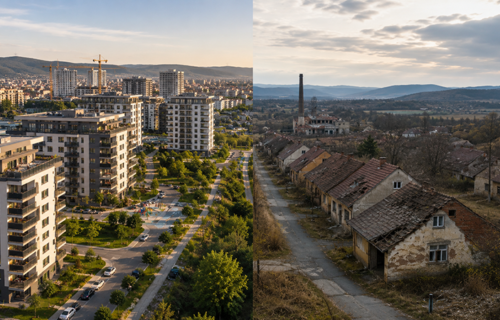
Western Slovakia continues to attract the strongest population growth, particularly in areas surrounding Bratislava and Trnava. Employment opportunities, infrastructure improvements and proximity to major economic centres have supported demand for housing in these regions and helped sustain price growth.
By contrast, some districts in central and eastern Slovakia have experienced population losses over the past decade. In these locations, a shrinking pool of potential buyers could eventually place pressure on housing demand, particularly if younger residents continue moving to larger urban centres.
Industry observers note that housing prices often react differently to changes in supply and demand. Strong demand can support gradual price increases over time, while weakening demand combined with rising housing availability may lead to sharper market adjustments. This dynamic has been observed in several European regions facing long-term demographic decline.
At the same time, current market conditions remain favourable for many property owners. Official data show that residential prices across Slovakia have continued to rise over the past year, with particularly strong growth recorded in major urban areas. This suggests that demographic challenges are unlikely to have a significant short-term impact on the market.
The debate has also renewed discussion about investment diversification. Financial advisers increasingly encourage households to avoid concentrating all of their wealth in a single asset class or geographic location. While property remains an important component of many investment strategies, experts argue that long-term financial security is often strengthened through broader portfolio diversification.
European demographic forecasts indicate that ageing populations will become a defining economic challenge across much of the continent over the coming decades. As a result, housing markets may become more dependent on local economic performance, migration patterns and employment growth than on national trends alone.
For investors, the message is not that residential property is losing its appeal. Rather, analysts suggest that future success may depend less on owning real estate itself and more on choosing locations capable of attracting residents, businesses and long-term economic activity.
As demographic trends continue to reshape Europe, Slovakia’s housing market may increasingly reflect a divide between regions benefiting from population growth and those facing a gradual decline in demand.