Düsseldorf logistics and industrial property market records average performance in 2025, big-box leasing leads activity

The Düsseldorf industrial and logistics property market delivered a broadly average performance in 2025, with demand concentrated in large-scale warehouse units and existing stock, according to data from REALOGIS Unternehmensgruppe, a German advisory firm specialising in industrial and logistics real estate and commercial land. Total take-up reached 299,000 square metres, representing a year-on-year decline of around six percent compared with 319,500 square metres in 2024, but remaining close to the five-year average of just over 300,000 square metres.

Market activity was supported by several large transactions, with the five biggest leases accounting for 42 percent of overall take-up. Among the most significant deals were lettings by Goodcang, GV Logistik, Nordlicht, Tecpro and one unnamed e-commerce occupier, each securing facilities of 20,000 square metres or more.

Rental levels showed no movement during the year. Prime rents stood at €8.25 per square metre at the end of 2025, unchanged from 2024, while average rents remained stable at €7.00 per square metre. Despite the lack of annual growth, both indicators continued to sit above their respective five-year averages, reflecting the structural tightening seen in previous years.

Leasing activity was primarily driven by existing space, which accounted for 172,400 square metres, or 58 percent of the total volume. Transactions involving refurbished or previously occupied buildings therefore remained the backbone of the market. At the same time, interest in new-build properties developed on former brownfield sites increased noticeably, reaching 88,600 square metres and almost one-third of total take-up. In contrast, activity in greenfield developments declined sharply to 38,000 square metres, less than half the previous year’s figure. The increase in existing and brownfield space was not sufficient to offset the contraction in greenfield projects, resulting in a modest overall decrease in annual take-up. Throughout the year, Düsseldorf continued to function predominantly as a tenant-led market, with no recorded owner-occupier transactions.

In terms of property types, large “big-box” logistics facilities dominated demand. These assets accounted for more than 210,000 square metres of leased space and represented over 70 percent of total take-up, making them the only segment to record year-on-year growth. Business parks, by contrast, experienced a significant reduction in activity, while smaller mixed or secondary property types also lost share compared with 2024.

From a sector perspective, logistics and distribution companies were the most active occupiers, generating more than half of all leased space and more than doubling their take-up compared with the previous year. Manufacturing occupiers also expanded, posting a strong increase and exceeding their longer-term average levels. Retail and wholesale operators moved in the opposite direction after an exceptional surge in 2024, with volumes falling sharply in 2025. Within this segment, e-commerce remained the dominant driver, while traditional retail formats accounted for a smaller proportion of transactions. Other user categories continued to play only a limited role in overall demand.

The structure of deals highlighted a continued preference for large-scale units. Transactions of more than 10,000 square metres once again shaped the market, accounting for roughly 70 percent of all space leased and recording a notable increase compared with 2024. Mid-sized and smaller units saw reduced activity across most size bands, while very small spaces below 1,000 square metres remained marginal.

Overall, the Düsseldorf logistics and industrial property market in 2025 was characterised by stable rental conditions, strong demand for large distribution facilities and a clear shift away from greenfield developments towards existing buildings and brownfield regeneration. Total tenant take-up amounted to 299,000 square metres, with prime and average rents holding steady at €8.25 and €7.00 per square metre respectively.

Regional office markets record higher leasing activity and lower vacancy in 2025

Office markets in Poland’s main regional cities recorded increased leasing activity and limited new development in 2025, according to the “Regional Office Markets 2025” report published by AXI IMMO. Total take-up in Kraków, Wrocław, the Tricity, Katowice, Łódź, Szczecin and Lublin reached approximately 770,000 square metres, while new supply fell to about 20,000 square metres. Modern office stock across these markets amounted to 6.72 million square metres, and the average vacancy rate declined to 16.9 percent, marking the first year-on-year decrease in several years.

AXI IMMO analysts indicate that tenant decisions are increasingly long-term and quality-driven, with greater emphasis on energy efficiency, accessibility and flexible layouts. Net take-up totalled around 370,000 square metres, including new leases, expansions and owner-occupied space. Among the largest transactions were Shell’s lease renewal of nearly 23,000 square metres at the DOT Office complex in Kraków and Motorola Solutions’ re-leasing of more than 17,000 square metres at Green Office in the same city. One of the larger new agreements was Warta’s lease of approximately 8,600 square metres at Grundmanna Office Park A in Katowice.

“In 2025, companies increasingly focus on office efficiency — optimising leased space and seeking locations that offer strong connectivity, access to services and the ability to scale operations flexibly. In many cities, we observed growing interest in higher-standard buildings, reflecting a broader trend of modernising office stock. Tenant activity was strongest in the fourth quarter, which accounted for 32% of the annual leasing volume. Renegotiations and renewals accounted for 52% of total activity. The highest leasing volumes were recorded in Kraków, Wrocław and Tricity, while IT, business services and manufacturing remained the most active take-up sectors,” said Emilia Trofimiuk, Research Manager at AXI IMMO.

The limited volume of new completions was linked to higher financing costs and cautious development strategies. The largest building delivered during the year was the Stella Office project in Kraków, providing close to 10,000 square metres. At the same time, approximately 240,000 square metres of office space remained under construction, primarily in Poznań and Kraków, with most projects scheduled for delivery in 2026.

The reduction in development activity contributed to a moderate decline in vacancy rates across regional markets. Katowice and Wrocław reported the highest availability levels, while Szczecin and Lublin recorded the lowest. Despite these differences, asking rents in most cities remained broadly stable, generally ranging between €8 and €18.50 per square metre per month.

“Katowice and Wrocław continue to record the highest vacancy rates among regional cities. In contrast, Szczecin and Lublin stand out with the lowest availability levels, which translates into narrower rental ranges and greater rent stability,” Trofimiuk added.

Looking ahead, AXI IMMO expects leasing volumes in regional markets to remain relatively stable, with potential shifts in tenant structure. “In the coming years, we expect take-up across regional markets to remain stable, although its sectoral structure may gradually evolve. The share of BPO/SSC companies may decline, while manufacturing and consumer-driven sectors are likely to gain importance. This diversification of take-up sources may enhance regional markets’ resilience to economic fluctuations and contribute to a more balanced distribution of tenant activity across cities. At the same time, the limited pipeline of new development projects and the growing importance of flexible lease formats, such as serviced offices and coworking, will shape the structure of available supply in the medium term. Owners of assets with higher vacancy levels are increasingly analysing alternative use scenarios, including residential, student housing or medical conversions, which may further contribute to qualitative supply selection across regional markets,” said Karolina Słysz, Head of Regional Markets, Office Agency at AXI IMMO.

According to the report, regional office markets are expected to continue operating with limited new supply in 2026. Combined with steady demand, this may result in further gradual vacancy declines, with leasing activity driven mainly by small and medium-sized tenants and a continued prevalence of lease renewals and renegotiations.

AXI IMMO expands office advisory team in southern Poland

AXI IMMO has expanded its Office Agency team in southern Poland, adding new staff in its regional offices in Katowice, Kraków and Wrocław. The company said the changes are intended to strengthen its presence outside Warsaw and improve support for companies undertaking office projects in regional markets.

“In 2026, we will continue to expand our office team beyond Warsaw and reinforce our presence in southern Poland. This is a deliberate operational decision aimed at being closer to our clients and responding more efficiently to companies executing office projects outside the capital. Alongside further strengthening our regional and Warsaw-based teams, we are also focusing on optimising internal processes to continuously enhance service quality and further develop our office sector advisory offering. All of these initiatives form part of our long-term strategy for growth in the office advisory segment,” said Tomasz Michalczyk, Head of Office Agency at AXI IMMO.

Karolina Słysz has joined the firm as Head of Regional Markets within the Office Agency team. She has around ten years of experience in commercial real estate, primarily in tenant representation and lease advisory, and previously worked for international advisory firms. Elżbieta Golik has joined as Associate Director. She has more than eight years of experience in commercial property advisory and focuses on tenant representation and transaction management.

AXI IMMO also reported internal changes within its Warsaw office team. Filip Kowalski joined as Associate Director, bringing experience in office and warehouse leasing as well as tenant representation. Anna Piłka-Sutkowska was promoted to the role of Advisor after previously working as a coordinator and later transitioning into brokerage. Natalia Majsterek has taken over the position of Office Department Coordinator while continuing postgraduate studies in management.

According to the company, these staffing changes follow a year of increased transaction activity and are part of a broader plan to develop advisory capacity in both regional and Warsaw markets.

Seqoy to lease space at Panattoni Business Park Prague Airport II

Seqoy, a Czech distributor of comic books, manga and genre literature, has agreed to lease space in a newly planned building at Panattoni Business Park Prague Airport II near Pavlov in the Kladno district. The company has operated in the local industrial zone since 2021 and is relocating to larger premises in response to higher demand and expanded logistics requirements. Construction of the new hall is scheduled to begin in March, with completion planned for early 2027. The development is being built by Panattoni and financed by the Accolade group.

Seqoy will occupy more than 3,300 square metres of warehouse space and around 300 square metres of office area. The remaining 5,200 square metres in the building will be available to other tenants. The company distributes publications for several Czech publishers and manages logistics and distribution for a wide range of genre titles on the domestic market.

“The comic book market has been growing and professionalizing for a long time, so larger and more modern premises are key for us to further increase the efficiency of storage and distribution—not only of comics and manga. Today, bookstores naturally expect fast delivery of new releases, but above all, continuous and reliable replenishment of individual titles. This places high demands on logistics, warehouse data management, and order processing speed. Investing in modern logistics technologies will enable us to use our warehouse more efficiently, increase inventory turnover, and provide overall better service to our business partners,” said Jiří Pavlovský, CEO of Seqoy.

The new building is planned to meet BREEAM New Construction “Excellent” environmental standards and will include LED lighting, energy-management systems, charging facilities for electric vehicles and heating based primarily on heat pumps.

“We are delighted that the successful Panattoni Business Park Prague Airport II zone continues to grow. Personally, I am very pleased when our clients share the innovative and sustainable approach that we have been applying in construction for a long time. This is also the case with Seqoy, which has chosen additional space in this excellently located industrial park for its expansion,” said Jan Andrejco, Regional Director of Panattoni.

“The fact that Seqoy is expanding here confirms for us that the complex enables companies from a variety of industries to grow. And we are delighted that it is now a representative of the creative world. At the same time, it is a nice example of how logistics is changing. Today, it is no longer just a matter of ‘transporting something somewhere’, but of fast, accurate and continuous replenishment of goods, including titles where there is a large selection and frequent orders. It is precisely for such operations that the combination offered by the park makes sense: a strategic location, modern technology, and high standards of sustainable construction,” added Jiří Stránský, Head of Development at Accolade.

Panattoni Business Park Prague Airport II currently provides close to 130,000 square metres of industrial and logistics space across several buildings. The site is located near exit 7 of the D6 motorway, offering road connections to Prague and western Czech regions, as well as proximity to Václav Havel Airport and access to public transport for employees.

Optimising Real Estate Operations: Technology and Innovation in Development

Property developers are increasingly introducing technological and process-driven solutions to streamline apartment sales, improve day-to-day operations and enhance long-term asset management in response to changing market conditions. These measures range from digital sales platforms, virtual viewings and automated customer-relationship systems to smart-building technologies, data-driven maintenance planning and integrated property management software. By combining operational efficiency with improved transparency and customer experience, developers aim to reduce costs, shorten transaction cycles and maintain competitiveness while adapting their business models to evolving buyer expectations and regulatory requirements. Here are their comments on the topic.

Agnieszka Majkusiak, General Director of Sales and Marketing at Atal

This year, the share of ready-made flats in the company’s offer will be significant, which in the coming months will focus our promotional and marketing activities on their attractive presentation. Last year was a period of organisational changes in our customer service departments, so we are well prepared for market challenges. At the end of December, we presented changes to the Atal Design finishing programme. We have optimised its packages, updated the list of available materials and reduced the prices of the packages, making this programme even more attractive to customers. We have also recently launched a referral programme, through which we reward existing and new flat buyers.

Tomasz Kaleta, Managing Director for Sales and Marketing at Develia

We entered 2026 with a land bank allowing for the construction of 16,000 units, including those developed as part of joint ventures and secured. This base gives us great flexibility in launching new investments.

In line with our strategy, we are focusing on residential projects in the popular segment with wide price availability. We will supplement our offer with investments in the elevated and premium segments to respond to the market needs of different customer groups.

At the same time, we are expanding our offering with variant flats, which are already available in the Bemowo Vita project in Warsaw, the premium Królowej Jadwigi investment in Poznań and Orawska Vita in Wrocław. This year, we plan to introduce them in further projects in Katowice and Wrocław. Variant flats are equipped with additional installation risers, allowing customers to choose the layout at the time of purchase and to rearrange it more easily in the future.

Joanna Chojecka, Sales and Marketing Director for Warsaw, Wrocław and Łódź at the Robyg Group

In response to the changing situation on the residential property market in Poland, we are consistently adapting our strategy by implementing modern technological, organisational and pro-environmental solutions. One of the key areas of development is the further digitalisation of our housing offer. We are developing the Smart House standard, which allows residents to manage energy, heating and lighting using mobile applications. These solutions not only increase the comfort of use of the flats, but also allow for a real reduction in operating costs, which is important in the context of rising energy prices.

Sustainable development and the implementation of ESG principles are also an important part of the company’s strategy. We carry out investments in line with the idea of green construction, using energy-efficient technologies, photovoltaic panels, LED lighting and solutions that support water retention and biodiversity. Projects are increasingly planned in line with the ‘15-minute city’ concept, which responds to residents’ needs for convenience, accessibility of services and quality of life in cities.

In the area of management and operations, the company focuses on professionalising processes and diversifying its activities. We are developing cooperation with institutional investors within the framework of joint ventures, which allows us to implement larger projects and increase the scale of our operations while limiting risk. At the same time, the company is expanding its land bank in the largest Polish agglomerations, thus securing the possibility of further development in the coming years.

Adapting to changes in demand, the company is also developing its range of rental flats and responding flexibly to the needs of different customer groups. An important element of the strategy is also the digitisation of customer service, including through online panels and remote management of the apartment purchase process. All these activities show that the company focuses on innovation, operational efficiency and long-term resilience to market changes.

Andrzej Swoboda, Vice-President of the Management Board, CTE Group

In 2026, we are focusing on optimisation and quality, not just scale. We plan to implement more flexible flat layouts that can be adapted to changing needs, solutions that increase energy efficiency and reduce operating costs, and the digitisation of sales and customer service processes.

In the area of investment management, we are focusing on better data analytics, more accurate demand forecasting and more efficient schedule and cost management. This is our response to a market that rewards predictability and quality of execution.

Karolina Bronszewska, Marketing and Innovation Development Director, Ronson

This year, we are focusing on strengthening our presence in the digital space, as we can clearly see that the process of choosing a flat is increasingly starting online, without the involvement of sales offices. One of our key directions is more advanced and systematic management of brand visibility in search engines, especially in the context of new investments and locations where we are developing our business. We are integrating our communication, image and sales activities to create a single, coherent mechanism for reaching customers at the stage when they are looking for information about the developer, the investment or the surroundings of a given location.

We focus on advisory content that guides customers through the entire process of selecting and purchasing a flat. We present specific solutions, including functional flat layouts, the role of the architect, building amenities and the quality of common areas.

We want the recipient to be able to better imagine everyday life in a given investment and make decisions based on knowledge, not just technical parameters. This is also the purpose of our experts’ statements, which are presented in interesting, modern formats on social media.

Marcin Michalec, Managing Director, Okam Capital

In response to the dynamically changing market, in 2026 we plan to launch the Prestia Senior Residences investment in Łódź. In addition, F.S.O. PARK, which, given the scale of the project, will allow for the introduction of solutions that cannot be implemented in small investments.

In times of growing competition and high supply on the market, additional value in the form of well-thought-out architecture, developed social infrastructure and high-quality common spaces, which are conducive to building long-term relationships with residents, is becoming increasingly important, which fits in perfectly with the company’s long-term strategy. We focus on quality, creating spaces for living, not just for housing. Lengthening administrative procedures related to new regulatory requirements, including the shelter law and planning reform, are forcing developers to involve their legal and design teams more closely in the preparatory processes.

In addition, observing industry trends, we see that developers are increasingly investing in advanced digital tools – from 3D visualisations and virtual tours to interactive flat configurators. New-generation CRM systems and analytical tools based on market data help companies better understand customer needs and plan their sales strategies more precisely. Today’s customers expect not only price transparency, but also efficient, personalised service throughout the entire purchasing process.

Witold Kikolski, Member of the Management Board of MS Waryński Development S.A.

In 2026, we are focusing primarily on adapting existing processes and standards to current market conditions, rather than implementing groundbreaking innovations. We are developing technological solutions that improve the energy efficiency of buildings and optimise operating costs, which is becoming increasingly important for individual customers.

In the area of management, we are focusing on improving tools that support budget and implementation schedule control in order to increase project stability, improve their profitability and better adapt our offer to current market conditions.

Rafał Konarski, President of the Management Board of CK Development

In the current reality, a flexible approach to designing the offer is key. We focus on functional apartment layouts, rational floor space and solutions that allow customers to tailor the standard to their financial capabilities. We are already implementing this approach in practice in new projects, both in the second stage of Nova Wola Park and in projects being prepared on new plots in Wiązowna and Falenty, where we are assuming flexible apartment layouts and the possibility of phasing the offer from the outset.

At the same time, we are investing in the optimisation of construction and sales processes. CK Development is now entering a new phase of development. We are focusing on consistent digitisation and professionalisation of processes. Solutions that are standard for large, nationwide brands represent a significant organisational challenge for a company with our roots, but at the same time a natural step towards further growth. We have just launched a new website, and we have more implementations ahead of us, including interactive mock-ups and digital tools to support sales. This is part of a broader transformation, thanks to which we are transforming from a local company into an increasingly recognisable and mature player on the development market.

Damian Tomasik, President of the Management Board of Alter Investment S.A.

In 2026, we are building an operational advantage. We are implementing standardisation of due diligence and matrices of legal, planning and environmental risks, better tools for analysing absorption capacity and stronger project data management.

In practical terms, this means faster investment decisions, fewer errors at the preparation stage and greater predictability of the schedule. We are also developing a partnership approach – joint ventures and capital cooperation where this shortens the time to monetisation and project and reduces risk. Today, innovation in Polish property development is not about ‘gadgets’. Innovation is about efficient process management, delivering decisions and delivering the product on time.

Mariusz Gajżewski, Head of Sales, Marketing and Communication, BPI Real Estate Poland

In 2026, we are increasing our focus on integrating sustainable solutions into our future investments: photovoltaic panels, green roofs, rainwater retention systems, electric car charging stations – these are already standard in our latest projects, such as PianoForte, Chmielna Duo, Panoramiqa and Bernadovo.

Source: dompress.pl

Oil Prices Hold Firm as Geopolitics Offset Oversupply Concerns, February Report Shows

Global oil markets remained resilient at the start of 2026, with crude prices holding near multi-month highs despite persistent worries about excess supply, according to the February edition of the Oil Market Monthly Report by Kamco Invest.

The report notes that benchmark prices climbed more than ten percent since the beginning of the year, supported largely by geopolitical tensions in the Middle East and Eastern Europe. Ongoing negotiations between the United States and Iran over nuclear capabilities, coupled with military posturing in the region and continued sanctions affecting Russian exports, added a risk premium to crude markets. At the same time, renewed Venezuelan export flows and a sharp rise in U.S. inventories during early February moderated some of the upward pressure.

Average Brent crude traded in the mid-to-high USD 60s per barrel during January, marking the strongest monthly average in roughly five months. While several forecasting agencies have slightly revised their near-term price outlooks upward to reflect recent strength, medium-term projections remain more conservative, with many institutions expecting prices to ease gradually into 2027 as supply growth re-enters the market.

On the demand side, the global outlook remains divided between major forecasting bodies. The Organization of the Petroleum Exporting Countries continues to project robust consumption growth of roughly 1.4 million barrels per day this year, driven primarily by emerging economies. In contrast, the International Energy Agency expects slower expansion of under one million barrels per day, citing economic uncertainty and higher price sensitivity. China’s consumption growth is increasingly scrutinised as domestic demand indicators soften, while India is projected to continue setting new records for refined fuel use despite short-term fluctuations.

Supply dynamics also shifted at the start of the year. Worldwide production declined in January following severe winter weather disruptions in North America and operational setbacks in Kazakhstan, where technical incidents temporarily curtailed output at major fields. Additional reductions were recorded across several OPEC+ members, including Russia and Venezuela, partly linked to infrastructure attacks and sanctions. Overall global supply slipped by more than one million barrels per day month-on-month, reversing part of the growth seen late last year.

Within the OPEC group, crude production fell to its lowest level in several months as most member states reported lower output. Only a handful of producers, including Iran and Kuwait, registered marginal increases. Despite the drop, the cartel retains significant spare capacity, with Saudi Arabia alone accounting for roughly two million barrels per day of potential additional supply. Market participants are watching closely for signals that OPEC+ could resume incremental production hikes after the current pause expires later in the first quarter.

Looking ahead, analysts’ price expectations for Brent crude remain clustered in the low-to-mid USD 60 range through mid-2026, with forecasts widening later in the year depending on the balance between geopolitical risk and renewed production growth. The report concludes that while immediate supply disruptions and political uncertainty continue to underpin prices, longer-term stability will depend on whether anticipated increases in output materialise and how strongly emerging markets sustain demand growth.

PORR launches ‘SmartStreet’ research project using AI to analyse recycled construction materials

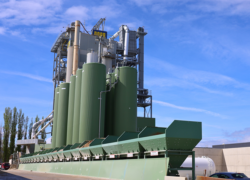
Construction group PORR has begun a research project called “SmartStreet” in cooperation with the University of Innsbruck to examine how artificial intelligence can be used to predict the performance of asphalt and concrete mixtures containing recycled materials. The initiative aims to improve the reuse of construction waste and support more efficient material selection in infrastructure projects.

Using recycled aggregates in asphalt and concrete can reduce emissions and limit the extraction of natural resources, but higher recycling content can also alter mechanical properties such as strength and durability. Until now, these effects have largely been assessed through laboratory testing, requiring multiple sample mixtures and time-consuming evaluations.

The SmartStreet project seeks to address this by training a neural network to estimate the mechanical characteristics of asphalt and concrete based on the type and proportion of recycled components used. The research runs from October 2025 to October 2028 and is supported by Austria’s Research Promotion Agency (FFG). According to PORR, the system is designed to incorporate additional datasets over time, allowing the model to improve as more test results become available.

“To our knowledge, this is the first research project of its kind,” said PORR CEO Karl-Heinz Strauss, noting that the objective is to increase the circular use of construction materials and make recycled products more suitable for practical applications.

Strauss added: “Virtually every construction project, especially in civil engineering, requires different concrete mixes. The situation is similar with asphalt. Of course, we strive to achieve both the optimal mix for the application and the best possible recycling content. We see great potential in AI to make the process more efficient and generate insights for future construction projects. At the same time, we have the opportunity to incorporate future results and contributions from other partners.”

PORR states that it currently produces around 1.5 million tonnes of recycled construction material across its operations and operates an asphalt plant in Vienna capable of high recycling rates. The SmartStreet initiative forms part of the company’s broader sustainability and innovation programme, which focuses on reducing emissions and promoting circular use of building materials.

The environmental impact of construction materials remains a significant issue globally. Cement production, a key component of concrete, accounts for a notable share of worldwide greenhouse gas emissions due to its energy-intensive manufacturing process. In Austria alone, more than 12 million cubic metres of concrete were produced in 2024, underlining the scale of the sector and the potential effect of improved recycling practices.

DIW Berlin study calls for independent monitoring of nuclear fusion research

A new study by the German Institute for Economic Research (DIW Berlin) concludes that nuclear fusion remains distant from practical use in the energy sector despite decades of public investment. The report argues that while large publicly funded research institutions continue to pursue long-term ambitions of building fusion power plants, private companies are increasingly concentrating on specialised technologies with nearer-term commercial applications.

According to the authors, many private firms are directing their efforts toward components such as advanced magnets, laser systems and related industrial technologies that can be applied in areas including medicine and manufacturing. These developments, the study notes, often have clearer short, and medium-term business potential than the construction of full-scale fusion reactors.

“Nuclear fusion is not an energy issue, but rather an innovation policy issue,” said Christian von Hirschhausen, DIW Fellow in the Energy, Transport and Environment Department and one of the study’s authors. “Most private companies are not working on the realisation of a fusion power plant, but on the commercialisation of niche products.”

The research compares several private-sector companies with major publicly funded projects using a newly developed evaluation framework. The analysis shows a widening gap between public programmes, which often project timelines extending beyond mid-century, and private initiatives that operate on shorter innovation cycles. The authors suggest that this divergence warrants a reassessment of how public funds are allocated.

“German research policy should not be geared towards the goal of building the world’s first fusion power plant, but should instead promote the innovative strength of private companies,” said Charlotte Dering of the Technical University of Berlin, a co-author of the study. Alexander Wimmers, another contributor, added that “public funds should be targeted at technologies with short-term potential for use, regardless of the energy use of nuclear fusion.”

The study proposes the introduction of regular independent monitoring of fusion research to evaluate the effectiveness and risks of continued public financing. Such a mechanism, the authors argue, would provide a more objective basis for long-term funding decisions.

Claudia Kemfert, head of DIW Berlin’s Energy, Transport and Environment Department, said the findings indicate that “nuclear fusion has been announced for ‘in a few years’ for decades, but is not expected to contribute to energy supply or the energy transition in the foreseeable future. The sector has long been an innovation-driven field of technology whose economic prospects are based more on specialised niche products than on a functioning power plant, and thus primarily on competition for research funding.”

Source: DIW Berlin

Ringier Axel Springer Polska extends lease at Signum Work Station in Warsaw

Ringier Axel Springer Polska has extended its lease at the Signum Work Station office complex in Warsaw’s Mokotów district for a further four years. The company has occupied space in the building since 2019 and currently uses close to 12,000 square metres of office area.

Ringier Axel Springer Polska operates a range of media, technology and digital service businesses in Poland, including news portals, print publications, e-commerce platforms and mobile applications. The group also develops publishing and advertising technologies used by media organisations in several international markets.

The lease extension, signed at the beginning of 2026, allows the company to remain at Signum Work Station until the end of 2029. Its offices are located on the ground floor and the 4th, 5th and 6th floors of the building. CBRE represented the tenant in the negotiations, while JLL advised the owner.

“We believe that a well-designed workspace fosters collaboration and creativity. Our office offers a variety of zones: for focused work, meetings and team activities. We also have a large event space, a cozy café, areas dedicated to relaxation and exercise, as well as our own recording studio and podcast room. The decision to remain in this location was therefore a natural one, and the negotiations were conducted in a constructive and partnership-driven atmosphere. We are also pleased that the new building owner is investing in the further development of this location. We look forward to continuing our fruitful cooperation,” said Edyta Serafin, Procurement & Administration Director at Ringier Axel Springer Polska.

According to TriGranit, which manages the property, the building has undergone technical and sustainability-related upgrades in recent years, including the introduction of dual power supply systems and a shift toward renewable energy sources. The office complex holds a BREEAM “Excellent” environmental certification.

Market advisors involved in the transaction noted that lease renewals accounted for a significant share of office activity in Warsaw’s Służewiec area in 2025, reflecting a preference among tenants to remain in modernised buildings rather than relocate.

Signum Work Station is located on Domaniewska Street in Mokotów’s business district and offers more than 32,000 square metres of leasable office space across seven above-ground floors, along with underground parking and ground-floor retail and service units. The building was acquired by DRFG in late 2024 and is currently owned by the CREIF fund and DRFG Investment Group, with TriGranit responsible for leasing and asset management.

INVESTIKA Expands into Germany in Joint Venture with Unibail-Rodamco-Westfield

INVESTIKA Real Estate Fund is entering the German property market through the planned acquisition of an 89.9 percent stake in the Höfe am Brühl shopping centre in Leipzig. The agreement has been signed as a joint venture with Unibail-Rodamco-Westfield Germany, which will retain a minority shareholding and continue to provide both asset and property management services. The closing of the transaction is expected in the first half of 2026.

The move represents the fund’s sixth market entry in Europe and broadens its geographic footprint while strengthening its retail segment. Following completion, the fund is expected to hold 65 assets across several countries, further diversifying its portfolio by both location and asset class. The share of retail properties within the portfolio will increase accordingly.

“The acquisition of Höfe am Brühl will strengthen our strategic objective to increase the Fund’s exposure to high-quality retail assets. It is a robust and established asset in one of Germany’s fastest-growing regional markets. The joint-venture with Unibail-Rodamco-Westfield, the recognised specialist in shopping-centre management, provides us with strong operational continuity and expertise,” comments Jaroslav Kysela, Member of the Board of Directors at INVESTIKA Investment Company, which manages INVESTIKA Real Estate Fund.

Unibail-Rodamco-Westfield confirmed that it views the partnership as aligned with its current asset strategy in Germany. “We are pleased to announce the sale of a major stake of Höfe am Brühl in Leipzig to Investika. We are looking forward to this partnership and the promising future of the centre. This step is closely in line with our previously communicated strategic focus on our core owned assets in Germany,” says Martin Makovec, Managing Director, M&A, Unibail-Rodamco-Westfield Central Europe.

Höfe am Brühl is located between Leipzig’s main railway station and the city’s primary shopping street and serves a catchment area of approximately 800,000 residents. The centre comprises around 50,500 square metres of retail space across approximately 130 units, with anchor tenants including Bershka, Pull&Bear, Müller, Media Markt, H&M and Lidl. In addition to retail, the complex includes roughly 4,900 square metres of office space, 31 residential apartments and 820 parking spaces. The asset holds both DGNB Platinum and BREEAM Excellent sustainability certifications.

Environmental performance forms a central element of the investment rationale. The property operates on 100 percent renewable electricity, uses LED lighting and incorporates energy-efficient systems, while electric-vehicle charging points are available in the parking facilities. Many tenants have also signed green lease agreements, aligning with INVESTIKA’s long-term focus on sustainable assets designed to deliver stable returns.

Explaining the strategic motivation behind the German expansion, Kysela notes that market conditions and diversification goals played a decisive role. “INVESTIKA Real Estate Fund is one of few Czech investors that is entering the German real estate market. Driven by our diversification strategy and the pursuit of optimal transaction conditions, we are expanding into Germany, one of Europe’s most mature markets. Despite its overall stability, a recent price correction in the commercial sector presents a strategic opportunity, making this acquisition a logical fit for a high-quality, diversified portfolio,” he comments. He adds that partnering with established local operators reduces risk exposure and opens access to financing relationships with major German banks. “Our German market entry in joint-venture with experienced partners minimises our exposition towards risk. It is our favourite way of cooperation proven in our previous acquisitions, which we wish to continue. Last but not least, our German market entry enables us to cooperate with prestigious German banks.”

INVESTIKA Real Estate Fund was advised on the transaction by Dentons, Ernst & Young, Drees & Sommer and Knight Frank, while Unibail-Rodamco-Westfield Germany was represented by Norton Rose Fulbright.

front page info
LATEST NEWS