Prices of New Prague Apartments Continue to Climb, Average Exceeds CZK 176,000 per Square Metre

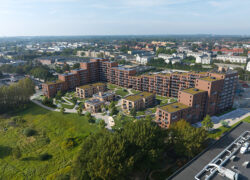
Newly built apartments in Prague continued to rise in price toward the end of last year, with the average asking level in residential projects exceeding 176,000 Czech crowns per square metre during the final quarter. Compared with the previous three-month period, values increased by just under three percent, according to market data compiled by a consulting firm that tracks housing developments across the city.

The highest prices were again recorded in the historic centre and neighbouring districts, where new homes reached well above 200,000 crowns per square metre on average. Central locations have long attracted the strongest demand due to limited supply and proximity to services and transport links. In contrast, most outer districts posted more moderate levels, with one area in the southeast of the city registering a small quarterly decline.

The figures underline a long-term upward trend in the capital’s new-build market. Over roughly the past decade, the typical price of a newly constructed apartment has multiplied several times, interrupted only briefly by periods of slower growth when borrowing costs rose and buyer activity softened.

At the same time, the number of active development schemes increased slightly, while the overall pool of unsold units shrank as smaller projects entered the market and previously launched buildings continued to sell. Larger domestic developers remained among the most visible suppliers in terms of available listings.

Smaller and mid-sized flats accounted for the majority of new offerings and transactions. These units tend to attract both first-time buyers seeking more affordable entry prices and investors looking for rental opportunities. Separate surveys conducted by leading residential developers have pointed to similar pricing levels at the end of the year, alongside steady sales volumes despite the continued rise in asking prices.

Source: Deloitte

Slovakia Activates Oil Emergency Measures and Releases Strategic Reserves to Support Refinery Operations

Slovakia’s government has activated emergency procedures in the oil sector after a halt in crude deliveries through a key pipeline route that runs across Ukrainian territory. The measure, approved by the cabinet, is intended to stabilise domestic fuel supply and ensure continued operation of the country’s main refinery near Bratislava.

As part of the decision, the state will make a portion of its strategic petroleum reserves available to the Slovnaft refinery on a temporary basis. Officials indicated that the volume released should allow the plant to continue operating at a reduced level for several weeks while alternative delivery channels are arranged. The oil is to be returned to national reserves at a later date under agreed financial guarantees.

The disruption in pipeline flows has limited the refinery’s access to its usual source of raw material, forcing it to scale back production and seek other import options. One of the alternatives under consideration is increased use of a southern route linking Slovakia to ports on the Adriatic Sea, although transport costs on that corridor are reported to be significantly higher.

Company representatives said tankers carrying crude have already been ordered and that a return to full output is expected once regular supply lines are restored or replacement shipments arrive. In the meantime, one of the refinery’s processing units has been shut down and another is running below normal capacity.

The government described the emergency status as a temporary step designed to prevent shortages on the domestic market. The arrangement allowing the refinery to draw from state stocks is expected to remain in effect for several months, depending on how quickly stable import routes can be secured.

At the same time, Slovakia and Hungary have appealed to European authorities to permit the use of maritime deliveries of Russian oil via existing pipeline infrastructure in Croatia, arguing that the interruption of pipeline transit has created an exceptional situation. European officials have yet to issue a final decision on the request.

Polish Military Introduces Restrictions on Chinese-Made Vehicles at Defence Sites

Poland’s armed forces have introduced new access rules for vehicles produced in China at selected military sites, citing concerns related to the potential collection of sensitive information through in-car digital systems. The decision follows an internal security assessment and is described by the military as a preventive step aimed at protecting defence infrastructure and communications.

Under the new measures, cars manufactured by Chinese brands or containing Chinese-origin electronic systems may be refused entry to restricted military areas. Exceptions can be made if specific technical features are disabled and additional safeguards are applied in line with local security procedures. The restrictions do not apply to facilities that are open to the public, such as medical centres or recreational venues located on military grounds.

In parallel, service-issued mobile phones are no longer permitted to connect to multimedia or connectivity systems in these vehicles while on duty. Military officials indicated that the policy is intended to reduce the risk of unintended data transmission and mirrors precautionary practices used by other allied defence organisations.

The move does not represent a nationwide ban on Chinese automobiles in civilian use, nor does it affect private ownership. It is limited to access and device-connection rules within designated defence locations.

Opteamic Group obtains NEN 4400-2 certification and starts operations in the Netherlands

Opteamic Group, a Polish employment agency, has launched operations in the Netherlands and obtained NEN 4400-2 certification, a compliance standard required by many companies operating in the Dutch labour market. The certification confirms compliance with local regulations concerning employment legality, tax and social security payments and financial transparency, allowing the company to cooperate with Dutch businesses.

“The Netherlands is a natural direction of expansion for the Opteamic Group. This market is one of the largest in Europe in terms of demand for employees in sectors in which we have many years of experience, such as recruitment for logistics, manufacturing, technology companies and the automotive industry. Our entry into this market was preceded by a process of adapting our operating procedures to local requirements and an audit that resulted in the award of NEN 4400-2 certification,” said Jakub Kizielewicz, CEO of Opteamic.

The NEN 4400-2 certificate is widely used in the Netherlands as a verification standard for employment agencies and contractors. It covers the legality of employing posted workers, the correctness of tax and social contribution settlements and financial reliability. For clients, it is intended to reduce legal and tax risks and facilitates cooperation with local partners.

“From the very beginning, we have been building our Dutch project based on local standards and compliance requirements. The NEN 4400-2 certificate is confirmation of this. We want to be a long-term partner that provides our clients with full operational and tax security,” Kizielewicz added.

Operationally, the company has begun activities using two models: recruitment services for Dutch employment agencies that hire candidates directly, and a temporary employment agency model under which Opteamic supplies workers to clients in the Netherlands and manages payroll, coordination and accommodation.

Target sectors include logistics and warehousing, manufacturing, automotive, engineering and metallurgy, with roles such as welders, CNC operators, mechanics and fitters. The company reports that it has signed its first contracts in technical, automotive, logistics and manufacturing segments.

Over the next two to three years, Opteamic plans to build a client portfolio in the Netherlands among both local agencies and end users, gradually increasing recruitment volumes and temporary staffing operations. Activities in the Dutch market are supported by structures in Poland, with decisions regarding a permanent local office dependent on business growth and client demand.

“Entering the Dutch market is part of a broader strategy to internationalise the Opteamic Group’s operations. Our key differentiator is our recruitment experience, including advanced sourcing, candidate pre-selection, verification of professional experience and process organisation. This responds to customer needs in terms of employment legality, competence requirements and business partner stability,” Kizielewicz said.

Opteamic Group specialises in mass and specialist recruitment as well as temporary staffing for logistics, manufacturing and automotive companies, providing services adapted to local regulatory and compliance requirements.

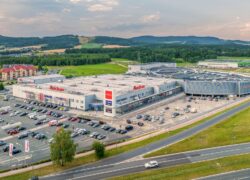
Galeria Sudecka Adds Gym and Signs Lease Agreements Covering Nearly 1,900 sqm

Galeria Sudecka in Jelenia Góra, managed by EPP, has expanded its tenant mix with the opening of a new gym and the signing and extension of lease agreements covering almost 1,900 sqm of retail space.

A key addition is Fit Style, a fitness club that has opened in the centre, introducing a regular-use service that operates beyond standard shopping hours. According to Magdalena Małycha, Asset Manager at EPP, the presence of a gym can increase daily footfall and encourage customers to combine exercise with other errands, creating additional opportunities for cross-shopping within the scheme.

Fit Style offers cardio, strength and functional training zones, adding to the centre’s service and lifestyle offer. The move reflects a broader trend of shopping centres incorporating health and fitness operators as part of their tenant mix.

The retail offer has also been strengthened by the arrival of Rituals Cosmetics, an international beauty brand specialising in body and face care products, as well as home items. Medicine, a Polish fashion brand known for artist collaborations and casual collections, has extended its lease and relocated to a unit twice the size, operating under its updated store concept. Wakacje.pl, a travel agency brand active in the Polish market, has also renewed its lease and moved into a larger space with a revised concept.

In the coming months, KODANO Optyk will join the centre, offering eye examinations and a range of prescription glasses and sunglasses.

The new openings and extensions form part of Galeria Sudecka’s ongoing strategy to diversify its tenant structure and strengthen its role as a retail and service destination in the Jelenia Góra region.

Catella Advises DWS on DKK 1 Billion Refinancing of Bakkekæret Residential Project

Catella Debt Advisory has advised DWS and CaNk Property Holding on the refinancing of the Bakkekæret residential development in Herlev, Denmark. The refinancing totals approximately DKK 1 billion and follows the completion and leasing of the project.

Bakkekæret comprises 445 rental apartments designed to serve a range of tenant groups, including singles, couples, families and seniors. The development was delivered with sustainability and digital infrastructure targets, receiving DGNB Platinum certification as well as WiredScore Platinum certification for connectivity standards.

After the project reached operational stabilisation, Catella Debt Advisory supported the owners in arranging a refinancing structure intended to align with the asset’s income profile and adjust its capital structure. According to the company, the transaction reflects continued lender interest in large-scale residential assets in the Copenhagen area, particularly those meeting environmental criteria.

Gustav Bjørn, Head of Debt Advisory and Managing Director at Catella Corporate Finance A/S, said the refinancing demonstrated bank appetite for well-located and sustainable residential properties serving broad tenant demand. He added that the asset’s compliance with green financing policies contributed positively to loan pricing and terms.

Catella Corporate Finance stated that the process involved cooperation between multiple financial and advisory parties throughout the transaction.

Skanska’s Port7 Office Complex in Prague Receives WELL Core v2 Platinum Certification

Three office buildings within the Port7 multifunctional complex in Prague’s Holešovice district have received WELL Core v2 certification at the Platinum level, the highest rating under the international standard assessing indoor environmental quality. The buildings, identified as A, D and E, were developed by Skanska and together form the first office complex in Prague to achieve this certification simultaneously across multiple structures.

The WELL Core v2 standard evaluates workplace environments based on factors linked to occupant health and comfort, including air and water quality, lighting, acoustics, thermal conditions and access to daylight. The certification process is intended to measure how building design and operations influence employee well-being and daily working conditions.

According to Skanska, the certification process for the three buildings ran in parallel for more than a year and involved independent assessments for each structure. The evaluation included detailed environmental measurements and on-site verifications covering air and water parameters, noise levels, lighting and thermal comfort. More than 80 hours of measurements were conducted across hundreds of testing points. Designers, architects, facility managers and external technical specialists participated in the process.

Eva Nykodymová, Health, Safety and Sustainability Manager for Skanska’s commercial development unit in Central and Eastern Europe, said the WELL certification focuses on the human experience of a building rather than solely on technical performance. She noted that the company aimed to create workspaces that support user health and satisfaction in addition to functional requirements.

Port7 had previously obtained LEED Platinum certification for environmental performance and Access4You certification related to accessibility and inclusivity. The addition of WELL Platinum places further emphasis on occupant well-being within the complex. Skanska stated that the combined certifications position Port7 as an example of contemporary office development that integrates sustainability, accessibility and indoor environmental quality standards.

Logicor Signs 13,200 sqm Lease with Moje Bambino at Logicor Łódź III

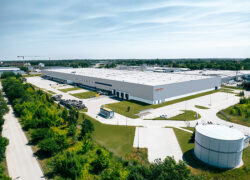
Logicor has signed a lease agreement with Polish educational equipment producer Moje Bambino for space at the Logicor Łódź III logistics park. The tenant has taken a total of 13,200 square metres, including 12,400 square metres of warehouse space and 800 square metres of offices. Following the transaction, 16,200 square metres remain available for lease in the 29,400-square-metre scheme.

Moje Bambino, headquartered in Łódź, operates five production facilities in Poland and supplies furniture and equipment for nurseries, kindergartens and schools across Central, Northern and Eastern Europe. The new lease is located close to the company’s existing headquarters and is intended to support the consolidation of selected operational functions, including the relocation of a small sewing unit from another site.

Logicor Łódź III is situated approximately nine kilometres from the city centre and around eight kilometres from Łódź–Lublinek Airport. The park is located along national road No. 14 with access to the A2 motorway connecting Poznań, Łódź and Warsaw, while the A1 motorway running north–south across Poland is also nearby. The location is additionally served by public transport links.

Commenting on the agreement, Piotr Czaplicki, Asset Manager at Logicor, said the lease reflects demand for logistics space in central Poland and noted that the company’s portfolio in the Łódź and Stryków area totals close to 250,000 square metres. Monika Stasiak, Head of Executive Office at Moje Bambino, said proximity to the firm’s headquarters and transport accessibility were key factors in the decision, alongside the possibility of bringing part of the company’s activities into one location.

Emerald Advisory Initiates Legal Proceedings Against Luxembourg-Based Real Estate Fund

Emerald Advisory GmbH, a Frankfurt-based advisory firm specialising in real estate debt management and credit servicing, has initiated legal proceedings against Emerald Fund SCA SICAV-FIS, which operates under the name “Marshall Bridge Fund,” according to a company statement. The case is reported to be pending before a German court. No court reference number or further procedural details were disclosed.

Emerald Fund SCA SICAV-FIS is a Luxembourg-domiciled real estate financing vehicle whose sub-fund, Marshall Bridge Fund, focuses on short-term bridge financing transactions. Emerald Advisory previously worked with the fund in an operational role under a servicing and management mandate related to elements of the loan portfolio and asset oversight.

The legal action concerns outstanding claims arising from the cooperation between the parties. Neither side has released detailed information regarding the nature of the claims or the financial scope of the dispute. Publicly available records do not currently indicate additional commentary from the fund or its representatives.

Emerald Advisory states that its activities include the management of complex real estate financings, non-performing loan servicing and structured workout and asset realisation processes. The firm indicated that it had been involved over an extended period in the operational handling of a substantial loan portfolio in coordination with fund-level decision makers, and that it was referenced in external fund communications as an advisor to the general partner.

In a brief statement, Dr. Norman Scherer, Managing Director of Emerald Advisory GmbH, said the company had decided to pursue its claims through legal proceedings and would not comment further on governance or compliance matters. Representatives of the Marshall Bridge Fund had not issued a public response at the time of publication.

According to the company statement, the Marshall Bridge Fund is overseen by its designated governing bodies, with senior roles in the structure including a managing partner and an investment committee chairman. No further details regarding the proceedings or potential timelines have been disclosed.

Photo: Dr. Norman Scherer, Managing Director of Emerald Advisory GmbH.

Düsseldorf logistics and industrial property market records average performance in 2025, big-box leasing leads activity

The Düsseldorf industrial and logistics property market delivered a broadly average performance in 2025, with demand concentrated in large-scale warehouse units and existing stock, according to data from REALOGIS Unternehmensgruppe, a German advisory firm specialising in industrial and logistics real estate and commercial land. Total take-up reached 299,000 square metres, representing a year-on-year decline of around six percent compared with 319,500 square metres in 2024, but remaining close to the five-year average of just over 300,000 square metres.

Market activity was supported by several large transactions, with the five biggest leases accounting for 42 percent of overall take-up. Among the most significant deals were lettings by Goodcang, GV Logistik, Nordlicht, Tecpro and one unnamed e-commerce occupier, each securing facilities of 20,000 square metres or more.

Rental levels showed no movement during the year. Prime rents stood at €8.25 per square metre at the end of 2025, unchanged from 2024, while average rents remained stable at €7.00 per square metre. Despite the lack of annual growth, both indicators continued to sit above their respective five-year averages, reflecting the structural tightening seen in previous years.

Leasing activity was primarily driven by existing space, which accounted for 172,400 square metres, or 58 percent of the total volume. Transactions involving refurbished or previously occupied buildings therefore remained the backbone of the market. At the same time, interest in new-build properties developed on former brownfield sites increased noticeably, reaching 88,600 square metres and almost one-third of total take-up. In contrast, activity in greenfield developments declined sharply to 38,000 square metres, less than half the previous year’s figure. The increase in existing and brownfield space was not sufficient to offset the contraction in greenfield projects, resulting in a modest overall decrease in annual take-up. Throughout the year, Düsseldorf continued to function predominantly as a tenant-led market, with no recorded owner-occupier transactions.

In terms of property types, large “big-box” logistics facilities dominated demand. These assets accounted for more than 210,000 square metres of leased space and represented over 70 percent of total take-up, making them the only segment to record year-on-year growth. Business parks, by contrast, experienced a significant reduction in activity, while smaller mixed or secondary property types also lost share compared with 2024.

From a sector perspective, logistics and distribution companies were the most active occupiers, generating more than half of all leased space and more than doubling their take-up compared with the previous year. Manufacturing occupiers also expanded, posting a strong increase and exceeding their longer-term average levels. Retail and wholesale operators moved in the opposite direction after an exceptional surge in 2024, with volumes falling sharply in 2025. Within this segment, e-commerce remained the dominant driver, while traditional retail formats accounted for a smaller proportion of transactions. Other user categories continued to play only a limited role in overall demand.

The structure of deals highlighted a continued preference for large-scale units. Transactions of more than 10,000 square metres once again shaped the market, accounting for roughly 70 percent of all space leased and recording a notable increase compared with 2024. Mid-sized and smaller units saw reduced activity across most size bands, while very small spaces below 1,000 square metres remained marginal.

Overall, the Düsseldorf logistics and industrial property market in 2025 was characterised by stable rental conditions, strong demand for large distribution facilities and a clear shift away from greenfield developments towards existing buildings and brownfield regeneration. Total tenant take-up amounted to 299,000 square metres, with prime and average rents holding steady at €8.25 and €7.00 per square metre respectively.


front page info
LATEST NEWS