Panattoni to deliver build-to-suit facility for Danfoss in Tuchom

Panattoni is developing a build-to-suit production and warehouse facility for Danfoss in Tuchom, northern Poland. The project will provide approximately 22,500 square metres of space, with completion scheduled for spring this year. The new building will be located near Danfoss’ existing operations and is intended to increase manufacturing capacity and expand local employment, with around 500 staff expected to work at the site.

Danfoss has operated in Tuchom for more than a decade, producing heat distribution units used to connect building installations to district heating systems for heating, cooling and hot water. The new facility will support higher output while remaining integrated with the current production base.

“A modern, expanded production plant opens up completely new opportunities for us. Thanks to the latest technologies and innovative solutions, we are increasing our production capacity, shortening order fulfilment times and improving efficiency, all while maintaining the highest quality standards. This investment strengthens our market position and allows us to respond even better to our customers’ needs,” said Adam Jędrzejczak, General Director and President of the Management Board of Danfoss Poland. He added: “The new factory also guarantees the highest level of safety and comfort at work. We have equipped it with advanced health and safety systems and ergonomic solutions that support the health and well-being of our employees. We are creating an environment conducive to talent development, innovative thinking and the creation of permanent, stable jobs. This is a milestone in the company’s development, an investment in the future that combines technology, quality and responsibility.”

According to Panattoni, the building will include specialised technical installations and energy-efficient systems. Heat pumps will serve as the main source of heating, cooling and ventilation, while a gas boiler system will operate only as a backup. The facility will also be equipped with infrastructure for the distribution of industrial gases used in production processes.

“Our project for Danfoss perfectly reflects how we respond to specific, often very advanced technological needs of our customers in tailor-made projects, creating modern and environmentally friendly facilities. The building will be equipped with installations distributing oxygen, acetylene, argon, helium and technical gas mixtures, among others. Heat pumps will be the primary source of heating, cooling and ventilation. A gas boiler room with two low-temperature boilers will only serve as an emergency heat source,” said Maciej Zawada, Head of Business Development at Panattoni BTS.

“Thanks to this investment, our client will significantly increase its production capacity and expand its operations in Poland, generating new jobs. This is also another example of the long-term cooperation and trust that global leaders place in us, returning and entrusting us with further ambitious tasks,” added Marek Foryński, Managing Director at Panattoni BTS.

Panattoni and Danfoss have previously cooperated on a production facility in Grodzisk Mazowiecki, where several manufacturing lines were relocated from Denmark. That project incorporated energy-saving technologies and building management systems and has been referenced by the company as part of its broader sustainability strategy.
Global logistics operator relocates operations to MLP Pruszków II

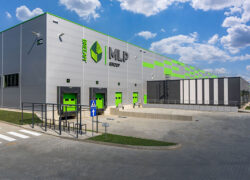
A major international logistics company has expanded its cooperation with MLP Group by moving its operations from the MLP Pruszków I park to the neighbouring MLP Pruszków II complex. The relocation follows nearly 15 years of partnership between the two parties and continues the tenant’s presence in the Polish market.

The company has been leasing space from MLP Group since 2011 and has regularly renewed its agreements at the original Pruszków location. Under the new lease, it will occupy 4,050 square metres of warehouse space and 547 square metres of office area at MLP Pruszków II, with handover scheduled for early June 2026. CBRE represented the tenant in the transaction.

Our long-standing cooperation is the best confirmation of the quality of the space we provide and our partnership-based approach to tenant relationships. The decision to relocate operations to MLP Pruszków II demonstrates that our clients grow alongside us and choose modern, sustainable solutions that support their long-term business goals – said Agnieszka Góźdź, Member of the Management Board and Chief Development Officer at MLP Group S.A.

According to CBRE, the leased facility will function as a cross-dock logistics unit, which required a more tailored leasing process than a standard warehouse agreement.

This project represents another milestone in our client’s operational development strategy, enabling significant supply chain optimization and increased distribution efficiency. It is worth noting that this is a cross-dock logistics facility, and the entire leasing process was somewhat more complex than in the case of a standard warehouse property. The delivery of this project confirms the effective and long-term cooperation both with our client and with the developer, MLP Group, said Marcin Janik, Director and Head of Industrial & Logistics Services for Southern Poland at CBRE.

MLP Pruszków II is located in the Brwinów municipality, around five kilometres from Pruszków and within the wider Warsaw metropolitan area. The logistics park has a planned gross leasable area of approximately 427,000 square metres. Selected buildings have received BREEAM environmental certification, and photovoltaic panels are being installed on rooftops as part of the developer’s sustainability programme.

The complex is positioned between local road 760 and the A2 motorway, roughly three kilometres from the Pruszków-Żbików interchange, with access to nearby international rail lines. On-site amenities include a bus stop and a public bicycle station intended to support employee commuting options.

Gdańsk Strengthens Its Leading Position with Strong Tenant Activity and Falling Vacancy

The office market in the Tri-City area closed 2025 with a total supply exceeding one million square metres of modern workspace. Despite the absence of newly delivered projects during the year, overall leasing activity held steady at just under 114,000 square metres. This balance between demand and limited additions to supply contributed to a gradual decline in the regional vacancy level, which settled below 12 percent by year-end.

Within the metropolitan area, Gdańsk further consolidated its role as the primary business hub. The city now represents roughly three-quarters of the region’s total office resources and accounted for the vast majority of leasing transactions over the past year. The contrast in availability between cities has become increasingly visible: while unoccupied space expanded noticeably in Gdynia, Gdańsk recorded a continued reduction, pushing its vacancy figure into single digits.

Leasing patterns during the year revealed a near-equal division between companies extending existing agreements and those signing fresh contracts. Renewals typically involved larger floorplates, while newcomers more often selected compact office modules. Demand came from a diverse range of industries, with logistics, finance and manufacturing firms among the most active participants in the market.

“We are seeing a clear change in the strategy of tenants, who are focusing on optimisation and quality rather than quantitative expansion. Companies are increasingly choosing smaller but better-designed offices in buildings with high technological standards,” comments Piotr Skuza, Associate Director in the office space department at Savills.

Rental levels for top-quality office space remained broadly unchanged, holding within the mid-teens euro range per square metre per month. Developers, however, have adopted a cautious stance as higher construction costs and shifting occupier preferences influence new investment decisions. The volume of space currently under development is limited and concentrated entirely in Gdańsk, with many future schemes dependent on securing tenants before construction begins.

Looking ahead, large-scale energy and offshore infrastructure projects planned for northern Poland could generate additional demand for modern office environments, particularly those with strong transport connections. With little new supply entering the pipeline, the most attractive and flexible office acknowledging modules in Gdańsk may become increasingly scarce if these sectors expand as anticipated.

Source: Savills

Photo: Gdańsk-© 2026 cij.world 

Leading Without Permission: What Women in Leadership Say Really Matters

Across real estate, law, advisory and research, women are building senior careers in environments that still demand resilience, clarity and self-belief. What emerges from conversations with female leaders is not a single formula for success, but a set of grounded principles shaped by experience rather than theory. Their stories offer practical inspiration for women navigating leadership paths today.

Confidence is built through competence, not comparison

For Luciana Giurea-Rosca, Head of Residential at AFI Europe Romania, confidence was not innate. “Confidence hasn’t always come naturally to me-it’s something I’ve struggled with my whole life,” she says. What made the difference was being encouraged to contribute without fear of being wrong. “Not knowing everything doesn’t make you inexperienced-it gives you a fresh perspective.”

Her advice to younger women is clear: stop waiting for permission, stop apologising before speaking, and don’t try to imitate anyone else. “You just need to act like yourself-confidently, fully, unapologetically.”

A similar message comes from Clare Sheils, Head of Valuation & Advisory Services Continental Europe at CBRE. She describes confidence as something that followed action, not preparation. “Don’t wait until you feel 100% ready. Start before you’re ready,” she advises.

Preparation matters more than visibility

For Sue Yoakum, Founding Partner at Yoakum Law, whose career spans both architecture and law, leadership credibility comes from deep technical understanding rather than positioning. Having worked for almost a decade as an architect before focusing on law, she explains that construction and engineering “have their own language,” and speaking it allows her to quickly understand clients’ challenges, whether a project is large or small.

That dual expertise has been particularly valuable in male-dominated environments. “I never focused on the reality that often I was the only woman in the room,” Yoakum says. Instead, her priority was preparation. “As a professional, we have to be prepared… it is very beneficial to know the issues and be fully prepared.”

Her approach reframes gender imbalance as a practical challenge rather than an obstacle, placing emphasis on substance, not perception.

Leadership is shaped by listening, tone and restraint

Many of the women interviewed highlight that authority is not about dominance.

Joanna Iwanowska-Nielsen, an accredited executive mentor, describes a turning point in her leadership journey as learning not to rush to answers. Listening first, asking questions and then speaking, she says, is the basis of effective communication.

For Katarína Žoldák Kupcová, Partner and Co-Founder of HERRYS, authenticity and emotional intelligence are central. “The way people feel during and after meeting with you is very important,” she notes, pointing to tone, energy and body language as leadership tools.

Mentorship is not a requirement-but generosity is

Not every leader followed a mentored path. “You might find it hard to believe but I never had a mentor,” Yoakum says. “I made my own way.” When it comes to supporting others, she does not differentiate between women and men, but recognises that some clients need more time and reassurance. “I generously answer their questions until they feel prepared.”

Giurea-Rosca sees mentorship less as guidance and more as space. “It’s creating space to try, to stumble, to ask questions, and to rise again,” she says, emphasising belonging and visibility.

Integration, not balance, sustains leadership over time

The idea of perfect work-life balance is widely rejected.

Yoakum describes her profession as “walking through a minefield on a daily basis,” where vigilance and care are essential to making it to the end of the day. Her advice is simple and unsentimental: love what you do, because “you are going to hate it sometimes.” The mindset she considers essential is openness, communication and care-combined with being yourself.

Others echo this realism. Leadership, they argue, does not require burnout to be valid, but it does require awareness and adaptability.

The wider picture

These personal experiences sit within a broader European context where women remain underrepresented at the highest levels of decision-making. Data discussed in Eurostat’s Women in Research and Innovation podcast shows persistent gaps in senior roles, innovation output and pay, reinforcing why visible, grounded leadership examples continue to matter.

A shared conclusion

Despite different sectors, countries and career paths, the message from these women is consistent: leadership is not about fitting a mould.

Be prepared. Listen carefully. Speak with clarity. Don’t wait for permission. And above all, as Yoakum puts it succinctly: “Be yourself.”

For women looking for inspiration, these voices offer something rare-honest guidance shaped by experience, not abstraction, and proof that leadership can be built without losing authenticity.

Photo Left to Right: Sue Yoakum, Founding Partner at Yoakum Law, Luciana Giurea-Rosca, Head of Residential at AFI Europe Romania, Joanna Iwanowska-Nielsen, an accredited executive mentor & coach, Clare Sheils, Head of Valuation & Advisory Services Continental Europe at CBRE and Katarína Žoldák Kupcová, Partner and Co-Founder of HERRYS.

© 2026 cij.world

Domestic Investors Account for 30% of Romania’s 2025 Real Estate Transactions as Regional Activity Recovers

Romanian investors represented the largest source of capital on the country’s real estate market in 2025, accounting for around 30 percent of completed transaction volume, according to Colliers’ annual market report. Over the past decade, locally generated capital totalled close to €1.8 billion in property investments, exceeding the cumulative volumes attributed to several traditional foreign investor groups over the same period.

Total real estate investment volume in Romania reached approximately €525 million in 2025, down from about €750 million in 2024. Colliers notes that the decline reflected the postponement of several large transactions and, to a lesser extent, domestic political uncertainty, rather than a withdrawal of investor interest.

At a regional level, 2025 marked a shift from cautious positioning toward a higher rate of deal completion. After two years characterised by a mismatch between buyer and seller pricing expectations, transactions across Central and Eastern Europe began closing at a steadier pace as valuations adjusted.

“One of the most important trends in Romania’s investment market is the increasingly strong role of domestic capital, which has become a factor of stability. Whereas in the past foreign capital was dominant, in recent years, with very few exceptions, locally generated capital has consistently ranked among the top two positions, a clear sign of the local economy’s maturation. Over the past decade, Romanian investors have placed around €1.8 billion, reaching a share of approximately 20% of the total, thus surpassing South African investments by roughly half a billion euros and those from the United Kingdom, the Czech Republic, or Austria by more than one billion euros. This structural shift creates a solid foundation for further positive developments and is a clear signal that the local market is gaining confidence in its own strength”, said Ionuț Mandanac, Associate Director, Capital Markets at Colliers.

Retail and offices generated most activity

Retail assets accounted for the largest share of investment volume in 2025, representing roughly 38 percent of transactions. The biggest individual deal involved the sale of a retail park portfolio of about 32,000 square metres to the UK-based fund M Core for an estimated €57 million. Together with additional acquisitions in secondary cities, the transaction positioned M Core among the most active investors of the year, representing close to 29 percent of the total market volume.

Office properties generated around 31 percent of total investment activity and introduced new investors to the Romanian market. The most significant office transaction was the acquisition of the first phase of the Equilibrium project in Bucharest by Hungary’s Gránit Asset Management for approximately €52 million. Another central Bucharest office building, Victoria Center, was acquired by Solida Capital, marking its entry into the local market.

In hospitality, the sale of the Hilton Garden Inn Bucharest Airport, estimated at around €40 million, became one of the largest hotel transactions recorded domestically. Colliers indicates that the relevance of the deal stems from the fact that it involved a newly developed asset rather than a repositioned property, highlighting the gradual maturation of the hotel investment segment.

Yields stable, financing conditions gradually improving

Prime yields in Romania remained broadly unchanged in 2025, with Colliers maintaining benchmark levels of 7.25 percent for dominant shopping centres, 7.50 percent for prime office buildings and 7.75 percent for leading industrial assets. Unlike certain neighbouring markets that saw modest yield compression or outward shifts, Bucharest values showed limited movement, suggesting a balance between buyer expectations and seller pricing.

Bank financing remained available for income-producing assets, and the year also recorded the largest refinancing completed on the local market, exceeding €500 million across several AFI retail and office projects. Lending margins for well-performing assets generally ranged between 200 and 250 basis points, slightly below previous years.

“Tax legislation is changing at an accelerated pace, and the rules are becoming increasingly complex, which is why investors are analysing transaction structures and their medium- and long-term tax impact much more carefully. Elements such as the deductibility of financing costs, the rules governing the recovery of tax losses, or the impact of the minimum turnover tax directly influence how investments are structured and how returns are calculated. Under these conditions, predictability and rigorous tax planning become decisive factors in maintaining the attractiveness of the local market”, said Alex Milcev, Partner, Tax & Law Services Leader, EY Romania and Moldova.

Central and Eastern Europe shows renewed transaction momentum

Across the wider region, the six largest Central and Eastern European markets — Bulgaria, the Czech Republic, Poland, Romania, Slovakia and Hungary, attracted approximately €11.6 billion in property investment in 2025, an increase of about 31 percent year-on-year. Volumes moved closer to pre-pandemic levels, largely supported by Poland and the Czech Republic, each recording transactions exceeding €4 billion. Investors from within the region generated nearly two-thirds of total activity, while Western European and U.S. capital accounted for smaller shares.

For 2026, Colliers expects moderate growth in regional investment volumes supported by stable pricing and gradually improving liquidity. In Romania, the year opened with a new institutional office transaction already completed and several large deals reported to be under negotiation. Market performance, however, remains linked to domestic political stability and broader international economic conditions.

“For 2026, we anticipate significantly better results in the real estate investment market than in the past two years. Liquidity is beginning to return to the region, and Romania benefits from solid fundamentals across all established sectors. Demand for logistics spaces remains strong, while the retail and office segments are showing positive dynamics, with multiple transactions at advanced stages of negotiation. If the domestic political environment remains stable, the government continues its reform agenda, and no major external shocks occur, the investment market could enter a phase of sustainable recovery. Investor appetite is present, and transactions are completed when there is convergence between sellers’ expectations and buyers’ investment parameters. The market operates optimally when prices reflect a balance between the assets’ fundamentals and the cost of capital”, concluded Robert Miklo, Partner, Head of Capital Markets at Colliers.

Source: Colliers Romania and EY

Photos: Robert Miklo, Partner, Head of Capital Markets at Colliers, Ionuț Mandanac, Associate Director Capital Markets at Collier and Alex Milcev, Partner, Tax & Law Services Leader, EY Romania and Moldova


Logivest brokers 5,500 sqm logistics lease in Witten as S.F. Cargo expands in Ruhr region

Logivest has arranged the lease of more than 5,500 square metres of logistics space in Witten, North Rhine-Westphalia, for logistics service provider S.F. Cargo. The property, located at Wideystraße 58, is owned by H. Schäper + Sohn Tiefbauunternehmung GmbH.

S.F. Cargo, which focuses on e-commerce logistics, was seeking a new base in the state of North Rhine-Westphalia. Logivest identified a suitable existing warehouse between Essen and Dortmund, offering direct access to the Bochum/Witten motorway junction and a central position within the Ruhr area.

“As a conurbation with excellent transport infrastructure, the Ruhr area is extremely attractive for e-commerce. Witten is particularly interesting for logistics service providers due to its proximity to the port of Dortmund and easy access to the Amazon central warehouse,” said Björn Peckedrath, Consultant Industrial and Logistics Letting at Logivest NRW GmbH.

According to the parties, the building’s specifications also supported the decision. The warehouse includes five loading ramps, three ground-level gates and a large external area suitable for parking and vehicle manoeuvring, as well as approximately 150 square metres of integrated office space.

The premises have already been occupied.

Square 7, part of MCore Continues Retail Expansion While Tightening Investment Selectivity

Square 7, part of the M Core group, has continued to expand its retail portfolio in Romania, balancing acquisitions, development, and asset management amid a challenging economic environment. In this CIJ EUROPE Q&A, Anca Merdescu, Head of Investments at Square 7,part of MCore reflects on the group’s investment priorities in 2025 and outlines how its long-term strategy is shaping decisions for the years ahead.

Looking back at 2025, what were the key investment priorities for Square 7, part of MCore and how did they shape your portfolio strategy this year?


Our key investment priorities in 2025 were closely linked to maintaining a strong focus on what we know best, which is convenience retail. While the Romanian market offers many opportunities, we believe that preserving a clear and consistent strategy is essential. Saying no can sometimes be difficult, but it is often the safest approach when it comes to protecting long-term strategic direction.


In parallel, we were very active on the development and asset management side, including several properties we have acquired in recent periods. A significant part of our work during the year focused on the integration process that follows acquisitions, covering people, internal processes, data, and overall operational alignment.


At the same time, we could not ignore the broader economic context, which has added sensitivity to all investment decisions. The increase in VAT and the higher overall tax burden are being felt directly by consumers, and this is reflected in our financial assessments. We also see economic sentiment and consumer confidence on a declining trend, influenced by fiscal consolidation measures and persistent inflation. As long-term investors, we continued to build our portfolio carefully in 2025, remaining open to acquisitions but highly selective and guided by a long-term view.


Square 7, part ofM Core have been active in new retail parks as well as in rebranding existing assets. How do you assess the performance of these projects so far, and what lessons are you taking into 2026?

Overall, asset performance has been in line with our expectations, although we have also had to adapt to new regulatory and fiscal measures that have a direct impact on landlord costs.


The intensity of activity over the past period has allowed us to encounter a wide range of situations, which has contributed to our continuous development as an organisation. When you are completing acquisitions worth hundreds of millions year after year, the learning curve is ongoing.


One important lesson relates to market maturity. Being an active buyer is sometimes not enough; you also need a prepared seller and a truly sellable asset. This can make a significant difference in execution, timing, and overall performance.


Another key aspect is our relationship with financing partners. We focus on building long-term partnerships with our lenders, and it is essential for us to deliver on what we commit to in shared business plans. This can be challenging, particularly in development projects, but transparency and alignment with banking partners are critical.


Finally, the team itself is a decisive factor. Doubling a team in a short period is not easy, but it also brings new energy and perspectives that support our growth plans.


How does Square 7, part of MCore integrate ESG and sustainability criteria into its investment approach?


ESG and sustainability criteria are essential for M Core. As long-term investors, we cannot invest against the direction in which the market is moving.


Green certifications, nZEB requirements, and energy-efficiency measures are a must in everything we do, whether we are developing projects from scratch or acquiring existing assets. These elements are always assessed as part of our investment and development process, as they directly influence long-term performance, operational efficiency, and asset relevance.


With the recent relocation of your Bucharest office and ongoing projects in regional cities, how important is geographic diversification in your medium-term strategy?


Geographic diversification plays a very important role in our medium-term investment plan. Convenience retail works well across a wide range of locations, which is why we are comfortable investing not only in major cities but also in smaller and regional markets.


We believe there is still significant growth potential across Romania, and we want to be present where consumers actually live and shop. By expanding beyond the main urban centres, we aim to build a flexible and resilient retail platform that can adapt to local needs and support long-term growth across the country.


Looking ahead, what types of assets or market segments do you see as priorities for Square 7, part of MCore in 2026 and beyond?


Looking ahead to 2026 and beyond, we remain committed to our core activity, which is retail. We believe this segment offers resilience and long-term relevance across different market cycles.


At the same time, M Core operates as a family office, which gives us the flexibility to move quickly when we identify a real opportunity. That flexibility is important, but any potential investment must meet very clear criteria. Opportunities need to align with our risk and return expectations, as well as our ESG, sustainability, and quality standards.


In that sense, we combine the agility of a family office with the discipline and analytical rigor of an institutional investor, particularly when it comes to risk assessment and long-term value creation. This balance between flexibility and rigor will continue to define our investment approach going forward.

© 2026 cij.world

HREIT company files notification to prosecutor over actions of temporary court supervisor at Gliwice residential project

A company from the HREIT group has filed a notification with the Gliwice Zachód District Prosecutor’s Office alleging that the temporary court-appointed supervisor of the Apartamenty Dąbrowskiego 8 project in Gliwice exceeded his powers and acted to the detriment of the company. The notification concerns events that, according to the developer, resulted in the effective suspension of construction works and increased uncertainty for apartment buyers and financial investors.

The case relates to the residential development “Apartamenty Dąbrowskiego 8” in Gliwice, for which the court appointed a temporary supervisor in late January 2026 in order to secure the company’s assets and review its financial standing. Some media reports subsequently linked that decision to concerns about a possible slowdown or interruption of construction activity. The developer maintains that works had resumed earlier and were progressing prior to the appointment.

According to the company, on 6 February 2026 individuals claiming to represent the temporary supervisor entered the construction site and undertook actions that limited access for the contractor and its staff. The developer states that these steps destabilised the investment process and complicated relations with project partners, ultimately affecting the interests of purchasers awaiting completion of their apartments.

“From the outset, the company has declared its unequivocal intention to continue and complete the ‘Apartamenty Dąbrowskiego 8’ investment project. This project is an active investment, carried out with a view to future buyers of premises who have entrusted the company with their funds and trust. The company’s priority has been and remains to secure the interests of these persons and to bring the investment to a stage where the ownership of the premises can be transferred in accordance with the agreements concluded. In the Company’s opinion, the actions taken have led to the destabilisation of the investment process, limited the Company’s decision-making power and posed a real threat to the timely completion of the project,” said Bartosz Nowicki, legal representative of the company.

The notification submitted on 16 February 2026 requests that authorities secure project and court documentation, CCTV recordings and other materials related to the incident, as well as interview witnesses present at the site. The matter has been referred to law enforcement bodies for further examination.

The temporary supervisor’s office had not issued a public response at the time of publication.

Poland’s New Mandatory E-Invoicing System: When Every Invoice Passes Through the State Platform

Poland has moved into a new phase of tax administration in which business invoices are no longer exchanged solely between buyer and seller. A nationwide digital platform run by the public authorities now sits in the middle of that process. While companies were able to use the system voluntarily for several years, 2026 marks the point at which participation becomes compulsory in stages, beginning with the country’s largest firms and gradually extending to almost all value-added tax payers.

Under the new arrangement, an invoice is not regarded as officially issued at the moment a company creates a PDF or sends an email to a client. Instead, the document must first be prepared in a standardized digital structure and transmitted to a central government server. Only after the platform accepts the file and assigns it a unique reference number does the invoice acquire legal standing. Copies are then stored in a state-managed database for a decade, and tax officials can view the information immediately rather than requesting it during audits months or years later.

The Ministry of Finance presents the reform as a modernisation measure aimed at closing loopholes in the tax system and simplifying record-keeping. Digital records are expected to reduce paperwork, eliminate the need for companies to maintain their own long-term archives, and make it easier to detect irregularities in value-added tax settlements. Similar clearance-style invoice controls already exist in several other European jurisdictions, and the Polish authorities argue that harmonising practices supports cross-border transparency and compliance.

Yet the change has also prompted unease in the business community. One concern is the degree of visibility the new framework provides to the state. Because every invoice flows through a single digital gateway, officials gain near-instant insight into turnover levels, trading partners, pricing terms and supply chains, even when there is no suspicion of misconduct. Critics view this as a structural shift from occasional post-transaction reviews toward continuous oversight of ordinary commercial activity.

Operational risk is another issue frequently raised. When the ability to issue invoices depends on a central IT system, any technical disruption — whether due to maintenance, overload or cyber threats — can slow or temporarily halt billing processes. Authorities have introduced contingency procedures for periods when the platform is unavailable, but companies still bear the responsibility of adapting their accounting software, training staff and ensuring uninterrupted connectivity. For large corporations these adjustments are manageable, while smaller enterprises often face proportionally higher costs and steeper learning curves.

There is also debate over effectiveness. Digital monitoring can reveal inconsistencies quickly, but it does not automatically eliminate organised fraud. At the same time, the compliance burden shifts toward businesses that must invest in new tools and workflows. Supporters argue that the long-term savings from automated reporting will outweigh the initial expense; sceptics counter that the balance between enforcement efficiency and economic flexibility remains unsettled.

The broader significance of the reform lies beyond technology. Poland is moving from a model in which tax authorities typically examined records after the fact to one in which transactional data is captured as commerce happens. Whether this strengthens competitiveness or introduces new friction will depend less on software performance than on how predictably and transparently the rules are applied. For entrepreneurs, the central question is no longer only how to generate an invoice, but how to operate in an environment where each invoice becomes part of a real-time national ledger the moment it is created.

Source: WEI

Catella reports improved year-end results as restructuring and asset sales shape 2025 performance

Catella closed 2025 with a stronger fourth quarter, concluding what the company described as a transitional year marked by restructuring measures and selected divestments. Adjusted for items affecting comparability, the final quarter supported the full-year result and reflected progress in efforts to create a more focused and operationally efficient group. The company stated that with a clearer direction for profitable growth it is positioned to benefit from gradually improving market conditions. The divestment of the Kaktus Towers project in Copenhagen was highlighted as one of the year’s most significant transactions.

After a temporary slowdown in real estate transaction volumes during the third quarter, activity increased again toward year-end. Across 2025, the European property market showed what the company described as a slow but steady recovery, supported by lower long-term interest rate expectations and contained inflation across the Eurozone and wider European markets. Catella said it focused on strengthening its financial position and reducing debt while retaining flexibility for future investments.

A key milestone was the sale of the Kaktus Towers development in the second quarter, which contributed positively to earnings and marked a strategic shift. As previously announced, Catella Group will no longer independently own or develop real estate assets. By the end of 2025, the Principal Investments business area was integrated into core operations, with future activity expected to focus on property investments alongside third-party partners through funds or co-investments where Catella holds minority stakes and generates fee-based income.

During the fourth quarter, Catella also completed the divestment of Catella Valuation Advisory France to Newmark Group Inc. The transaction was presented as a step toward refining the advisory business while maintaining local corporate finance expertise. In Germany, the front offices of two fund management companies were consolidated into Catella Investment Management GmbH at the start of the year to improve cost efficiency and capital-raising capacity.

Organisational changes continued in the autumn with new leadership appointments at group level. Dominik Röhrich was named Head of Investment Management, effective March 1, 2026, while Daniel Gorosch was appointed Head of Corporate Finance Europe, reflecting plans for further pan-European expansion.

For the fourth quarter, Catella reported an operating profit of SEK 11 million compared with SEK 69 million a year earlier. The decline was primarily attributed to an impairment of the KöTower project of SEK 151 million following an updated property valuation. The sale of the French valuation business contributed SEK 51 million positively. Excluding items affecting comparability, fourth-quarter operating profit reached SEK 118 million compared with SEK 82 million in the prior year. For the full year, operating profit amounted to SEK 277 million, or SEK 394 million when adjusted for comparability, compared with SEK 128 million and SEK 156 million respectively in 2024.

Assets under management remained broadly stable during the fourth quarter when adjusted for currency movements. Over the full year, AUM increased slightly from SEK 155.1 billion to SEK 155.3 billion despite currency headwinds from a stronger Swedish krona. Excluding currency effects, AUM rose by approximately 6 percent to SEK 165 billion.

Within Investment Management, operating profit for the fourth quarter reached SEK 46 million, up from SEK 34 million in the same period of the previous year, while full-year operating profit totalled SEK 138 million compared with SEK 135 million.

Corporate Finance recorded stronger activity in the final quarter as transaction volumes recovered. Operating profit for the fourth quarter reached SEK 88 million compared with SEK 31 million a year earlier. For the full year, operating profit totalled SEK 47 million compared with a loss of SEK 17 million in 2024. Excluding the SEK 51 million impact from the sale of the valuation business, restructuring costs and a prior-year bonus reversal of SEK 20 million, the underlying increase was SEK 15 million.

The Principal Investments segment reported its final results as a separate business area, having been integrated into the wider organisation as of 1 January 2026. During the fourth quarter, activities focused on completing projects intended for sale and assessing co-investment opportunities supported by the company’s balance sheet.

Looking ahead, Catella said it expects continued gradual growth in transaction activity in 2026 and sees opportunities across its core business areas as investor capital increasingly returns to Europe. The company stated that its financial position and balance sheet provide capacity to pursue selective investments.

The Board of Directors has proposed a dividend of SEK 0.90 per share. When adjusted for items affecting comparability, the proposal aligns with the company’s policy of distributing 50 percent of net profit over time while maintaining financial flexibility for future investments.

Photo: Daniel Gorosch, Head of Corporate Finance Europe, Catella

front page info
LATEST NEWS