Poland: Ready-to-Move-In Flats: Availability, Offer and Entry Prices

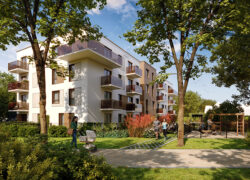
As demand patterns shift and some buyers prioritise immediate occupancy, completed residential units are gaining renewed attention across the Polish market. While most developers continue to sell the majority of their stock during construction, a selection of finished apartments remains available in several projects across key cities.

This overview looks at where ready-to-move-in flats can currently be found, what types of units are on offer and the price levels at which entry options begin. The information is based on statements provided by developers.

Tomasz Kaleta, Managing Director for Sales and Marketing at Develia: The attractiveness of the projects and a well-thought-out sales policy mean that the proportion of ready-to-move-in flats in Develia’s portfolio remains low, currently standing at around 9 per cent, whilst the market average is 20–25 per cent.

Currently, ready-to-move-in flats are available in our portfolio, including in the Legnicka Vita project in Wrocław, Centralna Vita in Kraków, Vilda Arte in Poznań and Ceglana Park in Katowice. In the Ceglana Park development, prices start from PLN 465,000 for a flat with an area of approximately 36 sq m.

Agnieszka Maj-Kusiak, General Director of Sales and Marketing at Atal: Thanks to the completion of numerous construction projects this year and last, we have a wide range of ready-to-move-in flats in completed developments across all major regional markets. The wide variation in prices stems from location, floor area, position within the development and its standard.

For example, in the Ogrody Andersa II development in Gliwice, a 26 sq m flat can be purchased for PLN 279,000, and a two-room flat of 40 sq m for PLN 397,000. In the Atal Aura II development in Łódź, a 26 sq m flat costs PLN 304,500, whilst in Nowe Miasto Polesie IV, a 45 sq m flat is on offer for PLN 431,800. In the Atal Olimpijska development in Katowice, a 25 sq m flat is available for PLN 376,000. In Poznań, in the Naramowice Odnova development, a 47 sq m two-room flat is available for PLN 470,000. In the Atal Idea development in Swarzędz, a 41 sq m flat is on sale for PLN 375,000. In Reda, in the Niebieski Bursztyn development, a two-room flat of 47 sq m costs PLN 461,000. In the Żerniki Na Novo estate in Wrocław, a 40 sq m flat is priced at PLN 542,500. In Kowale near Gdańsk, in the Atal Apollina development, a three-room flat of 56 sq m is priced at approximately PLN 581,000. In Warsaw’s Zakątek Harmonia, a 66 sq m flat costs PLN 707,500, whilst in the Poematu estate, a 75 sq m flat is available for PLN 898,500.

Monika Kudełko, Director of Strategy and Marketing Communications at Activ Investment: Our strategy, based on realistic market valuations, means that most properties find buyers whilst still under construction, which is why we rarely have completed flats on offer. Currently, all our projects are under construction, although the Kameralny Ruczaj development in Kraków is nearing completion. By the end of this summer, new residents will be able to collect the keys to their flats. The remaining units on offer are comfortable three-bedroom flats ranging from 55 sq m to 63 sq m. Their undoubted advantage is the impressive private green gardens, which cover up to 168 sq m, a rarity in this location. Prices for flats in the Kameralny Ruczaj development start from PLN 15,500 per square metre. This is an ideal proposition for those seeking a modern home with its own green space, ready for handover within the next few months.

Małgorzata Porzezińska, Sales Director at Archicom: We manage the sales process in our developments in such a way that the vast majority of flats find buyers whilst still under construction. As a result, the proportion of completed flats in the offering remains relatively small, accounting for only a small percentage of the total available stock. This is the standard operating model in the property development market, which allows for better planning of the investment process and matching the pace of sales to actual demand. At the same time, our portfolio includes projects at various stages of completion, ranging from developments just being launched for sale to those that are already finished, where customers can collect their keys almost immediately after purchase.

Currently, ready-to-move-in flats are available in several of our projects in Poland’s largest cities. In Warsaw, these include flats in the Modern Mokotów development, with prices starting from around PLN 685,000.

In Kraków, ready-to-move-in flats are available in the development on Dąbrowskiego Street, priced from around PLN 799,000. In Poznań, flats in the Wieża Jeżyce development can be purchased from around PLN 435,000, whilst in Łódź, in the Fuzja project, prices start from around PLN 393,000. The availability of specific flats and their floor areas are subject to rapid change.

Mariusz Gajżewski, Head of Sales, Marketing and Communication, BPI Real Estate Poland: We currently have developments in our portfolio where flats are ready to move into. These include the Chmielna Duo project in Warsaw, Panoramiqa and Cavallia in Poznań, and Czysta 4 in Wrocław. Prices vary depending on the location of the development, but we are talking about figures such as PLN 570,000 for 45 sq m in the Panoramiqa project, or PLN 970,000 for 32 sq m in Warsaw’s Chmielna Duo.

Furthermore, in Warsaw, we are at a very advanced stage of the PianoForte development, which offers apartments in a unique location, ready for immediate occupancy. Interest in ready-to-move-in flats remains stable, as some customers prefer the option of moving in quickly or starting to rent out the property. We see that customers looking for a flat to move into “right away” are very decisive and quick to make decisions.

Renata McCabe-Kudla, Country Manager at Grupo Lar Polska: We do not have such flats. We currently have flats on sale in the Moja Oszmiańska and Symfonia Praga developments, the construction of which we have recently commenced. The smallest flats are 34 sq m.

Joanna Chojecka, Sales and Marketing Director for Warsaw, Wrocław and Łódź at the Robyg Group: We offer ready-to-move-in studio flats in Warsaw, in the Osiedle Kameralne development. One-bedroom flats are currently available as part of a special promotion, with a discount of up to PLN 48,500. It is a green estate with a charming small lake. The entire development has been designed with residents’ comfort in mind, featuring numerous amenities and modern technological solutions. Osiedle Kameralne is a complex of modern buildings with varied architecture, situated in the old part of Bemowo, in Jelonki.

The Kameralne estate, which has been under development for many years, offers a full range of service and leisure facilities. The development is seamlessly integrated into the urban landscape, featuring a revitalised lake and accompanying parkland.

Agnieszka Gajdzik-Wilgos, Sales Manager at Ronson Development: In our projects, it is possible to purchase a flat or house and receive the keys immediately in several locations across Poland. In Warsaw, within the Zielono Mi I development, two-bedroom flats measuring 44 sq m are available from PLN 731,000.

In the Nova Królikarnia development, houses with a floor area of 207 sq m can be purchased for PLN 5,115,000, whilst in Eko Falenty, houses with a floor area of 96 sq m start from PLN 920,000.

In Wrocław, in the Viva III development, flats with a mezzanine measuring 48 sq m + 49 sq m are available from PLN 1,056,000. In Szczecin, in the Nowe Warzymice and Nowa Północ developments, flats of 90 sq m and 41 sq m are available for PLN 911,000 and PLN 425,000 respectively.

Andrzej Swoboda, Vice-President of the Management Board, CTE Group: The CTE Group offers ready-to-move-in three-bedroom flats in the Bakaliowe Estate, located on Lipa Piotrowska in Wrocław. This is an attractive proposition, offering rent-free, villa-style flats with separate entrances and gardens.

We are also completing the Świeradowska Apartments development. There are still a few studio flats and two-bedroom flats available. Our architectural concept proved successful in a competition organised by the Municipality of Wrocław, and the result is a source of great satisfaction for us. We will soon begin handing over the keys, and the cheapest flat, with an area of 26 sq m, can be purchased from PLN 454,000.

Marcin Michalec, Managing Director, Okam Capital: The last remaining flats and lofts ready for handover in our portfolio are currently available in the Strefa Progress development in Łódź. The cheapest unit, measuring 33 sq m, costs PLN 12,600 per sq m.

In the award-winning Warzelnia development in Warsaw, within the final historic building of the Bohema – Strefa Praga project, the last loft, measuring 84 sq m, is on sale at PLN 19,800 per sq m. A single apartment ready for handover is also available in the first phase of the CityFlow development in Warsaw’s Wola district. The nearly 93 sq m property costs PLN 25,000 per square metre.

In the coming months, we will complete our latest development in Łódź, Now, on Dowborczyków Street, as well as the final stages of the Inspire project in Katowice, located in the Valley of Three Ponds, and the second phase of the CityFlow development.

Kamil Rutkowski, CEO of Rutkowski Group: We have completed flats in the Ignatki Forest development near Białystok, where a 95 sq m flat costs PLN 8,676 per square metre, with a total price of PLN 831,334.

In the Ultra Marina development in Ełk, a 41 sq m flat costs PLN 355,711. In the Mono Apartamenty development in Ełk, a 65 sq m flat is available for PLN 434,869. In the Radosne Estate in Pisz, a 58 sq m flat can be purchased for PLN 425,226. In the Sobola Biel estate in Suwałki, a 42 sq m flat costs PLN 395,100.

Witold Kikolski, Member of the Management Board of MS Waryński Development S.A.: Our Stacja Ligocka development in Katowice is currently under construction, with completion scheduled for the second half of 2026.

Damian Tomasik, CEO of Alter Investment: As a land developer, we do not sell finished flats. We specialise in land development and preparing investment projects for implementation, which are then passed on to developers or investors.

A small proportion of our properties are fully ready for construction to begin and have planning permission. Examples include an intimate estate of eight detached houses in Pomlewo near Gdańsk, as well as a uniquely located plot in Jeziorany with access to the shoreline of Lake Ławki, prepared for a project comprising 19 high-end holiday homes.

Photo: Apartamenty Kamienskiego Wroclaw

Source: dompress.pl

Aleksandra Karczewska Joins Savills Poland Investment Advisory Team

Savills Poland has appointed Aleksandra Karczewska to its investment advisory team, where she takes on the role of Associate Director. She joined the firm in April 2026.

Karczewska has more than 13 years of experience in the commercial real estate sector, with a focus on office, logistics and retail transactions. Over the course of her career, she has advised a range of international investors and developers, including LaSalle Investment Management, Stena Real Estate, Echo Investment, KGAL, Uniqa, Wood & Company, Martley Capital, IROKO and CORUM.

Her transaction experience includes deals with a combined value exceeding €850 million. She has worked across the full investment process, including sourcing opportunities, financial analysis, due diligence coordination and transaction execution, on both the buy and sell side.

Among the transactions she has been involved in are the off-market sale of the Wronia 31 office building in Warsaw and the acquisition of two office properties in Kraków and Wrocław by Stena Real Estate from Skanska.

At Savills, she will focus on advising clients on investment transactions, supporting deal execution and contributing to business development activities within the team.

Before joining Savills, Karczewska worked at Colliers and previously at Burlington Real Estate, where she was involved in advisory work across the Central and Eastern European region. She began her career at Bank Pekao.

She holds a master’s degree in real estate from the University College of Estate Management in Reading, as well as a degree in finance and accounting from the Warsaw School of Economics. She has also completed postgraduate studies in property valuation at the Warsaw University of Technology and is a member of the Royal Institution of Chartered Surveyors.

Offshore Wind Development Gains Scale in Poland

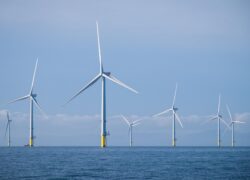
Offshore wind energy is becoming an increasingly important part of Poland’s economic development, with growing involvement from domestic companies and expanding industrial capacity. The sector is contributing to activity across manufacturing, logistics and services, while also creating demand for specialised skills.

Polish firms are taking part in various stages of offshore projects, including the production of steel components, development of port infrastructure and the installation and maintenance of wind farms. This reflects a broader shift towards greater local participation in a sector that has often been associated with international players.

The expansion of offshore wind is also influencing employment. Estimates suggest that up to 20,000 to 30,000 jobs could be created by 2030, covering roles such as engineers, technicians, logistics specialists and port operators. The sector is also contributing to the emergence of new professional specialisations linked to renewable energy.

Several infrastructure projects are already underway. The offshore terminal in Świnoujście, developed by the ORLEN Group, has been operational since mid-2025 and supports the installation of offshore wind components. In parallel, a new installation terminal is being developed at the Port of Gdańsk, while industrial facilities such as the Baltic Towers factory are producing structural elements for turbine towers.

One of the most advanced offshore wind developments is the Baltic Power project, a joint venture between the ORLEN Group and Northland Power. The project, located in the Baltic Sea, is expected to reach a capacity of around 1.2 GW and generate a meaningful share of Poland’s electricity demand once operational. Commissioning is planned for late 2026.

The development of offshore wind is also shaping supply chains within Poland. Domestic companies are involved in producing components, building onshore infrastructure and supporting installation activities. At the same time, ports and logistics hubs are being adapted to handle large-scale equipment and transport operations.

Over the longer term, offshore wind is expected to represent one of the largest areas of investment in Poland’s energy sector. The scale of planned projects indicates significant capital expenditure, alongside continued expansion of industrial capabilities and workforce development.

Despite its growth, the sector faces challenges, including public debate around environmental and economic impacts. Industry organisations and stakeholders are responding with information campaigns aimed at addressing concerns and providing data on the effects of offshore wind projects.

Overall, offshore wind development in Poland is progressing as part of a broader shift in the energy system, with increasing links to domestic industry and infrastructure. The extent to which local companies continue to expand their role in the supply chain will be a key factor in determining the sector’s long-term economic impact.

Galeria Katowicka Develops Accessibility Programme for Diverse Users

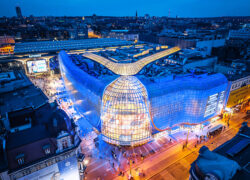
Galeria Katowicka is continuing to expand its accessibility initiatives, focusing on improving conditions for visitors with different needs in a high-traffic retail environment. Located at a major transport hub, the centre experiences high levels of noise and activity, which has influenced the development of measures aimed at reducing sensory overload and improving comfort.

The centre is building on its existing “Katowicka for Autism” initiative, one of the earlier programmes of this type in Poland’s retail sector. The project has been extended into a broader framework known as “Spectrum of Understanding”, introduced by APSYS across its managed properties. The programme is designed to support a wide range of users, including neurodivergent individuals, people with disabilities, older visitors and caregivers.

One of the key elements is a designated quiet room, intended to provide a space where visitors can reduce exposure to noise and other stimuli. The room is scheduled for further upgrades, supported by specialists in neurodiversity.

“Noise, light, announcements and heavy footfall can lead to sensory overload and reduce the comfort of using the retail space. The quiet room is a response to these challenges,” says Dorota Bartosiak.

“Public spaces still lack places conducive to quiet and regeneration, yet these have a significant impact on well-being,” adds Joanna Bylinka.

Additional measures include adjustments in selected retail units, where lighting and sound levels can be modified. The centre also provides a sensory guide and access to noise-cancelling headphones at the information desk.

Quiet hours have been introduced on a regular basis. During these periods, background music is turned off across the centre to create a more suitable environment for visitors sensitive to stimuli.

Staff training is also part of the programme, with sessions aimed at improving awareness of neurodiversity and supporting more effective communication with customers.

“April is Autism Awareness Month and a good opportunity to remind ourselves that inclusivity is now an integral part of responsible retail centre management,” says Anna Szczerkowska.

The initiatives are intended to improve the overall visitor experience and may serve as a reference for similar solutions in other retail locations.

Ada Walentek Appointed Head of Asset Management at Nhood for Poland and Romania

Ada Walentek has been appointed Head of Asset Management at Nhood for Poland and Romania. She will oversee asset management activities across both markets, including operational, financial, legal and technical aspects. She continues to serve as Head of Market for Nhood Services Poland.

In her new role, Walentek will be responsible for implementing the company’s asset management approach across the two countries, with a focus on performance, tenant relations and long-term value.

“The Polish and Romanian commercial property markets exhibit a similar investor structure and asset profile, as well as comparable operational challenges,” says Ada Walentek.

Walentek joined Nhood in 2021. Prior to that, she worked at Ceetrus Polska, where she held management roles, including managing director. Her earlier experience includes positions at Plaza Centers Management, Neinver and Klepierre.

She has been active in the real estate sector since 2001 and holds degrees from the University of Łódź and the Warsaw School of Management and Marketing, as well as a property agent licence.

MLP Group Signs Lease for New Warehouse Project in Gorzów Wielkopolski

MLP Group has signed a long-term lease agreement with a logistics operator for a new warehouse development at MLP Gorzów Wielkopolski. The project will be delivered as a single-tenant facility, with completion scheduled for the fourth quarter of 2026.

The tenant will occupy approximately 9,500 sq m, including around 8,800 sq m of warehouse space and 650 sq m of office and staff areas. The building will be designed to support logistics and courier operations.

“The signing of this lease confirms the attractiveness of MLP Gorzów Wielkopolski for logistics operators,” says Agnieszka Góźdź of MLP Group.

MLP Gorzów Wielkopolski is being developed as a logistics park with a planned total area of approximately 56,700 sq m. The project will include multiple buildings and is intended to meet current environmental standards, with certification planned under BREEAM New Construction at the Excellent level.

The development will incorporate energy and infrastructure solutions such as heat pumps, electric vehicle charging points and facilities for cyclists.

The site is located in the western part of Gorzów Wielkopolski, near the S3 expressway, providing access to domestic and international transport routes. It is situated approximately 53 km from the German border and around 135 km from Berlin, making it suitable for cross-border logistics operations.

HAVI Becomes First Tenant at Panattoni Business Park Kladno

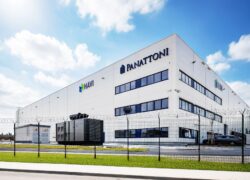
Logistics company HAVI has taken over space at Panattoni Business Park Kladno, becoming the first tenant in the industrial scheme developed on the former Poldi Kladno site.

HAVI will occupy approximately 10,000 sq m in the project, where it will operate a facility focused on the storage and distribution of chilled and frozen goods. The move expands the company’s logistics capacity in the region and supports its distribution network.

This new distribution center represents a significant milestone in HAVI’s continued development and the strengthening of our logistics network throughout the region,” says František Houška.

The development is being delivered by Panattoni, with investment from RSJ Group. The site is being redeveloped as a logistics and manufacturing park, with two planned buildings totalling around 88,500 sq m.

HAVI has leased space in Hall B, which will provide approximately 32,900 sq m in total. The building is designed to meet modern environmental and technical standards and is targeting a BREEAM New Construction rating at the Excellent level. The design includes energy management systems, heat recovery and rainwater reuse, as well as rooftop photovoltaic panels.

HAVI’s decision to locate its logistics operations at Panattoni Business Park Kladno confirms our ability to deliver tailored industrial space,” says Jan Andrejco.

The project represents a redevelopment of a former industrial brownfield site, with elements of the original structures reused during construction. A second building, Hall A, with a planned area of approximately 55,600 sq m, is scheduled for future development.

Handing over the keys to our first tenant marks an important step in the redevelopment of the former Poldi Kladno site,” says Marcel Kolesár.

The site is located around 30 km from Prague, with access to major road connections including the D5, D6 and D7 motorways. Rail access is also available nearby, with further infrastructure improvements planned in the area.

The development forms part of a broader trend of industrial regeneration, where former manufacturing sites are being repurposed for logistics and modern production uses.

German Economy Faces Another Test as Industrial Pressure and Weak Demand Persist

German companies are entering 2026 in a fragile position, as a combination of external shocks and structural challenges continues to weigh on the economy. After several years of limited or negative growth, the outlook remains subdued, with only modest expansion expected in the near term.

The resilience of companies will be put to the test once again in 2026,” says Dietmar Gerke, Head of SRM Germany, Austria and Switzerland at Atradius Germany, pointing to the impact of geopolitical tensions and ongoing supply chain disruptions.

Recent forecasts from leading economic institutes suggest growth will remain below one percent, reflecting continued weakness in industrial output and cautious business sentiment. While easing interest rates were expected to support a recovery, global developments have complicated that trajectory.

Tensions affecting trade routes, particularly in the Red Sea, have increased transport costs and extended delivery times, adding pressure to production processes that rely on timely inputs. At the same time, dependence on external suppliers for key raw materials continues to expose manufacturers to volatility. “Against the backdrop of the supply chain issues that have persisted for years, companies’ efforts to diversify their trade routes are now clearly evident,” says Gerke.

Germany’s industrial base remains under pressure. Energy-intensive sectors such as chemicals, steel and metals continue to face higher cost levels compared to international competitors. This has weighed on margins and investment decisions, while also contributing to a broader slowdown in manufacturing activity. Other sectors, including automotive and mechanical engineering, are dealing with weaker demand, trade barriers and rising competition.

Inflation has stabilised compared with earlier peaks, but cost pressures linked to energy and logistics remain. “Depending on how long the conflict persists, price pressures could increase further, while growth prospects may weaken,” Gerke notes.

Households are also contributing to the cautious outlook. Rising costs for energy and everyday goods have affected purchasing power, while uncertainty has led many consumers to delay major spending decisions. “Consumer sentiment has already deteriorated significantly. Many households are saving more and postponing or cancelling larger purchases,” he adds.

From an investment perspective, the current environment presents a mixed picture. While subdued growth and cost pressures are affecting corporate performance, the need to strengthen supply chains and improve efficiency is supporting demand in areas such as logistics, infrastructure and industrial modernisation.

Overall, Germany’s economy is entering another year characterised more by adjustment than recovery. Although its industrial base remains significant, the combination of external risks and domestic constraints suggests that growth will continue to be gradual and uneven, with resilience remaining a key factor for businesses and investors.

Zagreb Steps Into Autonomous Transport With Launch of Driverless Taxi Service

A new phase in urban mobility is beginning in Zagreb, where Croatia-based company Verne has started operating a driverless taxi service. The initiative marks one of the first real-world introductions of this type of transport in Europe, moving beyond testing into everyday use, albeit on a limited scale.

The service has been developed in cooperation with international partners, combining local operations with established ride-hailing platforms and autonomous driving technology. After several years of preparation, the rollout signals a shift from controlled trials to practical deployment, with vehicles now carrying passengers in selected parts of the city.

For now, the operation remains gradual. The service is being introduced step by step, with clear geographic limits and continued supervision as the system adapts to real traffic conditions. This measured approach reflects a broader pattern across Europe, where new mobility solutions are being introduced cautiously, with an emphasis on safety and public acceptance.

The project is linked to Croatia’s growing reputation in advanced automotive and technology development, particularly through its connection to the Rimac Group. Public funding and European support programmes have also played a role in enabling the initiative, highlighting the strategic importance placed on innovation in transport.

Compared with developments in the United States and China, where autonomous vehicles are already operating at a larger scale, Europe has taken a slower path. Regulatory complexity and stricter safety requirements have delayed wider adoption, but they have also created a more controlled environment for testing new systems.

Zagreb’s experience suggests that smaller cities may become key starting points for this type of technology. By introducing services in a more manageable setting, companies can gather operational data and refine their systems before expanding into larger and more complex markets.

The longer-term outlook will depend on how quickly these services can grow beyond their initial footprint. Wider adoption will require not only technological reliability but also clear regulatory frameworks and viable business models. For now, the launch in Zagreb represents an early step in what is expected to be a gradual transformation of urban transport across Europe.

Airports Drive Real Estate Expansion as Prague Emerges Among Europe’s Fast-Growing Hubs

The recovery of air travel across Europe is increasingly influencing real estate activity, particularly in sectors linked to tourism and transport infrastructure. Passenger traffic reached record levels in 2025, reinforcing the role of airports not only as transport nodes but also as catalysts for development in surrounding areas.

According to data from ACI Europe, European airports handled around 2.6 billion passengers in 2025, marking a year-on-year increase of approximately 4.4 percent and confirming a return to steady growth following the post-pandemic rebound  . Growth has been driven primarily by international travel, which continues to account for the majority of passenger volumes across the region  .

Within this context, secondary airports in Central and Eastern Europe have recorded some of the strongest increases. Passenger traffic at Václav Havel Airport Prague has grown at a double-digit pace, placing it alongside other expanding regional hubs such as Kraków and Budapest. Industry data shows that airports in this size category have been among the fastest-growing segments, supported by rising leisure travel and improved connectivity  .

The expansion of air traffic is translating into increased interest from investors, particularly in sectors directly linked to passenger flows. Hotels, retail schemes and food and beverage operators are expanding near major transport hubs, while logistics and distribution facilities are also benefiting from improved connectivity. This pattern reflects a broader trend in which airport infrastructure supports wider economic activity beyond aviation.

At the same time, major European hubs are pursuing long-term capacity growth, although progress varies. Projects such as the expansion of Heathrow Airport and the continued development of Istanbul Airport highlight the scale of investment required to accommodate future demand. Istanbul, in particular, is expected to play an increasingly important role due to its position between Europe and Asia.

Airport operators across Europe are also investing in infrastructure upgrades. The Spanish operator Aena has outlined a multi-billion euro investment programme aimed at expanding capacity in key markets, reflecting strong passenger growth and rising demand for air travel.

The link between aviation and real estate is becoming more pronounced as passenger numbers increase. Higher volumes of travellers support demand for accommodation, retail and services, while also reinforcing the need for logistics and office space in areas with strong transport connections. This is particularly visible around regional airports, where growth is opening new locations for development that were previously overlooked.

Looking ahead, industry forecasts point to continued expansion in European air traffic, with moderate annual growth expected over the next decade. While this trajectory is subject to economic and geopolitical conditions, the current trend suggests that airports will remain an important factor shaping real estate markets, especially in cities where capacity is expanding and connectivity is improving.

Sources: Colliers and CIJ EUROPE Analysis Team

front page info
LATEST NEWS