Czech Secondary Housing Market Gains Momentum as Regional Cities Drive Price Growth

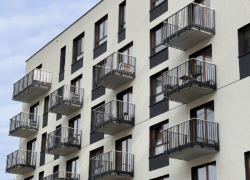
Prices for older apartments across the Czech Republic continued to rise in early 2026, with year-on-year growth reaching 15 percent in the first quarter and pushing the national average to CZK 83,333 per square metre. Quarter-on-quarter, prices increased by a more moderate three percent, reflecting steady but sustained demand, according to an analysis by FérMakléři.cz.

The data highlights a widening divergence between core markets and regional cities. While Prague and Brno remain the most expensive locations, the strongest price growth is now being recorded in more affordable urban centres.

In Prague, older flats reached an average of CZK 155,365 per square metre in the first quarter, marking a nine percent annual increase and a three percent rise since the end of 2025. Brno followed with prices climbing 10 percent year-on-year to CZK 122,813 per square metre, alongside a four percent quarterly increase.

Elsewhere, regional cities showed more pronounced upward momentum. Plzeň recorded a 13 percent annual increase to CZK 87,127 per square metre, while Hradec Králové and České Budějovice both posted year-on-year growth of 11 percent. In contrast, Olomouc saw more subdued movement, with prices rising six percent annually and just one percent quarter-on-quarter.

The most significant gains were observed in traditionally lower-priced markets. Ústí nad Labem led the trend with a 24 percent annual increase, taking prices to CZK 52,170 per square metre, alongside a six percent quarterly rise. Ostrava also recorded strong growth, with prices up 16 percent year-on-year to CZK 67,377 per square metre.

According to Lumír Kunz, managing director of FérMakléři.cz, the data reflects a shift in buyer behaviour towards more affordable locations, where pricing remains below the national average but demand is intensifying.

In absolute terms, rising prices are having a growing impact on household affordability. An 80 sq m apartment in Prague increased in value by more than CZK 1 million year-on-year, reaching approximately CZK 12.43 million. In Brno, a similar unit rose by around CZK 860,000 to CZK 9.83 million. Comparable increases were also recorded in regional cities, including Ostrava, Ústí nad Labem and Olomouc, underlining that even lower-cost markets are experiencing significant price pressure.

The first-quarter data suggests that while headline pricing remains anchored in the country’s largest cities, the current growth cycle is increasingly being driven by regional demand, as buyers continue to prioritise affordability amid constrained supply.

Source: CTK

Hungary’s Political Crossroads Signals a Potential Repricing Moment for Investors

Reports suggesting that Viktor Orbán has suffered a decisive electoral defeat at the hands of Péter Magyar remain unverified and should be approached with caution. No confirmed election result currently supports the narrative of a sweeping opposition victory. Yet the emergence of such headlines is not without significance. It reflects a broader shift in perception around Hungary’s political trajectory, one that investors are increasingly monitoring as part of their forward-looking assessment of the market.

For more than a decade, Hungary has presented a paradox within Central and Eastern Europe. Its economic base, particularly in manufacturing, logistics and urban real estate, has remained relatively resilient, while its political environment has introduced an additional layer of complexity. Ongoing tensions with the European Union over governance standards have shaped investor sentiment, often placing Hungary at a disadvantage compared to neighbouring markets such as Poland and Czech Republic.

The possibility of political change, even if not immediate, begins to alter this equation. The relationship between Budapest and Brussels sits at the centre of the investment outlook. Significant financial support allocated at the European level has been partially withheld, creating a drag on public investment and limiting the pace at which infrastructure and development projects can advance. A government perceived as more aligned with European institutional expectations could accelerate the release of these funds, injecting liquidity into the economy and indirectly strengthening multiple segments of the property market.

Such a development would likely reshape how Hungary is priced by international capital. In recent years, investors have approached the market selectively, factoring in not only economic indicators but also regulatory unpredictability and policy direction. A shift towards greater institutional alignment could reduce these concerns, encouraging a broader range of investors to re-engage. This would not necessarily result in an immediate transformation, but it would begin to narrow the gap between Hungary and its regional peers in terms of perceived risk.

The financial environment would also stand to benefit from a more stable political backdrop. Hungary has faced periods of elevated inflation and currency volatility, conditions that have complicated financing strategies and increased caution among lenders. Improved relations at the European level could support a gradual stabilisation process, strengthening confidence in the local currency and, over time, easing borrowing conditions. The impact would likely unfold progressively, rather than as a sudden shift, but it would nonetheless influence investment decisions across asset classes.

Equally important is the question of policy clarity. The current framework has been characterised by targeted fiscal measures and a degree of intervention that, while manageable for some investors, has introduced uncertainty into long-term planning. A recalibration towards a more predictable approach would enhance transparency and allow investors to assess opportunities with greater confidence. This is particularly relevant in real estate, where investment horizons often extend well beyond immediate market cycles.

Hungary’s property sector itself continues to rest on solid foundations. Budapest remains a key urban centre within the region, supported by its role in logistics networks and its appeal as a residential and commercial destination. However, capital inflows have not fully reflected these strengths. A change in sentiment, driven by political developments, could unlock previously cautious capital, particularly from institutions that have prioritised stability and alignment with European norms in their allocation strategies.

At the same time, any transition would not be without challenges. Periods of political adjustment often bring temporary delays in decision-making and shifts in fiscal priorities. For investors, this introduces a layer of short-term uncertainty that must be balanced against longer-term potential. The experience of other markets in the region suggests that initial volatility can accompany political change, even when the overall direction is viewed positively.

In this context, Hungary’s position is evolving. It is no longer seen solely through the lens of its current policy environment, but increasingly as a market with latent upside tied to political direction. Whether or not a significant electoral shift materialises in the near term, the mere prospect of change is beginning to influence how investors evaluate risk and opportunity. The country’s investment story is therefore moving beyond a static assessment of fundamentals towards a more dynamic consideration of timing, sentiment and potential realignment within the broader European framework.

Bohdan Pniewski: The Architect Who Defined Institutional Warsaw

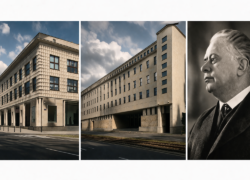
Bohdan Pniewski remains one of the most influential figures in shaping Warsaw’s institutional architecture, with a body of work that spans the interwar period, wartime interruption and post-war reconstruction. His legacy is not defined by adherence to a single architectural movement, but by a consistent ability to translate political, cultural and institutional ambition into built form.

Emerging in the 1920s as Poland re-established itself as an independent state, Pniewski quickly positioned himself among a group of architects tasked with giving physical expression to national identity. While modernist thinking dominated much of Europe at the time, his work took a more calibrated direction. He adopted contemporary construction methods, but resisted purely functional solutions, instead placing emphasis on proportion, materiality and spatial sequencing.

This approach came into sharper focus in the 1930s, as his commissions increased in scale and importance. The Grodzkie Courts complex in Warsaw, delivered between 1935 and 1939, stands as one of the most significant examples of institutional architecture from the interwar period. Developed as a major judicial centre, the project reflects a deliberate balance between modern planning and architectural gravitas. Its restrained façade, defined by repetition and scale rather than ornament, conveys authority without reliance on historic imitation. At the time of completion, it ranked among the largest judicial buildings in Europe and played a key role in shaping the visual identity of the Polish legal system.

The outbreak of the Second World War halted further development and left Warsaw extensively damaged. Like many of his contemporaries, Pniewski’s role shifted from active construction to conceptual work and education. However, his position within the architectural landscape remained intact, allowing him to re-engage directly in the rebuilding process after 1945.

Post-war Poland presented a fundamentally different operating environment, with architecture increasingly influenced by centralised planning and ideological frameworks. Despite these constraints, Pniewski retained a degree of authorship in his work. His contribution to the expansion of the parliamentary complex in Warsaw illustrates a strategic response to these conditions. Rather than imposing a dominant monumental structure, he introduced a composition of lower-scale buildings integrated into a landscaped setting, reinforcing institutional presence through spatial organisation rather than scale alone.

A comparable level of control is evident in the Ballet School on Moliera Street, completed in the early 1950s. Delivered during a period often associated with more rigid architectural expression, the project adopts a notably disciplined approach. The façade is structured through a consistent rhythm of openings, while the internal layout is directly aligned with the functional requirements of dance education. The result is a building that remains focused on performance and movement, avoiding unnecessary formal complexity while maintaining a strong architectural identity.

Pniewski also played a central role in the reconstruction of the Grand Theatre in Warsaw, one of the city’s most important cultural institutions. Rather than replicating the pre-war structure, the project combined preservation with expansion, introducing new spatial capacity and technical infrastructure while retaining the building’s historical presence. This approach reflects a broader reconstruction strategy seen across Warsaw, where architectural continuity was achieved through reinterpretation rather than direct replication.

Across these projects, Pniewski’s work demonstrates a consistent understanding of architecture as a tool of institutional communication. Whether designing for the judiciary, government or cultural sector, he prioritised clarity, order and material presence. His buildings are characterised by controlled proportions, disciplined detailing and a careful response to context, allowing them to remain relevant across changing political and economic conditions.

Today, his projects continue to form a key part of Warsaw’s institutional framework. The Grodzkie Courts and the Ballet School, developed in distinct historical periods, illustrate the continuity of his approach despite shifting external pressures. Both buildings remain operational and embedded within the city’s urban fabric, underscoring the durability of his architectural thinking.

In a Central and Eastern European context, where political transitions have repeatedly reshaped the built environment, Pniewski’s work offers a case study in adaptability. His ability to navigate different regimes while maintaining a coherent architectural language positions him as a defining figure in the evolution of Warsaw’s public architecture.

Source: CIJ EUROPE Analysis Team

Deloitte Study Highlights Growing Impact of Change Fatigue on Employees

Employees are facing increasing pressure to adapt to continuous change, according to the latest Deloitte Global Human Capital Trends 2026 report. The study indicates that around one-third of employees experienced more than 15 significant changes over the past year, driven by shifting customer expectations, business strategies and operating models.

This pace of change is affecting workforce wellbeing and engagement. According to the report, 68 percent of respondents reported a decline in wellbeing, while half noted lower levels of engagement. At the same time, 60 percent said their workload had increased.

Despite these challenges, only 27 percent of leaders believe their organisations manage change effectively. The study suggests that companies need to move beyond managing isolated changes and instead operate in a way that integrates continuous adaptation into everyday processes.

To support this shift, organisations are encouraged to invest in tools such as artificial intelligence, as well as in training, feedback and practical support for employees. Companies that have adopted this approach are more likely to report stronger financial performance and improved employee experience. However, only a small share of respondents said their employers are currently meeting expectations around ongoing learning.

Adaptability is increasingly seen as a key capability. While most leaders consider it essential, only a limited number report tangible progress in building it within their organisations.

The need for greater flexibility is also reflected in strategic priorities. A majority of executives identified speed and the ability to respond quickly to change as their main competitive focus for the coming years.

At the same time, technological developments, particularly in artificial intelligence, are prompting a reassessment of traditional corporate structures. Many organisations recognise the need to adjust functions such as human resources, finance, IT and legal to better support cross-functional collaboration and faster decision-making. However, there is a gap between intention and implementation, with relatively few organisations making significant changes so far.

“Persistent cost pressures, profound transformations in consumer and employee behaviour, as well as geopolitical volatility have pushed many organisations towards a reductive model,” said Raluca Bontaș. “This requires a reorientation towards value, supported by investment in innovation and adaptability.”

Artificial intelligence is also influencing decision-making processes. While many leaders acknowledge its importance, only a small proportion report meaningful progress in integrating AI into these processes. In most cases, implementation is still focused on efficiency and cost, although some organisations are beginning to consider its impact on employees.

“It’s high time to decide: those who act quickly gain a competitive advantage, and the real stake is the human factor,” said Doina Patrubani.

The study also highlights the potential impact of rapid technological change on organisational culture. While many leaders recognise this issue, relatively few are taking steps to address it. The report suggests that maintaining open communication and clearly explaining how new technologies affect work can help mitigate potential risks.

Overall, the findings point to a growing need for organisations to balance technological adoption with employee support, as continuous change becomes a defining feature of the workplace.

ARETE Expands Industrial Fund and Increases Exposure to Poland

ARETE reported year-on-year growth in its industrial fund, supported by portfolio expansion and continued full occupancy across its assets.

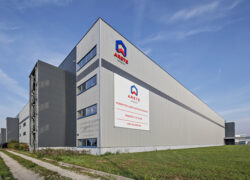
Total gross leasable area increased to more than 325,500 sq m, representing a rise of 23.3 percent compared with the previous year. The portfolio grew by nearly 60,000 sq m, while the fund’s land holdings expanded by more than 100,000 sq m to approximately 861,881 sq m, providing capacity for future development.

The growth was driven by a combination of acquisitions, selected disposals and ongoing asset management activity. The fund maintained full occupancy throughout the period.

A notable change in the portfolio structure is the increased allocation to Poland, which now accounts for 47 percent of the fund, up from 24 percent a year earlier. The Czech Republic remains a core market, while Slovakia represents a smaller share of the portfolio.

“The past year confirms that we are able to develop the fund while maintaining the quality of the portfolio,” said Miroslav Barnáš of ARETE Real Estate.

The adjustment in regional allocation reflects a focus on markets offering opportunities for further growth and development.

Czech Housing Market Re-accelerates as Demand Returns Faster Than Supply

Residential property prices in the Czech Republic picked up pace again toward the end of 2025, placing the country among the stronger performers across the European Union. According to data from Eurostat, the increase in values outstripped the wider European trend, reflecting a market where underlying pressures have not eased despite a brief slowdown in previous periods.

The latest rise follows a phase in which higher borrowing costs had temporarily reduced activity. As financing conditions began to improve, buyers who had postponed decisions returned to the market, bringing demand back more quickly than expected. This rebound has exposed the same structural limitations that have characterised the Czech residential sector for years, particularly the shortage of available housing.

While several countries across Central and Eastern Europe are experiencing similar dynamics, the Czech Republic stands out for the scale of its long-term price growth. Since the middle of the last decade, housing values have risen sharply, far exceeding the average increase seen across the European Union. This has gradually eroded affordability, especially for first-time buyers and households with average incomes.

Analysis from the Organisation for Economic Co-operation and Development has repeatedly pointed to the widening gap between property prices and earnings in the country. For many households, access to ownership has become increasingly difficult, even as demand remains strong.

The recovery in lending has played a significant role in the latest price movement. Figures from the Czech Banking Association show that mortgage activity rebounded in 2025 after a subdued period, approaching levels seen during earlier peaks in the market. This renewed access to financing has translated directly into stronger purchasing activity.

At the same time, new housing supply continues to lag. Data from the Czech Statistical Office indicates that the number of newly started homes has not kept pace with demand, even though completions have seen some improvement. Planning constraints, slower permitting processes and cost pressures remain obstacles to expanding the housing stock.

Compared with neighbouring markets, the Czech residential sector offers a relatively stable environment but with tightening returns. In countries such as Poland or Romania, investors can still find higher yields, while the Czech market increasingly reflects a combination of strong capital values and limited availability of new product.

Looking ahead, the direction of prices will largely depend on whether supply begins to respond more effectively. Without a meaningful increase in construction activity, the imbalance between demand and availability is likely to persist. While price growth may become less pronounced than in previous cycles, the underlying drivers suggest that upward pressure will remain in place.

The current phase reinforces a familiar pattern: when financing improves, demand quickly returns, but without sufficient new development, the market tightens once again. In this environment, the Czech Republic continues to stand out as one of the more constrained housing markets in Europe, where access remains a growing challenge for a significant part of the population.

Source: CIJ.World Research & Analysis Team

Czech Mortgage Rates Reverse Course as Global Volatility Filters Back Into Pricing

The Czech mortgage market has shown its first clear sign of reversal in 2026, with average advertised rates moving back above the five percent threshold in early April. Data from the Swiss Life Hypoindex indicates a month-on-month increase of 0.29 percentage points, taking the average offer rate to approximately 5.18 percent. The shift interrupts a stabilisation trend that had taken hold in late 2025 and signals a more cautious phase in bank pricing, as external pressures begin to reassert themselves.

The April movement represents one of the more pronounced monthly increases seen in recent periods, although it remains well below the sharp adjustments recorded during the 2022 tightening cycle led by the Czech National Bank. The repricing has been most visible in the core segments of the market, with three- and five-year fixed-rate products registering increases of roughly 35 to 40 basis points. Given their dominance in new lending volumes, the impact is immediately reflected in borrower affordability. A standard mortgage of CZK 3.5 million now carries a monthly repayment increase of several hundred crowns compared to March levels, a seemingly modest shift that compounds significantly over the duration of the fixation period.

While domestic monetary policy remains a central anchor, mortgage pricing in the Czech Republic is increasingly shaped by global financial conditions. Recent tensions in the Middle East have contributed to renewed volatility in energy markets and inflation expectations, feeding into sovereign bond yields and interest rate swaps, which act as the primary reference point for mortgage pricing across Europe. Institutions such as the European Central Bank and the International Monetary Fund have repeatedly highlighted the sensitivity of inflation expectations to energy price shocks. For lenders, this translates into higher funding costs and a reduced willingness to continue aggressive discounting.

The relationship is not direct, but the transmission mechanism is increasingly visible. Mortgage rates are not reacting to geopolitical developments themselves, but to the way those developments reshape expectations in capital markets. This dynamic has reintroduced volatility into a segment that had begun to stabilise, reminding both lenders and borrowers that the easing cycle remains fragile.

Banks are also adjusting their internal strategies. Through much of 2025, lenders competed actively on pricing in an effort to stimulate demand in a subdued residential market. That phase is now giving way to a more balanced approach, where margin protection and funding considerations carry greater weight. The current positioning is defined less by outright tightening and more by caution, with institutions waiting for clearer signals from inflation data and central bank policy before committing to further pricing moves.

The Czech development is part of a broader regional pattern. Across Central and Eastern Europe, mortgage markets are showing similar sensitivity to global rate dynamics. Pricing in neighbouring markets has remained relatively firm despite expectations of monetary easing, reflecting a shared hesitation among banks to move ahead of macroeconomic clarity. The result is a lending environment in which local conditions are increasingly intertwined with global financial sentiment.

Looking ahead, the trajectory of mortgage rates in the Czech Republic will depend on the interaction between disinflation trends, monetary policy signals and the stability of global bond markets. The April increase does not mark a structural shift back to rising rates, but it does underline how quickly the narrative can change. For now, the market is entering a phase of fragile stability, where any further easing in borrowing costs is likely to be gradual, uneven and highly sensitive to external shocks.

Source: CTK


Slovakia Reopens Diesel Trade While Keeping Domestic Controls in Place

Slovakia is preparing to resume diesel exports after a short-lived restriction introduced in March, but authorities are not stepping away from intervention altogether. Instead, the government is maintaining a framework of domestic controls designed to protect local supply, reflecting a cautious approach as the situation stabilises but remains uncertain.

The earlier restrictions were introduced after disruptions to crude deliveries through the Druzhba pipeline raised concerns over supply security. In response, the administration led by Robert Fico activated emergency measures that allowed it to manage fuel distribution more directly. This included limiting exports and drawing on state reserves to support refining operations.

A key factor in the decision to ease export limits has been the gradual improvement in supply flows. The increased use of the Adria pipeline has provided an alternative route for crude deliveries, reducing pressure on the domestic system. At the same time, the country’s main refinery, Slovnaft, has been able to stabilise production after relying on strategic reserves during the peak of the disruption.

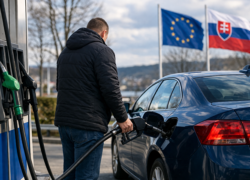
Despite this improvement, the government is not returning to a fully open market environment. Restrictions affecting how fuel is sold domestically remain in place, including limits aimed at preventing excessive demand. Measures targeting cross-border refuelling, which emerged as price differences within the region attracted drivers from neighbouring countries, are also being retained.

These steps have not gone unnoticed at the European level. The European Commission has raised concerns about the compatibility of such policies with internal market rules, particularly where pricing or access differs depending on the origin of consumers. While temporary action can be justified during supply stress, prolonged or selective restrictions risk creating friction within the single market.

The episode highlights the degree to which Central Europe’s fuel systems remain exposed to disruptions beyond their control. Although global oil price movements have played a role in shaping market sentiment, the more immediate pressures have come from logistical constraints and the time it takes for supply chains to adjust. Even when international prices ease, the effect is not felt immediately at the pump due to procurement cycles and processing delays.

Slovakia’s decision to resume exports while keeping domestic safeguards in place reflects an attempt to balance competing priorities. On one side is the need to restore normal trade flows within a tightly connected regional market. On the other is the imperative to ensure that local supply remains sufficient in the face of ongoing uncertainty.

For neighbouring countries, particularly those that rely on Slovak fuel exports, the easing of restrictions will provide some relief. However, the continued presence of domestic controls suggests that the situation remains fragile. The broader lesson is that energy markets in the region are still highly sensitive to external shocks, and that policy responses can shift quickly when supply risks emerge.

In the coming months, the direction of travel will depend on the reliability of alternative supply routes, the stability of global markets and the broader geopolitical backdrop. Until these factors settle, Slovakia and its neighbours are likely to operate in an environment where market openness and state intervention continue to coexist uneasily.

Bitcoin’s Missing Founder and the Quiet Risk Still Sitting in the System

More than a decade after Bitcoin entered circulation, the identity of its creator remains unresolved, despite repeated efforts to connect the pseudonym Satoshi Nakamoto to known figures in the cryptography community. The latest wave of speculation has again drawn attention to Adam Back, a long-time contributor to early digital cash concepts. Yet, as with previous theories, the case rests on interpretation rather than proof.

The persistence of this uncertainty is not simply a historical curiosity. It continues to sit in the background of a market that has grown into a globally traded asset class. Bitcoin’s origin story is rooted in a network of developers and thinkers who, from the 1990s onward, explored ways to create money that could function outside traditional financial systems. Among them were individuals such as Nick Szabo and Hal Finney, whose ideas helped shape the foundations of decentralised finance long before Bitcoin itself appeared.

This shared intellectual lineage explains why multiple candidates continue to be linked to the creator’s identity. It also highlights a more important point: Bitcoin did not emerge in isolation, but as the result of years of experimentation and overlapping contributions. Attempts to assign authorship to a single individual often overlook this broader context.

From a market standpoint, the anonymity of Bitcoin’s founder has been both a strength and a lingering unknown. Without a central figure, the system operates independently of any one person’s influence, reinforcing its position as a decentralised network. At the same time, the absence of a confirmed identity leaves open questions that would not exist in more traditional financial structures.

One of the most frequently cited concerns relates to the large quantity of Bitcoin believed to have been mined in the early stages of the network and attributed to its creator. These holdings have remained untouched, but their potential movement is often discussed as a theoretical risk that could affect market stability. While such a scenario appears unlikely, its mere existence continues to factor into long-term considerations for investors.

The issue also intersects with regulation. Authorities such as the U.S. Securities and Exchange Commission have taken the view that Bitcoin does not fall under the same classification as assets issued by identifiable entities. The lack of a central issuer has supported its treatment as a distinct category within financial markets. A confirmed identity, depending on the circumstances, could complicate that framework, although such an outcome remains hypothetical.

Past attempts to claim authorship have done little to resolve the matter. The most prominent case, involving Craig Wright, has been widely challenged and has not been supported by verifiable evidence. These episodes have reinforced a cautious approach to any new claims, with the burden of proof set at a level that has yet to be met.

As Bitcoin continues to mature, the practical importance of its origins is gradually diminishing. Institutional participation, improved infrastructure and clearer regulatory treatment are increasingly shaping the market’s direction. Even so, the question of who created it continues to surface, particularly during periods of heightened attention or uncertainty.

In many ways, the unresolved identity has become part of Bitcoin’s structure. It removes the possibility of central control, but it also leaves behind a narrative gap that the market periodically revisits. Whether that gap is ever closed may matter less over time, but for now, it remains one of the few unknowns in an otherwise transparent system.

Source: CTK

Slovak Entrepreneurs Expand Presence in Czech Market as Regional Ownership Patterns Shift

Slovak business owners continue to hold the strongest position among foreign investors in Czech companies, extending a trend that has been building for years. The latest data from Dun & Bradstreet shows that their presence has reached a new peak, underlining how closely connected the two economies remain.

The appeal of the Czech market for Slovak entrepreneurs is rooted in a combination of practical and historical factors. The ease of communication, similar regulatory environments and long-standing economic links make it relatively straightforward to operate across the border. This is further reinforced by the steady movement of people between the two countries, particularly students who often transition into business activity after completing their studies.

Beyond Slovakia, the structure of foreign ownership in Czech companies is gradually evolving. Investors from Ukraine remain a major group, although their numbers have stabilised after a period of rapid expansion. In contrast, the presence of owners connected to Russia has fallen sharply in recent years, reflecting wider geopolitical developments and the impact of sanctions.

At the same time, neighbouring countries are becoming more visible in the ownership landscape. Entrepreneurs from Hungary and Poland are steadily increasing their involvement, pointing to a broader shift in investment patterns within Central Europe. Rather than a decline in foreign participation, the data suggests a re-balancing towards regional capital.

The overall number of Czech companies with foreign ownership has seen a slight decrease, but this appears to be linked more to restructuring and changing business strategies than to any loss of interest in the market itself. Companies across Europe have been adjusting their portfolios in response to economic uncertainty, leading to a more selective approach to expansion.

The relationship between the Czech Republic and Slovakia remains particularly strong in both directions. Czech entrepreneurs also represent the largest group of foreign owners in Slovakia, highlighting the depth of integration between the two markets. This mutual presence creates a business environment where cross-border activity is not only common but often essential.

Looking ahead, the Czech market is likely to continue attracting investors from across the region, supported by its stable economic framework and strategic position within Europe. While global factors will continue to influence investment decisions, the growing role of Central European capital suggests that regional connections will play an increasingly important role in shaping ownership trends.

front page info
LATEST NEWS