Skanska Agrees Lease for Future Norwegian Headquarters in Oslo

Skanska has signed a ten-year lease for approximately 7,500 square metres of office space at Christian Krohgs gate 2 in Oslo, where it plans to establish its new Norwegian headquarters. The building is being developed through a joint venture between Skanska and Entra.

Following the agreement, the property is around 35 percent pre-let. Skanska is expected to move into the new premises in the fourth quarter of 2029.

The project is located in the Vaterland area, close to Oslo Central Station and well connected to public transport. The existing structure will be refurbished and extended, with the completed development expected to provide around 21,200 square metres of office space. The design aims to combine modern workspace requirements with elements reflecting the site’s industrial background.

The development is being delivered with environmental targets in place, including certification under BREEAM-NOR at the Very Good level. Plans also include the use of a fossil-free construction process, reduced emissions from building materials and measures to limit waste and increase reuse. The completed building is intended to meet high energy performance standards.

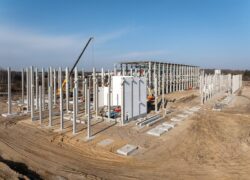
Panattoni Secures €22.5 Million Financing for ZREW Facility in Łódź

Panattoni has obtained €22.5 million in financing from Bank Pekao for the development of a build-to-suit manufacturing facility in Łódź for ZREW Transformatory.

The project will include a production hall along with office and staff areas, designed to accommodate the assembly and testing of high-power transformers. The facility is expected to support an increase in the company’s production capacity and create approximately 200 jobs.

The building will incorporate technical specifications required for heavy industrial use, including increased floor load capacity and specialised foundations for large-scale equipment. The production space will also feature variable ceiling heights to meet operational requirements.

Construction is scheduled to be completed by the end of summer 2026, with the start of production planned for later in the year.

The development will be delivered in line with sustainability standards and is expected to undergo BREEAM certification at the Excellent level.

Romania’s Private Credit Market Remains Niche as Investors Turn Selective Across Europe

Europe’s private credit market is entering a more disciplined phase after a prolonged period of expansion, with Romania reflecting the broader shift while maintaining its own structural characteristics. Rising borrowing costs, slower transaction activity and heightened geopolitical uncertainty have collectively reshaped investor behaviour, pushing capital providers towards more selective and risk-aware strategies.

Across Europe, private credit has remained an established asset class, but the conditions that supported rapid growth have weakened. Tighter monetary policy has kept financing costs elevated, while reduced deal volumes have limited exit opportunities and constrained liquidity. At the same time, renewed geopolitical tensions, including the conflict involving Iran, have added inflationary pressure and reinforced a reassessment of risk across both public and private markets.

Within this environment, Romania presents a distinct case. According to Andrei Drosu, Director Capital Markets at iO Partners, private credit remains relatively underdeveloped locally. He notes that while several players have attempted to establish a presence, their impact has been limited, leaving the segment uncommon in the Romanian market.

This is largely due to the continued strength of the banking sector. Drosu explains that banks remain highly active and competitive in providing real estate financing, offering pricing that is often more attractive than private credit structures. He points to large-scale transactions in 2025, where developers such as AFI Europe and Iulius Group secured loans ranging between €300 million and €550 million, highlighting the capacity of traditional lenders to support major projects.

In this context, private credit in Romania is not positioned as a direct substitute for bank financing. Instead, it functions as a complementary solution, typically used in situations where bank lending is constrained or unable to address specific structuring needs.

Investor appetite for private credit is nevertheless evolving. Valentin Neagu, Managing Director at Crosspoint Real Estate, observes that interest in the asset class is gradually increasing, although growth remains moderate due to ongoing economic and geopolitical uncertainty. He notes a clear shift in investor behaviour, with capital deployment now focused on stronger downside protection, tighter collateral requirements and greater visibility on exit strategies.

Neagu also highlights the growing role of domestic capital in Romania, which is now more active than at any point in the past decade. This trend, combined with increasing intra-regional investment flows across Central and Eastern Europe, has helped strengthen market resilience, even as international investors adopt a more cautious and selective approach.

Higher interest rates and reduced liquidity have further influenced decision-making across private markets. According to Neagu, investors are showing a preference for familiar markets and are taking longer to complete transactions. While international capital has become more selective, domestic investors are increasingly filling the gap, particularly in mid-market deals where local expertise and execution speed provide a competitive advantage.

Reduced liquidity in exit markets is also creating opportunities for private credit. Assets that cannot be sold at acceptable pricing levels still require financing, opening the door for structured capital solutions that were less visible during periods of higher liquidity.

Across the region, geopolitical developments are playing a more prominent role in shaping investment decisions. Neagu points to the growing influence of political events, including elections, on real estate activity across neighbouring markets, underscoring the interconnected nature of capital flows within CEE.

This shift towards selectivity is echoed in broader research. Vlad Saftoiu, Head of Research at Cushman & Wakefield Echinox, notes that investor appetite has moved away from broad risk-taking towards more disciplined, data-driven underwriting. While fundraising volumes have increased globally, capital is becoming more concentrated among larger managers, with a stronger emphasis on protecting portfolios against uncertainty.

Saftoiu adds that volatile interest rates and uneven liquidity have heightened sensitivity to exit and refinancing risks, pushing investors towards assets with strong income visibility and resilient cash flows. In Romania and across the wider CEE region, this has translated into a clear preference for quality, with secondary assets facing widening pricing gaps.

Looking ahead to the second half of 2026, market participants expect this trend to continue. Neagu anticipates that private credit activity will concentrate on clearly defined segments. Prime office assets in Bucharest with strong occupancy, industrial and logistics properties supported by stable income, and well-performing retail schemes in regional cities are expected to attract capital. At the same time, opportunities are emerging in value-add and opportunistic strategies, including under-leased office assets, redevelopment projects and structured residential financing.

Saftoiu similarly expects investors to prioritise assets with durable cash flows and lower capital requirements, with housing and industrial sectors continuing to draw strong interest at a European level.

Despite these developments, private credit in Romania remains closely tied to the availability and competitiveness of bank financing. As long as traditional lenders continue to provide attractive terms and large-scale funding, alternative financing is likely to remain a targeted tool rather than a mainstream solution.

For investors, the current environment signals a transition rather than a contraction. Private credit continues to play a role in bridging financing gaps and supporting complex transactions, but success increasingly depends on disciplined capital deployment, careful risk assessment and the ability to navigate a market shaped by both economic and geopolitical uncertainty.

© 2026 cij.world

KINGSTONE RE Acquires Newly Completed Residential Property in Frankfurt

KINGSTONE Real Estate has acquired a newly built residential property in Frankfurt am Main for its open-ended special fund focused on affordable housing in Germany.

The asset comprises 96 residential units, all of which are subject to subsidy arrangements, along with a daycare facility. The property also includes four smaller commercial units, split between retail and office use. The building was completed in 2025 and is already almost fully let.

Located on Kleyerstrasse in the Gallus district, the property forms part of the wider Kleyers development delivered by Swiss Life Asset Managers. The broader scheme includes multiple buildings and several hundred residential units, contributing to the ongoing redevelopment of the area.

The investment has been supported by public financing mechanisms, including loans and grants provided by the City of Frankfurt and the regional development bank WI-Bank. Such funding structures are commonly used in Germany to support the delivery of subsidised housing.

This transaction represents the fourth acquisition for KINGSTONE RE’s affordable housing fund, following earlier investments in Mannheim, Fürth and Weil am Rhein. The company indicated that additional acquisitions are under consideration, alongside plans to expand its activity in the sector.

Colliers advised on the transaction, while legal and tax support was provided by Heussen Rechtsanwaltsgesellschaft. Technical and environmental assessments were carried out by Case Real Estate and Arcadis Germany, with iib Consult responsible for market analysis.

Fragile Gulf Truce Leaves Energy Markets on Edge

A short-term pause in hostilities between the United States and Iran has shifted attention from immediate military escalation to a tentative diplomatic process, but the underlying risks to global energy flows remain firmly in place.

The two-week halt in major attacks is designed to create space for negotiations after a period of intensifying confrontation that unsettled oil markets and disrupted shipping activity. At the centre of discussions is a multi-point proposal put forward by Tehran, which outlines broad conditions for de-escalation. While the framework has been acknowledged as a basis for talks, it is widely viewed as an initial negotiating position rather than a realistic settlement in its current form.

For investors and corporates, the immediate focus is the stability of the Strait of Hormuz, a maritime corridor through which a significant share of global oil supply passes. Although the ceasefire reduces the risk of immediate disruption, shipping conditions have not returned to normal. Carriers continue to face elevated costs, while insurers maintain higher premiums linked to geopolitical uncertainty. Even with traffic gradually resuming, delays and logistical bottlenecks are expected to persist.

This reflects a broader pattern in energy markets. Supply does not need to be fully interrupted to generate economic impact. Heightened risk alone is sufficient to push up transport costs, influence pricing and create volatility across commodities and related sectors. Initial market reactions have shown some easing of pressure following the ceasefire announcement, but pricing remains sensitive to any sign that tensions could escalate again.

Claims that the United States could significantly reduce its exposure to Gulf developments through domestic production or alternative supply sources simplify a more complex reality. Oil markets operate on a global pricing system, meaning disruptions in one region quickly influence costs worldwide. Even countries with strong domestic output are not insulated from these dynamics.

For major importing regions, including Europe and large Asian economies, the primary consequence is likely to be sustained price pressure rather than outright shortages. Adjustments in supply chains tend to occur through market mechanisms, with higher costs spreading across industries and consumers rather than being confined to specific geographies.

The economic implications are already being assessed in Europe. Marcel Fratzscher, head of DIW Berlin, has warned that while the ceasefire is a positive step, it does not eliminate the risk of renewed escalation. He notes that the economic impact is beginning to emerge, particularly through rising costs that affect both households and industry in interconnected economies such as Germany. The discussion in Berlin is increasingly focused on how to balance immediate support measures with longer-term efforts to reduce dependence on external energy sources.

Meanwhile, any benefit to other major producers remains limited. While higher prices can support revenues, structural constraints and existing geopolitical factors restrict the extent to which supply can be rapidly redirected or expanded.

Public messaging around the ceasefire reflects differing strategic narratives. Donald Trump has presented the development as a step towards stabilisation, while Iranian officials have framed it as a position of strength in negotiations. For markets, however, the more relevant issue is the absence of firm commitments and the continued presence of operational risks across the region.

As talks continue, the situation remains defined by uncertainty rather than resolution. The temporary easing of tensions has reduced immediate downside risk, but it has not altered the structural importance of the Gulf to global energy supply. For investors, the key question is not whether volatility will persist, but how long it will remain embedded in pricing and decision-making.

Source: CIJ.World Research & Analysis Team

Romania launches consultation on draft pay transparency law aligned with EU rules

Romania has published a draft law transposing Directive (EU) 2023/970 on pay transparency into national legislation, opening a public consultation period until 8 April 2026. The proposal, released by the Romanian Ministry of Labour, is expected to be submitted to Parliament following consultation.

The draft broadly follows the EU framework on equal pay for equal work or work of equal value, while introducing several country-specific provisions, including shorter deadlines, defined institutional roles and additional procedural safeguards for employees.

A central element of the proposal is the requirement for employers to disclose salary information at the recruitment stage. Pay details must either be included in job advertisements or communicated to candidates in writing before interviews, signalling a shift towards greater transparency in hiring practices.

The draft also shortens timelines for responding to employee requests for pay data. While the EU directive allows up to two months, the Romanian proposal sets a 30 working day deadline, with a single extension of the same duration permitted. This is likely to require companies to strengthen internal processes for gathering and verifying remuneration data.

Employers would also be required to notify staff annually, by the end of the first quarter, of their right to request pay information and the procedures for doing so. In addition, companies would have 90 working days to address unjustified pay disparities, with a possible extension of up to six months in justified cases.

Another notable provision allows employees to request pay information through the National Council for Combating Discrimination, which would act as an intermediary by obtaining data from employers and transmitting it to the employee. This mechanism may increase the formalisation of pay-related enquiries and place additional administrative demands on companies.

The draft adopts a broad approach to determining comparable roles for equal pay assessments. Comparisons may extend beyond employees within the same company to include sectoral, national or group-level benchmarks, as well as hypothetical comparisons supported by statistical evidence. This wider scope could increase exposure to equal pay claims, particularly for organisations operating across multiple entities or industries.

Non-compliance would attract administrative fines ranging from RON 10,000 to 20,000 for initial breaches and up to RON 30,000 for repeated violations, enforced by labour inspectorates.

The proposal also предусматриes amendments to existing legislation, including the Labour Code and equality laws, to ensure alignment with the new framework.

While the draft remains subject to change during consultation and the legislative process, it provides a clear indication of the direction of travel. Companies operating in Romania are expected to begin assessing the potential impact on pay structures, reporting systems and HR procedures ahead of the law’s eventual adoption.

Source: CMS

Planning and permitting remain a standalone risk class in Romania

Romania’s real estate market continues to draw investor interest, but legal uncertainty remains a defining feature, especially in Bucharest. In this CIJ EUROPE Q&A, Ioana Grigoriu, Co-Head of Real Estate and Counsel at KPMG Legal, discusses the persistence of permitting risk, the legal fallout from zoning litigation, the implications of the Nordis law, the evolution of refinancing pressures, and the readiness of Romania’s framework for newer asset classes.

CIJ EUROPE: Over the past few years, permitting delays and the suspension or cancellation of zoning plans have created uncertainty for developers in Bucharest. From your perspective, has the legal environment around planning approvals improved recently, or does regulatory unpredictability remain one of the main risks for real estate investment in Romania?

Ioana Grigoriu: Over the past few years, Romania has indeed faced planning and permitting concerns as a standalone risk class. Things have not fundamentally changed. We still see pressure in this respect, first because of the cancellation of the sectoral PUZs. Out of the six district PUZs, only one is still standing. Bucharest still functions based on a general urban plan dating from 2000. It was extended until 2026, but it remains an outdated plan.

Because of that, the issue of building permits has become more severe. I read recently that the number of building permits decreased by 45 percent between 2021 and 2024, which is a very significant drop and a direct consequence of this situation. So, the risk is clearly still on the table. There is however a high degree of unpredictability, although less than during the peak years of suspensions and cancellations. I believe it is better understood now by investors and authorities alike, and better managed, because investors have started to factor and price this risk into their business plans and project timelines, so delays are less of a “black swan” and more of a modelled risk.

That said, in Romania this has been a major risk and, until Bucharest has a new PUG, probably not before 2027, I do not think the changes will be significant. We need a real reform, and a coherent one, that properly correlates the relevant documentation. Otherwise, permitting risk will remain a continuous issue.

CIJ EUROPE: Should the market be doing more collectively, whether through direct dialogue with government or broader lobbying, to push for change?

Ioana Grigoriu: The first step came, in a way, in 2025 when the government issued GEO 31/2025 which represents a genuine step forward aiming to reduce delays by introducing deadlines for issuance of certain endorsements and a form of tacit approval mechanism. So there has been an attempt to speed things up procedurally. However, in my view this is not enough unless the fundamentals of the urbanism sector are in place. You cannot properly issue a building permit unless the urbanism documentation is there, and that starts with the PUG.

As to what can be done, I believe efforts need to be combined. We need a reality check, both from the legal side and from the investors’ side. Even where there may be a legal basis to move forward, if the supporting documentation is not approved by the city hall, concerns remain. So yes, the efforts need to be consolidated.

CIJ EUROPE: Several court decisions related to the annulment of zonal urban plans have raised concern about the stability of development rights. How significant has this issue been for investors and lenders, and do you believe the legal framework now provides sufficient certainty for long-term projects?

Ioana Grigoriu: This has been a very significant issue. Starting from around 2015, we had a series of court cases and a key ruling from the High Court which effectively said that if the PUZ governing a project was cancelled, the building permits issued under it could also fall automatically. That created a major disruption for investors and lenders in a legal environment that was already poorly correlated. The basic market assumption had been that once you obtained your building permit, the legal life of the project was supposed to be secured. After those court decisions, that assumption could no longer be upheld.

A pivotal change came in April 2025 by way with Constitutional Court decision no. 208/2025, which in my view was a very good one which held that building permits cannot be automatically invalidated by the subsequent annulment of their underlying Zonal Urban Plan — therefore, the so called domino effect which affected most of the projects’ outcome has now been settled by the courts, who must now balance legality against legal certainty on a case-by-case basis..

That decision has helped restore a degree of stability. Combined with a proper legal framework, meaning a new Urbanism Code and a new PUG, it could create a much better level of certainty for investors. Long-standing market participants understand this as a country risk, but for new investors entering Romania, it remains difficult to explain why the legislation is still so unclear.

CIJ EUROPE: In the context of the recently introduced Nordis law and the legislator’s stated objective of enhancing protection for off-plan buyers, how do you assess the balance between regulatory intent and practical implementation? From your experience advising developers and investors, where are the main legal or transactional challenges emerging, and does the current framework risk affecting projects, financing or delivery timelines?

Ioana Grigoriu: The context matters. Romania had no dedicated framework for off-plan transactions until recently and the law itself is a good idea, but unfortunately the implementation falls short. It was introduced in response to a crisis case in which buyers paid the full purchase price under promissory agreements without receiving ownership as in most cases, the same units were effectively promised to multiple buyers. Where construction was unfinished, those buyers often had very limited legal protection.

The law correctly addresses the most egregious of the standing concerns: the pre-division (in Romanian “pre-apartamentare”) mechanism, which creates individual cadastral records for future units before construction, is genuinely innovative and represents a step forward, but it is still not enough. The two crucial issues remain related to how much of the advance a developer can collect and how that advance can be secured.

The initial version of the law capped the amount developers could collect from buyers, which was actually the mechanism that is already being implemented for a long time in other civil law jurisdictions such as Italy, France, Belgium. But the final form of the law, as approved in the Deputy Chamber, no longer imposes a true cap on advances. In theory, buyers can still pay 100 percent of the price. The law only limits how those funds may be used, hence we are witnessing a control over fund spending, but which is rather weak in definitions and correlations. It does not clearly define what a project is, what infrastructure means, what utilities mean, or how these categories should be tied to construction documentation. That creates a large grey area and operational misfunctions with all of the other players of the development of a project (contractors and suppliers).

The sanction for misusing funds is also problematic. The law provides for a penalty of 1 percent of the previous year’s turnover, but many developers operate through SPVs with little or no prior turnover, which means the sanction can be effectively meaningless. There is also still uncertainty around the recording and enforcement of legal mortgages for promissory buyers.

So yes, this creates pressure on implementation and on financing. Developers without pre-financing or equity in place face greater strain, and that is likely to push up apartment prices. There is demand for new apartments, but the risk is increasingly shifting to the end buyer, while developers are becoming more cautious about launching and selling projects. Until implementation rules are issued, many will continue to take the safest interpretation of the law.

CIJ EUROPE: Across Europe, many assets financed during the low-interest rate period are approaching financing deadlines. Are you beginning to see more structuring discussions or distressed scenarios in the Romanian market, and how are legal strategies evolving to address the new environment?

Ioana Grigoriu: This refinancing and restructuring wave has hit the more leveraged Western European markets harder than Romania so far, but the pressure is clearly building. We have seen more discussions around pre-financing, refinancing and restructuring, which is a signal that this trend is coming into the Romanian market as well.

There is not a lack of financing available, but the downside is that new debt is far more expensive than it used to be. That creates an equity gap and puts pressure on developers and investors. They need to be more creative, whether through prepayment schemes, extended deadlines, new equity stakeholders or mezzanine financing, to avoid falling into the worst-case scenario.

Romania does not have the same volume of heavily leveraged portfolios as some Western markets, which is why the distress here is more asset-specific than systemic. It tends to affect projects with weak fundamentals, such as secondary locations, outdated assets, higher vacancy or significant cost overruns. For projects with strong income and solid fundamentals, financing remains available.

There is also a real opportunity for foreign investors, particularly in mezzanine financing, but it depends heavily on the product and the investor’s familiarity with it. Institutional investors tend to favour sectors and structures they know well.

CIJ EUROPE: Investors are increasingly exploring sectors such as student housing, co-living, data centers and logistics. From a legal standpoint, does Romania’s regulatory framework adequately accommodate these newer asset classes, or will legislative adjustments be needed to support their growth?

Ioana Grigoriu: Romania’s legal framework is flexible enough to accommodate these sectors to some extent, but it was not designed with them in mind. What we are doing in practice is applying existing rules, permits and strategies to products that are not clearly regulated as distinct asset classes.

Logistics is probably the most comfortable of these sectors from a legislative standpoint, because it is generally treated as industrial and the legal route is relatively clear. For student housing, however, projects may be treated as residential or mixed-use and therefore carry the burden of residential permitting rules. For co-living there is a real regulatory vacuum. It shares some features with rental services and some with hotel accommodation, but there is no clear distinction in the law about what rules apply and when.

Data centers probably carry the heaviest burden of all. They are not clearly placed within any one category and there are no tailored rules accommodating their specific needs around energy, cooling, height, occupancy, IT, fire safety and data protection. This means developers and authorities often must improvise, and that creates delays and uncertainty in the permitting process.

Some of these issues may improve under the draft PUG or the new Urbanism Code. But reducing procedural delays is not the same as creating clear legal rules for each product type. Emerging sectors such as data centers need targeted regulation and clearer incentives.

CIJ EUROPE: Looking ahead 12 months, how do you see the Romanian real estate market evolving?

Ioana Grigoriu: Despite the overall economic and political context, I remain optimistic, so I think the next 12 months will keep a positive outcome, even if in a cautious way. Projects are still moving. We continue to speak with major companies and large players that want to do business in Romania. Retail remains a strong sector and continues to attract capital. Industrial and logistics are also functioning relatively well from a permitting perspective because the rules are more standardized.

So, I do not see a full stop in the market. There are still active sectors, clients remain interested, products are coming to market, and there are also a few large transactions that may be completed next year. Romania remains attractive.

Romania’s market continues to offer opportunity, but Grigoriu’s assessment underlines that legal clarity remains central to execution. Across planning, buyer protection, financing and emerging asset classes, the core issue is no longer simply identifying the gaps, but whether regulation and implementation can finally move in step. That, more than anything else, will determine how much of the market’s potential can be converted into long-term investment confidence.

© 2026 cij.world

Oil Loses Its Grip: Middle East Tensions Redefine Market Signals and Global Risk

Escalating tensions across the Middle East are exposing a structural shift in global markets, where oil prices are no longer a reliable short-term guide to regional equities or broader asset performance. While energy remains central to fiscal stability in the Gulf, recent market behaviour suggests investors are increasingly looking beyond crude as geopolitical risks, supply-chain disruption and domestic economic reforms reshape traditional correlations.

In markets such as Saudi Arabia and the United Arab Emirates, equity performance is becoming more closely tied to internal growth dynamics, capital inflows and diversification strategies. Saudi Arabia’s non-oil economy has continued to expand, supported by large-scale investment programmes, while the UAE benefits from its role as a regional hub for finance, trade and logistics. Although oil revenues still underpin fiscal balances and liquidity, their influence on day-to-day market movements has become less pronounced than in previous cycles.

At the same time, geopolitical tensions linked to Iran and wider regional instability are disrupting critical trade routes and exposing vulnerabilities in global supply chains. The Strait of Hormuz continues to handle roughly a fifth of global oil flows, while disruptions in the Red Sea have forced vessels to reroute around the Cape of Good Hope, adding roughly one to two weeks to transit times and increasing freight costs.

These pressures are feeding into a broader reassessment of risk. Rather than relying on headline indicators such as oil prices, investors are increasingly analysing indirect exposures, including supplier dependencies, logistics routes and regional bottlenecks that can amplify shocks across sectors.

At the macro level, the combination of elevated energy prices and constrained supply chains is increasingly discussed as a downside risk that could lead to a period of weaker growth alongside persistent inflation. While not the base case, such a scenario would test traditional portfolio structures. Commodities and certain real assets may provide partial protection, while fixed income remains sensitive to inflation expectations and policy responses. Equity markets are likely to see more pronounced divergence depending on sector exposure and pricing power.

In response, institutional investors are placing greater emphasis on forward-looking scenario analysis, modelling the impact of supply disruptions, shifting trade patterns and inflation trajectories across asset classes. This reflects a broader move away from relying on historical correlations towards more dynamic risk frameworks.

The emerging picture is one of increasing complexity. Oil continues to matter, particularly for government revenues and capital flows, but it is no longer sufficient on its own to explain market behaviour. As geopolitical tensions persist and economic structures evolve, investment decisions are being shaped by a wider set of variables, requiring deeper analysis and greater flexibility in strategy.

Source: CIJ.World Research & Analysis Team

Berlin logistics market sees solid start to 2026 as large-scale occupiers drive demand

The Berlin logistics property market recorded a strong opening to 2026, with total take-up reaching 106,000 sqm in the first quarter, according to REALOGIS. Activity was entirely driven by tenants, with no owner-occupier transactions recorded during the period.

Warehouse space dominated market activity, accounting for the vast majority of take-up, while office and mezzanine areas represented only a small share. Demand for warehouse space increased significantly compared with the same period last year, exceeding the five-year average and indicating a recovery in occupier activity after a more subdued phase.

A small number of large transactions shaped the quarter’s performance. The most significant was the entry of JD Logistics, which leased over 40,000 sqm in the southern area surrounding Berlin. Additional contributions came from FST Industrie and rentitNOW, with the three largest deals accounting for more than half of total take-up. The presence of JD Logistics highlights a broader trend of Chinese companies expanding their footprint in the German capital region, supported by the ongoing rollout of cross-border e-commerce platforms such as JD.com’s Joybuy.

Rental levels remained stable, with prime rents holding at €10.50 per sqm and average rents at €8.10 per sqm. Both figures continue to sit above their respective five-year averages, suggesting that the market has reached a plateau following several years of sustained rental growth.

New developments on brownfield sites accounted for the largest share of take-up, slightly ahead of existing space, while greenfield developments played a more limited role. Demand for brownfield projects was largely driven by the major JD Logistics and rentitNOW transactions, reflecting occupiers’ preference for modern, well-located facilities with faster delivery timelines compared to new greenfield developments.

From a product perspective, big-box logistics assets dominated, significantly outperforming other types of space such as business parks. The market remained clearly tenant-led, with leasing activity accounting for all recorded transactions.

Geographically, the strongest performance was recorded in the southern outskirts of Berlin, which captured around half of total take-up. The Berlin urban area followed, with activity distributed across western, southern, northern and eastern submarkets. Other surrounding areas saw more limited demand, and no transactions were recorded in the eastern periphery.

By sector, logistics and distribution operators were the primary drivers of demand, accounting for roughly half of total take-up and significantly outperforming retail and wholesale occupiers. Within the retail segment, traditional retail slightly outweighed e-commerce activity. Manufacturing and other sectors contributed a smaller but still notable share of leasing activity.

Large-scale requirements continued to define the market. Units above 10,000 sqm accounted for approximately half of all take-up, underlining the ongoing dominance of major occupiers in shaping demand patterns. Smaller unit sizes remained active but played a secondary role.

Overall, the first quarter confirms that Berlin’s logistics market remains structurally tenant-driven, with demand concentrated among large occupiers and supported by international expansion strategies, while rental levels stabilise at historically high levels.

Source: REALOGIS

Pfizer dispute with Poland highlights legal exposure from EU vaccine contracts

Legal proceedings between Pfizer and Poland over unfulfilled COVID-19 vaccine orders are drawing renewed attention to the contractual structure underpinning the European Union’s joint procurement strategy during the pandemic.

The case, being handled in Belgian courts where the relevant contracts are governed, relates to Poland’s 2022 decision to suspend acceptance of further vaccine deliveries agreed under a 2021 framework negotiated by the European Commission. While figures circulating in the market suggest Poland’s potential financial exposure could reach into the range of €1 billion, no final court ruling has been publicly confirmed to date.

At the core of the dispute are Advance Purchase Agreements concluded at EU level with vaccine manufacturers, most notably a May 2021 deal with BioNTech/Pfizer for up to 1.8 billion doses. The Commission negotiated these agreements on behalf of Member States under a joint procurement mechanism established during the health crisis. Participation in the scheme was voluntary, but once individual countries opted in and confirmed volumes, they became contractually bound by the agreed terms.

Poland later argued that the underlying conditions of the agreement had materially changed. Government representatives cited reduced demand as the pandemic evolved, alongside the financial and logistical impact of the war in Ukraine, as justification for halting further deliveries. The country also raised concerns about the proportionality of its contracted volumes relative to actual needs.

Pfizer has maintained that the contracts remain legally binding, and that Member States are required to honour their purchase commitments regardless of subsequent changes in market conditions. The outcome of the case is expected to hinge on the interpretation of these contractual obligations and whether extraordinary circumstances could justify a deviation from agreed terms.

The dispute is being closely watched across the region, as other Member States, including Romania, also adjusted or reduced vaccine orders amid declining demand. While no identical legal proceedings have been confirmed, the Polish case may set an important reference point for how such contracts are enforced.

Beyond the legal dimension, the situation has revived scrutiny of the European Commission’s role in negotiating vaccine supply agreements at the height of the pandemic. Acting under a mandate from Member States, the Commission centralised procurement in an effort to secure supply and strengthen the EU’s collective bargaining position. However, the structure of the agreements left financial responsibility with individual countries.

Questions around transparency have also persisted, particularly regarding the involvement of Commission President Ursula von der Leyen in direct exchanges with Pfizer CEO Albert Bourla during negotiations. While no wrongdoing has been established, the European Ombudsman and other institutions have raised concerns over access to documentation related to these communications.

As the legal process continues, the case underscores the long-term implications of crisis-era procurement decisions. While the EU’s joint approach enabled rapid access to vaccines during the pandemic, it also created binding commitments that are now being tested in a markedly different public health and economic environment.

Source: WEI

front page info
LATEST NEWS