GEMO to complete oncology centre at Motol and Homolka University Hospital in summer 2026

Construction company GEMO is nearing completion of the National Oncology Centre at Motol University Hospital and Homolka University Hospital, with delivery scheduled for summer 2026.

The project combines a new building with the refurbishment of an existing structure to create a single complex for cancer treatment. The facility is designed to bring together inpatient and outpatient services, diagnostic units, operating theatres, laboratories and a clinical trials centre within one location.

The scheme also includes shared public areas such as a central internal corridor with amenities, along with landscaped terraces and roof spaces intended to improve the hospital environment. The layout integrates both the original and newly constructed sections around an internal atrium.

According to the contractor, construction progress has accelerated following revisions to project coordination and documentation, as well as closer cooperation with hospital representatives and medical staff. Adjustments to the design were made during the build process to better reflect operational requirements.

Hospital management indicated that oncology care will form the core function of the new centre, supported by expanded diagnostic capacity, including imaging and screening facilities. Dedicated areas for the preparation of specialised treatments, including advanced therapies, are also planned.

The centre is intended to support a more coordinated treatment process, from initial diagnosis through to therapy, while also accommodating clinical research and specialist care. Prevention and screening programmes are expected to be part of the overall concept.

In addition to patient care, the facility will include space for training and professional events, with lecture capacity and staff amenities incorporated into the design.

Once completed, the oncology centre will operate alongside existing medical services at both hospitals, forming part of a broader healthcare cluster serving patients from across the Czech Republic and beyond.


HIH Real Estate appoints Markus Diers to strengthen asset management leadership

HIH Real Estate has expanded its asset management leadership team with the appointment of Markus Diers, who rejoined the company on 1 April 2026. He takes on the role of Managing Director of Asset Management, working alongside Carolin Dose and Frank Kindermann within a three-person leadership structure.

The division oversees a team of around 130 employees and manages approximately €15 billion in assets, covering roughly 400 properties across 12 European countries. The company indicated that the updated leadership structure is intended to support the ongoing development of its asset management platform and portfolio performance.

Diers brings more than two decades of experience in asset management, with a particular focus on retail and international retail property. He joins from Union Investment Real Estate, where he led retail asset management. Prior to that, he held a senior role at Redos Real Estate, overseeing a substantial portfolio. He previously worked at HIH between 2016 and 2021, including as Head of Retail Asset Management.

In his new position, Diers will oversee residential, logistics and retail asset classes, as well as areas including governance, service provider management and human resources.

Dose, who has been with HIH for nearly two decades and has served as Managing Director since 2023, continues to lead the office segment and is responsible for internal processes and coordination with fund management. Kindermann, who has held a managing director role since 2007, remains responsible for international activities, technical asset management, construction-related functions and leasing.

Commenting on the appointment, Dose said: “With Markus Diers, we are welcoming back a highly experienced colleague who knows our company and our structures inside out. Successful asset management depends on identifying at an early stage which developments will affect a property and deriving viable strategies from this. It is also crucial to take users’ needs into account and design processes efficiently. Markus Diers brings precisely this expertise to the table and will provide important impetus.”

Kindermann added: “Markus Diers is the ideal addition to our management team. This will enable us to further optimise and specialise our asset management and consistently drive forward the strategic development of our portfolios.”

Diers said: “I am delighted to be returning to HIH and to actively develop asset management together with the team. My focus will be on implementing sustainable usage concepts and on close, collaborative partnerships with our investors and tenants.”

Photo: The new trio leading HIH Real Estate’s asset management division (from left to right): Frank Kindermann, Carolin Dose and Markus Diers

Data4 advances Warsaw-area data centre campus with second facility

Data4 has begun operations at its second data centre on its campus in Jawczyce, near Warsaw. The new building has an IT capacity of 10 MW and forms part of the company’s phased expansion of the site in the municipality of Ożarów Mazowiecki.

The project follows the launch of the first facility in 2023 and reflects the company’s continued rollout in Poland. Data4 has invested around €200 million in the country to date and plans to increase this to approximately €600 million by 2030. The wider campus is being developed on a 4-hectare site and is expected to reach a total capacity of 60 MW, with around 50,000 square metres of gross floor area.

Demand for digital infrastructure in Poland is rising, supported by the expansion of cloud services and artificial intelligence. Industry estimates suggest that total data centre capacity in the country could grow from roughly 300 MW today to close to 500 MW by the end of the decade, with a growing share linked to AI-related workloads.

Andrzej Domański said: “Poland is already a leader in Central and Eastern Europe, accounting for over a third of the region’s data centre capacity. We want to continue actively strengthening the competitiveness and technological sovereignty of Poland and Europe. In a world where data and computing power are becoming critical resources, digital infrastructure supports both the economy and national security. Investments such as this one in Jawczyce create space for Polish companies to adopt modern solutions and catch up on their digital backlog.”

The campus is being developed in stages, with the second building aligning with the broader expansion plan. Adam Ponichtera said: “The expansion of the campus in Jawczyce is a clear signal that Poland remains one of Data4’s key markets in Europe. We are developing our infrastructure in a phased and predictable manner, combining high technical standards with a responsible approach to the environment and cooperation with the local community in the municipality of Ożarów Mazowiecki. A stable technological infrastructure is now a prerequisite for the further development of the digital economy.”

At group level, Olivier Micheli added: “The launch of another building on our campus in Poland is of strategic importance to us. With the rapid development of artificial intelligence and cloud services, digital infrastructure is becoming one of the cornerstones of the European economy’s competitiveness. That is why we are consistently expanding the Data4 campus network across Europe, responding to the growing demand for computing power.”

The new facility has been developed to meet BREEAM environmental standards and has received an ‘Excellent’ rating. It is also the first project within Data4’s European portfolio to be delivered under this certification framework. The building incorporates a modular construction approach, with a significant share of prefabricated components used during development.

Operational metrics from the first building indicate a power usage effectiveness level below 1.30, in line with industry targets set for the end of the decade. Water consumption levels are also reported to be below typical market benchmarks.

Beyond construction, the project includes cooperation with local authorities in Ożarów Mazowiecki. Planned initiatives include infrastructure upgrades in Jawczyce and support for local emergency services.

Paweł Kanclerz said: “The development of the Data4 campus in Jawczyce is an important investment for our municipality. We are delighted that this project not only strengthens the local infrastructure but also contributes to the region’s economic development. We appreciate the cooperation with the investor, which translates into concrete actions for the benefit of residents.”

Dekpol Deweloper opens sales for Eterna project in Gdańsk’s Młode Miasto

Dekpol Deweloper has started sales for its Eterna residential scheme, located on Stępkarska Street in Gdańsk within the Młode Miasto district. The project will consist of a single building with 170 apartments, supported by nine ground-floor commercial units, an underground parking garage and additional storage space.

The development is situated on former shipyard land that is being redeveloped into a mixed-use urban area. The location is close to several established points of interest, including the Museum of the Second World War, the European Solidarity Centre and the Motława riverfront.

The scheme includes a range of shared facilities, such as a fitness area, a sauna and communal spaces designed for residents. Retail units on the ground floor are intended to complement the residential component. Apartments are offered in a mix of layouts, from one- to four-bedroom units, with the largest reaching approximately 100 square metres. Entry-level pricing starts at PLN 616,000.

Rafał Skonieczny, sales director and member of the management board at Dekpol Deweloper, said: “In this part of Gdańsk, parking issues are of significant importance, which is why the underground car park is a key element of the development. We have placed equal emphasis on solutions that enhance the comfort of everyday life – from elegantly finished communal areas to a fitness zone and a residents’ meeting space.”

The design references the industrial background of the area, with materials such as brick, steel, concrete and wood incorporated into the interiors. The building’s form is intended to support practical apartment layouts while reflecting the character of the surrounding district.

Construction is scheduled to begin in April 2026, with completion planned for the first quarter of 2028.

Cities Must Move Beyond Short-Term Thinking to Safeguard Long-Term Urban Value, Skanska Says

Cities, developers and investors are being urged to rethink how urban value is created, shifting away from short-term delivery models toward approaches that prioritise long-term resilience, adaptability and sustained economic performance.

In its latest report, Shaping Sustainable Places, Skanska argues that a narrow focus on immediate project outcomes risks eroding long-term competitiveness and undermining the broader value that cities generate over time. The study highlights a widening disconnect between how projects are delivered across Europe and the United States and how urban environments are expected to perform socially, environmentally and economically in the decades that follow.

According to Claes Larsson, Executive Vice President at the group, urban development is entering a new phase where success is no longer defined by completion timelines or initial returns. Instead, the emphasis is shifting toward creating places capable of adapting to future pressures while continuing to deliver value for occupiers, investors and wider society.

The report identifies four core principles that should underpin this transition. Designing for flexibility and long-term change is seen as critical to protecting asset value and limiting costly retrofits. Early collaboration between stakeholders is also highlighted as a means to improve predictability and ensure developments perform effectively over time. In parallel, engaging local communities at the outset is framed as a way to reduce planning risks and support sustained demand. Finally, the integration of environmental, social and economic metrics into decision-making is presented as essential to achieving durable outcomes.

From an investment perspective, the report reflects a broader market shift. Lena Hök, Executive Vice President for Sustainability and Innovation, notes that climate risk is increasingly being priced into financial systems, influencing everything from insurance to regulatory frameworks. In this context, assets that are not designed to adapt may face declining value, while those aligned with long-term resilience criteria are likely to attract capital.

The findings are aimed at institutional investors and policymakers navigating a more complex risk environment, where urban performance is measured not only by financial returns but also by its ability to respond to climate pressures, demographic change and evolving user expectations.

As capital becomes more selective and regulatory scrutiny intensifies, the report suggests that the long-term success of cities will depend less on how quickly projects are delivered and more on how effectively they endure.

Czech Parcel Locker Expansion at Risk as New Building Rules Draw Industry Pushback

The Czech government is facing mounting criticism from logistics operators and e-commerce stakeholders over plans to bring parcel lockers under stricter construction rules, a move that could slow network expansion and affect service availability.

The proposed amendment by the Ministry of Regional Development of the Czech Republic seeks to classify self-service delivery lockers as small structures under the country’s Building Act. The intention, according to officials, is to resolve ongoing ambiguity around their legal status, as lockers have so far existed outside clear regulatory definitions.

However, industry participants argue that the change risks undermining one of the fastest-growing segments of last-mile logistics.

Parcel lockers have become a core part of consumer delivery habits in the Czech Republic. Recent survey data indicates that more than four-fifths of the population have used the service within the past year, with frequent monthly usage now common. With millions of parcels moving through the network each week, accessibility and proximity remain critical factors driving demand.

Operators warn that introducing formal construction procedures could significantly reduce the speed at which new lockers are deployed. Zásilkovna, one of the country’s largest providers, says the ability to respond quickly to local demand is essential, particularly in high-traffic locations where capacity constraints can emerge rapidly. Any delay in installation, the company argues, would translate directly into service deterioration, including longer wait times and reduced availability.

Concerns extend beyond operators to local authorities. Representatives of municipal associations caution that tighter rules could unintentionally limit access in smaller towns and rural areas. If installation becomes more complex and costly, companies may prioritise high-volume urban locations, reducing coverage in less profitable regions.

The proposal has also drawn criticism from the Association for Electronic Commerce, which argues that the market has already adapted through voluntary coordination with municipalities. According to the group, improved placement standards and better integration into public spaces have been achieved without the need for additional regulation.

From a market perspective, the debate reflects a broader tension between urban planning oversight and the operational flexibility required by modern logistics networks. While the government aims to create legal clarity, businesses warn that increased administrative requirements could conflict with efforts to streamline construction procedures and reduce bureaucracy.

The Czech Republic currently hosts around 15,000 parcel lockers, operated by companies including Alza, PPL and DPD. The sector has expanded rapidly in recent years, driven by the growth of e-commerce and shifting consumer preferences towards flexible delivery options.

As the amendment moves forward, the outcome will likely shape not only the pace of further expansion, but also the accessibility of delivery services across both urban and regional markets.

Source: CTK

Air Travel Faces Cost Pressure as Fuel Supply Risks Build Across Europe

Europe’s aviation sector is entering the summer season under growing strain, as instability in global energy routes raises concerns over the availability and cost of jet fuel.

Airports and industry bodies have flagged the risk that continued disruption to tanker traffic in the Strait of Hormuz could begin to affect fuel deliveries into Europe within weeks. The route is a critical artery for global oil movements, and any prolonged constraint has knock-on effects for refining and distribution across international markets.

In a warning addressed to the European Commission, Airports Council International Europe highlighted the risk that reduced shipping volumes could translate into tighter jet fuel availability. The concern is not only about access to crude oil, but also the ability of refineries and supply chains to maintain steady output of aviation fuel as demand accelerates into the peak travel period.

Market signals already point to mounting pressure. Fuel costs linked to aviation have risen sharply in recent weeks, driven by supply uncertainty and higher refining margins. For airlines, fuel remains one of the largest operating expenses, and sustained increases are likely to feed through into ticket prices and route planning decisions.

Across Central Europe, the impact is expected to be more gradual than immediate, but still significant.

In Poland, airports such as Warsaw Chopin Airport benefit from relatively stable logistics networks, including pipeline and rail connections. However, the country is integrated into the wider European fuel system, meaning global price movements are quickly reflected in local costs.

A similar dynamic is visible in the Czech Republic, where supply chains linked to regional refineries provide a degree of resilience. Even so, rising input costs are already influencing airline pricing and operational strategies at Václav Havel Airport Prague.

In Romania, domestic refining capacity offers some insulation. Production from companies such as OMV Petrom and Rompetrol helps support internal supply, although pricing remains closely tied to international benchmarks.

Meanwhile, in Hungary and Slovakia, fuel availability depends heavily on regional refining systems operated by groups such as MOL Group. While no immediate shortages are expected, extended disruption could place additional strain on inventories and import channels.

Industry representatives are urging coordinated action at EU level to safeguard supply ahead of the busiest travel months. Suggested measures include easing certain sourcing constraints and exploring joint purchasing approaches, although such steps would require complex coordination across member states.

For now, the most visible effect is likely to be cost-driven rather than supply-driven. Airlines are expected to adjust pricing and capacity as fuel expenses rise, while passenger demand may soften at the margins if ticket prices climb further.

The situation underlines a broader structural vulnerability. Even without a full interruption to supply, Europe’s aviation market remains highly sensitive to geopolitical developments far beyond its borders, with Central Europe positioned firmly within that exposure.

Source: CIJ EUROPE Analysis Team

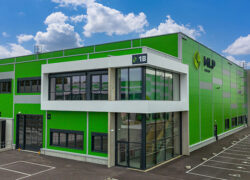
MLP Group Expands Vienna Footprint with Second Urban Logistics Development

MLP Group is reinforcing its presence in Austria with the acquisition of a second development site in Vienna, underlining the growing importance of urban logistics assets in core European cities.

The company has secured a 5,879 sqm plot in the Austrian capital, located in the 11th district and within close proximity to Wien Hauptbahnhof. The site’s connectivity and central positioning are expected to support last-mile distribution and business operations targeting the city’s dense urban market.

The project will be delivered as a brownfield redevelopment, with demolition of existing structures scheduled by the end of the second quarter of this year. In parallel, MLP Group will advance permitting, with completion of the new scheme targeted between the second and third quarters of next year.

The planned development will take the form of a modern urban business park, focusing on smaller, flexible units ranging from approximately 300 to 1,000 sqm. This segment remains undersupplied in Vienna, despite increasing demand from small and medium-sized enterprises seeking centrally located space.

The new scheme will complement the existing MLP Business Park Vienna, allowing the group to build a more comprehensive offering within the city’s urban logistics segment. The strategy reflects a broader shift among developers towards smaller-format assets positioned close to end users and transport infrastructure.

According to Radosław T. Krochta, CEO of MLP Group, Vienna remains a priority market within the company’s European expansion strategy, with the latest acquisition representing a further step in consolidating its footprint in key metropolitan areas.

The project is also expected to incorporate sustainability features aimed at improving energy performance and reducing environmental impact, in line with evolving occupier requirements and regulatory standards.

For Vienna, where availability of centrally located logistics space remains constrained, the development highlights both the intensity of demand and the continued repositioning of urban land towards higher-value, last-mile uses.

Czech Labour Market Shows Seasonal Lift as Hiring Picks Up in March

The Czech labour market showed early signs of seasonal recovery in March, with unemployment declining to 5 percent as hiring activity increased across several sectors.

According to data released by the Labour Office of the Czech Republic, the number of registered job seekers fell by more than 9,000 month-on-month to 372,338. At the same time, available vacancies rose modestly to 91,545, indicating a gradual improvement in labour demand.

Despite the monthly decline, unemployment remains above last year’s level, when it stood at 4.3 percent in March. The data suggests that while the labour market is stabilising, it has yet to fully regain the strength seen in 2025.

The March improvement follows a typical seasonal pattern, as warmer weather supports hiring in sectors such as construction, tourism and hospitality. Employers also appear to be cautiously resuming recruitment after a subdued start to the year.

Regional disparities persist. The highest unemployment rates were recorded in structurally weaker areas, particularly in parts of northern and eastern regions, while Prague continues to report the lowest levels, at below 4 percent. At a district level, labour market pressure remains most pronounced in industrial areas undergoing structural adjustment.

Vacancy distribution reflects broader economic activity, with the largest share of job openings concentrated in Prague and the surrounding Central Bohemian region. Demand is strongest in manufacturing, administrative support services, construction, transport and hospitality.

On average, there were just over four job seekers per vacancy in March, although this ratio varies significantly by region. In some districts, competition for roles remains intense, while in others the labour market is close to full employment conditions.

Economists attribute the March decline primarily to seasonal factors rather than a structural shift. At the same time, underlying trends remain mixed. Industrial employers continue to adjust headcount as they manage costs and respond to uncertain order books, while construction firms still face persistent labour shortages.

Analysts also point to cautious sentiment among employees. While job mobility remains present, fewer workers are actively seeking new roles compared to a year ago, suggesting a preference for stability in an uncertain economic environment.

Looking ahead, external risks could influence the labour market trajectory. Rising energy costs and geopolitical tensions, particularly linked to developments in the Middle East, may weigh on economic growth and hiring momentum. This raises the possibility that any further decline in unemployment could proceed more gradually in the coming months.

Even so, baseline expectations remain relatively stable. Provided there is no significant escalation in external shocks, unemployment in the Czech Republic is forecast to remain broadly contained this year, with only a modest increase compared to 2025 levels.

Source: CTK

Foreign Demand Drives Record February for Slovak Tourism Sector

Slovakia’s tourism market continued its upward trajectory in early 2026, with accommodation providers reporting record February figures driven primarily by a surge in international visitors.

According to data from the Statistical Office of the Slovak Republic, nearly 496,000 guests stayed in hotels and guesthouses across the country in February, marking a 10 percent increase compared to the same period last year. The figure also exceeded pre-pandemic levels, surpassing the previous February peak from 2020 by around 3 percent.

The growth was underpinned by strong performance in foreign demand. International arrivals rose by 15 percent year-on-year to approximately 195,000 guests, setting a new record for February. Domestic tourism also expanded, with nearly 301,000 Slovak residents using accommodation services, up 7 percent annually, although still slightly below the 2020 high.

In terms of overnight stays, total demand approached 1.4 million nights, also up 10 percent year-on-year. Foreign visitors accounted for a record 530,000 overnight stays, representing a 13 percent increase, while domestic guests generated around 825,000 nights, rising by nearly 8 percent. The average stay remained stable at 2.7 nights.

Regional performance reflected seasonal tourism patterns. Mountain destinations dominated activity, with Žilinský Region and Prešovský Region together accounting for more than half of all visitors. Both regions recorded their strongest February results on record, supported by winter tourism demand.

In urban markets, Bratislava Region ranked as the third most visited destination, attracting close to 88,000 guests. It remained the only region where international visitors formed the majority, with more than 54,000 foreign arrivals, also a record for the month.

Across the country, seven out of eight regions reported year-on-year growth in visitor numbers, with the strongest increase recorded in the Žilina region. The only exception was the Nitra Region, which saw a modest decline.

The positive trend extended into the broader start of the year. In the first two months of 2026, Slovakia recorded nearly 952,000 guests, representing an overall increase of 10.5 percent compared to the same period last year. Growth in overnight stays also remained robust, rising by 11 percent.

The data confirms that Slovakia’s tourism sector has not only recovered from the pandemic downturn but is now entering a new growth phase, with international travel playing an increasingly important role in driving performance.

front page info
LATEST NEWS