Friday, 23 October 2026
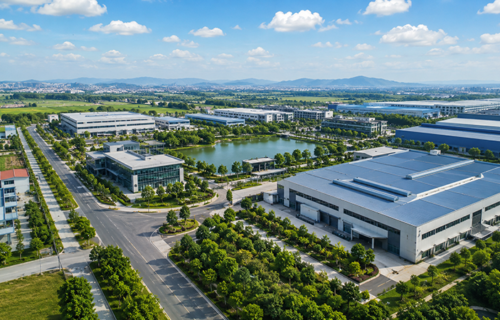
India’s industrial property market is beginning to undergo a transformation that could change how manufacturing real estate is developed, financed and operated. The traditional model of providing industrial land, basic factory buildings and warehouse space is gradually being supplemented by larger developments capable of supporting much more of a manufacturer’s operational requirements.
The transition is far from complete. A substantial proportion of India’s industrial stock remains relatively basic, while the most sophisticated projects are concentrated among major government-backed industrial cities and institutional private developers. Nevertheless, these developments provide an indication of where the market is heading.
Manufacturers increasingly require more than a building and road access. Reliable electricity, industrial water, wastewater treatment, telecommunications, employee transportation, security and logistics connections can determine whether a factory operates efficiently. For more advanced industries, the requirements become considerably more demanding. This creates an opportunity for industrial property developers to provide infrastructure before occupiers arrive rather than leaving individual manufacturers to develop it themselves.
The concept is particularly important as India’s modern industrial and logistics market expands. Grade A industrial and warehousing inventory reached approximately 300 million sq. ft. in 2026, almost twice the level recorded five years earlier.
Leasing has continued to increase alongside the expansion of stock. During the first half of 2026, approximately 36.2 million sq. ft. of industrial and logistics space was leased across India’s eight largest markets, representing growth of around 18% compared with the corresponding period a year earlier. Warehousing continued to account for the majority of activity, but industrial space itself approached 12 million sq. ft. of leasing and increased by approximately 36%.
This distinction matters because manufacturing facilities require considerably more complex infrastructure than conventional warehouses. A logistics building principally needs suitable access, loading facilities, fire protection, adequate electricity and efficient internal movement of goods. A manufacturing plant may additionally require high-capacity power, specialist water systems, treatment facilities, worker transport and complicated environmental infrastructure.
For some advanced industries, the availability and reliability of these services can be more important than the underlying cost of land. The competitiveness of industrial property is therefore increasingly determined by what surrounds the factory as much as the building itself.
Manufacturers appear ready to expand. Research conducted among manufacturing and logistics executives during 2025 found that close to nine out of ten respondents expected to increase their operations. At the same time, businesses continued to identify shortcomings in industrial facilities, logistics infrastructure and workforce availability.
For developers, this creates an opportunity to remove some of the difficulties companies encounter when establishing new production facilities. A manufacturer entering a prepared industrial development can potentially avoid constructing independent utility infrastructure, negotiating multiple service arrangements and solving basic connectivity problems before production begins.
The value proposition increasingly becomes speed. The faster a company can move from selecting a location to operating a factory, the more competitive the industrial development becomes.
India’s national industrial-corridor strategy increasingly reflects this approach. Large industrial developments are being planned around highways, dedicated freight routes, airports, ports and other major transport infrastructure. Instead of simply subdividing land into industrial plots, the objective is to create large manufacturing districts with infrastructure already available.
Several early projects demonstrate that the concept is no longer purely theoretical. Dholera in Gujarat, Shendra-Bidkin in Maharashtra, the integrated industrial development at Greater Noida and Vikram Udyogpuri in Madhya Pradesh have reached stages where industrial activity is taking place.
Dholera provides one of the clearest examples of the new model. The development combines industrial land with roads, electricity distribution, telecommunications, water infrastructure, sewage treatment and facilities capable of handling industrial wastewater. These services are planned across the development rather than being created separately by every manufacturer.
A central management facility also allows infrastructure and public services to be monitored electronically, while parts of the water and utility system can be managed through digital technology. This creates a substantially different environment from a conventional industrial estate.
The arrival of major semiconductor investment at Dholera demonstrates why this matters. Advanced electronics manufacturing requires exceptionally reliable electricity and water infrastructure together with sophisticated environmental and logistics systems. Companies investing billions of dollars in manufacturing facilities cannot make location decisions primarily on the basis of inexpensive land.
The ability of a location to provide reliable infrastructure becomes part of the investment decision. AURIC at Shendra-Bidkin provides another example of this evolution.
More than 3,000 acres of industrial land had been allocated by 2025, with automotive, electric mobility and other manufacturing investments among the businesses establishing operations within the wider industrial city. Digital utility management and centralised infrastructure are part of the development, while training facilities are being introduced to support the workforce required by manufacturers.
The wider masterplan also incorporates residential, commercial and recreational uses. This is potentially one of the most important changes in industrial development.
Factories cannot operate without workers, and the availability of employees increasingly depends on the quality of the environment surrounding major employment locations. Industrial areas situated far from established cities can struggle with recruitment if workers face long journeys or lack suitable housing and everyday services.
Future industrial developments are therefore beginning to incorporate employee accommodation, transportation and social infrastructure into their planning. This could gradually change the relationship between industrial property and residential development.
Instead of factories being separated from the communities that support them, major industrial locations could evolve into employment centres surrounded by housing, retail, healthcare, education and other services.
Private developers are already demonstrating parts of this model. Large professionally managed industrial developments in Chennai and other manufacturing regions increasingly provide serviced industrial land together with utilities, security, logistics support and environmental infrastructure.
Some developments combine employment areas with residential and social uses, allowing industrial activity to become part of a broader urban environment. Institutional industrial developers are also introducing technology into park operations.
Digital meters can monitor electricity and water consumption. Electronic gate systems can manage trucks and visitors. Sensors can support infrastructure maintenance, while centralised security systems can monitor large sites more efficiently.
Artificial intelligence is beginning to appear in selected security and operational applications, but it would be premature to describe AI-controlled industrial parks as the normal model across India. The more significant development is the gradual collection and use of operational data.
An industrial landlord capable of monitoring utilities, traffic and maintenance across an entire estate can potentially operate the property more efficiently than a collection of individually managed factories. Occupiers can also benefit.
Manufacturers increasingly need detailed information about energy and water consumption, both to control costs and to meet corporate environmental objectives. Digital infrastructure can make that information easier to collect.
Sustainability is consequently becoming closely connected to industrial infrastructure rather than remaining simply a building certification exercise. Large manufacturing developments can consume substantial amounts of electricity and water. The ability to generate renewable energy, reuse treated water and manage resources more efficiently can therefore have direct financial benefits.
Some of India’s newer industrial developments already incorporate wastewater reuse, rainwater management and solar generation. Private industrial operators are installing rooftop solar systems and digital utility monitoring, while selected parks have introduced electric-vehicle charging supplied through renewable electricity generated on site.
These facilities can help developers compete for international manufacturers whose corporate environmental requirements increasingly influence location decisions. For a multinational company, selecting a factory location can involve comparing India not simply with another Indian state but with manufacturing locations elsewhere in Asia.
Vietnam, Thailand, Malaysia and Indonesia are all competing for investment in electronics, automotive manufacturing, advanced engineering and other strategic industries. Industrial real estate consequently becomes part of India’s international competitiveness.
A company considering a new factory needs to understand how quickly land can be secured, approvals obtained, utilities connected and construction completed. Delays can represent substantial costs. A prepared industrial location capable of providing infrastructure from the beginning can reduce that uncertainty.
This is one reason India’s newest national industrial-park programme could have substantial implications for property development. The government approved approximately ₹33,660 crore in 2026 for an initiative intended to support the creation of 100 investment-ready industrial parks.
The programme aims to provide prepared sites and supporting infrastructure rather than simply identifying industrial land. The scale is significant because it could extend the integrated development model into locations that currently lack institutional-quality industrial property.
However, these future parks remain primarily a development pipeline rather than completed stock. The programme was still at an early implementation stage during 2026, meaning its success will depend on project selection, infrastructure delivery and the ability to attract genuine manufacturing demand.
For investors, this creates both opportunity and execution risk. India has already demonstrated through projects such as Dholera and AURIC that large integrated industrial developments can be created. The challenge is reproducing that quality across a much wider range of locations.
The private sector can play an important role. Institutional developers can differentiate themselves from traditional industrial estates by providing better infrastructure, professional property management and services that reduce operating difficulties for tenants.
Not every development needs the same facilities. A semiconductor cluster has very different requirements from an automotive park, pharmaceutical manufacturing centre or conventional engineering estate.
The next stage of India’s industrial property market could therefore involve greater specialisation. Electronics clusters may require testing facilities, clean infrastructure and specialised training. Pharmaceutical locations can require sophisticated environmental systems and laboratories. Automotive parks can benefit from supplier networks and large logistics areas.
Industrial property can increasingly be designed around the industry it intends to attract. This creates a different investment model from conventional speculative warehousing.
A developer is no longer simply constructing buildings that can be leased interchangeably to multiple logistics companies. Instead, the developer can create a long-term industrial platform containing land, buildings, utilities, environmental infrastructure and shared services.
Park management can then continue after construction. Security, landscaping, utilities, maintenance, traffic management and common infrastructure can remain under centralised professional control.
For investors, that operating platform can become part of the value of the asset. A well-managed industrial park with established occupiers, reliable infrastructure and limited available land can be more difficult to reproduce than an individual warehouse.
Successful manufacturing clusters can also create economic activity beyond their boundaries. Major factories attract component suppliers. Suppliers create demand for warehouses and logistics services. Workers require housing, shops, hotels, healthcare and transportation.
Industrial investment can consequently generate multiple layers of property demand. This is already visible around established automotive and manufacturing corridors in Chennai, Pune, Bengaluru and Delhi-NCR, where industrial expansion has contributed to wider residential and commercial development.
Large industrial parks can therefore evolve into regional property markets rather than remaining isolated manufacturing locations. That has important implications for institutional capital.
As industrial estates become larger, professionally managed and supported by long-term occupiers, they can become more suitable for investors seeking scalable real estate platforms. The opportunity extends beyond warehouse ownership.
Capital can potentially participate in factory buildings, infrastructure, logistics facilities, renewable energy systems and supporting commercial property around major manufacturing locations.
India’s challenge is not that its manufacturing output has failed to grow. The more persistent problem is that manufacturing has struggled to increase its share of the economy as rapidly as successive governments have targeted.
Improving the physical environment in which manufacturers operate can form part of the response. Companies that can establish factories faster, obtain reliable utilities and connect efficiently with suppliers and transport networks face fewer barriers to expansion.
Industrial real estate therefore becomes part of manufacturing policy. The strongest industrial developments of the next decade are unlikely to be judged simply by the amount of land sold or warehouse space completed.
Their competitiveness will increasingly depend on the reliability of power and water, transport connections, digital systems, environmental infrastructure, workforce access and the quality of long-term management.
India is still some distance from making this model standard across its industrial property market. That is precisely why the opportunity is significant.
Government-backed developments have demonstrated that integrated industrial cities can work, while institutional private developers are showing how technology, environmental infrastructure and professional management can improve individual industrial parks.
The next challenge is scale. If India’s proposed new industrial parks successfully reproduce these characteristics across a wider range of manufacturing corridors, industrial property could become a considerably more sophisticated institutional asset class.
The warehouse will remain an important part of that market, but it will no longer define it. India’s next generation of industrial real estate is increasingly being built around the factory, the infrastructure and the workforce as one connected investment ecosystem.
Source: © CIJ.World India Research & Analysis Team