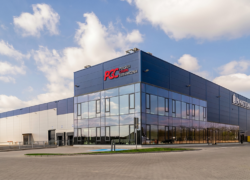
MLP Group reports higher leasing volumes in 2025

MLP Group recorded an increase in leasing activity in 2025, reflecting continued demand for logistics and industrial space across its core European markets. Over the course of the year, the Group leased a total of 363,200 sq m of space, representing an increase of around 20% compared with the previous year. As a result, the vacancy rate at year-end declined to 4.5%.

Leasing activity was supported by the signing of 56 lease agreements, including contracts with 39 new tenants, while the remaining transactions related to lease renewals with existing occupiers. According to the company, demand was driven primarily by tenants seeking modern logistics facilities in established locations.

The higher leasing volume translated into improved portfolio indicators. The vacancy rate decreased from 8% as at the end of September 2025 to 4.5%, while the weighted average unexpired lease term (WAULT) extended to approximately 7.8 years, increasing the visibility of rental income.

Radosław T. Krochta, Chief Executive Officer and President of the Management Board of MLP Group S.A., said the results reflected the company’s focus on its core European markets and a business model designed to perform across different market cycles. He added that leasing activity in the second half of 2025 was particularly strong and that the Group intends to continue expanding in key locations in 2026.

Looking ahead, MLP Group plans to launch new projects in Poland, including in Wrocław, Rzeszów, Warsaw and Poznań. International expansion is also set to continue, with planned developments in Germany and Austria. The company is preparing to commence projects in Munich, Hamburg and the Düsseldorf area, while also securing additional land in Hamburg and Munich to support future development from the second half of 2026.

MLP Group operates in Poland, Germany, Austria and Romania, developing Class A logistics parks ranging from urban logistics facilities to large-scale warehouse and industrial projects. The company states that its developments are delivered in line with ESG standards, with a focus on energy efficiency and long-term operational performance.

AFI Group to add Nová Elektra rental project in Prague to AFI Home portfolio

AFI Group is expanding its rental housing portfolio in Prague with the planned acquisition of the Nová Elektra residential project in Prague 9 – Hloubětín. The scheme, currently under development by FINEP, is scheduled for completion in December 2026 and will be incorporated into AFI’s rental platform under the AFI Home brand. Operations are expected to begin in the second quarter of 2027, following the furnishing of the apartments.

Construction of the building shell has recently been completed, and work is now progressing on technical installations and interior finishing. The project comprises two apartment buildings divided into four sections, delivering a total of 291 rental units. Apartment layouts will range from 1+kk to 4+kk, targeting a broad tenant base.

According to Pavel Jelínek, Chief Engineer at AFI Czech Republic, Nová Elektra is the first AFI project developed in cooperation with FINEP. He noted that the completion of the structural phase marks a key milestone, allowing the project to move into its next stage of implementation.

The development consists of four eight-storey buildings with shared underground parking providing 309 spaces, as well as technical facilities and basement storage units. Most apartments will feature balconies, while ground-floor units will include private front gardens. The scheme will also offer a 24-hour reception, on-site building management services, and a landscaped internal courtyard intended for residents’ use. As with other AFI Home projects, the apartments will be delivered partially or fully furnished and equipped with household appliances.

Elena Pisotchi, Rental Housing Manager at AFI Czech Republic, said the project reflects continued demand for professionally managed rental housing in Prague. She added that the combination of modern layouts, furnished units and in-house services is intended to meet the expectations of a wide range of tenants.

Nová Elektra is located in Hloubětín, an area undergoing gradual redevelopment and benefiting from good public transport connections. The site is close to metro and tram lines and offers convenient access both to Prague’s city centre and to surrounding recreational areas, supported by improving local amenities.

Poland moves to map renewable potential with new RES law

Poland has adopted new legislation designed to create a more predictable and transparent framework for renewable-energy investment, bringing national policy closer into line with the EU’s climate and energy objectives. Approved in November 2025, the law introduces an obligation to map the country’s renewable-energy potential and to designate areas for accelerated renewable-energy development, addressing structural challenges that have long slowed project implementation.

The reforms are intended to reduce administrative complexity, improve transparency in spatial planning and strengthen regulatory certainty. By doing so, they aim to enhance Poland’s appeal to renewable-energy investors at a time when competition for capital across Europe is intensifying.

The legislation reflects the requirements of the EU’s RED III Directive, which obliges member states to identify areas needed to meet their national contributions to EU renewable-energy targets. Under RED III, countries must prepare digital maps covering onshore and offshore areas that show renewable-energy potential while taking into account existing and planned infrastructure such as transmission networks and energy-storage facilities. The directive also introduces the concept of Areas for Accelerated Renewable Energy Development, where projects may proceed under simplified procedures and reduced environmental requirements, provided there are no significant transboundary impacts.

Central to the new Polish framework is the introduction of renewable-energy potential maps as digital tools identifying locations with the highest suitability for different technologies, including onshore and offshore wind, photovoltaics, geothermal energy, hydropower and biogas. The maps, prepared under the responsibility of the minister overseeing climate policy, combine data on resource availability, projected energy demand, existing and planned technical infrastructure and environmental constraints such as protected areas and wildlife migration routes. They will be updated periodically as part of revisions to the integrated National Energy and Climate Plan, allowing them to serve as a strategic reference for both investors and public authorities.

Areas for accelerated renewable-energy development will be designated on the basis of these maps at the regional, or voivodeship, level through resolutions adopted by regional assemblies. Separate plans will be prepared for each type of renewable installation, with priority given to degraded or post-industrial land, artificial water reservoirs and areas linked to technical or transport infrastructure. Environmentally sensitive zones identified through nature-sensitivity mapping will be excluded. Each plan will undergo a strategic environmental assessment and be preceded by public consultations and coordination with relevant authorities, seeking to balance faster investment with environmental protection and public interest.

Within designated accelerated areas, renewable-energy projects will benefit from simplified administrative procedures. In most cases, environmental decisions or full environmental impact assessments will not be required, and fast-track processes will apply to the issuance of building permits.

The law also introduces the option to designate accelerated areas through Integrated Investment Plans initiated at the request of investors. These plans function as a special form of local zoning instrument, enabling faster and more flexible adaptation of planning documents to the needs of specific renewable-energy projects. Used together with renewable-energy potential maps and accelerated development areas, they are intended to improve land-use efficiency while mitigating environmental and social risks and increasing predictability in the investment process.

If implemented effectively, the new framework could significantly improve investment conditions in one of the EU’s largest energy markets and support Poland’s gradual transition toward a more diversified, low-carbon energy mix. By combining digital mapping of renewable potential with accelerated development zones and streamlined permitting, the reform has the potential to shorten project timelines while strengthening energy security and compliance with EU climate commitments. Its success, however, will depend on transparent execution and effective coordination between central government, regional authorities and the private sector.

Source: CMS

CA Immo launches new share buyback programme

CA Immobilien Anlagen AG has announced the launch of a new share buyback programme, following a resolution adopted by its Management Board in line with Article 65(1)(8) of the Austrian Stock Corporation Act (AktG). The programme is based on the authorisation granted by the company’s 38th Annual General Meeting held on 5 May 2025.

Under the programme, CA Immo may repurchase up to 2,768,907 shares, corresponding to approximately 2.74% of the company’s current share capital. The shares will be acquired via the stock exchange, with transactions carried out in accordance with the terms set out in the AGM authorisation.

The purchase price per share must not be lower than 30% below, nor higher than 10% above, the average unweighted closing price of the company’s shares over the ten trading days preceding the repurchase. In addition, the maximum price paid per share may not exceed the most recently published IFRS net asset value (NAV) per share.

The share buyback programme is expected to commence no earlier than 15 January 2025 and will run until no later than 4 November 2027. The repurchased shares may be used for any purpose permitted under the AGM authorisation.

According to the company, the general objective of the programme is to enhance shareholder value.

CA Immo secures long-term full occupancy at Postępu 14 office building in Warsaw

CA Immo has secured long-term full occupancy at its Postępu 14 office building in Warsaw following a series of lease extensions and expansions with two anchor tenants, AstraZeneca and Samsung. The agreements cover a total of nearly 28,500 sq m of office space and result in a weighted average unexpired lease term (WAULT) of approximately 6.5 years.

AstraZeneca has extended its lease until 2032 and expanded its premises by around 1,700 sq m. The company will ultimately occupy close to 23,000 sq m within the building. Samsung has renewed its lease for approximately 5,500 sq m for a further seven years. Together, the transactions bring the building to full occupancy.

Postępu 14 forms part of CA Immo’s Warsaw office portfolio and follows the recent achievement of full occupancy at the Saski Crescent office building. The company attributes the leasing activity to its focus on long-term tenant relationships and active, tenant-oriented asset management.

According to Dawid Wątorski, Senior Leasing Manager at CA Immo Poland, the lease extensions demonstrate continued demand from large international occupiers. He noted that retaining tenants of this scale reflects the building’s ability to meet evolving corporate requirements in terms of flexibility, technical standards and workplace quality.

Postępu 14 is located in Warsaw’s Mokotów business district, at the junction of Marynarska and Postępu streets. The building provides more than 34,000 sq m of office space across 10 floors and benefits from access to public transport, proximity to a nearby rail station and short travel time to Warsaw Chopin Airport.

The property is classified as a class A office building and holds a BREEAM Excellent certification. It is fully supplied with electricity from renewable energy sources and meets EU Taxonomy-aligned energy efficiency criteria. On-site amenities include more than 700 parking spaces, facilities for cyclists, around 200 electric vehicle charging points, as well as food and beverage services.

As of 30 September 2025, CA Immo’s Warsaw portfolio comprised six office buildings with a combined lettable area of approximately 136,000 sq m and a total book value of around €470 million.

European student housing set for growth, but supply gaps persist

European student housing is expected to see continued investment growth over the coming years, although structural shortages are likely to remain, according to recent research by Savills and The Class Foundation.

The findings are based on the 2025 European Purpose-Built Student Accommodation (PBSA) Investment Barometer, which surveyed investors and operators managing portfolios of more than 136,000 student beds across Europe, with an estimated asset value of around €18.8 billion. Respondents indicated strong interest in expanding their exposure to student housing, with PBSA emerging as one of the most targeted living sectors for future investment.

According to the survey, around 62% of respondents plan to allocate capital to PBSA in the coming years. Investors and operators expect to increase the size of their portfolios by roughly 70% over the next two to five years, potentially deploying close to €20 billion in additional capital. Even if these plans are fully realised, however, the overall provision of purpose-built student housing across Europe would remain limited. Savills estimates that the average European provision rate would rise only modestly, from around 14% to approximately 18%, assuming student numbers remain broadly stable.

The research highlights that demand continues to outpace supply in many major university cities, including Prague. Savills’ 2024 analysis of the Prague market shows that student demand has remained consistently high over the long term, while the development of new accommodation has not kept pace.

Prague currently has an estimated 29,000 to 30,000 student beds, the majority of which are owned and operated by public or private universities. These university dormitories account for roughly 90% of total capacity. While refurbishment and modernisation programmes are underway, they are typically gradual and do not substantially increase overall capacity.

Private PBSA remains limited in the Czech capital. In 2024, Savills identified 22 privately owned student residences in Prague with a combined capacity of close to 3,000 beds. When existing co-living schemes popular with students are included, total private capacity rises to approximately 3,800 beds.

At the same time, Savills estimates that around 75,000 university students seek accommodation in Prague each academic year. The mismatch between demand and available beds has contributed to increased pressure on the traditional residential rental market, as many students are unable to secure places in dedicated student housing and turn to the private rental sector instead.

Savills concludes that the combination of stable student demand, limited supply growth and the slow pace of expansion in university-owned accommodation continues to underpin investor interest in PBSA, both in Prague and across Europe. However, the research also suggests that even a significant increase in investment activity is unlikely to eliminate structural undersupply in the sector in the medium term.

Source: Savills

Atradius survey suggests limited impact of AI on manufacturing jobs

A survey conducted by international credit insurer Atradius indicates that artificial intelligence is not expected to lead to widespread job losses in Germany’s manufacturing sector, despite growing public debate around AI-driven redundancies.

According to the survey, carried out among more than 470 companies at the end of 2025, 79 per cent of respondents do not expect artificial intelligence to result in job losses in the coming years. Only six per cent of companies anticipate that AI could directly lead to a reduction in employment.

The findings suggest that, unlike in some service-oriented industries, manufacturing remains heavily dependent on human labour. “The often-expressed concern that AI will replace jobs on a large scale is not reflected in our survey,” said Frank Liebold, Country Manager Germany at Atradius. He noted that AI is primarily being used to support and modify existing workflows rather than to fully replace them, adding that it “changes processes, it doesn’t take them over”.

Looking at recent experience, the impact of AI on employment has so far been limited. Around 82 per cent of surveyed companies reported that AI has not contributed to job cuts in the past. Only six per cent cited AI as a factor in previous layoffs, reinforcing the view that its role in workforce reduction remains marginal in manufacturing.

At the same time, many companies are actively preparing for technological change. Investments in employee training, digital competencies and a better understanding of AI applications are becoming more common. Firms are also focusing on developing skills that are difficult to automate, as part of a broader effort to adapt to evolving production processes. Nearly 60 per cent of respondents stated that they are actively engaging with current AI-related trends and technologies.

The survey covered a broad cross-section of the German economy, including companies from the automotive, construction and building materials, chemical, electronics, finance, IT and software, consumer goods, agriculture, food, mechanical engineering, metals, paper, textiles and transport sectors. Participating firms ranged from small businesses with fewer than 100 employees to large organisations employing more than 1,500 people, with annual turnover spanning from under €5 million to more than €1 billion.

Overall, the results suggest that while AI is increasingly influencing how manufacturing companies operate, its impact is currently centred on process optimisation rather than large-scale workforce reductions.

Inflation outlook eases as disinflationary forces dominate Polish economy

The Future Inflation Index (WPI), which anticipates changes in consumer goods and services prices several months ahead, declined by 0.4 points month on month, signalling a continued easing of inflationary pressures heading into January 2026. Most components of the index point towards further disinflation, with only consumer and business inflation expectations contributing to potential upward pressure on prices.

Disinflationary trends remain firmly entrenched in the real economy of Poland and its external environment. Global commodity prices have been broadly stable for the past two years, with a mild downward trend. Price declines have been most visible in energy commodities, while food prices have remained largely unchanged. According to market experts, these conditions are likely to persist into 2026.

Currency dynamics are also supporting price stability. The zloty has remained stable against both the euro and the US dollar and is currently at its strongest level in almost three years, reducing the cost of imports and easing inflationary pressure from abroad.

Producer price data continues to show no tangible pressure to raise prices. While surveys indicate that managers in the manufacturing sector are increasingly considering price increases, these intentions have not yet translated into actual pricing decisions. Inflation expectations among manufacturing firms have risen for a second consecutive month, with the share of managers planning price increases now exceeding those planning reductions by nearly six percentage points, up from 3.5 points a month earlier.

The inclination to raise prices is strongest among smaller companies and is particularly visible in the pharmaceutical and chemical sectors. A growing share of machinery and equipment manufacturers is also signalling potential price increases, likely reflecting rising investment activity. Despite these signals, producer price inflation remains negative, with average annual PPI in deflationary territory for more than two years.

Household surveys also show a moderate increase in inflation expectations. The proportion of consumers anticipating faster price growth has risen, while the share expecting slower growth has declined. Those expecting price increases at a similar pace remain unchanged from the previous month. Analysts view this uptick as temporary, potentially linked to seasonal price increases ahead of the Christmas period or higher consumer spending distorting perceptions.

At the same time, households report an improvement in their financial situation and express a willingness to increase spending over the next 12 months. While supportive of consumption, this trend could pose a risk to the durability of low and falling inflation in 2026 if demand strengthens more rapidly than supply.

Source: BIEC

Panattoni Sees Logistics as Essential Economic Infrastructure

Panattoni has underlined the growing strategic importance of logistics real estate, positioning modern industrial assets as mission-critical infrastructure that underpins supply chains, e-commerce and the digital economy.

As industrial and logistics property evolves beyond traditional warehousing, demand is increasingly driven by long-term structural trends rather than short-term market cycles. The expansion of e-commerce, automation, data centres and AI-enabled logistics is accelerating the need for high-specification, technology-enabled facilities that support both physical distribution and digital operations.

Against this backdrop, Panattoni continues to scale its privately owned, pan-European development platform, focusing on the delivery of modern space in supply-constrained markets. Founded in 1986, the company has grown into a global organisation with more than 1,100 professionals across North America, Europe, the UK, India and the Middle East. In Europe, where it has operated for over 20 years, Panattoni is active in 15 countries through 36 offices and has become the continent’s largest industrial developer.

The company’s private ownership model is seen as a key differentiator, enabling faster decision-making, long-term alignment and flexibility in responding to occupier and investor requirements. Panattoni is not reliant on a single capital source, allowing it to maintain evergreen investment capacity and pursue multiple strategies simultaneously. This agility is supported by a scalable product offering that is well understood by both occupiers and investors across jurisdictions.

Panattoni operates across the full development value chain, from land acquisition and planning through financing and construction to delivery and long-term asset management. Its development portfolio spans the logistics and industrial spectrum, including last-mile facilities, national distribution centres, cold storage, production-linked assets and specialised infrastructure such as data centres, where demand is rising sharply alongside AI-driven growth.

For investors, these fundamentals reinforce the positioning of logistics real estate as a top-tier global conviction strategy. Constrained supply in key logistics corridors, rising requirements for scale and power, and occupier commitments to decarbonisation and operational efficiency are supporting resilient income profiles and long-term relevance. Panattoni’s focus on modern, sustainable stock aims to align with these trends, targeting high ESG performance and future-proofed assets.

Robert Dobrzycki, Chief Executive Officer and Co-Owner of Panattoni, said that logistics real estate has become essential infrastructure for modern economies, with demand for high-quality, technology-enabled space continuing to deepen across European markets. He added that the company is scaling its platform across Europe and the UK to deliver the next generation of sustainable, power-rich facilities needed to keep supply chains resilient and competitive.

According to Dobrzycki, the same fundamentals underpin the investment case, with logistics real estate now firmly established as a core global strategy supported by structural demand, limited supply and increasing emphasis on supply-chain security and decarbonisation.

Jet Investment acquires logistics site for Jet Industrial Park Gdańsk

Jet Investment has acquired a logistics development site in northern Poland, marking its seventh strategic investment in the country. The project, to be developed as Jet Industrial Park Gdańsk, is located in Będzieszyn, approximately 15 kilometres south of Gdańsk, close to the S6 national route.

The investment covers a land area of 15.2 hectares and has a reported value of €50 million. Construction is scheduled to begin in the first quarter of 2026, following the receipt of a building permit.

Jet Industrial Park Gdańsk will comprise two warehouse buildings with a total gross leasable area of 65,820 sq m, split between units of 49,170 sq m and 16,650 sq m. The facilities are planned with a clear internal height of 12 metres, allowing for standard logistics operations and efficient space utilisation.

Jan Kos, Director of Real Estate Acquisition at Jet Investment, said the transaction reflects the company’s long-term view of the Polish industrial property market and its role within Central and Eastern Europe’s logistics network. He added that the development is intended to meet institutional standards and that the company aims to achieve a high level of BREEAM certification, in line with ESG requirements of its capital partners.

The project is located within the Tri-City region, one of Poland’s key logistics markets. Its proximity to the Port of Gdańsk supports access to international supply chains. The port is the largest container hub in the Baltic Sea and offers direct transoceanic connections to Asia, alongside extensive links across Europe. Ongoing expansion of the Baltic Hub terminal is expected to further increase regional throughput capacity in the coming years.

According to Jet Investment, the location also offers access to a broad labour pool in logistics, production and value-added services, which is a key consideration for potential tenants. The development is expected to support regional economic activity once operational.

Leasing advisory services for the project have been appointed to Sharow Asset Management Ltd..

front page info
LATEST NEWS