Czech Unemployment Ticks Up in December, Analysts Point to Seasonal Effects

Unemployment in the Czech Republic increased at the end of 2025, rising to 4.8% in December from 4.6% in November, according to new data released by the Labour Office of the Czech Republic. Compared with December 2024, the unemployment rate was 0.7 percentage points higher.

Economists said the month-on-month rise was broadly expected and largely reflects seasonal developments typical for the winter period.

A total of 354,314 people were registered as unemployed in December, roughly 13,000 more than in November and around 48,000 more than a year earlier. At the same time, the number of job vacancies declined by approximately 3,200, falling to 87,422 positions nationwide.

Seasonal slowdown behind the increase

According to analysts, the December rise in unemployment follows long-standing seasonal patterns. Hiring activity usually weakens at the end of the year, while temporary and outdoor jobs—particularly in construction and some service industries—are reduced during the winter months.

Economists also noted that although unemployment rose compared with November, the increase was smaller than in December 2024 and remained below the long-term December average. This, they said, may signal early signs of labour market stabilisation as economic activity gradually improves. So far, however, the recovery appears to be reflected more in fewer layoffs than in a strong expansion of new job creation.

For 2025 as a whole, the average unemployment rate reached 4.4%, up from 3.8% in 2024. Analysts expect a slight further increase in early 2026, with unemployment likely peaking in January before easing gradually in the following months as seasonal effects fade.

Strong regional differences persist

Regional disparities in unemployment remained pronounced. The Ústí Region recorded the highest unemployment rate in December at 7.1%, while Prague continued to report the lowest level, at 3.6%. Economists note that such differences are structural and long-standing, driven by the uneven distribution of jobs and housing affordability. Regions with stronger labour demand often face higher living and housing costs, limiting labour mobility.

Older jobseekers remain unemployed longer

Data from employment offices also highlight differences by age group. Applicants aged over 50 tended to remain unemployed for the longest periods, with nearly half registered for more than a year. In contrast, younger jobseekers under 29 years of age typically returned to work more quickly, with fewer than one in five remaining unemployed for longer than twelve months.

Labour market specialists stress that, in the context of an ageing population, employers cannot afford to overlook older workers. Better use of their experience and adjustments to working conditions could help reduce long-term unemployment while easing labour shortages across the economy.

Overall, the December figures suggest that while unemployment rose toward the end of the year, the increase was largely seasonal and does not yet indicate a significant deterioration in labour market conditions.

Czech Central Bank Posts Loss in 2025 Following Strong Koruna Appreciation

The Czech National Bank recorded a loss of CZK 72.9 billion in 2025, according to its preliminary balance sheet released on Thursday. The result follows a record profit in 2024 and was primarily driven by the sharp strengthening of the Czech koruna against major currencies, particularly the US dollar.

The central bank said that the koruna’s 14.8% appreciation against the dollar significantly reduced the value of its foreign assets, leading to a CZK 223.6 billion decline in asset valuation. This currency effect was the main factor behind the negative annual result, despite strong investment performance in the bank’s foreign exchange reserves.

Costs associated with the execution of monetary policy also weighed on the outcome, amounting to CZK 100.3 billion. However, these expenses fell by CZK 44.7 billion year on year, reflecting the gradual reduction in key interest rates over the course of 2025.

At the same time, returns on foreign exchange reserves reached a record CZK 252.8 billion, supported by favourable developments in reserve currencies, where assets appreciated by 10.3%. Reserve income increased by nearly CZK 92 billion compared with the previous year. According to the CNB, higher exposure to equities and additional gold purchases contributed to the strong investment performance.

The central bank noted that exchange rate movements were decisive for the final outcome. Had the koruna remained at its level from the beginning of the year, the CNB would have reported a profit of approximately CZK 150 billion.

The 2025 loss deepened the CNB’s accumulated negative result from previous years, which stood at CZK 277.2 billion at the end of the year. The bank stressed that the published figures remain provisional and do not yet include all accounting operations for 2025. The final, audited financial results are expected to be released in the spring.

The CNB has repeatedly emphasised that generating profit is not its primary objective. Its core mandate remains maintaining price stability and safeguarding financial stability, alongside managing currency issuance, payment systems and oversight of the financial sector.

Source: CTK

Czechia: Property Owners and Managers Liable for Damage Caused by Falling Snow

Property owners and building administrators in the Czech Republic bear responsibility for damage or injuries caused by snow or ice falling from roofs, unless they can demonstrate that adequate preventive measures were taken in advance. This was stated by Lukáš Syrový, head of the real estate law team at Havel & Partners, in comments to the Czech News Agency.

According to Syrový, liability applies both to property damage and personal injury. If falling snow damages property, such as a parked vehicle, the responsible party must compensate the injured party for the full cost of repairs, as well as related expenses including towing or, where applicable, the rental of a replacement vehicle and lost income.

In cases where falling snow or ice causes bodily harm, the legal consequences can be more serious. Injured individuals may seek compensation for pain and suffering, reduced quality of life, medical expenses, and loss of earnings. In exceptional circumstances, criminal liability may also arise, including charges related to negligent bodily harm or, in extreme cases, negligent homicide.

Prevention is key to limiting liability

To reduce the risk of damage and legal exposure, owners and administrators are advised to regularly inspect roofs and arrange for the removal of snow and ice during periods of heavy snowfall. The installation of snow retention systems, designed to prevent sudden snow slides, is also considered an important preventive measure.

Warning signs alerting passers-by to the risk of falling snow are not sufficient on their own to absolve owners or administrators of responsibility. However, Syrový noted that such signage may be taken into account as a mitigating factor, particularly when combined with other concrete preventive actions.

While incidents involving injuries to pedestrians are relatively rare, disputes related to property damage occur more frequently, especially in urban centres. These cases most often involve snow or ice falling onto vehicles parked near buildings. Although many disputes are resolved through out-of-court settlements, legal proceedings are not uncommon, and repair costs can reach tens of thousands of crowns.

The legal reminder comes amid renewed winter weather across the Czech Republic. Heavy snowfall affected the western part of the country on Friday, disrupting traffic on motorways, mountain roads and in city centres. Meteorologists expect occasional snowfall or snow showers to continue across much of the country, increasing the importance of preventive measures by property owners.

Source: CTK

Czech Government Rules Out Battery Gigafactory Project in Dolní Lutyně

The planned construction of a large-scale battery manufacturing plant in Dolní Lutyně, located in the Karviná region, will not proceed, Czech Prime Minister Andrej Babiš announced on Sunday. The decision follows sustained opposition from local residents, who have expressed concerns over the project’s impact on the community and surrounding environment.

The proposed facility, intended to produce batteries for electric vehicles, was prepared under the previous government led by Petr Fiala. According to Babiš, public resistance at the local level played a decisive role in abandoning the project. He added that the government would now seek alternative investment opportunities for the approximately 278-hectare site, focusing on projects that would gain broader local support.

The announcement came as a surprise to municipal officials. Pavel Buzek, mayor of Dolní Lutyně, said he had not been informed in advance but noted that residents had long opposed large-scale industrial development on the site. He highlighted the proximity of the land to protected natural areas and warned that such a project could divide the municipality geographically and place heavy demands on local infrastructure.

Criticism of the decision came from former Minister of Industry and Trade Lukáš Vlček, who argued that abandoning the gigafactory represents a missed opportunity for the Czech economy. According to him, the project could have strengthened the country’s automotive sector, generated significant public revenues, and supported economic transformation in a region affected by the gradual decline of coal mining.

Under earlier plans, the state had approved the transfer of land for a business park valued at approximately CZK 200 billion, with expectations of creating up to 7,000 jobs. However, a potential foreign investor postponed its decision last year amid weaker global demand for electric vehicles and battery technologies.

Local civic groups have consistently voiced concerns over environmental risks, the loss of agricultural land, and the scale of the proposed development. Representatives of the association Zachovejme Poolší confirmed they had communicated these concerns directly to the prime minister and called for a broader discussion on alternative uses of the site. While the land remains designated as strategically important for state investment, the group maintains that projects of such magnitude are incompatible with the character of the area.

In his statement, Babiš also outlined several broader government initiatives, including plans for closer cooperation with Slovakia on housing and energy projects. He said Czech ministers would report on discussions with their Slovak counterparts in early March, ahead of a joint government meeting expected later in the month.

Separately, the prime minister reiterated his government’s position on foreign policy, stating that the Czech Republic would not deploy troops to Ukraine or fund military supplies. He also referenced recent discussions with U.S. President Donald Trump, emphasizing the role of the United States in any future peace efforts related to the war in Ukraine.

The decision to abandon the gigafactory marks a significant shift in the Czech Republic’s industrial development plans and underscores the growing influence of local and environmental considerations in large-scale investment projects.

Source: CTK

Business Bankruptcies in the Czech Republic Rise to Highest Level Since 2021

Courts in the Czech Republic declared bankruptcy for 6,213 entrepreneurs in 2025, marking a 16% increase compared with the previous year and the highest annual total since 2021, according to a new analysis by the Czech Credit Bureau.

The number of insolvency rulings rose by 863 cases year on year, while courts accepted 6,568 bankruptcy petitions, an increase of 12% compared with 2024. Despite the acceleration, the total number of bankruptcies remained below levels recorded during the peak pandemic period in 2020.

Analysts note that the pace of growth in business insolvencies more than doubled compared with the end of 2024, reversing the downward trend observed between 2021 and 2023. At the same time, the broader financial position of entrepreneurs has shown mixed signals. While business lending expanded sharply toward the end of the year, deposits held by entrepreneurs continued to significantly exceed outstanding loans, and the proportion of non-performing loans declined further.

Another structural factor influencing insolvency statistics is the continued rise in the number of registered entrepreneurs, which reached its highest growth rate in the past six years. In addition, the vast majority of insolvency cases involving sole traders—around 97%—ended with the approval of debt relief, allowing individuals to continue operating their businesses under personal bankruptcy arrangements.

On average, Czech courts declared bankruptcy for 518 entrepreneurs per month in 2025, up from 446 per month in 2024. Monthly bankruptcy filings also increased, with courts receiving an average of 547 applications per month, compared with 488 a year earlier.

Regional differences remain pronounced

As in the previous year, the Moravian-Silesian Region recorded the highest number of entrepreneur bankruptcies, with 829 cases, followed by the Central Bohemian Region (737) and Prague (724). Insolvency numbers rose in every region, although the intensity of growth varied significantly.

The sharpest year-on-year increase was recorded in the Karlovy Vary Region, where bankruptcies rose by 37%. Substantial growth was also reported in the South Bohemian Region (27%) and the Liberec Region (25%). By contrast, the Moravian-Silesian Region showed the slowest growth rate despite having the highest absolute number of cases.

Measured relative to the number of active entrepreneurs, the risk of bankruptcy was highest in the Karlovy Vary Region, where 90 bankruptcies were recorded per 10,000 entrepreneurs. Similar levels were observed in the Liberec and Ústí Regions. Prague, on the other hand, recorded the lowest relative insolvency rate, with 39 bankruptcies per 10,000 entrepreneurs in 2025.

Construction most affected by insolvencies

By sector, construction remained the most exposed to business failure, accounting for 1,502 bankruptcies during the year. This was followed by wholesale and retail trade, including vehicle repair, with 1,014 cases, and manufacturing, where courts declared 833 bankruptcies.

Among major industries, the fastest growth in insolvencies was recorded in administrative and support service activities, where bankruptcies increased by 34% year on year.

Overall, the findings suggest that while the Czech business environment remains relatively resilient, pressure on smaller entrepreneurs intensified in 2025, particularly in construction-related and service-oriented sectors, as cost pressures and financing conditions continued to challenge business sustainability.

Source: CTK

Czech Inflation Holds Steady at 2.1% in December, Averaging 2.5% for 2025

Consumer price growth in the Czech Republic remained unchanged at the end of 2025, with inflation holding at 2.1% year on year in December, matching the rate recorded in November. The figures were confirmed by the Czech Statistical Office, which also published final data for the full year.

On a monthly basis, consumer prices declined by 0.3% in December, reflecting easing pressures in several spending categories.

For 2025 as a whole, average inflation reached 2.5%, slightly higher than in 2024. Over the year, prices of goods increased by 1.1%, while services became 4.7% more expensive, underlining the continued divergence between these two components of consumer spending.

Housing and services remain key inflation drivers

Housing-related costs were the main factor behind December’s annual price growth. Expenses linked to owner-occupied housing rose by 5% year on year, while rents increased by 6.4%. Water supply and wastewater services were also more expensive, alongside higher charges for refuse collection and heating.

In contrast, energy prices provided downward pressure on inflation. Electricity prices fell by 5.1%, natural gas by 6.7%, and solid fuels by 2.4% compared with December 2024.

Prices in the alcohol and tobacco category continued to rise, driven mainly by higher tobacco prices. Food and non-alcoholic beverages also recorded notable increases, particularly meat, dairy products and coffee. Spending on restaurants and accommodation rose further, reflecting sustained price growth in hospitality services.

Recreation and cultural services also contributed to inflation, with higher prices for leisure activities and packaged holidays. At the same time, consumers benefited from lower prices for clothing, footwear and fuels, which helped offset part of the upward pressure elsewhere in the consumer basket.

Inflation stable throughout the year

During 2025, annual inflation generally fluctuated between 2% and 3%, with the lowest rate recorded in April and the highest in June. Overall, rising food prices and service costs played the most significant role in shaping last year’s inflation profile.

Alongside inflation data, the statistical office also released updated figures on foreign trade prices for November 2025, confirming continued year-on-year declines in both export and import prices. Export prices were down 4.7% compared with the previous year, while import prices fell by 5.4%, influenced in part by the strengthening of the Czech koruna against major currencies.

Energy commodities contributed significantly to the decline in trade prices, with sharp reductions recorded for electricity, oil and natural gas.

Taken together, the latest data suggest that while inflation in the Czech Republic has stabilised close to long-term targets, underlying price pressures—particularly in housing and services—remain an important factor heading into 2026.

Slovak Construction Output Peaks in November but Annual Growth Loses Momentum

Construction activity in Slovakia reached its highest monthly level of 2025 in November, although the pace of annual growth slowed noticeably compared with earlier in the year, according to new figures released by the Statistical Office of the SR.

Total construction output amounted to EUR 907.5 million in November, marking the first time this threshold was exceeded in 2025. In real terms, production was 2.4% higher than a year earlier, representing the weakest annual increase recorded during the year. After adjusting for seasonal effects, output rose 3.5% compared with October, confirming a short-term rebound in monthly activity.

The deceleration in year-on-year growth was largely driven by weaker performance in domestic new construction, which declined by 2.3%. Although repair and maintenance works expanded strongly, posting an 8.5% annual increase, their smaller share of total output meant they could not fully offset the downturn in new building activity.

From a structural perspective, building construction, which accounts for the largest portion of the sector, fell by 3.5% year on year after adjusting for inflation. Civil engineering works, including infrastructure projects such as roads and railways, recorded only marginal growth of 0.6%, indicating subdued momentum in large-scale public works.

By contrast, Slovak construction companies continued to report robust activity outside the domestic market. Output generated abroad was nearly one-third higher than in November 2024, extending a steady growth trend that has been in place since the final quarter of last year.

Looking at the broader picture, construction output for the first eleven months of 2025 reached approximately EUR 7.5 billion, representing a 6.5% real increase compared with the same period in 2024. This cumulative growth was supported by solid gains in both domestic new construction and repair activities, each expanding by more than 4% over the period. Construction work carried out abroad showed particularly strong performance, rising by nearly 28% year on year.

In terms of construction segments, both building construction and civil engineering contributed positively to the year-to-date results, with annual growth rates approaching 4%, slightly higher in infrastructure-related works.

The latest data underline a mixed picture for the Slovak construction sector as 2025 draws to a close: while overall output remains elevated and foreign activity continues to strengthen, weaker domestic new construction is weighing on annual growth dynamics.

Czech Prices End 2025 on a Softer Note as Trade and Inflation Pressures Ease

Price developments in the Czech Republic showed further signs of stabilisation toward the end of 2025, with both foreign trade prices and consumer inflation pointing to a calmer cost environment as the year closed.

Data published by the Czech Statistical Office indicate that prices linked to international trade continued to decline in November, while inflation at the consumer level remained moderate in December, broadly confirming a cooling trend seen throughout the second half of the year.

Trade prices reflect weaker external pressures

In November, prices of goods exported from the Czech Republic fell compared with both the previous month and the same period last year. The decline was most pronounced in energy-related products and industrial inputs, reflecting lower global commodity prices and softer demand across European markets. Chemical products and refined fuels also recorded notable price reductions, while some gains were observed in wood-related exports.

Import prices followed a similar trajectory, edging down slightly month on month and showing a sharper fall compared with November 2024. Energy commodities, particularly oil and gas, accounted for a significant share of the annual decline, alongside lower prices for clothing and electricity. At the same time, certain manufactured goods, including vehicles and household furnishings, became more expensive to import.

Despite these movements, the balance between export and import prices remained broadly favourable over the year, suggesting that Czech exporters were still able to maintain relatively stable pricing conditions compared with their trading partners.

Inflation steady at year-end

At the consumer level, prices eased in December compared with November, largely due to lower food costs and reduced spending on transport. Fuel prices fell again toward the end of the year, adding to the downward monthly effect, while seasonal price adjustments in food categories also played a role.

On an annual basis, however, consumer prices continued to rise at just over two percent, unchanged from the previous month. Housing-related expenses and services remained the main contributors to inflation, with service prices growing at a faster pace than goods throughout the year.

Looking at the full twelve months of 2025, average inflation settled in the mid-two-percent range. While goods prices showed only modest growth over the year, services became significantly more expensive, reflecting higher labour and operating costs across the economy.

Entering 2026 with moderated price dynamics

Taken together, the latest figures suggest that price pressures in the Czech economy eased substantially compared with previous years marked by energy shocks and elevated inflation. Falling trade prices point to a more benign international environment, while stable consumer inflation near long-term targets indicates improved price predictability for households and businesses alike.

As 2026 begins, attention will turn to whether lower external costs translate into further relief for domestic prices, or whether services inflation and wage growth keep consumer prices on a steady upward path.

BF.direkt AG repositions with new strategy and strengthened Management Board

BF.direkt AG, the holding company of the BF Group, has strengthened its Management Board and announced a strategic repositioning aimed at addressing the growing complexity of the debt market and expanding into additional asset classes.

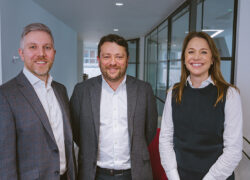
Fabio Carrozza, Maria Angela Ciriello and Eugenio Sangermano have been appointed to the Management Board. All three have been with the BF Group for several years and, in connection with their appointments, have acquired shareholdings in the company. Francesco Fedele will continue in his role as Chief Executive Officer, with responsibility for overall strategy and group-wide governance.

Under the new structure, Fabio Carrozza has been appointed Chief Sales Officer (CSO) and will oversee sales activities across the group. Maria Angela Ciriello will assume the role of Chief Financial Officer (CFO), taking responsibility for finance, while Eugenio Sangermano has been appointed Chief Investment Officer (CIO) and will lead the group’s investment activities.

According to Fedele, the revised management structure is designed to clarify responsibilities and support sustainable growth. In the advisory business, the group plans to at least double its current advisory volume of approximately €1.0 billion per year, with a stronger focus on infrastructure debt and corporate debt. In parallel, the asset management division is targeting an increase in assets under management from around €2.0 billion to more than €5.0 billion in the medium term, covering corporate private debt, infrastructure debt and real estate debt.

Fedele noted that the BF Group intends to maintain its position as a specialist in real estate financing in Germany, while further developing the expertise it has built in infrastructure and corporate debt in recent years. The strategic realignment places greater emphasis on these areas as part of the group’s continued development.

As part of this repositioning, BF.real estate finance has been renamed BF.advisory GmbH. The new name reflects the broader advisory and investment focus of the group beyond traditional real estate financing.

Fabio Carrozza has been with the BF Group since 2020 and has served as Managing Director of BF.advisory GmbH for several years. He brings long-standing experience in advising corporate and real estate clients and structuring complex financing solutions, following more than two decades in the banking sector.

Maria Angela Ciriello joined the BF Group in 2021 after 14 years at LBBW Asset Management Investmentgesellschaft in Stuttgart, where she worked in corporate controlling, risk management and outsourcing management. She holds qualifications as a certified economist and computer scientist.

Eugenio Sangermano has been part of the BF Group since 2023. Prior to that, he spent around 21 years at W&W Asset Management, including roles as Head of Business Development at W&W Asset Management Ireland and as a portfolio manager specialising in corporate private debt, infrastructure debt and real estate debt.

Photo left to right: Francesco Fedele, Maria Angela Ciriello, Fabio Carrozza, Eugenio Sangermano

Poland: Will new building standards affect apartment prices?

The amendment to the regulation on technical conditions for buildings, due to take effect in September, is expected to affect both construction processes and development costs. Stricter requirements, particularly in energy efficiency and building design, may increase project complexity and costs, which could ultimately be reflected in apartment prices, especially in supply-constrained markets.

At the same time, the new standards aim to improve building quality and long-term operating efficiency. Developers and investors are currently assessing the impact on project feasibility, timelines and pricing, as well as how quickly the market may absorb higher costs.

Joanna Chojecka, Sales and Marketing Director for Warsaw, Wrocław and Łódź at the Robyg Group

The amendment to the Technical Conditions, which is to come into force in September this year, will have a very significant impact on the entire construction process. The scale of the changes introduced by the new regulations is the largest in many years. It covers requirements for energy efficiency and insulation, as well as fire safety, acoustics, accessibility and equipping buildings with environmentally friendly solutions, such as renewable energy installations and charging points. This means that the design and implementation of investments will become more complex, and the technical standard of new buildings will increase significantly.

From the sector’s point of view, these changes are twofold. On the one hand, they will significantly improve the quality of future construction, with buildings becoming more energy-efficient, durable, quieter and better adapted to the needs of an ageing population. On the other hand, however, they will lead to a significant increase in project implementation costs. The increase in requirements for materials, installations and construction standards will translate into higher construction costs, which will naturally result in higher flat prices, especially in the new investment segment. Some developers are already signalling that the introduction of new regulations may require a review of schedules and the profitability of some projects.

The most noticeable changes will be those related to mandatory amenities, such as lifts in multi-family buildings, and increased insulation and fire safety standards. These are elements that will not only improve user comfort, but also significantly increase the unit cost per square metre. As a result, the sector may face some segmentation. Higher quality projects will gain a competitive advantage, while economic investments may be more difficult to implement.

Are all the changes necessary and justified? To a large extent, yes. Raising energy, safety and accessibility standards is in line with European trends and climate requirements. However, the pace and scale of the financial burden imposed on the industry in the short term raises doubts. The overly rapid implementation of many costly requirements at once may lead to a reduction in the supply of new flats and an increase in their prices above the natural market level.

In summary, the new Technical Conditions 2026 represent a qualitative step forward for the Polish construction industry, but at the same time pose a challenge for developers and contractors. In the short term, they will increase construction costs and flat prices, but in the long term they may contribute to the creation of a more modern, durable and energy-efficient housing stock in Poland.

Sebastian Bieńkowski, Director of the Investment Department at Nickel Development

The amendment to the Technical Conditions (WT) regulation, which is to come into force in September this year, will have a significant impact on the entire construction process. This is primarily due to the need to adapt national regulations to EU energy efficiency standards, requirements to improve the quality of life and accessibility of buildings, as well as to update fire safety regulations, which are intended to significantly increase the level of safety for users.

Among the changes, I particularly appreciate those concerning the adaptation of garages and basements to serve as temporary shelters for the population. These are solutions that strengthen the protection of residents and give projects additional utility value.

Of course, the new regulations will require modifications, both in current projects and in the selection of materials, but we do not see these measures as burdensome. This is a natural step towards the expected energy transition, supporting sustainable development and higher building efficiency.

However, it should be taken into account that the implementation of the new regulations will translate into higher investment costs and, consequently, higher flat prices. We estimate that this will be an increase of several per cent.

Renata Mc Cabe-Kudla, Country Manager at Grupo Lar Polska

The amendment to the Technical Conditions 2026 introduces significant changes, higher acoustic standards, more stringent energy requirements, additional requirements for playgrounds and stricter fire safety regulations.

These regulations will increase construction costs due to more expensive materials, more complex installations and higher finishing standards, which will translate into higher flat prices. We would like to point out that at the same time they will improve safety and comfort of use. It is worth remembering that the assumptions may still change.

Magdalena Wrona, Head of Design at Archicom

The amendment to the Technical Conditions Regulation, planned for September this year, should not have a significant impact on the implementation of our investments or the increase in flat prices, nor should it significantly change the design model, which is already based on high safety and quality standards. Many of the proposed provisions, such as the restriction on the use of sharp fence ends and some of the functional requirements, are already reflected in Archicom’s design practice.

The changes concerning increased fire resistance requirements for facades and improved acoustic parameters for partitions may have the greatest impact on the sector, as they may affect both technical solutions and implementation costs. At this stage, however, it is difficult to accurately estimate the scale of this impact. We are talking about draft regulations that may still be modified during the legislative process.

Mariusz Gajżewski, Head of Sales, Marketing and Communication, BPI Real Estate Poland

The planned amendment will introduce a number of significant changes, including increased access to daylight in flats, greater distances between buildings and more restrictive energy efficiency requirements. These regulations will undoubtedly improve the quality of new developments and the standard of living of residents, but in practice they may translate into higher construction costs and limited development opportunities for plots of land. As a result, the likely effect will be an increase in flat prices on the primary market.

We do not anticipate any negative impact of these changes on our projects. BPI Real Estate Poland’s projects are planned in a conscious and sustainable manner. We do not assume maximum use of plots in terms of usable floor space, because our priority is the quality of space, the functionality of flat layouts, access to natural light and the comfort of residents. Therefore, in our opinion, the new regulations are primarily beneficial and steer the market towards a long-term improvement in standards.

I believe this is a step in the right direction, although some of the provisions still need to be clarified in relation to market realities so that the impact of the regulations is balanced for both investors and residents.

Andrzej Swoboda, Vice-President of the Management Board, CTE Group

The entry into force of the amendment to the Technical Conditions, planned for September 2026, may be one of the most important moments for the housing market in Poland. From our perspective, these are necessary, albeit demanding, changes that will significantly raise the standard of new construction and, as a result, may also change the cost structure and prices of flats. There is no denying that the new requirements will entail higher construction costs. The industry is already talking about an increase in costs of up to 10-15 per cent, mainly due to more expensive materials (e.g. better insulation, fire-resistant materials), reinforced partitions, more complex technology and more precise installation.

However, it should be noted that not all of the solutions set out in the new regulation will bring proportional benefits. Energy savings may be minimal if the previous standards were already close to optimal. This means that the prices of new flats designed on the basis of the new technical conditions may be higher. In return, however, buyers will enjoy greater comfort and longer durability of residential buildings.

Overall, we consider the new Technical Conditions to be a step in the right direction. Raising standards of quality, safety, acoustics and energy efficiency is a real response to the expectations of today’s buyers. It is also a sign that residential construction in Poland is maturing and moving towards more user-friendly, durable and comfortable buildings.

At the same time, it is important that the new regulations are applied with moderation and common sense, taking into account the real benefits for the user, and not just a formal ‘race’ for parameters. Too rapid and severe tightening of standards may raise property prices beyond the means of many customers, without a proportional improvement in comfort.

Zuzanna Należyta, Commercial Director at Eco Classic

Like any such change, the amendment to the Technical Conditions Regulation will increase construction costs and, as a result, may lead to an increase in flat prices.

Damian Tomasik, President of the Management Board of Alter Investment

The amendment will bring significant changes to the design and preparation of investments. Already at the concept stage, it will be necessary to analyse shading, distance, functionality and space quality in more detail. Some plots may have lower absorptivity, which will affect both developers’ calculations and flat prices. The changes are intended to improve the quality of development, although some of the provisions are too restrictive and may limit supply.

Tomasz Czuchra, Vice-President of the Management Board of Waryński S.A. Holding Group

The amendment to the Technical Conditions, which will come into force in autumn 2026, will significantly affect the construction process, primarily due to the need to adapt documentation, design solutions and technologies to the new requirements. The scope of the regulations will include, among other things, standards for common areas, energy efficiency and functional elements of buildings, which will require advance planning and appropriate design adjustments.

At the same time, it should be remembered that any increase in standards means higher construction costs, which will ultimately translate into higher flat prices. In many areas, changes are necessary and justified, especially where they improve the usability or energy efficiency of buildings. However, the scale of the regulations must be implemented with caution so as not to lead to a reduction in supply or an excessive burden on buyers.

From the industry’s point of view, the new guidelines are an impetus for modernisation, but they require advance planning and design adjustments, which increases the time needed to prepare investments. Developers will therefore have to factor these costs and risks into their schedules and calculations, which means that flat prices are likely to rise gradually as the regulations come into force.

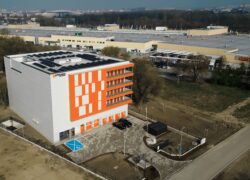
Photo: Rytm Mokotowa – Robyg

Source: dompress.pl

front page info
LATEST NEWS