PRIMESTAR Group appoints Uta Scheurer as Chief People Officer

The PRIMESTAR Group has expanded its management team with the appointment of Uta Scheurer as Chief People Officer, effective 1 January 2026.

In her new role, Scheurer is responsible for the Group’s People & Culture function. Her mandate includes the further development of organisational structures, leadership frameworks and corporate culture, as well as supporting the company’s stated corporate values of People, Passion, Professionalism and Progress.

Scheurer brings international experience in human resources and organisational development. Prior to joining the company, she held a senior People & Culture role at Ruby Hotels, where she was involved in developing HR structures, leadership programmes and cultural initiatives during a period of rapid growth.

The company stated that the management appointment reflects its focus on sustainable growth, digital transformation and long-term organisational development. Ronald Giese, Managing Director of PRIMESTAR Group, said the company sees personnel development as a key element of its future strategy.

The appointment strengthens the companies leadership team as the group continues to expand its operations and internal capabilities.

Office Market 2026: Strategic Pragmatism in Investments

The Polish office market is entering a phase of heightened financial and qualitative discipline. Decisions on new developments, refurbishments and leasing are increasingly driven by detailed analyses and strict financial calculations—a trend set to strengthen further in 2026.

New office supply remains at historically low levels, with the volume of projects under construction continuing to decline. High financing and construction costs, compounded by ESG requirements, are limiting the feasibility of new office investments. As a result, developers are cautious, and purely office-led projects are increasingly rare.

At the same time, tenants and investors are demanding hard data, including energy consumption, carbon footprint and indoor air quality. While EU regulations allow some flexibility in timelines and ambition, this environment favours economically sound projects over aspirational declarations.

In practice, prime city-centre land is increasingly developed as mixed-use rather than single-function office schemes. For occupiers, this means fewer office-only options in top locations and longer lead times for securing space. Going forward, only well-located, carefully planned projects with credible leasing strategies are likely to reach the market. Although the shortage of high-quality space—particularly in Warsaw—may stimulate future development, any recovery in supply is expected to be gradual.

Office buildings are also increasingly losing out to residential development. With current yields, relatively low office rents and limited investor demand, offices struggle to compete with housing projects, which offer more attractive risk-return profiles. As a result, developers are redirecting capital toward residential schemes, while older office stock is more often converted or demolished rather than refurbished.

In many cases, upgrading outdated, energy-intensive office buildings in secondary locations is economically unjustifiable. Investments in façades or technical systems rarely translate into higher rents or stronger demand. Pragmatism is prevailing, and repositioning or selling assets is often a more rational choice than attempting cosmetic ESG improvements.

This trend is gradually reducing office stock in major cities, most notably Warsaw. Redevelopment projects are pursued only where clear financial benefits exist, such as lower operating costs and stable rental income. In this context, hybrid and mixed-use schemes are gaining a clear competitive advantage.

Tenant demand remains strongest for modern offices in prime locations, where rents are stable and, in some cases, edging upwards. Availability in other segments continues to shrink, making it increasingly difficult to secure not only large floor plates but also medium-sized units. As a result, tenants are initiating lease negotiations earlier, typically 12 to 18 months before lease expiry.

Companies are increasingly weighing the trade-off between premium locations and refurbished buildings offering acceptable standards at lower cost. The focus is on achieving the right business balance over a five- to seven-year horizon, with lease negotiations extending beyond headline rent to include fit-out contributions, rent structures and flexibility in leased area.

Flexible office space is becoming an integral part of leasing strategies. Across Poland’s seven largest cities, flex stock totals around 420,000 sq m, with market penetration in Warsaw and Cracow still at only about 4%, compared with roughly 20% in Western Europe. This gap highlights significant growth potential.

Flex offices are increasingly used for market entry, project work and daily operations. In parallel, many organisations are reinforcing return-to-office policies. After years of hybrid working, offices are again seen as critical to collaboration, culture and relationship-building, increasing the importance of well-designed, functional space.

In 2026, competitive advantage will favour tenants who remain agile—making faster decisions, adopting flexible leasing structures and adjusting strategies in response to changing market conditions.

Author: Mateusz Strzelecki, Partner / Head of Tenant Representation at Walter Herz

Sonar advises Starwood Capital on German logistics acquisition

Sonar Real Estate GmbH acted as transaction manager on the buyer’s side in the acquisition of two logistics properties in Germany, collectively referred to as “2Up”. The assets, offering a combined rental area of approximately 69,000 sq m, are located in Munich-Schwaig and Donauwörth. They were sold by Wealthcap Immobilienfonds Deutschland 30 GmbH & Co. KG to a special fund advised by Starwood Capital Group and administered by IntReal. Both properties are fully let.

Following completion of the transaction, Sonar will also assume responsibility for the ongoing asset management of the two sites.

The larger of the assets is located in Donauwörth and comprises around 37,000 sq m of logistics space. Its main tenant is Airbus Helicopters. The facility is closely linked to the adjacent production site, which employs more than 7,500 people, and functions as an integrated logistics centre supporting manufacturing operations.

The second property, with approximately 32,000 sq m of rental space, is situated in Schwaig, close to Munich Airport. The principal tenant is ITG Group, which uses the site both as a fulfilment centre with a strong e-commerce focus and as its German administrative headquarters.

Nick Puschkasch, Managing Partner at Sonar Real Estate, said that investor interest in well-located logistics assets remains steady, particularly where properties are fully leased and linked to long-term structural demand. He added that Sonar’s appointment as both transaction and asset manager reflects the role of integrated advisory and management services across the investment lifecycle.

The transaction targets logistics assets serving sectors such as aerospace and e-commerce, where demand is supported by established production and distribution networks. According to the parties involved, the locations, tenant profiles and integration into regional supply chains were key considerations.

Legal advice to the seller was provided by DLA Piper. The buyer was advised legally by Greenberg Traurig and on tax matters by Deloitte. Technical due diligence was carried out by TA Europe, while BNP Paribas Real Estate acted as broker.

MLP Group develops 30,000 sq m of speculative space at MLP Pruszków II

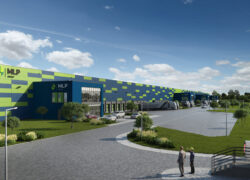
MLP Group has started the development of two warehouse and light industrial buildings with a total area of approximately 30,000 sq m at its MLP Pruszków II logistics park near Warsaw. Construction began in the fourth quarter of 2025, with completion scheduled for the second quarter of 2026. Around 30% of the space has already been pre-let.

The project is being delivered on a speculative basis in response to sustained demand for modern logistics and light industrial space in the Warsaw metropolitan area. The buildings are designed to offer flexible unit configurations to accommodate tenants from a range of sectors.

The facilities will be developed in line with sustainability requirements and are planned to achieve BREEAM certification at the Excellent level. The general contractor for the project is Bin Biuro Inżynierskie.

According to the company, the decision to proceed without full pre-leasing reflects market conditions in and around Warsaw, where demand for ready-to-occupy warehouse and production space remains high. MLP Pruszków II benefits from a central location west of Warsaw, with direct access to the A2 motorway and established transport infrastructure, supporting logistics, e-commerce, FMCG and light manufacturing operations.

Agnieszka Góźdź, Management Board Member and Chief Development Officer at MLP Group, said that tenant interest is focused on flexible, high-standard units combined with modern office space. She added that having space available on a speculative basis allows the company to respond more quickly to occupier requirements.

Jack Rasz, President of the Management Board at Bin Biuro Inżynierskie, said the contractor is responsible for the comprehensive delivery of the project, including the implementation of solutions required to meet sustainability and energy-efficiency standards.

MLP Pruszków II is located in the Brwinów municipality, around 5 km from Pruszków, and is the largest logistics complex in the area, with a planned total gross leasable area of approximately 427,000 sq m. Selected buildings within the park have already received BREEAM certification, and photovoltaic installations are being installed on rooftops in line with the group’s ESG approach.

The park is situated between local road No. 760 and the A2 motorway, approximately 3 km from the Pruszków–Żbików interchange, and is close to international rail lines. It also offers public transport access, including an on-site bus stop and a bicycle rental station.

MLP Group follows a build-and-hold strategy, retaining completed logistics parks in its portfolio and managing them internally. The company operates across Poland and other European markets, focusing on long-term asset management and tenant support.

Poland’s president blocks national law on online content oversight

In January 2026, Polish President Karol Nawrocki refused to sign legislation designed to introduce national procedures for supervising large online platforms and responding to unlawful material on the internet. The bill had been approved by parliament as part of Poland’s effort to align its domestic framework with new European rules governing digital services.

The president’s decision does not affect the European regulation itself, which applies automatically across all EU member states. Instead, the veto concerns how those rules would be enforced within Poland, including which public bodies would be responsible and how decisions affecting online content could be challenged.

According to the president, the proposed law raised constitutional concerns. He argued that it would allow public authorities to interfere with access to online content through administrative decisions, while judicial involvement would occur only if an affected individual or company took the initiative to appeal. In his view, this approach placed too much responsibility on citizens and businesses to defend their rights after a restriction had already been imposed.

Under the vetoed framework, regulators would have been able to order the removal or blocking of certain types of unlawful material. While appeal mechanisms were included, they relied on strict deadlines and required those affected to bear the cost and effort of legal action. Critics of the bill argued that, in fast-moving public debate and digital commerce, even short-lived restrictions can have lasting consequences.

Supporters of the legislation countered that the rules were intended to strengthen online safety and bring Poland into line with European standards. They warned that delaying the creation of a national enforcement system could leave gaps in oversight and reduce protections for users, particularly in sensitive areas such as harmful or criminal content.

The debate has also highlighted concerns about the role of specially recognised reporting organisations whose notices would receive priority treatment from platforms. Opponents of the bill questioned whether granting such status—potentially alongside public financial support—could create indirect influence over public debate, even if decisions formally remained with platforms and regulators.

With the veto in place, the law has been sent back to parliament. Lawmakers may attempt to override the decision, revise the legislation to address constitutional objections, or draft a new proposal altogether. Whatever route is chosen, Poland will need to balance European obligations with domestic safeguards to ensure that measures aimed at tackling illegal online activity do not undermine freedom of expression or legal certainty for digital businesses.

Source: WEI

Poland’s industrial market shows stable fundamentals at end of 2025

According to forecasts from AXI IMMO, Poland’s industrial and logistics sector remained one of the most resilient segments of the commercial real estate market at the end of 2025. While new supply slowed noticeably, tenant activity stayed strong and key indicators such as vacancy rates and rental levels remained broadly stable. Market conditions increasingly reflect a phase of maturity, with leasing decisions driven primarily by operational requirements rather than expansionary sentiment.

Total gross take-up of modern industrial and logistics space in Poland in 2025 is expected to exceed 6 million sq m, making it the third-highest annual result on record. Only the peak years of 2021 and 2022, when leasing volumes approached 7 million sq m, recorded higher activity. Lease renewals have gained significance and now account for around half of all transactions, highlighting a shift in tenant strategy.

Anna Głowacz, Head of Industrial & Logistics, noted that with logistics networks largely optimised, many occupiers are choosing to remain in established locations, prioritising cost control and operational efficiency. She added that net demand, including new leases and expansions, could reach around 3 million sq m in 2025, in line with the firm’s projections.

On the supply side, developer activity has become more cautious. New completions in 2025 are estimated at approximately 1.8 million sq m, representing the lowest annual volume since 2016 and a sharp decline compared with previous years. Most new projects are being delivered on a pre-let or build-to-suit basis, while speculative development remains limited. Developers are focusing on established markets and projects aligned with specific tenant needs.

The combination of reduced supply and steady leasing activity is expected to keep the national vacancy rate close to 8%. Monika Rykowska, Head of Research, observed that availability is tightening in core logistics locations, while higher vacancy levels persist mainly in regions where a larger volume of speculative space was delivered in earlier years.

Prime headline rents for big-box logistics space at the end of 2025 are expected to remain stable, ranging from approximately €3.6 to €6.0 per sq m per month, depending on location and building specification. Following the period of rapid rental growth between 2021 and 2023, the market has moved into a phase of rental stabilisation. Incentive packages are becoming more selective and are increasingly linked to lease duration and transaction size.

The company also highlights several structural trends shaping the sector. These include the growing importance of lease renegotiations, the continued expansion of e-commerce, and a stronger focus on ESG standards and energy efficiency. Tenants are placing greater emphasis on technical infrastructure and solutions that help reduce operating costs and carbon footprint.

Looking ahead, the company expects 2026 to bring continued stable, albeit selective, growth in Poland’s industrial and logistics market, supported by solid economic fundamentals, ongoing e-commerce development and further investment in transport infrastructure.

Sonar Real Estate acquires Berlin office and retail property Topas Arkade

Sonar Real Estate has advised a European foundation, acting as transaction manager, on the acquisition of the office and retail property Topas Arkade in Berlin-Mitte. The seller was UBS Real Estate GmbH. The transaction was concluded following a competitive bidding process managed by BNP Paribas Real Estate.

Topas Arkade is located at Friedrichstrasse 153a in central Berlin. The building, recognisable by its colonnaded façade, was originally constructed in 1900 based on plans by architect Alfred Breslauer. It was extended in the 1950s and underwent comprehensive modernisation in 1998.

The property provides approximately 5,600 sq m of lettable space arranged over seven floors. Around 4,200 sq m is used as office space, while roughly 1,100 sq m is allocated to retail and food and beverage tenants.

Nick Puschkasch, Managing Partner at Sonar Real Estate, commented that the acquisition reflects continued investor interest in centrally located, income-generating assets. He noted that, despite current market conditions, selected core-plus properties in established urban locations remain attractive for investors with a long-term strategy.

The buyer was advised by P+P Pöllath + Partners, CBRE and Witte Projektmanagement. The seller received legal and technical advice from GSK and Revacon.

Property management responsibilities will be assumed by 3PM, which is based in Berlin.

Hauck & Aufhäuser Fund Services Group expands ETF offering across Luxembourg and Ireland

Hauck & Aufhäuser Fund Services Group (HAFS Group) is extending its exchange-traded fund (ETF) services in Europe as demand for ETF structures and ETF share classes increases. The expansion focuses on providing operational and regulatory frameworks that enable asset managers to launch ETF products efficiently in Ireland and Luxembourg.

A central element of the initiative is the Group’s Irish white-label ETF platform, designed to allow asset managers to bring ETF products to market without building their own ETF infrastructure. The platform operates with J.P. Morgan as depositary and administrator. Although domiciled in Ireland, ETF structures on the platform are managed from Luxembourg.

According to Lisa Backes, Deputy CEO and Member of the Management Board at HAFS Group, the setup supports German asset managers considering Irish ETF structures by offering local-language guidance. She notes that the white-label model allows managers to launch ETFs under their own brands while outsourcing technical and regulatory requirements.

The first product launched on the Irish platform was the eNova Active Core EUR Ultra Short Term ETF by Active Core Asset Management. The fund was converted from an existing structure into an ETF share class and listed on Frankfurt Stock Exchange (XETRA) on 27 November 2025. The ETF invests in short-term euro-denominated sovereign bonds.

In addition, the Irish platform is positioned as an entry point for US-based asset managers seeking access to European investors via ETFs, using established structures and branding within a defined regulatory framework.

Alongside Ireland, the HAFS Group is offering ETF structures from its Luxembourg operations, aimed at providing additional flexibility for a broader range of strategies. The Group developed this capability in cooperation with the NaroIQ technology platform. One outcome of this approach was the launch of the Inyova Impact Investing Active Equity Fund UCITS ETF in Luxembourg, listed on XETRA on 19 December 2025. The actively managed ETF follows an impact-investing strategy focused on environmental and social criteria within a UCITS framework.

Backes adds that the Group’s role extends beyond fund administration to include support during product development, including structuring advice and ESG-related services. Looking ahead, the HAFS Group plans to conduct roadshows in German-speaking markets in 2026 to provide information on ETF structures and mechanics for initiators considering ETF launches for the first time.

Kachlet lock modernisation in Passau awarded to PORR–HABAU–FELBERMAYR consortium

The Kachlet Danube barrage in Passau, in operation since 1927, is set to undergo a comprehensive modernisation almost a century after its construction. The facility, which includes a double lock and a hydroelectric power station, is regarded as a key element of European inland freight transport on the Rhine–Main–Danube corridor.

Following an open tender process, one of the largest renovation projects on the Main–Danube waterway has been awarded to a consortium comprising PORR, HABAU and FELBERMAYR. Acting on behalf of the Magdeburg Waterways Construction Office, the consortium will carry out a complete overhaul of both existing lock chambers over a period of 13 years. Work will begin with the south lock, while shipping traffic will be diverted via the north lock, before the sequence is reversed.

Guido Zander, Head of the Waterways and Shipping Authority Danube MDK (WSA), responsible for operation and maintenance, said that the project would ensure the long-term reliability of the structure. He noted that the modernisation would secure the safe and efficient operation of the Rhine–Main–Danube waterway, which plays an important role in environmentally efficient freight transport.

Engineering and construction scope

The project presents significant technical challenges. Construction work will be carried out largely from the water, requiring specialised equipment and precise coordination. Dredgers mounted on pontoons will cut recesses into the existing lock walls, where anchors will be installed before the structures are resealed with concrete. The works will be undertaken sequentially to maintain navigability throughout the renovation period.

Karl-Heinz Strauss, CEO of PORR, said the project reflects the company’s experience in the refurbishment of transport infrastructure and complex water-based construction. Hubert Wetschnig, CEO of the HABAU Group, highlighted the need for detailed planning and execution, with HABAU contributing its expertise in structural and hydraulic engineering. Bernhard Strasser, Managing Director of FELBERMAYR-Bau, said the company would be involved in dredging operations, the provision of floating equipment, demolition and earthworks, as well as pipeline and road construction.

Within the consortium, PORR will contribute specialist civil engineering and earthworks capabilities, HABAU will provide additional engineering and hydraulic expertise, and FELBERMAYR will supply lifting technology and experience in hydraulic construction.

Project scale and objectives

Once completed, each lock chamber will measure approximately 335 metres in length and 24 metres in width. The works include demolition down to foundation level and complete reconstruction of the structures. Construction activities will range from earthworks and concrete construction to steel hydraulic engineering and pipeline installation, with up to 100 workers on site at peak periods.

In addition to rebuilding the lock chambers to current technical standards, the project includes the installation of new lock gates, hydraulic drive systems and modern control, automation and safety technology. The objective is to improve operational safety, align the facility with current inland navigation requirements and ensure reliable operation for the coming decades.

Czech Republic Launches Centralised Portal to Streamline Access to Public Contracts

A new central portal for public contracts was launched in the Czech Republic in December 2025, marking a significant step towards simplifying access to public procurement opportunities. The platform, ZAKAZKY.GOV.CZ, operates as a free national gateway for companies and bidders seeking public contracts and aggregates listings from multiple procurement systems into a single interface.

According to the Ministry of Regional Development of the Czech Republic, the portal currently covers around two thirds of the Czech public procurement market. Once additional platforms are connected, coverage is expected to increase to between 80 and 90 percent. In the longer term, the objective is to create a unified environment in which bidders can move seamlessly from identifying a contract opportunity to submitting a tender.

During its pilot phase, the portal integrates data from the Public Contract Bulletin alongside three major procurement platforms—NEN, Tender arena and TENDERMARKET—covering contracts published from 2023 onwards. By consolidating these sources, the portal eliminates the need for bidders to monitor multiple websites simultaneously. It also offers full-text and smart search tools, as well as clear, concise overviews of individual public contracts, helping users make quicker and more informed bid or no-bid decisions.

Further development phases are already planned. The Ministry intends to introduce an AI-powered assistant designed to help bidders interpret participation requirements, such as experience thresholds or insurance obligations. Communication tools are also planned, initially in the form of alerts and messaging, with the option of enabling direct bid submissions through the portal at a later stage.

Once fully implemented, the portal is expected to allow bidders to log in using state registers, benefit from automated checks such as criminal record verification, and manage authorisations through the Representation Register (REZA). Authorities see the platform as a key component in improving transparency, efficiency and accessibility within the Czech public procurement system.

Source: CMS

front page info
LATEST NEWS