One United Properties Takes EUR 80.5 mln financing from UniCredit 

One United Properties has signed a loan agreement with UniCredit Bank S.A. for an initial amount of EUR 80.5 million, with the possibility of increasing it up to EUR 140 million.


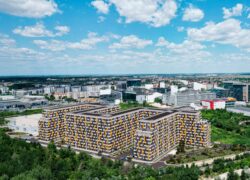
The purpose of the money is twofold. A portion will cover the remaining construction costs at One High District and One Lake Club – both projects with estimated delivery in the second quarter of this year. Another part will be directed towards financing the first tranche of the share buyback program launched in October 2025.


“The credit agreement thus supports both the completion and delivery to customers of the One High District and One Lake Club developments, as well as the implementation of the first tranche of the Public Purchase Offer Program, in accordance with the Company’s strategy to access long-term bank financing for its development projects and shareholder reward initiatives,” the current report submitted to the Bucharest Stock Exchange states.

Little London Theoretical High School to Open within Nusco City

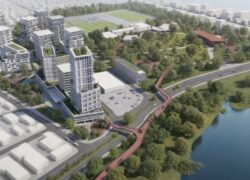
Nusco has recently entered into a partnership with Little London Theoretical High School, one of the most reputable Romanian private schools, to open a new campus covering all education levels within Nusco City.


The school, which will cover a land area of 7,200 sqm and a built area of 7,500 sqm, represents an investment estimated at more than EUR 18 million, financed by Nusco.


Little London will host all education cycles here, based on the Romanian curriculum, for more than 600 students: 5 kindergarten classrooms and over 30 classrooms and laboratories dedicated to primary, middle school, and high school education. The educational unit is intended for the entire northern area of Bucharest, not only for Nusco City residents.


“The opening of this new Little London Theoretical High School campus represents a natural extension of our activity and an important step in the school’s evolution. By adding this new campus to our portfolio, we aim to bring Little London’s educational excellence closer to families in the northern part of the Capital, alongside the ongoing activity of our current campuses, which continue their mission unchanged. The additional new space will allow us to serve a broader community and provide more students with access to a modern learning environment. In Nusco City, we found a partner who understands that quality education requires top infrastructure and green spaces. Starting in September 2029, at this new Nusco City campus, we will open the doors to a complete educational ecosystem for another 600 children, from kindergarten to high school, while also creating new career opportunities for education specialists,” said Luminița Macsim, Founder & CEO of Little London.


The new school project will also include an indoor sports hall, an outdoor sports field, a library, a conference hall, two drop-off areas, and 32 parking spaces, with delivery and commencement of classes scheduled for September 2029.


“Schools are essential — we all know this — which is why, alongside the other hotel and medical facilities, an educational institution was part of our project from the very beginning, when Nusco City first started taking shape,” explained Bogdan Iliescu, Commercial Director at Nusco.


IULIUS Workhub opened in United Business Center 1

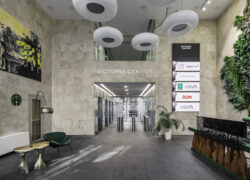
IULIUS has inaugurated its first coworking space, located in the United Business Center (UBC) 1 building included within the Iulius Town Timișoara mixed-use development. IULIUS Workhub covers 1,000 sqm and features both open-space coworking areas, and individual offices that may accommodate up to 8 people, as well.


The space features open coworking areas, as well as private offices that can accommodate up to 8 people at a time.


“We have closely monitored how the needs of professionals and the business community are evolving, but concomitantly we have also paid close attention to the expectations of the new generation, which wants more than just a basic workspace. IULIUS Workhub is our answer to a real, actual demand: a flexible space where you can come to collaborate with your team for as long as you need, but also a place where you can meet new people from various activity fields. IULIUS Workhub is a concept that we plan to replicate in our office hubs in Iași and Cluj-Napoca as well. The fact of being integrated into the UBC community within the Iulius Town complex gives this coworking space a key advantage: that is you have shops, restaurants, a cinema, a 5-hectare park, and all the services you require just a few steps away”, said Silviu Băbțan, Asset Management Director at IULIUS.

CEDER 2026 in review: From Boxes to Communities: The Transformation of Bucharest’s Office Sector

During the Educational Program panel held at the end of CEDER 2026, the experts invited to participate discussed how in modern Bucharest, the office development landscape is undergoing a profound shift, moving away from “isolated projects” toward integrated developments that actively “influence districts, communities and urban life”. This evolution marks a significant departure from the “chaotic” expansion seen before 2008, as reputable developers now prioritize urbanistic rules and the specific needs of the end-user.


A central theme in this new era is the transition of the office from a functional “box” to a vibrant community. Geo Mărgescu, Founder and CEO of Forte Partners, explains that office buildings have become “communities rather than simply boxes where employees are called to deliver”. In a post-pandemic world where repetitive work can often be done from home, the physical office has been reimagined as a space for collaboration, innovation, and creation. Tenants today demand unique environments that align with their corporate identity—spaces where “employees are feeling at home while working”.


The impact of these modern developments extends far beyond their own walls, often acting as catalysts for wider urban regeneration. A prime example is The Bridge project. Before its inception, the surrounding area was “completely dead,” dominated by old railway lines. Today, it anchors a thriving district with approximately 600,000 to 700,000 square meters of office and residential space. Similarly, the Sector Zero initiative—comprising the Millo and Tandem buildings—has revitalised downtown Bucharest by creating new pedestrian links and public squares.


International developers are also bringing a focus on efficiency and smart planning. Eric Drach, CEO of Hagag Development Europe, emphasizes that modern offices must be “planned smart, efficient, [and] green” to ensure long-term value for tenants. Location is also very important for office developments, as well as flexibility. This includes adaptable solutions like H Private, which offers flexible, short-term office leases along with the traditional long-term leases.


CEDER 2026 in review: The Optimistic Future of Bucharest

During the last panel held at CEDER 2026, dedicated to the past and future of real estate development in Bucharest, industry experts Geo Mărgescu and Eric Drach shared a profound optimism that the city is evolving into a more structured, community-focused metropolis. Geo Mărgescu, Founder and CEO of Forte Partners, describes himself as an “optimistic person as a structure” and expresses a strong conviction that Bucharest will look “completely different in the following five to six years”.


This optimistic outlook is rooted in the shift from building isolated structures to creating developments that “influence districts, communities and urban life”. Mărgescu believes that “the reputable developers are creating the trends” which educate the tenants and buyers, and explains “that the projects we are building now will be liked or will be judged by the generations which are not yet born today. And this is both the beauty and the responsibility of our job.” For Mărgescu, the ultimate goal is creating beauty that will “change the life of our children and grandchildren”.


Eric Drach, CEO of Hagag Development Europe, reinforces the positive sentiment, identifying a “very big potential” in the Bucharest market. From an international perspective, he observes that Romania’s real estate evolution has been remarkably fast, noting that the progress achieved since 2008 has often taken much longer in other global markets. Drach envisions a future where urban renewal acts as a “catalytic” generator for the city, creating new hubs for residential and commercial life. He emphasizes that the future belongs to projects with “long-term value” that place the “user at the center” and bring tangible benefits back to the local community.


The speakers also anticipate a more diversified urban landscape. Drach predicts that Bucharest will eventually embrace new asset classes like student housing and retirement homes, ensuring the city provides solutions for all generations. Meanwhile, Mărgescu foresees the rise of residential for rent (PRS) as a successful asset class to address the widening gap between demand and affordability.

Mega Company Invests EUR 10 Million in new Cold Storage

American industrial developer Mega Company has completed a new temperature-controlled cold storage. Mega Company has completed a EUR 10 million investment in a 4,500 sqm cold storage facility as part of the Mega MDO Logistics Park project in Chiajna, Ilfov County.


“The demand for temperature-controlled storage is constantly growing and we want to ensure that businesses have the capacity they need to operate safely and efficiently on a daily basis,” says Salah Turkmani, CEO, Mega Company


Mega Company’s portfolio currently includes: four industrial logistics parks, over 27 commercial properties, over 100,000 sqm of industrial space and 8,300 sqm of managed office space, and over 2.1 MWh of renewable energy production.

Romania: Construction, up 8% in Q1

Construction, which reached almost 9% of GDP, continued to grow in the first quarter of the year, a total increase of 8.2%, with a strong advance of the residential segment of 16%, followed by that of “new constructions”, of 10% and of “engineering constructions” (large investment works in infrastructure) of 8.5%.


The European Commission’s spring forecast mentions the residential and engineering constructions segments (motorways, hospitals) – among the factors that will keep the economy in the plus.


“The recovery in residential constructions is expected to continue, while investments in public infrastructure will intensify as the PNRR projects are completed,” the European Commission’s spring forecast says.

Duşu Family Opens EUR 10 million Hotel in Constanţa

Duşu family, who also control the port operator Socep, has invested EUR 10 million in opening the Millennium Hub & Hotel in Constanţa. The unit opens following a 6-year renovation process, with the building in which it operates being acquired by the investors in 2020.


With a total area of 4,200 sqm distributed over 10 levels, the hotel features 30 rooms, 10 suites for extended stays, the Atic Millennium restaurant, a café, conference rooms, a wellness area, and beach access during the summer season.


The hotel is controlled through the company DGN Romag, owned by Ion Duşu, Petrica Andra Elena Duşu, and George Duşu, whose main business activity is the renting and subleasing of real estate.

First Hampton by Hilton in Bucharest, at Promenada Mall Bucharest

NEPI Rockcastle has signed an agreement in principle with Lithuanian operator Apex Alliance Hotel Management to manage a new 4-star hotel in Bucharest. The unit will operate under the Hampton by Hilton brand and will be built as part of the expansion of the Promenada mall, located in the office area in the north of the capital. This will be the first Hampton-branded hotel in Bucharest and the third Hilton brand managed by Apex on the local market.


Apex Alliance won the competition to operate the hotel against the Baltic group Mogotel, which had proposed the Radisson RED brand.


The new accommodation unit will occupy an area of about 10,000 square meters, representing approximately half of the building under construction, and will have around 200 rooms. The delivery deadline for the building is the end of next year, with the operator needing up to 6 months to equip and launch the hotel.

CEDER 2026 in review: A City that Shapes the Generations to Come

The final panel held at CEDER 2026, entitled “The History of Real Estate in Romania” touched upon aspects about the past and future of real estate development in Bucharest and beyond. As showcased by this discussion, the evolution of modern cities has moved beyond the construction of isolated structures to a philosophy of integrated urban regeneration. As the real estate market matures, developers are increasingly focused on how buildings “shape the way people experience a city every day”. This shift marks a transition from chaotic expansion to projects that actively influence entire districts and communities.


According to Geo Mărgescu, Founder & CEO of Forte Partners, the foundation for successful regeneration lies in strict urbanistic rules. Referring to historical examples of “well-done urban development” like the Ioanid Lotization or the Grant Lotization, he notes that municipality-imposed regulations should be seen as “value-added attempts” rather than obstacles. These early 20th-century developments succeeded because they were planned as “complete neighborhoods” featuring public parks and specific architectural standards.


In the modern context, major developments have the power to breathe life into neglected zones. Mărgescu points to The Bridge project in Bucharest as a prime example of this influence. Before its completion, the surrounding area was “completely dead,” dominated by railway lines. Today, it anchors a district with hundreds of thousands of square meters of office and residential space, proving that a single project can “change the city for good”. Similarly, the Sector Zero initiative transformed a “dead and dark area” into a “sunny and joyful playground for the whole community”.


International perspectives also emphasize the developer’s duty to the public. Eric Drach, CEO of Hagag Development Europe, highlights the Israeli model of urban renewal where developers are encouraged to “bring something back to the community” in exchange for building rights. This might include community centers or essential services, such as the retail solutions integrated into the H Pipera Lake project. Drach argues that success is measured by long-term value, noting that a truly successful building attracts further investment and improves the “day-to-day living” of the surrounding neighborhood.


The ultimate goal of this new development wave is a profound societal shift. Mărgescu encapsulates this responsibility by citing Winston Churchill: “We are shaping the buildings, and the buildings are shaping us”. By creating beautiful streets and integrated neighborhoods, developers are not just building real estate; they are “shaping the generations to come”. As Bucharest moves toward a future of smart urban renewal, the industry is increasingly prioritizing the user at the center of every project.

front page info
LATEST NEWS