Sunday, 25 October 2026
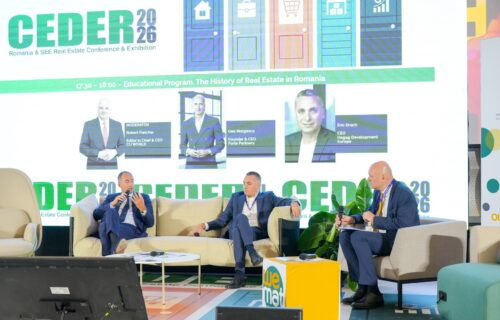
During the last panel held at CEDER 2026, dedicated to the past and future of real estate development in Bucharest, industry experts Geo Mărgescu and Eric Drach shared a profound optimism that the city is evolving into a more structured, community-focused metropolis. Geo Mărgescu, Founder and CEO of Forte Partners, describes himself as an “optimistic person as a structure” and expresses a strong conviction that Bucharest will look “completely different in the following five to six years”.
This optimistic outlook is rooted in the shift from building isolated structures to creating developments that “influence districts, communities and urban life”. Mărgescu believes that “the reputable developers are creating the trends” which educate the tenants and buyers, and explains “that the projects we are building now will be liked or will be judged by the generations which are not yet born today. And this is both the beauty and the responsibility of our job.” For Mărgescu, the ultimate goal is creating beauty that will “change the life of our children and grandchildren”.
Eric Drach, CEO of Hagag Development Europe, reinforces the positive sentiment, identifying a “very big potential” in the Bucharest market. From an international perspective, he observes that Romania’s real estate evolution has been remarkably fast, noting that the progress achieved since 2008 has often taken much longer in other global markets. Drach envisions a future where urban renewal acts as a “catalytic” generator for the city, creating new hubs for residential and commercial life. He emphasizes that the future belongs to projects with “long-term value” that place the “user at the center” and bring tangible benefits back to the local community.
The speakers also anticipate a more diversified urban landscape. Drach predicts that Bucharest will eventually embrace new asset classes like student housing and retirement homes, ensuring the city provides solutions for all generations. Meanwhile, Mărgescu foresees the rise of residential for rent (PRS) as a successful asset class to address the widening gap between demand and affordability.