CEDER 2026 in review: Navigating Uncertainty in Romania’s Industrial Market

While the Romanian industrial and logistics sector continues to show resilience, the industry leaders invited to take part in the Industrial panel held at CEDER 2026 were also open to discuss the risks that could undermine future growth.


One of the pressing concerns is the industry’s perceived lack of preparation for technological disruption. Alina Necula, Country Manager at Lion’s Head, warns that the sector is currently “superficial” in its approach to artificial intelligence, stating: “I think we in Romania, in real estate especially, we need to build a muscle for artificial intelligence. We don’t have that (…) It’s very important to understand it.”


This technological gap is compounded by “labor erosion”, a risk where long-term tenants find their business models failing halfway through a lease due to a vanishing workforce. Necula notes that manufacturing tenants can realize “in year five that they don’t have people anymore”, making strategic location near urban hubs and universities critical for survival.


Economic pressures are also mounting, particularly regarding energy and regulation. Roland Hofman, Co-Founder and CEO of Urbanity, points to a massive disparity in utility costs that threatens European manufacturing: “the gas prices are five times higher than in the States. This is [a] huge disadvantage that the European market is facing. So, this is something that puts much higher pressure on productivity, on finding the efficiencies.”


Furthermore, Gijs Klomp, Business Development Manager of WDP Romania, warns that Romania may be losing its competitive edge as a “low-cost” destination. He argues that increasingly rigid regulations—such as fire safety standards—are driving up development costs and, consequently, rents. Klomp observes that “the development yields and especially profits in Romania are, I would say, lower than they are in other more core Central European markets. It’s not that there is a lot of margin that you can surrender, which means it goes into rent. If it goes into rent, it goes back into the economy as inflation. And I think there we have to be cautious to find that optimum curve because in the end people will look at many countries, there are many options, and they will make an assessment of what are the benefits of Romania. And one of the benefits we had was a cost benefit and we have lost that. And we need to make sure that either we go up the productivity curve and we can offer higher productivity, because then people can accept costs, or we have to try to keep costs under control.”


Finally, there is a pervasive fear regarding the execution of critical infrastructure and political stability. While the connection to the Moldova region is highly anticipated, there is concern that if projects are not delivered on time, developers could lose vital financing. Ana Dumitrache, CEO of Olympian Parks, identifies political risk as a primary concern, questioning “how much is fundamental and how much is created by the political games, including the cost of energy”.


CEDER 2026 in review: The Next Phase of Romanian Industrial Growth

The experts invited to take part in the Industrial panel held at CEDER 2026 discussed the opportunities of growth present in the Romanian industrial and logistics market.


Ana Dumitrache, CEO of Olympian Parks, considers the market to be “underdeveloped” compared to regional peers like Poland and full of untapped potential for strategic expansion. She suggests that being behind in development is actually a “blessing” because it provides significant room for new, modern stock.


While the panel of experts acknowledges that demand has become more selective, it remains robust in specific niches, particularly for proximity-type developments near major cities that serve the “last mile” of logistics. Ana Dumitrache highlights the specific sectors that are currently in demand: “We see the demand coming a lot in these areas from the food industry, people who are actually delivering to the city. Pharma is again one sector where we’re having demand from. So, it’s this type of sectors which are still growing and especially coming closer to the cities with their logistics or changing the obsolete spaces they were occupying so far with more modern space.”


Beyond traditional logistics, manufacturing presents a significant opportunity for growth, particularly through near-shoring. Companies from high-cost countries like Germany, or those outside the EU wanting a foothold within the Union, are looking at Romania. This trend is expected to accelerate as infrastructure projects, specifically the long-awaited highway connection to the Moldova region, come to fruition. Gijs Klomp, Business Development Manager at WDP Romania observes: “A city like Iași is very interesting because you have a skilled labor force, you have an international airport. The only thing that was missing was a highway connection to bring the goods that you produce to the hinterland, to the markets, the consumer markets. And I think we will see that Moldova will start to develop because of that, clients will start seriously looking at that region.”


Growth in the current market is also being redefined by a shift toward operational efficiency. Modern tenants are increasingly preoccupied with the “total cost of occupation” rather than just base rent. The panelists indicate that developers can successfully charge for higher specifications if they result in lower utility costs. Klomp explains that if higher specs “bring added value for the customer in the sense that they are having benefits when it comes to energy consumption, (…) you have a case”.


Finally, the discussion suggests that the next phase of growth is tied to the digital and energy frontier. The electrical network is described as the “new highway”, essential for supporting the power-hungry requirements of Artificial Intelligence (AI) and data processing. Ana Dumitrache states: “I think there will be more and more demand for power, given the recent developments. I think we are all underestimating the power of AI and its recent developments and how much it will conquer our lives. And it will be necessary because it’s a huge amount of data, it needs to be processed and for that we need power. (…) The regions that have enough capacity, enough power and a stable network will be some poles of future development within the next five years.”

CEDER 2026 in review: The Place of Fitness in the Mixed-Use Concept

As the Romanian retail and mixed-use market transitions toward a focus on consumer experience, fitness facilities have moved from being peripheral amenities to central anchors of development strategy. Matei Filipidescu, CEO of World Class, highlights this shift, noting that World Class is no longer just a tenant but a core attraction that can “maximize the sale prices” for developers.


A primary driver for this inclusion is the concept of the “third space”—a destination between home and the office where people spend significant portions of their day. Unlike traditional retail, which faces pressure from e-commerce, fitness requires a physical presence. Filipidescu explains: “You may be able to buy online (…) but you cannot swim online, you cannot lift heavy weights online. And a properly located, visible and accessible gym or fitness center (…) ensures not three, four times once a week in traffic, but three, four times a week traffic”.


The synergy within mixed-use environments is particularly beneficial for fitness operators because it ensures a constant flow of users. While single-use buildings might only see traffic during specific hours, mixed-use projects provide a balanced ecosystem: “We have a gym here in the hotel. And that’s very well performing, because actually this is sort of a mix, right? You have the hotel, you have the shopping area, you have the restaurants, you have some office buildings. (…) In the morning you have the office. At noon you have either office or guys. In the afternoon you have the residents. So, throughout the day you have traffic in the gym.”


The scale and sophistication of these facilities are also increasing. For example, the extension of the Promenada Mall will feature a 4,000-square-meter World Class flagship store. This landmark project includes a semi-Olympic swimming pool and a fully integrated program ranging from kids’ activities to longevity services.


Ultimately, the inclusion of World Class in mixed-use projects is part of a broader mission to improve public health in a market where only 6% of the population currently uses a gym. Filipidescu concludes that the goal is to “reposition World Class as a provider of wellness and longevity services integrated,” stating: “the idea with longevity, for instance, and doing sports and prevention is not that you live longer, but you live better”.


Ambito Delivered Complete Electrical Infrastructure for 8,000 Apartments

The Romanian design, construction, and contracting services for electrical installations company, Ambito, has reached the milestone of 8,000 apartments for which it delivered complete electrical infrastructure across approximately 40 residential developments in Bucharest, Ploiești, and Ilfov County.


From an economic impact perspective, the electrical infrastructure delivered by Ambito for these 8,000 apartments represents projects worth more than EUR 40 million, within residential developments with total investments of nearly Eur 1 billion.


Electrical infrastructure is the ‘nervous system’ of a sustainable development. When properly designed, it supports a building’s energy efficiency throughout its entire lifecycle and enables the integration of new technologies. For us, surpassing the 8,000-apartment milestone represents a concrete contribution to building safe, efficient, and future-ready urban communities,” stated Robert Dorobanțu, founder and CEO of Ambito.


Over time, the Ambito team has contributed its expertise to landmark projects in the Capital, including Nusco City, Cloud9 Residence, Avalon, Primark, Glenwood Estate, Gate Office Building, Cyberjump, Parfumeriile Douglas, Jolie Village, Nusco Green Homes, and Politehnica Business Tower.

AFI Europe Acquires 6 Shopping Centers from MAS  

MAS has signed an agreement with AFI Europe, which aims to acquire 6 shopping centers in Romania, at a price of almost Eur 200 million. With an asset value of around EUR 281 million, this becomes the largest transaction ever signed in the retail sector of the local real estate market.


iO Partners advised MAS on the transaction.


“This transaction marks a defining moment for the Romanian real estate market, both through the scale of the portfolio and the efficiency of the execution process. The level of interest generated confirms that high-performing assets continue to attract institutional capital in a competitive manner, despite ongoing geopolitical and macroeconomic challenges, while investors increasingly view Romania as a key market at regional level,” said Andrei Văcaru, Managing Director Romania & Head of Capital Markets CEE.


The sale process was completed within a record timeframe for a transaction of this scale — approximately six months.

Julius Meinl Begins the Renovation of the Ambasador Hotel

Julius Meinl begins the consolidation and renovation works of the historic building of the Ambasador Hotel in Bucharest  in May, following the issuance of the building permit by the Bucharest City Hall.


The reopening of the unit is scheduled for 2027 under the name “The Julius Bucharest”, representing the largest real estate investment in the area in the last five years.


The modernization project involves a total investment estimated at Eur 30-35 mln., an amount that also includes the purchase price. The rehabilitation works will last about two years and will aim to bring the entire hotel to 4-5 star standards.


The hotel aims for LEED Gold organic certification and will integrate a gourmet delicatessen under the House of Julius Meinl brand.


Planeta Arthur opens bookstore in Colosseum Mall

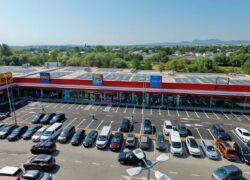
Colosseum Mall announces the official opening of the first bookstore concept Planeta Arthur.


“The opening of Planeta Arthur is part of an ongoing process of optimizing and diversifying the tenant mix in Colosseum Mall. We are focused on bringing concepts that are relevant to our community, and this launch, together with the recent opening of dm drogerie markt and the future launch of Mr. DIY, reflects the sustained pace of development and adaptation to our customers’ needs,” said Doinița Ilie, Head of Leasing, Colosseum Mall.


“We inaugurated the Planeta Arthur reading island in Colosseum Mall in 2024, which was a first step that allowed us to assess the potential of this location. Our conclusions confirm that this shopping center serves a rapidly developing area, home to many young families, with optimal public transport facilities. In addition, the marketing campaigns carried out by Colosseum Mall have helped promote Arthur’s offering, making this location one of the most relevant in our network. Opening a concept bookstore in Colosseum Mall is a natural next step,” said Ciprian Constantin, Sales Director, ART Publishing Group.

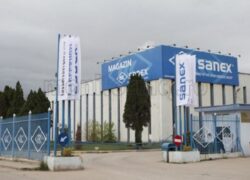
Aquila Inaugurates new Logistics Center in Bacău

Aquila, the integrated distribution and logistics services company for the consumer goods market in Romania and the region, inaugurated the new logistics center in Bacău, a strategic project in which the company made an investment of over Eur 1.2 million, which consolidates the company’s presence in the Eastern region of Romania and supports the expansion of operational capacities. The new logistics center is located in the south of Bacău, within ELI Park.


The center has a total area of ​​approximately 9,000 sqm, including storage and office spaces, a total capacity of approximately 7,400 pallets, and is operated on the basis of a long-term commitment.


Source: Profit.ro

CEDER 2026 in review: Another Dominant Retail Scheme in Bucharest

One of the most interesting questions that came up during the Retail and Mixed-Use panel held at CEDER 2026 was whether Bucharest can sustain another dominant retail scheme. The answer remains a point of contention among the industry experts invited to participate.


Robert Ioniță, Group General Counsel of NEPI Rockcastle argues that the data supports further development, noting that “Bucharest is the fifth region in Europe in terms of GDP per capita”. While he acknowledges that GDP is not the only indicator of spending power, he highlights landmark sites such as Casa Radio, Romexpo, and Gara de Nord as potential locations for future projects. Ioniță cites Warsaw’s Złote Tarasy as a model for what could happen in Bucharest, calling it “one of the most impressive projects that I’ve seen in CEE”.


Mihaela Petruescu, Country Director Property Services Romania & Poland at NHOOD echoes this sentiment, stating firmly, “There is still room for a dominant shopping scheme in Bucharest”. She points out that when looking at figures, Romania remains below other countries in the region, and existing malls are often too crowded to accommodate modern retail requirements. She notes, “International tenants and international players are looking to bring new concepts, extending their stores. And it’s not always very easy to find room in the existing shopping center for a new format”.


However, significant barriers remain, particularly regarding “authorization issues currently in Romania”. Both Petruescu and Ioniță emphasize the need for more “predictability and transparency” in urban planning to allow these innovative schemes to move forward.


A dissenting view comes from Geanina Ungureanu, Head of Retail at CPI Property Group, who believes the city may have reached its limit for massive developments. “There is no longer room in Bucharest for a big shopping center, just subjectively speaking”, she asserts. Instead of a new dominant mall, Ungureanu advocates for a shift toward the “development of the high street in our town, in the old center with old buildings”.

CEDER 2026 in review: The Fixed Minimum Rent plus Turnover Model

In the evolving landscape of Romanian retail, the standard leasing model—fixed rent plus turnover—is facing new scrutiny as consumer habits shift toward digital and omnichannel experiences. During the Retail and Mixed-Use panel held at CEDER 2026, moderator Mădălina Mitan, Partner at Schoenherr, posed a critical question to the panelists: “Is fixed rent plus turnover still fit for purpose or [do] we need to change something, because you need to make it work now for all occupiers?”.


For many landlords, the answer remains a firm yes, primarily due to the requirements of financial institutions. Geanina Ungureanu, Head of Retail at CPI Property Group, argues that the model is essential for stability: “Yes, this combination is perfect. [For] us as a landlord, it has to remain the same. So, this is why we invest. We need to have a base rent, a fixed minimum guaranteed rent (…) because you have financing, you have all the boards and the stakeholders that need to reflect that”. She views the relationship between small tenants and anchors as a “symbiosis” where both parties have adapted to this shared structure.


Mihaela Petruescu, Country Director Property Services Romania & Poland at NHOOD echoes this sentiment, noting that “from [a] lender perspective [it] is the best way to get more, if the tenants are selling (…) And from financial perspective, banks are not counting turnover rents, they are considering zero rent. So, it’s very important to have some certain amounts through minimum base rent. So still now this is the best option.”


However, the rise of technology is complicating how “turnover” is measured. Robert Ioniță, Group General Counsel of NEPI Rockcastle, points out that “the in-store sales from tablets” and showrooming behaviors create friction. He asks: “How [do] you charge that, how do you include that? How [do] you make sure that that’s included in the turnover end?”. Costin Blideanu, General Manager of AFI Brașov observes that in other markets, landlords are experimenting with being paid “per visitor” rather than a percentage of sales, as traditional turnover becomes harder to track when customers scan items in-store but buy online later.


Ultimately, the strategy is more than a financial calculation; it is a testament to the “partnership between landlord and tenant”. As Ioniță concludes, it is “an ecosystem where we need to work and thrive together”.

front page info
LATEST NEWS