B+N Group Rebrands as LIWO Group

B+N Group, a facility management services provider operating in Central and Eastern Europe, has begun operating under a new name, LIWO Group, as of 1 March 2026.

The rebranding introduces a single name for the group’s international activities. According to the company, the change does not affect ownership, management structure or daily operations. The new brand is intended to support the company’s activities across the nine European countries in which it operates.

Headquartered in Hungary, the group has more than 30 years of experience in facility management services. Its Hungarian subsidiary, B+N Hungary Kft., employs nearly 16,000 people. Across the wider group, total employment is close to 30,000, with operations in Germany, Italy, Poland, the Czech Republic, Slovakia, Slovenia, Romania and Bulgaria.

The company provides services at approximately 21,000 sites. Its portfolio includes technical facility operations, industrial cleaning, security services and green area maintenance. The group states that its operational model is based on standardised procedures and engineering support.

The company has also invested in technological development, including autonomous cleaning equipment. According to the 2025 FieldBots Radar survey, the group operates one of the larger fleets of cleaning robots globally.

B+N Hungary Kft., which manages the group’s activities in Hungary, will retain its existing legal name.

The rebranding reflects the group’s intention to operate under a unified identity across its international markets while maintaining its current organisational structure.

Revetas Capital Completes Sale of Park Center Hungary Portfolio

Revetas Capital has completed the sale of the Park Center Hungary portfolio to Gránit Asset Management, acting on behalf of the Magyar Posta Takarék Real Estate Investment Fund. The transaction concludes a value-creation strategy that began with the acquisition of the assets through a restructuring process in 2013.

The closing follows the signing of the sale and purchase agreement in December 2025 and the receipt of all required regulatory approvals, including clearance from the Hungarian Competition Authority.

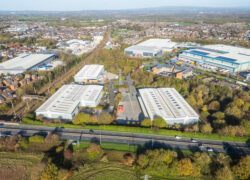
The portfolio comprises 12 retail assets across regional Hungarian cities, including eight retail parks and four single-tenant properties, with a total leasable area of approximately 45,000 sqm.

Over the holding period, Revetas carried out capital improvements, operational upgrades and tenant repositioning aimed at stabilising the assets. The company reported that the portfolio reached near-full occupancy supported by long-term leases.

Vlad Dragoescu, Partner and CEE Head of Portfolio Management at Revetas Capital, said: “The successful exit of Park Center Hungary reinforces Revetas’ competence in creating long term value from special situations. Since assuming stewardship of the assets, we have worked systematically to stabilize operations, enhance the tenant base and build an income profile suitable for institutional ownership. Delivering a transaction of this scale and complexity in a constrained market underscores our firm’s depth, our cross border execution capabilities and our commitment to delivering high quality outcomes for our investors.”

The transaction was finalised after all customary closing conditions were met, including competition clearance, which the company described as a key step in completing the process on schedule.

Bence Rohr, Principal at Revetas Capital, added: “From restructuring to stabilization and monetization, Park Center Hungary demonstrates our ability to manage complexity and exit with precision. We remained conviction-driven throughout the hold period, actively enhancing income quality and liquidity. Park Center Hungary exemplifies Revetas’ hands-on approach to transforming special situations into institutional-grade investments.”

Retail Parks Gain Ground in Poland’s Investment Market

Retail parks have become the dominant format within Poland’s retail property sector in recent years, reflecting shifting investor preferences and changing retail dynamics. Over the past five years, the number of such schemes has roughly doubled, and development activity remains elevated.

According to Wojciech Jurga, Managing Partner at Scallier, the format has gained traction largely because it aligns well with the expectations of private investors, who have become an increasingly important source of capital. Retail parks typically offer straightforward lease structures, relatively predictable income streams and a lower capital entry point compared with large shopping centres.

Typical projects can be initiated with equity of around PLN 10 million. Returns supported by long-term leases are generally estimated at approximately 7-8 percent annually before tax, with higher cash-on-cash performance possible when bank financing is used. Income stability is further supported by inflation-linked rent indexation and service charge management.

Banks continue to view the segment relatively positively from a risk perspective, particularly where schemes are anchored by national or international retail chains under long-term euro-denominated leases.

Development focus shifts to smaller cities

With retail supply in major urban centres already relatively mature, new projects are increasingly targeting county-level towns and smaller cities with populations above roughly 15,000–20,000 residents. Sites of one to two hectares with good road visibility and access are considered especially attractive.

Competition for well-located land is intensifying, although in some cases landowners are approaching developers directly with proposals to jointly develop retail parks rather than sell outright. In such arrangements, developers typically handle feasibility, financing, construction and leasing, delivering a completed income-producing asset to investors.

At the same time, developers note that administrative procedures have become more complex, which is extending project timelines.

Growing role of domestic capital

Retail parks are also benefiting from broader changes in Poland’s investment landscape. Across the six largest Central and Eastern European markets, commercial real estate investment reached €11.6 billion in 2025, with Poland accounting for €4.5 billion. Domestic investors contributed around €860 million to the Polish total, representing roughly 20 percent of overall volume, a record share.

Market participants view the rising presence of local capital as a sign of increasing maturity among Polish investors, particularly at a time when some international players remain cautious.

Recent transaction activity, including portfolio deals involving retail park assets, points to improving liquidity in the segment. The format is attracting both specialised real estate investors and high-net-worth individuals who are entering the property market for the first time.

However, some observers note that the absence of a domestic REIT framework continues to limit the institutionalisation of local capital and could be a constraint on future market depth.

Supportive fundamentals, but supply remains active

From a macroeconomic perspective, Poland continues to offer relatively supportive conditions for retail property. Economic growth, low unemployment and rising wages are underpinning consumer spending, while new retail brands continue to enter the market seeking cost-efficient space.

Approximately 500,000 sqm of new retail park space was delivered in 2025. Despite this pipeline, vacancy across the segment remains low, reflecting steady tenant demand.

Format continues to evolve

Retail park schemes are becoming more diversified in both size and tenant mix. New developments range from smaller convenience-led projects to larger schemes serving wider catchment areas.

Alongside grocery, discount and DIY operators, developers are increasingly incorporating food and beverage, fashion and service tenants. Uses such as fitness clubs, medical services, beauty operators and family entertainment are also becoming more common, supporting the role of retail parks as local service hubs.

Market participants generally expect the segment to continue expanding in the near term, supported by stable occupier demand and ongoing interest from private capital.

Author: Wojciech Jurga, Managing Partner at Scallier

Signs and Shop Windows Shape Urban Space, Says Allcon

The design of retail signage and shop windows continues to play an important role in how urban environments are perceived. When handled with restraint and aligned with surrounding architecture, visual elements at street level can contribute to a more coherent public realm.

Developer Allcon has been formalising this approach across its projects by introducing detailed aesthetic guidelines for tenants. The framework typically covers signage, window displays, lighting and outdoor seating, with the aim of maintaining visual consistency while allowing individual businesses to retain their identity.

According to Paulina Rowińska, Head of the Space Creation Department at Allcon, the company’s objective is to balance order and flexibility. She notes that careful execution and consistent standards can support customer interest and improve the overall perception of commercial areas.

While many Polish municipalities — including cities in the Tri-City area, have introduced so-called landscape resolutions regulating advertising and signage, Allcon applies similar rules even where local requirements are less strict. The company works with architects to prepare project-specific manuals that define acceptable materials, colour palettes, lighting solutions and display principles.

The approach draws on broader urban design practices promoted by organisations such as Traffic Design, which advocate for simplicity and visual clarity in public space.

Examples of this strategy can be seen at the Linea development in Gdańsk, where tenant shopfronts follow a unified visual language despite representing different types of businesses. A similar set of detailed standards was introduced at the Nowa Dąbrowa residential project in Gdynia, covering not only signage but also garden arrangements, fencing and small advertising formats.

Projects that have been operating for longer periods also illustrate the impact of coordinated design. At Sceneria Parkowa in Gdynia, individual tenants maintain distinct branding, but the overall composition of the retail frontage remains visually consistent.

Tenant feedback suggests that coherent visual environments can improve wayfinding and customer perception. Marta Jurczyk, manager of the Psia Salka dog training studio, notes that a well-organised setting makes it easier for visitors to understand the character of a place and builds a sense of professionalism.

In central Gdynia, the Olio restaurant demonstrates how minimal external signage can still support strong brand recognition. In this case, the venue relies largely on its interior visibility and restrained external presence to comply with strict local rules.

Academic research also points to a broader link between visual order and user experience. A 2025 study published in Landscape and Urban Planning by researchers from the University of Texas Rio Grande Valley found that environments with clear visual structure and recognisable identity tend to support stronger cognitive engagement and wellbeing among users.

Allcon representatives emphasise that achieving visual consistency requires ongoing coordination between developers, architects and tenants. However, they argue that the long-term effect is a more legible and attractive urban environment.

As Polish cities continue efforts to reduce visual clutter in public space, developer-led design frameworks such as these are becoming a more common complement to municipal regulation.

Budapest ONE Achieves Top BREEAM In-Use Rating in Hungary

Budapest ONE has received the highest BREEAM In-Use Outstanding certification across all three phases, positioning the Futureal-developed complex as the top-rated office building in Hungary under the scheme.

The 66,000 sqm office project was assessed based on its actual operational performance. After the second phase previously secured the rating, the first and third phases have now also reached Outstanding status in the Asset Performance category, achieving very high scores across multiple criteria. Areas such as accessibility, flexibility and water management were among the strongest-performing aspects of the building. CBRE supported the certification process in both advisory and assessment roles.

Located in the Őrmező district near Hungary’s largest intermodal transport hub, Budapest ONE was designed with a strong emphasis on energy efficiency and environmental performance. The complex operates an intelligent central building management system and uses heat-recovery ventilation to optimise energy consumption.

Renewable energy also contributes to the building’s performance. The rooftop installation of 150 solar panels, with a combined capacity of 81.76 kWp, produces roughly 80,000 kWh of electricity annually. This output is estimated to reduce carbon emissions by nearly 18 tonnes per year while helping lower operating costs for occupiers.

Futureal says the project was intended to demonstrate that sustainability measures can translate into tangible operational and financial benefits over the long term.

In addition to environmental certifications, the development incorporates features focused on user experience and wellbeing. Budapest ONE holds the highest Gold rating from Access4You for accessibility and has achieved WELL Core Platinum certification. Amenities include a rooftop garden, bicycle facilities with showers, charging points for electric vehicles and micromobility, selective waste collection and a rooftop running track. The complex also provides approximately half a hectare of shared outdoor community space.

The latest certification further strengthens Budapest ONE’s positioning among the region’s higher-performing office assets in terms of operational sustainability.

Women at Work: EU Gender Employment Gap Persists Despite Gradual Progress

Across the European Union labour market, a notable gap remains between male and female employment levels, although the difference has narrowed slightly over the past decade.

In 2024, the employment rate for men aged 20-64 stood at 80.8 percent, compared with 70.8 percent for women. This resulted in a gender employment gap of 10 percentage points, defined as the difference between male and female employment rates in the same age group.

Women more likely to work part-time

Beyond overall employment levels, structural differences between male and female participation remain evident. Women were significantly more likely to work part-time, accounting for 27.8 percent of female employment, compared with just 7.7 percent among men.

A similar pattern appeared in other forms of non-standard employment. Women held a higher share of temporary contracts (11.3 percent versus 8.9 percent for men) and were more frequently underemployed, with 3.6 percent of women seeking additional working hours compared with 1.6 percent of men.

These figures point to continued differences not only in employment participation but also in job quality and working patterns.

Wide variation across member states

The size of the gender employment gap varies significantly across the EU.

In 2024, Italy recorded the widest gap at 19.4 percentage points, followed by Greece at 18.8 points and Romania at 18.1 points. At the other end of the spectrum, the gap was minimal in Finland at 0.7 points and remained relatively narrow in Lithuania (1.4 points) and Estonia (1.7 points).

Long-term trend shows modest improvement

Between 2014 and 2024, the EU-wide gender employment gap declined by 1.1 percentage points. Twenty-two member states recorded improvements over the period.

Malta achieved the most substantial reduction, with the gap narrowing by 13.2 points. Other notable decreases were observed in Luxembourg (down 7.4 points) and Czechia (down 4.9 points), while France saw only a marginal improvement.

However, progress was not uniform. Greece’s gap remained unchanged over the decade, while several countries experienced widening disparities. The gap increased in Cyprus by 2.3 points, in Bulgaria by 1.4 points, in Romania by 0.6 points and in Italy by 0.5 points.

Outlook

The latest data indicate that although female participation in the EU labour market continues to improve gradually, structural differences persist, particularly in working patterns and employment quality. The relatively slow pace of convergence suggests that further policy focus may be required to close the remaining gap.

The analysis forms part of the EU’s broader statistical releases marking International Women’s Day.

Source: eurostat

Employment in Slovakia Remained High Despite Slight Decline in 2025

Slovakia’s labour market remained relatively strong in 2025, although total employment edged down slightly amid weaker performance in key sectors, according to the Labour Force Sample Survey.

In the fourth quarter of 2025, the number of employed persons stood at just over 2.0 million. Employment declined by 0.8 percent year-on-year and fell by 0.2 percent compared with the previous quarter after seasonal adjustment. The employment rate for people aged 20–64 slipped by 0.4 percentage points to 78.4 percent.

Services still dominate but show mild weakening

Employment trends varied across the economy. Of the 18 monitored sectors, seven recorded annual job growth in the final quarter.

The services sector continued to employ the largest share of workers, with nearly 1.7 million people, although headcount declined slightly year-on-year. Within services, wholesale and retail trade saw the most notable drop, losing more than 10,000 workers. Transportation and storage, as well as education, also posted declines.

Among large service segments employing more than 150,000 people, only human health and social work activities recorded a marginal increase in employment.

Manufacturing continues to lose workers

The most pronounced decline occurred in the production sphere. Manufacturing employment fell by more than 17,000 people year-on-year, extending a downward trend that has been in place for roughly a year and a half. Industry alone lost nearly 16,000 workers and employed about 638,000 people in the fourth quarter.

Construction also experienced a reduction in workforce, down 3.4 percent year-on-year, largely reflecting weaker domestic demand. In contrast, agriculture — the smallest production sector — recorded strong growth, adding over 7,000 employees.

Regional picture mixed

From a regional perspective, employment increased year-on-year only in Trnavský kraj during the fourth quarter, where the workforce expanded by 2.4 percent to around 291,000 people, the highest level in four years. All other regions reported declines, with the sharpest drop recorded in Banskobystrický kraj.

Employment rates above 80 percent were achieved in Bratislavský, Žilinský and Trnavský regions. The lowest employment rate was observed in Košický kraj at 73.1 percent.

At the same time, labour mobility remained elevated. More than 123,000 Slovaks worked abroad in the fourth quarter, up 4.8 percent year-on-year.

Full-year 2025 results

For the whole of 2025, average employment in Slovakia fell by just over 10,000 people, a decline of 0.4 percent, leaving total employment at approximately 2.0 million persons.

Half of the monitored sectors recorded year-on-year employment declines. The overall decrease was driven primarily by losses in the production sector, where employment fell by more than 11,000 people. By contrast, services posted only marginal growth.

Within services, administrative activities and transportation recorded the strongest increases in employment. On the negative side, education and information and communication services saw the most significant workforce reductions.

In the production sphere, agriculture was the only segment to expand employment, while industry and construction both contracted, with construction posting the steepest decline.

Regional and structural outlook

Regionally, employment growth for the full year was recorded only in Trnavský and Žilinský kraj. The most pronounced declines occurred in Nitriansky and Bratislavský regions.

Despite the slight drop in the number of workers, Slovakia’s overall employment rate held steady at 78.1 percent in 2025, unchanged from the previous year. The stability largely reflects demographic developments rather than labour market expansion.

The number of Slovaks working abroad continued to rise, exceeding 121,000 for the full year, up 3.5 percent compared with 2024.

Overall, the data indicate that while Slovakia’s labour market remains tight by historical standards, employment growth has begun to soften, particularly in manufacturing and selected service segments.

Source: SOSR

Average Monthly Wage in Slovakia Continues to Rise in 2025, Real Growth Slows

Wages in Slovakia continued to grow in both nominal and real terms in 2025, although the pace of real wage expansion moderated compared with the previous year, according to the Statistical Office of the Slovak Republic.

For the full year, the average nominal monthly wage reached EUR 1,620, representing a year-on-year increase of 6.3 percent. After adjusting for inflation, real wages rose by 2.2 percent, marking the second consecutive year of real income growth but at a slower rate than in 2024.

Fourth-quarter wages remain on an upward path

In the fourth quarter of 2025, the average nominal monthly wage climbed to EUR 1,739, up 5.8 percent year-on-year, equivalent to an average increase of EUR 96 per employee. In real terms, wages rose by 1.9 percent.

Both nominal and inflation-adjusted wages have now increased for nine consecutive quarters. Compared with the previous quarter, the seasonally adjusted average wage grew by 1.5 percent.

Broad-based growth across sectors

All 19 monitored sectors of the Slovak economy recorded year-on-year increases in nominal wages in the fourth quarter. The pace of growth varied considerably, ranging from just under 3 percent in public administration to more than 11 percent in electricity, gas and steam supply.

After accounting for inflation, real wages declined in three sectors: public administration, administrative services and real estate activities. In most other areas, employees saw real wage gains, with 14 sectors outperforming the national average.

Industry, the country’s largest employer, recorded a 6.7 percent increase in the average gross monthly wage in the fourth quarter, reaching EUR 1,884. Real wages in the sector rose by 2.8 percent. In trade — the second largest employer — nominal wages increased by 5.6 percent to EUR 1,597, with real growth of 1.7 percent.

Energy sector remains the highest paid

Employees in electricity, gas and steam supply continued to earn the highest wages, with the average monthly salary exceeding EUR 3,000 in the fourth quarter.

At the other end of the spectrum, accommodation and food service activities remained the lowest-paid sector, with average wages only slightly above EUR 1,000. Nevertheless, all monitored sectors reported average pay above the EUR 1,000 threshold for the second consecutive quarter.

Regional differences persist

From a regional perspective, Bratislavský kraj remained the only region with above-average wages, reaching EUR 2,068 in the fourth quarter. In the rest of the country, average wages ranged from EUR 1,411 in Prešovský kraj to EUR 1,685 in Trenčiansky kraj.

Nominal wages increased year-on-year in all regions. The strongest growth was recorded in Nitriansky kraj, where wages rose by 8 percent. In real terms, wages grew in seven of the eight regions, while Banskobystrický kraj registered a slight decline.

Full-year sector trends

Across 2025 as a whole, wages increased both nominally and in real terms in all monitored sectors. The slowest nominal growth was recorded in administrative services, while mining and quarrying saw the strongest increases.

The most pronounced real wage gains — exceeding 4.5 percent — were observed in mining, water supply, healthcare and accommodation and food services, despite the latter remaining the lowest-paid sector. Average pay in accommodation and food services reached EUR 969 for the year, making it the only sector still below the EUR 1,000 threshold on an annual basis.

The highest average salaries, exceeding EUR 2,600, were recorded in financial and insurance activities, followed by energy supply and information and communication. Overall, nine sectors reported wages above the national average.

Company size and outlook

By company size, the fastest wage growth occurred in firms employing 250 to 499 people, where the average monthly wage rose by 7.4 percent to EUR 1,947. Companies with more than 1,000 employees also recorded strong gains, with average pay increasing by 7 percent to EUR 2,269.

Despite the broadly positive trend, regional disparities remain significant. For the full year, average wages were highest in Bratislavský kraj at EUR 1,949, while other regions ranged from EUR 1,285 in Prešovský kraj to EUR 1,522 in Trenčiansky kraj.

Overall, the data indicate that wage growth in Slovakia remains resilient but is gradually normalising after the stronger real gains recorded in 2024.

Source: Statistical Office of the Slovak Republic

Poland’s GDP Expands in Q4 2025, Driven by Domestic Demand

Poland’s economy maintained solid growth at the end of 2025, supported primarily by household consumption and public spending, according to preliminary data released by Statistics Poland.

Gross domestic product rose by 4.0 percent year-on-year in the fourth quarter of 2025, improving on the 3.5 percent increase recorded in the same period a year earlier. On a seasonally adjusted basis, the economy expanded by 1.0 percent compared with the previous quarter and by 3.6 percent year-on-year.

For the full year 2025, economic growth was confirmed at 3.6 percent, unchanged from the earlier estimate.

Domestic demand remained the principal growth engine. Total domestic uses increased by 4.3 percent year-on-year in the fourth quarter. Final consumption expenditure rose by 5.2 percent, driven by a 4.2 percent increase in household spending and a 7.3 percent rise in public consumption.

Investment activity also contributed positively. Gross capital formation grew by 1.7 percent year-on-year, while gross fixed capital formation increased by 4.7 percent. The investment ratio stood at 22.3 percent, slightly below the level recorded a year earlier.

Despite the overall positive picture, inventory changes continued to exert a negative effect on growth, and net exports made a small negative contribution in the quarter.

Quarter-on-quarter dynamics also improved. Gross value added across the economy rose by 0.9 percent compared with the third quarter of 2025. Among sectors, trade and repair, construction and industry recorded notable gains, while financial and insurance activities declined.

Domestic demand increased by 1.4 percent quarter-on-quarter, supported by a 1.5 percent rise in total consumption expenditure.

On a year-on-year basis, gross value added in the national economy expanded by 3.5 percent in the fourth quarter. Industry, construction, trade and transport all posted growth in the range of roughly four to five percent, indicating broad-based expansion across the real economy. In contrast, financial and insurance activities recorded a marked decline.

Overall, the data suggest Poland entered 2026 with steady economic momentum, underpinned mainly by resilient consumer demand and public spending, while external trade provided limited support in the final quarter.

Czech Unemployment Rate at 3.3% in January 2026

The unemployment rate in Czechia rose to 3.3 percent in January 2026, marking a year-on-year increase of 0.5 percentage points, according to the Czech Statistical Office (CZSO). The latest labour market data point to a gradual softening in employment conditions at the start of the year.

The employment rate for people aged 15–64 reached 75.4 percent in January, down by 0.3 percentage points compared with the same month in 2025. Employment remains notably higher among men, at 80.0 percent, while the rate for women stood at 70.5 percent.

The share of unemployed persons within the labour force, which includes both employed and unemployed individuals, climbed modestly. Male unemployment remained below the three-percent mark at 2.8 percent, while the female unemployment rate increased to 3.8 percent.

According to the statistical office, the early data for 2026 confirm a gradual upward trend in unemployment. Officials noted that while male joblessness has remained relatively stable, the female rate has been rising over recent months and is approaching the four-percent level.

Labour market participation showed slight improvement. The economic activity rate for the 15–64 age group reached 77.9 percent, up by 0.1 percentage points year-on-year. Participation among men was 82.3 percent, compared with 73.4 percent among women.

The figures are based on the Labour Force Sample Survey, which follows internationally harmonised definitions of employment and unemployment. The methodology differs from administrative data on registered jobseekers because it captures labour market status based on household survey responses rather than labour office records.

Under the broader EU comparison covering people aged 15–74, the Czech unemployment rate stood at 3.2 percent in January 2026, indicating that the country continues to record one of the lower unemployment levels within the European Union.

The survey is conducted in private households and does not include individuals living in collective accommodation facilities or temporary shelters.

front page info
LATEST NEWS