Czech Economy Grew by 2.6% in 2025 as Statistical Office Revises Estimate Upward

The Czech economy expanded by 2.6 percent in 2025, according to updated figures released by the Czech Statistical Office (CZSO), which slightly revised its earlier estimate upward. The performance marks the strongest annual growth since 2022 and reflects support from both domestic spending and external demand.

In the final quarter of the year, gross domestic product increased by 2.6 percent year-on-year and by 0.6 percent compared with the previous quarter.

According to the statistical office, quarterly growth was driven mainly by stronger household consumption and higher investment activity, while inventory changes weighed on the overall result. External demand also made a positive contribution.

For the full year, household consumption rose by 3 percent, while government spending increased by 2.2 percent. Gross fixed capital formation expanded by 2 percent. The surplus in the foreign trade balance reached CZK 504.2 billion at current prices, up by CZK 0.8 billion year-on-year.

Gross value added increased by 2.8 percent, supported primarily by trade, transport, accommodation and hospitality, as well as information and communication activities and industry.

Labour market indicators also improved. Total employment grew by 1.1 percent year-on-year to approximately 5.5 million people, while the number of hours worked rose by 2.3 percent.

In the fourth quarter alone, household consumption increased by 1.3 percent quarter-on-quarter and by 3.2 percent compared with the same period a year earlier, driven mainly by spending on short-term goods and services. Government consumption rose by 1 percent quarter-on-quarter and by 2.5 percent year-on-year.

Investment activity strengthened toward the end of the year. Gross fixed capital formation grew by 1.7 percent quarter-on-quarter and by 5.3 percent year-on-year, supported in part by higher investment in residential and non-residential construction.

The external sector also recorded solid growth. In the fourth quarter, the trade surplus in goods and services reached CZK 133.9 billion, an increase of CZK 9.5 billion year-on-year. Exports rose by 0.8 percent quarter-on-quarter and by 5.1 percent year-on-year, while imports increased by 0.6 percent quarter-on-quarter and by 5.3 percent year-on-year.

Analysts: Economy shows resilience

Economists generally view the latest figures as evidence of stable economic conditions. Some noted that 2025 was the first year in which the Czech economy operated without the direct impact of the major shocks that affected previous periods.

Analysts also highlighted that household consumption in the fourth quarter exceeded pre-pandemic levels, indicating a recovery in consumer activity after several years of pressure from inflation and higher interest rates.

At the same time, observers pointed out that growth was supported by multiple components, including consumer spending, investment — particularly in construction, and contributions from the business sector and IT services.

Looking ahead, several economists expect the Czech economy to expand at a similar pace in 2026, with growth likely to be driven by household demand, public spending and a gradual recovery in investment.

However, they caution that external risks remain. Potential geopolitical tensions, particularly in the Middle East, could affect energy and commodity prices and pose an inflationary risk that may influence the growth outlook.

Source: CTK

Romania: New Housing Supply Falls to Eight-Year Low as Demand Remains Elevated

Residential deliveries and transaction volumes in Romania declined modestly in 2025, but overall demand remained above pre-pandemic levels, according to Colliers’ latest annual review. The market entered 2026 facing moderate upward pressure on prices amid limited new supply.

The consultancy estimates that both housing completions and sales fell by roughly 5 percent last year compared with 2024. Total deliveries dropped to below 58,000 units, marking the lowest annual output since 2017. Despite the slowdown, transaction volumes remained about one-fifth higher than the average recorded before the pandemic.

In Bucharest, demand weakened more noticeably than at national level, with transactions declining by close to 10 percent year-on-year. Even so, activity in the capital still stands significantly above pre-2020 levels and continues to attract the largest share of new development.

Across the country, supply trends were uneven. Most regions recorded declines in new completions, while Bucharest and Ilfov saw a slight increase. Current delivery levels in the capital region remain more than double the average seen in the decade prior to the pandemic, whereas output in the rest of the country sits marginally below long-term norms. Permit data suggests the development pipeline will remain limited in the near term.

Market conditions in 2025 were shaped by high borrowing costs, persistent inflation and higher VAT on residential transactions. Even so, mortgage-financed purchases rose to around 58 percent of total transactions, indicating that buyers have adjusted to the tighter financing environment.

Colliers notes that demand performance varied during the year. Activity started slowly, strengthened during the summer months — including ahead of the VAT increase, and stabilised toward year-end. The firm attributes the market’s resilience partly to longer-term income growth, noting that average purchasing power has expanded substantially over the past decade despite more recent pressures on real wages.

Residential prices in major cities increased by roughly 5 percent on average in 2025. However, the gap between projects has widened. New homes in well-connected locations with strong energy-efficiency standards recorded firmer price growth, supported by financially stable buyers.

Energy costs are also becoming a more significant factor in purchasing decisions. Older residential stock, particularly buildings that have not undergone thermal upgrades, is facing closer scrutiny from buyers who are increasingly comparing long-term operating costs with those of newer developments.

In certain competitive areas or in projects launched during periods of weaker affordability, developers have introduced targeted incentives such as negotiated discounts, flexible payment terms or bundled parking. Colliers emphasises that these measures remain selective and do not indicate a broad market correction.

Looking ahead, the consultancy considers the residential sector to be underpinned by structural demand, noting Romania’s relatively high overcrowding rate within the European Union. A meaningful price decline would likely require a clear deterioration in labour market conditions and sustained pressure on household incomes, developments that are not currently evident.

For 2026, Colliers anticipates a broadly balanced market, with the potential for improved momentum in the second half of the year if economic conditions stabilise and financing costs begin to ease.

The Ultimate Dubai Escape Plan? Why Avoiding a Big Tax Bill Isn’t Always So Simple

Dubai continues to attract entrepreneurs, executives and high-net-worth individuals drawn by its reputation as a low-tax lifestyle destination. With no personal income tax and a business-friendly environment, the emirate has positioned itself as a compelling alternative for globally mobile professionals seeking to optimise their financial position.

Yet advisers across the wealth and tax planning industry increasingly caution that relocating to the UAE is rarely a straightforward solution. While the move can be effective when properly structured, many expatriates discover too late that leaving a high-tax country involves more than booking a one-way ticket and securing residency in Dubai.

The key issue is that tax exposure is usually determined by the rules of the country being left, not the one being entered. Many jurisdictions assess liability based on a combination of factors such as physical presence, family connections, property availability and where a person’s primary economic interests remain. As a result, individuals may continue to face obligations at home even after establishing a life in the Gulf.

Professionals in the field report that one of the most common misunderstandings is the belief that residency can be switched instantly. In reality, it tends to be assessed over time and through evidence of genuine relocation. Frequent visits back to the home country, keeping a readily available residence, or maintaining strong personal ties can all undermine the intended tax outcome.

Timing also plays a significant role. Income received shortly after departure, including bonuses, share payouts or proceeds from asset sales, can sometimes remain taxable in the previous jurisdiction depending on local rules. Similarly, returning home within certain timeframes may reactivate liabilities that individuals believed they had left behind.

Entrepreneurs face an additional layer of complexity. Even when personally based in Dubai, business activities connected to other countries can still create exposure there, particularly if management decisions or revenue-generating functions are seen to occur outside the UAE.

Another factor reshaping the landscape is the global push toward financial transparency. Automatic information exchange between tax authorities has made it far easier for governments to track cross-border financial activity. Advisers say this has significantly reduced the margin for error in international relocation planning.

Importantly, Dubai itself is also evolving. While the absence of personal income tax remains intact, the introduction of a federal corporate tax has marked a shift in the UAE’s fiscal framework, particularly for business owners operating through companies.

Despite these complexities, specialists stress that Dubai can still offer substantial advantages when moves are carefully prepared. Successful relocations typically involve formally ending tax residency in the home country, managing travel patterns and accommodation ties, and ensuring that income events are properly sequenced around the move.

The broader message emerging from advisers is that the era of the quick tax escape is largely over. Dubai remains one of the world’s most attractive destinations for internationally mobile wealth, but the process now demands careful planning and detailed execution.

For investors and executives whose Dubai ambitions do not unfold as expected, the financial consequences of getting the timing or structure wrong can be significant. In an increasingly connected regulatory environment, the difference between a successful relocation and an expensive surprise often comes down to preparation long before the move takes place.

DL Invest Group and Boosteroid Plan Large-Scale AI Data Centre in Bielsko-Biała

DL Invest Group and Boosteroid have formed a joint venture to develop a large AI-focused data centre in Bielsko-Biała. The planned facility will begin with 82 MW of IT capacity, with further expansion phases expected to take total capacity beyond 200 MW and potentially up to 1 GW, subject to electricity availability and grid development.

The project reflects growing demand for infrastructure capable of supporting artificial intelligence, high-performance computing and cloud-based services. Industrial and logistics assets with access to significant power supply are increasingly being considered for conversion into digital infrastructure.

DL Invest Group manages a real estate portfolio valued at more than €1.2 billion, with occupancy levels of approximately 97 percent across more than 400 tenants. The company operates an integrated business model covering development, construction, asset management and property management, and retains assets for the long term. This structure enables it to adapt industrial properties for alternative uses, including data centre development.

Boosteroid operates 29 GPU-based data centres and provides infrastructure for AI and high-performance computing workloads. The Bielsko-Biała facility is being designed to accommodate high-density IT operations and to meet the technical requirements of large-scale cloud providers. The project is being developed in cooperation with hyperscale clients and is intended to support private AI cloud deployments for enterprise users.

The first phase will deliver 82 MW of IT load. A second phase is expected to increase capacity beyond 200 MW, alongside potential expansion into other markets. A third phase could scale the Polish site to 1 GW or more, depending on power supply conditions and transmission infrastructure.

The development is positioned as a step towards strengthening Poland’s domestic digital infrastructure capacity. Locating large-scale data processing facilities within the country allows companies operating in regulated sectors to store and process data locally, which may support compliance with national and European regulatory requirements.

The facility will also be available to businesses seeking dedicated AI infrastructure. Companies in sectors such as finance, manufacturing and healthcare will be able to deploy and train AI models using their own data within a controlled environment.

Access to sufficient and competitively priced electricity remains a key factor for the project’s long-term viability. The scale of further expansion will depend on the development of stable energy sources and grid capacity capable of supporting high-load digital infrastructure.

The Bielsko-Biała investment marks a shift in the use of industrial real estate towards digital infrastructure and reflects broader changes in the European data centre market.

ZEITGEIST Announces Changes to Ownership Structure

ZEITGEIST Asset Management has completed a change in its shareholder structure following the exit of the family office of co-founder Sebastian Junghänel.

Under the transaction, Sebastian Junghänel’s family office sold its stake to Family Office Noack. As a result, Family Office Noack now holds 85 percent of the company, while the remaining 15 percent is owned by RAV SICAF. The transaction concludes the previous partnership between the shareholders.

ZEITGEIST provides development and asset management services to private and institutional investors. Since 2014, the company has managed 67 projects across five countries, covering a total area of approximately 340,000 sqm and representing around €1.2 billion in assets under management. Its activities are focused on residential, office and urban regeneration projects.

Sebastian Junghänel stated that the transaction creates a clearer long-term ownership structure for the company and expressed confidence in its future direction.

Peter Noack, Founding Partner and CEO of ZEITGEIST Asset Management, said the revised shareholder base is intended to support the company’s development strategy and future investment activity.

Photo: Peter Noack, Founding Partner i CEO ZEITGEIST Asset Management, Zdena Noack, CEO ZEITRAUM

Deka Immobilien Signs 13,000 sqm Office Lease in Amsterdam’s Zuidas

Deka Immobilien has agreed a long-term lease with Databricks for approximately 13,000 sqm of office space at The Rock office building in Amsterdam’s Zuidas business district.

Databricks, a company specialising in data and artificial intelligence solutions, will occupy space within the building, which is currently undergoing a comprehensive refurbishment programme.

The renovation includes the redesign of the ground floor and mezzanine into shared areas featuring a reception, hospitality services, an all-day bar and a range of meeting facilities. Office floors from the first and second levels, as well as the ninth through to the twenty-second floors, are being modernised. Planned works include upgrades to ceilings, installation of LED lighting, refurbishment of sanitary facilities and improvements to lift lobbies. Completion of the refurbishment is scheduled for the end of 2026.

The Rock forms part of the portfolio of the WestInvest InterSelect open-ended real estate fund managed by Deka Immobilien. Following completion of the works, the building is expected to obtain a BREEAM In-Use rating of ‘Excellent’ and an A++ energy performance label.

Sportano Expands to 27,300 sqm at Panattoni Park Zielona Góra II, Bringing Scheme to Full Occupancy

Sportano has expanded its operations at Panattoni Park Zielona Góra II, increasing its leased space by 14,846 sqm to a total of 27,300 sqm. The agreement, signed with Panattoni and Accolade, covers both a lease extension and additional space, bringing the building to full occupancy.

The company, which operates an online sports retail platform, has been based at the park since 2021. It sells sports equipment, clothing and accessories across several European markets through its own website, third-party marketplaces and a physical store in Warsaw. According to company data, annual turnover has reached approximately PLN 500 million, with around two million orders processed per year. The decision to expand reflects continued growth in sales volumes.

Sportano’s logistics centre in Zielona Góra is equipped with automation systems including goods-to-person mobile robots, pick-to-light and put-to-light solutions, and an automated parcel sorting system serving multiple carriers. The newly leased space is intended to accommodate further automation, including high-bay storage systems and very narrow aisle configurations designed to increase storage density and operational efficiency.

Panattoni representatives said the expansion highlights the role of warehouse space in supporting the operational needs of e-commerce companies. Accolade, which owns the park, noted that retail remains an important source of demand for logistics space, particularly in regional markets.

Colliers advised Sportano during the lease negotiation process.

Panattoni Park Zielona Góra II is located near the Lubuski Industrial and Technological Park, with road access via provincial road 282 and the S3 expressway approximately three kilometres away. The site also benefits from access to rail infrastructure.

Union Investment has signed a 2,112 sqm office lease with Caisse des Dépôts at the Audessa building in Lyon’s Part-Dieu district, marking the first major letting following the asset’s recent repositioning.

The French public financial institution will occupy the entire fourth floor and half of the third floor under a nine-year agreement. The property is located in Lyon Part-Dieu, widely regarded as one of France’s most established and competitive office submarkets.

Union Investment acquired the building in 2022 for its UniInstitutional European Real Estate fund. Previously serving as the headquarters of electricity transmission operator RTE, the asset has since undergone a comprehensive redevelopment programme. The works included technical upgrades and environmental improvements, alongside an extension of the building.

Audessa now offers approximately 13,000 sqm of total leasable space. The refurbishment introduced a range of outdoor amenities, including a landscaped rooftop terrace with views towards Mont Blanc, terraces on each level, and a private garden area.

According to Union Investment’s French management, discussions are ongoing with additional occupiers. The company noted that future availability of prime office space in Part-Dieu may become more limited as the district continues its transition towards a broader mixed-use urban model, with a stronger emphasis on residential development.

The transaction was brokered by JLL. Legal advice to Union Investment was provided by August Debouzy.

VGP Reports Higher Earnings and Expanded Development Pipeline in 2025

VGP NV reported solid financial and operational growth for the year ended December 31, 2025, supported by leasing activity, project completions and continued expansion of its development land bank.

The group recorded taxable profit of €338 million, up 6 percent compared with 2024. Net asset value increased by 8.3 percent to €2.6 billion, while EPRA net tangible assets rose by 9 percent. EBITDA reached €454.7 million, representing a 28 percent year-on-year increase and marking one of the company’s strongest performances to date, second only to the exceptional logistics demand seen in 2021.

Leasing activity reached a record level during the year, with €106.7 million in new and renewed leases signed. Annualized revenue from closed and future leases stood at €468.3 million at year-end, an increase of 13.5 percent. The company reported that vacant space was re-let at rents averaging 14 percent higher than previous levels, and noted continued demand in early 2026, particularly from e-commerce and defense-related occupiers.

Development activity remained robust, with 43 projects under construction at year-end, representing more than 1 million sqm. Of these, 75 percent were pre-leased, securing €80.9 million in future annual rental income, the highest level of pre-leasing commitments in the company’s history. During 2025, VGP completed 21 projects totaling nearly 494,000 sqm, which are currently 99 percent leased and are expected to generate €32.9 million in additional annual rent. As a result, proportionately consolidated net rental income increased by 16.7 percent to €224.4 million.

Land acquisitions continued to support future growth. VGP secured 1.37 million sqm of new development land during the year, including sites in Germany, Portugal, Denmark and the United Kingdom. At the same time, 1.63 million sqm of land was allocated to projects launched in 2025. The group’s total secured land bank reached 10.3 million sqm, offering development potential exceeding 4.3 million sqm.

The standing portfolio, with an average building age of 4.8 years, maintained an occupancy rate of 98 percent. The company stated that its portfolio is progressing toward full sustainability certification, with 11 percent already holding or targeted to achieve top-tier certifications such as BREEAM Outstanding or DGNB Platinum. Among recent completions, a building in Arad, Romania, achieved what the company described as the highest BREEAM score globally for an industrial asset.

During the year, VGP concluded several joint venture and sale agreements, resulting in a net cash inflow of €389 million and realized gains of €60.5 million. In parallel, the company agreed with East Capital to establish a new pan-European fund focused on acquiring at least €1.5 billion in gross asset value from VGP, with a particular emphasis on Central and Eastern Europe. VGP intends to retain a 50 percent stake in the vehicle and aims to complete its first transaction with the fund in 2026.

Renewable energy capacity also expanded. Photovoltaic production capacity increased by 47 percent year-on-year to 170.5 MWp. In addition, the group has 141.2 MW of renewable projects under construction or in the permitting phase, including 14 battery storage projects totaling 106.6 MW.

The balance sheet remained stable, with cash of €524 million at year-end and a further €500 million in undrawn credit facilities. The proportional loan-to-value ratio stood at 50 percent, while net debt to EBITDA improved from 7 times in 2024 to 6.3 times in 2025. During the reporting period, the group issued bonds totaling €1.176 billion and repaid or repurchased €380 million of outstanding debt. In January 2026, it placed €600 million in bonds at what it described as the lowest risk premium in its history. VGP also received a BBB- investment grade rating with stable outlook from S&P Global, while Fitch reaffirmed its rating.

The board has proposed a regular dividend of €92.8 million, equivalent to €3.40 per share, representing a 3 percent increase compared with the previous year’s regular dividend.

Overall, VGP’s 2025 results reflect continued expansion of its logistics platform, strong leasing momentum and an active capital markets strategy, while maintaining high occupancy levels and advancing its sustainability objectives.

HSF System SK Completes Retail Development in Považská Bystrica

A new retail building has been completed in Považská Bystrica, with HSF System SK acting as general contractor for the project. The company delivered the construction works, including related infrastructure and technical installations. The contract value amounted to €1.89 million excluding VAT. The investor is OC Bpark PB s.r.o.

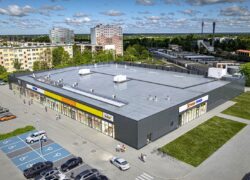
The scheme provides 2,419 sqm of commercial space, complemented by 790 sqm of paved external areas. The building has been designed as a compact structure with a unified façade and shared roof, while allowing for separate operation of individual retail units. The structural system consists of a prefabricated reinforced concrete frame, with sandwich panel façades and glazed entrance areas intended to provide natural daylight and clear access points.

According to Tomáš Kosa, CEO of HSF System, the project focused on delivering a practical layout and durable construction suited to everyday retail use. The investor’s representative, Ing. Vladimír Baránek, stated that the aim was to expand the range of services available in this part of the city and to integrate the project into the existing commercial zone.

The development is located within an established retail area and connects to existing transport and technical infrastructure. As part of the works, access roads, parking facilities and additional paved areas were completed. Separate supply access has been arranged to maintain customer safety and operational efficiency within the complex.

front page info
LATEST NEWS