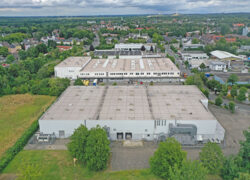
Brama Jury in Zawiercie Records 470,000 Visitors in First Six Weeks

The Brama Jury shopping and entertainment centre in Zawiercie recorded more than 470,000 visitors between its opening on 14 November and the end of December. The level of footfall remained strong in January and February, according to the developer, Master Management Group.

The project combines elements of a traditional shopping mall and a retail park and offers approximately 16,400 sqm of leasable space. It includes more than 40 retail and service units, as well as a four-screen cinema, restaurants, cafés and a fitness club. It is the first scheme of its type in the city.

Anna Polak, Head of Leasing at Master Management Group, said the initial results indicate that the centre has attracted significant interest from residents of Zawiercie and the surrounding district, which has a population of around 111,000. She noted that tenant mix, accessibility and supporting services have contributed to the performance recorded so far.

In recent weeks, several additional tenants have opened stores at the centre, expanding its retail offer. New arrivals include Rituals (230 sqm), Tatuum (254 sqm), Esotiq (68 sqm) and Silesia Jeans (281 sqm). The additions strengthen the fashion and lifestyle segments of the scheme.

Brama Jury is located on Zagłębiowska Street, a short distance from the city centre. The property is accessible by public transport and benefits from road connections to the wider Silesian region, including access to the A1 motorway. The centre provides 525 parking spaces.

The coming months will indicate whether the current footfall levels stabilise as the centre completes its first full year of operation.

Istropolis Launches Residential Sales as Construction Advances in Bratislava

One of Bratislava’s most closely watched redevelopment schemes has entered a new phase, with residential units now being marketed as construction progresses at the Istropolis site in Trnavské Mýto.

The large-scale project is transforming the former cultural complex into a mixed-use district combining housing, offices, retail and public amenities. The first stage includes a residential building offering more than one hundred apartments in a range of layouts, alongside two office properties that are already attracting major corporate occupiers.

The development marks a significant step in reshaping one of the capital’s busiest transport junctions into a contemporary urban quarter designed for both daily living and employment. The residential component aims to appeal to a broad buyer base, from young professionals seeking centrally located apartments to families looking for larger units within reach of public transport and services.

Construction began after the developer secured the necessary approvals and financing toward the end of last year. The initial phase is expected to set the tone for the wider scheme, which will ultimately deliver a new cultural venue, office capacity and public spaces integrated into the surrounding neighbourhood.

On the commercial side, international and domestic companies have already committed to relocating operations to the project’s office buildings. The confirmed occupiers signal confidence in the location’s long-term potential, particularly given its accessibility and prominence within the city’s transport network. Daily retail services, including grocery and food outlets, are also planned to support both office workers and residents.

The broader masterplan represents an investment estimated in the hundreds of millions of euros and is projected to generate several thousand jobs once fully operational. Market observers note that the scale of the project positions it among the most ambitious urban regeneration initiatives currently under way in Slovakia.

The scheme also aligns with Bratislava’s wider development momentum, as the city continues to attract capital into mixed-use and residential-led projects. Recent years have seen significant additions to the skyline and central districts, reflecting sustained demand for modern living and workspace in the capital.

As building activity continues through 2026, attention will focus on sales performance within the residential segment and the pace of further construction phases. If delivered according to schedule, the redevelopment is expected to establish a new focal point in Bratislava, combining housing, employment and cultural functions within a single integrated environment.

Catella: Affordable Housing and Operational Living at the Centre of Europe’s Real Estate Outlook for 2026

Catella has published its House View – March 2026, outlining its expectations for the European real estate market as it moves beyond a prolonged period of repricing and limited transaction activity.

According to the report, European property values declined by approximately 25 percent on average between mid-2021 and late 2023. Since the end of 2023, values have recovered modestly, rising by around 6 percent, suggesting that price discovery is largely complete and that markets are entering a new phase of the cycle.

Stabilising Rates and Early Liquidity Recovery

The outlook highlights changes in monetary policy as a key driver for 2026. The European Central Bank has reduced its deposit rate to 2.0 percent following multiple rate cuts, easing financing conditions and improving the relative attractiveness of real estate debt structures.

Investment activity has also shown initial signs of recovery. Around €225 billion of direct real estate transactions were recorded across Europe in 2025, representing a 5 percent year-on-year increase. Liquidity remains selective, but transaction volumes are gradually improving, particularly in residential and niche sectors and in major markets such as London and Paris.

Housing Supply Constraints Support Rents

Residential fundamentals remain central to Catella’s investment thesis. European residential rents have increased by an average of roughly 6 percent annually over the past five years, supported by limited new supply and low vacancy levels. In many markets, rental growth has outpaced inflation, particularly for newly built and energy-efficient properties.

The report points to an estimated shortfall of four million affordable housing units across Europe by 2030. Over the past decade, migration has added around 20 million people to the EU, reinforcing demand in major metropolitan areas including London, Paris, Madrid, Berlin, Amsterdam and Stockholm.

In regulated markets, rents on new leases have increased at roughly twice the pace of existing contracts, creating a widening gap that has limited mobility and reinforced demand pressure for new housing stock.

Affordable Housing as a Structural Priority

Within this context, Catella identifies affordable housing as a core long-term investment theme. The segment is characterised by persistent demand, near-full occupancy and constrained development pipelines due to land availability and regulatory factors.

Cities such as Madrid, Amsterdam, Utrecht, Rotterdam, Copenhagen, Munich and Düsseldorf are highlighted as facing particularly strong affordability pressures.

Operational Living Gains Momentum

Operational living formats — including student accommodation, co-living, micro-living, serviced apartments and senior housing — are also identified as high-conviction sectors. These formats benefit from demographic change, urbanisation and evolving lifestyle preferences, as well as shorter lease cycles and active management models.

The report estimates that Europe will require approximately two million additional senior housing beds by 2050, representing a 70 percent increase in supply to meet the needs of an ageing population.

Development partnerships and long-term operating structures are viewed as effective ways to access these segments, particularly in dense urban areas across the Nordics, Spain and Germany.

Selective Tactical Opportunities

Beyond residential strategies, Catella identifies selective opportunities in retail and logistics.

Retail parks focused on grocery and non-discretionary tenants have shown improving vacancy trends and stabilising rental performance in markets including Spain, Portugal, the UK, Germany, Poland and the Nordic countries.

Logistics, after rapid growth during the pandemic period, has entered a more moderate phase. However, structural drivers such as e-commerce expansion, supply chain reconfiguration and near-shoring continue to support long-term demand. Northern Italy, the Rhine-Ruhr region, Frankfurt, Amsterdam and regional Polish cities are identified as markets with potential.

Cautious Approach to Offices

The report notes that prime, well-located office assets in central business districts continue to benefit from a flight-to-quality trend. Buildings meeting sustainability standards remain comparatively resilient in cities such as London, Paris, Madrid, Frankfurt, Munich and Stockholm. However, the report suggests that office strategies carry higher execution risk and require careful capital expenditure planning.

Income Focus in the Next Phase

A key theme in the outlook is the shift from reliance on yield compression to a focus on income stability and operational performance. Catella suggests that returns in the current cycle are likely to depend more on net operating income growth and active asset management.

Overall, the report concludes that 2026 presents selective entry opportunities, particularly in sectors aligned with demographic trends, supply constraints and sustainability requirements, as European markets continue to stabilise.

Dom Development Extends and Expands Lease at Metropolitan Warszawa

Dom Development Group S.A. has extended its lease agreement at the Metropolitan Warszawa office building in central Warsaw and increased the amount of space it occupies. Following the expansion, the company will lease more than 4,000 sqm across several floors of the property.

The new agreement covers the tenant’s existing offices on the second and third floors, along with additional space on the fourth floor. JLL advised Dom Development during the lease negotiations.

Dom Development Group operates in Warsaw, Wrocław and Kraków, and is active in the Tri-City area through its subsidiary Euro Styl S.A. The company develops residential projects across different market segments and has been listed on the Warsaw Stock Exchange since 2006. According to company data, it has delivered approximately 58,000 residential units over more than three decades of activity.

The developer has been based at the Metropolitan building for around 15 years, having first signed a lease in 2010 and moved into the property in 2011. The decision to renew and expand the lease maintains its long-term presence at Plac Piłsudskiego.

Metropolitan Warszawa is located near the Saxon Garden and the Royal Route in Warsaw’s central district. The building provides office space along with retail and service units and includes facilities such as underground parking, cyclist amenities and a fitness area. The property has received BREEAM Excellent certification and other ratings related to health, safety and digital connectivity.

The extension reflects Dom Development’s continued operations from its existing central Warsaw location.

Calls for Amendment to Polish Real Estate Development Act Following Dispute Over Floor Area Calculations

Legal experts are calling for an amendment to the Polish Real Estate Development Act after recent changes to the legislation led to differing interpretations of how usable floor space should be calculated.

Article 5a of the Act, which came into force on 13 February this year, was intended to clarify the method for determining the usable area of residential premises. However, according to market participants, the provision has instead resulted in uncertainty.

The wording of the article refers to the PN-ISO 9836 standard in the version applicable at the time of submitting the building permit application. A literal interpretation of this reference could allow elements such as balconies, loggias, terraces and internal staircases to be included in the usable area of a dwelling. This may affect the formally stated size of apartments and, consequently, influence pricing, ownership shares in common areas and entries in land and mortgage registers.

Shortly after the new regulation took effect, the Office of Competition and Consumer Protection (UOKiK), in a position agreed with the Ministry of Development and Technology, presented a different interpretation. The authority indicated that Article 5a should be read together with technical and construction regulations, meaning that balconies and stairs should not be counted as usable space.

While this interpretation aligns with existing market practice and is intended to protect consumers, it does not constitute a generally binding legal source and is not formally binding on courts.

Maciej Boryczko, Partner and legal advisor at GESSEL, stated that two parallel approaches have emerged: one based on a literal reading of the statute and another based on a broader systemic interpretation. He noted that differing calculation methods could lead to disputes between developers and buyers, inconsistent court rulings and increased legal risk in residential transactions.

Recent UOKiK decisions have highlighted the importance of clearly presenting the actual floor area of apartments at the pre-contract stage. Karolina Olszewska, Senior Associate at GESSEL, referred to regulatory actions in 2024 and 2025 that focused on how developers inform buyers about the inclusion of areas under non-load-bearing partition walls.

In decision RLU-1/2025, UOKiK questioned a case in which the area under removable partition walls had not been included in the usable floor area initially presented to buyers. When ownership transfer agreements were concluded, the total area was recalculated as larger, leading to additional payments.

According to the experts, the current situation requires legislative clarification. They argue that Article 5a should explicitly define the relationship between the PN-ISO standard and technical construction regulations, and clearly state which elements must be included in the calculation of usable area.

They also note that under Article 87 of the Polish Constitution, only the Constitution, statutes, ratified international agreements and regulations constitute sources of generally applicable law. Interpretative positions issued by administrative authorities do not have the same legal status.

Without further clarification, legal advisors warn that uncertainty regarding floor space calculations may continue to affect the residential market.

Source: GESSEL

Cushman & Wakefield Echinox Valued €7.7 Billion in Romanian Real Estate in 2025

Cushman & Wakefield Echinox’s valuation department assessed real estate assets with a combined leasable area of approximately 7.8 million sqm in 2025, with a cumulative value exceeding €7.7 billion. Activity levels increased moderately compared with 2024.

According to the company, the market environment in 2025 was marked by structural adjustments and a widening gap between prime and secondary assets.

Around half of the valuation assignments were related to bank loan guarantees, followed by financial reporting mandates (25%), taxation purposes (15%) and other uses. In revenue terms, financial reporting accounted for approximately half of total income, reflecting the larger portfolio mandates typically involved in this segment. Bank-related valuations represented about one quarter of revenues.

Diverging Asset Performance

Real estate values in Romania did not move uniformly in 2025. Overall capital values increased by an estimated 5–10%, but differences between high-quality properties and older assets became more pronounced.

Prime properties in established locations, particularly those meeting energy efficiency and ESG standards, generally maintained their value or recorded modest gains. In contrast, older buildings lacking modern certifications or requiring significant upgrades saw downward adjustments, reflecting higher compliance costs and increasing obsolescence risks.

The industrial and logistics segment remained comparatively stable, supported by domestic demand and infrastructure development. Convenience retail assets also maintained relatively steady values.

The office sector continued to face challenges, especially secondary properties. Factors affecting this segment included financing conditions, uncertainty related to hybrid working patterns and ongoing planning restrictions in Bucharest.

Outlook for 2026

The consultancy expects market values to stabilise in 2026, with the possibility of moderate growth in the second half of the year, depending on monetary policy developments and potential yield adjustments.

Selective investment opportunities may emerge, particularly in value-add strategies and in secondary and tertiary cities benefiting from infrastructure improvements.

Bogdan Sergentu, Head of Valuation at Cushman & Wakefield Echinox, said the market in 2025 demonstrated a clear differentiation between asset types, with quality, energy performance and income stability playing a more significant role in determining value than in previous years.

CurryLab to Open at SOHO by Yareal in Warsaw’s Kamionek District

A new restaurant concept, CurryLab, will open at SOHO by Yareal in Warsaw’s Praga-Południe district this summer. The venue will occupy more than 150 sqm on the ground floor of the NEFRYT residential building within the mixed-use complex.

CurryLab has been created by the owners of the IndianTaste brand, which has operated in Warsaw since 2017. The new location at SOHO by Yareal will be the group’s fourth restaurant in the city and its first on the right bank of the Vistula River. The menu will focus on Indian cuisine, including both meat and vegetarian options.

The restaurant space is located in the western part of the development and faces the linear park that runs through the SOHO complex. A Green Caffè Nero café began operating in an adjacent unit earlier this year.

SOHO by Yareal is a mixed-use development in the Kamionek area combining residential, retail, office and recreational functions. The project was designed by HRA Architekci and integrates new buildings with renovated post-industrial structures. The residential portion of the scheme was completed at the end of last year and comprises ten buildings with a total of 870 apartments.

Across the development, more than 11,000 sqm of retail and service space has been planned. Existing tenants include food operators, convenience retail, personal services and healthcare providers.

Yareal Polska is currently preparing the final phase of the broader project, known as SOHO HUB. This stage will include additional office space, further retail units and the refurbishment of historic buildings. Works are scheduled for completion between 2026 and 2028.

Panattoni to Develop 46,000 sqm BTS Facility for Nagel-Group in Poznań

Panattoni has started construction of a 46,000 sqm build-to-suit (BTS) logistics facility for Nagel-Group in Poznań. The project will be delivered within Panattoni Park Poznań East III and is intended to serve as the company’s main operational site in Poland.

Nagel-Group, which specialises in food logistics, plans to consolidate four existing warehouse locations in the Poznań area into the new facility and relocate its local headquarters to the site. The move is designed to centralise operations within a single logistics property.

The warehouse will be configured to meet the tenant’s operational requirements, including temperature-controlled zones. Cold storage areas will operate at 2–4°C, while other sections of the building will maintain temperatures between 16–18°C.

The development will include an 11,000 sqm cross-dock area with 66 loading docks, as well as a three-storey office component. The site will provide approximately 300 parking spaces for cars and 120 spaces for heavy goods vehicles. The park is located near the A2 motorway, offering direct access to national and international transport routes.

The project is expected to incorporate environmental solutions such as a wastewater treatment installation and heating systems supported by heat recovery from refrigeration processes. The building is planned to obtain BREEAM certification at the Excellent level.

Construction works are scheduled to begin in the first quarter of 2026.

The Poznań region remains one of Poland’s established logistics markets, supported by transport infrastructure and access to labour. Panattoni has previously delivered multiple logistics projects in the Greater Poland region and continues to expand its presence there.

Poland’s Industrial and Logistics Market Shows Greater Selectivity in 2025

Poland’s industrial and logistics market remained one of the country’s most active commercial real estate sectors in 2025, although activity moderated compared with previous peak years, according to AXI IMMO’s latest annual report.

Total modern warehouse and logistics stock reached 36.58 million sqm at the end of December 2025, reflecting 6% annual growth. However, new supply declined significantly to 1.68 million sqm, down 35% year-on-year and marking the lowest annual delivery volume since 2016.

Leasing activity remained elevated. Gross take-up totalled 6.64 million sqm, an increase of 14% year-on-year and the third-highest annual result in the sector’s history. The vacancy rate remained largely stable at 7.4%.

On the investment side, the industrial and logistics sector recorded EUR 1.5 billion in transactions, representing 34% of Poland’s total commercial real estate investment volume and ranking as the second-largest sector by value.

Monika Rykowska, Head of Research at AXI IMMO, noted that the market is entering a more selective phase, characterised by a higher share of lease renegotiations, tighter speculative development and capital concentration in the most liquid regions, including Mazowsze, Śląsk and Łódzkie. She added that port cities such as Tricity and Szczecin are gaining importance, supported by infrastructure development. For 2026, she identified European industrial recovery and domestic consumption as key drivers.

Leasing Activity Driven by Renegotiations

Renegotiations accounted for 3.46 million sqm, or 52% of total take-up, reflecting the expiry of five-year leases signed during 2021–2022. Net take-up reached 3.18 million sqm, slightly lower than the previous year.

The highest tenant activity was recorded in Mazowieckie, Łódzkie and Śląskie. Major transactions included large lease extensions and renewals in Piotrków, Wrocław, Gdańsk and Ujazd, with activity concentrated among logistics operators, retailers and e-commerce companies.

Anna Głowacz, Head of Industrial at AXI IMMO, said the leasing structure reflects increasing market maturity, with tenants focusing on cost optimisation, consolidation and selective expansion. She added that moderate demand recovery from logistics operators is emerging alongside continued retail and distribution activity.

Development Activity Slows

Although total stock expanded, development activity slowed considerably. The construction pipeline stood at 1.79 million sqm, broadly stable year-on-year, but the share of speculative projects declined to 38.6%, indicating more cautious developer strategies. Many new projects are now conditioned on securing 40–50% pre-leases before construction proceeds.

Regional development activity remains concentrated in Mazowieckie, Pomorskie and Śląskie.

Headline rents in large-scale logistics projects remained within the range of EUR 3.6–6.0 per sqm per month, while effective rents typically ranged between EUR 3.0–4.5 per sqm, with incentive packages continuing to play a competitive role.

Investment Market Remains Active

The EUR 1.5 billion invested in the sector in 2025 marked a 15% increase year-on-year. Single-asset transactions and sale-and-leaseback deals dominated activity, with US and Czech investors among the most active capital sources.

Grzegorz Chmielak, Head of Capital Markets at AXI IMMO, commented that the industrial and logistics segment continues to offer relative stability. He highlighted the rise in sale-and-leaseback transactions as companies seek to release capital, and noted expectations of improved liquidity and potential prime yield compression in 2026 for assets secured by long-term leases.

Outlook for 2026

AXI IMMO anticipates stable supply levels in 2026, gradual vacancy reduction and selective rental growth in prime locations. Renegotiations are expected to remain a significant component of leasing activity, while new developments will primarily be linked to tenant expansions and space optimisation strategies.

Renata Osiecka, Managing Partner at AXI IMMO, stated that the sector demonstrated resilience in 2025, supported by sustained demand and disciplined supply. She indicated that infrastructure investment, nearshoring trends and ESG-driven technical standards will play an increasing role in shaping the market going forward.

Slovakia: Ukraine Will Not Resume Oil Transit via Druzhba Pipeline in Coming Days

Ukraine will not restart oil transit to Slovakia through the Druzhba pipeline in the coming days, the Slovak Ministry of Economy said on Tuesday. The resumption had previously been expected following several delays, based on information provided by the Ukrainian side.

In response to the continued disruption, the Slovak government decided to recommend that the national transmission system operator, SEPS, terminate its agreement with Ukraine’s grid operator Ukrenerho on emergency electricity supplies. Prime Minister Robert Fico had already announced last week that Slovakia would suspend this assistance and has indicated that further measures may follow.

Slovakia and Hungary have recently criticised Ukraine for delays in restoring oil flows through the pipeline. According to Ukrainian authorities, the Druzhba pipeline was damaged at the end of January during a Russian drone attack targeting energy infrastructure in western Ukraine. Kyiv has stated that repair works are under way.

The Slovak Ministry of Economy said Ukraine had committed to providing updated information regarding the status of oil transport by Friday.

Slovakia and Hungary remain among the European Union countries with the highest dependence on Russian crude supplies. Following the disruption of deliveries via Druzhba, the Slovak government declared a state of oil emergency. Slovnaft, the Bratislava-based refinery owned by Hungary’s MOL Group, released part of the country’s strategic reserves and began securing alternative supply routes.

SEPS Chairman Martin Magáth confirmed that the operator would terminate the emergency electricity supply contract with Ukrenerho, in line with the government’s recommendation. He noted that the contract had last been used in January. Electricity transit through Slovakia to Ukraine under other commercial agreements continues. Ukraine has increased electricity imports in recent months after repeated Russian attacks on its energy infrastructure.

Prime Minister Fico has questioned the extent of the reported pipeline damage and has called for discussions at the European Union level. He has stated his intention to seek talks with European Commission President Ursula von der Leyen regarding the issue.

According to media reports, the EU ambassador to Kyiv has not been granted permission to inspect the damaged section of the pipeline. Fico has also indicated that he is considering a direct meeting with Ukrainian President Volodymyr Zelensky.

Hungarian Prime Minister Viktor Orbán has likewise criticised Ukraine over the transit disruption. In a letter to the European Commission, he alleged that the delay in restarting Druzhba was politically motivated. Hungary is currently blocking a proposed €90 billion EU loan package for Ukraine, and Fico has not ruled out the possibility of Slovakia taking a similar position.

The situation remains unresolved as diplomatic discussions continue.

Source: CTK

front page info
LATEST NEWS