Monday, 21 September 2026
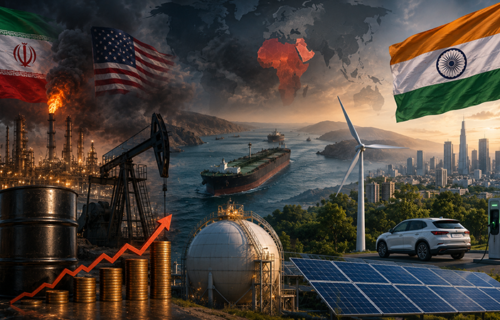
The conflict between Iran and the United States has highlighted the vulnerability of global energy markets and reinforced concerns about supply security across Asia. For India, one of the world’s fastest-growing energy consumers, the implications extend far beyond short-term fluctuations in oil prices. The crisis has exposed structural challenges related to import dependence, shipping routes, energy security and inflation, while also accelerating discussions around renewable energy and diversification strategies that could reshape the country’s energy landscape by 2030.
India remains heavily dependent on imported energy. Crude oil imports account for nearly 89 percent of domestic consumption, making the country highly sensitive to disruptions in global supply chains and international pricing. According to the International Energy Agency (IEA), India is expected to become the largest contributor to global oil demand growth through 2030, with consumption projected to rise to approximately 6.6 million barrels per day by the end of the decade. This growth will be driven by expanding industrial activity, urbanisation, rising incomes and increasing transport demand.
The most immediate consequence of tensions in the Gulf has been increased uncertainty surrounding the Strait of Hormuz, one of the world’s most important energy transit routes. A significant share of India’s crude oil and liquefied natural gas imports either originate from or pass through the Gulf region. Any disruption to shipping traffic can increase transportation costs, insurance premiums and delivery times, placing additional pressure on India’s energy import bill.
Higher oil prices also have broader economic consequences. Rising crude prices can increase fuel and transportation costs, contribute to inflation and widen India’s current account deficit. Given the importance of energy to manufacturing, agriculture and logistics, prolonged volatility in global energy markets can affect economic growth and consumer spending.
In response to these risks, India has continued to diversify its energy procurement strategy. The country has expanded crude purchases from a wider range of suppliers over recent years, reducing dependence on any single region. Policymakers have also emphasised the importance of maintaining strategic petroleum reserves to improve resilience during supply disruptions.
The conflict has also strengthened the long-term case for accelerating India’s energy transition. Government initiatives supporting solar power, wind energy, green hydrogen, battery storage and electric vehicles are increasingly viewed not only as climate measures but also as instruments of energy security. Reducing dependence on imported fossil fuels could help shield the economy from future geopolitical shocks.
Natural gas is expected to play an important transitional role in this process. India continues to pursue its goal of increasing the share of natural gas in the national energy mix, while investing in LNG infrastructure and domestic gas networks to support industrial and urban demand.
By 2030, the most significant impact of the Iran-US conflict on India may not be temporary price increases but a deeper shift in policy priorities. The crisis has reinforced the importance of supply diversification, strategic reserves, renewable energy development and domestic energy resilience. As India’s energy demand continues to grow, balancing energy security, affordability and sustainability will remain one of the country’s most important economic challenges.
Rather than changing India’s dependence on energy imports overnight, the conflict is likely to accelerate an existing transition toward a more diversified and resilient energy system. The pace at which that transition occurs may ultimately determine how exposed India remains to future geopolitical disruptions in the decades ahead.
Source: CIJ.World India Research & Analysis Team