CTP expands partnership with FAN Courier, leasing 4,500 sqm in CTPark Deva

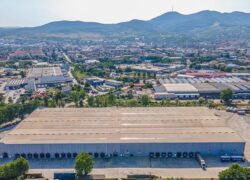
CTP has strengthened its partnership with FAN Courier by leasing an additional 4,500 sqm in CTPark Deva. This latest expansion brings FAN Courier’s total leased space in CTP’s portfolio to over 10,000 sqm, with the company already operating in CTPark Sibiu East and CTPark Craiova East.

CTPark Deva, located in Transylvania at the heart of Romania, offers a strategic position ideal for central distribution centers and manufacturing activities. The park’s proximity to the A1 Motorway connects it seamlessly to the country’s major logistics hubs, and it also benefits from access to public transportation, making it a prime location for both operations and workforce needs.

Jovan Radosavljevic, Managing Director of CTP Romania, commented: “Expanding our long-standing partnership with FAN Courier is a moment of pride for us. We have supported their impressive growth over the years, and this new location marks another milestone in our collaboration. CTPark Deva will serve as a vital logistics hub for FAN Courier, helping them continue their expansion by leveraging the park’s modern infrastructure and excellent connectivity.”

CTP’s ongoing expansion of its industrial and logistics parks across Romania aims to provide clients with tailored solutions and operational flexibility. FAN Courier’s expansion at CTPark Deva demonstrates how CTP’s national network helps clients scale their operations quickly, offering options that aren’t available on other logistics platforms.

CTPark Deva offers direct access to the A1 Sibiu-Deva Motorway, located just 2 km from the city center, making it ideal for logistics and manufacturing activities. The park also features cross-docking facilities and easy access to public transportation.

In recent years, Deva and its surrounding areas have emerged as key hubs for companies in the automotive and high-tech industries, driven by nearshoring trends. Supply chain disruptions caused by the pandemic and geopolitical tensions, coupled with new EU regulations, are encouraging more firms to establish operations in Central and Eastern Europe.

CTPark Deva still has over 6,000 sqm of available space, providing excellent opportunities for companies in the logistics and manufacturing sectors looking to optimize distribution and benefit from the park’s strategic location.

GARBE PARK České Budějovice will house a branch of an international logistics service provider

A leading international logistics and transport company has secured 1,500 sqm of space at GARBE PARK České Budějovice. The lease will be part of a new hall, totaling 3,900 sqm, with construction set to begin this month and completion expected in the second quarter of 2025.

“The tenant portfolio in our industrial park is expanding rapidly, and we’re excited to welcome our first logistics company. This new tenant joins a growing list that includes HAUSER, Taconova, NOBO AUTOMOTIVE, and a supermarket currently under construction,” said Veronika Zacha, Head of Business Development CZ at GARBE. “We’re also in discussions with another party to lease the remaining 2,400 sqm in the hall.”

The new tenant, one of the largest transport operators in the Czech Republic, chose GARBE PARK for its strategic location and accessibility. “Their decision underscores the park’s appeal, especially its proximity to major transport routes,” Zacha added. GARBE is also beginning construction of two turnkey buildings for upcoming tenants, which will feature high technical standards and sustainability measures.

The České Budějovice project is being developed in two phases. The first phase includes the remaining 20,000 sqm of space, with a logistics hall and supermarket in progress. This phase has a building permit in place, and facilities can be delivered within eight months of contract signing. The second phase, located nearby, will offer an additional 130,000 sqm, suitable for light manufacturing or logistics.

GARBE PARK benefits from its location just 2 km from the future D3 motorway, connecting Prague with the Czech-Austrian border via Tábor and České Budějovice. The park’s close proximity to České Budějovice airport adds another logistical advantage. The project is also focused on sustainability, aiming for energy efficiency and low operating costs for tenants.

Panattoni Park Tricity East V fully leased: KMC Services Secures 15,000 sqm

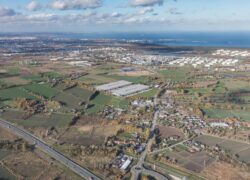
Panattoni has fully commercialized the first phase of its Panattoni Park Tricity East V development, leasing nearly 15,000 sqm to logistics provider KMC Services. With this agreement, the 50,000 sqm building, completed in the first phase, is now fully occupied. Plans for a second building are underway, with the entire park eventually expected to cover 105,800 sqm.

KMC Services, known for its comprehensive logistics solutions including warehousing, e-commerce services, customs, and both road and sea transport, has leased 15,000 sqm of warehouse space alongside 200 sqm of office space in the facility. This move is part of KMC’s broader strategy to enhance its intermodal north-south logistics capabilities in Poland.

“KMC Services is actively pursuing expansion, particularly with the creation of a comprehensive logistics network across Poland,” said Maciej Pichór, Logistics Director at KMC Services.

Panattoni’s Leasing Director, Martyna Sochaczewska, highlighted the park’s strategic location near the Baltic Hub Deepwater Container Terminal and the A1 motorway, making it an ideal logistics hub for operations across Poland and Europe.

As part of Panattoni’s commitment to sustainability, the park will undergo BREEAM certification, aiming for an Excellent rating. The site will feature eco-friendly initiatives such as water and energy-saving systems, insect shelters, and green areas, including a pocket park near the office entrance.

Developer Pierre Grafen and Luxent launch sales for Nová Cihelna Kladno apartments

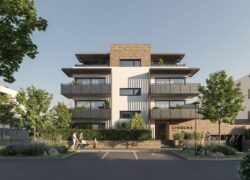
In a significant step toward sustainable urban development, developer Pierre Grafen, in collaboration with real estate agency Luxent – Exclusive Properties, has announced the launch of sales for the Nová Cihelna Kladno project. Located in a quiet part of Kladno, this upscale residential development will offer 104 low-energy apartments spread across six buildings on the site of a former brickyard. With a focus on sustainability and energy efficiency, the project promises to deliver modern, environmentally-friendly homes while revitalizing a historically significant part of the city.

The Nová Cihelna Kladno project, expected to begin construction in spring 2025 and complete by the end of 2026, has already secured planning permission. It represents a €11 million investment and is set to transform a long-abandoned brownfield site into a vibrant, green residential community. The apartments will feature energy-saving technologies, such as photovoltaic panels, underfloor heating with summer cooling via heat pumps, and a controlled ventilation system with heat recovery.

“We’re committed to creating sustainable and healthy housing at the highest energy efficiency level,” said Pavel Huml, a representative for developer Pierre Grafen. “The use of low-energy designs and eco-friendly materials is central to this development.”

A large community garden and commercial spaces on the ground floor will further enhance the area, providing residents with local amenities and green spaces to enjoy. The architectural design by Ortogonal emphasizes a harmonious connection to nature, with large-format windows allowing natural light to fill the interiors.

The development offers a range of apartment sizes, from 1+kk to 4+kk, with units ranging from 35 to 119 square meters. Many of the apartments come with spacious balconies, terraces, or private gardens. High-end features include noise-insulating security doors, window blinds, and provisions for electric vehicle charging. The complex is also designed to be wheelchair accessible, ensuring that it meets modern accessibility standards.

“Kladno is emerging as a top location for residential housing due to its strategic position and ongoing investments in infrastructure,” said Jiří Kučera, Director of Luxent – Exclusive Properties. “As Prague becomes less affordable for the middle class, cities like Kladno are increasingly attractive for those seeking high-quality housing at more accessible prices.”

The project’s price point starts at CZK 85,000 per square meter, significantly lower than the average CZK 145,000 per square meter for new developments in Prague, according to Deloitte’s Real Index for Q2 2024. This competitive pricing has generated strong interest, particularly among buyers from Prague looking for more affordable homes and local residents seeking modern upgrades.

The Nová Cihelna Kladno project is designed to meet energy class A standards, prioritizing sustainability. Each unit will include air-to-water heat pumps for heating and cooling, as well as smart ventilation systems that optimize energy use. The development will also feature rooftop photovoltaic panels to support low-energy operation, and water-saving technologies like Eco Smart taps, which reduce water consumption by up to 60%.

“With environmental responsibility becoming a key consideration for buyers, Nová Cihelna stands out as a forward-thinking development,” explained Jakub Vyčítal, project manager at Ikonix, the firm handling project management. “Our approach ensures that residents can enjoy a comfortable lifestyle while minimizing their environmental footprint.”

Kladno’s evolving infrastructure and easy access to Prague make it an ideal location for modern living. The development is located close to public transportation, with a bus stop nearby providing a direct route to Zličín. In addition, a planned modernization of the railway line will soon offer direct train connections to Prague city center and Václav Havel Airport.

Residents will also benefit from nearby civic amenities, including shops, medical facilities, schools, and kindergartens. The surrounding area offers numerous outdoor recreational activities, such as hiking and cycling in the Džbán Nature Park, sports facilities like Aquapark Kladno, and cultural landmarks like Libušín Castle.

As Kladno continues to develop, projects like Nová Cihelna Kladno are poised to play a key role in shaping the future of the city. With its focus on sustainable, high-quality housing, the project is expected to attract a diverse group of buyers, from families to young professionals, all seeking a quieter, greener lifestyle just outside of Prague.

Once an industrial hub, Kladno is now becoming a thriving city with modern infrastructure and a growing population. Significant investments in healthcare, education, and recreational areas have made it an attractive place to live, work, and raise a family. The Nová Cihelna Kladno project symbolizes this transformation, breathing new life into a historic site while providing future residents with the comforts of modern living.

With pre-sales already attracting considerable interest, the project is expected to sell quickly, offering buyers an opportunity to invest in a sustainable future without sacrificing convenience or quality of life.

Polish capital targets commercial real estate market with growing momentum

The Polish commercial real estate market has seen a significant shift in its investment landscape, with domestic capital making a strong comeback. According to Bartłomiej Zagrodnik, Managing Partner and CEO of Walter Herz, the share of Polish capital in commercial real estate investments has doubled in the past year, reflecting the changing dynamics of the Central European property market.

With international institutional investors largely stepping back from the Central European real estate market, local investors have stepped up to fill the gap. In particular, entities from across the CEE region, including the Czech Republic, Slovakia, Hungary, and Germany, have become key players in Poland’s commercial real estate sector. Additionally, capital from the United States continues to flow steadily into the market.

After years of limited activity, Polish investors are now playing an increasingly pivotal role. In the first half of 2024, domestic capital accounted for 12% of commercial real estate investments in Poland, up from just 6% a year prior. This growth marks a notable shift from previous years, when Polish capital contributed as little as 2% to the market.

Polish investors are exploring a range of investment avenues, from purchasing shares and bonds of real estate developers to acquiring land for joint ventures or independent projects. They are also investing in commercial units, residential properties, and select hotel assets. Many domestic investors are particularly focused on value-add assets—properties that can be revitalized or repurposed for greater profitability.

Retail investments, especially in standalone buildings and retail parks, have been a significant area of interest. A prime example is the expansion of the Aura Park network by Polish company Terg. Similarly, Polish investors have been active in acquiring older office buildings, with recent transactions including the acquisition of the Ludna 2 office building and the Curtis Plaza in Warsaw.

The hotel sector has also seen heightened interest from Polish investors. In the first half of 2024, all hotel acquisitions were financed by domestic capital, including purchases by the Satoria Group and TMS Inwestycje.

Polish capital is driven by both institutional investors and smaller family-owned businesses looking to diversify revenue streams through real estate. As the market continues to evolve, there is growing interest in establishing new legal structures, such as family foundations, to facilitate these investments.

However, experts caution that Polish investors still face challenges in fully capitalizing on opportunities in the commercial real estate sector. The absence of a legal framework enabling Real Estate Investment Trusts (REITs) in Poland has limited investment options. REITs, which operate in over 40 countries—including 14 EU member states—could unlock significant potential in Poland. Government departments are currently working on legislation to introduce REITs, which could allow Polish investors to engage more actively in the commercial property market. It is estimated that Polish capital potentially available for investment in the commercial sector amounts to PLN 20 billion, including PLN 11.5 billion from individual investors.

The overall investment climate in Poland and the broader CEE region has shown signs of improvement in 2024. After a slow first quarter, investment activity surged in the second quarter, with Poland recording €1.7 billion in real estate transactions in the first half of the year—almost double the amount seen during the same period in 2023.

Notably, the office and retail sectors saw major portfolio transactions, with acquisition volumes surpassing those of 2023. The European Central Bank’s decision to begin cutting interest rates in June 2024 has also raised hopes for more affordable financing, further boosting investor confidence.

As Polish capital continues to play a larger role in the real estate market, the country is poised to strengthen its position as a key player in the CEE region, offering promising opportunities for both domestic and international investors.

Transformation of Czech motorway network to boost regional development and industrial growth

The Czech Republic is preparing for a major transformation of its motorway network, a strategic move that will have far-reaching effects on the country’s industrial and logistics sectors. According to a report from Colliers, the second half of this decade will see a significant wave of motorway expansion, improving connections to key European transport corridors (TEN-T) and positioning the Czech Republic as a vital logistics hub in Central Europe.

This expansion is not just about improving national mobility; it is a critical step toward strengthening the country’s role in cross-border trade. New transport links to Germany, Poland, Austria, and Slovakia will enable more efficient goods transportation and fuel demand for new storage and distribution centers along these corridors. “The evolving transport network will attract tenant investors seeking prime locations with excellent access to other Central European markets,” said Josefina Kurfürstová, Senior Analyst at Colliers.

The motorway expansion is already underway, with more than 100 kilometers of new motorway sections expected to open by the end of 2024. This momentum is set to continue, with an average of 60 kilometers of new sections planned for each year over the next six years. While long-term projects may face potential delays due to permitting and construction challenges, the ambitious target of adding over 450 kilometers of new motorways by 2030 marks a historic expansion of the country’s transport infrastructure.

As the motorway network grows, so will the demand for industrial real estate. The Czech Republic currently has over 12 million square meters of industrial space under construction, with a vacancy rate hovering around 3%. Key industrial hubs such as Prague, Brno, Pilsen, and Ostrava are expected to maintain strong demand, but the expansion will also open opportunities in emerging locations. “New hubs like Olomouc–Přerov and Jihlava are likely to see increased demand for industrial space and higher rental rates as they gain better motorway access,” Kurfürstová added.

Improved infrastructure will make secondary and developing hubs more attractive to both investors and tenants. Locations like České Budějovice, Vysoké Mýto, and Litomyšl could emerge as new logistics and industrial centers, benefiting from better connectivity to national and international transport networks. Developers are expected to capitalize on these new opportunities, particularly as rental prices in these areas remain competitive compared to primary hubs like Prague, where rents range from €7 to €7.50 per square meter.

Several key projects are already in the pipeline, including the completion of the northern link between Prague and Ostrava (D11+D35+D1), which will relieve congestion on the existing D1 motorway. Other major routes will connect the Czech Republic more efficiently with Austria via the D3 motorway and with Poland via the D11, enhancing cross-border trade routes.

By 2025, plans to complete up to 118 kilometers of new motorways will bring substantial benefits to regional border towns, including Chomutov (D7) and Karlovy Vary (D6), which are set to become more accessible.

With the Czech motorway network poised for a historic expansion, the country stands on the brink of a major boost in industrial and logistics activity. As new transport corridors open, the Czech Republic will consolidate its position as a strategic hub for industry and logistics in Central Europe. “Investors, developers, and tenants should closely monitor the development of the motorway network over the next decade to capitalize on the new opportunities it will bring,” Kurfürstová emphasized. The expansion is not only a matter of infrastructure but a catalyst for regional development and economic growth across the country.

WDP Eyes Sustainable Growth in Romania’s Expanding Warehousing and Logistics Market

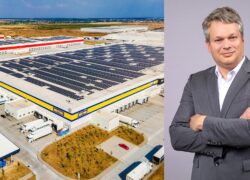
In an interview with CIJ EUROPE, Gijs Klomp, Business Development Manager for Romania at WDP, shared insights into the company’s operations and future strategies in Romania, where WDP has established a significant presence since 2007. With a portfolio nearing 2 million sqm, Romania remains the company’s sole market in Central Europe, and according to Klomp, it presents ample room for further expansion.

“We know the country well, and our footprint here is large,” Klomp noted. “At the moment, Romania is big enough for us to continue growing.” He highlighted that WDP’s warehousing portfolio in Romania has a significant focus on production-oriented projects, with build-to-suit facilities being a key specialty, especially for the light industry and food retail sectors. The company has developed numerous complex solutions for food retailers, including temperature-controlled units.

While discussing Romania’s growing demand for warehousing, Klomp observed that although demand is rising, it’s not increasing at the same rate as in previous years. “The retail market is growing, volumes are up, and the industrial side is stable with slight growth,” he said. Klomp pointed out that vacancy rates are low, but the challenge lies in translating increased demand into higher rents to offset rising construction costs.

Klomp also addressed trends in the Romanian logistics market, noting that more companies are viewing Romania as a regional hub for Central and South-Eastern Europe. This shift is driven by Romania’s strategic location, market size, and improving infrastructure. “Several clients are servicing multiple jurisdictions from Romania,” Klomp explained. He also highlighted the impact of Bucharest’s new outer ring road, which is making previously hard-to-reach areas more accessible, opening up new opportunities for businesses to tap into cheaper labor pools.

Labor availability, according to Klomp, has become a top priority for WDP’s clients when choosing a location. He mentioned that the growing concern over labor shortages is pushing some companies to consider automation, with technologies like robot picking already being implemented in some warehouses.

Infrastructure remains a challenge in Romania, Klomp admitted. “Generally speaking, the infrastructure is still poor, although improvements are underway. But these changes take time and add uncertainty.” He also pointed to Romania’s non-Schengen status (for land borders) as a hurdle, particularly in terms of border efficiency and the unpredictability of waiting times. Klomp described anticipated full Schengen membership as a “big milestone” for Romania.

On Romania’s broader role in the European logistics network, Klomp described the country as a “new Poland,” with a growing regional importance and improving international reputation. Romania’s advantages, including its large market, major seaport, energy independence, and expanding highway network, make it increasingly attractive for businesses.

Klomp also praised Romania’s permitting process, which he found to be less time demanding than in other countries like the Netherlands or Czech Republic. However, he noted that fire safety regulations are more stringent due to past incidents, particularly in multi-tenant buildings.

Sustainability and technology are key focuses for WDP, with Klomp explaining that the company has an ESG policy and aims to be future-proof. Although Romania lags behind Western markets in sustainability, WDP is committed to implementing biodiversity initiatives and constructing environmentally friendly facilities.

Looking ahead, Klomp mentioned several upcoming projects, including a new facility for a major food retailer in Bucharest and a build-to-suit distribution center for a veterinary pharmaceuticals company in Baia Mare. WDP is also exploring the potential for multimodal terminals, with plans to develop land in Constanța, leveraging its railway connection and proximity to the seaport.

“Our strategy is sustainable growth,” Klomp emphasized, adding that WDP remains focused on build-to-suits and acquiring income-producing assets in prime locations. The company’s flexible approach allows them to adapt to market conditions while continuing to expand their presence in Romania’s evolving logistics landscape.

Source: ©CIJ EUROPE

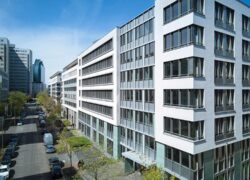
HIH secures major tenant for Mywest office building in Frankfurt City West

HIH Invest Real Estate (HIH Invest) has successfully leased around 5,400 square meters of office space in the Mywest building at Franklinstrasse 50, located in Frankfurt City West. The new tenant, an insurance company, plans to relocate its entire operations to the site.

Built in 2003, the Mywest office building spans approximately 9,000 square meters over seven floors and is part of a real estate individual fund managed by HIH Invest. It features modern amenities, including a two-level underground car park with 110 parking spaces, electric charging stations, a reception area, and a green courtyard. The building is conveniently located near public transport hubs such as Westbahnhof station, along with nearby shops, restaurants, and hotels.

“We plan to modernize the space in 2025 to meet the tenant’s specifications, including the creation of a larger reception area and enhancements to the green courtyard, which will offer employees a relaxing outdoor environment. Additionally, we are aiming to achieve BREEAM certification for the building,” said Simon Hüttmann, Senior Asset Manager at HIH Real Estate.

Despite the recent lease, approximately 2,700 square meters of office space remain available on the first and second floors of Mywest. Another long-term lease for the ground floor, comprising 980 square meters, was signed in 2023 with the Berufsfortbildungswerk (bfw) vocational training center.

Markus Leuchte, Head of Letting Management Frankfurt am Main, highlighted the building’s flexibility and modern design as key factors in attracting tenants. “Mywest offers flexible floor plans that can be customized to accommodate open-space, multi-space, or individual office concepts. This appealed to our new tenant, who sought to downsize from their previous headquarters while transitioning to a more modern work environment,” Leuchte explained.

The building’s space can be divided into up to three rental areas per floor, with options ranging from 400 square meters to the full floor size of approximately 1,300 square meters, making it a versatile option for future tenants.

Poland Would a reduction in interest rates and a drop in mortgage rates boost sales?

Would a reduction in interest rates and a fall in mortgage rates revive housing sales? How much of an impetus to purchase would cheaper standard loans without the Start-up Loan be? Could lower interest rates drive up housing sales

Zbigniew Juroszek, CEO of Atal:
There is no doubt that the high level of interest rates has a strong and negative impact on the situation in the real estate market. At present, mortgages in Poland are among the most expensive in Europe – the average interest rate on new commitments fluctuates around 8 per cent. This strongly reduces the demand for flats and the creditworthiness of buyers. Their situation is improved by the relatively high dynamics of wage growth, which, on the other hand, raises production costs, not without influence on the growth of housing prices.
The banks’ offer, with its high margins and predominance of fixed-interest products, does not encourage purchases either. Customers admit that as soon as there is an opportunity in the future to refinance a loan, move to a lower interest rate and fit into the cycle of rate reductions, they will gladly take advantage of such an option.

A gradual reduction of mortgage interest rates in Poland would make the discussion about state subsidies less relevant. This is because a standard offer would allow many families to realise their housing plans who, without subsidies, cannot now afford to take out a loan commitment. Also, given the proposed design of the subsidy scheme with its many restrictions, a rate cut would naturally exclude some potential beneficiaries.

Tomasz Kaleta, managing director of sales and marketing at Develia:
A reduction in interest rates and a drop in mortgage interest rates would certainly have a positive impact on the revival of housing sales, especially among customers who are currently hesitant to make a purchase decision. Lower interest rates could also indirectly influence the decisions of cash buyers for investment purposes. With interest rates on deposits and other low-risk financial instruments falling, investors are looking for alternative ways to invest capital, and real estate is often seen as a stable and attractive long-term investment.

In turn, lower interest rates on standard mortgages, without the support of the Start-up Loan scheme, could become a significant driver of demand. For many customers who do not qualify for government programmes, a cheaper loan could be a real incentive to decide to buy a home.

Agata Zambrzycka, sales and marketing director at Aurec Home:
Creditworthiness is definitely better than it was two years ago, but due to high interest rates, people earning the minimum wage still have to postpone the dream of buying their own property. Small interest rate cuts will not radically change this situation. Even a 1.75 pp drop in interest rates will not bring about a revolution in loan instalments. For example, for a 25-year loan of PLN 500,000, the instalment with a margin of 2.3 pp (the average for loans with variable interest rates) will drop from the current PLN 3,900 to around PLN 3,350. This is quite a difference, but borrowers in 2020-2021 were paying around PLN 2250 per month with the same terms.
It is worth noting that in the last three years, most of the newly granted loans had periodically fixed interest rates, so the rate cut will not affect the instalments of these commitments. In order to restore balance in the real estate market, long-term measures are needed, such as releasing land owned by state-owned companies for new development investments or streamlining administrative procedures.

Magdalena Gosk, Sales Leader BPI Real Estate Poland:
For many customers, cheaper credit is a key argument in the decision-making process of buying a property. Especially now, when the market is experiencing a prolonged decision-making process. The reduction in interest rates and the drop in mortgage interest rates is always an additional impulse for the revival of housing sales. Cheaper loans increase the creditworthiness of buyers by lowering monthly instalments, which could encourage people who, for financial reasons at least, have so far held back their decision to buy.

In the case of standard loans, on the other hand, without support programmes, a lower interest rate would be an important factor influencing the purchase decision. Most customers are looking for attractive financing terms. Cheaper loans would make the standard offer more competitive and could attract new buyers who previously did not qualify for more expensive loans.

Joanna Chojecka, sales and marketing director for Warsaw and Wrocław at Robyg Group:
We see positive trends in the market – lower inflation, funds from the EU and a stabilised economy allow us to assume that demand for flats will grow. Unfortunately, the supply is still low, there is a shortage of flats, especially in Warsaw, where the interest in purchase is the highest. This is the result of administrative procedures that are too slow and need to be definitely accelerated. Access to attractive housing finance for Poles is very important, but regardless of government programmes, we see that banks are preparing more and more interesting credit offers. Therefore, we are confident that the housing market will continue to grow and that the reduction of interest rates will have a slight impact on this growth.

Zuzanna Należyta, commercial director at Eco Classic:
At the moment, we are facing limited demand due to high interest rates. Many people simply do not have the opportunity to purchase a flat. The introduction of the programme in the announced form would certainly help especially those purchasing flats for their own needs. We estimate that the restrictions on the BK2% programme and the large supply will result in an upturn, but will not contribute to an increase in prices.

Marcin Michalec, CEO of Okam Capital:
A reduction in interest rates and thus an increase in creditworthiness would certainly allow some potential buyers to purchase flats. This, however, according to expert forecasts, may realistically happen only in 2025. At the same time, lower mortgage instalments could also encourage more people to purchase premises for investment purposes. Either of these forms, whether we are talking about government programmes of preferential loans for the first flat or cheaper mortgages – could have a positive impact on the recovery of the market.

Andrzej Gutowski, Sales Director of Ronson Development:
A reduction in interest rates and a drop in mortgage interest rates would certainly revive sales in the property market. The development market, including investment purchases, is strongly dependent on the level of interest rates. The years 2020 and 2021, when rates were at record lows, saw a lot of movement in real estate.
Even the mere announcement of a possible interest rate cut has a psychological impact. It can prompt buyers to make a decision. Cheaper loans, even without a ‘Start-up Loan,’ could become a significant impetus to buy for many potential customers.

Damian Tomasik, CEO of Alter Investment:
Currently, we have the most expensive loans in Europe and therefore, a reduction in interest rates and a decrease in mortgage interest rates would certainly boost sales. Mortgage loans are a key instrument for financing the purchase of real estate, and their preferential forms can significantly reduce the barrier to entry for many potential buyers.

Lower lending rates, without additional support programmes, could be a strong incentive, especially for those who were planning to buy but were holding back their decision in the face of high financing costs. It is worth noting that every percentage point, or even fraction thereof, of a reduction in mortgage interest rates significantly reduces the total cost of the loan in the long term, making the purchase of a property more attractive and cost-effective.

Source: dompress.pl
Photo: ROBYG, Royal Residence

EU inflation lows to 2.1% in September, Czech Republic Sees Increase

Inflation across European Union countries slowed to 2.1% in September, down from 2.4% in August, according to a report released today by the European statistics office, Eurostat. However, the Czech Republic bucked the trend, with inflation rising to 2.8% from 2.4% in August. The data, harmonized to fit the EU’s calculation methodology, differs from figures released by the Czech Statistical Office (ČSÚ).

In the eurozone, inflation also eased, falling to 1.7% in September from 2.2% in August. This was slightly lower than Eurostat’s initial flash estimate, which had placed inflation at 1.8%. On a month-on-month basis, prices fell by 0.1% across both the eurozone and the EU as a whole in September. In the Czech Republic, prices decreased by 0.5% compared to August.

Looking back a year, inflation was much higher. In September 2023, EU inflation stood at 4.9%, while the eurozone recorded 4.3%. The inflation rate in the Czech Republic was significantly higher at 8.3% at the same time last year.

Among EU nations, Ireland reported the lowest inflation in September at 0%, followed by Lithuania with 0.4%, and Slovenia and Italy at 0.7%. Conversely, Romania recorded the highest inflation at 4.8%, followed by Belgium with 4.3% and Poland at 4.2%.

Of the 27 EU countries, annual inflation dropped in 20, increased in five, and remained unchanged in two between August and September.

In the eurozone, services were the biggest driver of annual inflation, contributing 1.76 percentage points. This was followed by food, alcohol, and tobacco, which contributed 0.47 points, and non-energy industrial goods, which added 0.12 points. Energy, meanwhile, helped curb price growth with a negative contribution of -0.60 percentage points.

According to the ČSÚ, inflation in the Czech Republic reached 2.6% in September, compared to 2.2% in August. This increase was primarily driven by rising food and fuel prices, according to the office.

Source: Eurostat, ČSÚ and CTK

front page info
LATEST NEWS